Overview

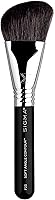
The Sigma Beauty F23 Angled Contour Brush sits near the top of Sigma's professional lineup, and it earns that position through thoughtful construction rather than branding alone. The angled head is cut at a precise slope that naturally follows the cheekbone hollow, making it far easier to place bronzer or contour powder exactly where you want it. Sigma built this brush around their SigmaTech synthetic fibers, which have quietly convinced many natural-hair loyalists to reconsider their stance. Yes, the price sits well above drugstore territory, but what you are getting is a brush engineered to perform consistently — not just feel pleasant in the hand on first use.

Features & Benefits

Pick up the F23 and the first thing you notice is how genuinely soft the bristles are — not flimsy, but cushioned in a way that feels kind on skin. The SigmaTech fibers are densely packed at the ferrule and taper toward the angled tip, giving the brush a dual quality: it can deposit a whisper of color for a subtle look or work in firm, short strokes for a more sculpted result. The aluminum ferrule locks bristles tightly and resists rust after repeated washing. Cleaning is also noticeably faster than with natural hair brushes — pigment releases quickly, which matters if you switch shades often.

Best For

This angled contour brush is genuinely built for people who reach for their contour tools on a regular basis, not someone who bronzes twice a year. It performs best with powder-based formulas — loose bronzers, pressed powders, even matte blushes used for sculpting — rather than creams or liquids. Those with naturally angular features or defined cheekbones tend to find the angled cut particularly intuitive, though it adapts to different face shapes with practice. Professionals and serious hobbyists will appreciate how cleanly it sanitizes between uses. If your collection already covers the basics and you are ready to add a dedicated contouring brush, this is a strong, purposeful choice.

User Feedback

Across a wide range of buyer reviews, Sigma's contouring tool earns consistently favorable marks, with softness and precision cited most often as its strongest qualities. Many users note that the angle maps almost intuitively to the cheekbone hollow, reducing the guesswork that cheaper brushes tend to require. On the critical side, a portion of reviewers feel the bristle density is too firm for a truly diffused, blended finish — a complaint that appears more common among buyers transitioning from fluffier tools. Price comes up regularly too, with some questioning the gap over mid-range alternatives. That said, most long-term owners report that bristle integrity holds up well after months of repeated washing.

Pros

  • The angled head maps naturally to the cheekbone hollow, making precise product placement easier than with flat or dome-shaped brushes.
  • SigmaTech synthetic fibers feel remarkably soft against skin with virtually no shedding, even after extended regular use.
  • Coverage builds smoothly from sheer to medium, giving real control over how subtle or sculpted the final look appears.
  • The aluminum ferrule holds bristles firmly in place with no loosening or rusting observed after months of repeated washing.
  • Cruelty-free and vegan construction makes this a confident choice for ethically conscious shoppers.
  • Pigment releases from the fibers quickly during cleaning, cutting wash time significantly compared to most natural hair brushes.
  • The wooden handle is well-balanced and comfortable to grip, which matters during close-up, detail-oriented application work.
  • Long-term owners consistently report that bristle shape and density hold up well after sustained use and frequent washing.

Cons

  • The price sits firmly in premium territory, which is a genuine barrier for buyers still assembling their first quality brush kit.
  • Bristle density can feel too firm for users who prefer a very soft, airy, diffused contour finish.
  • Beginners may face a learning curve, as the precise angled cut demands intentionality in placement rather than forgiving blendability.
  • Optimized for powder formulas, the brush underperforms noticeably when paired with cream or liquid contour products.
  • The performance advantage over solid mid-range competitors is real but incremental, not transformative enough to convince every budget-aware buyer.
  • Sold individually, so building out a complete Sigma brush set compounds the overall cost quickly for cost-conscious shoppers.
  • The structured angle suits defined bone structures well but requires more deliberate technique adaptation on rounder or softer face shapes.

Ratings

The scores below are generated by AI after analyzing thousands of verified buyer reviews for the Sigma Beauty F23 Angled Contour Brush from global markets, with spam, bot-generated, and incentivized submissions actively filtered out. The ratings reflect a balanced synthesis of real user experiences — both the standout strengths that keep buyers returning and the pain points that surface over sustained use. No score has been adjusted to favor any outcome; what you see is an honest, data-driven picture of how this brush performs across a wide range of users and routines.

Bristle Softness
93%
The SigmaTech fibers consistently rank as one of the F23's most praised qualities among buyers. Users with sensitive skin specifically note that the bristles feel cushioned and gentle on the cheekbones, with none of the scratchy drag that cheaper synthetic brushes often produce during blending.
A smaller subset of users — particularly those accustomed to dense natural-hair brushes — find the fibers slightly too soft for their preferred application style, feeling the brush lacks the resistance needed to push pigment effectively into the skin. This is largely a technique preference rather than a genuine product flaw.
Contouring Precision
89%
The angled head is consistently praised for mapping naturally to the cheekbone hollow without much guesswork, reducing the trial-and-error that many buyers report with less structured brushes. Daily contour users note that the angle allows them to deposit product precisely along the temple-to-cheek line in a single, confident stroke.
Buyers who prefer a very diffused, barely-there finish find the precision a double-edged quality — the defined angle can make blending out harsh lines more effortful than with a rounder, domed brush. Beginners in particular report needing several practice sessions before placement starts feeling natural and controlled.
Build Quality
91%
The aluminum ferrule is widely praised for staying firm and rust-free even after months of daily washing, which is a genuine concern for users who maintain strict brush hygiene between uses. Reviewers frequently describe the overall construction as noticeably more solid and deliberate than brushes available at lower price points.
A recurring observation is that the wooden handle can show cosmetic wear — minor scuffing or lacquer chipping near the ferrule base — when regularly exposed to moisture during cleaning routines. This is a cosmetic issue rather than a structural failure, but it feels somewhat inconsistent with the premium price tier.
Value for Money
67%
33%
Users who contour regularly and have compared brushes across multiple price tiers tend to agree that the quality gap over mid-range options is real and meaningful. The fiber quality, ferrule hold, and angled precision collectively justify the investment for people who rely on a dedicated contour brush as part of their daily makeup routine.
Price sensitivity is one of the most consistent themes in critical reviews — many buyers feel the performance advantage over solid mid-range competitors does not justify the significant cost gap, particularly for those who contour only occasionally. First-time buyers expecting a dramatic leap in results often report finding the improvement incremental rather than transformative.
Ease of Cleaning
88%
Synthetic fibers carry a clear practical advantage when it comes to cleaning — pigment rinses out quickly, and the F23 typically requires just a single pass of brush cleanser to restore bristles to a usable state. For professionals switching between shades or users with a compact brush set, that speed is a meaningful everyday benefit.
Deep cleaning is still required regularly, and some users note that rich bronzers or heavy contour powders can leave a faint tint in the lighter-colored bristles even after thorough rinsing. This does not affect application performance but can mildly frustrate detail-oriented buyers who expect full visual restoration after each wash.
Longevity & Durability
86%
Long-term owners consistently report that the bristle shape retains its structure well over months of regular use, with the angled tip staying true rather than fraying or fanning out as budget brushes commonly do. The ferrule shows no meaningful signs of loosening even for users who wash their brushes several times a week.
The wooden handle can develop surface wear over time — minor scuffing or finish fading — when regularly exposed to water during cleaning. A portion of buyers also note that the handle lacquer chips near the ferrule base after prolonged use, which feels cosmetically out of step with the premium positioning of the product.
Pigment Pickup
83%
The fiber density strikes a well-calibrated balance between picking up enough product to deposit visible color and avoiding the overloading that causes harsh, muddy lines. Users working with finely milled bronzers consistently praise how the brush loads evenly without clumping, making the very first stroke reliably count.
With heavier or less finely milled powder formulas, a subset of users find the brush picks up product unevenly, leading to patchy initial deposits that require additional blending effort. Tapping excess product off before application is often advised in these cases, but it adds a step that feels counterintuitive when using a precision tool.
Blendability
74%
26%
For users aiming for a defined, sculpted contour look, the brush blends product effectively within a controlled zone — the structured shape prevents over-diffusion and keeps color precisely where it is placed, which is exactly what deliberate, technique-driven contouring requires on a daily basis.
Those seeking a softer, more diffused finish consistently find the F23 less adaptable — the structured angle and denser bristle packing make it harder to feather out edges compared to rounder, fluffier alternatives. Achieving a naturally blended result requires deliberate buffing strokes that add noticeable time and effort to a full makeup routine.
Handle Comfort
82%
18%
The wooden handle provides a well-balanced feel — not too heavy, not too light — which matters during close-up work on the cheekbones and nose bridge where fine motor control is critical. Most users find the overall length comfortable for both seated vanity routines and handheld on-the-go application.
Reviewers with smaller hands find the handle length slightly awkward during precise application near the nose, where a shorter handle would offer better close-range control. The smooth surface also lacks any grip texture, which can feel marginally slippery when the hand is dusted with loose powder mid-routine.
Versatility
63%
37%
Within its intended use case, this angled contour brush covers a meaningful range — from barely-there sheer bronzing to a more sculpted, structured result — and can double as a matte blush brush for users who are comfortable adapting their technique across different looks and product loads.
Outside of powder contouring and sculpting, the brush struggles to adapt — it is not suited for cream products, lacks the diffusion for subtle highlight work, and its structured shape makes it a poor fit for broader powder tasks like setting or foundation. Buyers expecting a genuinely multipurpose tool will find it restrictive and will likely need additional brushes.
Cruelty-Free Ethics
96%
The fully synthetic construction means no animal hair, no animal by-products, and no sourcing ambiguity — a clear and verifiable ethical choice that conscious buyers consistently cite as a deciding factor in their purchase. The cruelty-free credentials here are structural and built into the product, not just a marketing label.
The score reflects near-universal satisfaction, but a niche group of buyers who specifically seek formal third-party cruelty-free certifications rather than manufacturer claims note that Sigma Beauty's certifications and their current scope are worth verifying independently before committing to a purchase.
Shedding Resistance
87%
The vast majority of buyers report no meaningful shedding during use or washing, even after months of repeated cleaning cycles. The aluminum ferrule's grip on the fiber bundle appears to hold consistently, providing a durability advantage over many synthetic alternatives where shedding worsens noticeably after the first few washes.
A small number of reviewers report isolated bristle loosening after aggressive cleaning with harsher solvent-based cleansers, suggesting the ferrule adhesive responds poorly to non-standard products. Gentle brush cleansers or mild soap are strongly recommended — using anything harsher carries a real risk of accelerating premature fiber loss.
Skin Compatibility
84%
Users with sensitive and rosacea-prone skin consistently highlight the SigmaTech fibers as exceptionally gentle — the soft, non-abrasive surface avoids aggravating inflammation during application in the way stiffer synthetic alternatives sometimes do. The broad majority of skin types report no irritation from sustained direct fiber contact.
A subset of users with very oily skin note that the brush can lift surface sebum when used on unprimed skin, occasionally disrupting how evenly the product deposits on the face. Those with dry, flaky patches may also find the structured bristles accentuate surface texture rather than smooth over it during contour application.
Product Compatibility
71%
29%
Within powder-based formulas, the brush handles a solid range — from finely milled loose bronzers to denser pressed powders and matte blushes used for sculpting. Users who work exclusively with powder products rarely encounter compatibility issues and consistently praise how reliably it performs across different formula textures and finishes.
Cream and liquid contour products are where Sigma's contouring tool clearly hits its limit — the fiber density causes streaking and makes blending far more laborious than with a brush or sponge designed for wet formulas. Buyers who routinely alternate between powder and cream contour products will almost certainly need a separate, dedicated tool for each.

Suitable for:

The Sigma Beauty F23 Angled Contour Brush is a strong fit for makeup enthusiasts who contour regularly and want a purpose-built tool rather than a multipurpose brush doing double duty. If you reach for powder bronzers, pressed contour powders, or matte blushes most days, the angled head and fiber density are calibrated precisely for that workflow. People with naturally angular bone structure — defined cheekbones, a prominent jaw — will find the brush geometry works almost intuitively along facial planes, cutting down the guesswork that comes with flatter or rounder brush heads. It is also well-suited for professionals and serious hobbyists who care about hygiene, since synthetic fibers sanitize faster and more thoroughly than natural hair, making cleaning between clients or looks considerably less laborious. If you have been building a quality brush collection and feel a contouring gap — that point where a general blush brush simply is not precise enough — this is a considered, long-term investment worth making.

Not suitable for:

The Sigma Beauty F23 Angled Contour Brush is not the right pick for casual or occasional makeup wearers who rarely contour, because the price premium is difficult to justify when the brush sits unused most days. Buyers who primarily work with cream or liquid contour products may find the fiber density less than ideal, as this tool is genuinely optimized for dry powder formulas. If you are just starting out with contouring and still working out placement and blending technique, a denser, fluffier brush tends to be more forgiving and is a better learning tool at this stage in your practice. Those who prefer a very diffused, barely-there finish may also find the F23's precise bristle structure and defined angle too structured for a softer aesthetic. Finally, shoppers comparing this against quality mid-range alternatives should know the performance gap, while real, is incremental — not dramatic enough to justify the cost difference for every buyer.

Specifications

  • Brand: This brush is manufactured by Sigma Beauty, a professional makeup brush brand known for its proprietary fiber technology and numbered face brush system.
  • Model: The model designation is F23, placing it within Sigma's face brush series as a dedicated angled contour tool.
  • Bristle Material: Bristles are constructed from SigmaTech synthetic nylon fibers, engineered to replicate the softness and pigment pickup of natural hair without using animal-derived materials.
  • Handle Material: The handle is made from wood, contributing to a balanced weight distribution and a comfortable grip during detailed application work.
  • Ferrule Material: The ferrule is made from aluminum, providing rust resistance and a firm, long-lasting hold on the bristle base.
  • Dimensions: The brush measures 2 x 2 x 7.4 inches (L x W x H), giving it a full-size handle suited to standard face makeup application.
  • Weight: The brush weighs 46 grams (1.62 oz), light enough for extended use without noticeable hand or wrist fatigue.
  • Brush Head Style: The head features a soft, angled cut designed to follow the natural slope of the cheekbone, jawline, and nose bridge.
  • Coverage Range: The brush delivers sheer-to-medium buildable coverage, with the final intensity determined by application pressure and the amount of product loaded onto the bristles.
  • Recommended Use: Intended for contouring, sculpting, and highlighting on the face, with best results achieved using powder-based formulas.
  • Cruelty-Free: The brush is cruelty-free by construction, as no animal hair or animal-derived materials are used in the bristles or any other component.
  • Vegan Status: All materials across the bristles, ferrule, and handle are vegan-friendly, with no animal by-products incorporated anywhere in the product.
  • Pieces Included: The product ships as a single brush unit with no carrying case, brush guard, or additional accessories included.
  • Care Instructions: The brush should be cleaned with a gentle brush cleanser or mild soap, rinsing bristles under lukewarm water while avoiding direct water contact with the ferrule to preserve the adhesive bond.
  • Product Form: The brush takes a standard wand form with a single fixed angled bristle head and a full-length handle, intended for handheld face makeup application.

Related Reviews

Sigma Beauty F40 Large Angled Contour Brush
83%
91%
Bristle Softness
93%
Shape & Angle Design
88%
Application Precision
74%
Build Quality
82%
Versatility
More
Sigma Beauty F53 Air Contour Blush Brush
79%
93%
Bristle Softness
88%
Blending Performance
57%
Precision & Control
91%
Ease of Cleaning
74%
Value for Money
More
Sigma Beauty CK001 12-Piece Makeup Brush Set
84%
93%
Bristle Softness
91%
Blending Performance
88%
Durability & Longevity
86%
Handle Quality
84%
Shedding Resistance
More
Sigma Beauty Makeup Brush Set – Set of 5 Brushes for Full Face
89%
94%
Blending Performance
92%
Softness & Comfort
89%
Durability & Longevity
88%
Ease of Cleaning
91%
Handle Design & Ergonomics
More
Sigma Beauty F24 All-Over Powder Brush

81%
93%
Bristle Softness
88%
Powder Application
86%
Durability
89%
Ease of Cleaning
84%
Build Quality
More
Sigma Beauty 3DHD Kabuki Brush
88%
89%
Ease of Use
94%
Application Precision
91%
Softness & Comfort
92%
Versatility (Foundation, Contouring, etc.)
76%
Durability
More
Anisa Beauty Angled Concealer Brush
86%
91%
Precision & Application
88%
Softness of Bristles
87%
Blendability
94%
Eco-Friendliness
80%
Comfort & Handling
More
Sigma Beauty F80 Flat Kabuki Brush
81%
93%
Bristle Softness
88%
Coverage Performance
84%
Build Quality
91%
Ease of Cleaning
78%
Value for Money
More
Sigma Beauty F47 Multitasker Makeup Brush
82%
93%
Bristle Softness
88%
Blending Performance
86%
Formula Versatility
61%
Coverage Buildability
58%
Contouring Precision
More
Sigma Beauty F35 Tapered Highlighter Brush
82%
93%
Precision & Placement
91%
Bristle Softness
84%
Formula Versatility
88%
Build Quality & Durability
86%
Shedding Resistance
More

FAQ

It can work for beginners, but there is a real learning curve. The angled cut is precise by design, which means product placement needs to be intentional — a fluffier, more forgiving brush tends to be easier to learn on. That said, if you are a beginner committed to building proper contouring technique, this is a tool you will not outgrow quickly.

It is genuinely optimized for powder formulas — loose bronzers, pressed contour powders, matte blush. The F23's fiber density and structure are calibrated for dry products, and while synthetic fibers do technically pick up cream formulas, the result tends to be streaky and harder to blend. If cream contouring is your primary method, a brush with a softer, less densely packed head would suit you better.

Use a gentle brush cleanser or mild soap, running lukewarm water over the bristles — keeping water away from the ferrule to protect the adhesive that holds the bristles in place. Work the cleanser through with your fingers, then rinse until the water runs clear. Because the fibers are synthetic, pigment releases quickly, so a thorough clean usually takes under a minute. Reshape the bristles gently and lay the brush flat to dry.

Shedding is a fair concern with lower-quality brushes, but the aluminum ferrule on this one holds the bristles firmly, and the SigmaTech fibers are tightly constructed at the base. Most long-term users report minimal to no shedding even after sustained use and repeated washing — a noticeable contrast to cheaper alternatives where the ferrule loosens over time.

Real Techniques makes genuinely solid brushes, and the gap is real but incremental — not a dramatic, night-and-day difference. The angled head on this brush tends to be more precisely shaped, and the fibers hold their form better over extended use. Whether that difference justifies the price gap depends largely on how often you contour and how much long-term durability matters to your collection.

The bristles are made entirely from synthetic nylon fibers, which means no animal hair is used anywhere in the construction. That makes it genuinely cruelty-free and vegan by design — not just by certification. If ethical sourcing factors into your purchase decisions, this one holds up to scrutiny without any asterisks.

It tends to feel most intuitive on faces with defined bone structure — pronounced cheekbones, an angular jaw — because the angled head aligns naturally with those facial planes. It absolutely works on rounder or softer face shapes too, but requires a bit more deliberate technique to get precise, flattering placement. Most users find they adapt their approach after a handful of practice sessions.

Longevity is one of the more consistent positives in buyer feedback — bristle shape and density tend to hold up well through months of regular use and frequent washing. The aluminum ferrule plays a meaningful role here, keeping the bristle base locked and preventing the flaring or fanning that worn brushes commonly develop over time.

It can technically apply blush, and some users do use it that way — particularly for a sculpted, defined blush look rather than a soft wash of color across the cheeks. That said, the angled geometry is genuinely built around contour work, and a broader, domed blush brush will give a more natural, diffused finish if that is the look you are after. Think of this as a dedicated precision tool rather than an all-in-one.

The angle is moderate and purposeful — clear enough to follow the cheekbone hollow without being so extreme that placement becomes difficult to control. It sits comfortably between a barely-angled blush brush and a sharply tapered detail brush, which is part of what makes it adaptable across both sheer everyday use and more sculpted, defined contouring looks.

Where to Buy