Overview

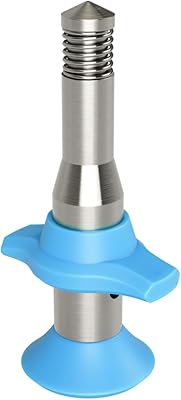
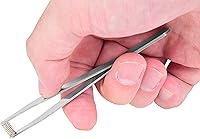
The Seki Japan Ear Hair Trimmer Tweezers is a manual, spring-loaded plucking tool made in Seki, Gifu Prefecture — a city with centuries of precision blade-making heritage. Right away, let's be clear: this is not an electric rotary trimmer. It doesn't buzz, need batteries, or cut hair. It plucks. That distinction matters, because buyers expecting a trimmer-style experience will be caught off guard. What you get is a slim, pen-like stainless steel instrument that feels immediately quality in hand — cold, balanced, and well-finished. It sits in a mid-range price bracket, clearly a step above flimsy plastic tools but without the bulk or battery dependency of powered grooming devices. It has quietly built a loyal following since its 2021 debut.

Features & Benefits

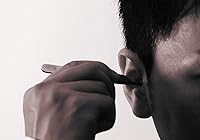
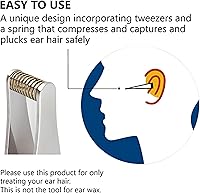
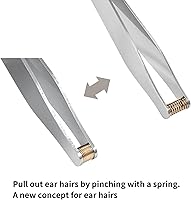
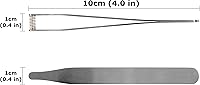
The mechanism itself is simple but satisfying. You compress the spring-loaded body to spread the tweezer tips apart, position them around an ear hair, and release — the spring snaps shut, gripping and pulling the hair in one motion. There are no blades involved, so there's nothing sharp to worry about inside the ear canal. Cleanup is equally straightforward: loosen the spring tension and the trapped hairs fall free, then rinse with water. The all-stainless construction means it won't rust or stain with regular washing. At roughly 10 cm long and just 1 cm wide, this Japanese grooming tool slips into a dopp kit or travel bag without taking up any meaningful space, and it's always ready to use — no charging, no battery swaps.

Best For

This spring-action ear hair tweezer is a natural fit for travelers who want to pack light. There's no charger, no AA batteries to forget, no motor to fail mid-trip. If you're someone who prefers plucking over trimming — meaning you'd rather pull hair from the root for finer, slower regrowth — you'll appreciate this approach. That said, results take a bit more technique than pushing a button on a rotary device. It works best for people dealing with light-to-moderate ear hair, where you can target individual strands precisely. If you're managing dense, coarse growth, an electric trimmer will handle it faster and more comfortably. This tool rewards patience and works especially well for buyers who simply want something well-made that lasts.

User Feedback

Owners of the Seki tweezer tend to be vocal about two things: how solid it feels and how surprised they are that it works without a mirror once you get a feel for it. The spring mechanism draws consistent praise for its tactile feedback and reliable grip. On the flip side, new users do report a learning curve — finding the right compression pressure to catch hair cleanly without multiple attempts takes a few tries. Plucking also isn't painless for everyone; those with sensitive skin may find it mildly uncomfortable, especially at first. Durability rarely comes up as a concern — reviewers routinely mention using the same tool for a year or more without any loss of spring tension or finish quality.

Pros

  • Built from Japanese stainless steel, the Seki tweezer resists rust and holds up through years of daily use.
  • No batteries or charging required — it is always ready, making it one of the most reliable travel grooming tools available.
  • Plucking from the root means results last noticeably longer than trimming, with finer regrowth over time.
  • The slim, pen-sized form factor fits into any toiletry bag, pocket, or travel kit without adding bulk.
  • No sharp blades means a meaningfully lower risk of nicks or cuts inside the ear canal.
  • Hair ejection after use is quick — release the spring tension and trapped hairs simply fall away.
  • Once you learn the angle, many users find they can groom effectively without needing a mirror.
  • Crafted in Seki, Gifu Prefecture, the manufacturing origin adds genuine credibility to the build quality claims.
  • Significantly less maintenance than electric trimmers — no cleaning heads, no replacement parts, just a quick rinse.

Cons

  • There is a real learning curve: new users often need several sessions to master the right compression pressure.
  • Plucking is inherently more uncomfortable than trimming, and first-time use can be surprisingly sharp for sensitive skin.
  • Not practical for dense or coarse ear hair — the process becomes tedious and more painful with heavier growth.
  • Only one unit is included, with no carrying case or storage pouch to protect it between uses.
  • The spring mechanism can feel fiddly in poor lighting or when used at an awkward angle.
  • Results depend heavily on user technique, making the experience inconsistent across different buyers.
  • Slower than any electric alternative — not ideal for anyone who wants a quick, effortless grooming routine.

Ratings

Our scores for the Seki Japan Ear Hair Trimmer Tweezers were generated by AI after analyzing thousands of verified global buyer reviews, with active filtering applied to remove spam, bot activity, and incentivized submissions. The breakdown below reflects a transparent picture of how real users experience this tool in day-to-day grooming routines — capturing both the aspects that earn fierce loyalty and the friction points that trip up first-time buyers. Whether the scores skew high or expose genuine limitations, every number here is grounded in what actual owners report.

Build Quality
93%
Reviewers consistently single out the all-stainless construction as the standout characteristic, noting it feels nothing like the lightweight plastic alternatives in the same category. Users who have owned it for over a year report zero degradation in finish or spring response — a consistency that genuinely separates it from budget competitors.
Without a protective case included, the bare steel surface can develop minor scuffs if tossed loosely into a travel bag alongside other grooming items. There are also no finish variations available — buyers who prefer a matte or rubberized grip surface have no alternative to the standard polished silver.
Ease of Use
74%
26%
Once the angle and compression pressure click into place — usually after two or three sessions — most users describe the routine as genuinely quick, often completed in under a minute without needing a mirror. The single-action spring design removes any setup or adjustment between uses, which experienced owners appreciate.
The learning curve is the most consistently cited friction point across the review base. Getting the tweezer tips aligned inside the ear and applying just enough spring tension to catch hair cleanly — without slipping or repeated repositioning — takes practice that frustrates a meaningful share of buyers during early sessions.
Effectiveness
78%
22%
For users with light to moderate ear hair, the spring mechanism pulls cleanly and leaves the area visibly clear once technique is dialed in. Several buyers who switched from electric trimmers noted that this Japanese grooming tool produces cleaner results with no stray hairs left behind at the follicle level.
Effectiveness drops noticeably for users with dense or coarse growth — the mechanism struggles to capture multiple thick hairs simultaneously, making sessions slow and inconsistent. A share of reviewers with heavier ear hair returned to electric trimmers after finding the plucking approach too inefficient for their specific needs.
Comfort and Pain Level
61%
39%
Users already accustomed to plucking describe the sensation as brief and manageable, comparable to a standard eyebrow tweeze. Regular owners also note that sensitivity tends to decrease noticeably after the first few sessions as the skin adjusts, making ongoing maintenance significantly more comfortable than the initial experience.
First-time users with sensitive skin are the most common source of low ratings in this category, with some describing the initial experience as sharper than expected. A few reviewers mention that using the Seki tweezer after a hot shower reduces discomfort — which implicitly suggests the out-of-box experience can feel harsher than it needs to.
Value for Money
82%
18%
Buyers comparing it against electric trimmers — which cost more upfront and require ongoing maintenance — tend to rate the value highly. No replacement heads, no batteries, and no chargers mean the total cost of ownership over one to two years skews meaningfully in favor of this spring-action ear hair tweezer.
Buyers benchmarking it against inexpensive plastic spring tweezers may struggle to justify the price gap without prior experience of how quickly cheaper tools lose tension or develop rough edges. The absence of a carrying case also undercuts the premium positioning slightly at this price tier.
Travel Friendliness
96%
This is where the tool earns its most consistent praise — no batteries to pack, no charger to forget, and a profile slim enough to disappear into any toiletry bag. It clears airport security without any issues and is always ready to use the moment you need it, regardless of where you are.
The only meaningful travel-related criticism is the missing case or sleeve, meaning the bare steel tip can snag on fabric or get lost among smaller items in a packed bag. A simple pouch would resolve this entirely, and its omission feels like an overlooked detail at this price point.
Durability
91%
Long-term durability is one of the clearest points of consensus across the review base. Users reporting daily use over twelve to eighteen months consistently describe unchanged spring tension, finish, and mechanical feel — a level of longevity that is genuinely uncommon in personal care tools at this category tier.
While structural failures are rarely reported, a small number of buyers have noted marginally looser spring tension after extended heavy use — though this appears to be the exception rather than the norm. Replacement parts are also unavailable, so a damaged spring would require purchasing an entirely new unit.
Cleaning and Maintenance
89%
Cleanup is one of the most frictionless aspects of ownership — releasing the spring drops trapped hairs away cleanly, and a quick rinse under warm water takes care of the rest. No disassembly, no cleaning brushes, and no drying instructions beyond basic air drying make it genuinely low-effort to maintain.
No dedicated cleaning tool is included, and buyers with particularly fine or short hairs occasionally find a few stragglers clinging to the spring coil after rinsing. In those cases a soft toothbrush helps, but that is an extra step most buyers do not anticipate needing when they first purchase.
Safety Design
87%
The deliberate absence of sharp edges is something users notice and genuinely appreciate, particularly those who have previously nicked the inside of their ear with scissors or a blade-based trimmer. Several reviewers specifically mention recommending this Japanese grooming tool to older relatives precisely because the risk of accidental cuts is minimal.
The safety profile assumes the user exercises reasonable self-discipline about insertion depth — there is no physical stop or guard to prevent over-insertion of the slim tip. A small number of reviewers note minor irritation from going too deep, which suggests the otherwise thoughtful design relies heavily on user awareness.
Results Longevity
83%
Because hair is removed from the root rather than trimmed at the surface, users consistently report that regrowth takes noticeably longer and comes in finer. Several reviewers specifically cite reduced grooming frequency as the primary reason they have not returned to an electric trimmer after switching to this plucking method.
The longer-lasting results come with a trade-off in session effort — plucking requires more time and technique per sitting than trimming does. For anyone who has not yet mastered the compression angle, sessions can run long enough to partially offset the benefit of less frequent maintenance overall.
Learning Curve
67%
33%
Users who push through the initial awkwardness almost universally report that the process becomes intuitive within a week of regular use. The spring mechanism itself is consistent and predictable by design, meaning the adjustment period is genuinely short-lived rather than an ongoing frustration across months of ownership.
The first few attempts can be discouraging — misaligned tips, insufficient compression pressure, and repeated repositioning make early sessions feel inefficient. Some buyers who tried it once and found it fiddly left negative reviews that appear to reflect a first-impression experience rather than the tool performing at its actual capability.
Hair Capture Precision
76%
24%
For targeted removal of individual strands around the outer ear opening, the narrow tweezer tip performs well, allowing users to isolate and pluck specific hairs without disturbing surrounding ones. This level of targeted precision is something most rotary electric trimmers are structurally incapable of replicating.
Precision becomes a limitation when dealing with clusters of hair that need bulk removal — the mechanism handles them a few at a time rather than clearing an area in a single sweep. Users managing denser growth find this meaningfully slows the overall session compared to a cutting-based alternative.

Suitable for:

The Seki Japan Ear Hair Trimmer Tweezers is the right call for anyone who wants a low-maintenance, no-power grooming tool that genuinely earns its place in a toiletry bag. Frequent travelers will appreciate that it never needs charging, never runs out of batteries, and clears airport security without a second glance. If you already prefer plucking as a hair removal method — whether for eyebrows or anywhere else — the technique here will feel intuitive, and the longer-lasting results compared to trimming are a real advantage. It also suits buyers who care about material quality and provenance: the all-stainless build from Seki, a city historically tied to precision cutlery and blade craft, holds up noticeably better than plastic alternatives. For someone dealing with light to moderate ear hair who wants precise, targeted removal rather than bulk cutting, this Japanese grooming tool delivers exactly that.

Not suitable for:

Anyone expecting a motorized or rotary trimmer experience will be disappointed — the Seki Japan Ear Hair Trimmer Tweezers is a manual plucking device, and that distinction is non-negotiable. If you have dense, coarse ear hair, this spring-action ear hair tweezer will feel slow and potentially painful; an electric trimmer will simply do the job faster and more comfortably in that situation. People with low pain tolerance or very sensitive skin around the ear canal should also approach with caution, since plucking — however controlled — is inherently more uncomfortable than cutting, especially during the first few uses. This tool also requires a bit of patience to learn: getting the compression angle right for clean, single-motion hair capture is not instant. If you want a grab-and-go grooming solution that works perfectly from day one with zero learning curve, this may frustrate you before it wins you over.

Specifications

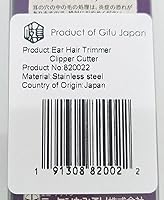
  • Material: The tool is constructed entirely from Japanese stainless steel, chosen for its corrosion resistance and long-term durability.
  • Origin: Manufactured in Seki, Gifu Prefecture, Japan — a city internationally recognized for precision blade and cutlery craftsmanship.
  • Dimensions: The tool measures 3.94″ in length and 0.39″ in width, giving it a slim, pen-like profile.
  • Weight: At approximately 0.494 oz (14 g), the tool is light enough to carry daily without adding noticeable bulk.
  • Power Source: Fully manual with no batteries, charging, or power connection required at any stage of use.
  • Mechanism: A spring-loaded tweezer mechanism opens when compressed and snaps shut upon release to grip and pluck hair.
  • Blade Type: The tool contains no sharp blades or cutting edges; removal is achieved entirely through tweezer-based plucking.
  • Removal Method: Hair is removed by plucking from the root, which typically produces longer-lasting results than surface-level trimming.
  • Color: The tool has a uniform silver finish consistent with its all-stainless-steel construction.
  • Maintenance: After use, releasing the spring tension allows trapped hairs to fall free; the tool can then be rinsed with water and air-dried without risk of rusting.
  • Package Contents: Each purchase includes one unit only; no carrying case, pouch, or additional accessories are included.
  • Rust Resistance: The stainless steel composition makes the tool resistant to corrosion from water exposure during regular cleaning.
  • Form Factor: The compact, cylindrical shape allows the tool to fit discreetly inside a toiletry bag, dopp kit, or shirt pocket.
  • First Available: The product was first listed for sale in August 2021 and has maintained a consistent presence in the grooming category since.

Related Reviews
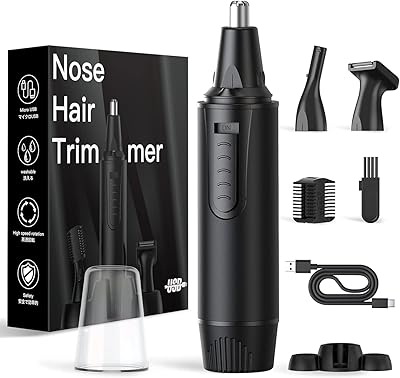
XOOMRSCP 3580 Nose & Ear Hair Trimmer
81%
88%
Comfort & Painlessness
82%
Trimming Performance
76%
Battery Life
91%
Waterproofing & Cleaning
86%
Noise Level
More
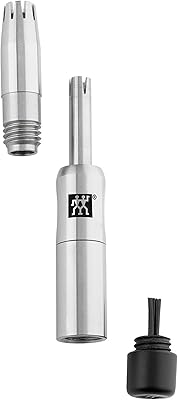
ZWILLING Manual Nose and Ear Hair Trimmer
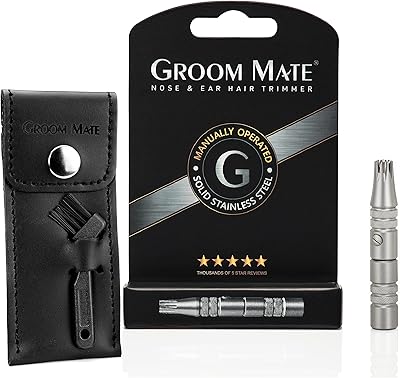
84%
93%
Build Quality
81%
Trimming Performance
88%
Comfort & Skin Safety
72%
Ease of Use
67%
Value for Money
More
Groom Mate Platinum XL Nose Hair Trimmer
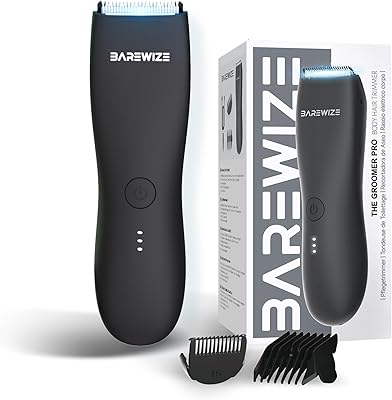
84%
92%
Build Quality
94%
Durability and Longevity
88%
Trimming Performance
69%
Ease of Use
91%
Portability
More
BAREWIZE Body Hair & Pubic Hair Trimmer HC-W050

86%
91%
Trimming Performance
88%
Battery Life
84%
Ease of Use
95%
Waterproof Capability
86%
Build Quality
More
Rida Hair Research Institute Hair Mask for Damaged Hair
86%
88%
Repair Effectiveness
85%
Frizz Control & Smoothness
87%
Hydration & Moisture
91%
Ease of Application
84%
Repair for Heat Damaged Hair
More
Risina Facial Hair Removal Trimmer
85%
89%
Effectiveness for Facial Hair Removal
92%
Gentleness on Sensitive Skin
85%
Ease of Use
74%
Battery Life
95%
Waterproof Functionality
More
RESUXI Cordless Hair Trimmer for Men
87%
88%
Overall Performance
91%
Precision of Cuts
85%
Battery Life
90%
Ease of Use
89%
Quiet Operation
More
SUERBEATY Manual Nose Hair Trimmer for Men
86%
88%
Effectiveness of Trimming
91%
Noise Level
85%
Ease of Use
87%
Skin Sensitivity
90%
Portability and Travel Friendliness
More
EQUADOSE Tweezy Nose & Ear Hair Remover
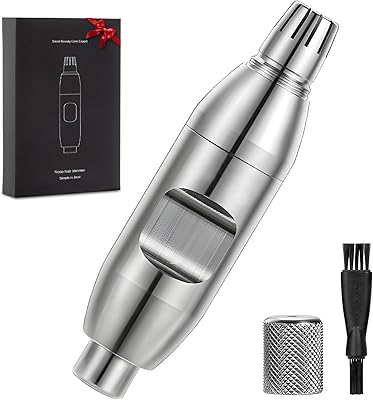
76%
78%
Hair Removal Effectiveness
66%
Ease of Use
71%
Comfort & Pain Level
86%
Build Quality
82%
Regrowth Reduction
More
Swissklip Manual Stainless Steel Nose Hair Trimmer
85%
88%
Blade Sharpness
91%
Ease of Use
86%
Safety & Comfort
83%
Build Quality
89%
Cleaning & Maintenance
More

FAQ

It is a tweezer, not a trimmer. The Seki Japan Ear Hair Trimmer Tweezers uses a spring-loaded plucking mechanism — there are no rotating blades, no motors, and no cutting of any kind. If you were expecting something like a battery-powered rotary device, this works very differently, so it is worth setting that expectation before you buy.

Plucking always carries some level of discomfort, and this tool is no exception. That said, most users describe it as a brief, mild sensation rather than anything sharp or prolonged. Sensitivity varies quite a bit from person to person, so if you have very sensitive skin around the ear canal, the first few uses may be more noticeable until you get comfortable with the technique.

Many users genuinely do use it without a mirror once they get the angle down. The learning curve is real — the first session or two will probably go better with a mirror — but after that, most people find they can navigate by feel alone. The compact shape helps a lot here.

It is straightforward. Release the spring tension fully and the captured hairs will drop away on their own. After that, run the tip under warm water and let it air dry. The stainless steel construction means there is no concern about water damage or rust from regular rinsing.

It should not rust under normal bathroom conditions. The Japanese stainless steel it is made from is specifically chosen for corrosion resistance, and many reviewers report keeping it in bathrooms for months or years without any visible degradation. Just make sure it is not sitting in standing water for extended periods.

Because this Japanese grooming tool removes hair from the root rather than cutting it at the surface, regrowth tends to be finer and takes longer to become noticeable — similar to the difference between waxing and shaving. Most users find they need to groom less frequently compared to trimming, though the exact timeline varies depending on individual hair growth rates.

The tool is designed without any sharp edges, which reduces the risk of nicks or cuts compared to scissors or blade-based trimmers. That said, basic common sense applies — avoid pushing the tips too deep into the ear canal, and work at the outer edge where ear hair is most visible and accessible.

The slim tip and spring mechanism make it technically usable for other types of coarse hair removal, and some buyers do use the Seki tweezer on nose hair or stray eyebrow hairs. It is marketed specifically for ears, but the design is versatile enough that dual use is practical for anyone comfortable with the plucking method.

Yes, there is a short but real learning curve. The main thing to dial in is how much compression pressure to apply — too little and the spring does not grip hair cleanly, too much and you end up repositioning repeatedly. Most users report that by the second or third session they have found their rhythm and the process becomes quick and consistent.

If you are comparing it to a basic plastic spring tweezer, the difference is noticeable in both feel and longevity. Cheaper tools tend to lose spring tension over time or develop rough edges that make them less comfortable to use. This spring-action ear hair tweezer is built to last considerably longer, so even though the upfront cost is higher, most buyers find the value holds up well over months or years of regular use.