Overview

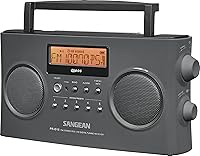
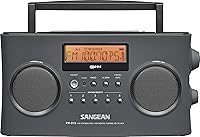
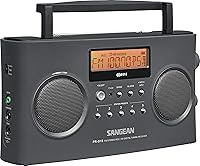
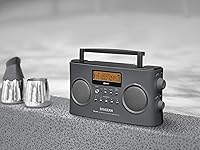
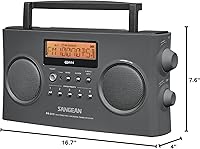
The Sangean PR-D15 AM/FM Portable Radio sits in a comfortable mid-range space for listeners who care about actual reception quality rather than Bluetooth or app integration. Physically, it has a classic tabletop aesthetic — gray, understated, and solid-feeling without being chunky. It runs on six C batteries or plugs into the wall via AC adapter, and crucially, it includes a built-in battery charger, so you're not constantly swapping cells. RDS support means compatible FM stations can push song or station name data to the backlit display — a small but appreciated touch. Sangean is a niche brand, but among dedicated radio listeners, it carries real credibility.

Features & Benefits

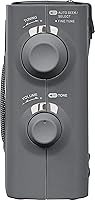
The standout is the 200mm ferrite antenna — longer than what most comparably sized portables include, and the difference shows when you're pulling in a weaker AM station from 60 miles out. Fine tuning is manual and precise: 1 kHz steps on AM, 10 kHz on FM, giving real control when auto-seek keeps sliding past your station. Ten presets split across AM and FM is workable for daily habits, even if it frustrates anyone with a longer list. The rotary treble and bass controls plus a loudness toggle are genuinely useful, not decorative. A stereo/mono switch is a quiet hero feature — flip it when FM reception gets shaky and you keep listenable audio instead of static.

Best For

This tabletop radio is a natural fit for AM enthusiasts, particularly those in rural or semi-rural areas where signal reliability matters more than having 50 preset slots. It earns a regular spot on a nightstand too — the alarm wakes you with either a radio station or a gradual buzzer, and the sleep timer lets you drift off to a talk show without leaving it running all night. For emergency preparedness, the combination of AC and battery power with an onboard charger makes it a sensible kit inclusion. It also suits listeners who are simply done with apps, subscriptions, and touchscreen menus — everything here is a knob or a physical button.

User Feedback

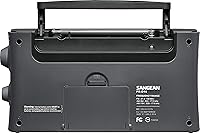
Among owners of the PR-D15, AM reception quality comes up repeatedly as the headline strength — many report it outperforms pricier competitors on weak signals, which is the core promise. Build quality gets consistent praise too; the buttons feel deliberate rather than cheap. The criticism, though, is fair: ten total presets is genuinely limiting if you rotate between several markets or genres, and the speaker, while clear at moderate volumes, will not fill a room. C batteries are less common than AA cells, adding a minor but real inconvenience. A handful of buyers also note the battery compartment is fussier to access than it should be. Realistic expectations go a long way — this is a focused, well-made radio, not a do-everything device.

Pros

  • AM reception quality stands out clearly against most competing portables in the same size class.
  • The 200mm ferrite antenna pulls in weak signals that smaller radios give up on entirely.
  • Manual fine tuning lets you lock onto a station precisely instead of fighting an auto-scan that overshoots.
  • Built-in battery charger removes the hassle of constantly buying or swapping disposable cells.
  • Rotary tone controls are tactile and responsive — genuinely useful for shaping sound on AM broadcasts.
  • The stereo/mono switch is a practical tool for salvaging listenable audio on borderline FM signals.
  • Build quality feels solid; buttons have good travel and the unit does not feel fragile or toy-like.
  • Dual power sources make this tabletop radio a reliable choice when grid power is unavailable.
  • RDS station data displays cleanly on the backlit LCD, adding useful context during FM listening.
  • Alarm and sleep timer work reliably, making the PR-D15 a low-fuss bedside companion.

Cons

  • Only ten total presets is a real limitation for listeners who regularly tune more than a handful of stations.
  • C batteries are less widely stocked than AA cells, adding inconvenience for battery-dependent users.
  • The battery compartment design has drawn repeated complaints about being awkward to open and close.
  • Speaker volume tops out at a level suited for personal listening — not enough to fill even a small room.
  • No Bluetooth, DAB, shortwave, or internet radio means this Sangean portable covers AM/FM and nothing more.
  • At its price tier, buyers expecting premium audio output may find the sound reproduction merely adequate.
  • The gray aesthetic is practical but plain — not a unit that draws compliments on a shelf or countertop.
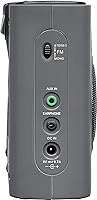
  • No headphone jack mentioned in specs, limiting private listening options for shared or quiet environments.

Ratings

The scores below reflect our AI-driven analysis of verified global user reviews for the Sangean PR-D15 AM/FM Portable Radio, with spam, bot-generated, and incentivized feedback actively filtered out before scoring. Each category is rated on real-world performance as reported by confirmed buyers, with both consistent strengths and recurring frustrations weighted transparently. Where opinions diverged, the score reflects the balance of evidence rather than defaulting to the positive.

AM Reception Quality
93%
This is the category where the PR-D15 earns its reputation most convincingly. Listeners in rural towns and fringe-coverage areas consistently report pulling in stations that cheaper radios simply cannot lock onto, crediting the long ferrite antenna bar. For AM talk radio devotees, this alone justifies the price.
A small number of users in areas with significant electrical interference — near power lines or older appliances — report that even this antenna cannot fully overcome local noise. Reception quality is exceptional by portable standards, but it is not magic in genuinely hostile environments.
FM Reception Quality
81%
19%
FM performance is clean and reliable in most suburban and urban settings, with RDS station data displaying correctly on compatible broadcasts. The stereo/mono switch is a practical tool that experienced FM listeners appreciate — flipping to mono on a borderline signal recovers listenable audio rather than static.
FM does not stand out the way AM does; at this tier, several competing portables match it without much effort. The unit also lacks an external FM antenna port, so users in weak-signal buildings have no hardware workaround beyond repositioning the radio.
Build Quality
84%
Owners repeatedly note that the PR-D15 feels more solidly assembled than radios at lower price points — buttons have firm, deliberate travel, the housing does not flex under light pressure, and the overall impression is of something built to last years rather than months. Several buyers report units still functioning perfectly after five or more years of daily use.
The battery compartment is a recurring weak point; multiple users describe it as stiff or fiddly to open and close compared to the rest of the unit. It is a minor but consistent complaint that suggests the compartment design did not receive the same attention as the rest of the build.
Ease of Use
88%
Physical knobs and buttons make this tabletop radio genuinely intuitive — there are no menus to navigate or settings buried in sub-screens. Older listeners and those who have grown tired of touchscreen interfaces specifically call out how straightforward it is to tune, adjust volume, and set the alarm without consulting a manual.
The manual fine-tuning approach, while precise, requires a bit more patience than auto-scan for listeners who are not used to it. New users occasionally overshoot their target station before getting a feel for the tuning knob sensitivity.
Power Flexibility
87%
The combination of AC adapter operation and battery backup is exactly what emergency-preparedness buyers want, and the built-in charging circuit means rechargeable C cells stay topped up during everyday use. Owners who keep the radio plugged in at home appreciate that it is always ready to go cordless when needed.
The dependency on C batteries is a friction point that comes up often — they are bulkier and harder to find quickly than AA cells. Users who do not already own rechargeable C batteries face an additional upfront purchase to make the charging feature worthwhile.
Audio Output Quality
67%
33%
For a portable radio, the speaker handles voice-heavy content like talk radio and news well — clarity at moderate volumes is solid, and the rotary treble and bass controls let you nudge the sound toward your preference rather than accepting whatever the default profile delivers.
Maximum volume is limited enough that background noise in a kitchen or workshop can easily compete with it. Music sounds compressed and thin at higher volumes, and buyers expecting anything approaching hi-fi output from the speaker will be disappointed — this is a spoken-word radio, not an audio performer.
Tone Controls
79%
21%
Having actual rotary treble and bass controls on a portable radio this size is uncommon and genuinely appreciated by users who listen for extended periods. The loudness toggle adds a bit of perceived warmth at lower volumes, which makes late-night listening more comfortable without waking others.
The range of adjustment is modest — these controls refine the sound rather than transform it, and users expecting dramatic EQ flexibility will find the effect subtle. It is more about smoothing rough edges than sculpting the audio from scratch.
Preset & Station Management
54%
46%
For listeners with a tight rotation of a handful of favorites, the ten presets across AM and FM cover daily habits without issue. Saving and recalling stations is straightforward, and the backlit display makes identifying presets easy in dim bedroom conditions.
Ten presets total is the most consistently cited limitation across user feedback, and it is hard to argue otherwise. Anyone who travels, listens across multiple formats, or simply has more than five stations per band will find themselves manually retuning more than they would like — and there is no workaround built into the device.
Alarm & Sleep Timer
82%
18%
The alarm works reliably as a daily wake-up tool, and the option to choose between a radio station or the gradual HWS buzzer gives users a meaningful choice based on how they prefer to wake up. The sleep timer pairs naturally with the alarm for a complete bedside experience that owners appreciate.
Alarm customization is limited to a single time setting — there is no option to set different alarms for weekdays versus weekends, which frustrates users who use the radio as their primary alarm. It covers the basics well but does not compete with dedicated clock radios on scheduling flexibility.
Portability
73%
27%
At 2.3 pounds and with a footprint that fits comfortably under an arm, the PR-D15 moves between rooms without effort, and battery operation makes it genuinely usable away from outlets. Users who bring it to a porch, garage, or garden note it handles outdoor use without complaint.
Six C batteries add meaningful bulk and weight compared to AA-powered portables, and the unit is not pocket-sized by any measure. It is best described as room-to-room portable rather than travel-bag portable — the form factor suits a home more than a backpack.
Value for Money
76%
24%
For buyers whose primary need is dependable AM reception and a durable, no-fuss radio that lasts, the PR-D15 delivers on what it promises. The build quality, antenna performance, and feature set hold up well against the price point when compared to what budget alternatives actually deliver in practice.
The limited preset count and modest speaker output are harder to accept at this price tier when some competitors offer more presets and louder playback for less. Buyers who are not specifically prioritizing AM reception may find the value proposition less convincing than dedicated AM enthusiasts do.
Display & Readability
78%
22%
The backlit LCD is clear and easy to read in typical indoor lighting, and the RDS text display works cleanly when a station supports it. Users who set the alarm at night specifically mention that the backlight makes reading the display comfortable without being intrusive.
The display is functional rather than impressive — it shows what you need without any modern polish. In direct sunlight or bright outdoor conditions, contrast can drop enough to make reading the frequency less comfortable, which matters for users who take the radio outside.
Setup & Initial Configuration
86%
Out of the box, the PR-D15 is ready to use almost immediately — plug it in or insert batteries, tune to a station, and you are listening within minutes. The owner's manual is clear enough that even users who dislike reading instructions can set the alarm and presets without frustration.
Manual tuning to save presets takes a few minutes of trial and error for first-time users unfamiliar with the process. It is not complicated, but there is a brief learning curve compared to digital radios where you press a button and the radio auto-populates a preset list.

Suitable for:

The Sangean PR-D15 AM/FM Portable Radio is purpose-built for listeners who take reception seriously and have little patience for radios that drop signals or muddy AM broadcasts. It makes the most sense for anyone living outside dense urban centers, where AM coverage is inconsistent and a long ferrite antenna actually earns its keep. Dedicated talk radio and news listeners who want a dependable bedside unit will get real daily value from the alarm, sleep timer, and tone controls — these are not afterthoughts here. It also works well as part of an emergency preparedness setup: the combination of AC and battery power, plus the onboard charger, means you are not scrambling for fresh cells when the power goes out. Anyone who simply wants a physical radio with knobs and buttons — no apps, no accounts, no pairing — will find this tabletop radio genuinely refreshing.

Not suitable for:

The Sangean PR-D15 AM/FM Portable Radio is a poor match for listeners who want more than ten preset stations, particularly those who travel across regions and rely on a deep preset library to jump between markets quickly. If you are expecting room-filling sound for a kitchen or living space, you will be underwhelmed — the speaker is sized for personal listening, not ambient background audio for a group. Buyers looking for Bluetooth connectivity, internet radio, DAB, or shortwave bands will need to look elsewhere entirely, as this model does not offer any of those. The reliance on C batteries can also be a friction point; they are bulkier and harder to find than AA cells, which matters if you rely on battery power regularly. If cutting-edge features or modern connectivity are anywhere on your checklist, the PR-D15 is simply not designed with you in mind.

Specifications

  • Dimensions: The unit measures 10.25″ long by 2.5″ wide by 5.25″ tall, making it compact enough for a nightstand or kitchen counter without taking up excessive space.
  • Weight: At 2.3 pounds without batteries, the PR-D15 is light enough to move between rooms but substantial enough to feel well-built in hand.
  • Power Source: Operates on six C batteries or via the included AC adapter, with a built-in battery charger that recharges rechargeable C cells while the unit is plugged in.
  • AM Antenna: A 200mm internal ferrite bar antenna is built into the chassis, providing enhanced sensitivity for AM reception compared to shorter antennas found in many competing portables.
  • Tuning Steps: AM tuning adjusts in 1 kHz increments and FM tuning in 10 kHz increments, allowing precise manual station selection beyond what auto-seek typically offers.
  • Station Presets: Ten presets are available in total, divided evenly between five AM and five FM slots for quick access to frequently used stations.
  • Display: A backlit LCD screen shows frequency, RDS station data on compatible FM broadcasts, and alarm or timer status in low-light conditions.
  • RDS Support: Radio Data System support enables compatible FM stations to send text information such as station name or program title directly to the display.
  • Audio Controls: Separate rotary treble and bass knobs plus a loudness on/off toggle give the listener manual control over the tonal character of the audio output.
  • Stereo Output: The unit receives FM in stereo and includes a dedicated stereo/mono switch to reduce noise on weaker signals without losing the broadcast entirely.
  • Alarm Function: The built-in alarm can be set to wake via a chosen radio station or via the HWS (Humane Wake System) buzzer, which gradually increases in volume.
  • Sleep Timer: A programmable sleep timer allows the radio to automatically power off after a set duration, useful for falling asleep to a talk station or music.
  • Radio Bands: Reception covers the standard AM and FM bands only; this model does not include shortwave, DAB, or internet radio capabilities.
  • Color: Available in gray with a classic, understated industrial design suited to home or office environments.
  • Included Items: Each unit ships with an AC power adapter and an owner's manual; rechargeable C batteries are not included and must be sourced separately.
  • Connectivity: The PR-D15 uses radio frequency reception only and does not support Bluetooth, Wi-Fi, auxiliary input, or any wired external antenna port.
  • Manufacturer: Designed and sold by Sangean America, Inc., a brand with a long-standing focus on portable and tabletop radios across consumer and enthusiast markets.
  • Model Number: The official model designation is PR-D15, and the product has been continuously available since its introduction in April 2013 without being discontinued.

Related Reviews
Sangean PR-D18RD AM/FM Portable Digital Radio
78%
91%
AM Reception Quality
83%
FM Reception Quality
88%
Alarm System
79%
Build Quality
86%
Portability
More
Sangean PR-D5 Portable AM/FM Radio
75%
93%
AM Reception
81%
FM Reception
74%
Audio Quality
84%
Build Quality
91%
Ease of Use
More
Sangean PR-D7 Digital Portable Radio
83%
85%
Sound Quality
80%
Portability
88%
Battery Life
90%
Ease of Use
82%
Alarm Functionality
More
Sangean H205TQ Portable AM/FM/Weather Alert Radio
85%
88%
Build Quality & Durability
81%
Sound Quality
90%
Ease of Use
72%
FM Reception
85%
Battery Life
More
Philips TAR1506 Portable AM/FM Radio
79%
93%
Ease of Use
78%
FM Reception Quality
54%
AM Reception Quality
91%
Portability
61%
Build Quality
More
GPX R602B Portable AM/FM Clock Radio
78%
93%
Ease of Use
88%
AM Reception
58%
FM Reception
86%
Clock Accuracy & Reliability
67%
Build Quality & Durability
More
Yewrich Portable AM/FM Bluetooth Radio
78%
84%
AM/FM Reception
91%
Ease of Use
67%
Bluetooth Performance
63%
Speaker Quality
78%
Build Quality
More
Sangean WR-12 AM/FM Radio
82%
88%
Sound Quality
91%
Build Quality
84%
Ease of Use
70%
Tuning Accuracy
79%
Connectivity
More
Sangean LB-100 Rugged AM/FM Radio
77%
93%
Build Quality
88%
Reception Quality
86%
Speaker Performance
91%
Durability Over Time
84%
Ease of Use
More
Jazmm Portable AM/FM/SW Pocket Radio
74%
83%
FM Reception Quality
54%
Shortwave Performance
88%
Battery Life
71%
AM Reception Quality
62%
Build Quality & Durability
More

FAQ

It runs fine on AC power alone using the included adapter — you do not need batteries installed at all for regular home use. Batteries are there for portability or as a backup when the power goes out.

The PR-D15 requires six C batteries. They are a standard size but noticeably less common on store shelves than AA or AAA cells, so it is worth stocking up or ordering them online in advance, especially if you plan to use battery mode often.

Yes, that is one of the more practical features of this tabletop radio — it has a built-in charging circuit that will recharge NiMH rechargeable C batteries while the unit is connected to AC power. Just make sure you are using rechargeable cells, not standard alkaline ones, which should never be charged.

Noticeably better in most cases, particularly on weaker or distant stations. The 200mm ferrite antenna is longer than what you find in budget portables, and the manual fine-tuning lets you lock onto a signal that auto-scan might skip past. Owners in rural areas specifically call this out as the reason they chose this model.

For personal listening at a desk, in a bedroom, or on a kitchen counter, the volume is comfortable and clear. It is not designed to project across a large room or compete with background noise in a busy space — if that is what you need, you would be better served by a larger unit.

The official product specifications do not list a headphone jack among the features or included connections. If private listening is a priority for you, it is worth confirming with the seller before purchasing.

You can set the alarm to wake you with either a chosen radio station or the HWS buzzer, which ramps up gradually rather than blasting at full volume immediately. Owners generally report it as reliable for everyday use, and the sleep timer pairs well with it if you like falling asleep to radio.

No — this Sangean portable covers AM and FM only. If shortwave or digital radio bands are on your list, you will need to look at a different model. The PR-D15 is intentionally focused on doing AM/FM well rather than covering every possible band.

RDS lets compatible FM stations send text data — typically the station name or the current program title — to the display. It is a minor convenience rather than a headline feature: handy when you want to confirm what station you have landed on, but not something that affects the listening experience itself.

It is a solid option for that use case. The dual power setup means it still works when the grid is down, and the built-in charger means your rechargeable batteries stay topped up during normal use so they are ready when you actually need them. Its straightforward, all-physical interface also means there is nothing to configure or update in a stressful situation.

Where to Buy