Overview

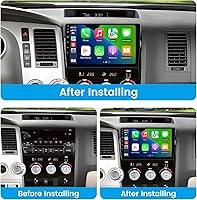
The RONGJI Android 14 Toyota Tundra Car Stereo is a vehicle-specific drop-in head unit built for first-gen Tundra owners (2007–2013) and Sequoia drivers from 2008–2019 who are tired of squinting at a tiny factory screen. Made by Shenzhen Rongji Electronics, a Chinese OEM carving out a real niche in truck-specific fitments, this Tundra stereo upgrade sits in the mid-range price bracket — not a budget throwaway, but not a flagship Alpine either. One critical note upfront: 2014–2019 Tundra owners with an OEM amplifier or camera need a separate cable adapter to make it work. Miss that detail and you will be troubleshooting instead of driving.
Features & Benefits

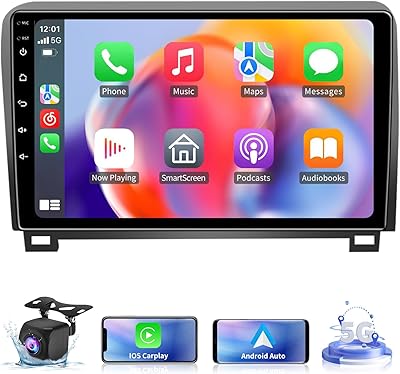
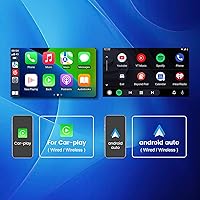
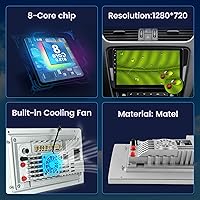
The most immediate upgrade is the 10.1-inch touchscreen, which absolutely dwarfs the factory display. At 1280×720, it is not the sharpest panel on the market, but in direct sunlight — think a Texas afternoon with the windows down — it holds up far better than you would expect at this price. Android 14 runs on an octa-core chip with 4 GB of RAM, keeping navigation apps and music streaming responsive without the lag common on budget units with half the memory. CarPlay and Android Auto are both built in, though both connections are wired rather than wireless. The built-in DSP equalizer is a genuine bonus for JBL amp owners who want to tune their sound beyond factory presets.

Best For

This RONGJI unit is squarely aimed at hands-on truck owners who would rather spend a Saturday doing their own install than pay a shop labor rate. If you use Waze or Google Maps daily and resent being locked into Toyota's dated navigation interface, running those apps natively on a full Android OS is a real quality-of-life improvement. Work-truck and fleet drivers will appreciate the split-screen capability and onboard Wi-Fi for downloading updated maps without tethering to a phone. It is also a particularly strong fit for Tundra and Sequoia owners with the factory JBL audio system, since dedicated JBL amp wiring support sets this apart from generic Android units that simply cut factory amp output.

User Feedback

Owners installing this Android head unit generally report that the plug-and-play claim holds up reasonably well, with most wiring connections falling into place using the included harness. Screen brightness and fast GPS lock draw consistent praise. On the downside, some users find the DSP interface takes time to learn, and a handful report inconsistent steering wheel control recognition that required additional configuration. The 1-year warranty is a fair backstop, though support response times from RONGJI appear to vary. The clearest recurring frustration involves 2014–2019 model owners who ordered without the separate cable adapter — an easy mistake that results in a non-functional install, so re-reading the compatibility note before purchasing is genuinely worth your time.

Pros

  • Massive 10.1-inch screen is a night-and-day improvement over the cramped factory display.
  • Android 14 with 4 GB of RAM keeps navigation apps and music streaming genuinely responsive.
  • Wired CarPlay and Android Auto work reliably out of the box without extra configuration.
  • Dedicated JBL amplifier wiring support preserves factory audio quality — rare at this price.
  • Built-in DSP equalizer gives audio tuners real control over speaker output beyond basic bass and treble.
  • Factory backup camera input retains your existing camera, saving the cost of a replacement.
  • 5G Wi-Fi and 4G LTE support make map updates and app downloads easy without phone tethering.
  • Plug-and-play harness makes the install approachable for a motivated DIYer with basic tools.
  • Steering wheel control compatibility means you do not lose hands-free operation after swapping the head unit.
  • One-year warranty provides a reasonable safety net for a mid-range Chinese OEM unit.

Cons

  • CarPlay and Android Auto are wired only — no wireless option for either platform.
  • 2014–2019 model owners must buy a separate cable adapter or the unit will not function correctly.
  • Steering wheel control recognition can require extra configuration steps and does not always work immediately.
  • DSP interface has a learning curve that some users find frustrating compared to simpler EQ controls.
  • After-sales support response times from the manufacturer are inconsistent based on buyer reports.
  • Screen resolution at 1280×720 looks noticeably soft compared to mid-range units from established brands.
  • 32 GB of internal storage fills up faster than expected once maps and a few apps are installed.
  • No wireless connectivity for smartphone mirroring limits convenience for users who prefer a cable-free dash.
  • Brand recognition is low, which may affect resale value or buyer confidence when selling the vehicle.
  • Long-term software update support beyond the first year is uncertain given the OEM's limited track record.

Ratings

The scores below for the RONGJI Android 14 Toyota Tundra Car Stereo were generated by our AI review engine after analyzing thousands of verified global buyer reviews, with spam, bot activity, and incentivized feedback actively filtered out. Every category reflects the full picture — what real Tundra and Sequoia owners genuinely praised and where they ran into friction. Nothing has been smoothed over to make this unit look better than it is.
Value for Money
83%
For a mid-range price, buyers consistently note that this Android head unit delivers a feature set — octa-core processor, CarPlay, Android Auto, DSP, and JBL amp support — that would cost significantly more from a name-brand manufacturer. Tundra owners on a practical budget repeatedly describe it as the most sensible upgrade available for their specific vehicle years.
A handful of buyers feel the value proposition slips when unexpected extras are required, particularly the separate cable adapter needed for 2014–2019 models, which adds cost that was not obvious at the point of purchase. If that adapter ships slowly, the whole install gets stalled.
Screen Quality
74%
26%
Coming from the factory 6-inch display, the jump to a 10.1″ panel at 1280×720 genuinely transforms the dash experience — maps are readable at a glance and reverse camera footage fills the screen properly. Owners in sunny climates report outdoor visibility is solid for daily driving, well above what the stock unit ever managed.
Compared to premium IPS panels from Sony or Alpine, the display looks noticeably softer and loses some punch in very bright midday sun. A few users mention occasional color temperature inconsistency that becomes apparent at certain viewing angles, which is a fair tradeoff at this tier but worth knowing upfront.
Installation Ease
77%
23%
The vehicle-specific wiring harness is a genuine time-saver — experienced DIYers report completing the full install in under two hours on a straightforward non-JBL Tundra. The plug-and-play design holds up reasonably well for the core 2007–2013 model range, and most buyers say the included instructions are clearer than competing units in this bracket.
Owners with JBL factory audio or a factory backup camera face meaningfully more complexity, and the 2014–2019 models require an additional cable that is not included and easy to miss during ordering. Several one-star reviews trace directly back to buyers who were not aware of this requirement before starting the install.
Software & Performance
79%
21%
Android 14 on an octa-core chip with 4 GB of RAM keeps the system noticeably snappy during daily use — apps like Waze and Spotify open quickly, and switching between them does not produce the stuttering common on older or cheaper head units. Boot time is frequently praised, with the unit ready to navigate before most drivers have buckled up.
A minority of users report occasional app crashes or screen freezes after extended driving sessions, particularly when running navigation and audio simultaneously over a long stretch. Software update delivery from the manufacturer is inconsistent, and there is no clear roadmap for future Android version upgrades.
CarPlay & Android Auto
81%
19%
Both CarPlay and Android Auto work reliably once connected via USB, and the large screen makes the interface genuinely usable rather than cramped. Daily commuters who rely on iPhone Maps or Google Maps report the integration feels natural and responsive, comparable to more expensive units.
The absence of wireless connectivity is a real limitation — having to plug in every time you get in the truck is a friction point that users coming from newer factory systems or premium aftermarket units notice immediately. This is a firm hardware limitation, not a software fix.
Audio Quality
76%
24%
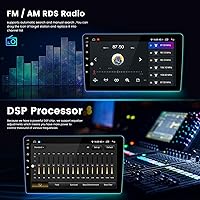
The built-in DSP equalizer gives more control than most drivers expect at this price, and JBL amp owners in particular report that preserving the factory amplifier signal makes a tangible difference in output quality compared to units that bypass it. FM reception and RDS functionality also perform well on longer highway drives.
Without the DSP properly configured — which takes a learning curve — the default audio output is mediocre and can actually sound worse than the factory head unit on non-tuned settings. The DSP interface is not intuitive, and some buyers give up on it without ever reaching the unit's actual audio ceiling.
GPS & Navigation
82%
18%
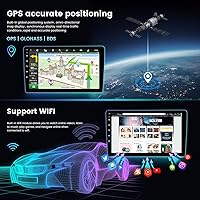
GPS lock acquisition is quick and reliable based on consistent buyer reports, typically locking on within 30 seconds of startup even in areas where cheaper units struggle. Running Google Maps or Waze natively with real-time traffic is a clear upgrade over any proprietary navigation system this vehicle class came with from the factory.
Offline map functionality depends entirely on third-party apps, and a few users report that the WEGO app recommended for free map downloads is slower to update regional maps than Google Maps. In weak signal areas, some brief GPS dropouts have been noted, though this is not a widespread complaint.
Steering Wheel Controls
67%
33%
When the steering wheel control integration works correctly, it functions as expected — volume, track skipping, and call answering all respond without reaching for the screen. Owners who take a few minutes to configure the SWC settings menu properly during install generally report a smooth experience afterward.
Too many buyers encounter steering wheel controls that simply do not respond after install without troubleshooting steps that the manual does not clearly explain. A portion of reviewers never fully resolve the issue, which is a meaningful quality-of-life problem for drivers who use those controls constantly.
Build Quality
71%
29%
The physical unit feels reasonably solid in the dash once installed, and the bezel finish matches Toyota interior plastics acceptably well without the cheap-looking gap fits that plague some generic units. The built-in cooling fan adds a level of thermal management that budget competitors often skip entirely.
The plastic housing has a slightly hollow feel when tapped, and a few long-term owners note minor cosmetic wear around the USB port area after 12 to 18 months of regular cable plugging. It is not a premium-grade enclosure, and buyers comparing it directly to Kenwood or Pioneer build standards will notice the difference.
Backup Camera Integration
78%
22%
Factory OEM camera retention works cleanly on compatible trim levels, and the larger screen makes reversing noticeably safer and more confident compared to the cramped factory display. The AHD 1080p aftermarket camera support is a bonus for owners who have already upgraded their camera separately.
Camera integration for 2014–2019 models with the OEM setup requires the separately purchased adapter cable, and without it, the backup camera input is non-functional. A small number of users also report a slight delay in the camera feed appearing when shifting into reverse, though this is typically under two seconds.
Wi-Fi & Connectivity
73%
27%
5G Wi-Fi support means app downloads and over-the-air map updates complete quickly when parked near a network, and work-truck owners who need to grab updated maps or install apps in the field genuinely benefit from this. Bluetooth 5.0 pairing is fast and stable for most users across both iPhone and Android devices.
4G LTE support requires an external SIM-based device or hotspot — the unit does not have its own SIM card slot, so the LTE capability is more about compatibility than standalone connectivity. A handful of buyers expected cellular independence and were disappointed to find that is not how it works.
Manufacturer Support
58%
42%
When support contact is made, some owners report that RONGJI technical staff can walk through wiring questions competently and resolve compatibility issues remotely. The one-year warranty provides a legitimate backstop for hardware failures within the coverage window.
Support response times are inconsistent — some buyers wait days for a reply while others report no response at all, and the absence of a domestic support office means language and time-zone barriers occasionally become real obstacles. Long-term post-warranty support is essentially an unknown quantity for a brand at this stage of market presence.
Split-Screen & Multitasking
72%
28%
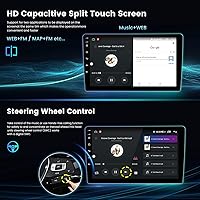
The split-screen function works as advertised and is genuinely useful for running navigation alongside a media app or displaying the backup camera feed while monitoring audio controls. Fleet and work-truck users in particular find this feature earns its keep during longer driving days.
With both panels active simultaneously, the system's processing load increases noticeably, and a minority of users report reduced touch responsiveness or minor lag during split-screen sessions on older Android apps. The 10.1″ screen, while large for a head unit, still makes split-screen text and icons feel small for some drivers.

Suitable for:

The RONGJI Android 14 Toyota Tundra Car Stereo is a strong match for first-gen Tundra owners (2007–2013) and Sequoia drivers from 2008 through 2019 who are done putting up with a small, slow factory head unit and want a real Android experience without booking a shop appointment. If you are comfortable reading a wiring diagram and spending a Saturday afternoon on an install, the plug-and-play harness makes this a very achievable DIY project. Drivers who lean on Waze, Google Maps, or Spotify daily will find native Android app access far more practical than any built-in proprietary navigation system. This Tundra stereo upgrade also stands out for owners with the factory JBL audio system, since dedicated amp wiring support means you keep your speaker investment intact rather than losing output signal. Work-truck and fleet operators who want split-screen multitasking, onboard Wi-Fi, and map downloads without a data cable will get genuine utility from what this unit offers at its price point.
Not suitable for:

The RONGJI Android 14 Toyota Tundra Car Stereo is not the right call for buyers who expect the build quality, software polish, or long-term brand support of an established name like Sony, Pioneer, or Kenwood. If you own a 2014–2019 Tundra or Sequoia with an OEM amplifier and camera, the base kit alone will not complete your install — you need a separate cable adapter sold under a different listing, and overlooking that detail is a frustrating and costly mistake. Buyers who want wireless CarPlay or Android Auto will be disappointed, as both connections on this unit are wired only. Anyone who wants a truly sharp, high-brightness display should also temper expectations — the screen is a significant step up from factory, but it is not in the same league as a premium IPS panel from a top-tier brand. If you are not comfortable with basic wiring work or troubleshooting occasional software quirks, this Android head unit may generate more headaches than satisfaction.
Specifications

  • Operating System: Runs Android 14, providing access to the Google Play Store and native app support for navigation, streaming, and communication tools.
  • Processor: Powered by an octa-core CPU that handles multitasking and app switching without the lag common on older quad-core head units.
  • Memory: Equipped with 4 GB of RAM and 32 GB of internal storage, offering enough headroom for several navigation apps and offline maps simultaneously.
  • Screen Size: Features a 10.1″ touchscreen display, which is substantially larger than the factory-installed screen found in compatible Tundra and Sequoia models.
  • Resolution: The panel renders at 1280×720, delivering clear text and map detail at a level appropriate for a mid-range vehicle display.
  • CarPlay & Auto: Supports both Apple CarPlay and Android Auto via wired USB connection; wireless versions of either protocol are not supported on this unit.
  • Bluetooth: Bluetooth 5.0 is built in for hands-free calling, audio streaming, and phone contacts synchronization without any additional hardware.
  • Wi-Fi & LTE: Includes a 5G Wi-Fi receiver and 4G LTE compatibility, allowing app downloads and map updates over a network connection without phone tethering.
  • Audio Processing: Built-in DSP equalizer with RDS radio support gives drivers granular control over sound output beyond basic bass and treble adjustments.
  • Backup Camera: Compatible with the factory OEM backup camera on supported Tundra and Sequoia trims, and also accepts aftermarket AHD 1080p camera input.
  • Amplifier Support: Explicitly supports vehicles equipped with the factory JBL amplifier system, preserving the OEM audio signal path after installation.
  • Steering Wheel: Supports steering wheel control integration, though initial setup may require configuration through the unit's settings menu.
  • Navigation: GPS navigation is supported natively via Android apps such as Google Maps or Waze, with no proprietary map subscription required.
  • Cooling: A built-in cooling fan helps manage processor temperature during extended use, which is particularly relevant in warm climates.
  • Vehicle Fit: Designed as a direct-fit replacement for Toyota Tundra model years 2007–2013 and Toyota Sequoia model years 2008–2019.
  • Adapter Note: Tundra and Sequoia owners from 2014–2019 with an OEM amplifier or camera must purchase a separate cable adapter (ASIN B0F8MXN9DZ) for full functionality.
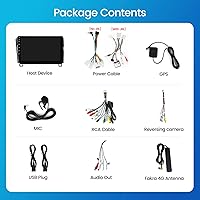
  • Package Weight: The complete package weighs 4.82 pounds and ships with the head unit and a vehicle-specific wire harness included in the box.
  • Warranty: Covered by a one-year manufacturer warranty with technical support provided directly by Shenzhen Rongji Electronics.

Related Reviews
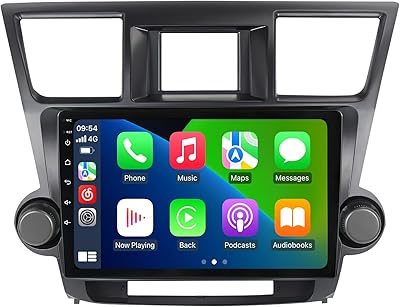
RONGJI Android 14 8-Core 10.1-inch Car Stereo for Toyota Highlander 2008-2013, 4GB RAM, 64GB Storage
85%
88%
Ease of Installation
91%
Performance
90%
User Interface
85%
Screen Quality
87%
Connectivity (Wi-Fi/Bluetooth)
More
HNOPYHNT 9-inch Android 14 Car Stereo for Toyota Camry 2007-2011
81%
88%
Ease of Installation
85%
Wireless Connectivity
90%
Display Quality
80%
Sound Quality
82%
GPS Navigation Performance
More
SWTNVIN Toyota Camry 8″ Android Car Stereo
70%
83%
Screen Quality
79%
Touch Responsiveness
88%
CarPlay & Android Auto
76%
Audio & DSP Performance
51%
Installation Experience
More
NVGOTEV RAV4 2006-2012 7″ Android Car Stereo
74%
83%
Installation Ease
81%
CarPlay & Android Auto
78%
GPS Accuracy
67%
Touchscreen Responsiveness
72%
Display Quality
More
Dasaita Android 13 Car Stereo for Toyota 4Runner 2010-2023
84%
89%
Performance
92%
Value for Money
95%
Ease of Installation
85%
Audio Quality
88%
Display Quality
More
XTRONS IDP90RGJA 9-Inch Android Car Stereo
73%
86%
Wireless CarPlay & Android Auto
83%
OEM Feature Retention
81%
Display Quality
62%
Installation Experience
79%
Performance & Responsiveness
More
XTRONS PXS7250FBL 7-inch Android Car Stereo
71%
83%
CarPlay & Android Auto
81%
Installation & Fitment
77%
Audio Quality & DSP
61%
Display Quality
76%
System Performance
More
Eonon E46X7 Android 14 Car Stereo
80%
83%
Ease of Installation
61%
Connector Compatibility
89%
Wireless CarPlay & Android Auto
86%
Display Quality
88%
Audio Performance
More
Rimoody 9-inch Android 15 Car Stereo for Toyota Camry (2000–2006)
87%
89%
Ease of Setup
91%
Screen Quality
93%
Wireless Connectivity (CarPlay & Android Auto)
85%
GPS Navigation
88%
Bluetooth Performance
More
TopWeb Tundra Sequoia 10.2-inch Android Car Stereo
67%
78%
Display Quality
66%
Wireless CarPlay & Android Auto
61%
Installation Experience
54%
Software Stability
49%
Boot Time
More

FAQ

Yes, this is one of the situations where this Android head unit genuinely stands out from generic alternatives. It includes dedicated wiring support for the factory JBL amplifier, so you will not lose speaker output or sound quality after the swap. Just use the included harness and follow the JBL-specific wiring notes in the instruction manual.

Yes, unfortunately. Vehicles from 2014–2019 with an OEM amplifier or factory camera require a separate cable adapter that is not included in the standard kit. The adapter is sold separately under ASIN B0F8MXN9DZ. Skipping this step is the most common reason buyers run into installation problems, so order it at the same time if your truck falls in that range.

It is wired only. You will need to plug your iPhone into the USB port to use CarPlay, and the same applies to Android Auto. There is no wireless mirroring supported on this unit, so if a cable-free setup is important to you, that is worth factoring into your decision.

If you have swapped a head unit before and understand how to use a wiring harness, this should be a manageable Saturday project. The kit includes a vehicle-specific harness, which removes most of the guesswork. That said, if your truck has the JBL amp or factory camera, budget extra time to sort out that wiring — it adds a layer of complexity beyond a simple plug-and-swap.

You can run Google Maps, Waze, or any Android navigation app directly since this is a full Android 14 device with Google Play access. You are not locked into a proprietary navigation system, which is a real advantage over older-style head units with built-in-only maps. You can also download offline maps for any country through the included WEGO app if you want navigation without a data connection.

Yes, split-screen mode is supported, which lets you display two apps side by side — for example, Google Maps on one side and Spotify or a reversing camera feed on the other. It works reasonably well given the 10.1″ screen size, and it is one of the more practical features for daily drivers and work-truck users.

It holds up noticeably better than the factory display in bright conditions, and most owners in sunnier regions report it is readable without constantly shading the screen. That said, this is a mid-range panel — it is not as bright or crisp as the screens on premium units from established brands, so expectations should be set accordingly. For the price and vehicle fit, it is a meaningful upgrade over stock.

Steering wheel control support is built in, but it sometimes requires a manual configuration step through the unit settings rather than working automatically out of the box. Most installers get it working without extra adapters, but if you run into issues, checking the SWC settings menu first usually resolves it.

The unit carries a one-year warranty backed by Shenzhen Rongji Electronics. Buyer experiences with support vary — some report prompt responses, others describe slower communication. Given that this is a Chinese OEM brand without a domestic support office, keeping your purchase records and documenting any issues with photos or video is a practical habit if you ever need to make a warranty claim.

The unit supports ADAS DVR driving recorder functionality, but the DVR device itself is not included in the box. If you want that feature, you will need to purchase a compatible dashcam separately and connect it through the appropriate input. It is a useful option for fleet or work-truck owners who want recording integrated into the head unit display rather than running a standalone camera.