Overview

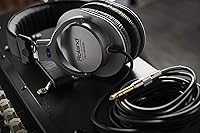
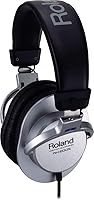
Roland RH-200S Studio Monitoring Headphones occupy a practical sweet spot for working musicians who need accurate, reliable sound without spending a fortune. Built around a closed-back design, they are intended for real studio work — tracking vocal takes, checking a rough mix, or monitoring during a live session — not casual playlist listening. Roland has been making professional gear for decades, and that credibility carries over here. The lightweight aluminum frame folds flat, which is genuinely useful for musicians who move between studios or record on location. These are not headphones built to flatter your music; they are tools built to give you an honest picture of your audio.
Features & Benefits

The RH-200S is built around 40mm dynamic drivers paired with neodymium magnets and CCAW voice coils — a combination that prioritizes accuracy over artificial coloring. The frequency response spans 20Hz to 20kHz, and the tuning leans toward flat, meaning what you hear is closer to what is actually in your mix. The closed-back ear cups deliver passive noise isolation, cutting out enough ambient sound to make tracking in a live room genuinely practical. One thing worth flagging: these studio headphones carry a 65-ohm impedance, so they perform best through an audio interface or dedicated headphone amp rather than plugged directly into a phone or tablet.

Best For

Roland's monitoring cans are a strong fit for home studio producers who want an honest reference without overspending, and for session musicians who need clean headphone monitoring during a live take without sound bleeding into the microphone. They also suit engineers looking for a portable closed-back option for on-location recording work. One caveat: if you plan to run these straight from a phone headphone jack, the 65-ohm impedance may leave you wanting more volume and punch. For anyone already working with a proper audio interface or mixer, though, the pairing is natural and the performance holds up well at this price tier.

User Feedback

With a 4.3-star average across more than 450 reviews, the RH-200S has earned a quiet but consistent reputation. Buyers most often praise long-session comfort, the clarity of the midrange, and a build that holds up with regular studio use. The most common criticism points to a leaner-than-expected low end — listeners coming from bass-boosted consumer headphones often need time to recalibrate their expectations to a flatter response. A smaller number of users have noted that the ear pads wear with heavy use over time. On balance, most reviewers feel the value proposition is solid, especially for those already set up with proper studio monitoring equipment.

Pros

  • Accurate, flat-ish frequency response helps you hear your mix honestly rather than a hyped version of it.
  • Closed-back design provides solid passive noise isolation, making live tracking sessions much more practical.
  • Lightweight aluminum frame with foldable hinges travels well for on-location or mobile recording work.
  • The RH-200S pairs cleanly with audio interfaces and mixers, delivering a clear and controlled signal.
  • Midrange clarity is consistently praised by users — vocals and instruments cut through with good detail.
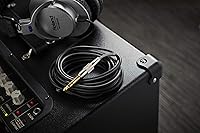
  • Comes with both 3.5mm and gold-plated 1/4-inch adapters out of the box, covering most studio setups.
  • Roland's build reputation backs these up — the overall construction feels solid and workmanlike.
  • Comfortable enough for extended sessions without causing noticeable fatigue, according to a strong majority of reviewers.
  • Retractable cable reduces desk clutter and makes storage between sessions neater and more convenient.

Cons

  • Low-end response is on the thin side — buyers expecting full, powerful bass will likely be disappointed.
  • The 65-ohm impedance underperforms when plugged directly into a phone or tablet without an amplifier.
  • Ear pad material shows wear with regular heavy use, and replacements are not always easy to source.
  • The neutral tuning takes adjustment if you are used to consumer headphones — it can feel flat or even dull at first.
  • Not well-suited for critical listening genres where deep sub-bass accuracy really matters.
  • The retractable cable mechanism, while convenient, adds a potential failure point over time with rough handling.
  • At this price tier, a few competitors offer slightly more refined low-frequency extension for similar money.
  • No inline remote or microphone, so these studio headphones are purely audio-in with no communication features.

Ratings

The scores below reflect our AI-driven analysis of verified global buyer reviews for the Roland RH-200S Studio Monitoring Headphones, with spam, bot-generated, and incentivized feedback actively filtered out before scoring. We synthesized patterns across hundreds of real-world responses from producers, session musicians, and home studio engineers to give you an honest picture. Both the standout strengths and the genuine frustrations are accounted for in every category.

Sound Accuracy
88%
Users consistently praise how honestly the RH-200S reproduces a mix — what you hear reflects what is actually in the recording rather than a flattering, colored version of it. Producers checking vocal takes or instrument balances in a home studio particularly appreciate this neutrality during critical listening.
The same flat tuning that engineers value can feel uninspiring for listeners expecting a dynamic, exciting sound signature. A handful of reviewers noted that the accuracy reveals harshness in poorly recorded tracks, which, while technically correct, can be fatiguing in longer sessions.
Low-End Response
61%
39%
For monitoring purposes, the bass is controlled and tight rather than loose or exaggerated, which helps when checking whether a kick drum or bass guitar is sitting cleanly in a mix without being masked by artificial boost.
This is the most consistently flagged weakness across buyer reviews. Users coming from consumer headphones frequently describe the low end as thin or underwhelming, and even some studio-focused buyers feel the sub-bass rolls off earlier than they would like for bass-heavy production genres.
Midrange Clarity
86%
The midrange is where the RH-200S genuinely earns its reputation. Vocals, acoustic instruments, and spoken-word recordings all come through with strong definition, making it easy to identify problem frequencies or check whether a lead element is cutting through the mix.
Some users feel the upper midrange can edge toward brightness at higher volumes, which adds a slight sense of sharpness on heavily compressed or bright recordings. It is not a dealbreaker, but it is worth noting for anyone mixing pop or electronic music with a lot of high-mid content.
Noise Isolation
81%
19%
The closed-back design does a solid job of blocking ambient room noise during tracking sessions — useful when recording vocals in a home studio with HVAC noise or background activity nearby. Multiple reviewers specifically mention being able to use these during live band tracking without significant bleed concerns.
Isolation is entirely passive, meaning it depends on how well the ear cups seal around your head. Users with smaller or unusually shaped heads have noted the seal is not always consistent, which reduces isolation effectiveness in noisier environments.
Comfort & Fit
83%
The lightweight aluminum frame keeps fatigue low during extended sessions, and reviewers regularly call out comfort as one of the first things they noticed. Engineers and producers who wear them for two or three hours while working through a session generally report no major discomfort or pressure points.
The ear pads, while adequate initially, have drawn criticism for wearing down faster than expected with daily heavy use. A few users also noted that the clamping force, though moderate, can feel slightly tight for people with wider heads over long periods.
Build Quality
78%
22%
The aluminum construction gives the headphones a reassuringly solid feel without adding unnecessary weight, and the overall fit and finish is consistent with what you would expect from Roland as a brand. Most buyers describe these as feeling durable and workmanlike rather than flimsy.
Ear pad degradation over time is a recurring complaint, with some users noting the foam and material surface deteriorating after six to twelve months of regular use. The retractable cable mechanism, while convenient, has been flagged by a smaller number of reviewers as a potential long-term weak point.
Portability
84%
The foldable hinges and sub-one-ounce frame make the RH-200S genuinely easy to pack into a gear bag or carry between studio sessions. On-location engineers and musicians who move between venues have mentioned this as a practical advantage over bulkier studio monitoring options.
There is no included carrying case, which feels like a missed inclusion at this price point. Users who travel frequently have to source their own pouch or case to protect the headphones in transit, adding a small but real extra step.
Cable & Connectivity
72%
28%
The retractable cable keeps things tidy on a studio desk, and the included gold-plated 1/4-inch adapter means you can connect directly to a mixing board, audio interface, or headphone amp without hunting for a separate adapter. Both connections feel secure.
The non-detachable cable is the primary frustration here. If the cable is damaged near the connector or at the ear cup junction — which does happen with regular movement and cable stress — the repair path is not straightforward compared to headphones with a standard removable cable design.
Interface Compatibility
89%
Pairing the RH-200S with popular audio interfaces like those from Focusrite, Universal Audio, or PreSonus delivers clean, well-driven output that makes the 65-ohm impedance feel like an asset rather than a limitation. Studio users with proper monitoring chains consistently rate this pairing highly.
Plugging directly into a laptop headphone jack or smartphone yields noticeably weaker results — lower volume, reduced dynamics, and less bass presence. Buyers without an audio interface in their setup should factor in that additional equipment cost before purchasing.
Value for Money
76%
24%
For buyers already equipped with an audio interface or mixer, the RH-200S delivers a strong return — accurate monitoring, solid build, and Roland's brand reliability at a mid-range price. Most studio-focused reviewers feel the performance justifies the cost when used in its intended context.
Buyers who later discover the low-end limitations or cable non-replaceability sometimes feel the value proposition weakens over time. At this price, a small number of reviewers point out that a couple of competing options offer more extended frequency response or detachable cables for a similar outlay.
Ear Pad Durability
58%
42%
When new, the ear pads provide a comfortable seal and feel reasonably well-made for the price tier. Users who use these studio headphones intermittently — a few sessions per week rather than daily — report that the pads hold up acceptably over their first year of ownership.
Heavy daily users frequently report visible wear, surface cracking, or foam compression within six to twelve months. Replacement pads are not always easy to find through mainstream channels, which means this is a real long-term ownership consideration that several buyers wish they had known upfront.
Ease of Setup
92%
There is essentially no setup involved — plug in the included cable, attach the 1/4-inch adapter if needed, and you are ready. First-time studio headphone buyers appreciate how immediately usable these are without any configuration, pairing, or software.
The only friction point some users mention is adjusting expectations around the impedance mismatch when first plugging into a consumer device — but this is a knowledge gap rather than a genuine setup difficulty, and it resolves quickly once users understand the proper signal chain.
Suitability for Beginners
74%
26%
The RH-200S is a reasonable first step into proper studio monitoring for intermediate musicians ready to move beyond consumer headphones. The neutral tuning teaches good listening habits, and the Roland brand name offers a degree of trust for buyers new to professional audio equipment.
The adjustment from bass-heavy consumer headphones can feel disorienting at first, and some beginners mistake the flat response for a defect rather than a design choice. Without an audio interface, the experience is also noticeably compromised, which adds a barrier for beginners not yet invested in a full studio setup.

Suitable for:

The Roland RH-200S Studio Monitoring Headphones are a smart pick for anyone building or working in a home studio who needs an honest, accurate listen without a major outlay. If you are a producer tracking vocals, a guitarist reviewing a rough mix, or a session musician monitoring through a headphone amp during a live take, these will serve you well. The closed-back design is particularly useful when you need isolation — recording in a room with ambient noise, or running a headphone cue mix during a tracking session without bleed. They also suit engineers who move around, since the foldable build and light weight make them easy to pack and take on location. Beginners who are ready to step away from consumer-style headphones and hear their music more accurately will find the flatter response an eye-opening — and useful — adjustment.

Not suitable for:

The Roland RH-200S Studio Monitoring Headphones are not the right call for buyers who just want to enjoy music casually, as the tuning prioritizes accuracy over the warm, bass-forward sound that makes consumer headphones feel satisfying for everyday listening. Anyone planning to run these directly from a smartphone should think twice — the 65-ohm impedance means volume and dynamics can feel underwhelming without a proper interface or headphone amplifier in the chain. If punchy, extended low-end response is critical to your work, the leaner bass reproduction here may leave you wanting more, and you might be better served by cans with a different frequency character. Buyers looking for premium padding or long-term ear cushion durability may also find that the ear pads show wear faster than expected with heavy daily use.
Specifications

  • Driver Size: Each ear cup houses a 40mm dynamic driver for broad frequency coverage and accurate sound reproduction.
  • Magnet Type: Neodymium magnets are used in the driver assembly, providing strong magnetic force in a compact, lightweight form.
  • Voice Coil: CCAW (Copper-Clad Aluminum Wire) voice coils reduce moving mass, contributing to faster transient response and detail.
  • Impedance: The RH-200S operates at 65 ohms, making it best suited for use with audio interfaces, mixers, or dedicated headphone amplifiers.
  • Frequency Response: The stated frequency response spans 20Hz to 20kHz, covering the full range of human hearing with a monitoring-focused tuning.
  • Ear Design: Closed-back, over-ear cups fully enclose the ears to provide passive noise isolation during tracking and mixing sessions.
  • Noise Control: Isolation is achieved passively through the sealed closed-back enclosure, with no active noise cancellation circuitry involved.
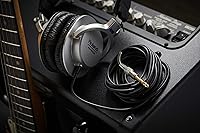
  • Connector: The cable terminates in a 3.5mm stereo jack and includes a gold-plated 1/4-inch screw-on adapter for studio equipment connections.
  • Build Material: The headband and structural components use lightweight aluminum, contributing to a durable yet travel-friendly form factor.
  • Foldable Design: The ear cups fold inward for compact storage, making the headphones practical for engineers and musicians on the move.
  • Cable Type: The attached cable is retractable, reducing tangling and keeping the setup tidy during both studio and portable use.
  • Weight: Without the cable, the headphones weigh approximately 0.7 oz, making them notably light for extended-session wear.
  • Compatible Devices: These studio headphones are designed to work with audio interfaces, mixers, DAW workstations, laptops, desktops, and tablets.
  • Color: The RH-200S is available in silver with an aluminum finish across the headband and ear cup housing.
  • Ear Placement: The over-ear fit positions the drivers around the ear rather than on it, improving both comfort and isolation during long sessions.
  • Connectivity: Connection is wired only; there is no Bluetooth, wireless pairing, or active electronics in the signal path.
  • Intended Use: The headphones are designed specifically for studio monitoring, headphone tracking, and mixing work rather than casual consumer listening.
  • Included Accessories: The package includes the headphones, a retractable cable, and a gold-plated 1/4-inch stereo adapter for connecting to professional equipment.

Related Reviews
Roland RH-300 Monitor Headphones
87%
91%
Sound Quality
83%
Comfort for Long Sessions
90%
Noise Isolation
89%
Build Quality
85%
Ease of Use
More
Senal SMH-1200 Studio Monitor Headphones
85%
89%
Sound Clarity
84%
Comfort for Long Sessions
77%
Cable Retractability
91%
Noise Isolation
82%
Durability
More
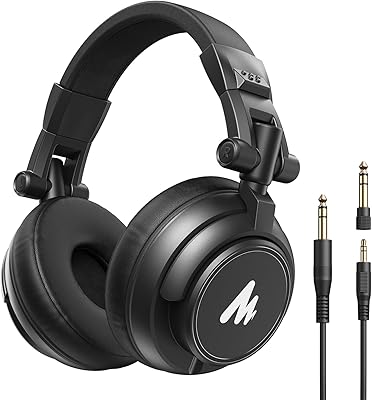
MAONO MH601 Professional Studio Monitor Headphones
85%
93%
Value for Money
84%
Low-Frequency Response
89%
Long-Term Comfort
76%
Passive Noise Isolation
72%
Build Materials
More
OneOdio Monitor 60
OneOdio Monitor 60
88%
88%
Audio Clarity & Detail
96%
Connectivity Versatility
91%
Long-Session Comfort
73%
Build Materials & Durability
84%
Passive Noise Isolation
More
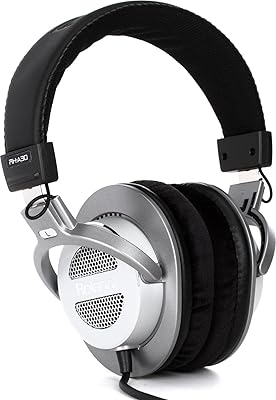
Roland RH-A30 Premium Open-Air Headphones

84%
92%
Sound Clarity
88%
Comfort for Long Sessions
85%
Build Quality
91%
Soundstage & Audio Balance
60%
Noise Isolation
More
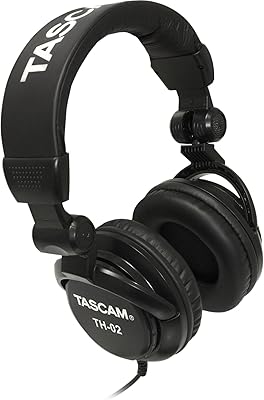
Tascam TH-02
Tascam TH-02
73%
83%
Sound Quality
91%
Value for Money
67%
Build Quality
63%
Comfort & Fit
74%
Passive Noise Isolation
More
Audio-Technica ATH-M50x
89%
92%
Audio Accuracy
94%
Build Durability
89%
Value for Money
86%
Passive Noise Isolation
67%
Long-Term Comfort
More
Tascam TH-07 High Definition Studio Monitor Headphones
85%
91%
Sound Quality
94%
Bass Response
88%
Comfort for Long Sessions
90%
Sound Isolation
85%
Build Quality
More
Audio-Technica ATH-M40x
82%
93%
Sound Accuracy
84%
Build Quality
78%
Comfort & Fit
74%
Passive Noise Isolation
88%
Cable & Connectivity
More
Audio-Technica ATH-M70x
88%
96%
Acoustic Accuracy
92%
Build Durability
94%
High-Frequency Detail
88%
Noise Isolation
85%
Monitoring Flexibility
More

FAQ

Technically yes, but the 65-ohm impedance means you may not get great volume or dynamics straight from a smartphone headphone jack. They are really designed to pair with an audio interface or headphone amplifier. If a phone is your only source, you might find the output underwhelming compared to lower-impedance consumer headphones.

They handle both reasonably well. The flatter frequency response makes them useful for checking a mix, and the closed-back isolation is practical for tracking. That said, most engineers will use them as a secondary reference rather than a primary mixing tool — open-back headphones or studio monitors are typically preferred for final mix decisions.

At this price tier they hold up well, particularly in midrange clarity and build quality. Some competitors offer slightly more extended low-end response, so if bass-heavy genres are central to your work, it is worth auditioning alternatives. For general studio tracking and reference listening, the RH-200S is a competitive and reliable choice.

Replacement ear pads are available for the RH-200S, though sourcing them can take some effort depending on your region. Roland-authorized dealers and third-party audio accessory suppliers are the most reliable places to look. It is worth factoring in pad longevity if you plan to use them heavily every day.

Yes, the ear cups fold inward toward the headband, making storage much more compact. Combined with the lightweight aluminum build, this makes the RH-200S a reasonable option for engineers or musicians who work across multiple locations or carry their gear regularly.

It is more accurate to say the low end is honest rather than enhanced. These studio headphones are tuned for monitoring, not for the kind of boosted bass you get from consumer-oriented cans. If you are used to something like bass-heavy Bluetooth headphones, the difference will be noticeable. For studio work, though, a flatter low end is usually a feature, not a flaw.

Yes, and this is actually where the RH-200S performs best. A 65-ohm impedance pairs well with the headphone output on most popular interfaces like the Focusrite Scarlett range, Universal Audio Volt, or similar units. You will get clean output and good volume without needing an additional headphone amp.

Most users report that the lightweight build and over-ear fit hold up well across extended sessions. The headband is adjustable and the clamping force is moderate rather than tight. A common note in user feedback is that these do not cause significant fatigue over a two-to-three hour session, though comfort always varies by head shape and individual preference.

The cable on the RH-200S is attached and retractable rather than fully detachable. This keeps things tidy and is convenient for storage, but it does mean that if the cable is damaged, repair or replacement is less straightforward than with a standard removable cable design.

They are a solid starting point, especially for someone who already has or is planning to buy an audio interface. The neutral sound profile will take some adjustment if you are used to consumer headphones, but that adjustment is actually valuable — you will start hearing your recordings more accurately. Just be aware that they are not the most forgiving listen for pure casual enjoyment.

Where to Buy