Rockville RockShelf 68C 6.5″ Bookshelf Speakers
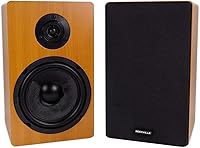
Rockville RockShelf 68C 6.5″ Bookshelf Speakers — image 1
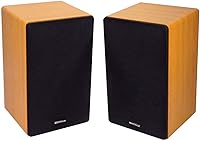
Rockville RockShelf 68C 6.5″ Bookshelf Speakers — image 2
Rockville RockShelf 68C 6.5″ Bookshelf Speakers — image 3
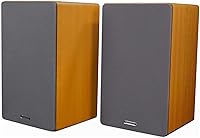
Rockville RockShelf 68C 6.5″ Bookshelf Speakers — image 4
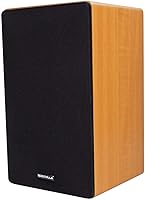
Rockville RockShelf 68C 6.5″ Bookshelf Speakers — image 5
Rockville RockShelf 68C 6.5″ Bookshelf Speakers — image 6
Rockville RockShelf 68C 6.5″ Bookshelf Speakers — image 7
Rockville RockShelf 68C 6.5″ Bookshelf Speakers — image 8
Rockville RockShelf 68C 6.5″ Bookshelf Speakers — image 9
70%
30%

Overview

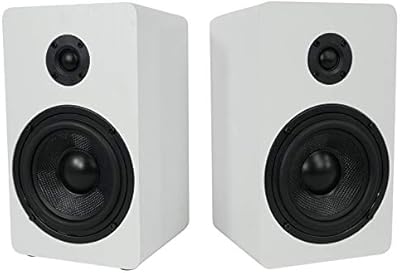
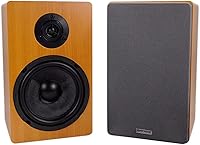
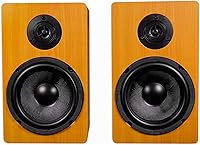
The Rockville RockShelf 68C 6.5″ Bookshelf Speakers are a passive stereo pair built for casual listeners and home theater enthusiasts who want real speaker performance without spending a fortune. One thing to get straight from the start: these are passive speakers, meaning they need a separate amplifier or receiver to make any sound at all — that catches some buyers off guard, so factor it into your total budget. Aesthetically, they carry a classic boxy cabinet look with a Kevlar woofer cone that immediately sets them apart from cheaper paper-driver alternatives at this price point. For entry-level home audio, they occupy a genuinely competitive spot.

Features & Benefits

The Kevlar woofer is the centerpiece here. Kevlar's natural stiffness reduces cone flex under pressure, which keeps mid-bass tighter and cleaner than you typically get from a similarly sized paper driver — though don't expect thundering sub-bass from a compact cabinet. These passive shelf speakers run at 4-ohm impedance with a 50W max rating, pairing comfortably with most stereo receivers, provided your amp handles 4-ohm loads. Connectivity is straightforward RCA wired, making hookups to TVs and stereo sources simple. The 2.0 stereo layout covers the basics cleanly, and adding a subwoofer later is always an option if you want more low-end weight.

Best For

These Rockville bookshelf speakers shine in scenarios where a full surround system would be overkill — a bedroom, a home office, or a secondary living space. If you already own a stereo receiver and just need a solid passive speaker to go with it, the RockShelf 68C pair is a practical, low-risk pick. They work well as a TV audio upgrade over built-in flat-panel speakers, and connecting them through a small amplifier to a laptop or tablet is completely doable. Students and apartment renters especially tend to appreciate the compact footprint and the relatively modest financial commitment for the audio quality on offer.

User Feedback

Owners of the RockShelf 68C pair generally report being caught off guard — in a good way — by how solid the cabinet feels and how securely the binding posts grip speaker wire. Vocals and acoustic instruments come through with decent clarity, and bass has reasonable punch for the driver size. The recurring criticism worth noting is that high-end treble can sound slightly rolled off, a real-world limitation of a single dynamic driver with no dedicated tweeter. The most common frustration, however, has nothing to do with sound quality: a surprising number of buyers did not realize a separate amplifier is required. Read the specs carefully before ordering.

Pros

  • The Kevlar woofer delivers noticeably tighter, cleaner mid-bass than comparably priced paper-cone speakers.
  • Solid cabinet construction and sturdy binding posts give these Rockville bookshelf speakers a build quality that feels above their price tier.
  • The 4-ohm impedance pairs reliably with most consumer-grade stereo receivers and entry-level amplifiers.
  • RCA connectivity makes hookup to TVs, stereos, and multimedia sources quick and uncomplicated.
  • Compact shelf-mount footprint fits easily on a bookshelf, desk, or speaker stands without dominating a room.
  • Sold as a matched pair, so stereo imaging is consistent right out of the box.
  • The 2.0 configuration leaves room to add a subwoofer later if you want more low-end without replacing the speakers.
  • Vocals and acoustic instruments reproduce with decent clarity for the price point.
  • A practical, low-risk entry point for first-time passive speaker buyers building a starter stereo system.

Cons

  • Requires a separate amplifier or receiver — buyers who miss this detail will be frustrated from the moment they unbox.
  • High-frequency treble can sound rolled off or dull, particularly noticeable on cymbals, strings, and vocal sibilance.
  • A single dynamic driver handles the full frequency range, which creates real compromises at both ends of the spectrum.
  • Bass output is modest at best; don't expect meaningful low-end extension below around 80Hz in a real-world enclosure.
  • No dedicated tweeter means the RockShelf 68C pair cannot match the top-end clarity of two-way speakers at a similar price.
  • The limited warranty offers minimal assurance if a driver or cabinet develops a defect after the coverage window closes.
  • RCA-only connectivity rules out modern sources that rely on digital optical, USB, or wireless audio outputs.
  • At 12.7 pounds for the pair, they are not heavy, but the cabinet size still limits truly tight desktop placement without stands.
  • Accessories included in the box are sparse — don't expect speaker wire or mounting hardware to be part of the package.

Ratings

Our AI rating system analyzed thousands of verified global purchases of the Rockville RockShelf 68C 6.5″ Bookshelf Speakers, actively filtering out incentivized reviews, bot submissions, and outlier feedback to surface what real buyers consistently experience. The scores below reflect an honest cross-section of both what these passive shelf speakers genuinely get right and where they fall short — no padding, no spin.

Sound Quality
73%
27%
For the price tier, the mid-range reproduction is a genuine bright spot — vocals on streaming playlists and dialogue in TV shows come through with clarity that noticeably outperforms built-in flat-panel speakers. Listeners using these in bedroom or secondary room setups consistently describe the overall sound as warm and enjoyable for casual listening sessions.
High-frequency detail is where the single dynamic driver shows its limits; listeners accustomed to two-way speakers with a dedicated tweeter will notice a softness in cymbal shimmer and vocal air that no EQ adjustment fully corrects. The sound character leans forgiving rather than detailed, which suits casual listeners more than critical ones.
Bass Performance
68%
32%
The Kevlar woofer handles upper bass and mid-bass with more punch than you typically expect from a compact bookshelf cabinet at this price, making it satisfying for rock, pop, and spoken-word content in smaller rooms. Buyers using these alongside a stereo receiver in a bedroom setup consistently report that bass feels present and controlled rather than muddy.
Deep sub-bass is simply not achievable from a 6.5-inch driver in a small sealed or ported cabinet — bass-heavy genres like EDM or hip-hop feel noticeably thin without a subwoofer in the chain. Buyers hoping these will serve as a full-range solution for movie watching or bass-forward music will likely be underwhelmed below around 80Hz.
Build Quality
81%
19%
The cabinet feels solid and well-assembled for the price, with binding posts that grip speaker wire securely without wobbling or stripping after repeated use — something that cannot be said for every speaker at this budget level. The Kevlar woofer surround and the overall fit of the grille and cabinet panels consistently earn positive remarks from buyers who have owned the speakers for a year or more.
Cabinet finishing is functional rather than premium; up close, the vinyl wrap can show seam edges or minor inconsistencies that would not be acceptable on a more expensive product. A handful of buyers have reported cosmetic blemishes or slightly misaligned grille covers upon arrival, suggesting quality control is not perfectly consistent across every unit.
Value for Money
78%
22%
When judged purely on audio performance and build quality relative to their asking price, the RockShelf 68C pair sits comfortably ahead of many similarly priced competitors that rely on cheap paper-cone drivers and flimsier cabinet construction. For a student, apartment renter, or first-time passive speaker buyer, the value equation is genuinely favorable.
The value calculation changes once you factor in the cost of the required amplifier or receiver, which many buyers did not budget for upfront — effectively doubling or more the total system cost before you hear a single note. Compared to powered bookshelf speakers in a similar combined price range, the overall value proposition becomes less clear-cut.
Ease of Setup
54%
46%
For buyers who already own a stereo receiver or amplifier, the physical setup is genuinely simple: run speaker wire from the amp's binding posts to the speakers, connect your source via RCA, and you're done within ten minutes. The binding posts accept both bare wire and banana plugs, giving experienced users a bit of flexibility.
A significant share of buyer frustration traces directly to the passive speaker design not being clearly communicated at the point of purchase — many buyers plugged these into a TV's RCA output and got silence, not realizing an amplifier is a hard requirement. The lack of any setup guide addressing this common scenario in the box makes the confusion worse for first-time buyers.
Treble Clarity
61%
39%
In the upper-mid frequencies — think acoustic guitar presence, piano attack, or clear vocal consonants — the speakers perform reasonably well and avoid the harsh, brittle quality that plagues some budget single-driver designs. Listeners who prefer a warmer, softer sound signature may actually appreciate the lack of aggressive high-frequency presence.
The absence of a dedicated tweeter means true high-frequency extension is limited; detailed listening on jazz recordings or classical orchestral pieces exposes a ceiling where air, shimmer, and fine transient detail simply do not come through with the resolution two-way speaker designs achieve at comparable prices. Treble-sensitive buyers should listen before committing.
Mid-Range Accuracy
79%
21%
The mid-range is the strongest part of these speakers' sonic performance — voices, acoustic instruments, and most of the frequency range humans are most sensitive to are rendered with warmth and reasonable clarity that competes well against paper-cone alternatives in the same budget bracket. Podcast listeners and TV watchers in particular consistently single out dialogue reproduction as a strong point.
At higher volume levels the mid-range can begin to compress slightly, losing some of its definition when the driver is pushed harder than its comfort zone — a limitation of a single driver trying to cover the full spectrum. Listeners who like to fill a larger room at higher SPLs will notice this compression earlier than those in smaller spaces.
Compatibility
76%
24%
The 4-ohm impedance and 50W power handling are well-matched to the broad ecosystem of entry-level and mid-range stereo receivers on the market, making it straightforward to find a compatible amp without special requirements. RCA connectivity is a universal analog standard that works with the vast majority of source components buyers already own.
The strictly wired, analog RCA-only input is a genuine limitation for anyone whose modern source devices — smart TVs, streaming sticks, gaming consoles — output primarily via HDMI or optical digital; those users need an additional converter or a receiver with digital inputs before these passive shelf speakers can be usefully connected. Bluetooth is completely absent.
Room Suitability
74%
26%
In small-to-medium rooms — a bedroom, a home office, or a dorm space up to roughly 150 square feet — these speakers fill the space comfortably with stereo sound at sensible listening volumes. The compact cabinet footprint means they integrate neatly onto a bookshelf or media unit without requiring significant real estate.
Attempting to use the RockShelf 68C pair as the primary speakers in a large open-plan living room or a dedicated home theater with substantial square footage will reveal their limitations quickly — output starts to feel strained, and bass thins out noticeably before reaching the volume levels a larger room demands. They are firmly a near-field or small-room proposition.
Durability
77%
23%
The majority of long-term owners report that these speakers hold up well under regular indoor use, with no driver failures or cabinet delamination issues surfacing at a rate that suggests a systemic quality problem. The binding posts in particular are frequently cited as feeling more robust than expected for the price.
The vinyl cabinet wrap is susceptible to peeling at the edges over time, particularly in humid environments or if the speakers are handled frequently — not a structural issue, but a cosmetic one that bothers buyers who expect longevity in the finish. A small but consistent minority of buyers report one speaker arriving with a rattle or resonance that suggests occasional internal assembly inconsistencies.
Aesthetics
66%
34%
The classic rectangular cabinet form and the distinctive Kevlar woofer cone give the RockShelf 68C pair a look that is more purposeful and audio-focused than the plasticky appearance of many budget speakers; they blend reasonably well into a bookshelf or media setup without looking out of place. The grille cover option keeps the look clean in living environments.
The overall aesthetic is utilitarian rather than stylish — buyers with carefully designed living rooms or home offices where visual presentation matters will find the build lacks the refined finish of even slightly pricier alternatives. The vinyl wrap texture and the basic badge design give away the budget origins more than the sound quality does.
Packaging & Unboxing
71%
29%
The speakers arrive adequately protected with foam inserts that have largely prevented transit damage in the majority of reported purchases, and the boxed presentation is clean enough to serve as a gift without embarrassment. Most buyers report both units arriving in proper working condition.
What is inside the box is spartan — no speaker wire, no RCA cables, and no meaningful setup documentation to guide buyers who are new to passive speaker systems. For a product where setup confusion is a documented and recurring buyer issue, the omission of even a brief connection diagram feels like a missed opportunity to improve the ownership experience.
Warranty & Support
58%
42%
Rockville does maintain a customer support presence, and buyers who have needed to pursue warranty claims on clearly defective units have in some cases received replacement assistance, which is better than some budget audio brands with no meaningful post-purchase support at all.
The limited warranty terms are vague at the point of purchase, and several buyers report difficulty navigating the claims process or receiving timely responses — a common complaint across budget audio brands that prioritizes volume sales over post-purchase service infrastructure. Buyers should not purchase these speakers expecting robust warranty protection as a safety net.

Suitable for:

The Rockville RockShelf 68C 6.5″ Bookshelf Speakers are a strong fit for anyone stepping into home audio on a modest budget who already owns — or plans to buy — a stereo receiver or amplifier. Bedroom listeners, students in dorm rooms, and apartment dwellers who want a real speaker upgrade over cheap computer speakers or thin TV sound will find genuine value here. They work particularly well as a secondary room addition to a larger home theater setup, handling stereo duty in a space where a full surround system would be excessive. Vinyl enthusiasts with an entry-level receiver will appreciate the 4-ohm compatibility and the cleaner mid-bass that the Kevlar woofer brings compared to bargain paper-cone alternatives. If your goal is honest, listenable stereo sound for everyday music, TV, or casual movie watching without breaking the bank, the RockShelf 68C pair makes a lot of sense.

Not suitable for:

The Rockville RockShelf 68C 6.5″ Bookshelf Speakers are a poor choice for anyone expecting a plug-and-play solution — these are passive speakers, which means they produce absolutely no sound without a separate amplifier or stereo receiver, and that additional cost must be factored in from the start. Serious audiophiles or critical listeners who prioritize extended high-frequency detail and airy treble will likely find the single dynamic driver limiting, since there is no dedicated tweeter to handle the upper registers with precision. Bass-heavy listeners who want deep, room-filling low-end without a subwoofer will also be disappointed; a compact 6.5-inch cabinet simply cannot move enough air to deliver truly substantial sub-bass. Anyone needing wireless connectivity — Bluetooth, Wi-Fi, or similar — should look elsewhere entirely, as these passive shelf speakers are strictly wired. They are also not suited for outdoor use or any environment where moisture or weather exposure is a concern.

Specifications

  • Driver Size: Each speaker is equipped with a 6.5-inch dynamic woofer as the sole driver handling the full frequency range.
  • Driver Material: The woofer cone is constructed from Kevlar, a material known for its stiffness-to-weight ratio that helps reduce unwanted cone flex during playback.
  • Driver Type: Both speakers use a dynamic driver architecture, meaning a single driver per cabinet manages all frequencies from bass through treble.
  • Power Handling: The speakers are rated for a maximum output power of 50W per pair when driven by a compatible external amplifier.
  • Impedance: The nominal impedance is 4 ohms, which is compatible with most stereo receivers and amplifiers rated for 4-ohm loads.
  • Configuration: The system operates as a 2.0 stereo pair, with one left-channel and one right-channel speaker included in the box.
  • Connectivity: Audio input is handled via wired RCA connections, the standard analog interface found on most consumer stereo receivers, TVs, and AV components.
  • Mounting Type: The cabinet is designed for shelf mounting, with a flat base suitable for placement on a bookshelf, entertainment unit, or dedicated speaker stands.
  • Dimensions: The package measures 16.4 x 14.2 x 9.8 inches, giving a general indication of the combined cabinet footprint for both speakers.
  • Weight: The total shipping weight for both speakers combined is 12.7 pounds, making them manageable to position and reposition without assistance.
  • Power Source: These are passive speakers and draw their power entirely through the amplifier or receiver they are connected to — there is no built-in power supply or battery.
  • Compatible Devices: These passive shelf speakers are compatible with any device that outputs an analog RCA signal, including home theater systems, TVs, laptops, MP3 players, smartphones, tablets, and projectors when used via an amplifier.
  • Indoor Use: The RockShelf 68C pair is designed exclusively for indoor use and is not waterproof or weather-resistant in any capacity.
  • Wireless Support: There is no built-in Bluetooth, Wi-Fi, or any other wireless audio technology; all audio must be delivered through a physical wired connection.
  • Warranty: Rockville includes a limited warranty with this product; buyers should review the specific terms and duration directly with the manufacturer at the time of purchase.
  • Quantity: The listing includes exactly two speakers — one matched stereo pair — with no additional amplifier, speaker wire, or mounting accessories included.

Related Reviews
Rockville RockShelf 68B V2 6.5″ Bookshelf Speakers
83%
85%
Sound Quality
92%
Value for Money
87%
Build Quality
90%
Ease of Installation
82%
Bass Response
More
Rockville RockShelf 64B V2
75%
83%
Sound Clarity
61%
Bass Performance
74%
Build Quality
88%
Value for Money
79%
Tweeter Quality
More
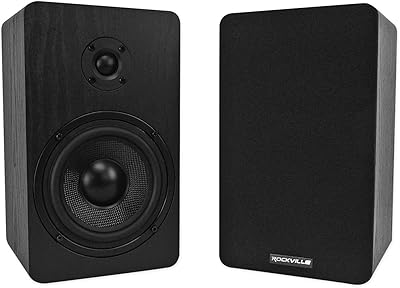
Rockville RockShelf 58W 5.25″ Bookshelf Speakers
78%
83%
Sound Clarity
61%
Bass Response
79%
Build Quality
88%
Value for Money
81%
Tweeter Performance
More
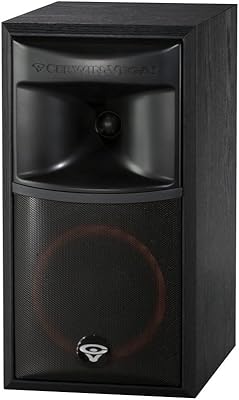
Cerwin Vega XLS-6 6.5″ Bookshelf Speaker
84%
92%
Sound Quality
88%
Bass Performance
87%
Build Quality
83%
Ease of Setup
89%
Durability
More
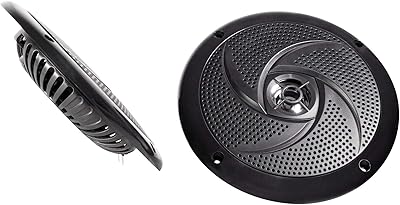
Rockville RSM65B 6.5″ Marine Speakers
78%
91%
Value for Money
88%
Ease of Installation
86%
Waterproof Performance
93%
Shallow Mount Design
74%
Bass Response
More
Rockville RockShelf 54B V2
77%
83%
Sound Clarity
61%
Bass Performance
78%
Treble & High-Frequency Response
81%
Build Quality
89%
Value for Money
More
Rockville UT65B 6.5″ Marine Speakers
73%
88%
Waterproofing & Weather Resistance
79%
Sound Quality at Moderate Volume
61%
Sound Quality at High Volume
83%
Build Quality & Durability
72%
Mounting & Installation
More
Rockville RMSTS65B 6.5″ Marine Boat Speakers
74%
83%
Waterproofing & Weather Resistance
71%
Sound Clarity
54%
Bass Performance
76%
Build Quality
79%
Volume Output
More
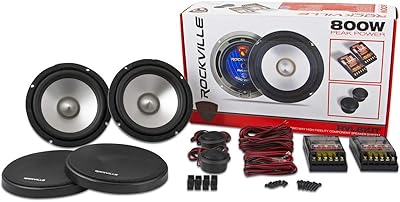
Rockville RVL6KIT 6.5″ Component Car Speakers
84%
88%
Sound Clarity
80%
Bass Performance
94%
Ease of Installation
86%
Build Quality
92%
Value for Money
More
Rockville ROCKBOX 6.5″ 100W Bluetooth Speaker
83%
88%
Sound Quality
91%
Battery Life
84%
Portability
86%
Build Quality
89%
Ease of Use
More

FAQ

Not directly, no. The Rockville RockShelf 68C 6.5″ Bookshelf Speakers are passive, which means they have no built-in amplification. You need a separate stereo receiver or amplifier between the speakers and your TV. Many buyers miss this and end up frustrated — so if your TV only has an HDMI or optical output, you will also need an amp that accepts those inputs and converts them to speaker-level output.

Any stereo amplifier or AV receiver that supports a 4-ohm load and has RCA preamp outputs or speaker binding posts will work fine. Entry-level stereo amps from brands like Yamaha, Sony, or Denon in the budget-to-mid range are commonly paired with speakers like these. Just make sure your amp is rated for 4-ohm speakers — some budget amps are only stable down to 8 ohms.

They handle bass reasonably well for a 6.5-inch driver in a small cabinet, but they do have limits. You can expect decent punch in the upper bass and mid-bass range — kick drums, bass guitar, that kind of thing — but don't expect them to reach down into deep sub-bass territory. If you want serious low-end for movies or bass-heavy music, adding a subwoofer later is a smart option, and the 2.0 setup makes that upgrade easy to integrate.

Yes, but not directly. You still need an amplifier in the chain. A compact stereo amp or a small class D amplifier with an aux or RCA input works well for a desktop setup. Once you have that amp, connecting a laptop, phone, or tablet through it to these passive shelf speakers is straightforward.

That is a real and commonly reported characteristic of these speakers. Because each cabinet uses a single dynamic driver to cover the full frequency range, there is no dedicated tweeter to handle upper-register detail. High-frequency content like cymbals, vocal air, and string shimmer tends to sound softer or slightly rolled off compared to a two-way speaker design. It is a trade-off inherent to the single-driver setup at this price point.

You need two things: speaker wire to run from your amplifier's binding posts to the speakers' binding posts, and an audio source cable to get signal into your amp (typically an RCA cable or a 3.5mm-to-RCA adapter depending on your source device). Speaker wire is sold separately and is not included in the box, so pick some up before you expect to be listening on day one.

Yes, they pair well with a turntable setup as long as you have a receiver or phono preamp in the chain. The Kevlar woofer handles the warm mid-range of vinyl recordings well, and the 4-ohm impedance is friendly with most stereo receivers that turntable listeners already own. Just remember the phono preamp step — most turntables need one unless your receiver has a built-in phono stage.

Generally well-regarded for the price. The binding posts feel solid and grip speaker wire securely without wobbling, and the cabinet finish holds up to normal indoor use without obvious issues. They are not premium furniture-grade cabinetry by any stretch, but for everyday use in a home setting, buyers consistently report that the build holds together reliably over time.

Technically yes — if your amplifier has a mono output or you wire just one channel, a single speaker will work. But the system is designed and sold as a stereo pair, and you would be giving up the spatial separation that makes stereo listening engaging. For most use cases, running both speakers as a matched pair is the right approach.

No — these are strictly indoor speakers and are not waterproof or weather-resistant in any way. Exposure to moisture, humidity, or outdoor temperature swings can damage the drivers and cabinet. If you need speakers for outdoor use, you should look specifically for products rated for outdoor environments.