Overview

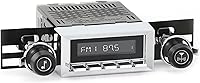
The Retro Manufacturing LAC-116-37-73 Classic Car Radio is a purpose-built head unit designed to drop directly into the factory dash opening of 1973-85 GM vehicles — no cutting, no custom trim rings, no compromises on appearance. That narrow focus is exactly the point. If you own a C/K truck, Blazer, Corvette, El Camino, Malibu, Caprice, Suburban, or any number of Oldsmobile and Cadillac models from that era, this retro-fit head unit was engineered with your specific dash in mind. The pricing reflects that specialization; you are paying for precise fitment engineering and RetroSound's patented shaft system, not raw hardware value. This is a single-unit, restoration-market product — not a universal radio that happens to sort of fit.
Features & Benefits

The Laguna radio packs built-in Bluetooth for wireless phone streaming, which matters more than it might sound in a daily-driven classic where reaching for a cable gets old fast. The AM/FM tuner covers 30 pre-set stations, keeping traditional radio fully functional for those who still want it. A 3.5mm auxiliary input rounds out connectivity, useful if you run a Sirius tuner or have an older device that predates Bluetooth. The onboard 18W x 4-channel amplifier is honest power — enough for a stock-configuration speaker setup in a vintage cabin, but not a substitute for a separate amp if you have upgraded speakers. Push-button controls complete the period-correct look without any touchscreen distraction.

Best For

This classic-car radio was built for a specific person: someone restoring or maintaining a 1973-85 Chevy C/K truck, Blazer, Corvette, Impala, Monte Carlo, El Camino, or Suburban, or an equivalent GMC, Oldsmobile, or Cadillac model from the same window. If factory-correct dash appearance matters to you — at a car show, a cruise night, or simply in your own garage — this unit addresses that concern in a way no universal radio can. It also suits owners replacing a dead OEM unit who want a direct swap rather than a fabrication project. Buyers chasing serious volume, touchscreen functionality, or CarPlay integration should look elsewhere. The Laguna radio solves a precise problem for a precise audience.

User Feedback

Owners consistently point to fit quality as the standout — the unit fills the factory opening cleanly, with no visible gaps or mismatched bezels that plague generic installs. Bluetooth pairing earns positive marks for reliability; most users report connecting their phones without repeated dropout issues. Where opinions split is on power output: buyers running stock speakers rarely complain, but anyone who has already upgraded to higher-wattage components tends to find the built-in amp falls short. Installation feedback is mixed in a nuanced way — the wiring is often described as manageable, but harness compatibility with certain model years requires some homework before ordering. Most buyers feel the specialty fitment justifies the cost over a cheap universal unit, though a few find the premium harder to accept.

Pros

  • Drops into the factory dash opening of compatible GM vehicles with no cutting or custom fabrication required.
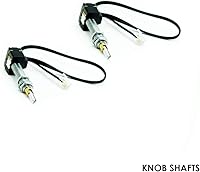
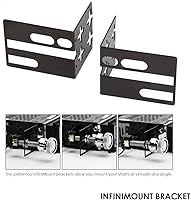
  • The patented adjustable shaft system accommodates varying dash depths cleanly across multiple model lines.
  • Built-in Bluetooth allows reliable wireless phone streaming without any visible dongles or adapters.
  • AM/FM tuner with 30 pre-sets keeps traditional radio fully functional for everyday or cruising use.
  • The 3.5mm auxiliary input adds flexibility for Sirius tuners, older devices, or anything without Bluetooth.
  • Push-button controls preserve the period-correct aesthetic that restoration-focused owners work hard to maintain.
  • Four-channel audio output distributes sound evenly across a stock speaker layout without additional hardware.
  • Single-unit packaging means no unnecessary extras driving up cost for a straightforward replacement install.
  • Compatible with a broad range of 1973-85 GM platforms, covering trucks, muscle cars, and full-size vehicles.

Cons

  • 18W x 4-channel output falls short if you have upgraded to higher-efficiency or higher-wattage aftermarket speakers.
  • No touchscreen, CarPlay, or Android Auto support — connectivity options stop at Bluetooth and a 3.5mm jack.
  • Wiring harness compatibility can vary by model year and trim, requiring research before purchase to avoid surprises.
  • The specialty fitment pricing is hard to justify if dash authenticity is not a priority for your build.
  • Vehicle compatibility is tightly defined — even one model year or platform outside the list means it will not fit correctly.
  • No USB charging or playback port, which can be inconvenient for users who prefer wired phone connections.
  • Limited to analog audio encoding, which may matter to buyers who prioritize digital signal quality.
  • Installation documentation may not cover every wiring variation across all supported model years and body styles.
  • Not a practical choice for anyone planning a full audio system upgrade, as the built-in amp will become the bottleneck.

Ratings

Our AI rating engine analyzed verified global buyer reviews for the Retro Manufacturing LAC-116-37-73 Classic Car Radio, actively filtering out incentivized submissions, duplicate accounts, and bot-pattern feedback to surface what real owners actually experience. The scores below reflect both the genuine strengths that keep classic-car enthusiasts coming back to this brand and the friction points that have frustrated a meaningful share of buyers. Nothing has been softened or inflated.

Fitment Precision
93%
Owners repeatedly describe the moment the unit slides into the factory opening as one of the most satisfying parts of the install — no visible gaps, no trim ring covering a bad fit, just a clean face that looks like it belongs. For show-car owners and daily drivers alike, this is the core reason to choose this unit over a universal alternative.
A small but consistent group of buyers found that certain model-year variations within the 1973-85 window — particularly some Oldsmobile and Cadillac body styles — required minor adjustments to the shaft depth before the fit was truly flush. The compatibility list is accurate at the platform level, but not every individual trim configuration behaves identically.
Bluetooth Reliability
84%
Most owners report stable, repeatable pairing with current iPhones and Android phones, with automatic reconnection on startup being a frequently praised detail. For someone driving a classic truck as a daily commuter, not having to manually re-pair every morning is a real quality-of-life improvement over cheaper Bluetooth solutions.
A recurring complaint involves occasional audio dropout at higher volumes or when the phone is more than a few feet from the unit, which some owners attribute to the antenna placement inside the compact housing. Pairing behavior can also be inconsistent when switching between two devices frequently.
Amplifier Output
61%
39%
For owners running the original factory speakers in their vintage cabin, 18W per channel covers everyday listening volumes without strain, and the four-channel distribution keeps sound balanced across the interior. In a stock-configuration vehicle, most buyers find the output perfectly adequate for city driving and cruising.
This is the single most common frustration among buyers who have upgraded their speakers: 18W per channel simply cannot drive higher-sensitivity or higher-wattage aftermarket components to a satisfying level. Anyone with even a modest speaker upgrade will hit the ceiling of the built-in amp quickly, making an external amplifier a near-necessity for that group.
Installation Experience
72%
28%
Owners with prior automotive wiring experience generally describe the swap as manageable within a few hours, particularly on C/K trucks where the factory harness layout is well-documented. The adjustable shaft system removes the guesswork from depth fitting, which eliminates one of the most common headaches in this type of install.
Wiring harness compatibility is not uniform across all supported model years, and some buyers encountered mismatched connector configurations that required sourcing an adapter or splicing wires directly. The instructions included with the unit were described by several installers as minimal, leaving owners to rely on online forums or prior experience to fill the gaps.
Value for Money
74%
26%
Buyers who prioritized a factory-correct appearance consistently felt the price was justified — they had already priced out custom fabrication or universal adapter solutions and found the total cost comparable while delivering a far cleaner result. For the restoration-focused buyer, the value proposition is about what you avoid paying in labor and adaptation parts.
Buyers who were less invested in dash authenticity — those who simply needed working audio — frequently cited the price as difficult to reconcile against universal units at a fraction of the cost. The specialty fitment engineering is the entire justification for the pricing, and it only makes sense if that fitment matters to you personally.
Aesthetic Authenticity
88%
The push-button control layout and proportions read convincingly as era-appropriate at a glance, which matters at car shows and concours events where a glowing touchscreen would be immediately disqualifying. Multiple owners noted that non-enthusiast passengers never flagged it as a modern unit.
Up close, particularly under good lighting, the unit does not replicate the exact font, knob texture, or faceplate finish of specific factory radios from the period. Owners pursuing a truly numbers-matching restoration may find it falls short of exacting standards, even if it passes casual scrutiny.
AM/FM Tuner Performance
79%
21%
The 30 pre-set stations cover well beyond what most daily drivers need, and owners who rely on AM for sports or talk radio noted that reception quality in clear suburban environments was solid. The tuner behaves predictably and does not require any configuration beyond basic preset programming.
In areas with weak signal or significant RF interference — common in rural routes or metal-heavy garage environments — AM reception in particular showed sensitivity limitations that some owners found frustrating. The antenna input relies on the original factory antenna setup, so degraded or missing factory antennas will compound reception issues.
Auxiliary Input Usability
77%
23%
The 3.5mm input is straightforward and works reliably with Sirius tuner outputs, older iPods, and any portable device with a standard headphone jack. Owners who run a satellite radio subscription found this the most practical connectivity path, keeping the main Bluetooth connection free for phone calls.
The aux jack positioning inside the unit can make cable management awkward depending on the specific dash layout of the vehicle, and a few owners noted the connection felt slightly loose after extended use. There is no input gain control, so volume matching between the aux source and the tuner requires adjusting on the source device.
Build Quality
81%
19%
The unit feels appropriately solid for a specialty fitment part, and owners who have had it installed for multiple years report no button failure or housing degradation under regular use. The faceplate materials hold up well in the temperature-variable environment of a vintage vehicle that may sit in a garage for extended periods.
A small number of buyers reported that the push buttons developed a slightly soft or imprecise feel after heavy use, which may be a minor concern for daily-driven vehicles where the controls are operated frequently. The overall construction quality is good but not exceptional for the price tier.
Compatibility Clarity
66%
34%
When a buyer's vehicle clearly falls within the mainstream of the supported platform list — a mid-70s C/K truck or a Chevelle, for example — the fit confirmation is reliable and the purchase decision is straightforward. RetroSound's model numbering system encodes fitment information, which experienced buyers appreciate.
The published compatibility list operates at the model-family level rather than specifying individual body styles, trim packages, or regional market variants, which leaves buyers with less common configurations in an uncertain position. Several owners of 1973-85 Oldsmobile and Cadillac variants reported needing to contact the manufacturer directly to confirm fitment before ordering.
Connectivity Range
58%
42%
For most buyers, Bluetooth plus a 3.5mm auxiliary input covers the two most common real-world audio sources — a smartphone and a satellite tuner — without requiring any additional hardware. The dual-input setup keeps the unit flexible enough for different owner preferences.
The absence of a USB port for either charging or media playback is a notable gap compared to even budget-tier universal head units available today, and buyers who expected to play music from a flash drive or charge their phone through the radio were caught off-guard. There is no digital audio input, which limits compatibility with newer source components.
Ease of Pairing New Devices
76%
24%
Initial Bluetooth setup is described as uncomplicated for most users, following a standard discoverable-mode pairing process that most smartphone owners will recognize immediately. Owners who share the vehicle between family members noted that switching between paired devices, while not instantaneous, was manageable.
The unit does not support multi-device memory in a way that allows seamless switching between two frequently used phones without manually re-initiating pairing each time. For households where a vehicle is shared by two drivers with different phones, this creates a minor but recurring inconvenience.
Long-Term Durability
78%
22%
Owners who purchased in the earlier years of this model's availability report consistent operation over several years without hardware failure, which is a meaningful data point for a specialty unit in a vehicle that may see seasonal or show-circuit use patterns rather than daily grinding.
Longer-term data on component failure rates — particularly for the Bluetooth module and the tuner circuitry — is limited given the product's relatively focused ownership base. A few owners noted difficulty sourcing direct replacement units after several years, raising questions about long-term parts availability.

Suitable for:

The Retro Manufacturing LAC-116-37-73 Classic Car Radio was designed for a narrow but passionate group of owners: anyone restoring, maintaining, or daily-driving a 1973-85 Chevrolet C/K truck, Blazer, Caprice, Corvette, El Camino, Impala, Malibu, Monte Carlo, or Suburban — and their GMC, Oldsmobile, and Cadillac counterparts from the same years. If you have spent real money making your classic look right, the last thing you want is a modern double-DIN unit bulging out of a dash that was never cut for it. This retro-fit head unit solves that problem with a factory-depth fit that requires no custom fabrication, no visible adapter panels, and no permanent modifications to the dash. It suits show-car owners who need period-correct aesthetics at a glance, and it works equally well for someone who just wants their truck's original radio slot filled cleanly with something that actually pairs to a phone. Owners replacing a dead factory unit will find the swap far more straightforward than sourcing and wiring a universal alternative.
Not suitable for:

The Retro Manufacturing LAC-116-37-73 Classic Car Radio is a poor fit for anyone who has already upgraded their speakers to high-wattage aftermarket components and expects the head unit to drive them — 18W per channel is adequate for stock speaker configurations, but it will underwhelm a more demanding audio setup without a separate amplifier. Buyers who want a touchscreen, navigation, Apple CarPlay, or Android Auto integration should shop elsewhere entirely; this unit does not offer any of those features by design. If you own a classic GM vehicle outside the 1973-85 window, or a make not covered by the compatibility list, do not assume this unit will fit — incorrect fitment assumptions are the single most common source of buyer frustration in this product category. The Laguna radio also carries a specialty price that reflects its fitment engineering, so shoppers primarily motivated by cost efficiency rather than dash authenticity may find better dollar-for-dollar value in a generic universal unit with an adapter kit.
Specifications

  • Brand: Manufactured by RetroSound under the Retro Manufacturing brand, a company specializing in factory-fit audio upgrades for classic vehicles.
  • Model Number: The unit is identified by model number LAC-116-37-73, which encodes its specific vehicle application.
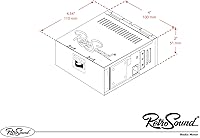
  • Dimensions: The unit measures 4 x 5.38 x 2 inches, engineered to occupy a standard single-DIN factory opening in compatible GM dashboards.
  • Amplifier Output: An onboard 4-channel amplifier delivers 18W per channel, sufficient for driving factory-configuration speakers in vintage vehicle cabins.
  • Tuner: Includes a built-in AM/FM tuner supporting up to 30 user-programmable pre-set stations.
  • Bluetooth: Built-in Bluetooth enables wireless audio streaming from smartphones and other compatible Bluetooth-enabled devices.
  • Auxiliary Input: A 3.5mm auxiliary jack provides wired input for Sirius satellite tuners, portable media players, and other non-Bluetooth audio sources.
  • Audio Channels: Outputs audio across 4 channels in surround configuration, distributing sound to all four speaker positions in the vehicle.
  • Audio Encoding: Processes analog audio encoding, with no digital signal processing or high-resolution audio format support.
  • Controls: Operated via push-button controls, consistent with the period-correct appearance of 1970s and early 1980s GM factory radios.
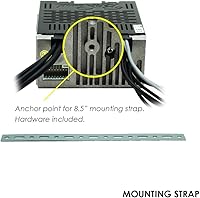
  • Fitment System: Uses RetroSound's patented adjustable shaft system, which accommodates varying factory dash thicknesses without requiring custom trim rings or dash modifications.
  • Compatible Vehicles: Engineered specifically for 1973-85 Chevrolet C/K trucks, Blazer, Caprice, Corvette, El Camino, Impala, Malibu, Monte Carlo, and Suburban; 1973-85 GMC trucks; 1973-85 Oldsmobile models; and 1973-85 Cadillac models.
  • Compatible Devices: Works with Bluetooth smartphones, Sirius satellite radio tuners, and portable audio players connected via the 3.5mm auxiliary input.
  • Connector Type: Features a 3.5mm jack as the primary wired input connector for external audio devices.
  • Pack Contents: Sold as a single-unit pack containing one head unit; no additional speakers, wiring harnesses, or mounting accessories are confirmed included.
  • Item Weight: Listed item weight is 0.01 ounces, which reflects a shipping or packaging weight entry rather than the actual installed unit weight.
  • Availability Date: This model was first made available for purchase in June 2017.

Related Reviews
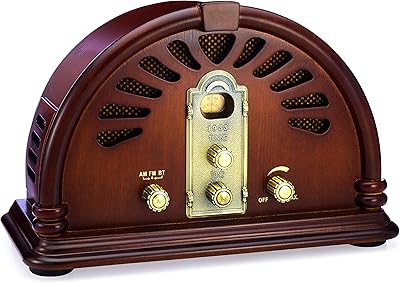
ClearClick VR44 Bluetooth AM/FM Radio
78%
88%
Build Quality
74%
Sound Quality
71%
Bluetooth Performance
67%
AM/FM Reception
93%
Ease of Use
More
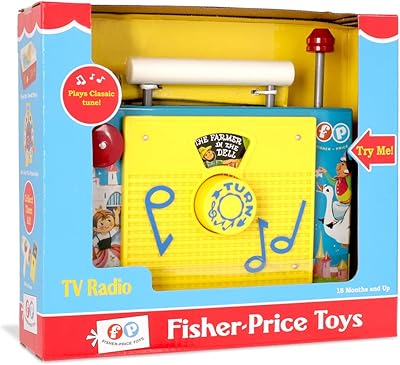
Fisher Price Classic TV Radio
87%
93%
Nostalgic Appeal
89%
Ease of Use
88%
Educational Value
91%
Design & Aesthetics
85%
Bluetooth Connectivity
More
mooas Retro Bluetooth Radio Alarm Clock Speaker
65%
81%
Design & Aesthetics
51%
Audio Quality
62%
FM Radio Performance
58%
Wireless Charging
44%
Alarm Functionality
More
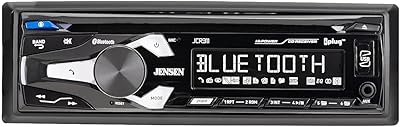
Jensen JCR311 Car Stereo Radio
82%
81%
Sound Quality
89%
Bluetooth Connectivity
93%
Ease of Installation
72%
Display Visibility
84%
FM/AM Reception
More
PRUNUS Retro Bluetooth Radio Speaker
87%
85%
Sound Quality
90%
Ease of Use
92%
Portability
75%
Radio Reception
88%
Build Quality
More
Cobra 29 LTD CB Radio
82%
88%
Audio Clarity
84%
Build Quality
91%
Ease of Use
86%
AM/FM Dual-Mode Performance
78%
SWR Calibration Meter
More
Videyas S302 Retro AM FM Radio with Bluetooth
85%
88%
Bluetooth Performance
91%
Portability
84%
Reception Quality
79%
Sound Quality
70%
Build Quality
More
Pyle PUNP34BT Retro Bluetooth Radio Speaker
75%
88%
Visual Design & Aesthetics
91%
Ease of Setup
71%
Bluetooth Reliability
62%
Sound Quality
58%
AM/FM Reception
More
LoopTone DS-R08-W Retro AM/FM Bluetooth Radio
76%
88%
Visual Design & Aesthetics
91%
Ease of Use
63%
AM/FM Reception Quality
79%
Bluetooth Performance
61%
Sound Quality
More
Caulikine ZS-02 Portable Retro Bluetooth Radio
75%
88%
Retro Aesthetic & Design
74%
Radio Reception Quality
79%
Bluetooth Connectivity
63%
Audio Output Quality
67%
Battery Life
More

FAQ

Yes, provided your truck falls within the 1973-85 C/K range, the Laguna radio is designed to occupy the factory opening directly. RetroSound's adjustable shaft system handles variations in dash depth, so you should not need to cut, trim, or fabricate anything. That said, it is worth confirming your specific cab style and trim level before ordering, since dash configurations can vary even within the same model year.

Generally, yes. Buyers consistently report stable pairing with current-generation smartphones, and reconnection after engine starts tends to be automatic once the initial pairing is done. It supports standard A2DP audio streaming, so any phone with Bluetooth audio output should work without needing a separate app or adapter.

Probably not at full potential. The onboard amplifier puts out 18W per channel, which is adequate for stock-sensitivity factory speakers but will underperform with higher-wattage or lower-sensitivity aftermarket components. If you have already upgraded your speakers, you would get better results pairing this head unit with a dedicated external amplifier rather than relying on the built-in one.

No, this classic-car radio does not include a USB port. Connectivity is limited to Bluetooth for wireless streaming and a 3.5mm auxiliary jack for wired input. If USB charging or flash drive playback is important to you, this unit will not meet that need.

For someone comfortable with basic automotive wiring, it is a manageable job. The unit is designed to replace a factory radio, so the general wiring logic follows a familiar pattern. That said, harness compatibility can vary across model years and body styles within the 1973-85 range, so it is worth checking whether a plug-and-play wiring adapter exists for your specific vehicle before you start. A few owners have noted that certain model-year wiring setups required some adaptation.

Yes. The 3.5mm auxiliary input is specifically suited for connecting a Sirius tuner or similar external audio source. You would handle the Sirius subscription and tuner hardware separately, then run audio output from the tuner into the aux jack on this unit.

According to the manufacturer's compatibility list, 1973-85 Oldsmobile models are covered, so a 1985 Cutlass should fall within range. However, dash opening dimensions and shaft depth can vary between body styles within that lineup, so confirming fitment against your specific body style and trim configuration before purchase is the safest approach.

No, it does not. This unit has no touchscreen interface and does not support CarPlay, Android Auto, or any app-integrated display functionality. Connectivity is limited to Bluetooth audio streaming and the 3.5mm auxiliary input.

It is designed precisely to avoid that problem. The push-button controls and proportions are styled to match the factory radio aesthetic of the era, so it tends to read as period-correct at a glance. It will not be an exact replica of your original unit, but it avoids the modern-tech appearance of a touchscreen or LED-heavy unit that would stand out in a clean restoration.

Warranty details are not specified in the product listing, so the safest step is to contact RetroSound or the retailer directly before purchasing to confirm current warranty terms and what the claims process looks like. For a specialty part at this price tier, clarifying support coverage ahead of time is worth the extra step.

Where to Buy