Overview

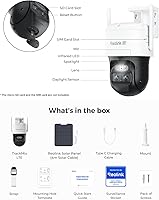
The Reolink TrackMix LTE+ 4G Solar Security Camera is built for one specific problem: keeping an eye on a remote location where you have neither a WiFi signal nor a power outlet nearby. Worth stating early — this camera has no WiFi support whatsoever, running exclusively on cellular LTE, which is a dealbreaker for some and a real advantage for others. What separates this solar LTE camera from typical PTZ options is its dual-lens design, and Reolink ships it with both a solar panel and a SIM card right in the box. It targets rural property owners, construction managers, and off-grid deployments. Its 3.9-star rating across 111 reviews suggests it delivers on core promises, with a few honest caveats worth understanding before buying.
Features & Benefits

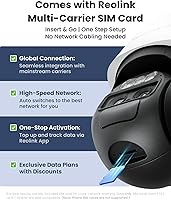
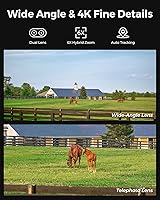
The defining feature is the split-screen dual view — one lens holds the wide scene while the other zooms in simultaneously, so you never sacrifice context for detail. The PTZ motor sweeps 355° horizontally and locks onto moving subjects automatically, following them across the frame without any manual input. After dark, you get passive infrared for quiet monitoring or an active spotlight for full-color footage. The solar-powered setup eliminates wiring entirely, though extended stretches of overcast weather can stress the battery, so your local climate matters. The included SIM auto-connects to whichever AT&T or T-Mobile signal is strongest, and smart detection filters people, vehicles, and pets to reduce the noise of meaningless alerts.

Best For

This cellular PTZ camera makes the most sense when your property sits well beyond any home router — remote farmland, a hunting cabin, a construction site, or a vacation home that sits unattended for long stretches. The wide PTZ sweep means a single unit can cover a large perimeter instead of requiring multiple fixed cameras. That said, it is genuinely not for everyone. You have to be comfortable managing a data plan through an app, because WiFi is simply not an option here. If you already have solid WiFi coverage and a working home security system, the ongoing LTE data cost may not justify making the switch to this camera.

User Feedback

Owners of the TrackMix LTE+ consistently point to image sharpness and the speed of auto-tracking as genuine highlights. The solar setup earns particular praise in sunny climates for being close to maintenance-free. On the downside, the 15fps frame rate surfaces repeatedly — footage can look noticeably choppy compared to cameras running at 30fps, especially during fast movement. Data consumption also catches buyers off guard; continuous LTE monitoring can burn through a plan faster than expected. A handful of reviewers found motion alert sensitivity needed manual adjustment straight out of the box, and opinions on the in-app SIM refill experience are genuinely split. With just 111 ratings to date, these patterns are directionally useful but not yet definitive.

Pros

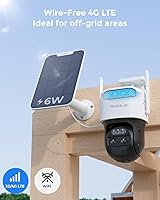
  • Runs completely independent of WiFi and wall power, making it viable for truly remote locations.
  • Dual-lens split view delivers wide-area context and zoomed detail on a single screen at the same time.
  • Included solar panel and SIM card mean you can have the camera operational without buying anything extra.
  • 4K 8MP resolution captures fine detail — license plates, faces, and identifying features hold up well.
  • Auto-tracking follows moving subjects across the frame without requiring manual pan control.
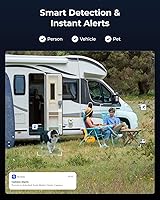
  • Smart detection cuts down on nuisance alerts by distinguishing people, vehicles, and pets from noise.
  • Multi-carrier SIM automatically latches onto the strongest AT&T or T-Mobile signal available.
  • IP65 weatherproofing handles rain and outdoor conditions without special housing.
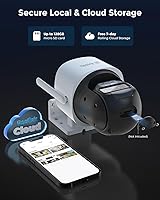
  • Free 7-day cloud storage provides a safety net even if local microSD access is unavailable.
  • 355° pan range means a single unit can realistically cover a large perimeter on its own.

Cons

  • 15fps frame rate makes fast-moving subjects look choppy compared to standard 30fps cameras.
  • LTE data consumption can exceed expectations quickly, especially with frequent motion events.
  • Solar charging is weather-dependent — sustained overcast days can drain the battery faster than it recharges.
  • The in-app SIM refill process has drawn mixed feedback, with some users finding it unreliable.
  • Motion alert sensitivity requires manual tuning out of the box to reduce false triggers.
  • At over six pounds, repositioning or adjusting the mount after initial installation is not quick work.
  • The review pool is still relatively small, making it harder to assess long-term reliability with confidence.
  • No WiFi fallback means a weak or dropped cellular signal leaves you with no remote access at all.
  • App experience has been inconsistent for some users, with occasional connectivity and notification issues.

Ratings

The scores below reflect our AI-powered analysis of verified global buyer reviews for the Reolink TrackMix LTE+ 4G Solar Security Camera, with spam, bot activity, and incentivized submissions actively filtered out before scoring. Each category is weighted against real purchase experiences from owners across rural, agricultural, and industrial deployment settings. Both what this camera does well and where it genuinely falls short are represented transparently in every score.

Image Clarity
88%
The 4K dual-lens output consistently earns praise from owners who need to identify faces, read license plates, or document site activity from a distance. In good daylight, the level of detail captured is noticeably better than mid-range single-lens alternatives, and most buyers report the footage holds up well when zoomed in during playback.
A handful of users note that the telephoto lens loses some sharpness at maximum hybrid zoom, particularly in lower-contrast scenes. The dual-lens split-screen can also feel cramped on smaller phone screens, making fine detail harder to assess on the go.
Night Vision
81%
19%
Having both infrared and spotlight modes gives owners real flexibility — quiet passive monitoring for wildlife or sensitive areas, and active full-color illumination when identification is the priority. Reviewers at farm perimeters and construction sites particularly value the color night footage for confirming whether an alert is a person or an animal.
The spotlight range is functional but not exceptional, and some users find it triggers inconsistently during fast movement at the edge of its detection zone. Infrared B&W footage, while reliable, can struggle with subjects wearing dark clothing against dark backgrounds.
PTZ & Auto-Tracking
79%
21%
The auto-tracking feature is one of the more praised aspects of this cellular PTZ camera — it locks onto a moving subject and follows them across the frame without manual input, which is particularly useful when monitoring large open areas remotely. Most owners report it picks up subjects quickly and keeps them centered through most of a crossing event.
At 15fps, the tracking motion itself can look visually choppy, which is a real limitation when trying to clearly document a fast-moving vehicle or running individual. A small number of reviewers noted the camera occasionally loses the subject when they move behind an obstacle and reappears at an unexpected angle.
Solar Reliability
72%
28%
In consistently sunny climates — the American Southwest, open farmland with good southern exposure, or coastal regions with long daylight hours — owners report the battery stays comfortably charged without any manual intervention. The combination of solar charging and battery backup means the camera keeps running through the night without issue in favorable conditions.
Buyers in the Pacific Northwest, northern states, or anywhere with heavy seasonal cloud cover report the battery depleting noticeably during stretches of poor weather. The solar panel is adequate for average conditions but not overbuilt, so users in marginal climates should plan for occasional supplemental charging rather than assuming full off-grid independence year-round.
Cellular Connectivity
74%
26%
The multi-carrier SIM that automatically selects the stronger AT&T or T-Mobile signal is a genuine convenience, especially for buyers who are not sure which carrier has better coverage at their specific rural location. Most reviewers in areas with at least moderate LTE coverage report stable connectivity and reliable alert delivery.
Signal-dependent reliability is a real variable — in dead zones or fringe LTE areas, users experience dropped connections and delayed alerts that undermine the camera's usefulness. Coverage quality is ultimately outside Reolink's control, but it is the single biggest factor in whether this camera performs well for any individual buyer.
Data Consumption
58%
42%
Users who configure the camera conservatively — local microSD recording with event-clip-only uploads and limited live streaming — report manageable data usage over a monthly cycle. The Reolink app does offer visibility into data consumption, which helps owners identify and adjust settings that are burning through their allowance.
This is one of the most consistent pain points in buyer feedback. Owners who stream live video frequently or who have the camera deployed in a high-traffic area can burn through a meaningful data plan faster than anticipated. Several reviewers expressed frustration at not having a clearer upfront expectation of typical monthly usage before purchasing.
App Experience
63%
37%
The Reolink app handles the core functions — live view, playback, PTZ control, SIM management, and alert settings — in a reasonably organized interface. First-time setup through the app is generally described as straightforward, and the ability to top up data and monitor usage from the same platform is convenient.
Recurring complaints mention intermittent notification delays, occasional difficulty reconnecting after a signal drop, and an in-app SIM refill process that some users find confusing or unreliable. The app is functional but has not yet reached the polish level that buyers at this price point might expect.
Smart Detection
76%
24%
The ability to filter alerts by person, vehicle, or pet meaningfully reduces the volume of irrelevant notifications compared to cameras that trigger on any pixel change. Owners monitoring driveways and site entrances report that person and vehicle detection is accurate enough to trust as a first filter for deciding whether to check live footage.
Motion alert sensitivity requires manual calibration after installation — the default settings trigger too frequently for most environments, and finding the right threshold takes trial and error. A small number of users report occasional missed detections when subjects approach from unusual angles or in poor lighting conditions.
Build Quality
77%
23%
The IP65 weatherproofing earns consistent trust from buyers who have run this camera through rain, dust, and temperature swings without issues. The dome housing feels durable in hand, and owners who have mounted it on barn exteriors or construction trailers report no weather-related failures after extended outdoor exposure.
The plastic construction, while adequate, does not feel as premium as the price might suggest, and a few users note that the dome cover can collect dust and spider webs that require periodic cleaning to maintain image clarity. At over six pounds, the mount hardware needs to be solid — lightweight brackets will not hold this camera securely.
Installation Ease
71%
29%
The absence of power and network cabling genuinely simplifies the physical installation — you are only dealing with the camera mount and positioning the solar panel within cable reach. Most buyers with basic DIY comfort level report completing the full setup, including app pairing and SIM activation, within a couple of hours.
The camera's weight makes solo ceiling installation awkward, and drilling into hard exterior surfaces like concrete or dense wood adds complexity. Post-installation fine-tuning of the pan position, tilt angle, and motion zones takes additional time that less tech-savvy buyers should factor into their expectations.
Value for Money
67%
33%
For buyers with a genuine off-grid monitoring need — a remote cabin, a rural construction site, farmland with no infrastructure — the combination of dual-lens 4K, solar power, and a bundled SIM in one package represents solid value relative to the cost of installing wired alternatives in those locations.
The ongoing data plan cost adds a real recurring expense that some buyers underestimate before purchasing, which affects the long-term value calculation. Buyers who later discover they have adequate WiFi coverage, or who find the 15fps footage insufficient for their needs, tend to feel the price was not justified for what they received.
Local Storage
82%
18%
MicroSD support up to 128GB — with hardware capable of handling larger cards — gives owners meaningful on-device recording capacity, which is particularly important when cellular connectivity is intermittent. Loop recording ensures the camera keeps writing new footage without requiring manual card management.
The microSD card itself is not included in the box, which means buyers need to factor in an additional purchase. High-traffic deployments can fill even a large card faster than expected, and the card slot's accessibility on the mounted camera is not always convenient for frequent swap-outs.
Alert Responsiveness
73%
27%
When cellular connectivity is solid, push and email alerts arrive with minimal delay, giving remote owners a reasonably timely heads-up about activity on their property. The siren option adds a deterrent layer that buyers monitoring sites with trespassing concerns find genuinely useful.
Alert timing is directly tied to signal quality, and in areas with inconsistent LTE, notifications can arrive several minutes after the triggering event — sometimes after the subject has already left the frame. This latency reduces the practical value of real-time alerts for buyers in marginal coverage zones.
Cloud Storage
78%
22%
The free 7-day cloud storage is a meaningful inclusion at this tier, providing an accessible off-device backup that requires no additional subscription to activate. Buyers who lose a microSD card to theft or damage appreciate having recent event clips safely stored and retrievable through the app.
Seven days of retention is the bare minimum for buyers who do not check footage frequently — a week can pass quickly during a vacation or work trip, and anything older is permanently gone. There is no option currently to extend retention without moving to a paid third-party solution.

Suitable for:

The Reolink TrackMix LTE+ 4G Solar Security Camera was built for people who need real security coverage in places where the usual infrastructure simply does not exist. Rural landowners protecting large acreage, farmers monitoring gates and outbuildings, and construction site managers who need eyes on equipment overnight are all natural fits. The dual-lens design means one camera can simultaneously hold the broad scene and zero in on a specific subject, which reduces the need to install multiple units across a wide property. Because it runs entirely on solar power with a battery backup and connects via 4G LTE, it can be mounted almost anywhere that gets reasonable sunlight and a cellular signal. Buyers who are comfortable managing a data plan through a smartphone app, and who prioritize self-sufficiency over dependence on a home network, will find this camera covers genuinely difficult monitoring scenarios with minimal ongoing maintenance.
Not suitable for:

Anyone expecting this camera to work alongside an existing home WiFi setup will be immediately disappointed — the Reolink TrackMix LTE+ 4G Solar Security Camera has no WiFi capability whatsoever, and that is not a workaround limitation but a fundamental design choice. If you already have reliable internet at your property and are simply looking for a backyard or driveway camera, there are better-suited options at a lower ongoing cost that do not require managing a monthly data plan. The 15fps frame rate is also a real consideration: if capturing fast-moving vehicles or people in sharp, fluid motion is a priority, you will likely find the footage underwhelming compared to standard 30fps cameras. Users in regions with extended overcast seasons should not expect solar charging to fully offset battery draw during those stretches without supplemental power planning. Finally, buyers who prefer a hands-off, plug-and-forget experience may find the app-based SIM management and motion sensitivity tuning more involved than they bargained for.
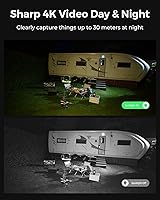
Specifications

  • Resolution: Both lenses capture at 4K 8MP, producing footage detailed enough to identify faces and license plates at a meaningful distance.
  • Network: Connects exclusively via 3G/4G LTE cellular — there is no WiFi mode, so a cellular signal is required for all remote access and alerts.
  • Pan & Tilt: The motorized mount covers 355° of horizontal pan and 90° of vertical tilt, giving near-complete spherical coverage from a single installation point.
  • Zoom: A 6x hybrid zoom combines optical and digital magnification across the dual-lens system to bring distant subjects into readable detail.
  • Frame Rate: Video is recorded and streamed at 15 frames per second, which is functional for surveillance but noticeably less fluid than 30fps cameras during fast motion.
  • Night Vision: Two night vision modes are available: passive infrared for discreet black-and-white footage, and an active spotlight for full-color illumination in total darkness.
  • Power Source: The included solar panel charges a built-in battery continuously during daylight, with the battery providing backup power during overnight hours or low-light days.
  • SIM Card: A multi-carrier SIM is included in the box and automatically connects to whichever AT&T or T-Mobile signal is strongest at the installation location.
  • Smart Detection: On-camera AI distinguishes between people, vehicles, and pets to filter out irrelevant motion events and deliver more precise push and email alerts.
  • Local Storage: A microSD card slot supports cards up to 128GB for standard use, with the hardware technically capable of handling cards up to 512GB.
  • Cloud Storage: Seven days of cloud storage is included at no extra charge, providing an off-device backup accessible through the Reolink app.
  • Weather Rating: The camera body carries an IP65 rating, meaning it is fully protected against dust ingress and resistant to water jets from any direction.
  • Dimensions: The camera unit measures 8.98 × 5.78 × 5.08 inches, making it a mid-to-large outdoor dome unit by current PTZ camera standards.
  • Weight: The camera weighs 6.05 pounds, which should be factored into mounting hardware selection, particularly for ceiling installations.
  • Mounting Type: Designed for screw-in installation on either a ceiling or wall surface, with no tool-free or adhesive mounting option supported.
  • App Compatibility: Managed through the Reolink mobile app on iOS and Android, with additional support for Amazon Alexa voice commands.
  • Video Format: Footage is encoded in MPEG-4 and saved as MP4 files, a widely compatible format for playback and archiving on most devices.
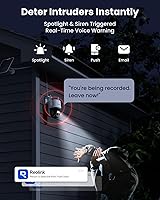
  • Alert Types: Notifications are delivered via app push alerts, email, and an onboard audio siren, which can be triggered by motion detection events.

Related Reviews
Techage CQ1SG 4G LTE Solar Security Camera
73%
88%
Ease of Setup
82%
Video Quality
79%
Night Vision Quality
67%
Solar & Battery Performance
74%
4G Connectivity Reliability
More
MOES S52 4G LTE Solar Security Camera
82%
89%
Value for Money
91%
Ease of Setup & Installation
84%
Video Quality (2K & Night Vision)
70%
Motion Detection Accuracy
88%
Battery Life & Solar Power
More
ANRAN G3M3 4G LTE Cellular Solar Security Camera
85%
88%
Video Quality
85%
Battery Life
81%
Motion Detection Accuracy
93%
Ease of Setup
87%
Night Vision
More
ieGeek ZY-G2 4G LTE Solar Security Camera
87%
94%
Video Quality
91%
Night Vision Performance
89%
Motion Detection Accuracy
85%
Audio Communication
87%
Battery & Solar Efficiency
More
Tefrio RBX-S73 4G LTE Solar Security Camera
74%
88%
Ease of Setup
76%
Cellular Connectivity
61%
Solar Charging Performance
83%
Image Quality
62%
App Experience
More
HOSAFE ZC-YT10 4G LTE Solar Security Camera
70%
83%
Cellular Connectivity
76%
Solar & Battery Life
71%
Video Clarity
67%
Night Vision Quality
86%
Ease of Setup
More
STAMOL ZY-G9 4G LTE Cellular Solar Security Camera
82%
88%
Ease of Installation
91%
Video Quality (2K Night Vision)
84%
Motion Detection Accuracy
79%
Battery Life
87%
Weatherproof Durability
More
eufy Security S330 4G LTE Solar Camera
76%
88%
Cellular Connectivity Reliability
67%
Solar Charging Performance
91%
4K Image Quality (Daytime)
74%
Night Vision & Low-Light Clarity
86%
Pan & Tilt Coverage
More
Reolink Go PT Ultra 4G Solar Security Camera
73%
88%
Image Quality
83%
Night Vision Performance
67%
Solar Charging Reliability
74%
4G Connectivity & Signal
58%
4G Data Consumption
More
Vosker VKX Solar Cellular Security Camera
73%
83%
Solar Reliability
86%
Cellular Connectivity & Setup
51%
Subscription Cost & Value
74%
Video Quality
67%
Night Vision Performance
More

FAQ

Not for remote access or alerts — without a cellular signal, you lose the ability to view live footage, receive notifications, or control the PTZ remotely. Local recording to a microSD card will still function if one is installed, but you would need to physically retrieve the card to review footage. For any location with truly dead cellular coverage, this camera is not the right fit.

The included SIM comes with an initial data allowance, but ongoing use does require topping up data through the Reolink app. There is no contract or activation fee, and you only pay for the data you load onto the SIM. How quickly that data depletes depends heavily on how much motion your camera detects and how often you check the live feed.

No, that is actually one of the more useful aspects of this setup. The camera displays both lenses simultaneously on a split screen, so you see the full wide-angle scene alongside a zoomed-in view of the same area at the same time. You do not have to sacrifice one for the other, which is a genuine advantage over standard single-lens PTZ cameras.

In regions with consistent sunlight, the solar panel generally keeps up with the camera's power demands. However, during extended overcast periods or short winter days at higher latitudes, the battery can deplete faster than the panel recharges it. If your location regularly sees weeks of heavy cloud cover, it is worth having a contingency plan — some users connect a supplemental power source during those stretches.

It is designed to operate as a standalone cellular camera through the Reolink app, and integration with third-party NVR systems or existing home security hubs is not straightforward. It supports Amazon Alexa for basic voice control, but deeper ecosystem integration is limited. If you need a camera that slots neatly into a broader security platform, you would want to verify compatibility before purchasing.

User feedback on auto-tracking is generally positive — the camera is reasonably quick to lock onto a moving person or vehicle and follow them across its pan range. That said, at 15fps, the tracking motion can appear a little stuttery compared to smoother-running cameras. It works well enough for identifying what happened and who was involved, though it is not as polished as higher-frame-rate systems.

Most users report the physical installation is manageable with basic tools — you are drilling into a wall or ceiling and running no cables beyond positioning the solar panel within its cable reach. The Reolink app walks you through SIM activation and camera pairing. The heavier challenge for some buyers is fine-tuning the motion sensitivity and alert settings after installation, which can take a bit of trial and error.

Yes, the camera accepts a standard nano-SIM, so you can use your own AT&T or T-Mobile SIM if you already have a data plan you prefer. Keep in mind the camera only supports those two carriers in the US, so a SIM from a carrier outside that network will not work regardless of its physical compatibility.

This is one of the more common surprises for new owners. Data usage varies widely depending on how busy the area is, how often motion events trigger clip uploads, and how frequently you stream live video. In an active environment, consumption can add up faster than expected. Setting the camera to record locally and only send alert clips — rather than continuous streaming — is one of the better ways to manage data consumption.

The camera operates on a loop-recording system, meaning once the card reaches capacity, it begins overwriting the oldest footage to make room for new recordings. The free 7-day cloud storage provides a parallel backup for recent event clips. If you are monitoring a high-traffic area, a higher-capacity card will give you more historical footage before overwriting begins.