
Overview

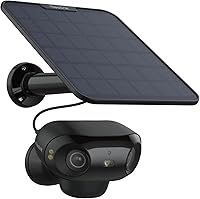
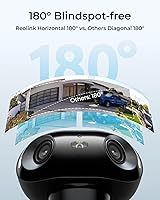
The Reolink Argus 4 Pro Solar Security Camera arrives as one of the more thoughtfully designed wireless outdoor cameras to hit the market in late 2024. Rather than asking you to string multiple cameras across a wall, it uses two lenses working together to cover a full 180° panoramic view in true 4K — one camera doing the job of several. It runs entirely on battery and solar power, with the panel included in the box. No subscription required, and local storage keeps your footage off the cloud entirely. For a wire-free outdoor setup, that is a genuinely compelling starting point.

Features & Benefits

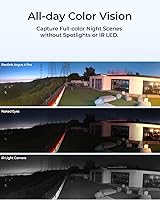
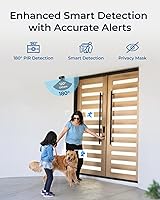
The dual-lens design is the standout feature here. Each lens has a wide F/1.0 aperture — the same kind of opening you would find on a quality low-light camera — which means the ColorX night vision actually produces color footage after dark rather than the washed-out gray you get from most outdoor security cameras. During daylight, the stitched panoramic image holds up well with minimal warping at the edges. On the connectivity side, Wi-Fi 6 support matters because it handles bandwidth more efficiently — especially useful when streaming 4K video over a crowded home network. The AI motion filtering is genuinely useful too, distinguishing between a person walking up your driveway and a passing car, so you are not drowning in pointless notifications.

Best For

This dual-lens outdoor cam is a strong fit for homeowners who want to monitor a wide outdoor area — a full driveway, the front of a garage, or a broad backyard zone — without drilling into walls for wiring. If you live somewhere that gets reliable sun for most of the year, the solar setup becomes genuinely low-maintenance. That said, buyers in consistently overcast climates should go in knowing the battery may need supplemental charging during gray stretches. It also suits anyone tired of paying monthly subscription fees just to access their own security footage. The 4K resolution and AI filtering make it particularly useful where it matters most — identifying who or what triggered an alert, quickly and clearly.

User Feedback

Among the roughly 300 buyers who have weighed in so far, the picture quality and straightforward installation are the most consistent points of praise. Several users switching from Arlo or Ring noted the value of owning their footage outright without any ongoing costs. The criticisms are more nuanced. A handful of reviewers mention that the companion app could be more polished, particularly around initial setup and notification controls. The 15fps frame rate — lower than the 30fps you would get from a hardwired camera — occasionally gets flagged as a limitation when reviewing fast-moving scenes. A few buyers in shadier locations also report that the solar panel alone is not always enough to sustain the battery through extended overcast periods.

Pros

  • Covers a full 180° wide area with one camera, eliminating the need to buy and sync multiple units.
  • Full-color night vision with wide-aperture lenses produces genuinely useful footage after dark, not just gray shapes.
  • No monthly fees — footage is stored locally on a microSD card or Reolink Home Hub you already own.
  • AI detection reliably distinguishes people, vehicles, and pets, cutting down on pointless false-alarm notifications.
  • Solar panel is included in the box, making the wire-free setup truly self-contained from day one.
  • Wi-Fi 6 support means smoother 4K streaming on compatible routers, especially on busy home networks.
  • IP66 weatherproofing handles rain, dust, and temperature swings without requiring extra protection.
  • Setup is straightforward enough that most buyers report getting it running without professional help.
  • The dual H.264/H.265 encoding keeps local file sizes manageable without sacrificing image quality.

Cons

  • 15fps frame rate can cause motion blur when reviewing footage of fast-moving people or vehicles.
  • Solar performance is climate-dependent — buyers in low-sunlight regions may need to recharge the battery manually.
  • The Reolink app has a learning curve and has drawn criticism for its notification and playback controls.
  • microSD card is not included, adding an extra purchase to reach the camera's full local storage potential.
  • Initial Wi-Fi setup can be finicky, particularly for users whose routers broadcast 2.4GHz and 5GHz on the same network name.
  • The 4K dual-lens stitching works best at moderate distances — very close subjects near the edges can show some distortion.
  • At nearly four pounds, the dome housing is bulkier than some competing cameras, which can limit discreet mounting options.
  • Reolink Home Hub must be purchased separately if you want multi-camera centralized storage beyond a single SD card.

Ratings

The scores below for the Reolink Argus 4 Pro Solar Security Camera were generated by our AI review engine after analyzing verified global buyer feedback, with spam, bot-submitted, and incentivized reviews actively filtered out. Each category reflects the honest balance of what real users praised and what genuinely frustrated them — nothing is glossed over. From standout image quality to legitimate gripes about frame rate and app polish, the ratings tell the full picture.

Image Quality
93%
Buyers consistently describe the 4K panoramic footage as among the sharpest they have seen from a battery-powered outdoor camera. The dual-lens stitching holds up well across the wide frame, and details like license plate numbers or facial features remain readable at a practical distance during daylight.
A small number of users report visible distortion at the far edges of the 180° frame, particularly when subjects are very close to the camera. This is largely inherent to wide-angle stitching and not a defect, but it can be jarring if you are not expecting it.
Night Vision
88%
The ColorX system earns genuine praise from users who switched from cameras that only produce grayscale footage after dark. Reviewers mention being able to identify clothing colors, vehicle colors, and facial features in low-light conditions — a meaningful upgrade for real security use.
A handful of buyers note that color accuracy degrades noticeably in very deep darkness when there is no ambient light source nearby. The effective full-color range is also shorter than the camera's maximum detection distance, so distant subjects at night tend to lose color detail first.
Solar Performance
74%
26%
In sunny climates, users report that the solar panel keeps the battery consistently topped up with minimal manual intervention. Buyers in California, Texas, and similar sun-heavy regions describe it as a true set-and-forget setup that has run for months without needing a manual charge.
Buyers in northern states, the UK, or other overcast-prone regions tell a different story — some report the battery draining faster than the panel can recover it during gray winter months. The solar dependency is the single most climate-sensitive variable in this camera's long-term reliability.
AI Motion Detection
86%
The ability to separate person alerts from vehicle or pet triggers is one of the most consistently praised aspects of this camera. Reviewers who previously dealt with constant false alerts from wind-blown trees or passing cars describe the AI filtering as a noticeable quality-of-life improvement.
Occasional misclassifications still happen — particularly between small pets and humans in certain lighting conditions. A small group of users also report that fine-tuning the detection zones through the app requires more trial and error than it should.
Wide-Angle Coverage
91%
Covering a full driveway or wide garage front with a single unit is the feature buyers mention most when explaining why they chose this over competitors. The 180° view eliminates the narrow sightlines that frustrate users of standard single-lens cameras and removes the need for complex multi-camera positioning.
The panoramic coverage trades depth for width — objects at the very periphery of the frame appear smaller and less detailed than centrally positioned subjects. Users expecting telephoto-style reach on the sides of the frame may find the trade-off limiting.
Setup & Installation
82%
18%
The majority of buyers describe the physical installation as straightforward, with the included bracket, template, and hardware covering most standard wall and eave configurations. The Reolink app guides users through the initial pairing process step by step, which most find clear enough to complete without support.
Wi-Fi setup causes friction for a notable subset of users, especially those whose routers broadcast 2.4GHz and 5GHz on the same SSID. Separating the bands or adjusting router settings is a prerequisite some buyers were not prepared for.
App Experience
63%
37%
The Reolink app covers the essentials reliably — live view, motion alert management, playback, and detection zone configuration all function as intended once the camera is connected. Users who stick to basic monitoring find the interface adequate for day-to-day use.
The app is a recurring source of frustration in reviews, with complaints centered on notification reliability, unintuitive menu structures, and occasional lag during live playback. It is functional but noticeably behind the polish level of competitors like Arlo or Google Nest.
Video Fluidity
61%
39%
For standard surveillance scenarios — monitoring a parked vehicle, watching a front door, or checking on a stationary area — the 15fps recording rate produces footage that is perfectly usable and easy to review after an event.
The 15fps cap is a genuine limitation when fast motion is involved. Reviewers flagging this issue mention that a running person or a vehicle driving quickly across the frame can appear choppy, making it harder to extract clear still frames from the footage. This is the most commonly cited technical disappointment.
Build Quality
84%
The dome housing feels solid and well-assembled, and the IP66 weatherproofing rating holds up in practice — users in rainy climates report no ingress or degraded performance after extended outdoor exposure. The mounting hardware is also sturdier than some cheaper alternatives.
A few buyers mention that the camera is heavier than expected for a battery-powered dome, which can be a consideration on older exterior walls or softer mounting surfaces. The ABS plastic housing, while durable, does not feel premium to the touch.
Battery Life
77%
23%
When paired with reliable solar input, the battery stays above a healthy charge level for weeks at a time in typical usage patterns. Users with moderate motion event volumes — a few dozen per day — report that the battery management is efficient enough to avoid constant monitoring.
Heavy motion event volumes, cold temperatures, or reduced solar input can drain the battery more quickly than the specifications suggest. Some buyers in colder climates note significantly reduced battery endurance during winter, even with the solar panel connected.
Local Storage
89%
The no-subscription storage model is one of the most emotionally resonant selling points among buyers who switched from Ring or Arlo. Knowing footage is stored on a local card rather than a cloud server — with no recurring cost — generates real satisfaction among privacy-conscious users.
The microSD card not being included is a friction point that catches some buyers off guard, particularly at this price level. Users who want multi-camera centralized storage also need to budget for the Reolink Home Hub separately, which adds to the total outlay.
Wi-Fi Connectivity
79%
21%
On Wi-Fi 6 compatible routers, buyers report stable connections and smooth 4K playback without the buffering or dropped feeds that plagued their previous cameras. The dual-band support gives the camera flexibility across different home network setups.
Users without a Wi-Fi 6 router will not benefit from the headline connectivity feature, and a subset of buyers on older 2.4GHz-only networks report occasional stream instability during peak household network usage. The 5GHz band also requires reasonable signal strength at the camera's mounting location.
Value for Money
81%
19%
Buyers who factor in the long-term savings from no monthly subscription fees consistently rate the value highly relative to competing cloud-dependent systems. The inclusion of the solar panel — which is often a separate purchase elsewhere — adds meaningful out-of-box completeness.
The upfront cost is not trivial, and buyers who encounter app frustrations or solar limitations early on tend to feel the price is harder to justify. Adding a quality microSD card and potentially a Home Hub can push the real total noticeably beyond the sticker price.
Privacy & Data Security
88%
Local-only storage is a strong privacy advantage, and buyers who prioritize keeping footage off third-party servers explicitly cite this as a deciding factor. There is no mandatory account-based cloud sync, which resonates strongly with privacy-conscious homeowners.
Some technically inclined users flag that the Reolink app still requires account creation and internet connectivity for remote access, which introduces a data touchpoint even for local-storage setups. Those wanting fully offline operation will need to manage expectations around remote viewing.

Suitable for:

The Reolink Argus 4 Pro Solar Security Camera is an excellent match for homeowners who want broad outdoor coverage without the hassle of running electrical wiring or paying ongoing cloud fees. If your property has a wide entry point — a double-car garage, a long driveway, or an open backyard — the 180° dual-lens design means one camera handles what would otherwise require two or three. It suits buyers who live in sun-reliable climates and want a largely hands-off setup once the panel is positioned correctly. Those who have grown frustrated with subscription-based competitors like Ring or Arlo will find the local storage approach genuinely liberating — your footage stays yours, stored on a card you control. Tech-forward users with Wi-Fi 6 routers will also get the most out of the camera's ability to stream 4K footage reliably without hogging bandwidth from the rest of the home network.

Not suitable for:

The Reolink Argus 4 Pro Solar Security Camera is not the right call for everyone, and a few specific scenarios stand out as poor fits. If you live in a consistently overcast or rainy region, the solar panel alone may struggle to keep the battery sustained through extended gray stretches, meaning you could find yourself manually recharging more often than expected. Users who need fluid video of fast-moving subjects — say, monitoring a busy street or a large pet running across a yard — may find the 15fps frame rate limiting compared to hardwired cameras that run at 30fps. It is also not ideal for buyers who need night vision coverage beyond a very wide but relatively short effective range, or those who want to integrate it into a larger third-party smart home ecosystem beyond the Reolink app. If you already have a 2.4GHz-only router and no plans to upgrade, you will not benefit from the Wi-Fi 6 capabilities that help justify part of its premium positioning.

Specifications

  • Resolution: The camera captures footage at 8MP (4K UHD), delivering sharp, detailed imagery suitable for identifying faces and license plates at a distance.
  • Viewing Angle: Two lenses work together to produce a stitched 180° panoramic field of view with minimal edge distortion.
  • Night Vision: ColorX full-color night vision uses an F/1.0 aperture and a 1/1.8-inch sensor to capture true-color footage in low-light conditions, supported by an IR-Cut filter.
  • Night Vision Range: The camera can detect and record usable footage at distances of up to approximately 100 meters in low-light environments.
  • Frame Rate: Video is recorded at 15 frames per second, which is sufficient for most stationary or slow-moving surveillance scenarios.
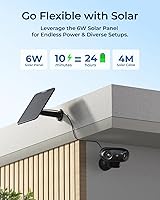
  • Solar Panel: A 6W solar panel is included in the box and connects to the camera to provide continuous daytime charging under direct sunlight.
  • Battery: The built-in lithium-ion battery holds 16.2Wh of capacity, which powers the camera during nighttime hours or periods without sufficient sunlight.
  • Wi-Fi Connectivity: The camera supports dual-band Wi-Fi 6, compatible with both 2.4GHz and 5GHz networks, enabling faster and more efficient video transmission than older Wi-Fi standards.
  • Local Storage: Footage can be stored locally on a microSD card of up to 512GB (sold separately) or on a Reolink Home Hub supporting up to two 512GB cards.
  • AI Detection: Onboard AI algorithms can distinguish between people, vehicles, and pets, allowing users to set category-specific motion alerts and detection zones.
  • Weatherproofing: The camera carries an IP66 rating, meaning it is fully dust-tight and protected against powerful water jets from any direction.
  • Video Encoding: Recorded footage uses either H.264 or H.265 encoding, with H.265 reducing file sizes by roughly half compared to H.264 at equivalent quality.
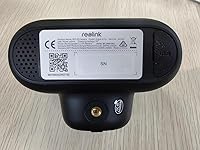
  • Form Factor: The camera uses a dome-style housing designed for wall-mount installation using the included bracket and mounting hardware.
  • Dimensions: The camera body measures 5.03 x 3.43 x 3.2 inches, making it a moderately sized dome unit suitable for most standard wall or eave placements.
  • Weight: The complete camera unit weighs 3.74 pounds, which should be factored in when selecting a mounting surface and hardware.
  • Video Format: All recorded clips are saved in MP4 format, which is widely compatible with most media players and editing software without conversion.
  • Compatible Devices: The camera is controllable via the Reolink app on Android and iOS devices, and is also compatible with the Reolink Home Hub for centralized management.
  • Power Source: The camera operates on a dual power system combining the built-in battery with the included solar panel, requiring no wired electrical connection.

Related Reviews
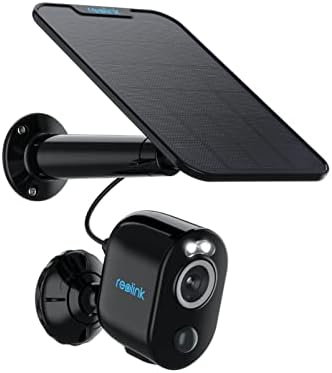
Reolink Argus 3 Pro Solar Security Camera
77%
88%
Image Quality
83%
Color Night Vision
66%
Solar Charging
71%
Battery Life
74%
AI Motion Detection
More
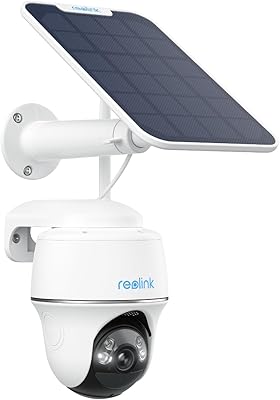
Reolink Argus PT Solar Security Camera
76%
83%
Image Quality
91%
Pan & Tilt Coverage
72%
Solar Charging
74%
Night Vision
67%
Motion Detection
More
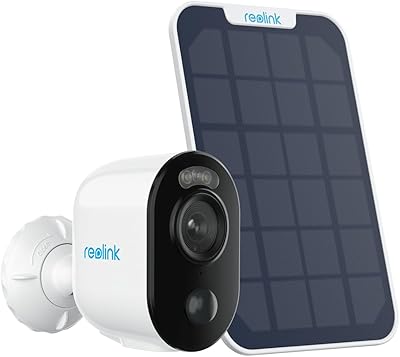
Reolink Argus 3E Solar Wireless Security Camera
77%
91%
Ease of Installation
88%
Video Quality (Daytime)
83%
Night Vision & Spotlight Performance
82%
AI Detection Accuracy
67%
Solar Charging Reliability
More
Reolink Argus Eco 2K Solar Security Camera
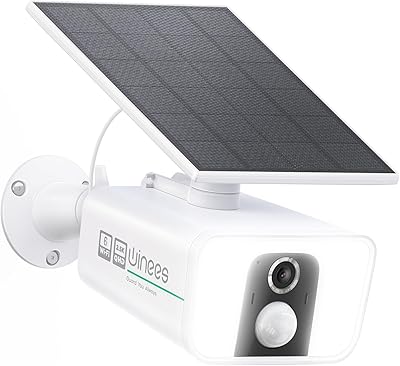
86%
94%
Ease of Installation
92%
Solar Power Efficiency
89%
Video Quality
70%
Motion Detection Accuracy
88%
Durability & Weather Resistance
More
Winees L2 Pro Solar Security Camera
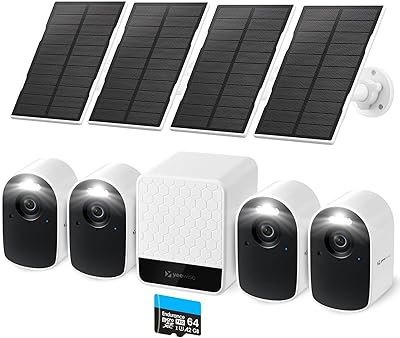
85%
88%
Video Quality
91%
Solar Charging Performance
85%
Night Vision
70%
Ease of Setup
89%
Motion Detection Accuracy
More
Yeewise YKW44 4-Cam Solar Security Camera System
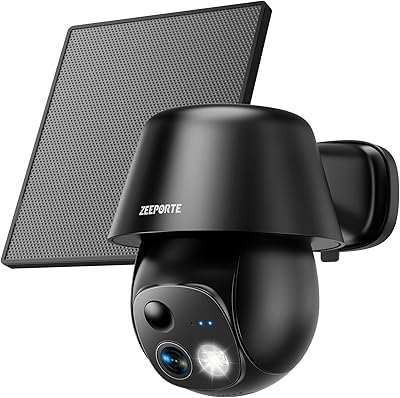
76%
83%
Video Clarity
79%
Night Vision Performance
67%
Solar Charging Reliability
81%
WiFi Connectivity & Stability
72%
App Experience
More
ZEEPORTE Snap 30T Solar Pan-Tilt Security Camera
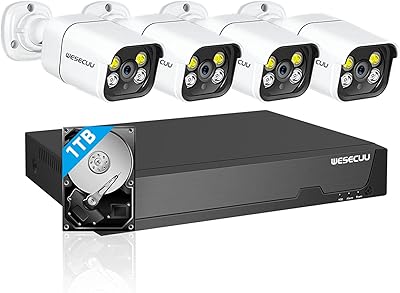
74%
83%
Image Clarity
79%
Night Vision
61%
Solar Charging Reliability
88%
Pan and Tilt Coverage
67%
App Experience
More
3-Link Battery Camera TB1 S Solar Security Camera
84%
91%
Setup & Installation
89%
Motion Detection Reliability
88%
Solar Charging Efficiency
83%
Night Vision Performance
85%
Weather Resistance
More
WESECUU 4CAM 4K POE Security Camera System
71%
83%
Image Clarity
78%
Night Vision Performance
71%
AI Detection Accuracy
54%
Mobile App Experience
76%
Setup & Installation
More
Hiseeu Wireless Pro 4K NVR Security Camera System, 8 Cameras, 3TB Storage
85%
94%
Setup and Installation
88%
Image Quality
92%
Storage Capacity
85%
Motion Detection Accuracy
87%
Night Vision Performance
More

FAQ

No, there is no subscription required. All footage is stored locally on a microSD card or a Reolink Home Hub, both of which you own outright. You never have to pay to access your own recordings.

In regions with consistent direct sunlight, the panel does a solid job of maintaining the battery through normal daily use. That said, if you live somewhere with long stretches of overcast or rainy weather, you may find the battery draining faster than the panel can replenish it. Keeping a USB-C cable handy for supplemental charging during gray seasons is a smart precaution.

The Argus 4 Pro is primarily designed to work within the Reolink ecosystem via its own app and the Reolink Home Hub. Native integration with Google Home or Alexa is limited, so if deep smart home integration is a priority, it is worth checking Reolink's current compatibility documentation before buying.

The dual-lens setup produces a true 180° horizontal field of view, which is wide enough to cover most standard driveways, garage fronts, or yard entrances in a single frame. The two lenses stitch their images together automatically, so you get one continuous wide view rather than two separate feeds.

No, the microSD card is sold separately. The camera supports cards up to 512GB, and you can also pair it with a Reolink Home Hub if you want centralized storage for multiple cameras.

Wi-Fi 6 is a newer wireless standard that handles data more efficiently, especially on networks with many connected devices. In practical terms, it means the camera is better at maintaining a stable connection and streaming 4K video smoothly without competing too aggressively with your phones, laptops, and other smart home devices for bandwidth. You will need a Wi-Fi 6 compatible router to take full advantage of this, though the camera does fall back to standard 2.4GHz Wi-Fi if needed.

The Reolink Argus 4 Pro Solar Security Camera uses ColorX technology, which captures genuine full-color footage at night rather than the monochrome imagery most outdoor cameras produce. The wide-aperture lenses let in significantly more light than average, so colors remain recognizable even in fairly dark conditions. The IR-Cut filter kicks in to preserve accuracy and prevent color washing from artificial light sources.

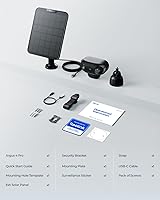
Yes, the installation is designed to be DIY-friendly. The box includes a mounting bracket, template, screws, and a quick-start guide. Most buyers report getting it mounted and connected to their app within an hour, though running the solar panel cable neatly may take a bit of planning depending on your wall surface.

If your network goes offline, the camera continues recording locally to the microSD card without interruption. You can access that stored footage once your connection is restored, or directly from the card if needed.

For typical home security use — someone walking up to a door, a car pulling into a driveway — 15fps is generally adequate. Where it shows its limits is with fast motion, like a running figure or a vehicle moving quickly across the frame, where footage can appear slightly choppy. It is a real trade-off worth knowing about, particularly if you are comparing against hardwired cameras that commonly record at 30fps.

Where to Buy