
Overview

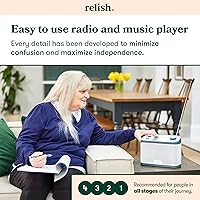
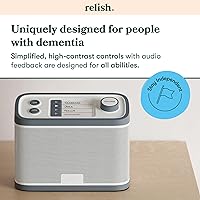
The Relish RD001 FM Radio MP3 Player isn't a watered-down standard radio with bigger buttons slapped on — it was built specifically for people living with dementia, Alzheimer's, or age-related memory loss. The idea is to remove every confusion, restore a small but real sense of independence, and let music do what it naturally does. It handles both FM and DAB radio as well as personal MP3 playback via USB stick, giving listeners more than one route to the music they love. Worth flagging upfront — it's mains-powered only and carries no AM band. The packaging has no clinical labeling whatsoever, making it a discreet and dignified gift.

Features & Benefits

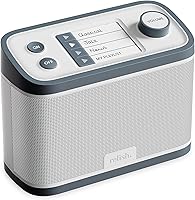
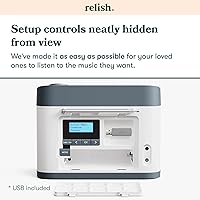
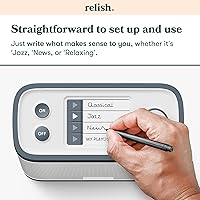
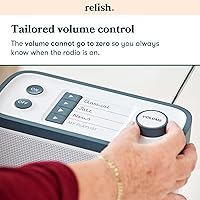
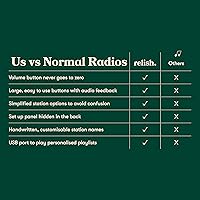
The design thinking here is more careful than it first appears. Most radios use a single toggle for power — for someone who loses track of what they just pressed, that's a real source of distress. The Relish radio uses dedicated On and Off buttons, clearly color-contrasted and large enough to find without difficulty. The volume dial has a hard stop above zero, so the device is never silently confusing — if it's running, you can hear it. Family members or carers can handwrite station names onto the label cards, replacing cryptic frequencies with something personally meaningful like a genre or a mood. The included USB stick means a curated playlist is easy to set up once, then leave.

Best For

This accessibility music player is most clearly suited to people in the early-to-mid stages of dementia or Alzheimer's who still want to listen to music independently — without relying on someone else to set things up every time. It works equally well in a care home setting, where staff can pre-configure presets and residents can manage the device on their own. Visually impaired seniors will appreciate the high-contrast controls and the satisfying tactility of the volume dial. It also suits anyone building a simple music therapy routine, since the USB playlist option lets you handpick the tracks most likely to spark recognition. The clean packaging helps too, if you're giving it as a gift.

User Feedback

With a 3.9-star average across over 400 ratings, the response is broadly positive but not without criticism. The warmest reviews come from caregivers and family members who describe real moments of relief — loved ones who previously couldn't operate any radio now managing this one independently. That speaks directly to the design's intent. Criticism tends to focus on value for money: some buyers feel the plastic build doesn't quite match the asking price, and a few note the speaker can struggle in a larger room. DAB reception gets mixed marks depending on location, particularly in rural areas. Initial preset programming also catches some users off guard despite the simplified layout. The clean packaging, though, consistently earns praise as a thoughtful gift.

Pros

  • Separate On and Off buttons remove the single-button toggle confusion that frustrates many people with memory loss.
  • The volume dial cannot reach zero, so the device is never silently on and causing quiet uncertainty.
  • Handwriteable station label cards let carers name presets in plain, familiar language instead of cryptic frequencies.
  • The Relish RD001 FM Radio MP3 Player ships with a USB stick, making personal playlist setup straightforward from day one.
  • Packaging carries no clinical labeling, making it a genuinely discreet and dignified gift to give or receive.
  • Corded power means no batteries to replace or forget — the radio is simply always ready to use.
  • High-contrast, large controls are genuinely accessible for users with low vision or reduced manual dexterity.
  • Covers both FM and DAB/DAB+ bands, offering a solid range of station options in most locations.
  • A 3.5mm headphone jack allows private listening without any complicated wireless pairing or setup required.

Cons

  • No AM band whatsoever — a genuine dealbreaker for listeners who rely on AM stations daily.
  • Corded-only design limits placement flexibility and rules out any portable or room-to-room use entirely.
  • Build quality feels closer to budget plastic than the asking price might reasonably lead buyers to expect.
  • The 3-watt speaker struggles to fill larger rooms or compete with moderate levels of background noise.
  • DAB reception is unreliable in rural or poor-signal areas, limiting the digital tuner's practical usefulness.
  • Programming presets via the hidden back panel carries a learning curve that some carers find unintuitive.
  • This dementia-friendly radio commands a noticeable price premium over standard FM/DAB radios with comparable audio output.
  • No battery backup means a power cut silences the device with no straightforward workaround available.

Ratings

Our scores for the Relish RD001 FM Radio MP3 Player are generated by AI after systematically analysing verified global buyer reviews, with spam, bot activity, and incentivised feedback actively filtered out before any scoring is applied. This dementia-friendly radio performs outstandingly in the areas it was purpose-designed for, but real buyer frustration around build quality, value, and portability is reflected just as transparently. The ratings below represent the honest consensus — the genuine highs and the legitimate pain points — distilled from hundreds of confirmed purchases.

Ease of Use
88%
Caregivers consistently report that family members who previously struggled with every standard radio manage this one independently within days. The stripped-back interface — just a power button, a dial, and clearly named station labels — removes the decision paralysis that conventional radios create for people with memory loss. That restored daily independence is exactly what most buyers pay for.
A small number of users note that switching between FM and DAB modes can still cause occasional confusion even with the simplified layout. For listeners in more advanced stages of cognitive decline, even two clearly labeled buttons can sometimes require caregiver intervention, which slightly tempers the promise of complete independence.
Accessibility Features
93%
The high-contrast On and Off buttons, the tactile volume dial with its hard stop above zero, and the handwriteable label cards together create an experience that no standard radio comes close to matching. Visually impaired users in particular praise the clear separation of controls as immediately intuitive, with no adaptation period needed before the device feels natural to use.
The accessibility focus does not extend to the preset programming process, which is handled through a back panel that can feel fiddly and inconsistent with the simplicity of everything else. There is also no audio confirmation when stations are changed, something a meaningful number of visually impaired users flag as a missed opportunity.
Control Design
91%
Splitting the power function into two physically separate, distinct buttons is a thoughtful engineering decision that pays off in daily use. Users with memory loss who routinely second-guess whether they pressed the right button on a standard toggle radio find this layout dramatically less stressful, and the volume dial's minimum stop means the device is never confusingly silent when on.
The physical buttons, while large and well-separated, have drawn occasional criticism for feeling slightly lightweight in their action — a tactile concern that stands out at this price point. Some users also wish station selection involved a dedicated selector dial rather than relying entirely on the handwritten label cards for navigation.
Build Quality
57%
43%
The unit is solidly enough constructed to withstand daily placement and regular handling in a care environment, and the controls have held up functionally well over extended periods of consistent use. Several long-term reviewers report no mechanical failures after many months, which suggests the internals are more durable than the external finish implies.
A recurring theme in critical reviews is that the plastic casing and overall finish feel noticeably lightweight relative to the asking price, leaving buyers with the impression that the premium is for the design concept rather than the materials. Anyone expecting the reassuring solidity of a traditional wooden or metal-cased radio will almost certainly be disappointed.
Value for Money
54%
46%
For the right buyer — someone whose loved one gains genuine daily independence from the simplified controls — the value case holds, because no cheaper off-the-shelf radio replicates this level of intentional simplicity. The included USB stick and the label card system add real practical utility that justifies at least part of the premium over standard options.
The price is the single most commented-on negative across the entire review pool, and the criticism is difficult to dismiss. The build quality and speaker performance do not match what buyers in this price bracket typically expect from audio hardware, and several reviewers conclude the premium is disproportionate to what is physically in hand.
Sound Quality
67%
33%
For its intended use — filling a small bedroom or quiet sitting room with familiar music or spoken-word radio — the 3-watt speaker performs adequately and delivers clear, intelligible audio at moderate volumes. Users primarily listening to speech stations or familiar songs at low-to-mid levels report little to complain about day to day.
The speaker loses composure at higher volume settings, producing a thin and somewhat harsh tone that some users describe as fatiguing during longer sessions. In rooms with any background activity — a television elsewhere, general household noise — the 3-watt output can struggle to project clearly without audible strain.
FM Reception
78%
22%
FM performance is consistently praised as the more dependable option for users in areas with variable DAB coverage, with solid signal lock on major stations in most environments. Audio from FM sources comes through cleanly on the built-in speaker without notable interference under typical domestic conditions.
In locations with already marginal FM signal — older buildings with thick walls, rural properties, or homes near sources of electrical interference — reception can be inconsistent and require careful positioning of the unit. The antenna is not extendable or repositionable, which limits the options available to improve a weak signal.
DAB Reception
63%
37%
In urban and suburban locations with good digital radio coverage, DAB performance is reliable and delivers noticeably cleaner audio than FM, with a wider selection of stations available to program into the preset slots. Users in strong-coverage areas rarely report any issues and appreciate the broader range of talk and music programming DAB makes accessible.
DAB quality is the most location-sensitive aspect of this device, and a meaningful number of reviews from rural or semi-rural buyers describe frequent dropouts and the need to fall back to FM entirely. Buyers in areas with known weak DAB coverage should treat the digital tuner as an unreliable secondary feature rather than a primary one.
Personalisation
84%
The handwriteable label card system is one of the most practically appreciated elements in the entire review pool. Replacing a station frequency with something personally meaningful — a name, a genre, a familiar phrase — removes a significant layer of confusion and makes station selection feel genuinely intuitive rather than an exercise in memory recall.
The label cards are effective but not the most durable solution — handwritten text can fade or smudge over time, especially on a frequently handled device. There is no spare card set included, and the writing area on each label is small enough that anything beyond a short word or two requires notably careful penmanship.
Setup & Programming
61%
39%
Once the initial preset programming is complete, the ongoing experience for both caregiver and listener is genuinely low-effort. Most carers who work through the setup describe it as a one-time investment that pays off over months of uninterrupted, fuss-free listening for their loved one.
The back-panel programming interface is where this otherwise simplified device becomes suddenly complex, and the manual does not fully bridge the gap for less tech-confident caregivers. Several reviewers report needing multiple attempts to save presets correctly, and the process feels sharply inconsistent with the effortless front-panel experience the device otherwise delivers.
USB Playback
77%
23%
The USB playlist feature is quietly one of the most powerful aspects of this accessibility music player for families building a personalised music routine. Loading carefully chosen tracks onto the included USB stick and letting it loop is a simple, set-and-forget way to provide a deeply personal listening experience without any ongoing management.
USB playback is basic by design — files play sequentially with no track-skipping interface available to the listener, which suits the target user but frustrates carers who want more playback control. There is no display showing which track is currently playing, and format support is limited to MP3 files only.
Packaging & Gifting
89%
The decision to omit any clinical language from the outer packaging is consistently cited as one of the most thoughtful elements of the whole product, particularly by buyers presenting it as a gift. It arrives looking like a quality radio rather than a medical aid device, which matters enormously to someone who values their dignity and sense of independence.
While the packaging is praised for its discretion, a handful of buyers feel the unboxing experience itself could be more considered to match the price. The presentation is functional rather than premium, which feels like a minor missed opportunity when the product is frequently purchased as a meaningful personal gift.
Volume & Loudness
62%
38%
At moderate listening levels in a quiet room, the volume output is adequate for the typical use case — a bedroom, a personal sitting room, or an individual care home room — and the smooth dial action makes incremental adjustments manageable for someone with limited fine motor control.
Multiple reviewers specifically flag that maximum volume does not carry well in shared spaces or rooms with ambient noise, making the device impractical as a sole audio source in a communal lounge. For users with moderate hearing loss who listen without headphones, the 3-watt ceiling can feel genuinely limiting in everyday situations.
Portability
31%
69%
The corded design does offer one practical benefit that caregivers appreciate: this dementia-friendly radio is always powered and always ready, with no risk of a flat battery cutting off a listener mid-session. Its compact footprint also means it can be placed discreetly on a bedside table or shelf without dominating the space.
Being mains-only is a hard limitation that rules out a meaningful range of use cases — moving between rooms, taking it to a garden, or continuing use during a power cut are simply not options. Buyers who expect to carry the device around the home will be firmly disappointed once they encounter this constraint.
Caregiver Experience
74%
26%
From a caregiver's perspective, the front-panel simplicity means very few daily interventions are needed once the device is configured — a real practical relief for family members visiting weekly or care staff managing multiple residents. The label card system in particular reduces the frequency of queries about which button to press.
The back-panel preset programming remains the main friction point for caregivers, and the learning curve there feels disproportionate given how effortless the rest of the device is. Carers who need to reprogram stations after a move or a DAB retuning event report the process is not noticeably easier the second time around.

Suitable for:

The Relish RD001 FM Radio MP3 Player is purpose-built for a specific and underserved audience: people living with dementia, Alzheimer's, or significant age-related memory loss who want to enjoy music without needing a caregiver to operate the device every single time. It is equally well suited to the family members and carers buying on their behalf — people who need something they can configure once, label in plain language, and hand over with genuine confidence. Care homes and assisted living facilities will find it particularly practical, since residents can use it independently without staff needing to step in each session. Visually impaired seniors also benefit, thanks to the high-contrast, tactile control layout. If you are building a personalised music routine around meaningful tracks using the included USB stick, this radio handles that without requiring ongoing technical involvement, and the discreet packaging means it doubles as a thoughtful, dignified gift.

Not suitable for:

The Relish RD001 FM Radio MP3 Player is not the right choice if the listener depends on AM radio — that band is absent entirely, and it catches buyers off guard more often than almost any other limitation. It is also corded only, so if portability between rooms or use away from a mains socket matters, this will fall short. At its price point the physical build is functional rather than premium, and anyone expecting construction quality to match the cost is likely to feel the gap. The 3-watt speaker is adequate for a quiet room but can feel underpowered in noisier or larger living spaces. DAB reception is location-dependent, meaning users in rural or poor-signal areas may find the digital tuner inconsistent. Finally, if the intended listener is comfortable with technology and simply wants a full-featured radio, there are more capable options available for considerably less money.

Specifications

  • Brand: Manufactured by Relish, a company focused on accessibility-led audio products designed specifically for people with dementia and age-related cognitive decline.
  • Model: Designated model number RD001, Relish's purpose-built dementia-friendly radio and MP3 player.
  • Dimensions: The unit measures 4.25 x 9.65 x 7.17 inches (L x W x H), providing a stable footprint suitable for a bedside table or shelf.
  • Weight: Weighs 2.57 pounds, giving it enough heft to stay in place without being difficult to reposition.
  • Power Source: Operates exclusively on corded mains power via the included lead; no battery or rechargeable option is available.
  • Radio Bands: Supports FM, DAB, and DAB+ tuner bands; AM reception is not included on this device.
  • Speaker Output: Features a built-in mono speaker rated at 3 watts, suitable for quiet to moderately sized rooms.
  • Headphone Jack: Includes a standard 3.5mm audio output jack for private listening via wired headphones or a personal amplifier.
  • USB Port: Fitted with a USB-A port for MP3 file playback; a USB stick is included in the package.
  • On/Off Controls: Uses two physically separate, large, color-contrasted On and Off buttons, eliminating single-button toggle confusion entirely.
  • Volume Dial: The volume control has a hard mechanical stop above zero, ensuring the device always produces audible output when switched on.
  • Station Labels: Includes a handwriteable label card panel on the front face, allowing presets to be named in plain, personally meaningful language.
  • Color and Style: Finished in grey with a contemporary design that suits most home and care facility settings without appearing clinical.
  • In the Box: Package includes the radio unit, a USB stick, a mains power lead, and an owner's manual.
  • Customer Rating: Carries an average rating of 3.9 out of 5 stars based on 422 published customer ratings.

Related Reviews
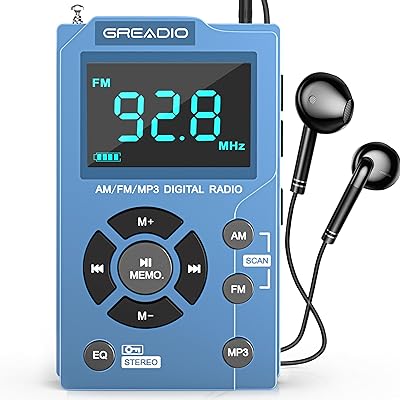
Greadio Portable AM FM Radio MP3 Player
80%
88%
FM Reception
57%
AM Reception
86%
Battery Life
91%
Ease of Use
93%
Portability & Size
More
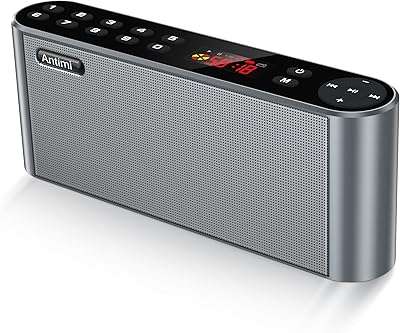
Antimi FM Radio Portable Bluetooth Speaker
75%
72%
Sound Quality
83%
FM Radio Performance
67%
Battery Life
78%
Build Quality
69%
Bluetooth Connectivity
More
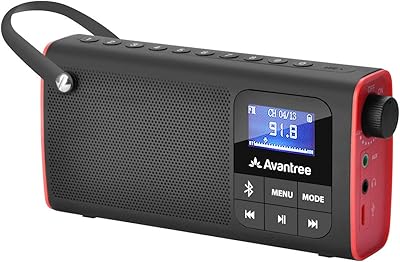
Avantree SP850 Portable FM Radio Bluetooth Speaker
81%
93%
Ease of Use
91%
Portability & Form Factor
74%
FM Radio Performance
71%
Bluetooth Connectivity
68%
Sound Quality
More
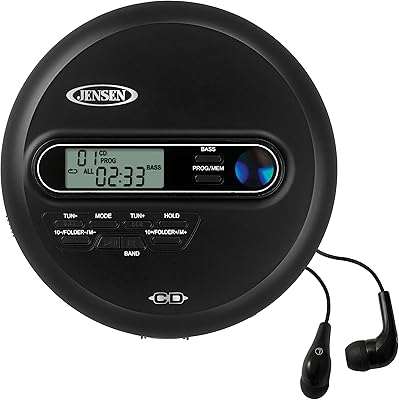
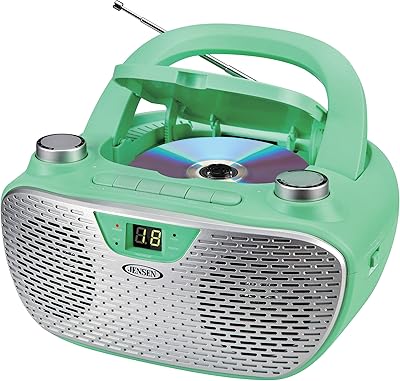
Jensen CD-65 Portable CD/MP3 Player
73%
83%
Value for Money
67%
Anti-Skip Performance
58%
Build Quality
91%
Ease of Use
76%
FM Radio Quality
More
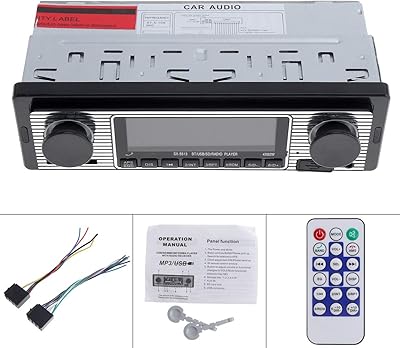
ePathChina EPC_CAU_01Z Bluetooth Car Stereo Receiver
68%
83%
Value for Money
76%
Bluetooth Performance
78%
Ease of Installation
61%
Sound Quality
52%
Build Quality
More
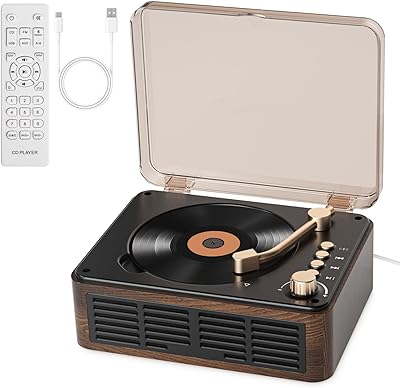
Gueray HJG146CD Retro Wood CD Player
77%
91%
Ease of Use
84%
Value for Money
67%
Sound Quality
88%
Design & Aesthetics
71%
Bluetooth Performance
More
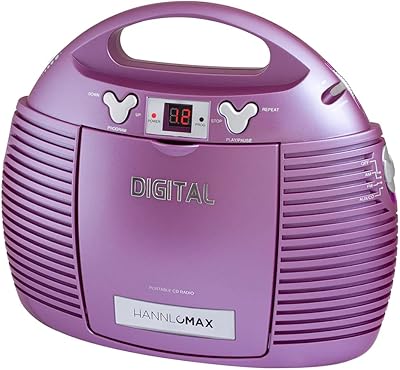
HANNLOMAX HX-327CD Portable CD Player
70%
88%
Ease of Use
61%
Sound Quality
74%
AM/FM Radio Performance
82%
Dual Power Flexibility
67%
Portability
More
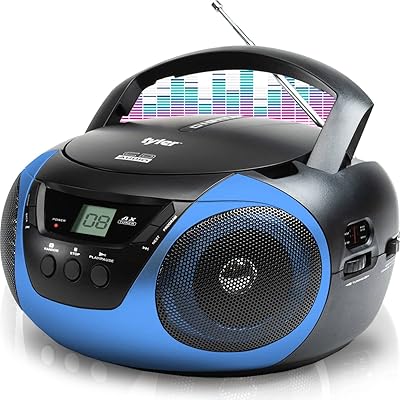
Tyler TAU101-BL Portable Boombox CD Player AM/FM Radio
83%
85%
Sound Quality
70%
Radio Reception
88%
Portability
80%
Build Quality
90%
Ease of Use
More
Jensen CR-100RB Portable AM/FM Cassette Player
71%
81%
Value for Money
88%
Ease of Use
63%
Cassette Playback Quality
67%
AM/FM Reception
58%
Build Quality
More
Jensen CD-485 Portable Stereo CD Player
74%
91%
Ease of Use
62%
Sound Quality
67%
AM/FM Radio Performance
58%
Build Quality
78%
CD Playback Reliability
More

FAQ

No, the Relish radio does not include an AM tuner — it covers FM, DAB, and DAB+ only. If the person you are buying for listens regularly to AM stations, this is a genuine dealbreaker worth confirming before purchasing. There is no workaround for this within the device itself.

That is exactly what it is designed for. Once you have programmed the presets and written familiar names on the station label cards, the listener just presses On, turns the dial to the station they want, and adjusts the volume. There is no menu to navigate, no small print to read, and no confusing toggle button. For many families, that restored independence is the whole reason for buying it.

It requires a mains socket — there is no battery option at all. That means the device stays in one fixed location, but the upside is that you never have to worry about it going silent because batteries ran out or were not replaced.

Preset programming is handled through a panel hidden behind the back cover of the unit, kept separate from the simplified front controls. This keeps the listener's experience uncluttered, but the initial setup does require a bit of patience. The included manual walks you through it, and most carers find it manageable once they have done it once — though some reviewers note it feels less intuitive than the clean front panel might lead you to expect.

The USB port is designed for standard MP3 files loaded onto the included USB stick. It is worth keeping the playlist simple and well-organised, as the device is built for ease of use rather than complex folder navigation or a wide range of file formats.

Yes, and this is a detail Relish clearly put real thought into. The outer packaging carries no mention of dementia or Alzheimer's, so it can be handed over as a gift without any clinical signaling. It presents simply as a radio — which is exactly what it is.

The built-in speaker delivers 3 watts, which works well in a quiet room but can feel limited in a larger or noisier space. If volume is a significant concern, the 3.5mm headphone jack is worth considering — connecting wired headphones or a small personal amplifier via that socket can make a meaningful difference for someone with hearing loss.

No, this device does not include Bluetooth or Wi-Fi. Connectivity is limited to the USB port for MP3 playback and the 3.5mm jack for wired audio output. The intentional simplicity of the design means no wireless features, which suits the target audience well, but is worth confirming if wireless streaming matters to you.

DAB quality depends heavily on your location. In urban areas and most regions with strong digital signal coverage, it works consistently well. In rural locations or areas with patchy DAB reception, some users report dropouts or the need to fall back on FM. If coverage where you live is known to be weak, FM is likely to be the more dependable option for daily use.

Use a fine-tipped permanent marker and write whatever is immediately meaningful to the listener — a favourite genre, a name, a time of day, anything that triggers instant recognition without mental effort. Avoid abbreviations or frequency codes entirely. Some carers also find it useful to update the labels if listening preferences or available stations change over time.

Where to Buy

CaregiverProducts.com
In stock $145.99
The Wright Stuff
In stock $149.99
The Alzheimer's Store
In stock $159.99