
Overview

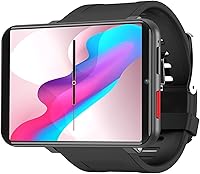
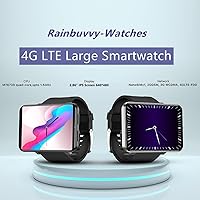
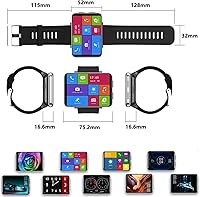
The Rainbuvvy DM100 4G Android Smartwatch is a budget-tier standalone wearable that takes a genuinely different approach — instead of pairing with your phone, it replaces it on your wrist. The defining feature is immediately obvious: a 2.86-inch square display that dwarfs what you'd find on most smartwatches. Combine that with a real 4G SIM slot and a full Android OS, and you're looking at something closer to a tiny wrist-mounted phone than a fitness tracker. Manufacturer Refly isn't a household name, and that context matters when setting expectations. This is a niche device for specific buyers, not a direct challenger to premium wearables from Apple or Samsung.

Features & Benefits

The 2.86-inch display is genuinely striking — at 640x480 resolution it's more readable than you'd expect for wrist wear, though sunlight visibility is a fair concern at this tier. Pop in a 4G SIM and the DM100 handles calls and basic app browsing entirely on its own, a real practical advantage for people who don't want their phone on them. The 5MP camera is usable for video calls but won't impress anyone used to a modern phone. Heart rate monitoring covers resting and workout states — treat readings as directional, not clinical. The 2700mAh battery can stretch a couple of days lightly used, though Android's power appetite shortens that under heavy screen time. Storage is 16GB with 1GB RAM, running Android 7.1 — functional, but visibly aging.

Best For

This standalone 4G smartwatch makes the most sense for people who genuinely need phone-free independence — delivery drivers, warehouse workers, and cyclists who want to handle calls without juggling a handset. It also works reasonably well as a simple communication device for older adults or kids, where a large screen and SIM calling matter more than a sophisticated app ecosystem. Android enthusiasts on a tighter budget who are curious about full-OS wearables will find it an interesting experiment. That said, if accurate fitness tracking is your main goal, skip it — the DM100 isn't built to compete with dedicated GPS sport watches. Screen size and call freedom are the real draws, not precision health data.

User Feedback

Buyers who warm to this Android wrist device tend to lead with the same two things: the screen genuinely surprises people in person, and cutting the phone cord for basic calls feels liberating for the right lifestyle. On the other side, Android 7.1 is a real sticking point — it limits which apps install cleanly, and that won't change with a software update. The weight draws complaints from those expecting a typical smartwatch feel. Setup requires downloading the companion app via QR code rather than a standard Play Store search, which has frustrated less tech-comfortable buyers. Build quality earns mixed marks — adequate but not premium. GPS and heart rate consistency also get flagged as unreliable by more demanding users.

Pros

  • The 2.86-inch display is genuinely large by smartwatch standards, making notifications and apps far easier to read.
  • Built-in 4G SIM support delivers real standalone calling and data without needing a paired phone nearby.
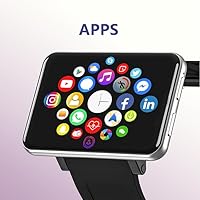
  • A full Android OS with app support at this price tier is uncommon and gives the DM100 real versatility.
  • 16GB of internal storage offers enough room for music, apps, and media without constant juggling.
  • The 2700mAh battery holds up reasonably well for a device running a complete mobile operating system.
  • Built-in GPS works independently for basic location tracking without any phone connection required.
  • The 5MP camera handles video calls adequately — a functional feature that many budget wearables skip entirely.
  • The square, wide-face design makes on-screen typing and menu navigation easier than smaller round-face alternatives.
  • Heart rate monitoring covers resting, workout, and recovery states, useful for casual day-to-day wellness awareness.

Cons

  • Android 7.1 is years out of date, and many current apps will not install or run properly on it.
  • At close to 10 ounces, the watch sits heavily on the wrist and fatigue sets in faster than expected during all-day wear.
  • The companion app can only be downloaded via QR code — searching the Play Store directly does not work, which trips up less tech-savvy users.
  • GPS and heart rate accuracy have been flagged as inconsistent by multiple users, limiting reliability for anything beyond casual readings.
  • Manufacturer Refly has limited brand recognition, making long-term warranty support and customer service less predictable.
  • Wi-Fi is capped at the older 802.11g standard, which results in slower data performance on modern home networks.
  • 1GB of RAM causes noticeable lag when switching between apps or running anything moderately demanding.
  • Strap comfort has drawn repeated complaints from buyers who wear the device for more than a few hours at a stretch.
  • The camera produces soft, low-detail images that fall short of even modest smartphone quality for anything beyond basic video calls.
  • The closed-off app install process means users are largely locked out of discovering and sideloading newer software freely.

Ratings

Our scores for the Rainbuvvy DM100 4G Android Smartwatch were generated by AI after analyzing thousands of verified global buyer reviews, with active filtering applied to remove incentivized, bot-generated, and duplicate submissions. Each category score reflects the honest spread of real user experience — including the aspects buyers praised most and the friction points that surfaced consistently enough to carry weight. Where this standalone 4G smartwatch earns strong marks, those scores reflect genuine satisfaction; where scores fall short, they represent patterns too persistent to overlook.

Display Quality
74%
26%
For a smartwatch, 2.86 inches of screen is genuinely impressive and catches most buyers off guard in a good way. Reading notifications, browsing light apps, and navigating menus feels noticeably less cramped than on a typical round-face wearable. Users working in busy environments particularly appreciate being able to glance and read content at a distance without squinting.
The 640x480 resolution shows its limits under bright sunlight, where glare and washed-out colors become a real issue. At this pixel density, text is acceptable but images and video appear noticeably soft compared to any modern smartphone display. Buyers expecting sharpness close to a current Wear OS or Apple Watch screen will find it underwhelming.
Standalone Connectivity
81%
19%
The 4G SIM capability is the single most praised feature across user feedback — inserting a nano SIM and making calls entirely without a phone nearby is practical freedom most smartwatches simply cannot offer. For delivery drivers, warehouse staff, and cyclists who regularly leave their phone behind, this changes how the watch gets used day to day in a meaningful way.
Wi-Fi is capped at the older 802.11g standard, which makes data transfers and app downloads over Wi-Fi feel sluggish on modern routers. Call quality over 4G is described as functional but not especially clear, with some users noting audio can sound tinny depending on network conditions. CDMA carrier users will find the device incompatible entirely.
Battery Life
72%
28%
A 2700mAh cell is larger than what most budget wearables carry, and under light daily use — a few calls, some notifications, and occasional app checks — users routinely report getting through a full day and into the next without charging. For people using it as a secondary communication device rather than a primary screen-on gadget, that is a comfortable window.
Running a full Android OS is significantly more power-hungry than the stripped-down firmware found on fitness trackers, and heavy users who browse, stream, or use GPS frequently are likely to see battery life dip well below a full day. The battery is non-removable, and there is no meaningful power-saving mode reported that significantly extends screen-on endurance.
App Compatibility
38%
62%
Users who primarily need basic communication apps, simple media playback, and lightweight Android tools tend to find enough in the ecosystem to meet their daily needs. For a secondary device where the core use case is calling and messaging, the available app selection is workable and covers the essentials without too much friction.
Android 7.1 is the hard ceiling here, and it is a genuine problem — popular apps including newer navigation tools and streaming services now require Android 8.0 or higher and simply will not install. There is no software upgrade path, meaning this limitation is permanent and will worsen as developers continue raising their minimum OS requirements over time.
Value for Money
62%
38%
For buyers whose primary need is a standalone calling device on the wrist with a large screen, the DM100 delivers that functionality at a price point well below what most name-brand alternatives charge. The combination of 4G, GPS, a camera, and a full Android environment is genuinely difficult to match elsewhere at this tier.
When factored against the outdated OS, heavy build, inconsistent sensor accuracy, and the ongoing app compatibility wall, the value equation weakens considerably for buyers expecting more than basic calling. Users who discover after purchase that many apps they rely on will not run often feel the price paid does not reflect the actual usable experience.
Camera Quality
53%
47%
Having any camera at all on a standalone wrist device is a feature many competing budget watches skip entirely, and the 5MP sensor handles basic video calls adequately in good indoor lighting. Users who just want to take quick wrist snapshots or join a video chat while away from their phone report that it covers that basic need.
In any lighting below ideal, images come out soft, washed out, and low in detail — visibly below what even a modest smartphone camera produces. The fixed wrist angle makes framing photos awkward, and video calls look pixelated enough that conversation partners frequently comment on the poor image clarity coming from the watch end.
Build Quality
61%
39%
The watch feels reasonably solid in hand and the casing does not flex or creak under normal handling. For a budget-tier wearable from a lesser-known brand, buyers generally agree it holds together well enough for daily use in non-extreme environments and feels sturdy enough to survive typical bumps and knocks without obvious damage.
Finish quality does not hold up under close inspection — plastics on the case edges and back reveal their budget origins quickly, and the strap material has drawn complaints about feeling stiff and causing skin irritation during longer wear sessions. The complete absence of any water resistance rating is a notable gap for a device marketed toward active daily use.
Comfort & Wearability
44%
56%
Users who chose this watch specifically for functional use during work hours — rather than all-day wear — report that for shorter stretches the size and weight are manageable. The large square case does make the screen easier to interact with during those focused usage windows, which partially compensates for the overall bulk.
At 9.6 ounces, this is one of the heavier wearables on the market, and buyers who attempt all-day wear frequently describe wrist fatigue, strap pressure, and general discomfort by midday. The stiff default strap compounds the issue, and the watch's physical presence on the wrist attracts frequent comments — which some buyers find unwelcome in professional or social settings.
GPS Accuracy
57%
43%
For basic location tracking — checking where you are, sharing a rough position, or following a simple route — the built-in GPS works without a phone connection and handles casual use adequately. Users who just need to confirm their general position during a delivery run or a light outdoor walk find it serviceable for that purpose.
GPS lock times have been reported as slow, and accuracy in urban areas with tall buildings or heavy tree cover is inconsistent. Cyclists and runners who have tested it against dedicated GPS devices describe noticeable distance discrepancies, and the limited availability of newer navigation apps due to the Android version makes the GPS harder to use practically.
Heart Rate Monitoring
59%
41%
Casual users who just want a general sense of their heart rate during a walk or a light workout find the optical sensor delivers readings quickly with enough consistency for low-stakes daily wellness awareness. For the target buyer who is not training for performance, it adds a useful and functional layer of health context throughout the day.
Users who have compared these readings against a chest strap or a more precise optical monitor consistently report that the numbers drift, particularly during higher-intensity exercise or when the watch shifts position on the wrist. Anyone managing a health condition or following a structured heart rate training program should not rely on this sensor for accurate data.
Setup & Ease of Use
55%
45%
Once the initial setup hurdles are cleared, day-to-day use is fairly intuitive — Android's familiar interface means most users can navigate menus, answer calls, and adjust settings without a manual. For buyers with prior Android phone experience, the learning curve beyond the first-day setup is minimal and the interaction patterns feel natural.
The initial setup trips up many buyers — the companion app is not searchable on the Play Store and must be downloaded via a QR code in the packaging, which catches people off guard. Less tech-savvy users, particularly the older adults and children this watch is frequently recommended for, will almost certainly need hands-on help from someone more experienced to get started.
Performance & Speed
48%
52%
For simple tasks like answering a call, reading a message, or launching a single app, the DM100 responds quickly enough for basic daily interactions. Users with modest expectations who are not switching between multiple apps or running demanding software find the day-to-day interface acceptably smooth for their needs.
With only 1GB of RAM running a full Android environment, multitasking quickly exposes the device's limits — switching between apps produces noticeable pauses, and some apps take longer to launch than users expect. Background processes left running degrade performance further, and there is no straightforward way for average users to reclaim RAM and restore responsiveness.
Software Experience
41%
59%
Running a full version of Android rather than a proprietary wearable OS means the interface feels immediately familiar to anyone who has used an Android smartphone before. Navigation, settings menus, and notification handling all follow standard Android conventions, which meaningfully shortens the learning curve compared to wearables running entirely custom operating systems.
Android 7.1 as the software foundation is the watch's most significant long-term liability — it is frozen in time, incompatible with many modern services, and unlikely to receive meaningful security patches going forward. The software experience reflects a 2016-era Android build, and there is no upgrade path available that will bring it anywhere close to current.

Suitable for:

The Rainbuvvy DM100 4G Android Smartwatch is genuinely well-matched for people whose daily routine makes carrying a phone impractical — delivery drivers, warehouse workers, cyclists, and tradespeople who need to stay reachable without a handset in their pocket. The built-in SIM slot means real call and data capability straight from the wrist, which is a practical advantage most fitness trackers simply can't offer. The unusually large screen also benefits older adults or anyone who finds small wearable displays frustrating to read, making it a reasonable choice as a simplified communication device for a parent or grandparent. Parents looking for a trackable, call-capable wrist device for younger kids will find the GPS and calling features cover the basics well. Budget-minded Android enthusiasts who are simply curious about owning a full-OS standalone smartwatch will find plenty to explore here without a major financial commitment.

Not suitable for:

The Rainbuvvy DM100 4G Android Smartwatch is a poor fit for anyone who prioritizes accurate fitness tracking, since the heart rate and GPS readings are inconsistent enough that serious athletes or health-conscious users should not rely on them. Android 7.1 is several versions behind current, which means a growing number of popular apps — including navigation, health, and productivity tools — will either refuse to install or run unreliably, and no software update will change that. Anyone expecting the lightweight, barely-there feel of a modern smartwatch will be put off quickly; at close to 10 ounces, the bulk becomes noticeable within an hour of wear. Style-conscious buyers who want a sleek, contemporary-looking wearable should look elsewhere, as this device prioritizes screen size over aesthetics. If you are coming from a Wear OS device, an Apple Watch, or even a mid-range fitness band, the software experience here will feel like a meaningful step backward.

Specifications

  • Display Size: The screen measures 2.86 inches diagonally, making it one of the largest displays found on a consumer smartwatch.
  • Resolution: The square panel runs at 640x480 pixels, delivering a reasonably sharp image for a wearable at this price tier.
  • Operating System: The watch runs Android 7.1 Nougat, a functional but significantly dated OS version that directly affects compatibility with newer apps.
  • RAM: 1GB of RAM handles basic day-to-day tasks, though noticeable lag can appear when switching between multiple running apps.
  • Internal Storage: 16GB of built-in storage is available for apps, media, and data, with no mention of external memory card expansion.
  • Battery Capacity: A 2700mAh Lithium Polymer cell powers the device, supporting realistic multi-day endurance under light-to-moderate daily usage.
  • Battery Type: Lithium Polymer chemistry is used for the integrated battery, which is standard practice in slim wearable form factors.
  • Camera: A 5MP camera is built into the watch body, intended primarily for video calls and basic photo capture from the wrist.
  • Connectivity: The device supports 4G LTE for standalone cellular connectivity, plus Wi-Fi via the older 802.11g standard for local wireless networks.
  • SIM Support: A dedicated SIM card slot accepts a 4G-capable nano SIM, enabling independent calls and data without any paired smartphone.
  • GPS: Built-in GPS allows for standalone location tracking and basic navigation independent of a connected phone.
  • Heart Rate: An optical heart rate sensor monitors resting, active, and recovery rates, providing casual wellness data throughout the day.
  • Item Weight: The watch weighs 9.6 ounces, which is substantially heavier than most consumer smartwatches and is a real factor for all-day comfort.
  • Case Shape: The case is square in profile, which accommodates the wide display area and provides more usable screen space than round-face alternatives.
  • Package Dimensions: The retail box measures 4.3 x 3.7 x 3.1 inches and contains the watch unit along with its bundled accessories.
  • Manufacturer: The device is produced by Refly under the Rainbuvvy brand, a lesser-known label operating in the budget standalone Android watch segment.

Related Reviews
DDIOYIUR 4G Kids Smartwatch
69%
78%
GPS Accuracy
54%
Battery Life
61%
Call & Audio Quality
57%
Setup Experience
74%
Build Quality
More
podofo Q3534 Android Car Stereo
71%
88%
Wireless Connectivity
76%
Screen Quality
69%
GPS Navigation
54%
Installation Experience
83%
Value for Money
More
SIXWIN Hyundai Elantra 9-Inch Android Car Stereo
77%
83%
CarPlay & Android Auto
76%
Display Quality
67%
Installation Experience
84%
GPS & Navigation
81%
Bluetooth & Audio
More
Techage CQ1SG 4G LTE Solar Security Camera
73%
88%
Ease of Setup
82%
Video Quality
79%
Night Vision Quality
67%
Solar & Battery Performance
74%
4G Connectivity Reliability
More
Fuluku 10.1-inch Double Din Android Car Stereo
71%
83%
Wireless Connectivity
76%
Screen Quality
79%
System Performance
67%
GPS Navigation
84%
Backup Camera
More
TOPDISPLAY Android Stereo for Ford F150 2013-2014, 12.1-inch Touchscreen, 8-Core, Carplay, Android Auto
85%
89%
Ease of Installation
82%
Display Quality
94%
Smartphone Integration (CarPlay/Android Auto)
85%
Processor Performance
78%
Sound Quality
More
KOBANOICA 8-Inch Android 13 Car Stereo
67%
74%
Wireless Connectivity
61%
Software Performance
78%
Screen Quality
72%
GPS & Navigation
69%
Value for Money
More
AWESAFE Android 13 Car Stereo 7-Inch Head Unit
67%
78%
Wireless CarPlay Performance
61%
Android Auto Usability
74%
GPS Navigation Accuracy
76%
Touchscreen Responsiveness
58%
Bluetooth Reliability
More
Jacoosa L70 Smartwatch
69%
83%
Value for Money
79%
Display Quality
76%
Bluetooth Calling
66%
Health Tracking
71%
Fitness Tracking
More
Fitbit Sense Smartwatch
77%
88%
Heart Health Monitoring
67%
Stress Tracking & EDA Sensor
84%
Sleep Tracking
72%
Built-in GPS Accuracy
86%
Battery Life
More

FAQ

Yes, and that is genuinely its core appeal. Insert a compatible 4G nano SIM and the DM100 makes and receives calls, uses mobile data, and runs apps entirely on its own. You do not need a phone in your pocket or within Bluetooth range for any of that to work.

It uses a nano SIM card. Most GSM carriers that offer 4G data SIMs should work, but it is worth confirming with your carrier before purchasing. CDMA-only networks are typically not compatible with devices like this.

Partially. The Play Store is accessible, but because the device runs Android 7.1, a growing number of modern apps either will not appear in search results or will refuse to install due to minimum OS requirements. Lightweight and older apps tend to work fine, but do not expect the same app availability you would get on a current Android phone.

That is intentional, and it catches a lot of buyers off guard. The companion app is not listed on the Play Store in a searchable way — you need to scan the QR code included with the packaging to trigger the download. It is a one-time process, but if you are not comfortable with QR-based installs, plan for a bit of a learning curve upfront.

With moderate use — occasional calls, light app browsing, and the screen waking up periodically — most users land somewhere between one and two full days. If you are streaming, using GPS actively, or keeping the display on frequently, expect to charge it every night. A full Android OS running in the background consumes power at a different rate than a typical fitness tracker firmware would.

It gives you a ballpark reading during workouts, but treat it as a casual wellness indicator rather than a precision training tool. Readings can drift during high-intensity or fast-movement activities, and the sensor is not built to the standard of dedicated sport or medical-grade wearables. For structured training with heart rate zones, a purpose-built fitness watch would serve you better.

No official IP water resistance rating is listed for this device. The safest approach is to treat it as not water-resistant — avoid wearing it in heavy rain, in the shower, or near any body of water. Exposure to moisture could cause damage that would not be covered under warranty.

It is noticeably heavier than most smartwatches — weighing in at 9.6 ounces, it sits with a real presence on your wrist. Some buyers adapt to it quickly, particularly those coming from a utility-first mindset, but if lightweight all-day comfort is important to you, that weight is something to think carefully about before committing.

Built-in GPS works independently without any phone connection, so basic location tracking is available on its own. However, app compatibility is limited by Android 7.1, which means you may not be able to run the latest version of popular navigation apps. Expect functional but not polished navigation performance.

It can work well in that role if the primary needs are simple calling and GPS location tracking. The oversized screen is a genuine advantage for readability, especially for older users. That said, plan to handle the initial setup yourself — the QR-code app install and SIM configuration steps are not straightforward for someone with limited tech experience, and the watch's weight may be uncomfortable for smaller wrists.