Overview

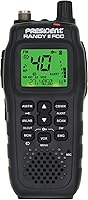
The President Randy II Handheld CB Radio holds a genuine distinction in the CB world: it's the first handheld unit to earn FCC approval for both AM and FM operation. That's not marketing spin — FM mode has existed in CB radios sold overseas for years, but regulatory clearance for handheld use in the U.S. had been a real barrier until now. At just under 6 inches tall and 10.7 ounces, it's legitimately portable by CB standards. The included kit covers most practical setups right out of the box, and a 2-year warranty from a brand with decades in the CB space gives this FCC-approved unit a credible foundation.
Features & Benefits

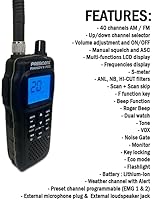
What actually sets the Randy II apart in daily use starts with the noise filtering. The combination of NRC and ANL filters makes a real difference if you're running this in a loud truck cab or on a noisy job site — audio comes through noticeably cleaner than on budget units. The P Channels (P1–P5) use preconfigured CTCSS/DCS tones, letting teams communicate on a shared frequency without picking up every random conversation on the band. Built-in VOX hands-free mode is a natural fit for drivers. NOAA weather reception is a genuinely practical add-on, not a checkbox feature. The LED flashlight with SOS mode rounds things out for emergency situations.

Best For

This handheld CB radio makes the most sense for people who actually need it in the field. Long-haul truckers will appreciate the NOAA weather scanning and the ability to jump between 40 channels quickly without fumbling with settings. Campers and off-roaders get a unit that's water resistant and compact enough to throw in a pack. Work crews can set up private P Channel groups so job-site chatter stays off the public CB frequencies. For someone stepping up from a basic walkie-talkie who wants legitimate FCC-legal FM access, the Randy II offers a genuine upgrade path. It also fits naturally into a home emergency kit alongside a weather radio.

User Feedback

With a 4.4-star rating across more than 440 reviews, the reception is largely positive — but worth reading carefully. Buyers consistently mention the audio clarity as a standout, especially in noisy environments where the noise filtering does what it claims. The included accessories get mixed reactions: the desktop dock and AC adapter are seen as genuinely useful, but some buyers view the wrist strap and belt clip as filler. Battery life comes up as a mild criticism for heavy users. The advertised 25-mile range is a point of contention — real-world CB range depends heavily on terrain and obstacles, so treat that figure as a best-case scenario. Compared to older President models, most users see meaningful improvements in the overall feature set.

Pros

  • First and only FCC-approved handheld CB radio with legal AM and FM operation in the U.S.
  • NRC and ANL filter combination delivers noticeably cleaner audio in loud truck cabs and job sites.
  • NOAA weather channel access adds real emergency and travel utility beyond standard CB use.
  • Built-in VOX hands-free mode is well-suited for drivers who cannot safely hold a radio.
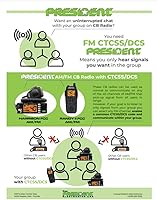
  • P Channels with CTCSS/DCS tones let teams communicate privately without broadcasting on public CB frequencies.
  • Compact enough to pocket or clip to a bag — genuinely portable by CB radio standards.
  • LED flashlight with SOS mode is a practical emergency feature rarely found on handheld CB units.
  • Desktop dock and AC adapter make the kit genuinely useful, not just box filler.
  • Key Lock prevents accidental channel or setting changes during active use in rough conditions.
  • Two-year manufacturer warranty from an established CB brand adds meaningful long-term purchase confidence.

Cons

  • Battery life under continuous heavy scanning is a recurring complaint among high-usage buyers.
  • The 25-mile range claim is a best-case ceiling — realistic range in mixed terrain is far shorter.
  • FM mode offers limited value if the people you communicate with are still running AM-only radios.
  • VOX sensitivity calibration requires patience, and false triggers at highway speeds frustrate some drivers.
  • P Channel setup has a learning curve that the included manual does not fully address.
  • Belt clip and wrist strap feel thin and low-quality relative to the overall price point.
  • Speaker distortion becomes noticeable at maximum volume during extended monitoring sessions.
  • Antenna connector may loosen with frequent removal and reattachment over time.
  • Menu navigation for advanced settings is not immediately intuitive for users coming from simpler radios.
  • Water resistance is real but conservative — this is not a submersion-proof unit and should be treated with care in wet conditions.

Ratings

The President Randy II Handheld CB Radio earned an overall rating built from AI analysis of verified buyer reviews worldwide, with spam, bot-submitted, and incentivized feedback actively filtered out before scoring. Across more than 440 confirmed reviews, our system identified clear patterns in what real users praised and where frustrations surfaced — and both sides are reflected honestly in the scores below. No category was padded; every rating here maps directly to something buyers consistently brought up.
Audio Clarity
88%
Users running this unit in loud truck cabs and on active job sites consistently called out the audio quality as noticeably better than expected for a handheld CB. The NRC and ANL filter combination reduces the kind of background roar that makes voice communication exhausting over long drives.
A handful of reviewers noted that at maximum volume the speaker can introduce slight distortion, particularly in the upper frequency range. It is not a dealbreaker for most, but users sensitive to audio fidelity may notice it during extended monitoring sessions.
Noise Filtering Performance
86%
The layered filtering system — NRC, ANL, NB, and Hi-Cut working together — is one of the most cited reasons buyers chose this unit over cheaper alternatives. Truckers in particular appreciated how much cleaner channel 19 sounded compared to their previous radios during highway runs.
In very high-interference environments, like near industrial equipment or under power lines, the filters reduce but do not fully eliminate static. Some users expected total noise suppression and were mildly disappointed when heavy RF interference still broke through.
FCC-Approved FM Mode
91%
For hobbyists and professionals who wanted legal FM operation in a handheld CB format inside the U.S., this is the only game in town. Users upgrading from import radios or older AM-only units described the FM mode as a genuinely useful addition for cleaner local communication.
FM mode is most useful when communicating with others who also have FM-capable radios, which limits its practical value in areas where the CB community still predominantly runs AM. Some buyers realized this after purchase and felt the feature was underutilized in their region.
Portability & Form Factor
84%
At just under 6 inches tall and 10.7 ounces with battery, this unit is genuinely pocketable by CB radio standards. Campers and hikers noted it fits comfortably in a jacket pocket or pack side pocket without the bulk associated with traditional CB handhelds.
Compared to a compact FRS walkie-talkie, the Randy II is still noticeably larger and heavier. Users who wanted something truly ultralight for backpacking found the trade-off between CB features and portability a fair but real compromise.
VOX Hands-Free Operation
79%
21%
Drivers and warehouse workers praised the VOX function for letting them communicate without touching the unit mid-task. The sensitivity adjustment means it can be tuned to avoid triggering on background noise, which is a practical detail that cheaper VOX implementations often skip.
VOX sensitivity calibration took some trial and error for several users, particularly in vehicles with significant road noise. A few reviewers reported false triggers at highway speeds even after adjusting the threshold, which required them to fall back to manual PTT.
P Channel Group Communication
77%
23%
Work crews and small fleet operators found the five preconfigured P Channels with CTCSS/DCS tones genuinely useful for keeping team communications off the public CB bands. It reduces the coordination overhead of manually setting tones across multiple radios.
The initial setup process for P Channels has a learning curve that the manual does not fully smooth out. Several buyers reported spending more time than expected getting multiple units synced, particularly users coming from simpler radios with no tone squelch experience.
NOAA Weather Reception
83%
Truckers and campers repeatedly mentioned NOAA reception as a feature that justified keeping this unit in rotation even when CB traffic was quiet. Getting real-time weather alerts without a separate device is a practical convenience that adds genuine value on long trips.
Reception quality for NOAA channels depends heavily on proximity to a broadcast tower, and users in rural or mountainous regions noted weaker signal pickup. This is an inherent limitation of NOAA broadcasting geography, not a hardware flaw, but worth setting expectations around.
LED Flashlight & SOS Mode
74%
26%
The integrated flashlight with four modes including SOS was called out by emergency preparedness buyers as a surprisingly useful addition. For a broken-down driver at the side of a highway at night, having a signaling tool built into the radio is a practical safety feature.
The flashlight brightness is adequate for basic visibility but is not comparable to a dedicated tactical flashlight. Users who expected strong output for trail navigation or prolonged use found it more suitable as an emergency signal than a reliable light source.
Battery Life
63%
37%
The included lithium ion battery pack is sufficient for casual or intermittent use, and buyers who primarily used the unit docked with the AC adapter reported no complaints about power. The desktop dock integration makes overnight charging straightforward in a vehicle or home setup.
Heavy users — those scanning channels continuously during long drives or extended outdoor sessions — consistently flagged battery life as the unit's most notable weak point. Several reviewers recommended carrying a spare battery or keeping the mobile charge module accessible during use.
Range Performance
68%
32%
In open terrain with minimal obstructions, verified buyers reported solid communication distances that matched or approached the stated maximum. Truckers on flat interstate highways had positive results using standard CB channel 19 for road condition updates.
The advertised 25-mile range is a theoretical ceiling, not a typical expectation. In practice, rolling hills, dense forest, urban buildings, and atmospheric conditions all compress effective range significantly — many users reported realistic ranges closer to 3 to 8 miles in mixed terrain.
Build Quality & Durability
81%
19%
The overall construction feels solid for a handheld radio in this price segment. The key lock mechanism in particular received positive comments from users who clip the radio to a belt or bag, preventing accidental frequency changes during active use.
A small number of reviewers raised concerns about the longevity of the antenna connection after repeated removal and reattachment. The water resistance rating is real but conservative — this is not a submersible unit, and users should treat it accordingly in wet conditions.
Display & Interface
82%
18%
The 7-color LCD display is easy to read across different lighting conditions, and being able to pick a display color that contrasts well with your environment is a small but appreciated usability touch. Night visibility was specifically mentioned positively by truckers using the radio after dark.
The menu navigation for accessing less-used features like scan skip settings or adjusting the display color requires consulting the manual the first few times. Users accustomed to simpler radios found the interface functional but not immediately intuitive.
Kit Accessories Value
71%
29%
The desktop dock and AC adapter are the standout inclusions — buyers who use the radio regularly at a fixed location like a home base or truck stop setup found having a dedicated dock genuinely convenient. The mobile charge module was also called out as a practical road kit addition.
The belt clip and wrist strap are basic inclusions that several reviewers described as thin plastic. The mic support and some peripheral accessories felt like padding to some buyers rather than items they actually used, which tempers the overall impression of the kit.
Scan & Channel Navigation
78%
22%
The scan skip function allows users to flag and bypass dead or unwanted channels quickly, which keeps the scanning process from getting bogged down on quiet frequencies. Regular CB users noted this made monitoring multiple channels during travel noticeably more efficient.
The scan speed is competent but not the fastest available in the category. Users who frequently hop between specific channels for different purposes — fleet comms versus general CB traffic — occasionally wished channel switching was slightly more immediate.
Value for Money
76%
24%
For buyers who specifically need FCC-approved FM operation, NOAA reception, and the full filter suite in a portable form, the price reflects a genuinely differentiated product with no direct equivalent in the U.S. market. The 2-year warranty adds to the long-term value calculation.
Buyers who primarily need basic AM CB communication and do not require FM mode or advanced filtering may find the price harder to justify against simpler handheld options that cost considerably less. The value proposition is strongest for users who will actually use the advanced features.

Suitable for:

The President Randy II Handheld CB Radio is the right call for anyone who needs a portable CB unit that can actually keep up with demanding, real-world conditions. Long-haul truckers are the obvious fit — the combination of NOAA weather reception, strong noise filtering, and 40-channel scanning covers everything they need during extended highway runs without requiring a mounted dashboard unit. Outdoor users like campers, off-roaders, and overlanders will appreciate having a water-resistant radio that doubles as an emergency signaling device, with an SOS flashlight mode that goes beyond what most handheld radios offer. Work crews running coordinated operations will find the P Channel system with CTCSS/DCS tones genuinely useful for keeping internal communications clean and private. For CB enthusiasts who have been waiting for a U.S.-legal handheld with FM mode, this FCC-approved unit fills a gap that simply did not exist in the domestic market before. It also slots naturally into a home emergency preparedness kit, combining weather alerts, two-way communication, and emergency signaling in a single compact device.
Not suitable for:

The President Randy II Handheld CB Radio is harder to recommend if your CB needs are basic or occasional. If you primarily want AM-only communication on a tight budget, there are simpler handheld CB options that cost considerably less and cover the fundamentals without the added complexity of FM mode, P Channels, and multi-filter systems that you may never actually use. The battery life under continuous heavy use is a real limitation — anyone who plans to run the radio for full-day scanning without access to a charging source will find themselves managing power more carefully than they might like. The advertised 25-mile maximum range is also a figure that assumes ideal open-terrain conditions, so buyers in hilly, forested, or urban environments should set expectations around a fraction of that in practice. If your communication partner group is still running AM-only radios, the FM mode advantage largely disappears. And for truly ultralight outdoor activities where every ounce counts, the 10.7-ounce weight and CB-scale dimensions may make a compact FRS radio a more practical choice.

Specifications

  • Brand: Manufactured by President Electronics USA, a long-established name in CB radio equipment with a global presence.
  • Model Number: The unit's official model identifier is TXUS622, which can be used when searching for compatible accessories or warranty support.
  • Dimensions: The radio measures 1.46″ deep, 2.62″ wide, and 5.98″ tall, making it one of the more compact handheld CB units on the U.S. market.
  • Weight: The unit weighs 10.7 ounces with battery, which is manageable for handheld use but heavier than a standard FRS walkie-talkie.
  • Frequency Range: Covers the full CB band from 26.965 MHz to 27.405 MHz across all 40 standard CB channels.
  • Operating Modes: Supports both AM and FM transmission and reception, making it the first FCC-approved handheld CB radio to legally offer FM mode in the United States.
  • Channels: Provides access to all 40 standard CB channels, plus 5 preconfigured P Channels (P1–P5) using FM mode with fixed CTCSS/DCS tones for private group communication.
  • Max Range: Rated for a maximum talking range of up to 25 miles under ideal open-terrain conditions; real-world range will be shorter depending on terrain and obstructions.
  • Battery: Powered by one included lithium ion battery pack; also compatible with the included AC adapter and mobile charge module for wired power options.
  • Voltage: Operates at 13.2 volts, which is compatible with standard 12V vehicle electrical systems when used with the appropriate charge module.
  • Display: Features a 7-color backlit LCD display that can be adjusted for visibility in different lighting conditions, including low-light and nighttime environments.
  • Water Resistance: Rated as water resistant, offering protection against light moisture exposure but not designed for submersion or heavy rain without protective covering.
  • Noise Filters: Equipped with three independent noise filtering systems — ANL (Automatic Noise Limiter), NB (Noise Blanker), and Hi-Cut — alongside an NRC (Noise Reduction Circuit) for layered interference suppression.
  • VOX: Built-in VOX (Voice-Operated Transmission) with adjustable sensitivity allows fully hands-free radio operation without pressing the push-to-talk button.
  • Weather Reception: Includes dedicated NOAA weather channel reception for real-time weather alerts and broadcasts across all standard NOAA frequencies.
  • Flashlight: Integrated LED flashlight with four operating modes, including a dedicated SOS distress signal mode for emergency visibility situations.
  • Special Features: Additional features include Scan Skip, Key Lock, ASC (Automatic Squelch Control), and CTCSS/DCS tone squelch support for filtered channel reception.
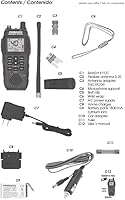
  • Included Accessories: The kit includes an antenna, belt clip, wrist strap, battery pack, AC adapter, desktop dock, mobile charge module, mic support bracket, and a printed user manual.
  • Warranty: Covered by a 2-year limited manufacturer warranty through President Electronics USA, which is above average for handheld CB radios in this segment.
  • FCC Status: Holds full FCC approval for AM and FM handheld CB operation in the United States, a regulatory clearance no other handheld CB unit had previously achieved.

Related Reviews

President Walker II Fixed-Mount CB Radio
78%
88%
Build Quality
84%
Audio Clarity
61%
Ease of Installation
86%
Display & Controls
67%
Range Performance
More
Cobra HH50WXST Handheld CB Radio
87%
86%
Performance
89%
Sound Quality & Noise Reduction
91%
Portability & Size
92%
NOAA Weather Alerts
84%
Build Quality & Durability
More
President Bill CB Radio
80%
83%
Audio Receive Quality
78%
Transmit Clarity
86%
Noise Filtering
71%
Squelch Performance
74%
Display Readability
More
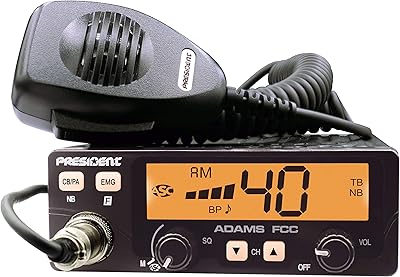
President Adams FCC CB Radio
81%
83%
Signal Clarity
86%
Squelch Performance
91%
Display Quality
92%
Ease of Setup
61%
Microphone Quality
More
Uniden PRO501HH 40-Channel Handheld CB Radio
74%
78%
Build Quality
82%
Transmission Clarity
74%
Reception Quality
61%
Battery Performance
59%
Range (Real-World)
More
Uniden PRO401HH 40-Channel Handheld CB Radio
77%
86%
Audio Clarity
67%
Range Performance
61%
Battery Life & System
79%
Build Quality
91%
Ease of Use
More
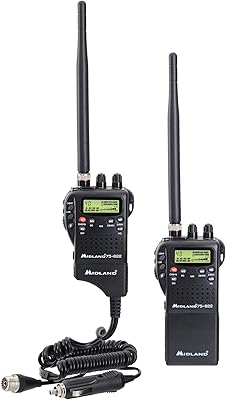
Midland 75-822 Handheld CB Radio
76%
91%
Ease of Setup
78%
Build Quality
74%
Audio Clarity
88%
NOAA Weather Reception
53%
Talk Range
More
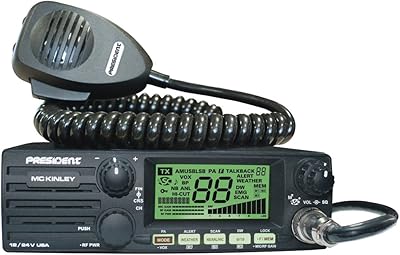
President McKinley TXUS600 AM/SSB CB Radio
86%
88%
Communication Range
85%
Voice Quality & Clarity
82%
Noise Reduction Performance
90%
Ease of Use
87%
Build Quality
More
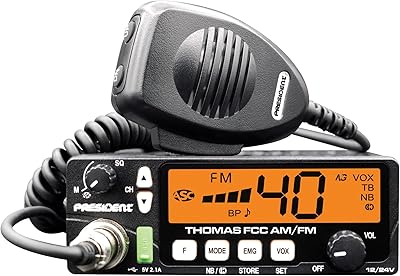
President Thomas AM/FM CB Radio
81%
83%
Audio Clarity
78%
Transmission Quality
91%
Ease of Installation
67%
VOX Hands-Free Performance
86%
Display Quality
More
Uniden PRO501TK 40-Channel Handheld CB Radio
77%
83%
Antenna Performance
78%
Ease of Use
51%
Battery Life & Power
81%
Audio Clarity
86%
NOAA Weather Alerts
More

FAQ

It is legitimate. The President Randy II Handheld CB Radio is the first handheld unit to receive FCC approval for FM operation on the CB band within the United States. FM has been available on CB radios sold in Europe for years, but domestic FCC certification for a handheld was a genuine regulatory first when this unit launched. You can use FM mode legally without concern, provided the person you are communicating with also has an FM-capable radio.
The 25-mile figure is an open-sky ceiling that assumes flat terrain with no obstructions — conditions that rarely exist in practice. Most users should plan for effective ranges between 3 and 10 miles in real-world environments. Rolling hills, tree cover, urban buildings, and atmospheric conditions all compress range significantly. If you need reliable communication beyond a few miles in anything other than flat open land, manage your expectations accordingly.

Yes, the built-in VOX (voice-activated transmission) mode is designed exactly for that scenario. Once you adjust the VOX sensitivity threshold to filter out road noise, the radio will transmit automatically when you speak without requiring you to press any buttons. It takes a little calibration to get right in a noisy vehicle, but once set up, hands-free operation works consistently.

The P Channels (P1 through P5) are preconfigured memory slots that operate in FM mode with fixed CTCSS/DCS tones assigned to each channel. Anyone trying to communicate with you on a P Channel needs a radio that also supports FM mode with matching tone squelch settings — which in practice means another Randy II or a compatible President model. They are most useful for closed-group communication where you want to avoid picking up random CB traffic on shared frequencies.

Battery life varies considerably depending on how heavily you use the radio. For light or intermittent use — scanning occasionally and transmitting briefly — most users get through a full day without issue. Continuous scanning or frequent long transmissions drain the battery noticeably faster, and heavy users have flagged this as the unit's weakest point. If you plan extended off-grid use, carrying a spare battery or keeping the mobile charge module accessible is worth planning for.

It is genuinely useful if you are regularly in areas with active NOAA broadcast towers, which covers most of the continental U.S. fairly well. Truckers on long routes and campers heading into areas with variable weather have cited NOAA reception as one of the features they actually rely on. Reception quality does drop in remote or mountainous regions further from broadcast towers, but for the majority of users in accessible areas, it works as advertised.

Light moisture exposure — a brief splash, light drizzle, or sweaty hands — is within what the water resistance rating covers. This is not a waterproof or submersible radio, and prolonged exposure to heavy rain or immersion would likely cause damage. Treat it like you would a water-resistant watch: fine in incidental contact with water, but not something to rely on in genuinely wet conditions without additional protection.

It is a mixed bag. The desktop dock and AC adapter are the standout useful inclusions — if you use the radio at a fixed location, having a dedicated dock for overnight charging is a genuine convenience. The mobile charge module is also practical for vehicle users. The belt clip and wrist strap, on the other hand, feel basic and thin for the price point. Most buyers end up using two or three items from the kit regularly and viewing the rest as backup.

CB radio operation in the United States does not require an individual license under FCC rules — CB is a license-free service for personal and business communications. You can use this handheld CB radio right out of the box on any of the 40 standard CB channels without filing any paperwork. The FCC does regulate CB usage in terms of power limits and channel restrictions, but those are built into the radio's design and are not something you need to manage manually.

A fixed-mount CB with a full-size external antenna will generally outperform this unit on range and audio output, since vehicle-mounted antennas have a significant propagation advantage. Where the Randy II wins is flexibility — you can take it out of the vehicle, use it on foot, pack it for camping, or keep it in a kit bag. If your use is exclusively in-truck highway driving and range is your priority, a mounted unit may serve you better. If you want one CB radio that covers multiple scenarios, the handheld format makes more sense.

Where to Buy