Overview

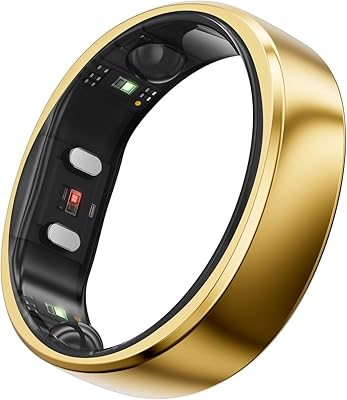
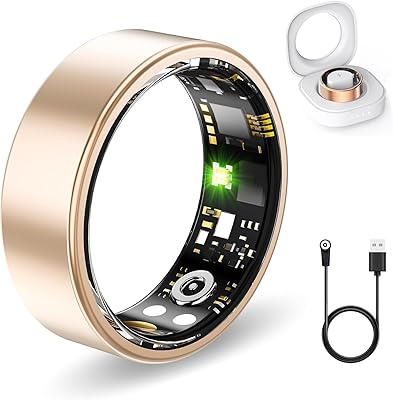
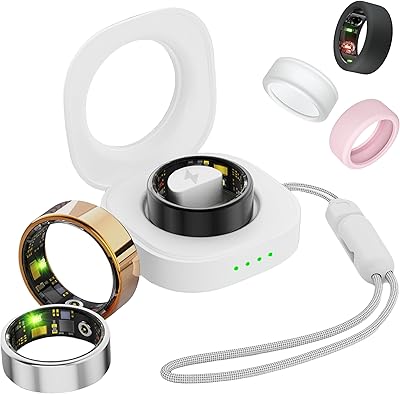
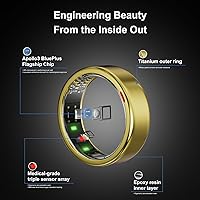
The POBOVi Gen 1 Smart Ring enters a market dominated by expensive, subscription-locked devices and makes a pretty clear argument: why keep paying monthly fees just to read your own health data? Built with a titanium-coated exterior and a wireless charging case, the POBOVi ring has the physical credentials you would expect at this price point. It is a Gen 1 product, which matters — early hardware can carry rough edges in software and sensor calibration. That said, it is also HSA/FSA eligible, which opens a real door for health-focused buyers to offset costs through existing benefits. Worth keeping expectations grounded, but the value case is genuinely hard to dismiss.

Features & Benefits

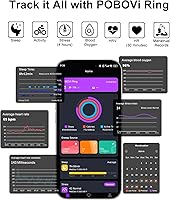
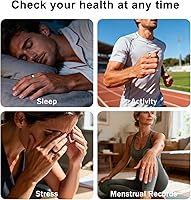
This health-tracking ring covers a lot of ground for its size. Heart rate, blood oxygen, HRV, stress levels, and sleep stage tracking all run passively throughout the day and night — you do not need to start a workout or press anything. For women, menstrual cycle logging is a genuinely useful inclusion that most competing rings at this price point skip entirely. Battery life holds up well in practice, with most users getting close to the advertised week on a charge. The wireless charging case keeps things tidy. There is no GPS onboard, which is a real limitation for runners, but Bluetooth and NFC connectivity cover everyday needs without locking you into a proprietary ecosystem.

Best For

This smart ring makes the most sense for people who want health data at a glance without the wrist bulk of a smartwatch or the ongoing cost of a subscription service. If the Oura Ring's annual fee has put you off, this is a logical alternative to evaluate. It fits well into the routines of swimmers and gym-goers given its swim-rated waterproofing. Women tracking reproductive health will find the built-in menstrual logging more practical than juggling a separate app. It is also a solid option for anyone with an HSA or FSA account to spend down. Just go in knowing GPS is absent — this is not the ring for serious outdoor athletes who need route data.

User Feedback

With over 700 ratings averaging 4.0 stars, the reception is solid but not uniformly glowing. Comfort and discreet design come up repeatedly — people genuinely appreciate wearing something that does not announce itself as a tech device. Setup is straightforward for most users. Where things get mixed is around app polish: some users report the companion app feels less refined than what you get from Oura or Samsung, and a handful flag inconsistencies in sleep and stress data. Battery life mostly lives up to its billing, though heavy sync usage can trim that. On value, the consensus is clear — compared to subscription-based rivals, the lifetime access model tips the scales in this ring's favor for budget-minded buyers.

Pros

  • No subscription fees — lifetime app access is included from day one, which saves real money over time.
  • Tracks heart rate, SpO2, HRV, stress, and sleep stages continuously without any manual input.
  • Built-in menstrual cycle logging sets this ring apart from most competitors at a similar price.
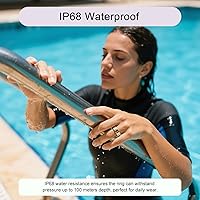
  • Swim-rated waterproofing means you can wear it in the pool, shower, or rain without worry.
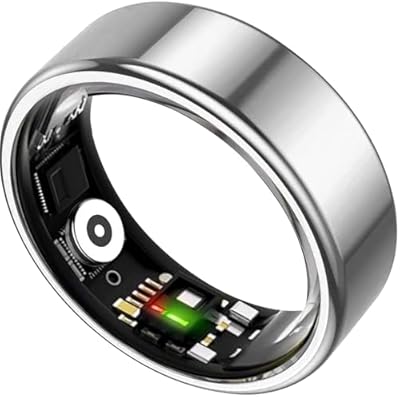
  • The titanium-coated exterior looks and feels premium for its price tier.
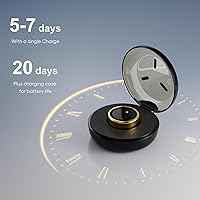
  • Seven-day battery life holds up well in practice for most users, reducing charging anxiety.
  • The wireless charging case is compact and travel-friendly, no cable fumbling required.
  • HSA and FSA eligibility makes it easier to offset the cost through health benefit accounts.
  • Works with both iOS and Android without locking you into a proprietary operating system.
  • At this price point, the value proposition against subscription-based rivals is genuinely compelling.

Cons

  • The companion app feels rough around the edges — a common frustration among Gen 1 hardware buyers.
  • No onboard GPS makes this a poor fit for outdoor runners or cyclists who track routes.
  • Sizing accuracy can be tricky; the need to purchase a separate sizing kit is an added inconvenience.
  • Some users report inconsistencies in sleep stage data, particularly distinguishing light from deep sleep.
  • Stress and HRV readings can vary noticeably day to day, raising questions about sensor reliability.
  • The app experience does not match the polish of Oura or Samsung Galaxy Ring software.
  • Battery life can fall short of seven days if Bluetooth sync frequency is set to high.
  • As a first-generation device, firmware updates and feature improvements are still a work in progress.
  • No notification support or on-wrist controls for users who want more than passive health tracking.

Ratings

The scores below for the POBOVi Gen 1 Smart Ring were generated by our AI system after processing verified global user reviews, with spam, bot activity, and incentivized feedback actively filtered out before analysis. The results reflect a honest cross-section of real buyer experiences — both the genuine strengths and the recurring frustrations that show up across hundreds of independent reviews. Where this ring earns strong marks and where it falls short are both represented here without sugarcoating.

Value for Money
91%
Among the most consistently praised aspects across all reviews is the absence of a subscription fee — buyers repeatedly note that the lifetime app access model changes the long-term cost calculus entirely. When stacked against Oura Ring or Samsung Galaxy Ring on total cost of ownership, this ring comes out significantly ahead for budget-minded health trackers.
A handful of users feel the app quality does not quite justify even the one-time price when compared to what subscription-based rivals deliver in terms of interface polish and analytical depth. For buyers expecting Oura-level software sophistication, the value equation feels less clear-cut.
Sleep Tracking
83%
Users who prioritize sleep data tend to be pleasantly surprised — the ring reliably captures sleep duration and provides a breakdown of light, deep, and REM stages without any setup required each night. Many reviewers note it gave them a consistent baseline to work from over several weeks of passive logging.
Stage classification can drift on nights with restless or interrupted sleep, occasionally misreading wakefulness as light sleep. A subset of users found the data inconsistent enough week-over-week to question whether subtle trend changes were real or sensor noise.
Comfort & Wearability
88%
The titanium-coated band draws frequent praise for sitting flush on the finger without the raised edges or pressure points that cheaper smart rings can create. Reviewers across different hand types note they genuinely forget they are wearing it by the end of the first day, which matters enormously for all-day tracking accuracy.
Getting to that comfort level depends heavily on ordering the right size upfront, and POBOVi's sizing does not map to standard ring charts. Users who estimated their size without the official sizing kit sometimes received an ill-fitting ring that required a return and reorder.
Battery Life
84%
Most users report hitting five to seven days of real-world battery life, which aligns reasonably well with the advertised claim. Travelers and frequent flyers specifically call out the wireless charging case as practical — it holds a reserve charge without needing a wall outlet for a top-up.
Heavy users who keep Bluetooth sync on frequent intervals can see battery life drop closer to five days, which still beats most smartwatches but undercuts the headline claim. A few reviewers noted the battery degraded noticeably after six to eight months of daily charging cycles.
Health Metric Accuracy
71%
29%
Heart rate readings during rest and moderate activity are generally consistent with what users cross-check against chest straps or medical-grade oximeters. For everyday trend monitoring — are your resting heart rate and HRV improving over weeks — the ring gives usable directional data.
During high-intensity workouts, heart rate readings can lag or spike unreliably, and SpO2 readings during sleep show more variance than competing devices in the same price tier. Users who expected clinical-level precision were often disappointed; this is a wellness indicator tool, not a diagnostic one.
App Experience
62%
38%
The core dashboard is clean enough for beginners to navigate, and the onboarding process is generally straightforward — most users are up and tracking within minutes of first pairing. Health summaries and weekly trend charts give casual users a readable overview without overwhelming them with raw data.
The app is where Gen 1 limitations show most clearly: reviewers regularly flag sluggish data sync, occasional crashes, and a lack of granular data export options that power users want. The experience feels noticeably behind Oura and Fitbit in terms of UI polish and analytical features.
Build Quality
86%
The titanium-coated exterior holds up well against the scratches and knocks of daily life — reviewers who wear it constantly through gym sessions and outdoor activities report minimal surface wear after months of use. The fit and finish feel appropriate for a mid-range health wearable and well above budget alternatives.
Some users noticed the inner ring coating showed minor discoloration after extended pool use, suggesting the waterproofing treatment is durable but not indefinitely impervious to chemical exposure. A small number of reviewers reported the charging contact points showing corrosion after several months.
Waterproofing
82%
18%
Swim-rated waterproofing holds up reliably in pools and daily showers, with many active users reporting zero issues after months of regular aquatic use. Gym-goers who wear it through heavy sweat sessions also note no moisture-related performance degradation.
Extended saltwater exposure — ocean swimming in particular — seems to accelerate wear on the outer coating faster than fresh or chlorinated water, based on a subset of user reports. The waterproofing is functional but probably not designed with serious open-water swimmers in mind.
Menstrual Tracking
77%
23%
Female reviewers highlight this as a genuine differentiator, particularly those who were previously managing a separate period-tracking app alongside a fitness wearable. Having cycle logging integrated into the same ring that monitors sleep and stress creates a more unified picture of overall wellness patterns.
The feature relies partly on manual input to function accurately, especially in the early calibration weeks, which some users find tedious. A few reviewers noted the cycle predictions took two to three months of data before becoming reliably useful.
Sizing & Fit Process
58%
42%
Once users get the right size — whether through the official sizing kit or careful measurement — the ring fits well and stays comfortably positioned throughout the day and night. POBOVi does offer the sizing kit on Amazon, which is a practical solution when buyers use it.
The extra step of purchasing a sizing kit separately before ordering the ring itself is a friction point that frustrates buyers used to standard sizing charts. Several reviewers went through one or two returns before landing on the correct size, adding delay and cost to the purchase process.
Connectivity & Pairing
79%
21%
Initial Bluetooth pairing is generally painless across both iOS and Android devices, with most reviewers completing setup in under five minutes. NFC functionality and the lack of a proprietary OS requirement are noted positives for users who switch phones or use non-standard Android builds.
Occasional Bluetooth disconnection issues crop up in reviews, particularly after phone software updates, requiring manual re-pairing. A subset of Android users on non-mainstream handsets reported intermittent sync failures that were not present on iOS.
Sleep Insights Depth
67%
33%
The ring captures enough data to identify broad sleep quality trends — users recovering from illness or managing stress can see meaningful changes in their weekly sleep scores over time. For casual sleep optimization, the nightly breakdown is useful enough to act on.
The depth of actionable insight in the app falls short of what dedicated sleep trackers or Oura provide — there is no integration with environmental data, and the coaching recommendations can feel generic rather than personalized. Power users tracking sleep for specific health goals will hit the ceiling of the app's analytical capability quickly.
Design & Discretion
89%
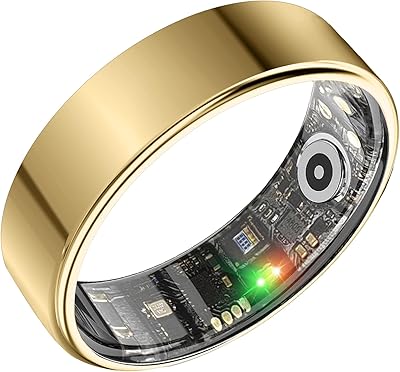
Buyers consistently appreciate that the ring looks like jewelry rather than a gadget — the Gold colorway in particular reads as an accessory rather than a tracker, which matters to users who wear it in professional or social settings. Its low-profile form factor makes it one of the least conspicuous health wearables available.
The round band form factor, while elegant, means there is no visual feedback whatsoever — no screen, no LED indicators — so users who want at-a-glance information without opening an app will find the experience entirely invisible in a way that takes some adjustment.
Setup & Onboarding
81%
19%
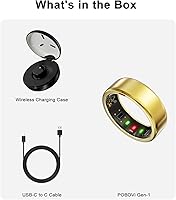
The out-of-box experience is smooth for most users — the ring, charging case, and USB-C cable are clearly laid out, and the companion app guides new users through pairing and profile setup without requiring technical knowledge. First-time smart ring owners specifically mention the process feeling approachable.
A few reviewers encountered firmware update prompts immediately after pairing that stalled setup for 10 to 20 minutes, which is a minor but avoidable frustration. Users who expected instant data after pairing were sometimes surprised that baseline calibration takes a night or two to produce meaningful results.

Suitable for:

The POBOVi Gen 1 Smart Ring is a strong fit for health-conscious adults who want continuous, passive monitoring without strapping on a bulky smartwatch every morning. If you have been eyeing Oura or the Samsung Galaxy Ring but balk at paying an annual subscription just to access your own data, this ring directly addresses that frustration with lifetime app access included at purchase. Women who want menstrual cycle tracking baked into a single discreet device — rather than juggling a separate period-tracking app — will find real practical value here. It also suits swimmers, gym regulars, and anyone whose daily routine involves water or physical activity, given its swim-rated waterproofing. Buyers with an active HSA or FSA account will appreciate that this qualifies as an eligible expense, making it easier to justify as a wellness investment rather than a gadget splurge.

Not suitable for:

The POBOVi Gen 1 Smart Ring is not the right choice for anyone who needs GPS-based route tracking, whether you are a runner logging outdoor miles or a cyclist wanting mapped workouts — there is simply no onboard GPS. Serious athletes or biohackers who rely on precision biometric data should also temper expectations; like all consumer smart rings, this is a trend indicator, not a clinical-grade device, and sensor consistency has drawn some criticism in user reviews. If you are accustomed to the polished app ecosystems of Fitbit or Apple Watch, the companion app here may feel underdeveloped by comparison — this is a Gen 1 product, and the software shows it. People with very specific ring sizing needs should know that getting the right fit requires ordering a separate sizing kit, which adds friction to the purchase process. Finally, anyone deeply invested in a smartwatch ecosystem who wants notification mirroring or on-wrist controls will find this ring does not serve those needs at all.

Specifications

  • Brand: Manufactured by POBOVi, a wearable technology brand focused on subscription-free health tracking devices.
  • Model: This is the Gen 1 (first generation) release of the POBOVi Smart Ring, model code GOLD GEN-1.
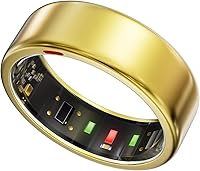
  • Exterior Material: The outer shell features a titanium coating designed to be skin-friendly and resistant to everyday wear and scratches.
  • Shape & Form: The ring has a round band form factor, designed to sit flush on the finger like a standard piece of jewelry.
  • Available Colors: Currently available in Gold and additional colorways; always verify current color availability at time of purchase.
  • Waterproofing: Rated for swim-level water resistance, making it suitable for use in pools, showers, and outdoor wet environments.
  • Battery Life: A single full charge supports up to 7 days of continuous use under typical tracking conditions.
  • Charging Method: Charges wirelessly via an included charging case, which connects to power through a 1m USB-C cable.
  • Battery Type: Uses a laminated lithium polymer cell, chosen to minimize ring weight while preserving battery capacity.
  • Connectivity: Connects to smartphones via Bluetooth and also supports NFC for compatible data interactions.
  • App Compatibility: The companion app works with both iOS and Android devices, with no platform-exclusive restrictions.
  • Health Metrics: Continuously tracks heart rate, blood oxygen (SpO2), heart rate variability (HRV), stress levels, sleep stages, and menstrual cycles.
  • GPS: No onboard GPS is included; outdoor route or distance tracking requires a paired smartphone.
  • Subscription: No recurring subscription fee is required; app access and full feature functionality are included for the lifetime of the device.
  • HSA/FSA Eligible: The POBOVi ring is officially approved for purchase using Health Savings Account (HSA) and Flexible Spending Account (FSA) funds.
  • Box Contents: Includes the smart ring, wireless charging case, 1m USB-C cable, an instruction manual, and a quick-start guide.
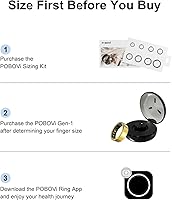
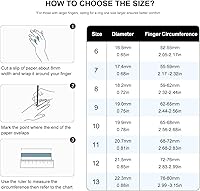
  • Sizing: Ring sizing does not follow standard jewelry sizing conventions; a separate POBOVi Sizing Kit is recommended before purchase.
  • Operating System: Runs on POBOVi's proprietary ring operating system, managed and updated through the companion mobile app.
  • Product Weight: The total packaged weight is approximately 0.15 kg, reflecting the lightweight build of the ring itself.
  • ASIN: The Amazon product identifier for this item is B0D3C3ZJMT, first listed in June 2024.

Related Reviews
BENIO Ring Gen 2 Smart Ring, Size 7
85%
87%
Health Tracking Accuracy
91%
Waterproof Performance
88%
Comfort & Wearability
82%
Battery Life
85%
Compatibility with Devices
More
RingConn Gen 2 Smart Ring
84%
91%
Battery Life
88%
Comfort and Wearability
85%
Sleep Apnea Monitoring
78%
App Experience
90%
Water Resistance
More
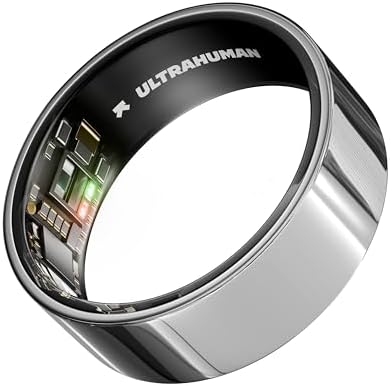
Ultrahuman Ring AIR Smart Ring Health Tracker, Size 9
86%
88%
Health Tracking Accuracy
92%
Comfort & Wearability
85%
Battery Life
90%
Build Quality
80%
App Experience
More
MERNEUO Smart Ring
MERNEUO Smart Ring
84%
88%
Health Tracking Accuracy
90%
App Integration & Ease of Use
72%
Battery Life
93%
Waterproof & Durability
85%
Comfort & Fit
More
aaboRing Smart Ring
aaboRing Smart Ring
85%
88%
Heart Rate Monitoring
91%
Sleep Tracking Accuracy
92%
Build Quality (Titanium)
85%
Battery Life
90%
Waterproof Performance
More
TIAZUUX Smart Ring Health Activity Tracker
74%
91%
Value for Money
87%
Sleep Tracking
88%
Comfort & Wearability
83%
Build Quality
79%
Battery Life
More
FKGZJF Smart Ring
FKGZJF Smart Ring
86%
91%
Value for Money
89%
Battery Life
85%
Health Monitoring Accuracy
92%
Design & Comfort
82%
App Experience
More
UniJethro Smart Ring SR11M
85%
89%
Health Tracking Accuracy
91%
Battery Life
93%
Waterproof Durability
86%
Comfort & Fit
88%
Ease of Use
More
Anarow R10M Smart Ring
72%
83%
Value for Money
79%
Sleep Tracking
74%
Heart Rate Monitoring
47%
Blood Pressure Accuracy
86%
Comfort & Wearability
More
JAKCOM R5 Smart Ring
83%
88%
NFC & RFID Performance
82%
Ease of Use
90%
Design & Comfort
76%
Setup & Customization
85%
Wireless Storage Functionality
More

FAQ

No, and that is one of the main reasons people choose the POBOVi Gen 1 Smart Ring over competitors. You pay once at purchase and get full app access for life — no hidden tiers, no premium unlock fees.

This is genuinely important to sort out before buying. POBOVi's sizing does not follow standard ring size charts, so the company sells a separate sizing kit on Amazon. Order that first, find your correct size, and then place your ring order. Getting the wrong size is one of the most common frustrations buyers run into.

Yes, the ring is swim-rated and holds up fine in pools. Saltwater and chlorine exposure is generally manageable for the waterproofing on this type of device, though rinsing it with fresh water after salt or chlorinated water is always a reasonable habit to maintain longevity.

It gives you a useful picture of your sleep patterns — light, deep, and REM stages — but treat it as a trend tool rather than a clinical measurement. Some users report occasional inconsistencies in how stages are classified. For most people it is accurate enough to act on, but if you need medical-grade sleep data, a dedicated sleep study is a different product category entirely.

Yes, the companion app supports both iOS and Android without any feature differences between the two platforms. There is no lock-in to Apple Health or Google Fit as a requirement either.

It should — this health-tracking ring is officially listed as HSA and FSA eligible. That said, it is worth double-checking with your specific plan administrator, as eligibility rules can vary slightly depending on your benefits provider.

Most users report getting close to the advertised 7-day battery life under normal use, which typically means all-day tracking with moderate Bluetooth sync frequency. If you have sync set to very frequent intervals, expect something closer to 5 to 6 days. The wireless charging case makes topping it up convenient regardless.

The ring handles the physiological side — tracking relevant metrics like temperature patterns and HRV — while the app provides the cycle logging interface. You may need to input some data manually to help calibrate cycle predictions, particularly when you first start using it.

It is a reasonable entry point, especially given there is no subscription cost to worry about while you figure out whether ring-based tracking fits your lifestyle. Just go in knowing the app is not as polished as what you would get from more established players, and that getting the sizing right upfront matters a lot for comfort.

On raw feature count — heart rate, SpO2, HRV, sleep tracking, stress monitoring — they cover similar ground. Oura has a more refined app experience and a longer track record of firmware improvements, but it charges an ongoing subscription fee. The POBOVi ring costs less overall when you factor out those recurring fees, which is the trade-off most buyers are weighing.