Overview

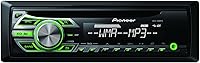
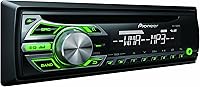
The Pioneer DEH-150MPG CD Receiver has been quietly doing its job since 2012 — a no-frills single-DIN head unit that asks nothing more of you than to plug it in and drive. Pioneer built this as an entry-level option, and it has stuck around because it simply works. There is no Bluetooth, no USB port, no touchscreen — and that is the point. If you want an honest replacement for a dead factory radio without paying for features you will never use, this is that unit. The green illumination gives it a retro feel that blends naturally into older dashboards without looking out of place.
Features & Benefits

The most practical thing about this Pioneer head unit is the front-mounted aux input — a 3.5mm jack right on the face of the unit, so you can plug in a phone or MP3 player without routing cables through the dash. CD playback handles WMA and MP3 files burned onto disc, which covers a surprising range of everyday listening needs. The MOSFET amplifier is worth noting too; it runs more efficiently than cheaper op-amp designs, which translates to cleaner sound at moderate volumes. If you ever want more power, the single RCA pre-out gives you a path to an external amp. Steering wheel control compatibility rounds things out nicely.

Best For

This entry-level CD receiver makes the most sense for a specific type of driver. If your factory radio just died and you need something reliable that slots straight into a standard single-DIN opening, this fits the bill without drama. It is also a natural pick for anyone who still has a collection of CDs or burned discs and wants to keep using them. DIY installers will appreciate the clean, minimal wiring requirements. It also works well as a secondary unit — think a work truck, a weekend project car, or a spare vehicle where you want functional audio without overthinking it. If Bluetooth is non-negotiable, look elsewhere.

User Feedback

Across more than 130 ratings, this single-DIN stereo holds a 4.3-star average — a steady score for a unit that has been on the market for over a decade. Easy installation and clear, consistent sound are the two things buyers bring up most. Long-term owners tend to echo the same sentiment: it works, it lasts, and Pioneer build quality holds up. That said, the criticism is just as consistent. No Bluetooth and no USB are the most common complaints, and a few buyers note that a single RCA pre-out feels limiting for system expansion. For anyone expecting modern connectivity, it will feel dated — but for its intended buyer, the reliability speaks for itself.

Pros

  • Installs quickly into any standard single-DIN slot with minimal wiring complexity.
  • The front aux input gives you instant plug-and-play connectivity for any device with a 3.5mm output.
  • CD playback is reliable and handles both WMA and MP3 files on burned discs.
  • MOSFET amplifier delivers noticeably cleaner power than cheaper op-amp-based units.
  • Steering wheel control compatibility is a practical feature that many entry-level rivals skip entirely.
  • Pioneer build quality has held up for long-term owners across many years of regular use.
  • Push-button controls are intuitive and easy to operate without taking your eyes off the road.
  • The single RCA pre-out gives you a real upgrade path to an external amplifier later.
  • Green illumination blends naturally into older dashboards without looking mismatched.
  • A 4.3-star average across more than 130 ratings reflects consistent real-world satisfaction.

Cons

  • No Bluetooth means no wireless audio streaming or hands-free calling of any kind.
  • The absence of a USB port rules out playing music directly from a flash drive.
  • Only one RCA pre-out channel limits how far you can expand the audio system.
  • No HD radio support means you are limited to standard AM and FM reception quality.
  • The feature set has not evolved since 2012, and newer rivals now offer more at comparable price points.
  • Green-only illumination may clash with the interior lighting of some modern vehicle cabins.
  • No built-in equalizer presets or advanced sound tuning options for listeners who want more control.
  • Display readability in bright daylight can be a weak point compared to newer head units.

Ratings

Our AI rating system analyzed verified global user reviews for the Pioneer DEH-150MPG CD Receiver, actively filtering out incentivized, duplicate, and bot-generated feedback to surface what real buyers consistently experience. The scores below reflect a transparent picture of both where this entry-level CD receiver genuinely delivers and where it falls short for certain buyers.

Ease of Installation
91%
Owners across the board praise how straightforward this single-DIN stereo is to install, with many reporting a clean fit using a standard wiring harness adapter and no modifications to the dash. DIY installers with basic car audio experience frequently describe the process as taking under an hour.
A small number of buyers note that steering wheel control integration requires sourcing a separate, vehicle-specific adapter that is not included, which adds an extra step and potential cost that some were not expecting.
Sound Quality
74%
26%
For everyday listening on a commute or around town, users find the audio output clean and clear at moderate volumes, with the MOSFET amplifier providing noticeably less distortion than the aging factory radios most buyers are replacing. Spoken-word content and casual music listening both translate well through factory speakers.
Buyers with higher audio expectations find the output underwhelming at higher volumes, and the lack of any built-in equalizer presets means you have limited control over the sound signature. It handles the basics well but does not challenge even modestly priced competitors in terms of dynamics or depth.
Build Quality
83%
Pioneer's reputation for reliable hardware holds up here — long-term owners who have run this entry-level CD receiver for several years consistently report that it continues to function without disc-reading errors, button failures, or display issues. The chassis feels solid for a unit at this level.
The face panel plastics have a budget feel that some buyers notice immediately, and the overall finish does not convey the same quality impression as Pioneer's higher-tier models. A few users mention that button feedback is functional but lacks tactile confidence.
CD & Media Playback
88%
Disc reading performance is one of the strongest aspects of this Pioneer head unit — it handles standard audio CDs reliably and reads MP3 and WMA files on burned CD-Rs without the skipping or recognition errors that plague some cheaper units. Buyers with large physical media collections find this consistency genuinely reassuring.
There is no tolerance for scratched or heavily worn discs beyond what any CD mechanism can reasonably handle, and a handful of buyers report that very old or low-quality burnt discs occasionally cause read errors. The absence of any USB or SD playback option also means the media flexibility ends at the disc slot.
Connectivity Options
41%
59%
The front-mounted 3.5mm aux input is genuinely convenient — you can plug in a phone or portable player without routing cables through the dash, and it works reliably with any device that has a headphone output. For a wired workflow, it covers the basics.
By any current standard, the connectivity offering is severely limited. No Bluetooth, no USB port, no NFC, and only a single RCA pre-out on the rear leave buyers with very few options for modern audio workflows. Drivers who want wireless audio streaming will find this unit completely inadequate for their needs.
Value for Money
78%
22%
For the specific buyer who needs a proven, reliable replacement for a dead factory radio without paying for features they will never use, this entry-level CD receiver represents a reasonable exchange. The Pioneer name and the unit's track record since 2012 add credibility to the purchase.
The value equation has shifted as newer competitors now include Bluetooth as a baseline feature at comparable price points, making this receiver feel like a harder sell for anyone doing a direct feature-to-feature comparison. Buyers who later discover they miss wireless connectivity often feel the money would have been better spent stepping up.
Display Readability
67%
33%
The display is functional for basic use — track information, radio frequency, and source labels are legible at a glance during normal driving conditions, and the green illumination is consistent with surrounding controls on older dashboards.
In direct sunlight or bright daytime conditions, the display can wash out noticeably, making it harder to read without shielding it. The character display is also basic by modern standards, showing limited track information compared to the scrolling metadata displays found on newer units.
Steering Wheel Control Compatibility
72%
28%
Buyers who make the effort to source the correct adapter harness for their vehicle report that steering wheel control integration works reliably, which is a practical convenience feature that keeps hands on the wheel during a commute. It is a feature many competitors at this level omit entirely.
The compatibility depends entirely on a third-party adapter that varies by vehicle make and model, and the setup is not always plug-and-play. Some buyers are caught off guard by the additional cost and research required to get this feature working correctly.
Radio Tuner Performance
71%
29%
The AM and FM RDS tuner picks up stations reliably in most urban and suburban environments, and RDS support means station names and basic data display on the screen where available. For traditional radio listeners, it covers the everyday use case without issues.
HD radio is not supported, which is a real limitation in markets where HD broadcasts are common, as you will miss out on the improved audio fidelity and secondary channels those signals carry. Buyers in rural areas with weaker signal environments also note that reception can be inconsistent.
Button & Control Usability
79%
21%
The push-button layout is logically organized and easy to operate by feel after a short adjustment period, which matters when you are keeping your eyes on the road. First-time users find the learning curve minimal compared to touchscreen units that require looking at the display.
The buttons themselves are small and moderately spaced, which can make precise operation tricky for drivers with larger hands, particularly in cold weather with gloves on. There is no rotary volume knob on some configurations, which some users find less intuitive than a traditional dial.
Illumination & Aesthetics
62%
38%
The green illumination is consistent and blends naturally into older vehicle interiors that originally shipped with green factory lighting, giving the install a cohesive look rather than an afterthought appearance. The glow is subtle rather than distracting at night.
The single fixed green color is a limitation for drivers whose vehicles have amber, white, or red interior lighting, as the mismatch can look noticeably out of place. There is no option to adjust or change the illumination color, which is a feature even some modestly priced competitors now offer.
Long-Term Durability
86%
A meaningful number of verified buyers who have owned this Pioneer head unit for three or more years report that it continues to function exactly as it did at installation, with no disc mechanism degradation or electronic faults. Pioneer's hardware reliability record across its product history backs up these individual accounts.
Long-term durability of the display backlight is occasionally flagged as a concern, with a small number of owners noting dimming over extended use. As with any electronics from 2012, sourcing replacement parts if something does eventually fail may become progressively more difficult over time.
Package & Documentation
69%
31%
The included documentation covers the basic installation steps clearly enough for a competent DIY installer to follow without needing to consult external resources, and the package includes the necessary removal keys and hardware for a standard install.
The manual is dense and not particularly user-friendly for first-time head unit installers, and there is no quick-start guide to simplify the process. No wiring harness adapter or dash kit is included, which means additional purchases are required before installation can begin for most vehicles.

Suitable for:

The Pioneer DEH-150MPG CD Receiver is built for a very specific buyer — and for that buyer, it hits the mark reliably. If your factory head unit has died and you need a straightforward single-DIN replacement that installs cleanly without a steep learning curve, this is a practical, low-stress solution. Owners of older vehicles who still maintain a CD collection will find the disc playback dependable and the WMA and MP3 support on burned discs a genuine bonus. The front aux input also means you can plug in a phone or portable player the moment you are done with discs, which covers most everyday listening needs without any workarounds. DIY installers will appreciate how uncomplicated the wiring is, and anyone running a work truck, a fleet vehicle, or a secondary car will find this entry-level CD receiver more than adequate for daily use. If your priority is something that works consistently without requiring updates, app pairing, or troubleshooting, this single-DIN stereo delivers exactly that.
Not suitable for:

Buyers who rely on Bluetooth audio streaming or hands-free calling should look elsewhere before considering this unit — the Pioneer DEH-150MPG CD Receiver has no wireless connectivity of any kind, and that is a hard limitation rather than a minor inconvenience. If you primarily listen through a USB drive or want to charge your phone through the head unit, this receiver will frustrate you from day one, as there is no USB port at all. Audio enthusiasts planning a multi-amp setup will also find the single RCA pre-out restrictive fairly quickly. Anyone shopping for a primary head unit in a newer vehicle where the dashboard expects a modern feature set — digital media integration, smartphone mirroring, or HD radio — will find this unit underpowered for those expectations. It is also worth acknowledging that the feature set, by any current standard, is dated; if you are comparing this against newer competitors in a similar price range, some of those alternatives now offer Bluetooth as a baseline, which shifts the value equation noticeably.

Specifications

  • Brand: Manufactured by Pioneer, a long-established Japanese consumer electronics company with decades of car audio experience.
  • Model Number: The exact model designation is DEH-150MPG, which identifies this specific entry-level single-DIN receiver in Pioneer's lineup.
  • Form Factor: This unit follows the standard single-DIN form factor, measuring 3.35 x 4.72 x 7.09 inches, compatible with most single-DIN dash openings.
  • Weight: The unit weighs 2.64 pounds, keeping installation manageable for a solo DIY installer without requiring special mounting hardware.
  • Disc Formats: Supports CD playback with full compatibility for WMA and MP3 audio files burned onto standard CD-R and CD-RW discs.
  • Aux Input: A front-facing 3.5mm auxiliary input jack allows direct wired connection of smartphones, MP3 players, or any device with a headphone output.
  • RCA Pre-Out: Includes one RCA pre-out channel, enabling connection to an external amplifier for expanded audio output beyond the built-in power stage.
  • Amplifier Type: Uses a MOSFET amplifier design, which operates more efficiently and with lower distortion than standard op-amp configurations at comparable output levels.
  • Audio Output: Delivers stereo audio output suitable for standard two-speaker or four-speaker vehicle configurations without additional processing equipment.
  • Connectivity: Connectivity options are limited to the front 3.5mm auxiliary input and rear RCA output; there is no Bluetooth, USB, or wireless capability.
  • Steering Wheel Control: The unit is compatible with factory steering wheel audio controls when paired with the appropriate vehicle-specific adapter harness.
  • Illumination: The display and button lighting use green illumination, a fixed color that suits older vehicle interiors with similar factory lighting tones.
  • Controller Type: All functions are accessed via physical push-button controls on the face of the unit, with no touchscreen or rotary encoder interface.
  • Tuner: Includes an AM and FM RDS tuner for standard terrestrial radio reception; HD radio is not supported.
  • Availability: This model was first made available in October 2012 and has remained in production, indicating stable long-term parts and support availability.

Related Reviews
Pioneer DEH-S4100BT CD Receiver
77%
88%
Bluetooth Reliability
81%
Sound Quality
83%
Hands-Free Call Quality
74%
App Integration
77%
Ease of Installation
More
Pioneer DEH-S6220BS 1-Din CD Receiver
78%
88%
Sound Quality
84%
Bluetooth Reliability
86%
Ease of Installation
82%
Value for Money
63%
Display Readability
More
Pioneer DEH-S4220BT 1-Din CD Receiver
79%
88%
Bluetooth Reliability
79%
Sound Quality
91%
Ease of Installation
86%
Value for Money
58%
Display & Interface
More
Pioneer FH-S722BS Double-DIN CD Receiver
74%
76%
Bluetooth Performance
78%
Sound Quality
81%
Ease of Installation
83%
Value for Money
69%
User Interface & Controls
More
Pioneer DEH-S1200UB
Pioneer DEH-S1200UB
89%
94%
Sound Clarity
87%
Ease of Installation
90%
Build Quality
88%
Connectivity Options
92%
USB & AUX Compatibility
More
Pioneer DMH-342EX Double-DIN Multimedia Receiver
69%
83%
Touchscreen Quality
81%
Audio Performance
86%
Bluetooth Reliability
41%
Smart Integration
78%
Backup Camera Compatibility
More
Pioneer AVH-W4400NEX 7″ In-Dash Multimedia Receiver
74%
86%
Wireless Connectivity
61%
Touchscreen Responsiveness
58%
Installation Experience
83%
Audio Output Quality
79%
Build Quality
More
Kenwood KMR-D378BT Marine CD Receiver
86%
88%
Ease of Installation
91%
Sound Quality
92%
Weatherproof Durability
79%
Bluetooth Connectivity
85%
Voice Control Functionality (Alexa)
More
Pioneer MVH-S720BHS Single-Din Digital Media Receiver
80%
88%
Bluetooth Performance
84%
Sound Quality
86%
HD Radio Reception
91%
Value for Money
82%
Ease of Installation
More
Pioneer AVH-W4500NEX Double-Din Car Stereo Receiver
74%
88%
Wireless Connectivity
84%
Touchscreen Responsiveness
86%
Sound Output Quality
51%
Installation Experience
62%
Menu & Interface Usability
More

FAQ

No, it does not. This single-DIN stereo has no Bluetooth capability at all, wired or wireless. If hands-free calling or wireless audio streaming is something you rely on daily, you would need to look at a different unit that includes Bluetooth as a built-in feature.

Unfortunately, there is no USB port on this receiver. Your options for audio playback are a physical CD, a burned CD-R with MP3 or WMA files, or a wired device connected through the front 3.5mm aux input.

It is compatible with steering wheel audio controls, but you will typically need a separate steering wheel control adapter harness that is specific to your vehicle's make and model. These adapters are widely available and are not included in the box.

For anyone comfortable with basic car audio installation, yes. It fits a standard single-DIN opening and uses a conventional wiring harness setup. Most DIY installers report a straightforward process, especially when using a vehicle-specific wiring adapter harness to avoid cutting factory connectors.

Yes, there is one RCA pre-out on the rear of the unit, which gives you a path to connect an external amplifier. Keep in mind it is a single pre-out, so your options for multi-amp configurations are limited without an additional line output converter.

The disc player handles standard audio CDs as well as CD-Rs and CD-RWs burned with MP3 or WMA files. That covers most physical media people commonly have, including home-burned compilations and old data discs with audio files.

It is a fairly subtle green glow on the buttons and display text — nothing flashy or bright. It tends to blend well with older vehicle interiors that originally came with green factory lighting, but it can look a bit out of place in newer cars with amber or white interior lighting.

As of the available product data, Pioneer has not discontinued this model, which is notable given it has been on the market since 2012. That longevity is generally a good sign for parts availability and support, though it is worth verifying current availability before purchasing.

Most owners describe it as a clear, clean step up from an aging factory unit. It will not blow anyone away, but the MOSFET amplifier does a decent job at moderate listening volumes. Think of it as solid everyday audio rather than audiophile-grade performance.

As long as the vehicle has a standard single-DIN opening, this entry-level CD receiver will physically fit. For vehicles with proprietary or oversized factory head unit openings, you may need a dash kit adapter, which is a common accessory available for most makes and models.

Where to Buy