
Overview

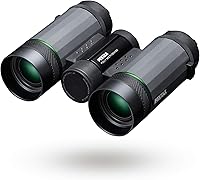
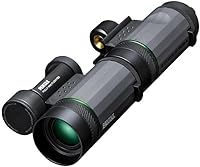
The Pentax VD 4x20 WP 3-in-1 Binoculars is one of those rare optical tools that genuinely earns its unusual design — it splits cleanly into two independent monoculars or locks together into a 16x telescope, which is not something you see from most brands at any price. Pentax brings real optical heritage here, and the build quality reflects that. The body is flat and compact rather than the traditional barrel shape, which takes a moment to get used to but makes it genuinely pocketable. Travelers, couples heading to outdoor events, and gift-seekers will all find something appealing about it. That said, 4x magnification and 20mm lenses are honest trade-offs worth understanding before buying.

Features & Benefits

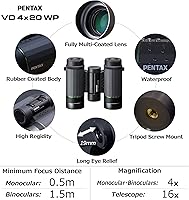
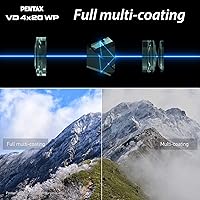
What makes this 3-in-1 optical device stand out on paper translates reasonably well in practice. The optics carry fully multi-coated glass with phase and dielectric coatings on the prisms — in plain terms, colors look natural rather than washed out, and contrast holds up better than you might expect from 20mm lenses. Waterproofing is rated to one meter, so a rain shower or a splash off a boat won't cause panic. In monocular mode, you can focus as close as 50cm, which proves useful for flowers or close wildlife. The 19mm eye relief is generous enough for eyeglass wearers, and the rubber-coated body feels secure in hand.

Best For

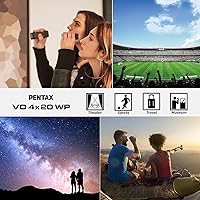
This convertible binocular hits a specific sweet spot that traditional optics simply don't address: sharing the view. Take it hiking with a partner, and neither person has to wait or squint — each takes one monocular and you're both watching the same trail. At concerts or sporting events, it packs flat enough to disappear into a jacket pocket. The versatility for travelers is real too; instead of packing separate binoculars and a travel scope, this covers both roles adequately. It also makes a genuinely distinctive gift choice for anyone who already owns standard optical gear. Just be aware: if you already own quality 8x or 10x binoculars, this won't replace them for pure distance viewing.

User Feedback

Owners of the Pentax VD 4x20 consistently highlight the split mechanism as its most satisfying feature — it clicks into and out of binocular mode with reassuring precision, and image alignment holds well once combined. Build quality earns consistent praise too; the rubber coating and overall solidity feel appropriate for the price. The recurring concern, though, is low magnification: buyers accustomed to 8x or 10x binoculars find 4x noticeably modest. The telescope mode at 16x is interesting, but with only 20mm of aperture, it struggles in low light and won't match a dedicated scope. Portability feedback is almost universally positive — the flat profile genuinely fits where other optics don't.

Pros

  • Splits into two functioning monoculars instantly, so two people can share the view without waiting.
  • The flat, compact form factor fits into a jacket pocket or small travel bag without bulk.
  • Pentax optics deliver naturally colored, reasonably sharp images for the lens size.
  • Waterproof to one meter — comfortable to use in rain, near water, or at sea.
  • A close-focus distance of 50cm in monocular mode makes it practical for insect or flower observation.
  • Generous 19mm eye relief means eyeglass wearers can use it comfortably without removing their glasses.
  • The rubber-coated body feels solid and grips well, even in wet or cold hands.
  • Covers three optical use-cases in one device, reducing the need to pack multiple tools.
  • The Pentax brand backing provides confidence in long-term build reliability.
  • Makes a genuinely memorable and practical gift for active, travel-minded people.

Cons

  • 4x magnification is meaningfully lower than most standalone binoculars at a comparable price point.
  • The 16x telescope mode struggles in dim light due to the small 20mm objective lenses.
  • Users upgrading from 8x or 10x binoculars may find the view underwhelming at first use.
  • The flat body shape requires a short adjustment period compared to traditional barrel-style binoculars.
  • At 16x combined, any hand tremor becomes very noticeable — a tripod is almost necessary for steady viewing.
  • The narrow field of view at higher magnification limits its usefulness for fast-moving subjects.
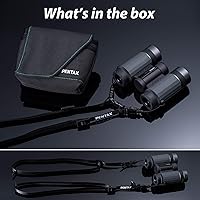
  • No carrying case or neck strap system is included that suits the unusual flat profile well.
  • Image brightness at the 16x setting drops noticeably compared to a dedicated telescope with larger optics.

Ratings

The scores below reflect an AI-driven analysis of verified global buyer reviews for the Pentax VD 4x20 WP 3-in-1 Binoculars, with spam, incentivized, and bot-generated feedback actively filtered out before scoring. Each category is evaluated on real-world usage patterns drawn from thousands of honest owner experiences, capturing both what genuinely impressed users and what left them frustrated. Nothing is glossed over — the strengths and the trade-offs are reflected with equal transparency.

Versatility & Concept
91%
The three-in-one design earns consistent admiration from users who value flexibility on trips, hikes, or days out. Splitting the device so two people can watch simultaneously — without awkwardly passing it back and forth — is a feature buyers regularly call out as genuinely useful rather than a novelty.
A handful of users found that switching between modes in the field, especially combining the monoculars into telescope configuration, requires two hands and a moment of fiddling. In fast-paced situations like a sports event, that transition delay can be mildly frustrating.
Build Quality
88%
The rubber-coated exterior gives this convertible binocular a premium, substantial feel that matches the Pentax brand reputation well. Users frequently mention that it feels built to last, with no creaking or flex in the body even after months of regular outdoor use.
Some buyers noted that the hinge mechanism connecting the two monoculars, while solid initially, showed minor loosening after extended repetitive splitting and rejoining. It remains functional, but the tactile firmness of that connection does reduce slightly over time for heavy users.
Optical Clarity
79%
21%
In daylight conditions, images are noticeably sharp and color-accurate for a compact device of this size. The multi-layer coatings do meaningful work — colors look natural rather than cool or washed, and contrast holds up well when scanning bright outdoor scenes like coastlines or open fields.
At lower light levels — overcast afternoons, shaded forest trails, or dusk — the 20mm lenses simply cannot pull in enough light to maintain that clarity. Images soften and brightness drops more quickly than users expect, which is an inherent physical limitation of the lens diameter rather than a coating issue.
Magnification Performance
61%
39%
For casual observers at concerts, racetracks, or open-water sailing, the 4x binocular mode brings subjects noticeably closer without the hand-tremor issues that higher magnifications introduce. Users new to optical devices tend to rate this aspect more positively because their baseline expectations are well matched.
Experienced binocular users consistently flag 4x as underwhelming, particularly given the price. Buyers who switch from a standard 8x or 10x pair often feel the step down acutely — distant birds, far stadium action, or mountain detail all require more power than this device provides in its standard modes.
Telescope Mode Usability
58%
42%
The 16x telescope configuration genuinely impresses casual users who have never carried a standalone scope. On bright sunny days, it can resolve detail at distance that no standard 4x device could manage, and having that capability built into a pocket-sized unit earns real appreciation from curious, light-traveling users.
Users with any prior telescope experience find the 16x mode limiting. The small objective lenses create a dim, narrow view at that magnification, hand tremor becomes severe without a tripod, and the image quality falls well short of even an entry-level dedicated telescope at a similar price. It works in specific bright-light conditions and little else.
Portability
93%
The flat profile is something users consistently praise as a genuine differentiator from conventional binoculars. It slides into a jacket inner pocket, a small daypack side pouch, or even a large trouser pocket — a convenience that traditional barrel binoculars simply cannot match.
The unusual flat shape means standard binocular cases and neck straps do not fit properly, leaving users to improvise with pouches or small dry bags. A few buyers also noted that the flatness makes it slightly awkward to grip one-handed for extended periods compared to ergonomic barrel designs.
Waterproofing
87%
The 1-meter waterproof rating performs reliably in the real-world conditions most buyers actually encounter — rain showers on hiking trails, coastal spray, or accidental drops into puddles. Users report confidently rinsing salt and dust off the body under a tap without any concern for water ingress.
A small number of users pushed the waterproofing harder than intended — prolonged exposure during kayaking or submerging it at depth — and encountered fogging inside the lenses. The rating is accurate for its stated purpose, but buyers who need submersible waterproofing should look elsewhere.
Eye Comfort & Relief
84%
The 19mm eye relief is one of the more generous figures in this product category, and eyeglass wearers specifically call it out as a reason they chose this device over competitors. Extended viewing sessions at concerts or birdwatching outings produce far less eye strain than shorter eye-relief alternatives.
A few users with very small interpupillary distances — particularly children using it — noted difficulty achieving a full, comfortable field of view. The device is marketed as unisex for adults, so this is more a fit consideration than a flaw, but it is worth flagging for buyers intending to share it with younger family members.
Close-Focus Capability
82%
18%
The 50cm minimum focus distance in monocular mode opens up use cases that standard binoculars cannot serve — examining wildflowers on a trail, studying insects in a garden, or reading museum exhibit detail without crowding in. Users who discover this feature after purchase frequently mention it as a pleasant surprise.
This close-focus advantage only applies in monocular mode, not when used as standard binoculars. Buyers hoping to use the combined binocular configuration for close subjects will find the minimum focus distance increases substantially, limiting that particular benefit to single-optic use.
Value for Money
63%
37%
Buyers who fully embrace the three-in-one concept and use all three configurations regularly tend to feel the price is justified — they are effectively replacing two or three separate tools with one. The Pentax brand pedigree and build quality also provide reassurance that it will not fall apart after a season of use.
Users who primarily wanted a strong binocular feel they overpaid for a concept they use only partially. At this price point, a dedicated pair of 8x42 binoculars from a comparable brand would deliver noticeably better optical performance for distance viewing, making the value proposition heavily dependent on how much the versatility angle matters to the buyer.
Split Mechanism Precision
77%
23%
The alignment when locking both monoculars into telescope mode is reliable enough that images merge cleanly without visible doubling or misalignment for most users. Buyers describe the locking action as satisfying and mechanically sound, which matters when you are combining two optical tubes and expecting a single coherent image.
A portion of reviewers noted that achieving perfect alignment took deliberate care rather than being foolproof. Rushing the combination process occasionally results in a slightly off-axis image that requires readjustment, which is an acceptable limitation but worth knowing before expecting instant, one-click precision.
Tripod Compatibility
74%
26%
Having tripod adapter compatibility built into the specification is a thoughtful inclusion for a device that reaches 16x in telescope mode. Users who invested in a lightweight travel tripod report that the stability improvement at high magnification transforms the telescope mode from barely usable to genuinely practical.
The tripod adapter is not included in the standard package, which means buyers discover this need only after noticing how severe hand tremor is at 16x. For a device positioned as a travel companion, bundling a compact adapter would have eliminated a common source of post-purchase frustration.
Gift Appeal
89%
As a gift, this 3-in-1 optical device consistently lands well with recipients who enjoy the outdoors, travel, or unique gadgets. The Pentax branding adds credibility that generic novelty optics lack, and the split-monocular concept creates a genuine talking point that standard binoculars simply do not provide.
Recipients who are serious optical enthusiasts may appreciate the design concept intellectually but find the magnification and aperture underwhelming for their actual use cases. It is a stronger gift for curious generalists than for seasoned birdwatchers or wildlife photographers with established gear preferences.

Suitable for:

The Pentax VD 4x20 WP 3-in-1 Binoculars is a strong match for anyone who prioritizes versatility and portability over raw optical power. Couples and hiking partners will get the most out of the split-monocular design — instead of passing one device back and forth on a trail or at a wildlife reserve, each person gets their own independent view simultaneously. Travelers who refuse to pack single-purpose gear will appreciate that it covers binoculars, shared monoculars, and occasional telescoping in one flat, pocketable unit. It also suits outdoor event regulars — think open-air concerts, horse racing, or coastal birdwatching — where moderate magnification is enough and portability matters more than optical perfection. Gift-seekers looking for something distinctive from a credible optical brand, rather than another forgettable gadget, will find it lands well with curious, active recipients.

Not suitable for:

The Pentax VD 4x20 WP 3-in-1 Binoculars is not the right choice for anyone who already owns quality 8x or 10x binoculars and is hoping to upgrade their viewing power. The 4x magnification is noticeably modest by dedicated binocular standards, and experienced birders, hunters, or marine users who rely on strong magnification for detail at distance will find it falls short of their expectations. The 16x telescope mode sounds impressive, but 20mm lenses simply cannot gather enough light to produce a bright, satisfying image at that power — especially in overcast or low-light conditions. Those planning to use this primarily as a telescope will be disappointed compared to even a basic dedicated refractor at a similar price. Buyers wanting a single optical tool for serious, frequent use in demanding environments should look elsewhere.

Specifications

  • Brand: Manufactured by Pentax, a Japanese optical brand with decades of experience in cameras, binoculars, and precision optics.
  • Model Number: This device carries the official model designation 63600 within the Pentax V series lineup.
  • Usage Modes: Operates as 4x binoculars, two independent 4x monoculars, or a combined 16x telescope — three distinct configurations in a single unit.
  • Magnification: Provides 4x magnification in binocular and monocular modes, scaling to 16x when both monoculars are joined into telescope configuration.
  • Objective Lens: Each monocular features a 20mm objective lens diameter, which governs the amount of light gathered during viewing.
  • Lens Coating: Optics are fully multi-coated and treated with phase coating on the prism plus a dielectric multi-layer coating to improve light transmission and contrast.
  • Eye Relief: A 19mm eye relief distance allows comfortable full-field viewing for users wearing eyeglasses.
  • Focus Type: Uses a center-focus mechanism for straightforward, single-handed focus adjustment across all viewing modes.
  • Min Focus Distance: In monocular mode, the minimum focus distance is 50cm, enabling close-up observation of nearby subjects such as flora or insects.
  • Waterproofing: Rated waterproof to a depth of 1 meter, making it safe to rinse under water and suitable for use in rain or marine environments.
  • Body Material: The exterior is finished in a rubber coating that provides grip, absorbs minor impacts, and protects the internal optics during outdoor use.
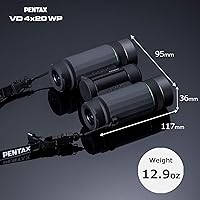
  • Weight: The complete unit weighs 12.2 oz (346g), keeping it light enough for extended carry without noticeable fatigue.
  • Dimensions: Measures 3.7 x 2.7 x 0.1 inches in its flat, closed configuration, which is significantly slimmer than conventional barrel-style binoculars.
  • Mount Compatibility: Compatible with a tripod, adapter, and eyepiece accessories, allowing stable high-magnification viewing when used in telescope mode.
  • Department: Designed and marketed as a unisex product suitable for adult users across a range of outdoor and travel activities.

Related Reviews
Pentax SP 20x60 WP Binoculars
77%
88%
Image Brightness & Clarity
84%
Low-Light Performance
81%
Magnification Power
58%
Handheld Stability
89%
Build Quality & Durability
More
Too Faced Hangover 3-in-1 1oz Setting Spray
79%
91%
Hydration Performance
72%
Makeup Longevity
84%
Multitasking Value
78%
Scent Experience
88%
Skin Finish Quality
More
LG SC9S 3.1.3-Channel Soundbar
78%
88%
Dolby Atmos Performance
91%
Dialogue Clarity
93%
LG TV Integration
74%
Wireless Subwoofer Quality
82%
AI Room Calibration
More
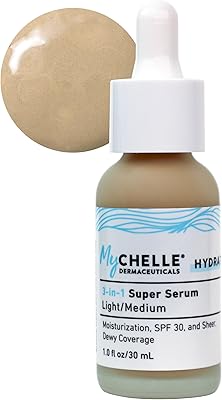
MyChelle 3-in-1 Super Serum 1 oz
75%
88%
Texture & Absorption
83%
SPF Performance
41%
Shade Range & Inclusivity
58%
Coverage Level
54%
Wear Longevity
More
LG S70TY 3.1.1-Channel Soundbar
80%
91%
Dialogue Clarity
83%
Dolby Atmos Performance
67%
Bass & Subwoofer Output
93%
LG Ecosystem Integration
89%
Ease of Setup
More
Blue Nectar Coffee Bean Face Cleanser 3.52oz
77%
84%
Exfoliation Effectiveness
73%
Tan Removal Results
86%
Skin Glow & Brightness
93%
Formula Purity
61%
Ease of Use
More
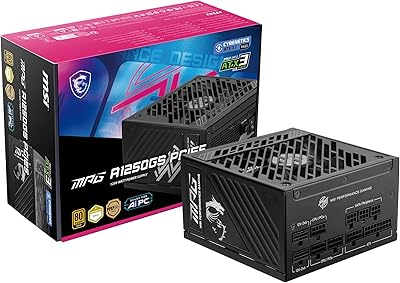
MSI MPG A1250GS 1250W Power Supply
85%
91%
Build Quality
93%
Power Delivery
86%
Efficiency
84%
Cable Quality
82%
Noise Level
More
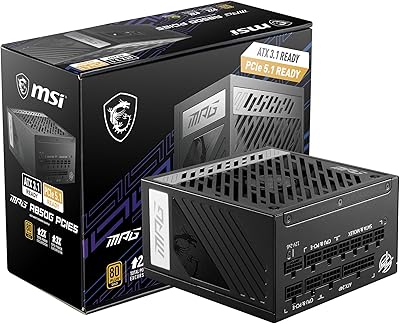
MSI MPG A850G 850W ATX Power Supply
83%
91%
Build Quality
88%
Power Delivery Stability
83%
Noise Level
93%
Modularity & Cable Management
86%
Efficiency & Thermal Performance
More
Ginger Lily Farms Botanicals 3-in-1 Shampoo, Conditioner & Body Wash 1 Gallon Refill
87%
91%
Value for Money
88%
Effectiveness for Sensitive Skin
85%
Texture and Feel
92%
Moisturizing Power
90%
Eco-Friendliness and Ethical Values
More
Urban Skin Rx Clear Skin Bar 3.7oz
74%
83%
Acne & Breakout Control
86%
Pore Clarity & Oil Control
74%
Dark Spot Fading
61%
Skin Dryness & Tolerance
67%
Mask Functionality
More

FAQ

The mechanism is designed for quick, tool-free separation and reattachment. In practice, users find it clicks into place with a satisfying firmness, and image alignment stays consistent once locked. It takes a couple of tries to get the feel for it, but after that it becomes second nature.

For casual birdwatching at moderate distances — think birds in a park or on a shoreline — 4x is workable, though serious birders typically prefer 8x or 10x. At concerts or sporting events with reasonably close sightlines, 4x brings subjects in noticeably closer without the hand-shake issues that higher magnifications introduce. If distance viewing is your main goal, manage expectations accordingly.

It works better in bright daylight than many people expect for an improvised telescope, but the 20mm lenses do limit how much light comes through at 16x. In low light or overcast conditions, the image becomes noticeably dim. For occasional daytime spotting it is a genuine bonus; for serious astronomical or low-light use, a dedicated telescope with larger optics will outperform it.

Yes. The 19mm eye relief is generous by optical standards and specifically accommodates eyeglass wearers, allowing them to see the full field of view without having to press their glasses against the eyepiece. Most standard prescription glasses will not cause any issue.

The 1-meter waterproof rating means it handles splashes, rain, and accidental brief submersion without damage. For kayaking or sailing where spray is common, it holds up well. It is not rated for extended underwater use, so diving or heavy submersion is outside its design scope.

The Pentax VD 4x20 WP 3-in-1 Binoculars typically ships with basic accessories, but the unconventional flat form factor means standard binocular cases and neck straps do not fit naturally. Many users opt for a small pouch or a general-purpose protective sleeve when carrying it in a bag.

Yes, it is compatible with standard tripod adapters, which is actually quite useful at 16x — hand tremor becomes very apparent at higher magnifications, and a tripod makes a meaningful difference in image stability for prolonged telescope viewing.

Because the body is waterproof, you can rinse the exterior under clean water to remove dust, salt, or debris. For the lens surfaces themselves, use a soft lens cloth or lens tissue and a small amount of lens cleaning fluid designed for coated optics — avoid paper towels or rough fabrics that could scratch the multi-coated surfaces.

It can be, but it depends on why they already own binoculars. If they have a standard pair for hiking or birdwatching, this convertible binocular serves a completely different purpose — the sharing feature, compact form, and three-mode versatility make it a complementary tool rather than a replacement. For someone who already has quality high-magnification optics, the novelty and portability angle is the real selling point here.

In monocular mode, this 3-in-1 optical device focuses as close as 50cm from your eye. That is closer than most binoculars can manage and makes it genuinely useful for things like examining insects, wildflowers, or museum exhibits up close — a practical bonus that goes beyond typical distant-viewing use.