Overview

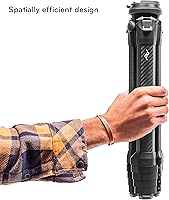
The Peak Design Aluminum Travel Tripod is built for photographers who simply won't accept the trade-off between portability and performance that most travel tripods demand. When collapsed, it fits roughly the diameter of a water bottle — a genuinely impressive feat for something that handles full-frame DSLRs loaded with telephoto glass. Peak Design has built its name on crowdfunded, community-tested gear, and this travel tripod carries that ethos forward with a lifetime warranty. Worth noting: this review covers the aluminum variant specifically, not the lighter carbon fiber version. The price sits firmly in premium territory, so if your tripod never leaves a studio, the math doesn't work in your favor.
Features & Benefits

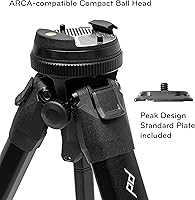
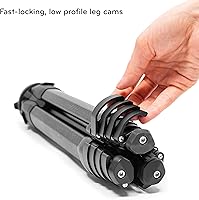
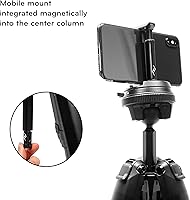
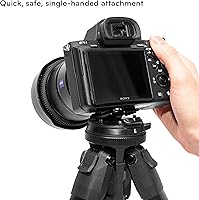
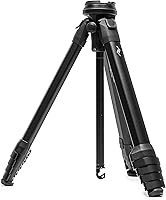
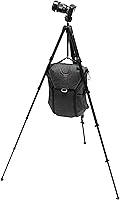
The leg deployment system is where this travel tripod genuinely earns its reputation. Five-section legs lock simultaneously via aluminum cam levers — no twisting individual sections, no fumbling in cold gloves. The included ball head is smooth and responsive, with an Arca-Swiss compatible quick-release plate already built in, which saves you from the adapter puzzle most budget tripods create. You can drop it into low mode for ground-level shots, or flip the center column entirely for overhead or macro work without reaching for a single tool. A center column hook lets you hang your bag for added stability. The included mobile mount is a thoughtful touch that most competitors skip entirely.

Best For

Peak Design's aluminum tripod makes the most sense for photographers who travel regularly and shoot with mirrorless or full-frame cameras — people who know the pain of hauling a standard tripod through airport security or up a mountain trail. Content creators who move between phone and camera often will appreciate that the mobile mount ships in the box, not sold separately. Landscape shooters doing long exposures in variable conditions will value the low-mode capability and the stability that the weight hook adds outdoors. If you shoot exclusively in a controlled studio environment, though, this is genuinely not the right buy — you'd be paying a significant premium purely for portability you'll never use.

User Feedback

Owners consistently highlight two things: how fast the leg deployment really is in practice, and how solid the anodized finish feels after extended use — both live up to the marketing. The included accessory kit, with its weatherproof soft case and hex wrenches, earns repeated praise for feeling complete rather than an afterthought. On the critical side, taller photographers often hit the ceiling with the maximum height, which can fall short for eye-level shooting without the column raised. Some users also find that while the ball head is smooth, it lacks the precision of a dedicated geared head for technical work. The price gap between the aluminum and carbon versions is another recurring point of friction for buyers comparing the two.

Pros

  • Collapses to roughly the size of a water bottle, fitting easily in a daypack or carry-on without creative packing.
  • The one-motion cam leg system deploys all five sections simultaneously — real-world users confirm it is as fast as advertised.
  • Handles up to 20 lbs of camera gear, which covers full-frame DSLRs with heavy telephoto lenses without complaint.
  • Arca-Swiss compatible quick-release plate is built into the ball head, eliminating the need for third-party adapters.
  • Low-mode shooting gets close to ground level, and the center column inverts for overhead or macro angles without tools.
  • A mobile mount is included in the box, making this travel tripod genuinely usable for smartphone content without buying extras.
  • The anodized aluminum construction feels premium and durable, not hollow or plasticky like many competitors at lower price points.
  • The included weatherproof soft case and full accessory kit mean you are ready to shoot straight out of the box.
  • The center column weight hook provides a practical stability boost in windy outdoor conditions.
  • Peak Design backs the tripod with a lifetime warranty, which meaningfully reduces the long-term financial risk of the purchase.

Cons

  • The price sits well above most competing travel tripods, making it a hard sell for casual or occasional photographers.
  • Maximum height with the center column raised tops out around 60 inches, which falls short for taller photographers shooting at eye level.
  • The ball head, while smooth, lacks the precise incremental control that geared heads offer for technical or studio-style work.
  • At roughly 3.4 lbs, the aluminum version is noticeably heavier than the carbon fiber variant — a real consideration for ultralight packers.
  • The cost jump between the aluminum and carbon versions is steep, leaving buyers caught between two imperfect compromises.
  • The five-section leg design, while compact, requires more extension steps than a three-section tripod when maximum height is needed quickly.
  • Not suited for smooth video panning — the ball head is optimized for still photography, not fluid cinematic movement.
  • Replacement parts and servicing, while covered under warranty, may require shipping the tripod back to Peak Design rather than local repair.

Ratings

The scores below for the Peak Design Aluminum Travel Tripod were generated by our AI after analyzing thousands of verified buyer reviews from global markets, with spam, incentivized submissions, and bot activity actively filtered out. Each category reflects the honest distribution of real user sentiment — strengths and frustrations weighted equally — so you get a clear picture of where this tripod genuinely excels and where it falls short of expectations.
Portability
96%
This is the category that defines the tripod's entire reason for existing, and buyers consistently confirm it delivers. Photographers report sliding it into a side water bottle pocket on their hiking pack and forgetting it is there until they need it — a genuine first for a tripod that handles serious camera loads.
The aluminum version's weight is noticeable compared to the carbon fiber variant, and a handful of ultralight backpackers feel that difference on long-distance carries. It is still lighter than most competing full-featured tripods, but for ounce-counters, the gap matters.
Setup Speed
93%
The cam lever leg system is the single most praised mechanical feature across all reviews, and the praise is justified. Users switching from twist-lock tripods describe the one-push deployment as genuinely transformative — particularly valuable when chasing fast-moving light during golden hour or capturing spontaneous street moments.
A small number of buyers note a short learning curve before the motion becomes truly fluid, and cold or gloved hands can make the levers slightly harder to engage. Once mastered it is fast, but it is not quite as instant as the marketing imagery suggests on your very first use.
Build Quality
91%
The anodized aluminum finish has a solidity and tactile quality that users consistently contrast favorably against plastic-heavy competitors. After months of heavy travel use — including sandy beaches, rocky trails, and humid conditions — owners report no structural degradation, loose joints, or finish wear worth noting.
A minority of buyers have flagged minor play in the ball head friction knob after extended heavy use, suggesting the mechanism may loosen slightly over time. Nothing that affects shooting performance critically, but enough for perfectionists to notice.
Stability
88%
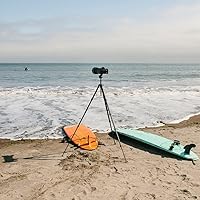
For a tripod this compact, the load capacity is exceptional, and long-exposure landscape photographers report sharp results even in moderate wind when the center column hook is loaded with a camera bag. The TPU feet grip wet rock and wooden decks equally well, which matters in the unpredictable environments travel photographers routinely encounter.
At maximum height with the center column fully extended, stability predictably decreases — as it does with virtually any tripod in this class. Users shooting with very long telephoto lenses at full extension in windy conditions report needing additional weight on the hook to get consistently sharp results.
Ball Head Performance
74%
26%
For travel and landscape photography, the included ball head covers the vast majority of real-world shooting needs. Friction adjustment is smooth and predictable, and the Arca-Swiss plate integration means experienced photographers can mount and dismount a camera body in seconds without fumbling with adapters.
This is where the most consistent criticism surfaces among advanced users. Photographers doing technical work — architecture, product shots, focus stacking — find the ball head lacks the repeatable micro-precision that a dedicated geared head provides, and the panning base is not fluid enough for smooth video movement.
Value for Money
67%
33%
For photographers who travel constantly and genuinely need a compact, high-capacity tripod, the price-to-performance ratio is defensible over a multi-year ownership horizon — especially with a lifetime warranty factored in. Buyers who make the purchase with full awareness of what they are getting report very little regret.
This is the category with the sharpest buyer divide. Casual or occasional photographers frequently experience sticker shock, and the existence of the carbon fiber variant at an even higher price creates an uncomfortable middle-ground feeling for some aluminum buyers. The price requires a very specific use case to feel truly justified.
Height Range
71%
29%
The low-mode capability is genuinely impressive for a tripod this portable — getting close to ground level without carrying a separate low-angle accessory is a real advantage for wildflower, tide pool, and street-level shooting. The tabletop mode also adds useful versatility for travel vloggers working in tight spaces.
The maximum height is a recurring pain point for taller photographers, with the center-column-raised ceiling falling below comfortable eye level for many adults over average height. This is a structural trade-off inherent to the compact design, but it is worth knowing before you buy.
Smartphone Compatibility
83%
The included mobile mount is one of the more appreciated box inclusions across all reviews — it is secure, mounts directly to the ball head, and makes the transition between camera and phone genuinely quick. Content creators who shoot hybrid camera-and-phone setups particularly value not needing a separate adapter purchase.
The mobile mount works reliably with standard smartphone sizes but can feel less secure with very large or thick-cased phones. It is a practical accessory rather than a premium one, and a handful of buyers have noted they replaced it with a third-party mount for heavier phone setups.
Low-Mode Versatility
86%
Reaching near ground level and inverting the center column without tools is a feature set that nature and macro photographers specifically call out as a purchase driver. Being able to transition from eye-level to ground-level shooting without swapping equipment is a meaningful time-saver in the field.
Getting the tripod fully stable in its lowest configuration requires spreading all legs to their maximum angle, which can be awkward on narrow surfaces like rocky ledges or wooden boardwalks. A small number of users feel the low-mode position could be slightly more comfortable to access.
Quick-Release System
89%
Arca-Swiss compatibility out of the box is a feature that experienced photographers deeply appreciate — it means the tripod integrates immediately with L-brackets, lens collars, and plates they likely already own. The plate that ships in the box is functional and well-machined, not a throwaway placeholder.
Photographers locked into proprietary systems from other brands will need adapter plates to use their existing gear, though this is a universal trade-off rather than a design flaw specific to this tripod. The included standard plate also lacks an anti-rotation pin, which some technical shooters prefer for security.
Included Accessories
87%
The weatherproof soft case, hex wrenches, mobile mount, bushing removal tool, and standard plate together form one of the more complete out-of-box packages in this category. Buyers consistently mention feeling like nothing was left out — a contrast to competing tripods that ship with minimal extras.
The soft case, while weatherproof and well-made, does not offer rigid protection during transit, which matters if you are checking bags or storing the tripod in a crowded vehicle cargo area. A semi-rigid option would have been appreciated at this price point.
Durability Over Time
84%
Long-term owners — those who have used the tripod for two or more years of regular travel — report very few structural issues, and the lifetime warranty backstops any concerns about component longevity. The anodized finish holds up to repeated contact with rough surfaces far better than powder-coated alternatives.
TPU feet are the most commonly replaced wear item over time, and while replacement parts are available, some users find the process of sourcing them through Peak Design's support channels slower than expected. A few owners also report that cam levers can become slightly stiffer after exposure to fine sand or grit without regular cleaning.
Aluminum vs. Carbon Trade-off Clarity
62%
38%
Peak Design makes both variants available, and buyers who research the difference before purchasing tend to feel confident in whichever choice they make. The aluminum version's lower price point is a genuine advantage for buyers who are weight-neutral in their use cases.
A notable segment of aluminum buyers express post-purchase uncertainty about whether they should have stretched to carbon, particularly after extended carry on hiking trips. The product line would benefit from clearer guidance at the point of sale about which buyer profile each variant is actually designed for.
Video Usability
48%
52%
The tripod's load capacity and stability are technically sufficient to hold a camera rig for static video shots, and travel vloggers doing straightforward talking-head or B-roll footage report acceptable results for casual video work.
The ball head offers no fluid drag control, making smooth panning shots essentially impossible without post-processing correction. Dedicated video shooters rate this tripod poorly for their needs, and it is a fair criticism — this is a still photography tool that tolerates video rather than supports it.

Suitable for:

The Peak Design Aluminum Travel Tripod was clearly designed with one type of buyer in mind: the photographer who moves constantly and refuses to leave their serious gear at home. If you shoot with a mirrorless or full-frame camera and you've ever had to choose between packing a real tripod or having room for anything else in your bag, this tripod resolves that conflict without asking you to give up load capacity or build quality. Landscape and long-exposure photographers will particularly appreciate the low-mode capability and the center column hook, which adds meaningful stability when wind or uneven terrain would otherwise cause problems. Content creators who split their time between smartphone and camera shooting get a rare all-in-one solution, since the mobile mount ships in the box rather than as a paid add-on. Minimalists who want a single tripod that handles outdoor adventures and occasional controlled shoots will find the versatility genuinely useful rather than just marketed.
Not suitable for:

If your tripod never leaves your studio, the case for the Peak Design Aluminum Travel Tripod falls apart quickly — you would be paying a substantial premium for a compact form factor that simply does not matter in a fixed shooting environment. Taller photographers, particularly those shooting above average eye level without wanting to rely on a raised center column, may find the maximum height limiting in practice. Shooters who rely on fine, repeatable positioning — architecture, product, or technical studio work — will likely feel constrained by the ball head, which offers smooth friction control but none of the incremental precision a dedicated geared head provides. Budget-conscious buyers comparing this to the carbon fiber variant should know the weight savings between the two are real but come at a noticeably higher cost, which may not be justifiable unless ounces genuinely matter on your trips. And anyone hoping to use this as a video tripod should know upfront that the ball head is not optimized for fluid panning.
Specifications

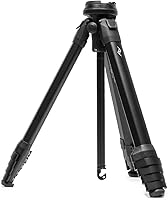
  • Weight: The aluminum variant weighs 1.56 kg (3.44 lbs), while the carbon fiber version comes in lighter at 1.29 kg (2.81 lbs).
  • Load Capacity: Supports up to 9.1 kg (20 lbs), which comfortably handles a full-frame DSLR body paired with a heavy telephoto lens.
  • Collapsed Size: Folds down to 39.1 cm (15.4″) in length and 7.9 cm (3.125″) in diameter — roughly comparable to a standard water bottle.
  • Max Height: Reaches 152.4 cm (60″) with the center column fully raised, or 130.2 cm (51.25″) with the column in the down position.
  • Min Height: Drops as low as 14 cm (5.5″) in low mode, enabling ground-level and near-surface shooting without additional accessories.
  • Leg Sections: Features five leg sections per leg, locked simultaneously via aluminum cam levers rather than twist-lock collars.
  • Tripod Head: Ships with an integrated compact ball head offering smooth friction control and a built-in Arca-Swiss compatible quick-release plate.
  • Materials: Legs are constructed from anodized aluminum, while the ball head and hub are powdercoated aluminum; feet are made from TPU for grip on varied surfaces.
  • Center Column: The center column is fully invertible without tools and includes a load-bearing hook at the base for hanging additional weight.
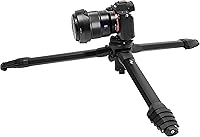
  • Tabletop Mode: In tabletop configuration, the tripod reaches 57.2 cm (22.5″) with the column raised, or 35.9 cm (13.125″) with the column down.
  • Quick Release: The quick-release system is Arca-Swiss compatible, making it directly usable with a wide ecosystem of third-party plates and accessories.
  • In the Box: Includes the tripod with ball head, a standard plate, mobile mount, weatherproof soft case, 4mm and 2.5mm hex wrenches, and a bushing removal tool.
  • Variants: Available in two versions — aluminum alloy and carbon fiber — with carbon offering a meaningful weight reduction at a higher price point.
  • Warranty: Peak Design backs this tripod with a lifetime warranty covering defects in materials and workmanship for the original owner.
  • Phone Support: The included mobile mount attaches directly to the ball head and supports standard smartphone sizes for photo and video use.
  • Leg Lock Type: Aluminum cam levers lock all leg sections in a single downward push, eliminating the need to rotate or flip individual twist locks.
  • Feet Material: TPU rubber feet provide traction on slippery or uneven surfaces and can be replaced if worn down over time.
  • BSR Ranking: Ranked #184 in Complete Tripod Units on Amazon, reflecting strong and consistent sales performance within a highly competitive category.

Related Reviews
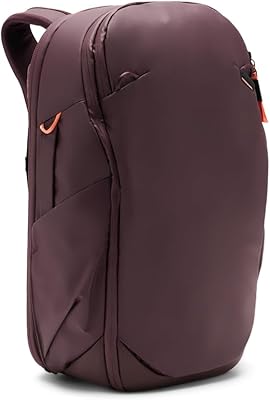
Peak Design Travel Backpack 45L
85%
96%
Build Quality
93%
Zipper Durability
91%
Packing Organization
88%
Expandability & Capacity
92%
Airport & Transit Usability
More
Peak Design Travel Backpack 45L
86%
94%
Build Quality & Durability
92%
Weather Resistance
88%
Capacity Flexibility
89%
Laptop Protection
91%
Organization & Packing Features
More
Sirui Traveler 7A Aluminum Camera Tripod
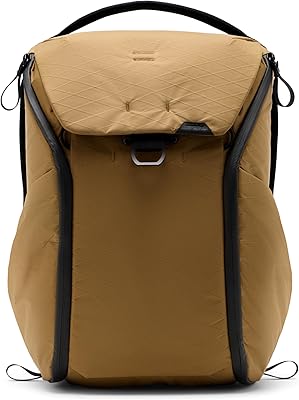
86%
91%
Portability & Size
88%
Build Quality & Durability
89%
Ease of Setup
85%
Weight Capacity
90%
Monopod Conversion
More
Peak Design Tech Pouch Electronics Organizer
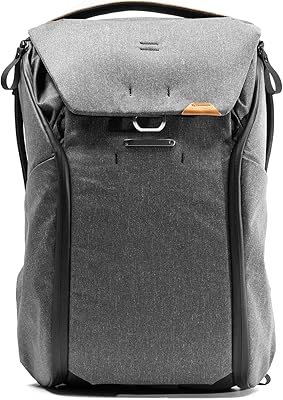
84%
94%
Interior Organization
91%
Build Quality
67%
Value for Money
88%
Travel Practicality
73%
Capacity & Sizing
More
Peak Design Wash Pouch Toiletry Bag
84%
94%
Build Quality
91%
Organization & Layout
67%
Capacity
88%
Hanging Hook
89%
Water Resistance
More
Peak Design Everyday Backpack 30L
82%
94%
Build Quality
91%
Organization & Layout
88%
Weather Resistance
89%
Access & Usability
72%
Comfort & Fit
More
Peak Design Everyday Backpack 20L
85%
94%
Build Quality
92%
Weather Resistance
89%
Storage Flexibility
87%
Comfort & Ergonomics
90%
Organization & Dividers
More
Topo Designs Global Travel Bag 30L Backpack
79%
93%
Build Quality
88%
Organization & Storage Layout
91%
Carry-On Compliance
86%
Versatility & Carry Modes
78%
Laptop Sleeve Functionality
More
Sirui Traveler 5C Carbon Fiber Tripod
85%
94%
Portability & Weight
88%
Build Quality & Durability
85%
Ease of Use
90%
Stability & Support for Larger Cameras
72%
Leg Locking System
More
K&F Concept KF09.007V1 72-inch Aluminum Tripod
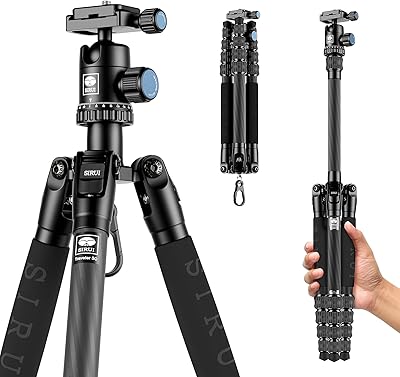
81%
93%
Portability & Packed Size
91%
Maximum Extended Height
71%
Ball Head Performance
84%
Leg Lock Mechanism
79%
Monopod Conversion
More

FAQ

Yes, it genuinely does. The cam lever system lets you push all five leg sections down and lock them in a single motion per leg, which takes only a few seconds once you have done it a couple of times. Most users report that the setup speed is one of the first things they notice after switching from a twist-lock tripod.

Collapsed, the tripod measures just under 40 cm in length and is roughly the diameter of a large water bottle, so it slides easily into the side pocket of most travel backpacks or fits upright inside a carry-on. It is one of the more airline-friendly full-featured tripods available.

For most travel and landscape photography, the included ball head is genuinely capable — the friction control is smooth, and the Arca-Swiss plate system means you can mount and dismount your camera quickly. That said, if you do precision technical work like architecture or focus stacking where you need repeatable micro-adjustments, you may eventually want a dedicated geared head instead.

Yes. The ball head uses a standard Arca-Swiss compatible dovetail system, so any plates or L-brackets you already own in that ecosystem will attach directly without adapters. This is a real practical advantage over tripods with proprietary quick-release systems.

The carbon fiber version saves you roughly 270 grams compared to the aluminum, which sounds modest but is meaningful if you are counting ounces on multi-day hikes. The trade-off is a noticeably higher purchase price. If weight is genuinely critical to your kit, carbon makes sense; if you mostly travel by car or fly with checked bags, the aluminum is the smarter value.

It can technically hold a camera for video, and the ball head locks down solidly for static shots. However, the ball head is not designed for fluid panning, so smooth cinematic movement is not something it does well. If video work is a significant part of what you shoot, a fluid video head would serve you better.

In low mode with the legs fully spread, the tripod gets down to about 14 cm from the ground, which is quite usable for low-angle landscape or nature shots. For true flat-lay work at table height, you can also use the tabletop mode. The center column also inverts, giving you additional creative flexibility close to the ground.

It is genuinely practical for most standard-sized smartphones. It clamps securely and mounts directly to the ball head, so you can switch between your camera and your phone in seconds. It is not designed for oversized or heavily cased phones, but for everyday use it works well and saves you from buying a separate phone adapter.

The anodized aluminum legs and powdercoated hardware resist light moisture and dust reasonably well, and the TPU feet maintain grip on wet rock or muddy ground. The tripod is not waterproof in any submersion sense, but it handles the kind of weather exposure most outdoor photographers encounter without issues. The included soft case also offers light weather protection during transport.

Potentially, yes. With the center column fully raised, the tripod tops out at around 152 cm, which sits below eye level for photographers over roughly 5 feet 10 inches. You can work around this by shooting at a slight downward angle or choosing locations where the ground elevation helps, but if eye-level framing without compromise is important to you, this is a genuine limitation worth factoring into your decision.

Where to Buy