Overview

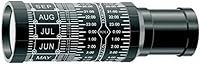
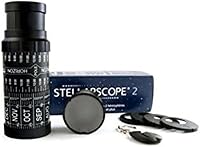
The Navir Stellarscope Star Finder Scope is not a telescope — and that distinction matters more than you might think. Rather than magnifying distant objects, it works as a handheld star chart viewer: a compact cylinder housing rotating star maps that you hold up toward the sky to match what you see overhead. Crafted in Italy and recommended for ages 8 to 18, it's built with enough care to feel like a proper instrument rather than a throwaway toy. A battery-powered backlight illuminates the internal chart at night, which is really the whole point — you're not using this in daylight.

Features & Benefits

This handheld star finder packs a respectable spec sheet into a very small frame. The 42mm objective lens and altazimuth-style pointing make it straightforward to aim at any patch of sky without fussing over complicated mounts. Star maps cover both the northern and southern hemispheres, which is genuinely handy if you travel. The reflex finderscope design helps you align what you see in the viewer with actual stars above — a detail beginners really appreciate. At just 6.7 oz and under 8 inches long, it slips into a jacket pocket. Batteries are included, so there's no frustrating first-night setup. Kellner or Plossl eyepiece compatibility adds flexibility for those who want to experiment further.

Best For

The Navir scope is tailor-made for younger stargazers — kids and teens who are curious about space but not yet ready to wrestle with a full-size telescope. It also works well as a hands-on STEM tool for classrooms or homeschool projects, giving students something tangible to interact with rather than just reading about constellations in a book. Campers and hikers will find it useful on clear nights away from city lights. For gift-givers, this stellarscope occupies a sweet spot — it feels purposeful and educational rather than cheap, but it doesn't require the recipient to commit to astronomy as a serious hobby. Casual constellation hunters of any age will get genuine use out of it.

User Feedback

Buyers consistently praise how easy it is to use straight out of the box — younger kids pick it up quickly, and the star charts are clear enough that you don't need an astronomy background to make sense of them. The included batteries and illuminated chart get particular appreciation. That said, a few recurring criticisms are worth noting. The plastic construction feels adequate but not rugged, and some owners worry about long-term durability with regular use. There's also a modest learning curve in aligning the scope correctly with the actual night sky — something that trips up first-timers until they get the hang of the rotation. Most buyers feel the quality justifies the price for an educational tool in this category.

Pros

  • Works straight out of the box — three LR44 batteries are already included.
  • Covers both northern and southern hemisphere star maps, making it useful for travelers.
  • Genuinely lightweight at under 7 oz, so kids can hold it up without fatigue.
  • The reflex finderscope design makes sky alignment intuitive even for complete beginners.
  • Italian manufacturing gives it a build quality that feels a step above typical toy-aisle alternatives.
  • Star chart clarity is consistently praised by parents and young users alike.
  • Compatible with Kellner and Plossl eyepieces for those who want to explore further.
  • Compact enough to slip into a jacket pocket on a camping trip or evening walk.
  • Recommended age range of 8–18 years means it can grow with a child over several years.
  • Ranks among the top options in its category, reflecting sustained buyer satisfaction.

Cons

  • The plastic body raises durability concerns with heavy or careless daily use over time.
  • There is a real learning curve to correctly aligning this stellarscope with the actual night sky.
  • The backlight illumination may feel underwhelming in very dark, rural stargazing conditions.
  • This handheld star finder offers no magnification whatsoever, which surprises some buyers.
  • Younger children below the recommended age of 8 may find the alignment concept too abstract.
  • Replacement LR44 batteries can be slightly harder to find than standard AA or AAA cells.
  • No carrying case or protective pouch is included, leaving the lens vulnerable to scratches.
  • The Navir scope may feel limited fairly quickly for teens who develop a serious astronomy hobby.
  • Instructions could be clearer — some first-time users report confusion during initial setup.

Ratings

The scores below for the Navir Stellarscope Star Finder Scope were generated by our AI after analyzing verified buyer reviews from multiple global markets, with spam, bot activity, and incentivized feedback actively filtered out. The ratings reflect a balanced synthesis of real-world praise and recurring frustrations — nothing has been smoothed over to flatter the product. Where this handheld star finder genuinely impresses, the scores reflect it; where buyers have run into real limitations, those are transparently captured too.

Ease of Use
78%
22%
Most buyers — including kids as young as 8 or 9 — report getting the hang of the basic chart-rotation and sky-pointing process within one or two evenings outside. The reflex finderscope makes the initial alignment feel far less daunting than it sounds on paper, and parents frequently note that children pick it up faster than expected.
The first session can genuinely frustrate new users who do not read the instructions first, particularly around setting the date ring correctly before heading outside. A handful of reviewers noted that the alignment concept feels abstract until you have actually done it successfully at least once under a real night sky.
Educational Value
91%
This is where the Navir scope consistently earns its strongest praise. Teachers and homeschooling parents report that kids who use it regularly start recognising constellations within weeks, turning an abstract school topic into something tangible and exciting on a camping trip or in the backyard.
The educational scope is deliberately narrow — it teaches star and constellation identification, not broader astronomy concepts like planetary motion or deep-sky objects. Buyers hoping for a richer curriculum tool may find it covers less ground than expected for classroom use beyond an introductory level.
Build Quality
61%
39%
For an Italian-manufactured educational instrument in this price bracket, the construction feels noticeably more considered than typical toy-aisle alternatives. The cylindrical body has a solid feel in hand, and the rotating chart mechanism operates smoothly without obvious play or wobble.
The all-plastic housing is the most frequently cited concern in long-term reviews — users who have owned it for a year or more often mention scuffs, minor cracks near the eyepiece, or a looser-feeling chart ring after sustained use. There is no case or pouch included, which does not help matters.
Star Chart Clarity
86%
The internal star maps are consistently praised for being legible and well-organised, with star and constellation labels that are easy to read even for younger users. Buyers find the dual-hemisphere coverage genuinely useful, particularly families who travel internationally and want to keep using the scope in different locations.
Under the backlight, very fine print near the edges of the chart can be slightly harder to read, particularly for users with weaker eyesight. A small number of reviewers mention that the chart does not include enough intermediate stars to bridge the gap between the brightest landmarks and fainter neighbouring constellations.
Backlight Performance
67%
33%
The battery-powered illumination does exactly what it needs to do in typical suburban or semi-rural settings — it lights the internal chart clearly enough to read without being so bright that it ruins your night vision between glances. Most users in average dark-sky conditions find it perfectly adequate.
In genuinely dark rural skies — the kind you encounter on serious camping trips far from light pollution — several reviewers describe the backlight as noticeably dim. It also has no brightness adjustment, so you get one fixed level regardless of your environment, which limits adaptability.
Portability
93%
At just 6.7 oz and compact enough to fit in a jacket pocket or a small daypack side pouch, this handheld star finder travels effortlessly. Hikers and campers in particular highlight how little space and weight it adds to a kit, making it easy to bring along on trips where carrying a full telescope would be out of the question.
The lack of any included carrying case or protective bag means the lens and body are exposed in a pocket or bag, which leads to scratches over time. A simple drawstring pouch would have solved this entirely, and its absence feels like an oversight at this price point.
Out-of-Box Readiness
88%
Three LR44 batteries are included in the package, which means there is no frustrating first-night scramble to find the right battery type before heading outside. The scope requires no assembly, calibration, or software — you can be using it within minutes of opening the box.
The instructions, while functional, are considered thin by some reviewers — particularly around the initial date-ring setup process. A quick-start card with a visual diagram for the first alignment attempt would make the out-of-box experience feel more complete and confidence-inspiring.
Value for Money
74%
26%
When judged as an educational STEM toy rather than an optical instrument, most buyers feel the price is fair for what they receive — Italian manufacturing, dual-hemisphere maps, and an immediately usable product. Gift-givers in particular report that it lands well as a present that feels thoughtful and purposeful.
A vocal minority of reviewers feel the price is slightly high given the all-plastic construction and the relatively narrow scope of what the tool actually does. Those who compare it against entry-level refractor telescopes at a similar price point sometimes feel the stellarscope concept delivers less perceived value for money.
Age Appropriateness
82%
18%
The 8–18 age recommendation turns out to be well-calibrated in practice. Children in the 9–13 range tend to get the most enthusiastic use out of this handheld star finder, engaging with it as both a game and a learning tool across multiple seasons and school projects.
At the upper end of the recommended range, older teenagers who develop a serious interest in astronomy may find this stellarscope limiting within a year of regular use. It is a strong starting point, but it does not evolve with the user the way an upgradeable telescope setup would.
Gift Presentation
79%
21%
The packaging and the product itself read as a premium educational gift — buyers consistently mention that recipients react positively upon unboxing, noting it feels like a real instrument rather than a toy. The Italian branding and clean design contribute to this impression.
The box design, while adequate, is not quite at the premium gift-ready level some buyers hope for when purchasing this as a birthday or holiday present. A few reviewers mention they added their own gift wrap or a secondary box to elevate the presentation for a special occasion.
Optical Alignment Accuracy
71%
29%
When set up correctly for the right date, time, and hemisphere, the chart alignment is accurate enough to reliably identify the brightest and most recognisable constellations. Users who invest a little time learning the process find it consistently dependable on clear nights.
Getting the alignment precise enough to identify fainter or less prominent star groupings requires more practice and patience than the product's marketing implies. In urban environments with significant light pollution, users report that the chart sometimes seems to show more stars than are actually visible overhead.
Hemisphere Versatility
84%
The inclusion of both northern and southern hemisphere star maps is a genuine differentiator that reviewers from Australia, South Africa, and South America specifically call out as appreciated. It makes this handheld star finder a practical travel companion rather than a tool only useful at home.
Switching between hemisphere modes is not immediately obvious from the instructions, and a handful of buyers initially used the wrong hemisphere map for their location without realising it, which led to confusion before the error was spotted. Clearer labelling on the scope itself would help.
Durability Over Time
57%
43%
For users who treat it with reasonable care, the Navir scope holds up acceptably over one to two years of occasional use. The optical components themselves — the lens and the internal chart — tend to remain functional even when the exterior shows wear.
Long-term reviewers are notably less positive than short-term buyers. The plastic housing shows wear relatively quickly with regular handling, and the chart rotation mechanism can develop minor stiffness or looseness after extended use. It is not built to last a decade the way a quality metal-bodied instrument would.

Suitable for:

The Navir Stellarscope Star Finder Scope is an excellent pick for parents, educators, and gift-givers who want to spark a genuine interest in astronomy without overwhelming a young learner. Kids and teens aged 8 to 18 are the core audience, and the tool genuinely fits that bracket — it's engaging enough to hold a curious child's attention on a camping trip or in the backyard without requiring any prior knowledge of the night sky. Teachers running STEM units on space science will find it practical as a hands-on classroom or homework aid. Casual adult stargazers who simply want to learn constellation names — rather than pursue serious deep-sky observation — will also get real value from this handheld star finder. Its compact size and included batteries make it ready to use on the first clear night, no setup required.

Not suitable for:

Anyone expecting the Navir Stellarscope Star Finder Scope to function like a traditional magnifying telescope will come away disappointed — this tool identifies stars by chart alignment, it does not bring them closer or resolve detail. Serious amateur astronomers, even at a beginner level, will outgrow this handheld star finder almost immediately and would be better served by an entry-level refractor or reflector telescope. The plastic body, while adequate for careful handling, is not built to survive the rough-and-tumble treatment younger children might subject it to, so it's less suitable for kids under 8 or households where gear tends to get dropped repeatedly. If the backlight is your primary concern for very dark rural skies, some users find the illumination modest rather than robust. This is fundamentally a learning aid, not a performance instrument — buyers who want optical power should look elsewhere.

Specifications

  • Brand: Manufactured by Navir, an Italian brand with a focus on quality educational optical instruments.
  • Model: The model designation is Stellarscope, with item code HT32386.
  • Dimensions: The scope measures 7.87″ in depth by 2.36″ in width and 2.36″ in height.
  • Weight: The unit weighs 6.7 oz (approximately 190g), making it genuinely easy to hold aloft for extended periods.
  • Lens Diameter: The objective lens has a 42mm diameter, sized for star chart alignment rather than deep-sky magnification.
  • Eyepiece Type: Compatible with Kellner and Plossl eyepiece designs, offering some flexibility for users who want to experiment.
  • Mount Type: Uses an altazimuth mount configuration, allowing straightforward up-down and left-right directional pointing.
  • Finderscope: Equipped with a reflex-style finderscope that helps users intuitively align the viewer with their target area of the sky.
  • Focus Type: Manual focus is used, giving the user direct control over clarity without motorized or electronic assistance.
  • Power Source: Powered by three LR44 button-cell batteries, which are included in the box at the time of purchase.
  • Illumination: An internal battery-powered backlight illuminates the star chart maps for usability in low-light and nighttime conditions.
  • Hemisphere Maps: Internal rotating star charts cover both the northern and southern hemispheres, supporting use across different global locations.
  • Age Range: The manufacturer recommends this product for users aged 8 to 18 years.
  • Country of Origin: Designed and manufactured in Italy, where Navir has a long-standing reputation for educational optical toys.
  • Category Rank: Currently holds a top-ten position, ranked #6 in the Telescope Finder Scopes category on Amazon.
  • Availability: The product has not been discontinued by the manufacturer and remains an active part of the Navir lineup.
  • Package Contents: The package includes one Stellarscope unit and three LR44 batteries; no additional accessories are bundled.
  • Body Material: The housing is constructed from plastic, keeping the overall weight low while maintaining a functional level of rigidity.

Related Reviews
Lixada Wired Fishing Finder Sonar Sensor
70%
88%
Ease of Setup
76%
Display Clarity
63%
Depth Detection Accuracy
72%
Bottom & Structure Detection
58%
Audible Fish Alarm
More
FYSCKEJI Smart Card Android Wallet Tracker
79%
91%
Ease of Setup
88%
Google Find Hub Integration
72%
Bluetooth Range
78%
Speaker Volume & Audibility
83%
Battery Life
More
Deeper START Castable Fish Finder
75%
88%
Ease of Setup
93%
Portability & Form Factor
67%
App Experience
71%
Sonar Accuracy & Fish Detection
76%
Battery Life
More
RICANK F12 Fish Finder
86%
89%
Ease of Use
92%
Portability
91%
Water Resistance
87%
Fish Location Accuracy
82%
Battery Life
More
Venterior VT-FF005 Portable Castable Fish Finder
80%
91%
Ease of Setup
78%
Sonar Accuracy
84%
Display Readability
77%
Wireless Range & Connectivity
73%
Battery Life
More
Lowrance Eagle 7″ Fish Finder
80%
88%
Display Clarity
84%
Sonar Performance
91%
Ease of Installation
76%
FishReveal Imaging
82%
Chart Coverage & Navigation
More
FVJ Key Finder Wallet Tracker
88%
91%
Value for Money
94%
Ease of Use
87%
Battery Life
92%
Durability
75%
Bluetooth Connectivity
More
KeySmart iPro Key Organizer with Apple Find My
77%
83%
Tracking Reliability
61%
Key Compatibility
71%
Build Quality & Durability
88%
Battery Life
91%
Design & Portability
More
Garmin Striker 4cv Fish Finder
86%
93%
Sonar Imaging Clarity
89%
Ease of Use
91%
Portability
84%
Battery Life
85%
Build Quality
More
Venterior VT-FF001 Fish Finder
88%
94%
Accuracy of Depth Readings
91%
Fish Detection Reliability
89%
Ease of Setup
95%
Portability and Weight
76%
Battery Life
More

FAQ

It is something quite different. The Navir Stellarscope Star Finder Scope is a handheld star chart viewer — you use it to identify and locate stars and constellations by aligning its internal rotating maps with the night sky. It does not magnify distant objects the way a traditional telescope does, so do not expect it to bring stars closer or resolve planetary detail.

You start by setting the correct date and time on the rotating outer ring, which lines up the star chart inside with whatever is currently visible in the sky above you. Then you hold it up, look through the eyepiece, and point it toward the part of the sky you want to identify. The internal backlight switches on to illuminate the chart, making it readable in the dark. It takes a few tries to get the hang of the alignment, but most users get comfortable with it after one or two sessions outside.

It works well in typical suburban backyards and semi-dark outdoor settings. In truly pitch-black, remote skies, some users find the illumination a touch modest — bright enough to read the chart, but not dazzling. That said, a very bright backlight would ruin your night vision anyway, so the level it offers is arguably appropriate for the task.

It runs on three LR44 button-cell batteries, which are included so you can use it immediately. LR44 cells are widely available at pharmacies, electronics stores, and online, though they are less common than standard AA or AAA batteries, so it is worth keeping a spare set on hand.

The manufacturer recommends ages 8 and up, and that guidance is fairly accurate. The concept of rotating a chart to match a specific date and time is a bit abstract for younger children, and the alignment process requires some patience. A curious and engaged 7-year-old might manage with adult help, but independently? Probably better to wait a year.

It covers both hemispheres, which is one of the more practical aspects of this handheld star finder. Whether you are in Europe, North America, Australia, or South America, the internal star charts have you covered — you just select the appropriate hemisphere setting.

The body is plastic, and while the Italian construction feels a step above a cheap toy, it is not rugged outdoor equipment. Careful, regular use by a responsible child should be fine over time. If your kid routinely drops or tosses their gear, the Navir scope may not hold up as well as you would hope, and there is no protective case included.

Yes, there is a short one. The first time out, getting the date ring set correctly and then aligning the scope with an actual patch of sky can feel fiddly. Most users — kids and adults alike — report that after one or two real stargazing sessions, the process becomes much more natural. Reading the included instructions before heading outside the first time helps significantly.

It is a solid choice for a teen who is curious but just starting out. It feels purposeful and educational rather than gimmicky, and it is practical enough that they can actually use it on clear nights. If the teen is already deep into astronomy and saving for a proper telescope, this handheld star finder might feel too introductory — but for a budding interest, it hits the right note.

Adults can absolutely use it and get genuine value from it. Casual stargazers who want to finally learn which constellation is which will find the Navir scope just as useful as any young person would. It is marketed toward the 8–18 bracket mainly because that is the educational sweet spot, but there is no physical or functional reason an adult cannot enjoy it.

Where to Buy