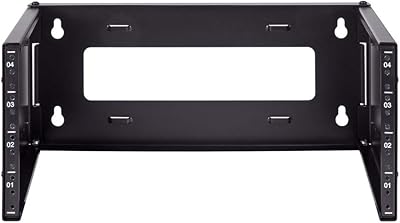
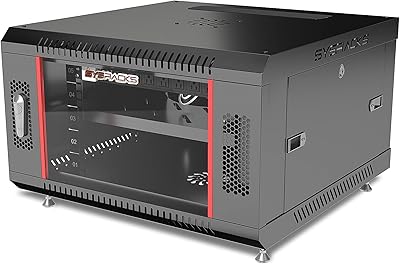
Overview

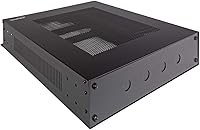
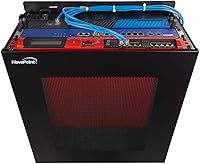
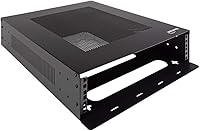
The NavePoint 2U Vertical Wall Mount Server Rack is a practical, no-frills solution for anyone trying to tidy up networking gear without sacrificing floor space. NavePoint sits in a solid mid-range position — the build quality is honest rather than impressive, but that is entirely appropriate for what it is designed to do. The 2U form factor means two rack units of vertical space, which realistically fits a small managed switch, a patch panel, or a compact modem. It is not a replacement for a full server cabinet. Think of it as a clean, permanent home for light networking equipment in spots where a floor unit simply is not practical.
Features & Benefits

Built from heavy-gauge steel and rated to hold 60 pounds, this wall-mount rack handles the loads typical networking gear demands — a managed switch, patch panel, and modem together rarely push anywhere near that limit. It is EIA 19-inch compatible, so standard rack-mount equipment slots right in without adapter headaches. The mounting holes sit 16 inches apart, aligning with standard wall studs in North American construction, which makes drywall installs genuinely straightforward. Passive venting slots keep air moving around heat-generating equipment, and the cable punch-outs and tie bridges make routing patch cables far less chaotic than a typical shelf setup. M6 cage nuts, screws, and washers are included out of the box.

Best For

This vertical rack unit works best when the use case is genuinely light. Home lab enthusiasts consolidating a modem, router, and small switch into one wall-mounted setup will get real value here. The same goes for small businesses with a cramped back-office telecom closet, or AV installers mounting a patch panel and media converter somewhere discreet. Renters and small offices where a floor cabinet is overkill will appreciate how little space it demands. Where it falls short: anything requiring significant rack depth, active cooling, or heavy server hardware. If your gear is shallow and loads are light, this is a sound choice. Push beyond that and you will quickly hit its limits.

User Feedback

Buyers who install this wall-mount rack for basic home or office networking generally come away satisfied. The most consistent praise centers on the solid steel construction — it feels sturdier than the price suggests, and the finish holds up reasonably well under normal conditions. That said, a few recurring frustrations are worth knowing. The included instructions are thin, which can trip up first-timers who have never assembled a rack before. Buyers mounting into concrete or brick walls note the included hardware does not cover those situations — separate anchors are needed. Depth is another real-world limitation: the NavePoint 2U rack offers roughly 6 inches of internal clearance, so always measure your equipment depth before ordering.

Pros

  • Mounts flush to the wall, keeping networking gear completely off the floor and out of the way.
  • Heavy-gauge steel construction handles typical home or small office networking loads without flexing or feeling flimsy.
  • The 16-inch stud spacing aligns with standard North American wall framing, making drywall installs genuinely straightforward.
  • EIA 19-inch compatibility means most standard switches, patch panels, and compact modems slot right in without adapters.
  • Passive venting slots help prevent heat buildup in enclosed or low-airflow spaces.
  • Cable punch-outs and tie bridges make cord organization noticeably cleaner than any open shelf alternative.
  • Comes with M6 cage nuts, screws, and washers in the box — no separate hardware run needed for a basic install.
  • Compact wall footprint works well in cramped telecom closets, utility rooms, and tight back-of-house spaces.
  • Black powder coat finish looks intentional and professional rather than afterthought industrial.

Cons

  • Only about 6 inches of usable internal depth — many 2U appliances simply will not fit despite the rack-unit compatibility.
  • Assembly instructions are minimal and can leave first-time rack builders guessing at key steps during installation.
  • Included mounting hardware covers drywall-and-stud walls only; concrete or masonry installs require sourcing separate anchors.
  • Two rack units of space fills up fast — adding even one unplanned device quickly exhausts what this vertical rack unit can hold.
  • No door, panel, or dust cover is included, leaving all mounted equipment fully exposed in open or dusty environments.
  • The shallow profile means patch cables and power adapters compete for the same tight clearance once gear is installed.
  • Paint finish is prone to scuffing during handling and installation if the unit makes contact with rough wall surfaces.
  • At over 20 pounds unloaded, it is heavier than it looks — wall anchoring mistakes are costly and not easily undone.

Ratings

Our AI rating system analyzed thousands of verified purchase reviews for the NavePoint 2U Vertical Wall Mount Server Rack from buyers across North America, Europe, and Australia, actively filtering out incentivized, bot-generated, and unverified feedback to ensure every score reflects genuine hands-on experience. The results show where this wall-mount rack truly earns its place on the wall — and where real-world limitations have caught buyers off guard. Both the strengths and the recurring pain points are reflected transparently in every score below.
Build Quality
83%
Buyers consistently note that the heavy-gauge steel frame feels noticeably more substantial than the price suggests. Even after loading it with a managed switch and patch panel, there is no flex or creaking — it holds its shape firmly. For a mid-range wall-mount unit, the structural integrity earns genuine respect.
A portion of buyers note that steel edges can be slightly sharp at the corners, and the welds, while functional, are not as refined as those found on pricier competing brands. It is solid for static everyday use but does not feel engineered to survive frequent equipment swaps or rough handling.
Value for Money
78%
22%
For home lab builders and small office administrators who need a permanent rack solution without a large outlay, this vertical rack unit delivers a respectable return. The steel construction, included cage nut hardware, and EIA compatibility together form a package that would cost more if assembled piecemeal from separate components.
Buyers who encounter the depth limitation after purchasing tend to feel the value proposition evaporates quickly — a rack that does not fit your equipment is worth nothing regardless of price. There are cheaper shelf-style options and pricier deeper alternatives, making the ideal buyer profile narrower than the price alone suggests.
Installation Ease
71%
29%
The 16-inch stud spacing is a well-considered design choice that aligns with standard North American wall framing, removing much of the guesswork from locating mount points. Most buyers working on standard drywall walls report a clean, manageable install that wraps up in under an hour with basic household tools.
The instruction sheet is sparse enough that first-time rack installers frequently report needing to find external video resources before feeling confident proceeding. Buyers mounting into concrete or brick walls also discover on arrival that the included hardware is not suited for masonry, requiring a separate trip to the hardware store.
Equipment Compatibility
67%
33%
EIA standard 19-inch compliance means the vast majority of consumer and prosumer networking gear — patch panels, small managed switches, media converters, and compact cable modems — mounts cleanly without any adapters. For buyers with standard shallow equipment, compatibility is rarely a concern and the fit is precise.
The 6-inch internal depth is the single biggest compatibility issue across all user feedback. Buyers who purchased without verifying equipment depth regularly discover that deeper 2U appliances, rackmount UPS units, or enterprise-grade switches simply do not fit — a frustrating and entirely avoidable outcome that accounts for a significant share of negative reviews.
Depth Clearance
54%
46%
For genuinely shallow gear — standard 1U patch panels, thin managed switches, and compact cable modems — the 6-inch depth clearance works without issue, and buyers with this type of equipment rarely raise it as a concern. When the use case is light and shallow, the depth constraint is simply a non-factor.
For anyone with deeper equipment, the 6-inch internal clearance is a hard barrier that no workaround can solve. This is the most common driver of buyer regret, stemming almost entirely from the widespread confusion between rack unit height — which is standardized — and physical depth, which varies considerably from one appliance to the next.
Structural Stability
85%
Once properly anchored into wall studs, buyers consistently describe this vertical rack unit as rock-solid — no wobble, no flex, and no sense that the rack is shifting under load. Even in utility areas where the wall sees occasional vibration or foot traffic, a correct install holds firm over time.
Stability is entirely dependent on hitting the studs correctly during installation — the rack is only as secure as the anchoring beneath it. Buyers who skipped the stud-finder step or relied on wall anchors alone report subtle movement under load, which is a safety concern that should not be taken lightly given the equipment weight involved.
Included Hardware
82%
18%
Shipping with 8 complete sets of M6 cage nuts, screws, and plastic washers is a practical inclusion that first-time rack builders genuinely appreciate, removing the need for a separate hardware order before the install can begin. Experienced network techs confirm the cage nuts thread reliably and hold rack-mount equipment securely.
The hardware set covers rack equipment mounting well but completely omits wall mounting hardware for non-drywall surfaces. Buyers installing into concrete, masonry, or brick walls must source appropriate anchors separately, which feels like an oversight given how common those wall types are in commercial and light industrial environments.
Cable Management
74%
26%
The cable punch-outs and tie bridges stand out as a genuinely useful feature at this price tier, giving buyers a structured way to route patch cables and contain power cords without resorting to zip-tie improvisation. Home lab users especially appreciate how much tidier the setup looks compared to an open shelf alternative.
With only 6 inches of internal depth to work with, even well-routed cables can make the space feel congested once a switch, patch panel, and their respective cabling are all competing for the same limited clearance. Buyers with multiple patch cables note it can still look chaotic at full capacity despite the management features.
Space Efficiency
91%
Getting networking gear completely off the floor and onto a wall is exactly what this rack is designed to do, and it executes that goal extremely well. In cramped telecom closets, back-of-house retail spaces, and tight home utility rooms where every square foot counts, the wall-mount format is a meaningful upgrade over any floor-based solution.
The 2U height restriction means space efficiency has a firm ceiling — once two rack units of equipment are installed, there is nowhere for a third device to go. Buyers who underestimate how quickly a networking setup grows often find themselves shopping for a second rack sooner than they initially planned.
Passive Ventilation
69%
31%
The integrated venting slots handle thermal management adequately for typical light networking gear — a patch panel, a compact switch, and a modem together generate minimal heat, and passive airflow is genuinely sufficient for that kind of load. Buyers in reasonably ventilated spaces report no heat-related issues under normal operating conditions.
For equipment with higher thermal output — dense multi-port switches or devices with active internal cooling — passive venting is insufficient, and there is no provision for mounting a supplemental fan to the rack. Buyers in sealed or poorly ventilated closets occasionally report noticeable warmth around the rack under sustained use.
Documentation Quality
48%
52%
For buyers with prior rack or hardware installation experience, the lack of detailed instructions is a non-issue — the mount process is logical enough that a seasoned DIY installer can work through it confidently. The overall assembly is straightforward in concept, which partially offsets the documentation shortfall for experienced users.
First-time rack builders consistently flag the included instruction sheet as inadequate, with feedback describing it as too sparse to support a confident install. This is one of the most recurring criticisms across all user feedback and directly contributes to misaligned cage nuts, mounting errors, and frustrating reinstalls among buyers who are new to rack hardware.
Finish and Aesthetics
76%
24%
The black powder coat finish gives the NavePoint 2U rack a clean, professional appearance that holds up respectably once it is on the wall. Home lab users and AV installers note that it integrates naturally into server closet and utility room environments without looking cheap or out of place.
Scuffing during installation is a reported issue for buyers who drag or press the rack against rough wall surfaces while positioning it. A few buyers also note that the finish around drilled edges and mounting points tends to be thinner, leaving those areas somewhat vulnerable to rust if the installation environment carries any consistent humidity.
Versatility
72%
28%
The EIA 19-inch standard and wall-mount format make this rack applicable across a surprisingly wide range of light networking contexts — home labs, retail back offices, AV closets, and small business telecom setups all fit naturally within its intended scope. Buyers from varied professional backgrounds consistently find a practical match for their specific light-duty needs.
Versatility drops off sharply once equipment depth, heat output, or payload exceeds what this wall-mount rack is designed to handle. Unlike a larger open-frame rack, there is no way to expand the unit — when two rack units are filled, the only path forward is purchasing an additional rack entirely.

Suitable for:

The NavePoint 2U Vertical Wall Mount Server Rack is a smart buy for anyone who needs to organize a modest collection of networking gear and has more wall space than floor space to spare. It fits naturally into home lab setups where a modem, a small managed switch, and a patch panel need a clean, permanent home without consuming valuable floor real estate. Small businesses running a tight back-office telecom closet — the kind with cables draped over shelves and equipment stacked on a folding table — will find this a meaningful step up in organization. AV installers working in confined media rooms or utility spaces can use it to mount media converters, signal processors, or patch panels neatly and out of the way. Renters and small office operators who need something practical without committing to a full-depth floor cabinet will appreciate both its footprint and its honest price point.
Not suitable for:

Anyone expecting enterprise-grade depth or capacity from this wall-mount rack is likely to come away disappointed. The unit offers only about 6 inches of usable internal clearance — a detail that catches many buyers off guard, since 2U describes rack unit height, not physical depth, and plenty of 2U appliances extend well beyond that limit. If you plan to mount anything heavier than light networking equipment, or if your gear generates serious heat and needs forced-air cooling, this vertical rack unit is simply the wrong tool for the job. Buyers installing into concrete, brick, or masonry walls should also know upfront that the included hardware only covers standard drywall-and-stud installs; appropriate masonry anchors will need to be sourced separately. If your goal is a proper server build — housing 1U rackmount servers, deep UPS units, or multiple stacked appliances — a full-depth enclosed cabinet is the right investment instead.

Specifications

  • Brand: This rack is manufactured by NavePoint, a brand focused on budget-to-mid-range networking and server accessory solutions.
  • Form Factor: The unit occupies 2 rack units (2U) of vertical space, following the EIA standard rack unit height of 1.75 inches per U.
  • Rack Standard: Compatible with EIA standard 19-inch rack-mount equipment, covering the vast majority of consumer and prosumer networking gear.
  • Mount Type: Designed for vertical wall mounting, the rack attaches directly to wall studs or any flat surface using the integrated rear mounting bracket.
  • Weight Capacity: Rated to support up to 60 lbs of installed equipment, which comfortably exceeds the combined weight of typical home or small office networking gear.
  • Material: Constructed from heavy-gauge steel throughout, providing a rigid enclosure that resists flex under normal networking equipment loads.
  • Finish: Coated in a black powder coat finish that delivers a clean, professional appearance with modest resistance to surface scratches under normal handling.
  • Dimensions: The overall unit measures 26 x 21 x 6 inches, with the 6-inch measurement representing the usable internal equipment depth clearance.
  • Unit Weight: The rack itself weighs 20.1 lbs unloaded, which is a relevant factor when selecting appropriate wall anchors and ensuring the wall mount is properly secured.
  • Stud Spacing: Mounting holes are spaced exactly 16 inches on center, aligning with standard North American residential and light commercial wall stud spacing.
  • Ventilation: Built-in venting slots are integrated into the rack panels to promote passive airflow around installed equipment without requiring a separate fan unit.
  • Cable Management: Includes cable punch-out ports and tie-bridge attachment points for routing and securing patch cables and power cords in an organized manner.
  • Rack Hardware: Ships with 8 sets of M6 cage nuts, corresponding screws, and plastic washers for securing standard rack-mount equipment to the unit rails.
  • Internal Depth: Usable internal equipment depth is approximately 6 inches, which limits compatibility to shallow rack-mount devices such as patch panels and compact switches.
  • Rail Width: Rack rails are spaced to the EIA standard 19-inch mounting width, accepting any equipment with standard rack ears without modification or adapters.
  • Rack Unit Height: At 2U, the rack provides approximately 3.5 inches of total rack unit height, accommodating two 1U devices or one shallow 2U appliance.

Related Reviews
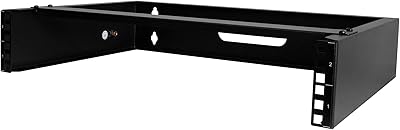
StarTech 2U Wall Mount Network Rack - 14 in Deep (RACK-2U-14-BRACKET)
88%
94%
Ease of Installation
89%
Build Quality
92%
Space Efficiency
85%
Weight Capacity
91%
Sturdiness
More
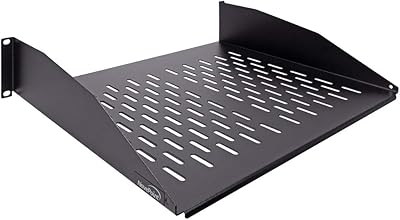
NavePoint 2U 19-Inch Universal Vented Rack Mount Cantilever Server Cabinet Shelf 14-Inches Deep
86%
88%
Build Quality
93%
Ease of Installation
91%
Weight Capacity
86%
Ventilation Effectiveness
78%
Size & Compatibility
More
Sysracks SRW 15.600B 15U Wall Mount Server Cabinet
73%
83%
Build Quality
88%
Value for Money
61%
Assembly Experience
74%
Usable Interior Depth
58%
Cooling Performance
More
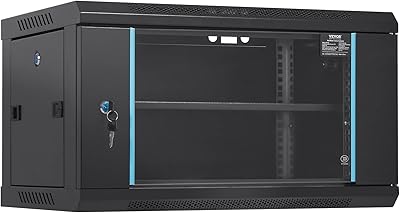
VEVOR 6U Wall Mount Server Rack Cabinet
85%
85%
Build Quality
91%
Ease of Installation
88%
Security Features
80%
Heat Dissipation
70%
Weight Capacity (Wall-Mounted)
More
StarTech 9U Wall-Mount Server Rack Cabinet
84%
94%
Build Quality & Durability
91%
Ease of Installation
88%
Space Efficiency
87%
Security Features
75%
Cooling Capabilities
More
StarTech 12U Wall-Mount Server Rack Cabinet
86%
91%
Build Quality
88%
Ease of Installation
80%
Cooling Efficiency
95%
Space-Saving Design
85%
Security Features
More
JINGCHENGMEI 19 Inch 2U Vertical Wall Mountable Rack
87%
92%
Build Quality
88%
Ease of Installation
94%
Space-Saving Design
90%
Sturdiness
85%
Max Weight Capacity
More
NavePoint 4U Patch Panel Bracket Wall Mount Rack
87%
92%
Ease of Installation
88%
Build Quality
90%
Adjustability/Versatility
85%
Weight Capacity
89%
Space Optimization
More
Electriduct 2U Wall Mount Rack Enclosure Network Cabinet
86%
89%
Build Quality
91%
Ease of Installation
85%
Security Features
82%
Airflow Efficiency
88%
Weight & Load Capacity
More
Sysracks 6U 24″x24″x14.5″ Wall Mount Server Rack
85%
91%
Value for Money
88%
Build Quality
89%
Ease of Installation
92%
Space-Saving Design
85%
Security Features
More

FAQ

Two rack units gives you about 3.5 inches of usable rack height — enough for two 1U devices, like a patch panel paired with a small managed switch, or one 2U-height appliance. The more important number to check is depth: this wall-mount rack only offers roughly 6 inches of internal clearance, so always verify your equipment depth spec before ordering. Shallow prosumer gear from brands like Netgear, TP-Link, or Ubiquiti typically fits without issue.

The included hardware is designed specifically for standard drywall-and-stud installations. If you are mounting into concrete, brick, or masonry, you will need to source appropriate masonry anchors separately — the rack itself has no issue with those surfaces, it is just that the packaged fasteners are not suited for them. Plan that extra hardware purchase into your install before you start drilling.

For a drywall installation, yes — finding your studs first is not optional. The mounting holes are spaced 16 inches apart specifically to line up with standard stud spacing, which is a real convenience, but only works if you actually hit solid wood. Anchoring into drywall alone, with nothing behind it, is not safe for a unit this heavy once equipment is loaded in.

For typical home or small office setups, that rating is far more capacity than you will ever come close to using. A managed switch, a patch panel, a cable modem, and a compact router together rarely exceed 12 to 15 pounds combined. The weight capacity is generous for this use case and is not a practical concern under normal conditions.

It ships with M6 cage nuts, screws, and plastic washers for mounting rack equipment to the rails, and standard wall mounting hardware is included for drywall-and-stud installs. If you are going into masonry, you will need to add anchors yourself. One honest heads-up: the assembly instructions are minimal, so if you have never put a rack together before, a quick tutorial search beforehand will save you time.

The built-in venting slots support passive airflow, which works well for low-heat devices like patch panels, small switches, and cable modems. If you are running equipment with higher thermal output — like a dense multi-port switch or a device with active cooling requirements — it is worth checking whether passive ventilation alone is adequate for your specific environment and closet conditions.

The physical steps — finding studs, drilling, attaching the bracket, installing cage nuts, and sliding in equipment — are not complicated for anyone comfortable with basic DIY. The challenge is that the included instructions are quite sparse, which can leave first-timers second-guessing a few steps. Looking up a rack installation walkthrough video before you start will make the whole process much smoother.

Yes, and this is genuinely one of the better use cases for this vertical rack unit. Its compact footprint fits well in narrow closets, and the passive venting helps manage heat in enclosed spaces. That said, make sure the closet has at least some degree of air circulation — a fully sealed, unventilated space is a thermal concern for any networking equipment, not just the rack itself.

The black powder coat is reasonably durable for a rack at this price point. Minor scuffs can happen during installation if the unit brushes against rough wall surfaces, but once it is mounted and left alone, the finish tends to hold up well under normal static conditions. It is not a high-impact finish, but for a rack that sits on a wall and rarely gets handled after install, it performs as expected.

It depends entirely on the specific UPS. Most rack-mount UPS units are either 1U or 2U in height, but they are also quite deep — often 15 to 20 inches or more — and this vertical rack unit only offers about 6 inches of internal depth clearance. The vast majority of rackmount UPS models will not physically fit. If UPS integration is a priority, this particular rack is not the right choice for that application.