Overview

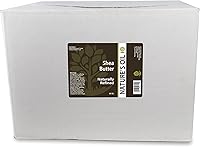
Nature's Oil Naturally Refined Shea Butter 55lb is a bulk cosmetic ingredient built for formulators, small-batch producers, and soap makers who need consistent, professional-grade raw material — not a finished retail cream. Unlike unrefined shea, which retains its characteristic nutty odor and ivory color, this refined shea block undergoes a natural refining process that strips out scent and pigment while leaving key bioactive compounds largely intact. That trade-off matters: you gain a neutral, workable base ideal for custom fragrances and pigments, but you lose some raw character that purists value. Sourced from an FDA-registered facility, it carries real credibility for buyers who need documented ingredient provenance.
Features & Benefits

What makes this cosmetic-grade shea worth using in production comes down to its fatty acid composition. The blend of palmitic, stearic, and oleic acids directly supports skin barrier function, which is why it shows up in eczema formulations and scar-softening balms as often as it does in everyday lotions. Beyond the fatty acids, you also get vitamins A, E, and F alongside triglycerides and cetyl esters — compounds that affect how a finished product feels on skin and how stable it remains over time. The melt point of 40–45°C is practical: it behaves predictably in standard double-boiler or heated mixing setups without requiring industrial equipment.

Best For

This bulk shea butter is squarely aimed at people running production pipelines, not weekend hobbyists buying a small jar. Independent formulators producing body butters, balms, or rich moisturizers in volume will get the most from the 55lb block format, where the per-unit cost drops considerably compared to retail sizing. Small soap businesses benefit similarly — batch consistency is easier to maintain when you're pulling from a single, large ingredient source rather than mixing across multiple smaller purchases. It's also a practical buy for anyone who needs odorless, neutral-colored shea as a base for proprietary scent or pigment blending, and for those who require traceable sourcing for labeling or compliance documentation.

User Feedback

Buyers who use this refined shea block regularly tend to praise its batch-to-batch consistency — texture and color stay predictable across orders, which matters when you're scaling a formulation. The neutral scent gets positive mentions from formulators who have struggled with the persistent odor of unrefined alternatives. That said, the feedback isn't uniformly glowing. Packaging variation is a real concern: some buyers have received the product in different container types than expected, which can affect storage and handling. A smaller number of reviewers have flagged inconsistencies in moisture content on arrival, which can complicate precise weighing and incorporation into formulations. Worth knowing before committing to a large purchase.

Pros

  • Neutral scent and color make it a ready base for custom fragrances, pigments, or active ingredient blending.
  • Consistent texture batch to batch gives formulators a reliable starting point for scaling tested recipes.
  • The fatty acid profile — palmitic, stearic, and oleic — is genuinely well-suited for skin barrier support in finished formulations.
  • Vitamins A, E, and F alongside cetyl esters add meaningful formulation value without requiring supplementation.
  • A melt point of 40–45°C is predictable and manageable with standard double-boiler or heated mixing equipment.
  • FDA-registered facility sourcing provides documentation that matters for compliance, labeling, and wholesale resale.
  • Buying at 55 pounds drops the effective per-unit cost considerably compared to stacking smaller retail purchases.
  • This cosmetic-grade shea integrates cleanly into eczema-targeted and scar-softening product lines without introducing unwanted odor.

Cons

  • Packaging is not standardized and can vary between orders, which complicates storage planning and handling logistics.
  • Some buyers have reported inconsistent moisture content on arrival, which can affect accurate weighing during formulation.
  • A 55-pound block requires substantial climate-controlled storage space that many small home-based makers simply do not have.
  • Refined shea sacrifices some of the raw bioactive intensity that unrefined versions retain, a real trade-off for certain formulations.
  • No small-quantity trial option exists — buyers must commit to the full bulk volume without a lower-risk sample format.
  • Shipping a block of this size carries real risk of damage or temperature-related condition issues during transit.
  • Buyers expecting the signature nutty character of raw shea will find this refined version entirely stripped of that quality.
  • The upfront cost requires confident demand forecasting; slow-moving inventory at this scale ties up capital and storage unnecessarily.

Ratings

Our AI rating engine analyzed verified global buyer reviews for Nature's Oil Naturally Refined Shea Butter 55lb, actively filtering out incentivized, bot-generated, and unverified submissions to surface only authentic formulator and producer experiences. The scores below reflect both what works reliably in real production environments and the friction points that repeatedly surfaced across independent buyers. Strengths and legitimate criticisms are weighted equally — nothing is glossed over.

Ingredient Purity
88%
Formulators consistently report that this refined shea block integrates cleanly into batches without introducing off-notes or unexpected reactivity. The natural refining process appears to do its job well — buyers building eczema-targeted or sensitive-skin product lines note the ingredient behaves predictably across multiple production runs.
A small but vocal segment of buyers who expected near-unrefined potency found the refining process removed more of the raw bioactive character than they anticipated. For formulations where maximum raw nutrient density is the goal, the trade-off is real and worth considering before committing to this volume.
Scent Neutrality
91%
The near-complete elimination of shea's natural nutty odor is one of the most consistently praised qualities among soap makers and lotion formulators. Buyers building custom-fragrance products specifically seek out this cosmetic-grade shea because it does not compete with or distort the scent profile they are designing around.
A handful of buyers noted a faint residual smell on select batches — not rancid, but slightly earthy — suggesting some variation in the refining outcome across production lots. It is minor enough that most formulators would not notice it in a finished product, but it is worth knowing.
Texture Consistency
83%
When stored and handled correctly, this refined shea block delivers a uniform, smooth texture that melts evenly and blends well into emulsions and butters. Soap makers running repeated batches especially appreciate that the raw material behaves the same way every time, reducing the need for formula adjustments.
Temperature fluctuations during shipping can cause the block to partially melt and recrystallize, resulting in a grainy or uneven surface texture on arrival. This does not affect final formulation quality after a full melt-down, but it is an inconvenience that a meaningful number of buyers have flagged.
Bulk Value
86%
High-volume producers consistently note that the per-pound cost at this scale represents a genuine saving over sourcing smaller retail quantities. For small businesses running regular production cycles — weekly soap batches, monthly lotion runs — the economics of buying this refined shea block at 55 pounds make clear financial sense.
The value equation only holds if you can move through the quantity before quality begins to degrade, which requires adequate storage and reliable demand. Buyers who overestimated their production volume have found themselves holding more inventory than they can responsibly use within a safe timeframe.
Melt Behavior
79%
21%
The stated melt point of 40–45°C aligns closely with what working formulators report, making this a predictable ingredient in standard double-boiler setups without requiring specialized industrial heating equipment. Lotion and balm makers note the melt is clean and even once the block reaches temperature.
Some buyers found that thicker sections of the block take noticeably longer to melt through than expected, requiring more active management during processing. A few also mentioned that uneven recrystallization after shipping made initial melt behavior slightly inconsistent until the block was fully homogenized.
Fatty Acid Profile
85%
The combination of palmitic, stearic, and oleic acids gives formulators a genuinely useful building block for barrier-supporting skin care. Buyers developing dry-skin or eczema-adjacent product lines report that the fatty acid composition contributes to the emollient performance they need without requiring supplementation.
Buyers who want detailed third-party fatty acid lab analysis for their own product documentation may find the available specification data insufficient for formal cosmetic compliance reporting. The ingredient is well-regarded, but its documentation depth may not satisfy all regulatory or retail partner requirements.
Vitamin Retention
74%
26%
Vitamins A, E, and F surviving the natural refining process is a meaningful distinction from more aggressively processed alternatives. Formulators building antioxidant-focused or collagen-supporting product claims find this a workable base without needing to add back significant quantities of supplemental vitamins.
The refining process inevitably reduces vitamin concentration compared to raw unrefined shea, and buyers who have tested both side by side notice the difference in formulation performance at identical usage rates. If vitamin potency is a primary formulation goal, the refined format requires careful expectation-setting.
Packaging Reliability
58%
42%
Most buyers receive the product in functional condition adequate for immediate use in production, and the core ingredient quality inside the packaging is generally not compromised by container variation. Experienced bulk ingredient buyers tend to approach variable packaging as a known category norm rather than a product-specific defect.
Packaging inconsistency is one of the most frequently raised complaints — buyers sometimes receive a different container type than their previous order, which disrupts storage planning and handling workflows. For operations running tight inventory systems, unpredictable packaging creates real logistical friction that should not be underestimated.
Moisture Content on Arrival
61%
39%
The majority of buyers report that moisture levels fall within acceptable ranges for production use, and formulators experienced with bulk raw materials know how to account for minor variation in their recipes. When the product arrives in good condition, it integrates into formulations without requiring additional drying or treatment steps.
A recurring subset of buyer feedback flags inconsistent moisture content on arrival, which is a meaningful problem when precise weighing is part of a tested formula. Even small deviations in water activity can affect emulsion stability and shelf life, making this a legitimate concern rather than a minor inconvenience.
Shipping Condition
63%
37%
Buyers in moderate climates who receive the block during cooler seasons generally report arrival in solid, workable condition with no significant handling damage. The block format is inherently more resilient to minor transit compression than fragile or liquid ingredients, which works in its favor.
Warm-weather shipping introduces real risk — blocks arriving partially melted and re-solidified in irregular shapes have been reported, and some buyers note inadequate thermal protection in the packaging for the product's melt point. This is a structural logistics issue that affects a non-trivial number of orders.
FDA Facility Credibility
89%
Buyers who need to document ingredient sourcing for product labeling, resale compliance, or retail partner audits consistently highlight the FDA-registered facility origin as a practical differentiator. For small businesses trying to position their finished products with health-conscious or regulatory-aware retail channels, this sourcing detail carries real weight.
The FDA-registered designation covers the manufacturing facility, not a specific product-level certification — a distinction that matters for buyers seeking ingredient-level claims on finished product labels. Some formulators have needed to clarify this nuance with their own compliance reviewers before including sourcing language in marketing materials.
Color Neutrality
87%
The white to off-white appearance of this cosmetic-grade shea is specifically valued by makers whose finished products depend on precise color control — tinted lip balms, color-matched body butters, and pigmented soaps all benefit from a base that does not introduce unwanted yellowing or ivory tones.
Buyers accustomed to the natural ivory character of unrefined shea sometimes perceive the bleached appearance as a sign of over-processing, even when the quality is sound. It is a subjective concern, but it occasionally causes hesitation among newer formulators evaluating the product for the first time.
Storage Manageability
66%
34%
Buyers with dedicated production or storage space find the 55-pound block format straightforward to manage — it is dense but stable at room temperature in most conditions, and the block form is easier to portion by cutting or chipping than liquid bulk formats would be.
For home-based makers or producers without climate-controlled storage, managing a 55-pound block through seasonal temperature swings is a genuine challenge. Several buyers underestimated the practical storage footprint and the discipline required to protect the ingredient from repeated partial melting cycles over time.
Formulation Versatility
82%
18%
This bulk shea butter performs well across a wide range of product types — lotions, balms, cold-process soaps, hair butters, and body creams — without requiring significant reformulation adjustments when switching between applications. Formulators who work across multiple product categories value having a single reliable raw material that spans their full lineup.
Despite its versatility as a base ingredient, refined shea does not bring the standalone skin-feel intensity of unrefined versions, meaning formulators targeting a rich, dense skin sensation may need to compensate with additional emollients or actives. It is a capable base, but rarely the star of a formulation on its own.

Suitable for:

Nature's Oil Naturally Refined Shea Butter 55lb is built for buyers who treat shea butter as a working ingredient rather than a finished product. Independent cosmetic formulators who produce lotions, balms, body butters, or scrubs in meaningful volume will find the bulk block format genuinely practical — both for cost efficiency and batch consistency. Small soap-making businesses benefit especially, since sourcing from a single large batch minimizes the ingredient variability that can throw off a tested formula. Wholesale buyers who need a neutral-scented, neutral-colored base to accept custom fragrances or pigments will also get real mileage here, since the refining process delivers exactly that kind of clean, workable canvas. Anyone who requires FDA-registered facility documentation for product labeling, compliance, or resale purposes will appreciate having that sourcing on record.

Not suitable for:

Nature's Oil Naturally Refined Shea Butter 55lb is a poor fit for anyone who wants to apply shea butter directly to their skin without further processing — this is a raw cosmetic ingredient that requires melting, blending, and formulating before it becomes a usable end product. Buyers who specifically want unrefined shea for its nutrient density, natural color, or raw earthy scent will also find this a mismatch, since the refining process neutralizes those characteristics as a deliberate trade-off. Casual DIY makers producing small personal batches will likely find 55 pounds an impractical quantity to store, manage, and work through before quality begins to degrade. If adequate climate-controlled storage space is not available, moisture and temperature fluctuations can compromise a block of this size before it is fully used. Lastly, budget-sensitive buyers expecting the per-pound cost to be as low as industrial commodity pricing should temper expectations — this sits at a professional-grade price point reflecting its sourcing and quality controls.

Specifications

  • Brand: Manufactured and sold under the Nature's Oil brand by Natural Essentials Inc.
  • Net Weight: Each unit is a solid block weighing 55 pounds (approximately 24.9 kg).
  • Package Dimensions: The packaged block measures 15 x 10.5 x 9 inches.
  • Form Factor: Supplied as a solid bulk block, not as a whipped, liquid, or pre-portioned product.
  • Refinement Type: Naturally refined, meaning odor and pigment are removed without the use of harsh synthetic chemicals.
  • Melt Point: The butter melts between 40–45°C (104–113°F), which is consistent with standard cosmetic-grade shea specifications.
  • Fatty Acids: Contains palmitic, stearic, and oleic fatty acids, which are primary contributors to skin barrier support in finished formulations.
  • Vitamins: Retains vitamins A, E, and F (alpha-linolenic acid and linoleic acid) following the natural refining process.
  • Additional Compounds: Includes triglycerides, cetyl esters, and essential fatty acids ALA and LA, which influence emolliency and product stability.
  • Skin Compatibility: Identified as suitable for combination skin types when incorporated into finished cosmetic formulations.
  • Scent Profile: Odor is neutralized through the refining process, yielding a virtually scent-free base ingredient.
  • Color Profile: Refining removes natural pigmentation, producing a white to off-white appearance suitable for color-sensitive formulations.
  • Facility Compliance: Shipped directly from an FDA-registered manufacturing facility, supporting traceability for compliance and resale documentation.
  • Packaging Note: Container type may vary depending on availability at time of fulfillment, which is standard practice among bulk ingredient suppliers.
  • Intended Use: Classified as a raw cosmetic ingredient intended for professional or semi-professional formulation, not direct skin application as-is.
  • ASIN: Amazon Standard Identification Number for this listing is B09VY9NR8Y.
  • UPC: Universal Product Code for this item is 196135027514.

Related Reviews
MGL Naturals Coconut Shea Hair Food 16oz
79%
88%
Moisturizing Performance
91%
Ingredient Quality
67%
Texture & Absorption
72%
Hair Type Suitability
79%
Value for Money
More
CJ's BUTTer All Natural Shea Butter Balm Unscented 12 oz
87%
94%
Effectiveness for Dry Skin
92%
Suitability for Sensitive Skin
89%
Moisturizing Long-Lasting Hydration
85%
Absorption & Finish
78%
Texture & Consistency
More
CJ's BUTTer Monkey Farts Shea Balm 6oz
81%
91%
Skin Absorption
88%
Diaper Rash Effectiveness
93%
Ingredient Transparency
79%
Scent Experience
86%
Cloth Diaper Compatibility
More
Better Shea Butter Mango Butter 100% Natural Skin Moisturizer 1 LB Block
87%
92%
Hydration Effectiveness
89%
Skin Softening
85%
Absorption Speed
87%
Texture & Feel
95%
Natural Ingredient Quality
More
Better Shea Butter Raw Shea Butter 1lb Bar
86%
94%
Moisturizing Effectiveness
88%
Skin Irritation Relief
82%
Texture and Feel on Skin
90%
Hair Nourishment
95%
Versatility for DIY Products
More
White Naturals Raw African Shea Butter 2lb
84%
91%
Hydration & Moisturizing Effectiveness
88%
Skin Texture Improvement
93%
Suitability for Dry Skin
87%
DIY Use & Versatility
72%
Absorption & Feel
More
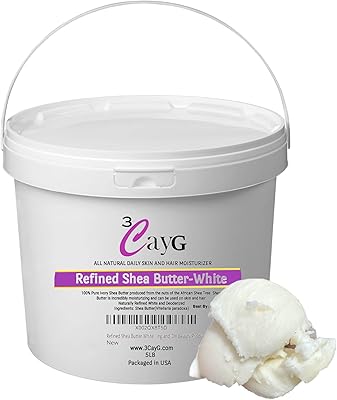
3CAYG 5lb Refined White Shea Butter
81%
91%
Texture & Workability
78%
Scent Neutrality
86%
Ingredient Purity
83%
Value for Quantity
67%
Packaging & Seal Integrity
More
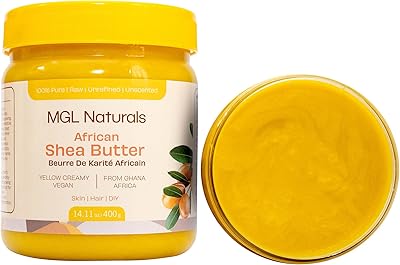
MGL Naturals Shea Butter Yellow Creamy 16oz
87%
94%
Hydration Effectiveness
88%
Skin Feel & Absorption
90%
Hair Nourishment & Shine
82%
Scent/Fragrance
92%
Value for Money
More
Soapeauty 100% Pure Refined African Shea Butter 32oz
87%
92%
Skin Hydration
90%
Moisturizer Effectiveness
88%
Texture & Feel
85%
Absorption Rate
94%
Scent Neutrality
More
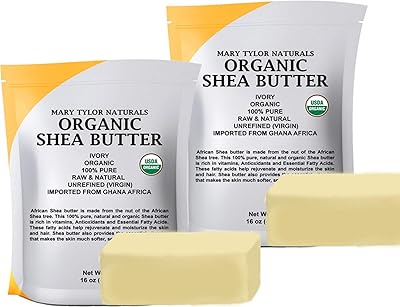
Mary Tylor Naturals Organic Shea Butter 2 lb
83%
88%
Effectiveness for Dry Skin
91%
Moisturizing & Hydration
75%
Texture & Ease of Application
68%
Scent & Fragrance
85%
Multi-Purpose Use
More

FAQ

It needs to be melted and incorporated into a formulation before use. This is a raw cosmetic ingredient intended for makers of lotions, balms, soaps, and similar products — not a finished skin-care product you'd scoop from a jar and apply directly.

Unrefined shea retains its natural nutty scent, ivory color, and the full spectrum of its raw bioactive compounds. Refining removes the odor and pigment, which makes it a cleaner base for formulations where you're adding your own fragrance or color. Some trace compounds are reduced in the process, but the core fatty acids and vitamins largely survive natural refining — it's a meaningful trade-off, not a catastrophic loss of quality.

Keep it in a cool, dry location away from direct sunlight and heat sources. Shea butter is stable at room temperature in most climates, but prolonged exposure to warmth above its melt point will cause it to liquefy and potentially recrystallize unevenly. If you're in a warm climate, climate-controlled storage is worth the investment for a quantity this size.

Packaging variation is common with bulk ingredient suppliers — container type is often determined by what is available at the time of fulfillment rather than being a fixed part of the product specification. The shea butter inside is the same; only the outer packaging changes. It is worth having your own resealable storage containers on hand regardless.

Yes, this refined shea block works well in cold-process soap formulations. Its fatty acid composition contributes hardness and a mild, conditioning lather. The neutral scent is a particular advantage here since it will not compete with the fragrances or essential oils you add to the batch.

Properly stored shea butter typically has a usable shelf life of 12 to 24 months. Signs of degradation include a noticeably rancid or sour smell and a gritty, inconsistent texture that does not smooth out when melted. Since you are working with a 55-pound quantity, rotating your stock and using older portions first is good practice.

Not necessarily. Shea butter naturally goes through temperature fluctuations during shipping, which can cause it to partially melt and recrystallize, resulting in a grainy or uneven surface texture. This is a cosmetic issue with the block, not a quality defect. Fully melting and re-solidifying it at a controlled temperature will typically restore a smooth, consistent texture.

The fatty acid profile makes it a reasonable ingredient choice for formulations targeting dry or eczema-prone skin. That said, the suitability of any finished product depends on the full formulation, not just one ingredient. If you are developing products specifically for sensitive skin, patch testing your finished formula is always the right step before wider distribution.

Absolutely. Refined shea is widely used in hair butters, edge controls, scalp treatments, and deep conditioning masks. The neutral scent and color are especially useful in hair care because they let you control the final product profile without fighting the raw ingredient's natural characteristics.

For high-volume producers, yes — the per-pound cost at this scale is meaningfully lower than stacking smaller retail purchases. The savings are real, but they only make sense if you can use the quantity before it degrades and have the storage space to handle it responsibly. For low-volume makers, a smaller format is likely the smarter financial choice.