Overview

The Nakamichi Dragon Quad 12″ Surround Sound System occupies a rare space in home audio: it delivers the scale and channel complexity of a full AV receiver setup while shipping as a single, calibrated package. The core configuration — four wireless 12-inch subwoofers, a 58-inch main soundbar, and two surround speakers — is genuinely ambitious. This is not a living room system; it is a dedicated theater setup that demands space, commitment, and a serious budget. Nakamichi has carved out a niche in over-the-top all-in-one systems, and the Dragon represents the furthest that ambition has gone.

Features & Benefits

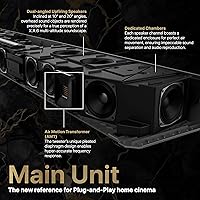
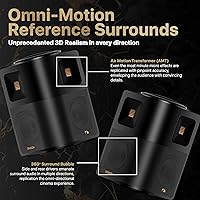
Four wireless subwoofers producing bass down to 19Hz means explosions and low musical notes arrive as physical events, not just sounds — something most soundbars simply cannot replicate. The Air Motion Tweeters across seven drivers handle high frequencies with noticeably better speed and clarity than conventional dome tweeters, keeping dialogue crisp at any volume. The Pro-Cinema Surround Engine processes Dolby Atmos up to 24.1.10 channels and DTS:X Pro up to 30.2 channels, matching what high-end AV receivers decode. The Omni-Motion surrounds adjust vertical dispersion physically, reducing dependence on ceiling-bounce height channels. HDMI eARC with 4K120 passthrough and three inputs handles modern source hardware without compromise.

Best For

The quad-sub soundbar is purpose-built for large dedicated rooms — think 400 square feet or more — where the output has room to breathe and the bass does not become oppressive. Buyers who want Atmos and DTS:X performance without sourcing a receiver, amplifiers, and seven-plus speakers separately will find this Nakamichi setup genuinely appealing. It also suits enthusiasts making a significant step up from mid-range bars, or gamers who want spatial audio and tactile low-end on a large screen. If you want one brand, one calibration, and no integration headaches, this system was designed with exactly that buyer in mind.

User Feedback

Buyers consistently highlight bass impact as the system's most memorable quality — several note it surpassed their expectations from a soundbar-category product. Setup draws more mixed reactions; six boxes and wireless subwoofer placement require patience, and a few users found the initial calibration process less intuitive than expected. Rooms under 300 square feet are repeatedly flagged as too small — the system can overwhelm intimate spaces. Treble clarity from the AMT drivers earns praise for making dialogue intelligible at high volumes. Long-term reliability feedback is still limited given the product's recent availability, but early customer support interactions appear generally positive in verified purchase comments.

Pros

  • Four wireless 12-inch subwoofers produce bass that registers as a physical sensation, not just a sound.
  • Dolby Atmos and DTS:X Pro channel counts rival what dedicated AV receiver setups deliver.
  • Air Motion Tweeters keep dialogue and high-frequency detail crisp even during loud, dense soundtracks.
  • The all-in-one design eliminates multi-brand integration headaches and pre-calibrates the full system at the factory.
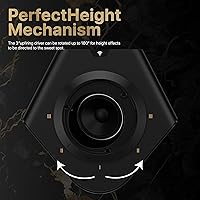
  • Omni-Motion surrounds physically adjust vertical dispersion, reducing reliance on ceiling-mounted height speakers.
  • Three HDMI inputs with 4K120 and 8K passthrough handle modern source hardware without requiring an external switch.
  • Bluetooth 5.0 with aptX HD delivers noticeably cleaner wireless audio than standard Bluetooth connections.
  • The quad-sub soundbar fills very large rooms evenly, maintaining dynamic range without audible strain.
  • Wireless subwoofer connectivity eliminates the need to run long cables across a large dedicated room.
  • Early long-term owners report stable, consistent performance with responsive customer support when issues arise.

Cons

  • Setup requires significant time, physical space, and ideally two people to unbox and position correctly.
  • The companion app feels less refined than the hardware, with inconsistent connectivity reported by multiple users.
  • No AirPlay 2, Spotify Connect, or native streaming platform integration at this investment level is a notable gap.
  • Wireless subwoofer dropout has been reported in environments with heavy 5GHz network congestion.
  • Gaming input latency requires manual audio sync adjustment on some televisions to avoid a perceptible delay.
  • Long-term reliability data is limited given the product launched in late 2024 — multi-year durability is unproven.
  • Some plastic trim elements on the surround speakers feel inconsistent with the premium quality of the main unit.
  • The remote and EQ controls lack the granularity that experienced home theater buyers typically expect at this price tier.
  • A small number of verified buyers have reported a subwoofer amplifier fault under sustained high-output use.
  • Upper midrange hardness appears on compressed streaming audio at high volumes, most noticeable on non-lossless sources.

Ratings

The Nakamichi Dragon Quad 12″ Surround Sound System has been scored by our AI after analyzing verified buyer reviews from global markets, with spam, bot-generated, and incentivized feedback actively filtered out. Scores reflect the full spectrum of real ownership experiences — from first impressions during setup to long-term daily use — with both standout strengths and genuine frustrations weighted honestly. No category has been softened to protect the product's reputation.

Bass Performance
96%
Owners consistently describe the bass as a physical experience rather than just an audible one — furniture vibrates, chests tighten during action sequences, and low musical notes feel as much as heard. Four independent 12-inch drivers reaching down to 19Hz produce a foundation that most dedicated subwoofer setups simply cannot match in sheer scale.
In rooms under roughly 300 square feet, the output becomes genuinely overwhelming and difficult to tame through EQ alone. A handful of users report that bass bleed between rooms is a real concern in open-plan homes, making placement and room treatment more critical than anticipated.
Surround Sound Immersion
91%
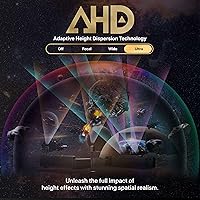
The Omni-Motion surrounds create a convincing wraparound soundstage that buyers upgrading from traditional soundbars describe as a revelatory difference — helicopters track overhead, crowd noise fills the sides, and height channels register as distinctly above rather than vaguely wide. Atmos and DTS:X content in particular draws consistent praise for spatial accuracy.
Some users note that the height channel performance depends heavily on ceiling height and room geometry, and rooms with irregular shapes or low ceilings reduce the effectiveness of the vertical dispersion. A few buyers feel the surround balance at default calibration favors the rear channels more aggressively than their preference.
Dialogue Clarity
84%
The Air Motion Tweeters draw specific attention from buyers who previously struggled with muffled or recessed dialogue on conventional soundbars. Voices remain intelligible and forward-placed even during loud action scenes, which owners of older systems often cite as the single most noticeable improvement in everyday TV watching.
At very high volume levels, a small number of users report that the center channel can thin out slightly, reducing the warmth of male voices in particular. This appears more pronounced with certain broadcast audio formats than with lossless streaming sources.
Setup & Installation
54%
46%
For buyers with prior experience setting up multi-component home theater systems, the wireless subwoofer approach removes a significant cable management hurdle, and the all-in-one calibration means no separate receiver configuration or speaker impedance matching. The system ships fully pre-matched, which removes guesswork for less technical users.
Six large boxes, a 463-pound total weight, and the logistics of positioning four separate subwoofers in a large room make installation a genuine project — most buyers report needing at least two people and several hours. Initial wireless pairing and channel calibration frustrate a notable portion of reviewers, with some requiring multiple attempts before achieving stable sync.
Value for Money
67%
33%
Buyers who commit to this Nakamichi setup as a separates-replacement genuinely justify the cost by calculating what a comparable AVR, seven-plus speakers, and four quality subwoofers would total from individual components. For that specific buyer, the all-in-one convenience, pre-calibration, and single-vendor support carry real monetary and practical value.
At this price tier, audiophiles and home theater enthusiasts with the technical willingness to build a separates system will get more flexibility, upgradeability, and in some cases better measured performance per dollar. The premium here is substantially for integration and convenience, which not every buyer feels is adequately reflected in the final cost.
Build Quality & Materials
82%
18%
The main soundbar unit has a substantial, furniture-grade presence that buyers consistently describe as looking appropriate next to high-end televisions. The subwoofer cabinets feel dense and inert, with minimal cabinet resonance reported even at high output levels.
A few users note that some of the plastic trim elements on the surround speakers feel slightly below the standard set by the main unit, creating a minor inconsistency in perceived quality across the full package. Finish durability over multi-year ownership remains an open question given the product's relatively recent release.
Connectivity & Compatibility
88%
Three HDMI inputs with eARC and 4K120 passthrough cover the needs of most modern AV setups without requiring an external switch, which buyers with multiple gaming consoles or streaming devices genuinely appreciate. Bluetooth 5.0 with aptX HD handles casual wireless listening with noticeably better fidelity than standard Bluetooth connections.
A small number of users report intermittent HDMI handshake issues with specific television models, requiring cable swaps or input resets to resolve. There is no built-in streaming platform integration, which buyers expecting Spotify Connect or AirPlay 2 will find disappointing at this price point.
Room Size Suitability
59%
41%
In large dedicated home theater spaces — roughly 400 square feet and above — the Dragon system fills the room evenly and maintains dynamic range without strain, which is the environment it was clearly designed for. Owners with proper room treatment report the system locks in a genuinely cinematic sound level that smaller rigs cannot approach.
In medium or smaller rooms the system is genuinely problematic; buyers in apartments or standard living rooms frequently report that even moderate volume settings produce bass pressure that is fatiguing rather than enjoyable. This is not a fixable EQ issue — it is a fundamental mismatch between output capability and room volume.
Remote & App Control
63%
37%
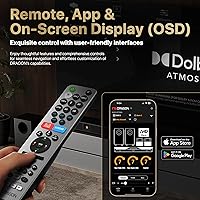
The physical remote covers the essential functions — volume, input switching, and sound mode selection — without requiring a phone for basic daily operation, which casual users appreciate. Basic controls are logically laid out and function reliably within line-of-sight range.
The companion app receives mixed feedback, with some users reporting inconsistent connection behavior and a user interface that feels less polished than the hardware it controls. Several buyers note that advanced EQ and channel trim adjustments are cumbersome to access and lack the granularity expected at this investment level.
High-Frequency Detail
86%
The AMT tweeter array produces a noticeably airier and more extended top end than conventional dome tweeters, with cymbal decay, string overtones, and ambient soundtrack texture rendering with genuine refinement. Music listeners in particular highlight this as an unexpected strength for a product primarily marketed around cinema bass.
At very high listening levels some buyers detect a slight hardness in the upper midrange that suggests the crossover transition between the AMT drivers and the main woofers is not perfectly seamless in all content. This is primarily noticeable on compressed streaming audio rather than lossless sources.
Low-Frequency Extension
94%
A 19Hz lower frequency limit is not a marketing claim that most listeners will consciously perceive as a pitch, but in practice it means the system reproduces subsonic content in film soundtracks as genuine pressure events — underwater scenes, earthquake sequences, and large orchestral passages gain a physical dimension that is immediately noticeable. Buyers with prior subwoofer experience consistently rate this aspect above expectations.
The lowest octave of bass output requires a room with enough cubic volume to develop properly; in smaller spaces the low-end becomes pressurized and unpleasant before it becomes tonally satisfying. Room modes and standing waves at these frequencies are also harder to manage without dedicated acoustic treatment.
Wireless Reliability
76%
24%
Under normal conditions the wireless subwoofer connections maintain stable sync without audible dropouts, and the majority of long-term owners report no degradation in wireless performance over months of use. The freedom from running cables across a large room is a meaningful practical benefit that buyers cite regularly.
A subset of users in environments with dense 5GHz wireless traffic report occasional dropout events during high-intensity listening sessions, which briefly interrupts immersion in a noticeable way. Firmware updates have addressed some early stability complaints, but buyers in congested wireless environments should factor in potential interference management.
Gaming Performance
81%
19%
The combination of spatial audio processing and physically impactful bass transforms compatible games — gunfire, explosions, and environmental audio gain a dimensionality and physicality that standard gaming headsets and smaller soundbars cannot replicate at scale. Buyers using the system with large-screen gaming setups describe it as a genuinely distinct experience.
Input latency in gaming modes draws occasional criticism, with a small number of users noting a perceptible audio delay in fast-paced titles that requires the television's audio sync adjustment to correct. The system also lacks native HDMI 2.1 VRR audio passthrough support, which is a notable omission for next-generation console users.
Long-Term Reliability
71%
29%
Early verified buyers who have owned the system for six months or more largely report stable, consistent performance without component failures, and Nakamichi's customer support response time receives positive mentions in a meaningful proportion of reviews. The wireless subwoofer electronics appear robust under regular heavy use.
The product's relatively short market history means multi-year reliability data is simply not available yet, and buyers making a significant investment reasonably flag this uncertainty. A small number of users have reported a subwoofer amplifier fault requiring replacement, which — while handled under warranty — raises questions about component longevity under sustained high-output use.

Suitable for:

The Nakamichi Dragon Quad 12″ Surround Sound System was built for a specific kind of buyer, and that buyer knows who they are: someone with a dedicated home theater room of at least 400 square feet, a serious appetite for cinematic impact, and no interest in sourcing and integrating a stack of separate components. If you have spent time researching AVR setups, speaker matching, and room calibration only to conclude that the complexity is not worth it, this system offers a credible shortcut to a high channel-count Atmos and DTS:X result without the multi-vendor headache. It also suits enthusiasts making a decisive jump from a mid-range soundbar who want the upgrade to be immediately and unmistakably apparent — not a subtle improvement, but a fundamentally different experience. Gamers with large screens and a taste for spatial audio and physically impactful low-end will find the Dragon system hard to match in its category. Anyone who values a pre-calibrated, single-brand solution with no impedance matching or crossover tuning required will appreciate the design philosophy here.
Not suitable for:

There are meaningful reasons to walk away from this Nakamichi setup, and room size is the most important of them. Apartments, standard living rooms, and any space under roughly 300 square feet will be overwhelmed by four 12-inch subwoofers — the bass becomes pressurized and fatiguing long before it becomes enjoyable, and no amount of EQ adjustment fully corrects a fundamental mismatch between output capacity and room volume. Buyers who are genuinely comfortable building a separates system — receiver, discrete speakers, and quality subwoofers sourced independently — will likely get more flexibility, better long-term upgradeability, and comparable or superior measured performance at a similar total cost. The setup process is also a legitimate deterrent for anyone who expects plug-and-play simplicity; six large boxes, 463 pounds of total hardware, and wireless subwoofer calibration require time, patience, and ideally more than one person. Those expecting smart platform integration such as AirPlay 2 or Spotify Connect will find the connectivity feature set disappointing relative to the investment. Finally, buyers in the early stages of building a home theater who are still uncertain about their room, their usage habits, or their long-term commitment to this format should wait — this is a purchase that only makes sense when the room and lifestyle are already fully defined.

Specifications

  • System Configuration: The Dragon system operates as an 11.4.6 wireless surround setup, comprising a main soundbar, four independent wireless subwoofers, and two Omni-Motion Reference surround speakers.
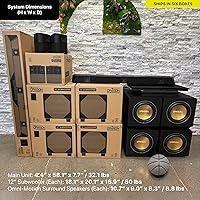
  • Main Unit Dimensions: The primary soundbar measures 7.7″ deep, 58.1″ wide, and 4.4″ tall, requiring a television stand or wall surface of at least 58 inches in width.
  • Subwoofer Dimensions: Each of the four wireless subwoofers measures 18.1″ tall, 20.1″ wide, and 16.9″ deep, with each unit weighing approximately 80 pounds.
  • Surround Speaker Dimensions: Each Omni-Motion Reference surround speaker measures 10.7″ tall, 9.0″ wide, and 8.3″ deep, weighing 8.8 pounds per unit.
  • Total System Weight: The complete package — all speakers, subwoofers, and the main soundbar — has a combined shipping weight of 463 pounds across six boxes.
  • Total Output Power: The system delivers a combined maximum output of 5000 watts across all amplified drivers, with the four subwoofers alone accounting for 3000 watts of that total.
  • Frequency Response: Bass extension reaches down to 19Hz, covering subsonic frequencies that appear in film soundtracks as pressure events rather than audible tones.
  • Tweeter Technology: Seven Air Motion Tweeter (AMT) drivers are distributed across the system, including three in the main soundbar unit, providing high-frequency reproduction with faster transient response than conventional dome tweeters.
  • Main Unit Drivers: The 58-inch soundbar houses 14 individual speaker drivers in total, covering full-range, midrange, and AMT tweeter functions across the front soundstage.
  • Dolby Atmos Support: The onboard Pro-Cinema Surround Engine processes Dolby Atmos content at up to 24.1.10 channels, matching the decoding capability of high-end standalone AV receivers.
  • DTS:X Pro Support: DTS:X Pro decoding is supported at up to 30.2 channels, providing full object-based surround processing without requiring an external processor or receiver.
  • HDMI Connectivity: The system includes three HDMI inputs alongside one HDMI eARC output with 4K120 and 8K video passthrough, supporting current-generation consoles and streaming devices without signal degradation.
  • Wireless Standard: Bluetooth 5.0 with aptX HD codec support enables high-resolution wireless audio streaming from compatible smartphones, tablets, and computers.
  • Additional Inputs: An optical audio input is included alongside the HDMI connections, providing compatibility with televisions and source devices that lack HDMI ARC or eARC ports.
  • Height Channels: Six upfiring speakers are integrated into the system to generate overhead audio reflections for Dolby Atmos height content without requiring separate ceiling-mounted speakers.
  • Surround Mechanism: The Omni-Motion Reference surrounds include a PerfectHeight Mechanism that physically adjusts the vertical dispersion angle of the speaker driver, allowing height channel tuning to match room geometry.
  • Mounting Option: The main soundbar supports wall mounting, with wall mount hardware and configuration documented in the included installation materials.
  • Control Method: Primary system control is handled via the included remote; a companion application provides access to advanced settings including EQ adjustment and channel trim configuration.
  • Warranty: The system is covered by a limited manufacturer warranty; buyers should confirm the specific duration and terms directly with Nakamichi or the point of purchase.
  • Package Contents: The full retail package includes the main soundbar, four wireless subwoofer units, two Omni-Motion Reference surround speakers, and associated cables, remotes, and mounting hardware, shipped across six separate boxes.

Related Reviews
Nakamichi Dragon Home Surround Sound System with Dual 12″ Subwoofers
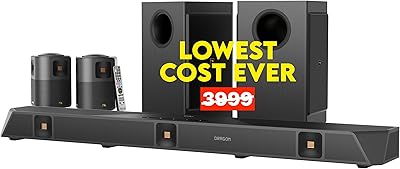
89%
94%
Bass Performance
91%
Surround Sound Quality
88%
Setup and Installation
90%
Wireless Connectivity
87%
Value for Money
More
Nakamichi Dragon 11.4.6 Home Surround Sound System
84%
94%
Sound Quality
92%
Bass Performance
65%
Ease of Setup
88%
Build Quality
90%
Audio Clarity
More
Bobtot K89 5.1 Home Theater System
73%
83%
Bass Performance
67%
Surround Sound Immersion
81%
Value for Money
88%
Connectivity & Input Range
74%
Bluetooth Reliability
More
Supersonic SC-37HT 5.1 Home Theater System
69%
83%
Value for Money
58%
Audio Quality
77%
Karaoke Functionality
88%
Ease of Setup
71%
DVD & Disc Playback
More
Platin Milan 5.1 Surround Sound Speaker System
76%
83%
Wireless Audio Quality
88%
Ease of Setup
79%
Surround Sound Immersion
67%
Bass & Subwoofer Performance
61%
App Experience
More
Bobtot K701S 5.1 Surround Sound System
72%
84%
Value for Money
81%
Bass Performance
88%
Ease of Setup
71%
Surround Sound Immersion
87%
Connectivity & Compatibility
More
Klipsch Reference Theater Pack 5.1 Surround System
82%
92%
Sound Clarity
78%
Bass Performance
88%
Surround Immersion
67%
Wireless Subwoofer Reliability
91%
Ease of Setup
More
Bobtot B48 5.1 Home Theater System
77%
83%
Bass Performance
74%
Surround Sound Immersion
91%
Setup & Installation
88%
Connectivity Options
79%
Bluetooth Reliability
More
Acoustic Audio AA2400 2.1 Bluetooth Speaker System
74%
83%
Bass Performance
81%
Value for Money
88%
Connectivity Range
67%
Bluetooth Reliability
62%
Satellite Speaker Quality
More
Supersonic SC-38HT 5.1 Channel Home Theater System
71%
74%
Value for Money
58%
Audio Quality
47%
Build Quality
83%
Setup & Ease of Use
78%
Karaoke Performance
More

FAQ

Yes, and this is probably the most important question to ask before buying. The quad-sub soundbar is built for large dedicated spaces — ideally 400 square feet or more. In smaller rooms, four 12-inch subwoofers generate bass pressure that becomes uncomfortable before it becomes enjoyable, and that is not something you can fully correct with EQ. If your space is under roughly 300 square feet, a different system will serve you better.

Realistically, you need at least two people. The total package weighs 463 pounds spread across six boxes, and each subwoofer alone is around 80 pounds. Beyond the physical logistics, positioning four subwoofers in a large room and completing the wireless calibration takes several hours even for experienced users. Budget a full afternoon and a second pair of hands.

It replaces one completely. The onboard Pro-Cinema Surround Engine handles Dolby Atmos and DTS:X Pro decoding internally, at channel counts that match high-end standalone receivers. You connect your sources directly to the system via the three HDMI inputs and let it handle everything. No external receiver, amplifier, or processor is needed.

A separates system gives you more flexibility, independent upgradeability, and in some cases better measured performance from individually optimized components. The Dragon system trades some of that flexibility for integration — everything is pre-matched, pre-calibrated, and sourced from one vendor. If you are comfortable researching and assembling components, separates may offer more value per dollar. If you want a finished, calibrated result without the complexity, this Nakamichi setup makes a legitimate case for itself.

For most users in normal home environments, the wireless subwoofer connections are stable and maintain sync without audible interruptions. The caveat is dense wireless environments — if your home runs a lot of devices on the 5GHz band, some users have reported occasional dropout during high-intensity content. It is not a widespread issue, but worth knowing if your network environment is congested.

No. The system uses six integrated upfiring speakers in the main soundbar to generate height channel reflections, and the Omni-Motion surround speakers include a physical adjustment mechanism for vertical dispersion. Ceiling-mounted speakers are not required. That said, rooms with very low or acoustically absorptive ceilings may limit how effectively the upfiring channels register as coming from above.

Yes, via Bluetooth 5.0 with aptX HD, which provides noticeably cleaner audio than standard Bluetooth. What the system does not offer is native streaming platform integration — there is no AirPlay 2, Spotify Connect, or built-in streaming apps. For wireless music playback you are working through Bluetooth or a connected source device rather than streaming directly to the speaker.

The remote handles the essentials — volume, input switching, and sound mode selection — without requiring the app for routine daily operation. The companion app becomes necessary if you want to dig into EQ settings, channel trim, or more advanced configuration. Just be aware that the app has received mixed feedback; it works, but it is not as polished as the hardware it controls.

The main unit is 58.1 inches wide, so it pairs most naturally with televisions in the 65-inch to 85-inch range, where the soundbar width is visually proportionate to the screen. It can work below 65 inches if your stand or wall setup accommodates the width, but visually it tends to look imbalanced beneath smaller screens.

It handles gaming well, particularly for large-screen setups where spatial audio and physical bass impact genuinely change how games feel. The main thing to watch is input latency — some users have needed to adjust audio sync settings on their television to eliminate a perceptible delay in fast-paced titles. Also note that HDMI 2.1 VRR audio passthrough support is not confirmed, which is worth checking if you use a next-generation console and want variable refresh rate features.