Overview

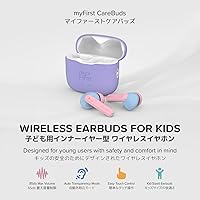
The myFirst CareBuds Kids True Wireless Earbuds are one of the few options in this space genuinely designed around a child's ear, not just repackaged adult hardware with a colorful shell. Oaxis, the brand behind the myFirst lineup, has built a focused range of child-friendly tech, and that intentionality shows here. The central promise is an 85dB volume cap — a limit that aligns with widely accepted hearing safety guidelines for young listeners. For kids aged 3 to 12, whose ear canals are noticeably smaller than adults', that purpose-built approach actually matters. Just don't expect studio-grade sound; these earbuds prioritize safety and fit above all else.

Features & Benefits

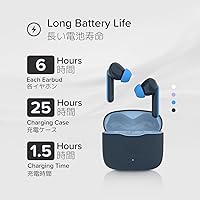
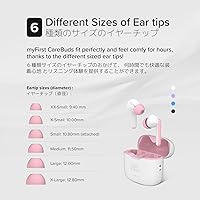
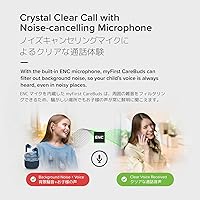
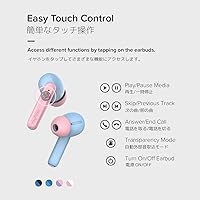
The six silicone ear tip sizes — running from XXS all the way to L — are the first thing worth noting. Most earbuds ship with three sizes at best, so having an XXS option for very young children is genuinely practical, not a footnote. Bluetooth 5.3 auto-pairing keeps setup fast, which matters when you're handing these to a seven-year-old. Touch controls work well enough, though parents should know accidental taps do happen — a minor trade-off for having no fiddly buttons. The IPX4 water resistance handles sweat and splashes capably. Battery life is six hours per charge from the earbuds themselves; the case tops them up multiple times for a combined 36-hour total. A built-in mic handles calls and voice assistants without issue.

Best For

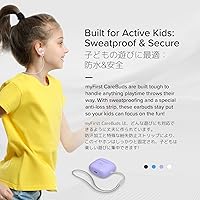
These kids earbuds make the most sense for parents buying a first pair of wireless earbuds for a school-age child — particularly one who has had earbuds fall out constantly because nothing ever fit right. The USB-C charging case is a small but real convenience for households where that cable is already universal. Families who want genuine child safety features without resorting to cheap, toy-quality audio will find this children's wireless earbud hits a reasonable middle ground. It is also worth considering for small-eared older kids or petite adults who find standard earbuds physically uncomfortable. The included anti-loss strap is a thoughtful addition for younger kids prone to losing an earbud on the school run.

User Feedback

With a 4.4-out-of-5 rating across roughly 117 reviews, the CareBuds earn broadly positive marks — though that sample size is still modest enough to take the consensus with some context. Parents consistently highlight how well these stay in small ears, and the quick pairing process draws repeated praise. On the critical side, some users find the touch controls a bit too sensitive, triggering unintended actions at inconvenient moments. Sound quality draws occasional complaints, which is expected — the 85dB cap does reduce perceived loudness in genuinely noisy environments like buses or busy playgrounds. Long-term durability gets mixed feedback, with a handful of reviewers noting wear with heavy daily use by younger children.

Pros

  • Six ear tip sizes, including XXS, give even very young children a rare chance at a genuinely secure fit.
  • The 85dB volume limit provides real, hardware-enforced hearing protection — not just a software toggle.
  • Bluetooth 5.3 auto-pairing works quickly, so kids can connect independently without parental help every time.
  • IPX4 water resistance handles sweat, light rain, and the inevitable spilled juice box without drama.
  • USB-C charging is a practical choice that fits into most modern family households without hunting for a spare cable.
  • Six hours of earbud playtime covers a full school day comfortably, with the case adding multiple additional charges.
  • The built-in microphone handles video calls and voice assistants well enough for everyday child use.
  • Touch controls keep the design clean and easy for small hands, with no tiny buttons to fumble with.
  • The included anti-loss strap is a genuinely useful addition for younger children prone to dropping one earbud.
  • At its price tier, the CareBuds offer child-specific safety features that most budget alternatives simply skip.

Cons

  • Touch controls are prone to accidental triggers, which can frustrate kids mid-listening session.
  • Sound quality is noticeably average — acceptable for kids, but underwhelming if audio fidelity matters at all to the buyer.
  • The 85dB cap feels restrictive in genuinely loud environments, making content harder to hear when background noise competes.
  • With only around 117 ratings at the time of writing, the review pool is too small to draw firm long-term reliability conclusions.
  • Durability under heavy daily use by young children has drawn mixed feedback from some buyers.
  • The Bluetooth range of 10 meters is functional but shorter than what some competing earbuds in this category offer.
  • No active noise cancellation means these kids earbuds struggle to isolate audio in noisy classrooms or transit settings.
  • The carrying case, while lightweight, adds bulk compared to slim cases on competing models.

Ratings

The scores below were generated by AI after analyzing verified buyer reviews for the myFirst CareBuds Kids True Wireless Earbuds from global sources, with spam, bot activity, and incentivized feedback actively filtered out. Each category reflects the honest distribution of real user sentiment — including the frustrations buyers encountered, not just the highlights. Where opinions were divided, the scores reflect that split rather than smoothing it over.

Hearing Safety
93%
The hardware-enforced 85dB volume cap is the most consistently praised aspect across reviews — parents specifically mention peace of mind during long car rides and unsupervised screen time. Unlike software-based limits that can be sidestepped, this one holds regardless of what volume the connected device is set to.
A small number of parents noted the cap feels overly restrictive in legitimately loud environments like busy playgrounds or trains, where children genuinely struggle to hear content clearly. This is a deliberate design choice, but it is worth flagging for families in consistently noisy households.
Ear Fit & Comfort
88%
Reviewers with younger children — particularly those aged 4 to 7 — repeatedly highlight that the XXS ear tips finally solved the falling-out problem they had with every other earbud they tried. Extended wear comfort is frequently mentioned, with kids reporting no soreness even after two or three hours of continuous use.
A handful of buyers found that even the XXS tips were slightly too large for children at the younger end of the 3-to-12 range, suggesting the fit is better suited to kids aged 5 and up. Touch control placement also occasionally caused accidental dislodging when children adjusted the earbuds mid-use.
Connectivity & Pairing
86%
Bluetooth 5.3 auto-pairing draws consistent praise for its reliability — most reviewers describe a genuinely effortless connection experience after the first setup, with the CareBuds reconnecting automatically when removed from the case. This matters significantly for families where kids need to be independent with their devices.
A few reviewers reported occasional dropout when the connected device was more than around 8 meters away, particularly through walls or in signal-dense environments. While not a widespread issue, it came up enough in feedback to be worth noting for use cases involving room-to-room mobility.
Touch Controls
67%
33%
The absence of physical buttons keeps the design clean and accessible for small fingers, and most older children in the 8-to-12 range adapted to the touch interface quickly. Basic functions like play, pause, and volume adjustment are reliable once the muscle memory is established.
Accidental taps are the most commonly cited frustration in negative reviews — children skipping tracks, pausing audio unintentionally, or triggering voice assistants without meaning to. Younger kids especially found the sensitivity hard to manage, and there is no option to adjust or lock the controls.
Sound Quality
61%
39%
For spoken-word content like audiobooks, podcasts, and educational apps, sound clarity is described as clean and sufficiently detailed by most parents. At moderate volume levels well within the 85dB ceiling, the dynamic drivers reproduce dialogue and simple music tracks without obvious distortion.
Reviewers who compared the CareBuds to adult earbuds in a similar price range found the audio noticeably flatter, with limited bass response and compressed highs. Music-focused kids — particularly older ones who have developed a preference for richer sound — may find the audio uninspiring over time.
Battery Life
79%
21%
Six hours of earbud playtime comfortably covers a full school day of mixed use, and the case topping them up multiple times before needing a wall charge means most families go several days between plug-ins. Reviewers appreciate the USB-C standardization, which eliminates the need for a dedicated charging cable.
Some buyers were initially misled by the 36-hour total figure, expecting 36 continuous hours from the earbuds themselves. Once the distinction between earbud playtime and combined case-plus-earbud runtime was understood, the disappointment eased — but the marketing framing created confusion that showed up repeatedly in reviews.
Water Resistance
82%
18%
IPX4 protection held up reliably for the majority of reviewers whose children used the earbuds during outdoor activities, PE classes, and sweaty summer days. Several parents specifically mentioned no issues after minor rain exposure or accidental splashing near a sink.
A small number of users reported audio issues after exposure to more than light moisture, suggesting real-world performance sits at the lower end of the IPX4 rating rather than comfortably above it. These earbuds should not be treated as fully weather-resistant for heavy outdoor or sports-focused use.
Microphone Quality
71%
29%
For video calls with family and online school sessions, the built-in microphone performs adequately — voices come through clearly enough for the other party to follow the conversation without constant repetition. Parents who set their children up for remote learning found this a practical bonus.
In louder environments, the microphone struggles to isolate the child's voice from background noise, which became a recurring complaint for users in open-plan homes or shared spaces. It is functional for calm settings but falls short for anything requiring crisp vocal pickup.
Build Quality & Durability
63%
37%
Initial build impressions are consistently positive — the plastic and silicone construction feels solid in hand, and the case hinge and lid mechanism drew specific praise for feeling more substantial than similarly priced competitors. Most reviewers reported no issues within the first few months of use.
Longer-term durability feedback is more divided, with several reviewers noting wear on the touch surfaces and loosening ear tip retention after four to six months of heavy child use. Given the target demographic, the durability ceiling feels slightly lower than the price point might suggest.
Ease of Use for Kids
84%
Children aged 6 and above generally managed the CareBuds independently after a single walkthrough, which is exactly what parents want from a kids-focused product. The auto-pairing and touch controls reduce friction enough that most kids can start listening without adult intervention.
For the youngest end of the target range — children aged 3 to 5 — the learning curve was steeper, particularly around the touch controls and understanding which earbud goes in which ear. The product works best when a parent invests a little time in the first few uses.
Value for Money
76%
24%
Compared to budget alternatives that omit genuine safety features, the CareBuds justify their mid-range positioning for parents who consider the 85dB cap and proper ear tip sizing non-negotiable. The accessory bundle — including anti-loss strap, multiple tip sizes, and USB-C cable — adds practical value without inflating the price.
A subset of reviewers felt the audio quality and long-term durability did not quite match the price expectation, particularly when adult earbuds at similar price points offer meaningfully better sound. The value proposition depends heavily on how much weight a buyer places on child-specific safety features.
Packaging & Accessories
81%
19%
The included anti-loss strap and sticker sheet were consistently flagged as thoughtful additions — the strap in particular earned genuine appreciation from parents of younger children prone to dropping individual earbuds. Reviewers felt the unboxing experience reflected the child-focused brand positioning well.
A few buyers noted that the stickers, while a nice touch for kids, felt like filler rather than a meaningful inclusion. The user manual was described as sparse by some reviewers who wanted clearer guidance on pairing troubleshooting or ear tip replacement.
Portability & Case Design
78%
22%
At 45 grams, the charging case is genuinely lightweight and fits easily into a school bag or jacket pocket without adding noticeable bulk. Most reviewers praised the compact form factor as appropriately sized for a child's daily carry.
The case lacks a secure locking mechanism beyond the standard lid snap, and a few parents reported it popping open inside bags, potentially exposing the earbuds to damage. The case exterior also attracted visible scratches more quickly than buyers expected.

Suitable for:

The myFirst CareBuds Kids True Wireless Earbuds are a strong match for parents who want their child's first pair of wireless earbuds to come with a meaningful safety floor built in, not just a colorful case. The 85dB volume cap makes them a particularly sensible choice for daily school use — commutes, audiobooks, and video calls — where kids tend to crank the volume without thinking. Children aged 3 to 12 with smaller ear canals will benefit most from the six-size ear tip range, especially the XXS option that most competing earbuds simply do not offer. Families who have already standardized on USB-C across their devices will find the charging setup refreshingly convenient. This children's wireless earbud also suits small-eared older kids or petite adults who have given up on standard earbuds ever fitting comfortably.

Not suitable for:

The myFirst CareBuds Kids True Wireless Earbuds are not the right pick for anyone prioritizing audio quality over safety engineering. The 85dB cap is a genuine hardware limitation — in loud environments like a noisy car, a crowded cafeteria, or a gym, the maximum volume will feel noticeably restricted, and there is no way to override it. Parents buying for a child who is rough on gear should temper expectations; durability feedback from real-world use has been mixed, particularly with younger kids who treat earbuds as just another toy. These kids earbuds also lack active noise cancellation, so they are a poor choice for children who need to focus in genuinely loud settings. If the goal is a single pair of earbuds shared between a child and an adult with normal hearing sensitivity, the volume ceiling will frustrate the adult user.

Specifications

  • Bluetooth Version: These kids earbuds use Bluetooth 5.3, which provides stable connectivity and fast auto-pairing with most modern devices.
  • Volume Limit: Maximum output is hardware-capped at 85dB to protect young listeners from long-term hearing damage during extended use.
  • Ear Tip Sizes: Six silicone ear tip sizes are included, ranging from XXS to L, to accommodate children's smaller ear canals as well as adult ears.
  • Earbud Playtime: Each earbud delivers up to 6 hours of continuous playback on a single charge from the case.
  • Total Playtime: The charging case extends total listening time to approximately 36 hours across multiple recharges of the earbuds.
  • Charging: The case charges via USB-C and reaches a full charge in approximately 1.5 hours.
  • Water Resistance: Rated IPX4, the earbuds can handle sweat, light rain, and accidental splashes but are not designed for submersion.
  • Bluetooth Range: Wireless range extends to approximately 10 meters (roughly 30 feet) in open, unobstructed conditions.
  • Controls: All playback, volume, and pairing functions are managed through touch-sensitive surfaces with no physical buttons present.
  • Microphone: A built-in microphone supports voice calls, video conferencing, and compatible voice assistant commands.
  • Driver Type: Dynamic drivers handle audio reproduction across both earbuds, tuned for a general listening profile.
  • Impedance: Impedance is rated at 16 Ohm, which is standard for true wireless consumer earbuds at this tier.
  • Case Weight: The charging case weighs 45 grams, making it light enough for a child's school bag without adding noticeable bulk.
  • Item Weight: The total product weight including earbuds is approximately 0.16 kg (5.6 oz).
  • Target Age: Designed primarily for children aged 3 to 12, though the XXS-to-L ear tip range also accommodates small-eared adults.
  • Materials: Earbuds and case are constructed from plastic, rubber, and silicone components.
  • In the Box: Package includes the earbuds, charging case, anti-loss strap, handy strap, silicone ear tips in 6 sizes, stickers, a USB-C cable, and a user manual.
  • Noise Control: Passive sound isolation is achieved through the in-ear sealed fit; there is no active noise cancellation on this model.

Related Reviews
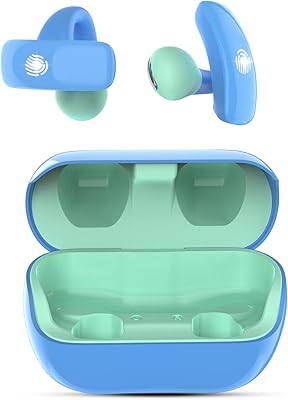
BANIGIPA T506 Kids Open-Ear Wireless Earbuds
77%
86%
Comfort & Fit
93%
Hearing Safety
91%
Situational Awareness
61%
Sound Quality
44%
Sound Leakage
More
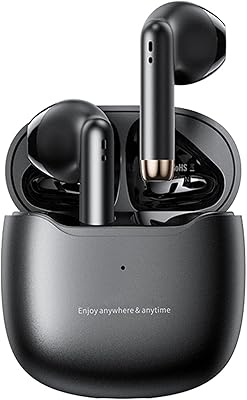
Xmenha RLRBS8CSNJ Wireless Earbuds
73%
71%
Sound Quality
78%
Bass Performance
57%
Noise Cancellation
69%
Battery Life
82%
Waterproofing
More
KICKER TWS1 True Wireless Earbuds
69%
73%
Sound Quality
79%
Bass Performance
51%
Microphone Quality
58%
Battery Life
83%
Connectivity & Pairing
More
JVC HA-A30T True Wireless Earbuds
76%
71%
Active Noise Cancellation
88%
Battery Life
74%
Sound Quality
83%
Comfort & Fit
58%
Microphone & Call Quality
More
KICKER TWS2 True Wireless Earbuds
85%
91%
Battery Life
88%
Sound Quality
85%
Ease of Use
75%
Comfort for Long Use
87%
Call Quality
More
JVC Marshmallow True Wireless Earbuds
77%
91%
Wearing Comfort
83%
Fit & Stability
78%
Battery Life
67%
Sound Quality
54%
Call Quality
More
Sennheiser Sport True Wireless Earbuds
86%
88%
Sound Quality
94%
Battery Life
85%
Comfort & Fit
90%
Durability (Water & Sweat Resistance)
78%
Touch Controls
More
HTC TWS6 True Wireless Earbuds
86%
87%
Sound Quality
91%
Battery Life
90%
Comfort & Fit
89%
Bluetooth Connectivity
85%
Durability (Sweat Resistance)
More
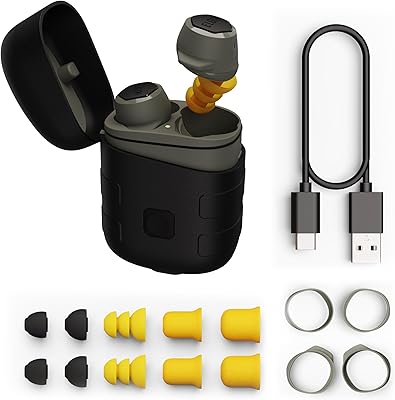
Elgin Rebel True Wireless Hearing Protection Earbuds
76%
78%
Hearing Protection Effectiveness
93%
Battery Life
67%
Fit & Comfort
59%
Call Quality
88%
Water & Dust Resistance
More
Sudio A1 True Wireless Earbuds
79%
88%
Battery Life
79%
Comfort & Fit
72%
Sound Quality
61%
Noise Isolation
91%
Connectivity & Pairing
More

FAQ

The auto-pairing via Bluetooth 5.3 means the earbuds reconnect to a previously paired device on their own when taken out of the case — no button-pressing required. Most kids pick this up quickly after the first adult-assisted setup. The touch controls are simple enough, though very young children may trigger them accidentally at first.

The 85dB limit is enforced at the hardware level inside the earbuds themselves, not through software on the connected device. This means it cannot be bypassed by adjusting the phone or tablet volume above a certain point. What you hear is genuinely capped, which is the whole point.

Start with the smallest size that creates a snug seal without feeling uncomfortable — typically XS or XXS for children under 8. A good fit means the earbud stays in place when your child shakes their head gently and sound feels full rather than thin or echoey. The included range from XXS to L covers most children in the 3–12 age group.

Yes, the built-in microphone handles voice pickup well enough for video calls, online classes, and voice assistant commands. Audio quality on calls is functional rather than exceptional, but for a child joining a class or chatting with family, it does the job reliably.

That figure represents total combined playtime across the earbuds and the case acting as a battery bank. The earbuds themselves last around 6 hours per charge, and the case holds enough power to recharge them multiple times before you need to plug the case into a wall. So in practice, a fully charged case and earbuds together can last several days of typical child use.

The myFirst CareBuds Kids True Wireless Earbuds are IPX4-rated, so they handle sweat, splashes, and humid environments without issue. That said, real-world durability feedback from buyers with younger children has been mixed — some report solid longevity, while others note wear with very heavy daily use. These are not indestructible, and treating them as a durable accessory rather than a rugged toy is a fair mindset.

The CareBuds connect to any device that supports standard Bluetooth, which includes iPads, Amazon Fire tablets, Android tablets, laptops, and most smart TVs. As long as the device has Bluetooth enabled, pairing is straightforward and works the same way as with a smartphone.

It is a small silicone connector that links both earbuds together so they stay physically joined when not in the ears — useful for younger kids who might set one earbud down and lose it. It is optional, and many older children will not need it, but for kids aged 3 to 6 it can save a lot of frustration.

Remove the silicone ear tips from the earbuds and wipe them down with a slightly damp cloth or a gentle alcohol wipe. Avoid soaking them or running water directly into the earbud housing, even though the earbuds are IPX4-rated. Let everything dry fully before reattaching the ear tips and placing them back in the case.

Honestly, in genuinely loud environments the 85dB cap does become perceptible — content can feel harder to hear when significant background noise is competing. This is a deliberate design trade-off, and it is worth knowing before buying. If your child regularly listens in very noisy settings and tends to want high volume, they may find these kids earbuds frustrating in those specific situations.