


Overview

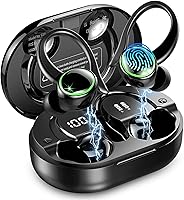
The Matast C16 enters a crowded budget sport earbud market with more on paper than most rivals at this price. Matast isn't a household name, so it's fair to approach these with measured expectations — but the specs do stand out. You get Bluetooth 5.4, a dual LED battery display on the case, and earhooks designed to stay put through serious workouts. The IP7 waterproofing claim is notable for this tier, though real-world durability depends on the quality of that nano-coating over time. If you're hunting for feature-rich wireless earbuds without a steep price tag, these sport earbuds are at least worth a serious look.

Features & Benefits

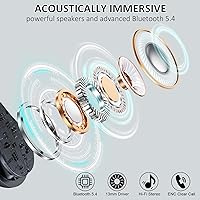
The 14.2mm graphene drivers and four-chamber acoustic design are meant to push budget audio closer to something worth actually listening to. In practice, graphene driver marketing is common at this price point, but the wider frequency range (18Hz to 25kHz) suggests at least a reasonable attempt at clarity across highs and lows. The Bluetooth 5.4 connection brings noticeably lower latency compared to older versions — helpful if you watch video or play mobile games. Four ENC microphones handle call noise reduction, and the USB-C fast charge means ten minutes plugged in buys you two more hours of use. The hall effect sensor auto-reconnects when you open the case. Small convenience, but appreciated.

Best For

These sport earbuds make the most sense for active daily users — runners, gym regulars, and anyone whose earbuds routinely get sweaty. The earhook design and IP7 resistance address real workout concerns that true wireless earbuds without hooks often fail. They're also a reasonable pick for commuters or open-office workers who field a lot of calls and need better mic performance than basic budget options provide. The 60-hour total battery claim, treated realistically as perhaps 40 to 50 hours in practice, still covers multi-day use comfortably. For someone stepping into the wireless earbud world and wanting a feature-loaded starting point without a major financial commitment, this Matast model checks a lot of boxes without overpromising.

User Feedback

With a 4.4-star average across over 500 ratings, the C16 buds earn their score without being exceptional. Buyers tend to praise the secure earhook fit and solid bass response — two things that matter most at this price tier. Call quality gets positive mentions too, though several reviewers note that wind noise can trip up the microphones outdoors. Some buyers flag that the plastic build feels light in the hand, which may raise durability questions over time. Battery life feedback is mixed: most find real-world use comes in below the headline figure, though still competitive. Compared to bigger-name budget rivals, opinions are split — a few feel the value is strong, while others would pay a little more for a known brand.

Pros

  • Earhook design keeps these sport earbuds locked in place through intense runs and heavy training sessions.
  • IP7 waterproofing handles sweat and light rain without any special precautions needed.
  • Bluetooth 5.4 delivers a stable, low-latency connection that holds up well for video and mobile gaming.
  • USB-C fast charge gives you two usable hours from just ten minutes plugged in.
  • Four-mic ENC performs well in indoor and moderately noisy environments, making calls noticeably clearer.
  • The charging case LED display shows exact battery percentage rather than vague indicator dots.
  • Multi-day battery life is realistic for moderate daily use — most buyers charge every few days, not every night.
  • Auto-reconnect via hall effect sensor means the buds are ready the moment you open the case.
  • Three ear tip sizes let you dial in a comfortable, secure seal regardless of ear shape.
  • Strong value-for-money ratio given the feature count at this price tier.

Cons

  • Wind noise significantly degrades mic performance during outdoor calls, undermining the ENC claims.
  • Plastic build feels noticeably lightweight in hand, raising questions about durability beyond the first year.
  • The 60-hour battery figure is a best-case ceiling — real-world totals typically land meaningfully lower.
  • No companion app means zero control customization, EQ access, or firmware update support.
  • Accidental touch activations on the earbud surfaces are a recurring complaint during physical activity.
  • Multipoint Bluetooth is absent, so switching between two devices requires manual re-pairing each time.
  • Earhook comfort during sessions longer than 90 minutes is inconsistent depending on ear shape.
  • The charging case picks up scratches quickly and is slightly bulkier than the most compact rivals.
  • Brand support history is limited given how recently Matast entered the market.
  • Bass output leans toward heavy and boomy rather than controlled, which can muddy more complex audio.

Ratings

The Matast C16 has been evaluated by our AI rating system after analyzing hundreds of verified global buyer reviews, with spam, incentivized, and bot-generated feedback actively filtered out. Scores reflect how these sport earbuds genuinely perform across real-world conditions — not just what the spec sheet promises. Both standout strengths and recurring frustrations are weighted transparently in every category below.

Fit & Stability
88%
The 45° angled earhooks consistently earn praise from runners and gym users who've been burned by earbuds that fall out mid-sprint. Multiple ear tip sizes help dial in the fit, and most buyers report the hooks stay comfortable even through 45-minute to one-hour sessions without pressure points.
A small number of users with unusually shaped ears find the rigid hook angle doesn't adapt well, leading to mild discomfort on longer wear. Those with smaller ears occasionally report the hooks feeling slightly loose despite using the smallest tips.
Sound Quality
74%
26%
For the price tier, bass response gets more positive mentions than you'd expect — the larger drivers and chamber design do seem to push low-end output beyond what most similarly priced earbuds deliver. Highs are described as clear enough for podcasts, calls, and workout playlists.
Graphene driver marketing is widespread at this price level, and audiophile expectations will not be met. Mids can sound recessed compared to warmer, pricier options, and some buyers note the bass tips toward boom rather than tight accuracy during complex tracks.
Call Quality & Mic Performance
71%
29%
In controlled environments — office settings, indoor commutes, quiet spaces — the four-mic ENC setup genuinely impresses at this price. Several buyers note that callers on the other end report hearing them clearly even in moderately noisy rooms, which is a meaningful step above basic budget earbuds.
Wind is the mic's clear weakness. Outdoor calls during runs or on breezy days produce noticeable interference that the ENC does not fully suppress. A handful of reviewers mention that the 80% noise reduction claim feels optimistic in real open-air conditions.
Battery Life
76%
24%
Multi-day use without reaching for a cable is genuinely achievable with these sport earbuds. Most buyers who use them one to two hours daily find they go several days before needing to recharge the case, which is a practical win for the target audience.
The 60-hour total figure is a best-case ceiling, not a daily reality. Real-world feedback suggests 40 to 50 hours is more typical, and volume levels impact earbud runtime noticeably. The gap between marketed and actual battery figures draws a few pointed comments in reviews.
Fast Charging
86%
The USB-C fast charge feature earns consistent appreciation from buyers who forget to charge overnight. Ten minutes in the case buying two usable hours is a practical, real-world benefit that gets called out positively in multiple reviews — especially by commuters rushing out the door.
Full charge from flat takes around 90 minutes, which is reasonable but not class-leading. A few buyers note the case itself takes longer to fully recharge than expected, which can be inconvenient if both buds and case are drained simultaneously.
Waterproofing & Sweat Resistance
79%
21%
IP7-rated waterproofing at this price tier is genuinely uncommon, and buyers who use these sport earbuds through intense sweat sessions or caught in light rain report no performance issues. The internal nano-coating approach means there are no exposed ports to worry about during workouts.
IP7 is a manufacturer rating, and long-term real-world durability of the nano-coating remains uncertain given the limited time this model has been available. Buyers should avoid full submersion despite the rating, and a few users caution against assuming the protection holds indefinitely.
Bluetooth Connectivity
83%
Bluetooth 5.4 delivers a noticeably stable connection within the rated 15-meter range, and the hall effect auto-reconnect is a small but genuinely useful feature — open the case and the buds are paired and ready without any button pressing. Latency on video is low enough that lip sync rarely becomes an issue.
A small segment of buyers report occasional dropouts when their phone is in a pocket during runs, particularly with certain Android devices. Multipoint connection — pairing to two devices simultaneously — is not supported, which limits flexibility for users switching between a laptop and phone frequently.
Touch Controls
68%
32%
Basic functions — play, pause, volume, call answer — work reliably and respond well enough for quick adjustments mid-run. The touch surfaces are positioned logically on the earbuds and don't require awkward finger angles to operate.
Accidental touch activations get mentioned more than once, particularly when adjusting the fit during exercise. The control mapping is not customizable, which frustrates buyers who want to remap functions or add EQ access. There is no companion app support to address this.
Build Quality & Materials
63%
37%
The overall design looks tidier than many generic competitors, and the charging case with its LED percentage display gives the package a more polished feel than the price might suggest. Most buyers find the case hinge solid enough for daily use.
The plastic construction of the earbuds themselves feels noticeably lightweight — several reviewers use the word cheap when handling them directly, even if performance holds up. Long-term durability beyond six to twelve months is an open question given the brand's limited track record.
Charging Case Design
81%
19%
The dual LED digital display showing exact battery percentage — rather than a vague three-dot indicator — is a differentiator that buyers genuinely appreciate. Knowing you have 34% left versus just seeing one bar standing is a small but satisfying upgrade in daily usability.
The case is plastic and picks up scratches quickly in a bag or pocket. It is also slightly larger than the most compact rivals on the market, which some buyers notice when packing light for travel or fitting it into tighter pockets.
Comfort During Extended Wear
72%
28%
For sessions under an hour, the combination of silicone ear tips and earhooks keeps discomfort at bay for the majority of buyers. The buds are light enough that ear fatigue is not a common complaint in short-to-medium duration use cases.
Longer listening sessions — two hours or more — produce more mixed feedback. The earhook pressure point varies by ear anatomy, and some users find the hooks cause mild soreness during extended desktop work or long commutes where the hooks serve no functional purpose.
Value for Money
84%
Stacking up the feature list — Bluetooth 5.4, IP7, ENC with four mics, fast charge, digital case display, earhooks — against the asking price, most buyers land on the conclusion that these sport earbuds punch reasonably above their weight. For first-time wireless earbud buyers especially, the value proposition is hard to dismiss.
The gap between spec-sheet promises and real-world delivery is where some buyers feel shortchanged. Those who've owned better-known budget competitors at similar prices occasionally note that brand reliability and software polish tip the scales toward spending a little more on an established name.
Latency for Video & Gaming
77%
23%
The 35ms latency figure from Bluetooth 5.4 translates to a noticeably smoother video watching experience compared to older Bluetooth versions. Mobile gamers who primarily play casual titles report the sync feels close enough to wired that it stops being a distraction.
For fast-paced competitive gaming or perfectly synced audio-critical video editing, 35ms still introduces a detectable gap. These sport earbuds are not positioned as gaming headsets, and buyers using them in that context should calibrate expectations accordingly.
Ease of Use & Setup
89%
Initial pairing is quick, and the auto-reconnect behavior on case opening removes the friction that frustrates users of cheaper earbuds. Buyers who are not tech-savvy consistently describe setup as effortless, which matters for the audience this model targets.
Without an app, advanced setup options simply do not exist. Users who want EQ adjustments, firmware updates, or control remapping have no path to get there. For casual buyers that is fine; for anyone wanting more control, it is a notable gap.

Suitable for:

The Matast C16 is a practical choice for anyone whose workouts are the primary use case for wireless earbuds. Runners, cyclists, and gym regulars who've had earbuds slip out mid-session will appreciate the earhook design — it solves a real problem without asking you to spend heavily. The IP7 waterproofing makes these sport earbuds a reasonable companion through sweaty training sessions or unexpected rain, and the multi-day battery means you're not fishing for a charging cable every other night. People who take a lot of calls in moderately noisy environments — open offices, indoor commutes, busy gyms — will find the four-mic ENC setup a genuine upgrade over the basic single-mic options at this price. First-time wireless earbud buyers who want a feature-rich starting point without gambling on a large investment will also find these worth the consideration.

Not suitable for:

Buyers who care deeply about audio fidelity should look elsewhere — these sport earbuds sit firmly in the budget tier, and no amount of graphene driver marketing changes the fact that critical listening reveals the limitations. The Matast C16 is also a poor fit for anyone who makes frequent outdoor calls in windy conditions, since the mic performance drops off noticeably once the elements get involved. There is no companion app, no EQ customization, and no firmware update path, so users who want to tweak their sound or remap controls will find that frustrating fast. Those who regularly switch audio between a laptop and a phone simultaneously will miss multipoint Bluetooth support, which is absent here. Buyers with a strong preference for established audio brands and long-term support histories will likely find the value proposition less convincing once brand reliability enters the equation.

Specifications

  • Bluetooth Version: These sport earbuds use Bluetooth 5.4, offering lower latency, reduced power consumption, and a more stable connection than previous generations.
  • Driver Size: Each earbud houses a 14.2mm graphene dynamic driver within a 4-sound chamber acoustic design.
  • Frequency Response: The audio frequency range spans 18Hz to 25kHz, covering deep bass through high-frequency detail.
  • Microphones: Four built-in microphones with Environmental Noise Cancellation (ENC) are designed to suppress external noise during calls.
  • Water Resistance: The earbuds carry an IP7 waterproof rating via internal nano-coating, making them resistant to sweat, rain, and brief water exposure.
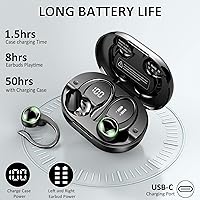
  • Earbud Battery: Each earbud delivers up to 8 hours of playback on a single charge at moderate volume levels.
  • Total Battery: Combined with the charging case, total playback capacity reaches up to 60 hours under manufacturer test conditions.
  • Charging Standard: The case charges via USB-C, and a 10-minute fast charge provides approximately 2 additional hours of earbud playback.
  • Full Charge Time: A complete charge cycle for the earbuds takes approximately 1.5 hours from fully depleted.
  • Bluetooth Range: Stable wireless transmission is rated up to 15 meters (approximately 50 feet) in open, unobstructed conditions.
  • Latency: Bluetooth 5.4 delivers a reported 35ms audio latency, which is suitable for casual video watching and mobile gaming.
  • Touch Controls: Each earbud features capacitive touch controls for play, pause, volume, call management, and voice assistant activation.
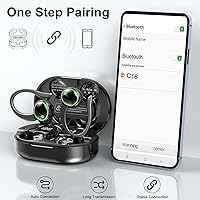
  • Auto-Connect Sensor: A hall effect sensor automatically powers the earbuds on and reconnects them to the last paired device when the case is opened.
  • Ear Tip Sizes: Three sizes of silicone ear tips (S, M, L) are included to accommodate different ear canal shapes.
  • Earhook Design: Flexible 45-degree angled earhooks are built into each earbud to maintain a secure fit during high-intensity physical activity.
  • Use Modes: The earbuds support both binaural stereo mode and mono single-earbud mode for flexible listening scenarios.
  • Case Display: The charging case features a dual LED digital display showing exact battery percentage from 1% to 100% during charging.
  • Earbud Weight: Each individual earbud weighs approximately 1 gram, contributing to a low-fatigue wear experience during extended sessions.
  • Connectivity: These earbuds support HFP, A2DP, HSP, and AVRCP Bluetooth profiles, ensuring compatibility with a wide range of devices.
  • In-Box Contents: The package includes two earbuds (L and R), a charging case with LED display, a USB-C charging cable, three ear tip sizes, and a user manual.

Related Reviews
DBPOWER C16 Native 1080P Projector
72%
78%
Image Quality
91%
Setup Experience
54%
Brightness & Ambient Performance
86%
Connectivity & Wireless Performance
47%
Streaming App Compatibility
More
Corsair Vengeance RGB PRO SL 64GB (2x32GB) DDR4 3200MHz C16 Desktop Memory
87%
91%
Performance
88%
Ease of Installation
93%
RGB Customization
86%
Value for Money
84%
Compatibility
More

FAQ

For most users, yes. The 45-degree angled earhooks are the key — they wrap around the outer ear and prevent the earbuds from loosening during running, jumping, or heavy lifting. Pairing the right ear tip size with the hooks makes a noticeable difference, so it is worth spending a minute trying all three sizes before your first workout.

The IP7 nano-coating protects the internal components from sweat and light rain without issue. Brief accidental splashing is also fine. That said, IP7 is not designed for submersion or showering, and the long-term durability of nano-coatings on budget earbuds is not guaranteed after months of heavy use, so treat the rating as sweat and weather protection rather than swim-proof.

Treat it as a best-case ceiling rather than a daily expectation. Real-world usage — especially at higher volumes or with the mic active during calls — tends to bring the total closer to 40 to 50 hours. That is still strong for the category, but managing expectations upfront saves disappointment.

In indoor environments like open offices, busy cafes, and transit stations, the four-mic ENC setup performs well above what you would expect at this price. Colleagues and callers consistently report hearing voices clearly. The weak point is outdoor wind — if you are taking calls while running or in a breezy environment, the mics struggle and background noise bleeds through more than the spec sheet implies.

The earbuds connect to one device at a time — there is no multipoint Bluetooth support. So if you are paired to your iPhone and want to switch to your laptop, you will need to manually disconnect from the phone and reconnect to the computer. It is a minor inconvenience that is worth knowing about before buying if you switch devices frequently.

Yes. The mono mode lets you use either the left or right earbud independently, which is useful for cycling, running near traffic, or just keeping one ear free during a long workday. The other earbud stays in the case and charges while you use the single one.

No companion app exists for these sport earbuds, which means no EQ adjustments, no control remapping, and no firmware update path. What you get out of the box is what you get. For casual listeners this is not a problem, but buyers who like to fine-tune their audio experience will find that limiting.

On first use, take the earbuds out of the case — they should power on automatically and enter pairing mode. Find them in your device's Bluetooth settings and connect. After that initial pairing, the hall effect sensor handles reconnection every time you open the case, so you do not need to dig into Bluetooth settings each time.

They are fine for sessions up to about an hour, but the earhooks become a mixed experience during extended desk use. The hooks are designed to anchor during movement, and when you are sitting still for two or more hours, the contact point can create mild pressure depending on your ear shape. If desk use is your primary scenario, earbuds without hooks might suit you better.

These sport earbuds work with any Bluetooth-enabled device — Android phones, iPhones, Windows and Mac laptops, tablets, and even some smart TVs with Bluetooth audio output. The supported profiles (HFP, A2DP, HSP, AVRCP) cover music streaming, calls, and media controls across all major platforms without any special configuration required.