


Overview

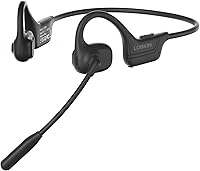
The LOBKIN X13 Open Ear Bluetooth Headset is built around a simple premise: let people work all day without their ears paying the price. Unlike over-ear headphones that trap heat or earbuds that seal the canal, this open-ear headset sits alongside the ear, leaving your surroundings fully audible. That matters if you spend most of your day on calls while still needing to catch a doorbell, a coworker, or traffic around you. Priced in the mid-range, the X13 competes squarely with business-oriented wireless headsets. Just be clear going in — this is a call and communication tool, not a device for critical listening or serious music enjoyment.

Features & Benefits

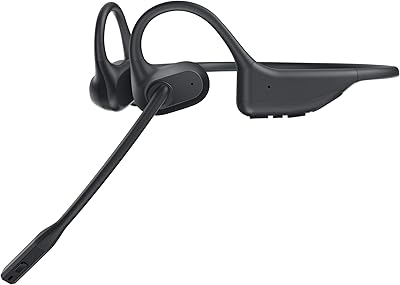
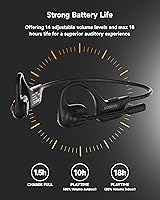
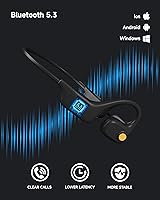
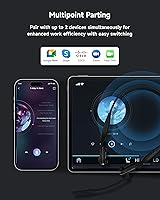
The X13 runs on Bluetooth 5.3, which keeps the connection stable whether you're tethered to a laptop across the room or switching between a phone call and a Teams meeting. Multipoint pairing means it stays connected to two devices at once — no fumbling through menus to swap sources. The rotating microphone, adjustable through 240 degrees, lets you position it precisely where your voice sounds clearest, and the DSP processing cleans up background noise on your end of the call. Battery covers a full workday comfortably, and when it runs low, USB-C fast charging gets it back in about an hour and a half. At 29 grams, you'll often forget you're wearing it.

Best For

This Bluetooth work headset earns its place for people whose jobs keep them on calls for hours at a stretch — think remote support agents, logistics coordinators, or anyone juggling phone and laptop throughout the day. Drivers and commuters will appreciate staying on a call without losing track of what's happening around them. It also suits anyone who has abandoned traditional over-ear headsets due to pressure or heat discomfort during long sessions. Where it falls short is music. If you expect rich sound or noise isolation in loud environments, the open-ear design will disappoint — sound leaks, bass is minimal, and it was never engineered for that purpose.

User Feedback

With a 4.2-star average across over 300 ratings, this open-ear headset lands in solidly positive territory, though not without nuance. Buyers consistently highlight all-day wearing comfort and clean microphone performance as the main reasons they would recommend it. Setup gets praise too — pairing is quick and multipoint works reliably for most, though a handful note occasional hiccups when switching between two simultaneously active devices. The recurring frustration is audio quality for music: the open design means sound leaks at higher volumes, and the listening experience feels thin compared to closed headphones. For calls, however, most buyers feel the value holds up solidly at this price tier.

Pros

  • Open-ear design eliminates ear canal pressure, making it genuinely comfortable to wear for a full workday.
  • At just 29 grams, the X13 is light enough that most users forget it is on their head.
  • Multipoint Bluetooth lets you stay connected to a phone and laptop at the same time without re-pairing.
  • The rotating microphone adjusts easily to sit where your voice sounds clearest, which callers actually notice.
  • DSP noise reduction keeps your voice sounding clean on calls even in moderately noisy environments.
  • Battery comfortably covers a full workday, and USB-C charging gets it back up quickly when needed.
  • Setup is fast — most users are paired and on a call within a few minutes of opening the box.
  • Water resistance adds a practical layer of durability for commuters or outdoor use in light rain.
  • Staying aware of ambient sound makes this a safer choice for drivers and anyone working in shared spaces.

Cons

  • Sound leaks noticeably at higher volumes, which can disturb people working nearby in quiet offices.
  • Audio quality for music is thin and lacks bass, so this is a poor substitute for dedicated listening headphones.
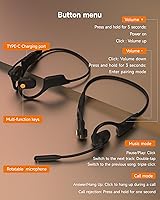
  • A single multi-function button handles everything, which can lead to accidental skips or dropped calls until you learn the press patterns.
  • Open-ear design provides zero noise isolation, making it impractical in genuinely loud environments.
  • Some users report occasional Bluetooth hiccups when both multipoint devices are actively trying to connect simultaneously.
  • ABS plastic construction does the job but feels lightweight in a way that may not inspire confidence in long-term durability.
  • No carrying case is included, which makes protecting the headset during travel or daily commuting less convenient.
  • The 10-hour battery rating applies under ideal conditions; real-world use at higher volumes will fall short of that figure.

Ratings

The scores below reflect an AI-driven analysis of verified global buyer reviews for the LOBKIN X13 Open Ear Bluetooth Headset, with spam, bot-generated, and incentivized feedback actively filtered out to preserve integrity. Every category is scored based on real patterns in what users praised and what frustrated them — nothing is softened or cherry-picked. Strengths in call performance and comfort sit alongside honest scores for areas where this headset falls genuinely short.

Wearing Comfort
91%
Users consistently describe forgetting the X13 is on after an hour or two of wear — a meaningful benchmark for a work headset. The open-ear hook design avoids the pressure and heat buildup that plagues over-ear cups, and the 29-gram weight keeps fatigue minimal even across eight-hour workdays.
A small but recurring group of buyers with larger ears or unusual ear shapes report the hook feeling slightly loose or requiring readjustment throughout the day. The one-size design leaves no adjustment option for users at either end of the fit spectrum.
Call Clarity
84%
On the microphone side, the DSP processing does real work — call recipients frequently compliment voice clarity even when the speaker is in a moderately noisy environment like a home kitchen or a parked vehicle. The rotating mic arm lets users dial in the exact pickup position, which makes a noticeable difference compared to fixed-mic alternatives.
In genuinely loud environments — busy roads, loud open offices — the DSP struggles to keep up, and callers start to hear background bleed. The headset was never designed for extreme noise conditions, and its performance reflects that ceiling honestly.
Battery Life
83%
For a standard eight-to-nine hour workday at typical call volume, the battery holds up reliably without needing a mid-afternoon top-up. Users who keep volume moderate report the charge comfortably outlasting their working hours, which removes one source of anxiety from the daily routine.
The 15-plus hour figure is a best-case scenario tied to very low volume levels that most users do not operate at in practice. At louder, more realistic call volumes, the real ceiling lands closer to nine or ten hours, which is still solid but worth calibrating expectations around.
Bluetooth Stability
77%
23%
Day-to-day pairing is fast and consistent for most users — the headset reconnects to known devices reliably when powered on, and single-device Bluetooth 5.3 performance is stable across the typical 10-to-15 meter indoor range without dropout complaints under normal conditions.
Multipoint is where stability becomes less predictable. A meaningful subset of buyers note that when both connected devices are actively trying to send audio simultaneously, the handoff can stutter or require a manual reset. It works well most of the time, but it is not bulletproof.
Multipoint Performance
72%
28%
The ability to stay connected to a phone and laptop simultaneously is genuinely useful for hybrid workers who field calls on both devices throughout the day. Initial setup is straightforward, and for many users the switching works passively in the background without any manual input needed.
Reliability is inconsistent enough that some buyers stop relying on it and simply reconnect manually when switching between devices. The experience depends heavily on the specific combination of devices, and there is no way to know in advance whether your particular phone-laptop pairing will behave smoothly.
Microphone Noise Cancellation
74%
26%
In home office settings with moderate ambient noise — an air conditioner, street traffic, or background TV — the DSP mic filtering does a credible job keeping the caller's voice intelligible and clean on the receiving end. Most remote workers find it adequate for professional video call environments.
It is important to understand that this noise cancellation applies only to what your callers hear, not to what you hear while wearing the headset. Users who expected any reduction in their own ambient noise perception are frequently disappointed, as the open design means full environmental sound passes through unfiltered.
Music Audio Quality
48%
52%
For casual background listening — a podcast, a talk radio stream, or low-demand background music — the audio is functional and intelligible. Users who treat music as secondary to calls find it acceptable as a byproduct of wearing a headset they are already using for work.
Anyone approaching this open-ear headset expecting music-grade audio will be disappointed. Bass is nearly absent, the soundstage is flat, and sound leakage at moderate volumes makes listening in quiet environments self-conscious. This is not a flaw to be patched — it is inherent to the open-ear format.
Build Quality
67%
33%
The ABS plastic construction is light and holds up fine under daily use conditions — being tossed in a bag, handled repeatedly, and worn in light rain. Water resistance adds a practical durability layer for commuters who encounter unpredictable weather.
The headset does not feel premium in hand. Several buyers note a plasticky quality that gives some pause about long-term durability over months of heavy daily use. Without a carrying case included in the box, protecting it during transport falls entirely on the user.
Ease of Setup
89%
Out of the box, most users are paired and on their first call within minutes. The pairing process follows the standard Bluetooth flow without any app requirement, proprietary software, or driver installation — a practical advantage for less tech-savvy buyers or those setting up quickly before a workday.
The user manual is minimal, which is mostly fine given how simple setup is, but becomes frustrating when troubleshooting multipoint pairing issues or learning the full set of button press combinations. A clearer quick-reference guide would reduce the early learning curve.
Button Controls
63%
37%
The single multi-function button keeps the physical interface simple, and once users learn the short-press, long-press, and double-press combinations, day-to-day call management becomes quick and one-handed — which is exactly what drivers and mobile workers need.
The learning curve for a single-button system managing multiple functions is steeper than buyers expect. Accidental call drops, unintended track skips, and confusion between hang-up and reject patterns come up repeatedly in early-use feedback, and there is no tactile differentiation to help.
Noise Isolation
22%
78%
For users specifically choosing this headset because they want to stay aware of their surroundings — drivers, warehouse workers, parents at home — the complete absence of passive isolation is the intended and correct behavior, and they rate it positively for exactly this reason.
For anyone expecting even modest passive noise reduction for the wearer, this headset delivers none. The open design is a fundamental trade-off, not a tunable feature. In loud environments like construction sites or busy open offices, concentrating on call audio becomes genuinely difficult.
Value for Money
76%
24%
Buyers who use this Bluetooth work headset primarily for calls consistently feel the price is justified — they get solid mic performance, comfortable all-day wearability, and multipoint connectivity without paying premium brand prices. For its intended use case, most owners feel they made a reasonable purchase.
Those who bought it hoping for balanced performance across both calls and music feel the price is harder to defend. The audio quality gap compared to similarly priced over-ear headphones is significant enough that buyers with mixed use cases frequently wish they had spent differently.
Charging Experience
82%
18%
USB-C charging is a practical win over older Micro-USB alternatives — most users already carry a USB-C cable, which means no hunting for a proprietary charger. The roughly 90-minute charge cycle means a short break fully restores the battery from empty.
There is no charging case and no wireless charging option, which limits convenience for users who want a single compact solution for storage and charging. Battery level indication is also minimal, leaving users to guess remaining charge rather than monitoring it precisely.
Situational Awareness
94%
This is where the open-ear format genuinely excels and outperforms any sealed alternative. Truck drivers, cyclists, and warehouse workers highlight the ability to hear traffic, colleagues, and equipment warnings while remaining on a call as the single most important reason they chose and kept this headset.
The same openness that makes situational awareness excellent becomes a liability indoors in shared workspaces. Colleagues can hear the audio coming from the headset at higher volumes, which creates social friction in quiet office environments that sealed headsets avoid entirely.

Suitable for:

The LOBKIN X13 Open Ear Bluetooth Headset is purpose-built for people whose work lives revolve around calls, and who cannot afford to be cut off from their surroundings while wearing a headset. Remote workers and hybrid professionals who sit through back-to-back video calls will find the all-day comfort a genuine advantage over heavier, hotter alternatives. Truck drivers, delivery personnel, and commuters who need to stay aware of road noise, signals, or colleagues while managing phone calls are exactly the kind of users this headset was designed around. If you regularly manage a phone and a laptop simultaneously, the dual-device multipoint connection means you stop wasting time re-pairing mid-afternoon when your phone rings during a Teams call. Anyone who has quietly given up on traditional headsets due to ear fatigue, canal pressure, or overheating will likely find this open-ear format a practical step up in daily wearability.

Not suitable for:

The LOBKIN X13 Open Ear Bluetooth Headset is a poor fit for anyone who thinks of headphones primarily as a music listening device. The open-ear design allows sound to bleed out at moderate-to-high volumes, and the audio profile lacks the bass depth and overall richness that music listeners expect. If your environment is genuinely loud — a busy open-plan office, a construction site, or a noisy café — the open design works against you, since you hear everything around you with no isolation whatsoever. The DSP noise cancellation works on your microphone signal, meaning it cleans up what others hear, but does nothing to protect your own ears from ambient noise. Buyers expecting premium build quality or a polished premium audio experience should also recalibrate; the ABS plastic construction is functional but does not feel luxurious. Finally, if you need a headset certified for specific professional or aviation use, this does not fit that profile.

Specifications

  • Form Factor: Open-ear air conduction design sits alongside the ear without inserting into or sealing the ear canal.
  • Model Number: This headset is identified by the manufacturer under model number X13.
  • Weight: The headset weighs 29 grams, placing it among the lighter options in the business headset category.
  • Material: The primary construction material is ABS (Acrylonitrile Butadiene Styrene) plastic, a durable and lightweight thermoplastic.
  • Bluetooth Version: Bluetooth 5.3 provides a faster, more stable wireless connection with reduced latency compared to older Bluetooth standards.
  • Multipoint Pairing: The headset can maintain simultaneous connections to two devices, such as a smartphone and a laptop, without manual re-pairing.
  • Microphone: A dual DSP noise-cancelling microphone with 240-degree rotation allows precise directional adjustment for optimal voice capture.
  • Impedance: The driver impedance is rated at 32 Ohm, standard for consumer and business-grade wireless headsets.
  • Battery Life: Typical battery life is up to 10 hours at normal volume levels, extending beyond 15 hours when volume is kept low.
  • Charging: The headset charges via USB-C and reaches a full charge in approximately 1.5 hours using fast-charging technology.
  • Water Resistance: The X13 carries a water-resistant rating suitable for light rain or commuting conditions, but is not rated for submersion or heavy moisture exposure.
  • Controls: A single multi-function push button on the headset manages call answering, hanging up, and basic media playback controls.
  • Noise Cancellation: DSP noise reduction is applied to the microphone output to reduce background noise heard by call recipients, not to audio playback for the wearer.
  • Compatibility: The headset pairs wirelessly with smartphones, laptops, desktops, tablets, gaming consoles, smart speakers, and televisions via Bluetooth.
  • Package Contents: The retail package includes the headset unit and a user manual; no carrying case or additional ear tips are included.
  • Connectivity: The headset uses Bluetooth exclusively; there is no 3.5mm audio jack or wired connection option available.
  • Target Use: Intended primarily for business calls, remote work, video conferencing, and commuter use rather than recreational music listening.
  • Age Range: Designed for adult and teen users; not intended for young children.

Related Reviews
SHOKZ OpenMeet Open-Ear Bluetooth Business Headset
72%
88%
Wearing Comfort
69%
Call Clarity
62%
Audio Quality
91%
Battery Performance
63%
Microphone Quality
More
Monster AC100 Open-Ear Bluetooth Headphones
76%
88%
Battery Life
79%
Comfort & Fit
67%
Sound Quality
83%
Bluetooth Stability
71%
Call Quality
More
Nothing Ear (Open) Open-Ear Earbuds
79%
91%
Wearing Comfort
83%
Workout Stability
74%
Sound Quality
77%
Call Quality
49%
Sound Leakage
More
Qecnato Q77 Open Ear Bluetooth Earbuds
79%
88%
Wearing Comfort
84%
Fit Stability
67%
Audio Quality
91%
Battery Life
86%
Water & Sweat Resistance
More
Gixxted O3 Open-Ear Bluetooth Headset
77%
88%
Wearing Comfort
79%
Microphone Clarity
62%
Audio Sound Quality
83%
Dual-Device Pairing
86%
Mute Button Usability
More
LOBKIN S18 Open Ear Clip-On Earbuds
77%
91%
Wearing Comfort
83%
Stability During Exercise
66%
Sound Quality
94%
Situational Awareness
81%
Battery Life
More
PSIER EP20 Open-Ear Bluetooth Earbuds
78%
88%
Comfort & Fit
93%
Ambient Awareness
71%
Sound Quality
84%
Battery Life
86%
Value for Money
More
STECEi G219 Open-Ear Bluetooth Earbuds
81%
91%
Wearing Comfort
86%
Call Quality
73%
Audio Quality
68%
Sound Leakage
88%
Battery Life
More
AMINY U9 Open-Ear Clip-On Earbuds
78%
91%
Wearing Comfort
83%
Secure Fit During Activity
74%
AI Translation Accuracy
61%
Sound Quality
88%
Battery Life
More
QXUFV QX68 Open-Ear Bluetooth Headphones
80%
92%
Wearing Comfort
84%
Fit & Stability
74%
Sound Quality
96%
Situational Awareness
89%
Battery Life
More

FAQ

The X13 supports multipoint pairing, meaning it can stay connected to two devices simultaneously. To set it up, pair it with your first device normally, then enter pairing mode again and connect to the second device. Both connections stay active, so incoming calls on your phone won't drop your laptop audio unexpectedly.

No, and this is an important distinction to understand before buying. The DSP noise cancellation on the LOBKIN X13 Open Ear Bluetooth Headset works on the microphone signal — it cleans up the audio that your callers hear on their end. Because this is an open-ear design, you will still hear everything around you while wearing it, which is intentional for safety and situational awareness.

Most users with glasses find open-ear headsets more comfortable than over-ear headphones, since there is no clamping force squeezing the frame against the head. That said, how the earpiece hook sits alongside the frame depends on the shape of your glasses, so comfort can vary from person to person.

Yes, it works well for this purpose. It connects to a laptop via Bluetooth and is recognized as a standard audio and microphone device by most operating systems. Zoom, Teams, Google Meet, and similar platforms will pick it up without needing any special drivers or software.

Honest answer: it is fine for podcasts and spoken-word content, but underwhelming for music. The open-ear design means there is no bass reinforcement and no audio isolation, so music sounds thin compared to in-ear or over-ear headphones. If music listening is a priority, this headset will likely disappoint.

At moderate to high volumes, yes — sound leakage is a real consideration with any open-ear design. The open architecture that lets ambient sound in also lets your audio out. If you work in a quiet shared space, keeping the volume low will minimize the issue, but it is something to factor into your decision.

In typical call-heavy use at a moderate volume, most users see battery life land in the 8 to 10 hour range, which covers a standard workday comfortably. The 15-hour figure quoted by the manufacturer applies at low volume in ideal conditions. When the battery does run low, USB-C charging gets it back to full in around an hour and a half.

It carries a water-resistant rating that handles light rain and sweat without issue, making it practical for commuters or outdoor workers. That said, it is not waterproof, so you should not wear it in heavy rain or expose it to running water. Wiping it down with a dry cloth after exposure is good practice.

It can pair with car audio systems via Bluetooth, but pairing with a car while also staying connected to your phone via multipoint is something to test with your specific setup before relying on it. Many users find it simpler to use the headset for direct phone calls rather than routing audio through the car system.

The single multi-function button handles answering, ending, and rejecting calls as well as basic playback controls, so you do need to learn the different press patterns. Most users get comfortable with it within a day or two. The main frustration early on tends to be accidentally skipping a track or ending a call when you meant to pause.