Overview

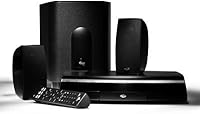
The Klipsch CS-500 2.1 Home Theater System is a compact, all-in-one audio solution built for buyers who want real sound quality without the headache of a multi-component setup. Klipsch has serious audio pedigree, and this system carries that brand credibility into a more accessible package — though it is worth being clear-eyed about what that means. This is a mid-range integrated system, not a reference-grade home theater rig. What sets it apart from generic alternatives is the built-in DVD player and AM/FM radio, which make it genuinely self-contained. Expect solid performance for its tier, not miracles.
Features & Benefits

The horn-loaded satellite speakers are the standout hardware choice here — Klipsch's signature design delivers noticeably more punch and directional clarity than typical box speakers at this level. The compact subwoofer handles bass responsibly, adding weight to movie soundtracks without overwhelming a smaller room. Dolby Virtual Speaker technology does a reasonable job simulating width and depth from just three speakers, though anyone who has heard a true 5.1 discrete layout will notice the difference. The component video output is a practical touch for compatible displays. Three auxiliary inputs mean your game console, phone, or secondary audio source is never left scrambling for a connection.

Best For

This Klipsch system makes the most sense for apartment residents or anyone with a smaller living room where running five or seven speaker cables simply is not realistic. It is also a strong fit if you want to stop juggling a separate DVD player, stereo, and radio — this all-in-one theater unit handles all three without extra boxes cluttering the entertainment center. People upgrading from flat TV speakers will notice an immediate clarity improvement in both dialogue and bass presence. It also works well as a gift for non-audiophiles who want a trusted brand name and genuinely simple setup involved.

User Feedback

Owners consistently praise the clarity and setup simplicity — many note that getting sound running out of the box takes minutes, not an afternoon. The horn-loaded design gets specific callouts for sounding more alive than competing systems they had previously tried. Criticism tends to cluster around the virtual surround experience; listeners accustomed to a proper multi-speaker array find the simulated effect noticeably limited, especially for side and rear imaging. DVD player reliability earns mixed marks from longer-term owners, with some reporting disc-read issues after a few years of regular use. The remote is functional but basic. Overall sentiment leans positive for the audience this setup was designed to serve.

Pros

  • Horn-loaded satellite speakers deliver a clarity and punch that genuinely surprises buyers stepping up from TV audio.
  • Setup takes minutes, not hours — no receiver configuration, no speaker wire runs, no manual-diving required.
  • The all-in-one theater unit consolidates DVD playback, AM/FM radio, and surround sound into a single box.
  • Three auxiliary inputs let you keep a game console, phone, and secondary device connected at the same time.
  • The compact subwoofer adds real bass weight to movies without overwhelming a smaller room.
  • Klipsch brand heritage means the core speaker components are built to a noticeably higher standard than generic alternatives at this tier.
  • Component video output provided a cleaner picture than composite on compatible displays, a practical touch.
  • The universal IR remote controls the entire system from a single device, reducing remote clutter.
  • Dialogue clarity in movies is a consistent highlight from long-term owners, even years into ownership.

Cons

  • Dolby Virtual Speaker processing cannot realistically replicate the spatial accuracy of a true multi-speaker surround layout.
  • No Bluetooth, optical, or HDMI input makes connecting modern TVs and streaming devices unnecessarily complicated.
  • DVD player reliability declines noticeably for some owners after two to three years of regular use.
  • Component video output is a legacy standard that most televisions sold in recent years do not support at all.
  • The remote has poor button feedback and a limited effective range, requiring a near-direct line of sight.
  • AM reception quality draws consistent complaints in areas with even moderate interference.
  • The integrated design means a single internal hardware failure can take down the entire system with no easy fix.
  • No digital audio inputs limit compatibility with current-generation source devices that default to optical or HDMI audio output.

Ratings

The Klipsch CS-500 2.1 Home Theater System has been scored by our AI engine after processing verified buyer reviews from global markets, with spam, bot activity, and incentivized submissions actively filtered out. The ratings below reflect an honest cross-section of real ownership experiences — covering everything this all-in-one theater unit does well and the areas where it falls short of expectations.

Sound Clarity
83%
The horn-loaded satellite speakers deliver a noticeably crisp, forward-projected sound that most users at this tier simply do not expect. Dialogue in movies comes through cleanly, and there is a liveliness to the high-mids that generic box speakers at similar prices rarely match.
At higher volumes, some listeners report a slight harshness in the upper frequencies — a known trait of horn-loaded designs that not every ear appreciates. The soundstage width is limited by the 2.1 configuration, which becomes apparent during complex movie scenes.
Bass Performance
74%
26%
The compact subwoofer adds genuine low-end weight to action movies and music without physically dominating a smaller room. Users upgrading from TV-only audio consistently note the bass as the most immediately noticeable improvement.
Deep, extended bass at the lower frequency range is where the small subwoofer hits its physical limits. Dedicated bass enthusiasts will find it adequate but not satisfying, and it can sound slightly one-note during prolonged listening sessions.
Virtual Surround Quality
61%
39%
For casual viewers who have never owned a true multi-speaker layout, the Dolby Virtual Speaker processing adds a reasonable sense of width and atmospheric depth to movie audio. It works particularly well for dialogue-heavy content and moderate-action scenes.
Anyone with prior experience using a proper 5.1 or 7.1 discrete speaker setup will immediately notice what is missing — rear imaging and genuine side placement are not convincingly replicated. The virtual surround effect can also sound slightly processed and artificial during loud, complex soundtracks.
Ease of Setup
91%
This is one of the CS-500 setup's most consistently praised qualities across ownership reviews. Most users report going from unboxing to fully operational audio in under 15 minutes — no AV receiver, no speaker wire runs, no configuration menus to navigate.
The simplicity is a feature, but it also means there is very little room to customize the system to your room or preferences. Those who enjoy tweaking crossover points or speaker placement angles will find this all-in-one theater unit limiting.
DVD Player Reliability
63%
37%
In the first year or two of regular use, the built-in DVD player performs solidly and handles standard discs without notable issues. Having playback integrated into the main unit genuinely reduces cable clutter and remote juggling for everyday movie watching.
Long-term reliability is a real concern flagged repeatedly by multi-year owners, with disc-read errors and occasional failure to recognize discs becoming more common over time. Replacement is not simple since the player is integrated, meaning a hardware fault can sideline the whole system.
Build Quality
69%
31%
The main unit has a reasonably solid feel for its category, and the speaker housings do not rattle or flex under moderate listening volumes. Klipsch's manufacturing standards give it a more substantial presence than many budget all-in-one competitors.
The plastics used on the remote and some panel areas feel noticeably less premium than the speaker components themselves. A few long-term owners report cosmetic wear around control buttons and input ports after several years of regular use.
Remote Control Usability
58%
42%
The universal IR remote consolidates control over the entire system, which is genuinely convenient for a single-remote living room setup. Basic functions like volume, input switching, and DVD playback controls are logically laid out.
The remote's button travel and tactile feedback are underwhelming, and several users note that response range is shorter than expected, requiring a fairly direct line of sight. Button labeling can be difficult to read in dim home theater lighting conditions.
AM/FM Radio Performance
72%
28%
The integrated AM/FM tuner adds real standalone utility, especially for users who want background radio without powering up a separate device. Reception quality in most urban and suburban environments is described as reliably clean on FM.
AM reception in particular draws complaints from users in areas with significant interference. There is no digital radio support, which is an expected limitation given the product's original release date but still worth noting for modern buyers.
Auxiliary Input Versatility
78%
22%
Three aux inputs is a practical number that covers the most common real-world scenario — a game console, a phone or media player, and a secondary source all connected simultaneously without unplugging cables. Switching between them is straightforward.
The inputs are analog only, with no optical, HDMI, or digital coaxial options. This is a meaningful limitation for users connecting modern TVs or game consoles that default to digital audio output, often requiring an adapter or a different connection workaround.
Video Output Quality
67%
33%
The component video output is a thoughtful inclusion that provides a cleaner picture than composite on compatible TVs, which was a meaningful differentiator when this system launched. For users with component-input displays, the image quality from standard DVDs is respectable.
Component video is a legacy connection standard, and most televisions sold in recent years do not include component inputs at all. Buyers with modern 4K or HDMI-only displays will find this output essentially unusable without additional hardware.
Value for Money
71%
29%
As a complete system that bundles speakers, a subwoofer, DVD player, and radio into one purchase, the overall cost-per-feature ratio is reasonable for the intended audience. For someone who needs all of those functions and values simplicity, the bundled value is real.
Buyers who only need one or two of those functions — say, speakers and a subwoofer — can likely assemble a better-performing combination at a similar price point today. The integrated design trades flexibility for convenience, and that trade-off hits harder as individual components have improved over time.
Room Fit & Aesthetics
76%
24%
The compact footprint is genuinely well-suited to smaller living rooms and apartment spaces where a rack of separate components simply does not fit. The understated styling does not clash with most furniture arrangements or entertainment center configurations.
The overall visual design reflects its mid-2000s origins and looks noticeably dated next to modern minimalist home theater components. Users who care about aesthetics matching a contemporary interior may find the styling a friction point.
Long-Term Durability
62%
38%
The speaker components themselves — particularly the satellite drivers — tend to hold up well over extended periods of use, with many owners noting the drivers still sound solid after years of regular operation. Klipsch's core hardware reputation carries through at this tier.
The integrated electronics, particularly the DVD mechanism and the amplifier board, are the durability weak points flagged most often. When something goes wrong internally, the repair path is complicated by the all-in-one design, and service support for an older model can be difficult to find.
Connectivity for Modern Devices
44%
56%
The three analog aux inputs do cover basic device connection needs, and most audio sources that output a standard 3.5mm or RCA signal connect without any issue. For older source devices, the CS-500 setup is perfectly compatible.
By today's standards, the absence of Bluetooth, Wi-Fi, optical input, or any smart integration is a significant gap. Streaming audio from a phone or connecting a modern soundbar-generation TV requires workarounds, and for buyers accustomed to wireless convenience, this limitation is hard to overlook.

Suitable for:

The Klipsch CS-500 2.1 Home Theater System is a strong fit for anyone who wants a meaningful audio upgrade without the complexity of assembling a multi-component setup. Apartment residents and small living room owners will appreciate how the compact footprint delivers genuine sonic improvement over built-in TV speakers without requiring dedicated shelf space for separate components. It is particularly well-suited for buyers who still maintain a DVD collection and want playback, radio, and surround sound consolidated into a single unit. First-time home theater buyers — especially those who find AV receiver menus and speaker wiring intimidating — will find the plug-and-play approach genuinely refreshing. It also makes a practical gift for parents, students, or anyone moving into a new space who wants a complete, ready-to-use audio solution from a brand with a real audio reputation behind it.

Not suitable for:

The Klipsch CS-500 2.1 Home Theater System is not the right choice for buyers who take immersive surround sound seriously. Anyone who has experienced a properly calibrated 5.1 or 7.1 discrete speaker layout will find the virtual surround simulation a noticeable step down, particularly for side and rear audio imaging. Modern connectivity needs are also a genuine obstacle — there is no Bluetooth, no optical input, and no HDMI, which means connecting a current-generation TV or streaming device often requires adapters or workarounds. Buyers who have already moved entirely to digital streaming for both video and music will find the built-in DVD player and AM/FM radio irrelevant rather than useful. And if long-term reliability is a priority, the integrated design is a risk factor — if the DVD mechanism or amplifier board develops a fault, there is no clean repair path, and the entire system can be sidelined by a single internal component failure.

Specifications

  • Manufacturer: This system is manufactured by Klipsch, a U.S.-based audio company with a long heritage in horn-loaded speaker design.
  • Model Number: The official model number for this unit is 1006501, also marketed under the CS-500 product name.
  • Configuration: The system uses a 2.1 speaker configuration, consisting of two horn-loaded satellite speakers and one compact subwoofer.
  • Surround Technology: Dolby Virtual Speaker processing is used to simulate a 5-channel surround sound experience from the three physical speakers included.
  • Satellite Design: Both satellite speakers use Klipsch's horn-loaded driver design, which improves efficiency and directional audio projection compared to conventional box drivers.
  • Built-in Player: A DVD player is integrated directly into the main component unit, supporting standard DVD and CD disc formats.
  • Radio Tuner: An AM/FM radio tuner is built into the main unit, allowing standalone broadcast radio use without any additional device.
  • Video Output: The main unit provides a component video output for connecting to compatible televisions with improved picture quality over composite connections.
  • Auxiliary Inputs: Three analog auxiliary inputs are included on the main unit for connecting external audio sources such as game consoles, portable media players, or secondary devices.
  • Remote Control: A universal infrared remote control is included and operates all primary functions of the integrated system from a single device.
  • Dimensions: The main component unit measures 12.25″ x 6.75″ x 8.25″, making it compact enough for smaller entertainment centers and shelving units.
  • Weight: The complete system weighs approximately 36.6 pounds, which includes the main unit, subwoofer, and satellite speakers combined.
  • First Available: This system was first made available for purchase in April 2005, placing it in an era before HDMI and digital streaming became standard consumer expectations.
  • Discontinued Status: As of the last available product data, this unit has not been officially marked as discontinued by Klipsch, though availability may be limited to secondary markets.
  • Connectivity Type: All audio inputs are analog only; the system does not include optical, coaxial digital, HDMI, or any wireless connectivity options.

Related Reviews
Monoprice 5.1.2 Channel Home Theater System
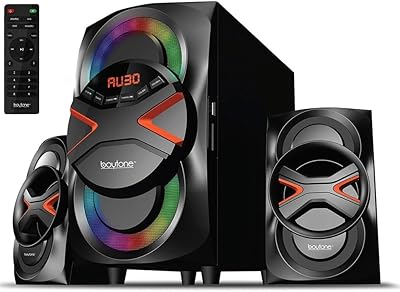
74%
91%
Value for Money
78%
Sound Quality
82%
Subwoofer Performance
61%
Atmos Height Effect
63%
Build Quality
More
Boytone BT-326F 2.1 Bluetooth Home Theater System
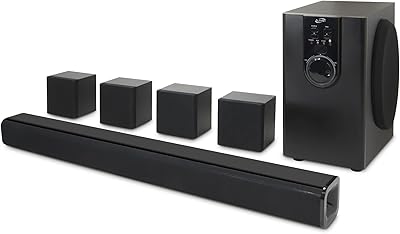
72%
88%
Value for Money
83%
Sound Volume & Bass
86%
Connectivity Range
91%
Ease of Setup
61%
Audio Clarity
More
iLive IHTB159B 5.1 Home Theater System
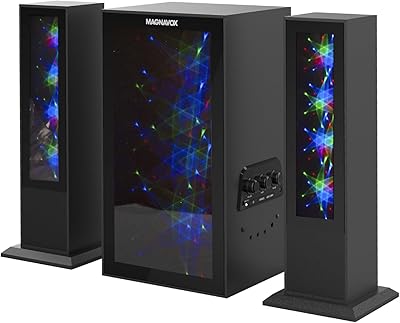
66%
81%
Value for Money
58%
Audio Quality
44%
Bass & Subwoofer Performance
67%
Surround Sound Effect
83%
Ease of Setup
More
Magnavox MHT990 2.1 Home Theater Speaker System
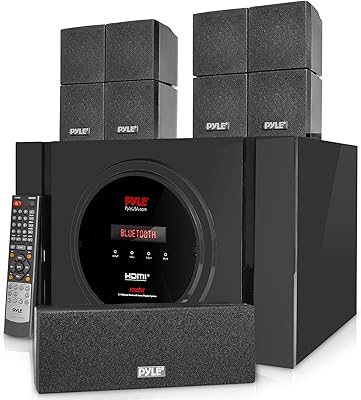
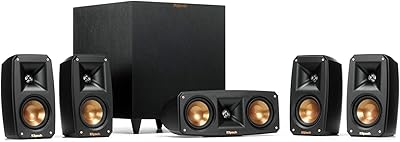
72%
74%
Value for Money
61%
Audio Quality
63%
Bass Performance
89%
Ease of Setup
86%
Light Display
More
Pyle PT589BT
Pyle PT589BT
66%
74%
Value for Money
61%
Sound Quality
72%
Subwoofer Performance
83%
Ease of Setup
53%
Build Quality
More
Rockville HTS56 5.1 Home Theater System
71%
67%
Sound Quality
74%
Subwoofer Performance
88%
Setup & Installation
83%
Connectivity & Compatibility
62%
Karaoke Functionality
More
Klipsch Reference Theater Pack 5.1 Surround System
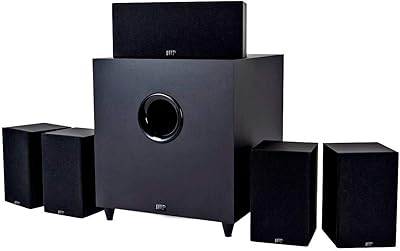
82%
92%
Sound Clarity
78%
Bass Performance
88%
Surround Immersion
67%
Wireless Subwoofer Reliability
91%
Ease of Setup
More
Monoprice 10565 5.1-Channel Home Theater System
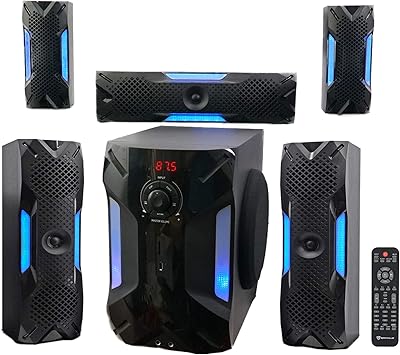
70%
88%
Value for Money
83%
Bass Performance
76%
Surround Immersion
61%
Satellite Speaker Quality
54%
Build Quality
More
Acoustic Audio AAT1003 5.1 Tower Speaker System
70%
83%
Value for Money
88%
Setup & Installation
67%
Sound Quality
71%
Bass Performance
58%
Build Quality
More
Acoustic Audio AAT5005 5.1 Tower Speaker System
72%
83%
Value for Money
67%
Sound Quality
74%
Bass Performance
88%
Setup & Installation
54%
Build Quality
More

FAQ

Honestly, this is one of the easier home audio systems to get running. You connect the satellite speakers to the main unit, plug in the subwoofer, run a video cable to your TV if needed, and you are basically done. Most people have audio playing within 15 minutes of opening the box.

It depends on your TV's inputs. The CS-500 setup uses analog audio inputs and a component video output for picture. If your TV has component video inputs and a headphone or RCA audio output, you can connect it. However, many newer televisions have dropped component inputs entirely in favor of HDMI only, so check your TV's back panel before purchasing.

It creates a wider, more atmospheric soundstage than two speakers alone would produce, which is noticeable and pleasant for casual movie watching. That said, it does not replicate the genuine spatial placement of a true 5.1 setup — there is no real rear or side channel audio. If you have never owned a discrete surround system, you will likely enjoy it. If you have, you will notice the difference.

Yes, through one of the three analog auxiliary inputs. You would need a 3.5mm-to-RCA cable to connect a phone or tablet, which is inexpensive and widely available. There is no Bluetooth or Wi-Fi, so a physical cable connection is the only option for wireless-first devices.

Like most DVD players sold in North America, this unit is generally configured for Region 1 discs. It will not natively play DVDs purchased in other regions without a hardware modification, which is not something Klipsch supports officially.

The speaker components tend to age well — the horn-loaded drivers in particular have a reputation for long-term reliability. The integrated electronics, especially the DVD mechanism, are more variable. Some long-term owners report disc-read issues after a few years of regular use. Keeping the DVD lens clean and avoiding dusty environments helps extend its lifespan.

Yes. The auxiliary inputs let you connect any external audio source and use the amplified speaker system independently of the disc player. The DVD player simply sits unused if you prefer streaming or other sources.

It handles smaller rooms well and adds convincing low-end weight to movies and music without straining. In a medium-sized room — think a standard apartment living area — it performs adequately. For a larger open-plan space or a dedicated home theater room, it will likely feel underpowered.

The remote controls all functions of this all-in-one theater unit and is described as a universal IR remote, meaning it may be programmable to operate basic TV functions as well. In practice, users note that the remote requires a fairly direct line of sight and has a shorter effective range than most standalone universal remotes.

That depends entirely on your needs. If you want a simple, self-contained unit with a DVD player, radio, and decent audio — and your TV has compatible inputs — it can still serve that purpose well. However, buyers who prioritize modern connectivity like Bluetooth, optical input, or streaming integration will find it outdated. It is best suited for buyers with modest, specific needs rather than those building a future-proof home audio setup.