Overview

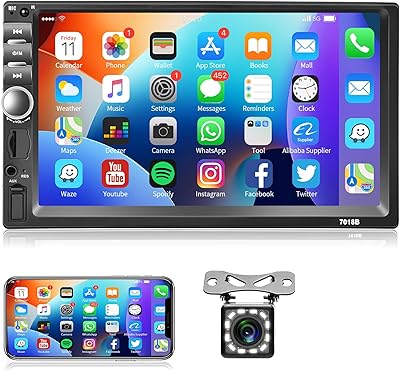
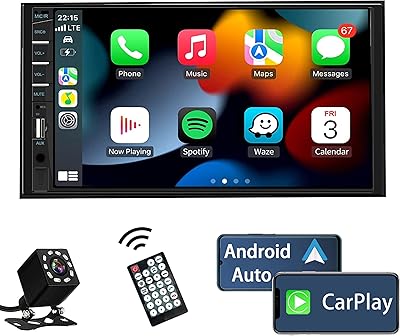
The Kissound KS9701 7″ Double Din Car Stereo arrived on the market in April 2025 and has picked up surprisingly fast traction for a brand most drivers haven't heard of. It's a standard double din unit built around a 7-inch IPS touchscreen, and it ships with a backup camera included — a nice touch at this price tier. The feature list punches above its weight against budget offerings from established names like JVC or Kenwood. That said, Kissound isn't a household name, so tempered expectations are fair. Installation isn't plug-and-play; if you're not confident with wiring, professional installation is worth budgeting for alongside this purchase.

Features & Benefits

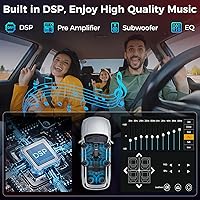
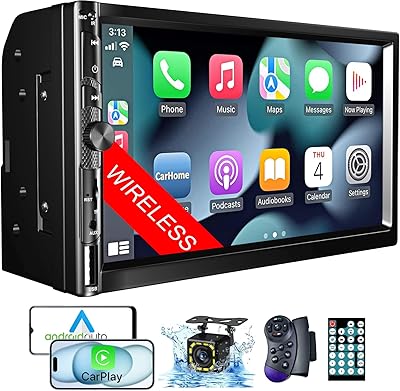
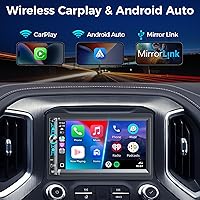
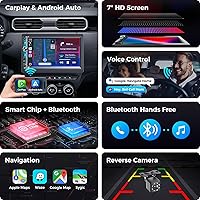
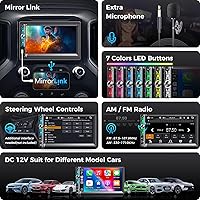
What makes this Kissound stereo worth considering is the wireless CarPlay and Android Auto support. At this price, that's not a given — many competitors still push wired-only connections. Your phone reconnects automatically when the car starts, which is a small but appreciated daily convenience. The 7-inch display holds up reasonably well in sunlight thanks to decent IPS viewing angles. Audio tuning has real depth: a 10-band DSP equalizer and a dedicated subwoofer RCA output let you actually shape the sound rather than just nudge a volume slider. A dual microphone setup handles highway road noise better than expected during calls. USB-C, AUX, TF card, and FM/AM tuner round out the input options.

Best For

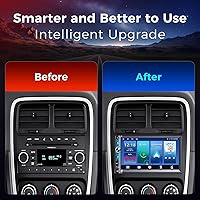
The KS9701 makes the most sense for drivers pulling an older vehicle out of the stone age — the kind of car that still has a factory radio with no Bluetooth, let alone CarPlay. If you're building a budget audio system and want a subwoofer RCA output to tap into without spending extra on a premium head unit, this double din head unit covers that base. Heavy commuters who depend on Google Assistant or Siri for hands-free navigation will find the wireless connection reliable enough for daily use. DIY installers should note that steering wheel control requires a compatible adapter like the PAC SWI-CP2, sold separately, and some vehicles will also need an additional dash kit for a clean fit.

User Feedback

With a 4.2-star average across 161 ratings — solid, but not the kind of score that suggests across-the-board satisfaction — the picture is honestly mixed. Wireless CarPlay pairing draws consistent praise: most buyers report the connection is fast and stays stable for everyday city driving. The included camera also receives positive mentions, with users noting it's a legitimate addition rather than an afterthought. On the downside, Bluetooth stability at highway speeds has come up more than once, and the DSP menu has a steeper learning curve than some buyers anticipated. A handful of installations hit snags with missing dash kits or antenna adapters. The promised 24-hour tech support gets mixed reviews — some found it helpful, others less so.

Pros

  • Wireless CarPlay and Android Auto reconnect automatically at startup — no manual pairing needed after initial setup.
  • The 7-inch IPS screen delivers wide viewing angles and a touch response that holds up well in direct sunlight.
  • A dedicated subwoofer RCA output and 10-band DSP EQ give real sound-shaping flexibility that is rare at this price.
  • An 8-LED backup camera ships in the box, adding genuine parking safety without requiring a separate purchase.
  • The dual microphone design — built-in plus external port — keeps voice calls noticeably clearer at highway speeds.
  • USB-C, AUX, TF card slot, and FM/AM tuner cover nearly every input scenario a typical driver encounters.
  • Mirror Link for both Android and iOS adds wired screen-mirroring without needing a wireless data connection.
  • Fits a standard double din opening, making this a direct drop-in upgrade across a wide range of vehicle makes.
  • Automatic camera switching on reverse engagement works reliably, removing the need to manually toggle the input.

Cons

  • Bluetooth audio streaming has shown stability issues at higher speeds, based on recurring buyer feedback.
  • The 240W power figure is a peak rating, not RMS — real continuous output is considerably more modest.
  • The DSP and EQ menu system has a noticeable learning curve; the interface is not particularly intuitive for first-time users.
  • Kissound is a lesser-known brand with a short public track record, raising fair questions about long-term parts and firmware support.
  • Many vehicles require a separate dash kit, antenna adapter, or wiring harness that is not included in the package.
  • Steering wheel control requires a third-party adapter such as the PAC SWI-CP2, which adds cost and complexity to installation.
  • The 24-hour tech support promise has delivered inconsistent results in practice — response quality appears to vary by case.
  • The included camera cable is only 19.7 feet long; larger vehicles or non-standard mounting positions will likely need an extension.

Ratings

The scores below were generated by our AI system after analyzing verified buyer reviews for the Kissound KS9701 7″ Double Din Car Stereo from owners worldwide, with spam, incentivized feedback, and bot activity actively filtered out to ensure the data reflects genuine real-world experience. Each category score is calibrated to surface both where this head unit punches above its weight for the price tier and where consistent pain points emerge across different vehicle types and use cases. Nothing has been softened — the ratings reflect the full picture, trade-offs included.
Value for Money
87%
For drivers upgrading an older vehicle, the feature-to-price ratio is genuinely hard to match — wireless CarPlay, Android Auto, a 7-inch IPS display, a backup camera, subwoofer output, and a 10-band EQ in a single package is a combination established brands simply do not offer at this price point. Most buyers feel the feature count alone validates the purchase.
Value perception erodes once the necessary extras are factored in — a steering wheel control adapter, a dash kit, and sometimes an antenna adapter can collectively push the real installation cost well above the unit price. For owners of older or less common vehicles, those add-ons are close to mandatory, quietly undermining the budget-friendly headline.
Wireless Connectivity
83%
Wireless CarPlay and Android Auto are the standout reasons most buyers choose this unit, and they generally deliver as promised. The automatic phone reconnection on startup removes the daily pairing hassle, and city commuters consistently report stable connections during navigation and music streaming. For a budget head unit, dual-platform wireless support is a genuine competitive edge.
Highway driving exposes occasional stability issues, with some users reporting brief connection drops during extended freeway stretches. The wireless link can also vary based on individual phone Bluetooth settings, introducing unpredictability that a wired connection simply avoids. Buyers doing regular long-distance driving should keep a USB-C cable handy as a reliable fallback.
Subwoofer Output
82%
18%
The dedicated subwoofer RCA output is a genuine standout at this price tier — most entry-level head units omit it entirely, leaving bass enthusiasts with no clean signal path to an external amplifier. Budget system builders rate this feature highly, as it lets them add a subwoofer later without needing to replace the head unit.
The subwoofer output is a single RCA channel rather than a stereo pre-out pair, which limits flexibility for more advanced audio routing configurations. The DSP sub-channel settings are buried in the same unintuitive EQ menu, so dialing in a crossover point correctly requires patience and some working knowledge of audio signal chains.
Display Quality
79%
21%
The 7-inch IPS panel is a strong point for the price tier — wide viewing angles keep the screen legible whether mounted slightly high or angled toward the driver, and touch response handles quick glances and taps without significant lag. Map displays and camera feeds are sharp enough for practical in-car use, particularly during daytime driving.
The 1024x600 resolution is the display's primary limitation — competing mid-range panels are noticeably sharper, and small navigation text can look slightly soft on this screen. Glare management in direct afternoon sunlight is also imperfect, requiring manual brightness adjustment during peak sun hours to maintain comfortable visibility.
FM/AM Tuner
78%
22%
FM reception is solid for everyday urban and suburban use — station lock holds well during commutes, and the auto-search function saves local stations reliably during initial setup. AM performance is similarly adequate for drivers who follow talk radio or local sports coverage as part of their regular driving routine.
Signal sensitivity in rural areas or under highway overpasses drops more than expected, and some vehicles require an antenna adapter — not included — to reach full reception quality. There is no HD Radio support, which is a noticeable omission for listeners accustomed to the improved fidelity that HD-capable tuners deliver on the same stations.
Sound Quality
76%
24%
The 10-band DSP equalizer is the audio highlight here — it gives real control over frequency response in a way that generic bass and treble sliders simply cannot match. Buyers who take time to calibrate the EQ settings report meaningfully improved audio from their existing speakers, making this a capable foundation for a budget system build.
The advertised 240W is a peak figure — real continuous output is considerably more modest, and buyers expecting big volume from the internal amplifier alone will be disappointed. Factory EQ presets are underwhelming out of the box, so meaningful audio improvement requires time spent navigating the DSP menu before the stereo sounds its best.
Touch Response
74%
26%
The touchscreen handles daily tapping — adjusting volume, changing inputs, dismissing navigation prompts — with acceptable responsiveness for an in-car display. Touch recognition is consistent across the full screen surface without noticeable dead zones at the edges, which matters during quick one-handed interactions at traffic lights.
Compared to mid-range competitors, touch latency is perceptible — quick swipes and rapid multi-tap inputs occasionally require a second attempt to register. Cold weather use also introduces some sluggishness, which proves mildly frustrating during winter morning commutes when fast menu access matters most.
Hands-Free Calling
72%
28%
The dual microphone design — built-in unit plus an external mic port — gives buyers real flexibility in optimizing voice pickup for their specific installation. Commuters who position the external microphone near the visor report noticeably clearer call quality, with road noise managed more effectively than is typical of single-mic budget alternatives.
Call quality is heavily dependent on microphone placement and wiring care — buyers who skip the external mic or install it poorly report mediocre performance at highway speeds, with wind and road noise intruding noticeably. Voice command recognition through Siri and Google Assistant also drops off in louder cabin environments, requiring the occasional repeated request.
Build Quality
71%
29%
The chassis has adequate rigidity for road vibration, and the bezel shows no obvious flex or cheap plastic creaking during regular in-car operation. The rear heat sink is a thoughtful design inclusion, managing thermal load during extended playback sessions without any noticeable performance throttling over time.
As a newer brand, long-term durability data does not yet exist, and buyers upgrading from established names like Kenwood or Pioneer may notice a step down in fit-and-finish quality on the physical controls. A handful of early adopters have flagged occasional firmware-related quirks requiring a unit restart, suggesting software maturity still has room to improve.
Backup Camera
68%
32%
Including an 8-LED infrared camera in the box is a genuine value addition — most budget head unit competitors charge extra for even a basic camera. The LED assist lighting makes the camera practically useful in low-light parking garages and nighttime situations where reversing without visual assistance would be a real safety concern.
Daytime image clarity is modest — the camera produces a functional but visually soft picture that lacks the wide-angle sharpness of dedicated aftermarket units. The included cable runs only 19.7 feet, which suits most standard sedans and hatchbacks but leaves larger trucks, SUVs, or vehicles with unconventional mounting positions short, requiring a separately purchased extension.
Ease of Installation
66%
34%
The unit physically fits any standard double din opening without modification, which is installation at its smoothest. Buyers with prior wiring experience — even from a single previous head unit swap — generally complete the basic setup within a couple of hours, and the included documentation covers core harness connections clearly enough to follow.
First-timers face a steeper challenge than the product listing implies — routing the external microphone, sourcing and wiring the steering wheel control adapter, fitting a vehicle-specific dash kit, and potentially tracking down an antenna adapter all compound quickly. Several buyers report that non-standard vehicle configurations required significant additional research, parts, and time beyond initial expectations.
User Interface
59%
41%
Navigation between the core functions — CarPlay, radio, camera, and Bluetooth — becomes second nature after a week of daily use, and the main screen shortcuts reduce the number of taps needed for the most common actions. For buyers who are happy leaving the EQ alone, day-to-day usability is perfectly acceptable.
The DSP and EQ menus are notably unintuitive — several buyers describe spending significant time with the manual before adjusting settings confidently without misconfiguring something. The broader interface feels dated compared to current competitors, and navigating back from deep settings screens requires more deliberate tapping than most drivers will find acceptable while in motion.
Bluetooth Stability
61%
39%
Initial pairing is fast and consistent, and audio streaming in stop-and-go city traffic or suburban driving is generally reliable day to day. For commuters whose routes stay below highway speeds, Bluetooth rarely introduces meaningful frustration, and call connections through the built-in mic establish promptly without manual intervention.
Stability at highway speeds is the most commonly raised Bluetooth issue in buyer feedback, with multiple owners noting audio interruptions or dropped calls above 60 to 65 mph. The problem appears more pronounced with certain phone-and-unit combinations, but its frequency in the reviews makes it difficult to dismiss as an isolated edge case.
Steering Wheel Control
56%
44%
When a compatible interface module is wired in correctly, steering wheel control delivers on its promise — volume, track skipping, and voice assistant activation all function without removing hands from the wheel. Buyers who invest in the PAC SWI-CP2 adapter and take care with the wiring report a noticeably more polished and complete daily driving experience.
The required adapter is sold separately, meaning buyers must research compatibility, purchase an additional part, and complete another wiring step not reflected in the unit price. Without it, the steering wheel buttons are entirely non-functional with this head unit — a frustrating surprise for buyers who assumed the feature was included and ready to use out of the box.
After-Sale Support
52%
48%
Kissound does operate a support channel, and a portion of buyers report receiving useful guidance on wiring questions and configuration issues within the advertised 24-hour window. For straightforward technical problems — confirming a harness pinout or walking through a factory reset — the support team appears capable when it is responsive.
The 24-hour response claim has a noticeably inconsistent real-world track record, with a meaningful share of buyers describing delayed replies, generic answers, or unresolved issues after multiple contacts. As a newer brand with limited history, buyers also lack the community forums, third-party repair options, and established firmware update cadence that longer-standing manufacturers provide as standard.

Suitable for:

The Kissound KS9701 7″ Double Din Car Stereo is a strong match for drivers who own an older vehicle still running a basic factory head unit and want to add wireless CarPlay or Android Auto without paying a premium for an established brand name. If your car has a standard double din slot and you've been tolerating a radio that can't connect to your phone, this unit closes that gap at a price point that's hard to argue with. Commuters who spend significant time on the road making hands-free calls or using Siri and Google Assistant for navigation will find the dual microphone setup manages highway background noise well enough for daily practical use. Budget-minded audio enthusiasts planning to eventually add a subwoofer or external amp will appreciate the dedicated RCA output and 10-band DSP EQ — features that genuinely aren't standard at this price tier. DIY installers who have basic wiring confidence and already own or plan to buy a compatible steering wheel control adapter will get the cleanest, most satisfying result from this unit.
Not suitable for:

Buyers who prioritize long-term brand reliability or a polished, frustration-free out-of-the-box experience should be cautious — the Kissound KS9701 7″ Double Din Car Stereo comes from a brand with a limited track record, and that matters when you're wiring something into your car's electrical system. If you drive primarily at highway speeds and rely on Bluetooth for continuous audio streaming, the stability complaints surfacing in buyer feedback are a real concern worth weighing before purchasing. The advertised 240W output is a peak figure rather than an RMS rating, so anyone expecting that number to translate into raw amplifier power from the unit alone will find reality falls short. Drivers whose vehicles need a non-standard dash kit, a specific antenna adapter, or a vehicle interface module should also budget for those extras upfront since none are included. And if you're not comfortable working through a multi-layer DSP menu or troubleshooting a wiring harness on your own, the setup learning curve may outweigh the cost savings over a professionally supported alternative.
Specifications

  • Screen Size: The display measures 7 inches diagonally, using an IPS panel for consistent color accuracy and wide viewing angles across the cabin.
  • Resolution: The touchscreen runs at 1024x600 pixels, providing sufficient sharpness for navigation maps, media artwork, and camera feeds.
  • Form Factor: The unit follows the standard double din format, designed to fit the 2-DIN dash openings found in most passenger vehicles.
  • Max Output: Total amplifier output is rated at 240W peak across four channels — this is a peak figure and not a continuous RMS power measurement.
  • Audio Channels: The system operates as a 4.1-channel configuration with four full-range speaker outputs and one dedicated subwoofer RCA output.
  • Wireless: The unit supports Bluetooth audio and calls, wireless Apple CarPlay, and wireless Android Auto, all without requiring a cable connection to the phone.
  • Equalizer: A 10-band DSP equalizer is built in, allowing users to adjust frequency response across the full audio spectrum to suit their speakers and preferences.
  • Microphones: A built-in microphone handles standard handsfree calls, while a dedicated external microphone port accepts an add-on mic for improved voice clarity at highway speeds.
  • Camera Inputs: The unit accepts both a rear backup camera and a front camera, with automatic input switching triggered by engaging the vehicle's reverse gear.
  • Included Camera: An 8-LED infrared backup camera ships in the box with a 19.7-foot cable; installations requiring a longer run will need a separately purchased extension cable.
  • Input Ports: Physical input options include a USB-C port, a 3.5mm AUX jack, and a TF card slot for local media playback.
  • Tuner: An integrated tuner receives both FM and AM radio bands through a standard antenna input connection.
  • Mirror Link: Wired Mirror Link is supported for Android and iOS devices, enabling phone screen mirroring to the head unit display without a wireless connection.
  • Wheel Control: Steering wheel button integration is supported via a compatible aftermarket wiring harness; a separate interface module such as the PAC SWI-CP2 is required and sold independently.
  • Video Formats: The unit supports local playback of MPEG-4, DivX, AVI, and RMVB video files, along with MP3 and WMA audio formats and JPEG images.
  • Item Weight: The head unit itself weighs 2.61 pounds, not accounting for the included camera, mounting hardware, or packaging.
  • Dimensions: The retail package measures 14.45 x 9.06 x 5.87 inches, encompassing the unit, backup camera, and all included accessories.
  • Model Number: The official model designation is KS9701, produced and sold under the Kissound brand name.
  • Launch Date: This head unit was first listed for purchase in April 2025 and has accumulated over 160 ratings since its release.

Related Reviews

Durxenmnt CP6067WL 7-Inch Double Din Car Stereo
72%
83%
Wireless Connectivity
91%
Value for Money
88%
Ease of Installation
67%
Touchscreen Responsiveness
63%
Backup Camera Quality
More
Rimoody A2084 7-Inch Double Din Car Stereo
70%
83%
Value for Money
71%
Ease of Installation
62%
Touchscreen Responsiveness
78%
Bluetooth Performance
69%
Mirror Link & Smartphone Integration
More
Hikity Android 13 7-Inch Car Stereo
65%
83%
Value for Money
78%
Installation Ease
54%
GPS Navigation
67%
Bluetooth Performance
71%
Screen Quality
More
Jensen MPR420 Double DIN Car Stereo Receiver
69%
83%
Bluetooth Reliability
78%
Hands-Free Call Quality
86%
Ease of Installation
47%
Display Usability
63%
Audio Performance
More
Power Acoustik CPAA-70D 7-inch Double Din Stereo
72%
84%
Value for Money
78%
CarPlay & Android Auto
81%
Installation Ease
67%
Touchscreen Responsiveness
63%
Bluetooth Performance
More
AMprime 7-Inch Double Din Car Stereo
67%
79%
Value for Money
76%
Display Quality
58%
Bluetooth Performance
62%
Mirror Link
83%
Ease of Installation
More
ATOTO A5L 7-inch Double DIN Car Stereo
76%
84%
Wireless CarPlay & Android Auto
71%
Display Quality
88%
Audio Quality & DSP
82%
Android OS & App Ecosystem
86%
Connectivity Options
More
Haudio 7-Inch Double Din Car Stereo
71%
83%
Wireless Connectivity
77%
Screen Quality
88%
Value for Money
54%
Ease of Installation
62%
Audio Output Quality
More
Leadfan X5 7-Inch Double Din Car Stereo with Apple CarPlay & Android Auto
84%
88%
Ease of Installation
91%
Smartphone Integration (Apple CarPlay & Android Auto)
89%
Bluetooth Connectivity & Call Quality
85%
Display Quality
82%
Backup Camera Performance
More
Podofo 7023B 7-Inch Double Din Car Stereo
67%
88%
Value for Money
61%
Ease of Installation
54%
Mirror Link Performance
72%
Bluetooth Reliability
69%
Touchscreen Responsiveness
More

FAQ

Wireless CarPlay performs well for most day-to-day driving scenarios — the unit reconnects to your phone automatically when you start the car, which is a genuine convenience advantage. A small number of buyers have mentioned occasional dropouts during extended highway drives, so keeping a USB-C cable in the center console as a backup for wired mode is a sensible precaution if you depend heavily on navigation.

A double din slot is roughly 7 inches wide and 4 inches tall. The simplest check is to look at your current factory stereo — if it fills that size opening, you have a double din. Single din units are about half the height. Most vehicles manufactured from the mid-1990s onward have one or the other, though some models with factory-integrated screens may require a vehicle-specific installation kit regardless of the opening size.

Possibly, and it is worth knowing this upfront rather than being surprised after purchase. The head unit and backup camera are included, but steering wheel control integration requires a separate interface module — the PAC SWI-CP2 is specifically recommended. Depending on your vehicle, you may also need a dash installation kit if your opening does not fit cleanly, and some older vehicles require an antenna adapter to pick up FM and AM signals properly.

The 240W figure is a peak power rating across all four channels combined, not a continuous RMS measurement. RMS — the more meaningful real-world number — will be significantly lower, which is standard practice across budget head units at this price point. If you want serious output levels, the dedicated subwoofer RCA output is there so you can route signal to an external amplifier for much more headroom.

Yes, but you will need to purchase a compatible steering wheel control interface module separately — the PAC SWI-CP2 is the recommended option for this unit. Once that adapter is wired in, you can map your existing wheel buttons to functions like volume adjustment, track skipping, and voice assistant activation. Without the adapter, the head unit has no way to interpret the signals from your steering wheel.

It is manageable for someone willing to do their homework, but it is not completely plug-and-play. Basic steps like connecting a wiring harness, routing the camera cable, and mounting the unit are accessible with a good tutorial and basic tools. Where it gets more involved is routing the external microphone, wiring in a steering wheel control adapter, and potentially trimming or fitting a dash kit. If any of that sounds uncertain, paying a car audio shop for an hour of installation time is money genuinely well spent.

Both platforms are fully supported. The Kissound KS9701 7″ Double Din Car Stereo handles wireless Android Auto and wireless Apple CarPlay, and the automatic reconnection on startup works for both. Wired connections via USB-C are also available for either platform if you prefer a cable or run into any wireless pairing issues.
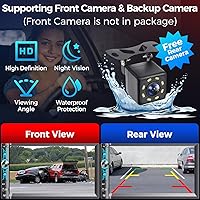
For a bundled camera at this price tier, it is more useful than you might expect. The 8-LED infrared assist helps considerably in low-light and nighttime parking situations, and the auto-switching when you engage reverse works reliably. The image quality is not high-definition, so wide-angle clarity in bright conditions is limited compared to aftermarket cameras — but for day-to-day parking assistance, most buyers find it perfectly adequate without needing an immediate replacement.

Yes — there is a dedicated single RCA subwoofer output on the rear of the unit. You run that signal line to a standalone subwoofer amplifier, which then powers the sub directly. Combined with the 10-band DSP equalizer for dialing in the low-end response, this makes the KS9701 a reasonable foundation for building out a budget audio system over time.

Kissound advertises a 24-hour response window for tech support, but real-world buyer feedback on this point has been decidedly mixed. Some buyers report prompt and helpful responses; others have described longer waits or answers that did not fully resolve their issue. Given that this is a relatively new brand without the deep support infrastructure of established names like Sony or Kenwood, it is reasonable to set tempered expectations and lean on community forums or car audio installation guides if you run into technical hiccups.