Overview

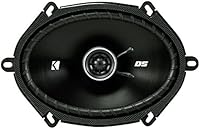
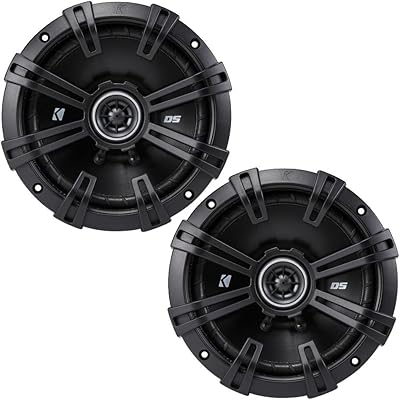
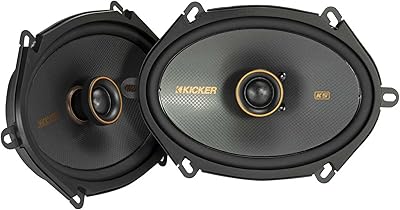
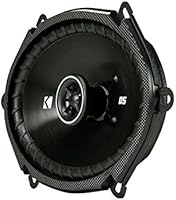
The Kicker DSC680 6x8-Inch Coaxial Speakers are a solid mid-range pick for drivers who want a real audio improvement without tearing apart their entire dashboard. These speakers fit the standard 6x8-inch OEM bays found across a wide range of trucks, SUVs, and sedans — which means for many owners, swapping them in is as simple as pulling out what is already there. Kicker has built a strong name in car audio over the years, and the DSC lineup sits right in the sweet spot between budget throwaways and high-end custom builds. These are not competition speakers. They are honest, capable replacements that do their job well.
Features & Benefits

The DSC680 speakers carry a 200W peak rating, but the more relevant number for everyday listening is the 70W RMS — that is the continuous power they handle comfortably without strain, and it is plenty for most factory or aftermarket head units. At 4-ohm impedance, they drop straight in without needing an external amplifier, keeping the install clean and cost down. Frequency response runs from 45Hz to 20kHz, covering lower bass notes through crisp highs, with the built-in bass boost giving the low end a mild, welcome lift. The 0.51-inch tweeter handles vocals and acoustic detail well, and the coaxial two-way design means only one driver to mount per side.

Best For

These Kicker coaxials make the most sense for anyone dealing with tired, muddy-sounding OEM speakers in Ford F-150s, Mustangs, or any vehicle with a standard 6x8-inch cutout. If you want noticeably better sound but are not ready to commit to a full component system with separate crossovers and extra wiring runs, this speaker pair is a logical next step. The install is approachable for a confident DIYer — pull the door panel, swap the speaker, done. Bass-forward listeners will appreciate the built-in boost, though anyone expecting deep, room-filling lows should know upfront that a standalone subwoofer is still the only real solution for that.

User Feedback

Owners who have swapped these into their vehicles consistently point to improved vocal clarity as the most immediate win over factory speakers — the mids open up noticeably and highs stop sounding like they are coming through a tin can. Installation feedback skews positive, with many F-150 and Mustang owners calling it a painless process. The main criticism that surfaces is bass depth; the built-in boost helps, but without a subwoofer, low-frequency punch still has real limits. Long-term owners generally report solid build durability after two or more years of daily use. Against similarly priced rivals, most buyers feel the overall value holds up well.

Pros

  • Vocal clarity and midrange detail are dramatically better than most factory speakers right out of the box.
  • The standard 6x8-inch form factor fits a wide range of trucks, SUVs, and sedans without adapters in most cases.
  • At 4 ohms, the DSC680 speakers work directly with stock head units — no amplifier purchase required.
  • 90dB sensitivity means these get genuinely loud without straining a factory radio.
  • The built-in bass boost adds warmth to the low end that most stock speakers completely lack.
  • Installation is straightforward enough for a confident DIYer to complete both doors in under an hour.
  • Frequency response down to 45Hz gives these Kicker coaxials broader coverage than many rivals in the same class.
  • The included pair means you have everything needed for a full two-door upgrade in one purchase.
  • Long-term owners report solid durability under normal daily driving conditions over one to two years.
  • Compared to Pioneer and Rockford Fosgate alternatives at a similar price, the overall sound profile holds up competitively.

Cons

  • Deep bass is genuinely limited — a dedicated subwoofer is still necessary for any real low-frequency impact.
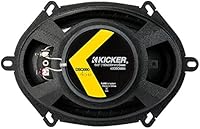
  • No installation hardware or wiring adapters are included, adding a separate shopping step for some vehicles.
  • At very high volumes, the tweeter can develop a slight harshness on bright or heavily compressed tracks.
  • The plastic grilles and basket feel noticeably budget-grade when handled up close during installation.
  • Soundstage imaging compresses in larger vehicle cabins where the listener sits further from the door speakers.
  • A subset of owners in hot or humid climates have reported tweeter failure earlier than expected.
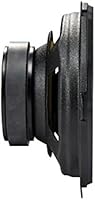
  • The mounting depth can be a tight fit in certain vehicle door configurations, requiring extra care during install.
  • Buyers stepping up from a component system will find the midrange separation noticeably less refined.
  • Upper midrange can sound slightly forward on certain music genres, particularly with low-bitrate streaming audio.

Ratings

The Kicker DSC680 6x8-Inch Coaxial Speakers were evaluated using an AI-driven analysis of verified global buyer reviews, with spam, incentivized submissions, and bot activity actively filtered out before scoring. The ratings below reflect a balanced synthesis of real-world ownership experiences — covering everything from first-install impressions to long-term daily use. Both the genuine strengths and the recurring frustrations are represented transparently in each category.
Sound Clarity
84%
Owners consistently report a striking improvement in midrange and vocal reproduction compared to factory speakers — dialogue in podcasts comes through cleanly, and acoustic instruments stop sounding flat and compressed. At moderate to high volumes the DSC680 speakers hold detail well without harshness.
A small but vocal subset of listeners find the upper midrange slightly forward on certain music genres, particularly with compressed streaming audio. Those switching from higher-end component systems may notice the clarity ceiling more quickly than casual listeners.
Bass Performance
61%
39%
The built-in bass boost adds a welcome body to the low end that most factory speakers completely lack. For pop, hip-hop, and EDM at everyday commute volumes, the added warmth is noticeable and pleasant without muddying the overall mix.
Deep, physical bass is simply not what coaxial speakers at this level can deliver, and the DSC680 is no exception. Buyers expecting genuine sub-bass presence are regularly disappointed — multiple reviewers note that a dedicated subwoofer remains essential for any serious low-frequency experience.
High-Frequency Reproduction
82%
18%
The 0.51-inch tweeter punches above its size, delivering crisp cymbal detail and airy vocal highs that hold up well at highway speeds with road noise present. Listeners who primarily stream pop or country music comment that the highs feel natural rather than tinny.
At very high volume levels some users detect a slight brittleness in the upper treble, particularly with bright-mastered tracks. It is not a dealbreaker for most, but audiophiles pushing these hard off an aftermarket head unit may find the highs occasionally fatiguing.
Installation Ease
91%
The coaxial format and standard 6x8-inch mounting footprint make these an almost universal drop-in fit for Ford F-150s, Mustangs, and a range of GM and Chrysler vehicles. Multiple buyers describe completing both doors in under an hour without specialized tools.
A handful of owners report minor fitment quirks in certain vehicle models where the mounting depth creates a tight squeeze against the door panel. No adapter brackets are included, which can add a small extra step for some less-common vehicle configurations.
Factory Head Unit Compatibility
88%
At 4 ohms, these speakers work directly with most OEM and aftermarket head units without any additional amplification. Buyers who want a clean, no-fuss upgrade without adding an amp to their budget find this particularly valuable.
For those already running an aftermarket amp, the 4-ohm load is standard and presents no issues — but the 70W RMS ceiling means high-powered setups will eventually expose the speaker's limits. Running these underpowered off a very weak factory radio can result in thin, underwhelming output.
Build Quality & Materials
74%
26%
The overall construction feels solid for the price tier — the basket and grille components do not rattle or creak after installation, and long-term owners report no obvious physical degradation after one to two years of regular daily driving.
The materials are competent rather than impressive. Up close, the plastic components feel noticeably less premium than what you get from higher-tier Kicker or Rockford Fosgate alternatives, and a few buyers note that the grilles feel somewhat fragile during handling.
Durability & Longevity
77%
23%
The majority of owners who have run these speakers for over a year report no failures or performance degradation, even in warm climates where door-panel temperatures can spike significantly in summer months. Kicker's limited warranty adds a layer of confidence.
There is a smaller but consistent group of reviewers who report premature tweeter failure or surround degradation, usually in humid or extreme-heat environments. These appear to be edge cases rather than a systemic issue, but they are worth acknowledging for buyers in hot climates.
Value for Money
83%
Relative to similarly priced options from Pioneer and Rockford Fosgate, the DSC680 speakers offer a competitive sound profile and better-than-average sensitivity at 90dB, which means they get louder with less power. For the upgrade cost, the sonic jump from stock is hard to argue with.
A few buyers feel the pricing pushes into territory where spending a bit more would get them into true component speaker systems with noticeably better separation. For listeners with discerning tastes, the value equation starts to look less clean at the upper end of the price range.
Volume & Sensitivity
86%
At 90dB sensitivity, these speakers get loud off a stock radio without straining. Highway drivers and those who listen to music over significant road noise report this as one of the most practically useful traits of the DSC680 — plenty of headroom without distortion creeping in.
While 90dB is strong for this category, buyers pushing these to maximum volume off underpowered head units sometimes encounter mild distortion at the upper range. It is a limitation of the format rather than a flaw in the speaker specifically.
Midrange Performance
81%
19%
Vocals and instruments in the 200Hz to 3kHz range — where most music actually lives — are rendered with noticeably more texture and presence than OEM speakers. Talk radio and podcasts in particular benefit from the improved midrange definition during long commutes.
Compared to dedicated midrange drivers in a component setup, the DSC680 coaxial naturally has some trade-offs in midrange separation. Listeners who have experience with component systems will notice the difference, even if casual drivers will not.
Frequency Range Coverage
79%
21%
A response down to 45Hz means these cover more of the audible spectrum than many competing coaxials in the same size class. The wide top end at 20kHz ensures no detail is missing from well-recorded tracks, giving a more complete listening experience overall.
The 45Hz low-end extension is technically impressive but real-world bass output at those frequencies is modest in practice. The spec gives the impression of full-range coverage, but listeners should calibrate expectations — true deep bass still requires dedicated hardware.
Packaging & Unboxing Experience
68%
32%
Both speakers arrive securely packaged with no reported transit damage in the vast majority of purchases. The pair format means buyers have everything needed to complete a two-door install right out of the box.
Accessories are minimal — there is no installation hardware, wiring adapter, or instruction guide included. Buyers who are first-time installer will need to source vehicle-specific wiring harness adapters separately, which some reviewers found mildly frustrating given the price point.
Aesthetic & Grille Design
66%
34%
The black finish and clean grille design look appropriate behind most OEM door panel speaker cutouts. For drivers who keep the grilles on, the speakers blend in without looking aftermarket or out of place in a factory interior.
The visual design is purely functional — there is nothing distinctive or premium-looking about the grille or cone finish. Buyers who want a more styled appearance visible through speaker grilles will likely find the DSC680 underwhelming compared to more aesthetically focused competitors.
Imaging & Stereo Soundstage
72%
28%
For a coaxial design, these Kicker speakers produce a reasonably wide soundstage inside the cabin. Listeners who sit close to the front doors — typical in smaller sedans — report a clear sense of left-right separation that significantly improves the in-car listening experience.
Soundstage depth and precise imaging are areas where the coaxial format structurally falls short of component alternatives. Stereo positioning feels natural at moderate volumes but can compress and become less defined when pushed harder or in larger vehicle cabins.

Suitable for:

The Kicker DSC680 6x8-Inch Coaxial Speakers are an ideal choice for everyday drivers who are tired of the flat, lifeless sound that comes out of aging factory speakers and want a meaningful improvement without committing to a full audio system overhaul. If your vehicle — a Ford F-150, Mustang, or similar truck or SUV — came with 6x8-inch OEM speaker bays, this speaker pair slots in with minimal fuss, making it a natural Saturday project for a confident DIYer. Commuters who spend long hours in the car listening to music, podcasts, or talk radio will notice the cleaner mids and crisper highs almost immediately after swapping these in. Buyers who want to stay within a practical budget while still getting a genuine sonic upgrade — without adding an external amplifier or rewiring their entire dash — will find the 4-ohm compatibility and included pair particularly convenient. These Kicker coaxials also suit listeners who enjoy bass-forward genres and want a modest low-end boost over stock, as long as expectations around deep bass are kept realistic.
Not suitable for:

The Kicker DSC680 6x8-Inch Coaxial Speakers are not the right call for audio enthusiasts who are building a serious, high-output car audio system from the ground up. If you are already running an aftermarket amplifier at high wattage, the 70W RMS ceiling will become a limitation you notice fairly quickly, and stepping into a component speaker system would be a smarter investment at that point. Listeners who demand strong, physical sub-bass from their door speakers will be disappointed — the built-in bass boost adds body, but it cannot substitute for a dedicated subwoofer, and no amount of EQ adjustment will change that fundamental reality. Buyers in consistently hot or humid climates should also weigh the durability reports carefully, as a subset of long-term owners in extreme environments have noted premature tweeter wear. Finally, if premium materials and a visually striking aesthetic matter to you — for a custom build where the speakers are visible — the functional but unremarkable design of this speaker pair is unlikely to satisfy.
Specifications

  • Speaker Size: Each speaker measures 6x8 inches (160x200mm), matching the standard OEM bay dimensions found in a wide range of trucks, SUVs, and sedans.
  • Speaker Type: Two-way coaxial design integrates the woofer and tweeter into a single unit, eliminating the need for separate crossover wiring during installation.
  • Peak Power: Each speaker handles up to 200W of peak power, representing short-burst capacity rather than continuous listening levels.
  • RMS Power: Continuous RMS power handling is rated at 70W per speaker, which reflects the sustained output suitable for everyday listening volumes.
  • Impedance: At 4 ohms, these speakers are compatible with the vast majority of factory and aftermarket head units without requiring an external amplifier.
  • Frequency Response: The speakers cover a frequency range of 45Hz to 20,000Hz, spanning from the lower bass registers through the full upper limit of human hearing.
  • Sensitivity: A sensitivity rating of 90dB means these speakers produce strong output volume even when driven by a modest factory head unit.
  • Tweeter Diameter: The integrated tweeter measures 0.51 inches in diameter and handles high-frequency reproduction to keep vocals and instrument detail clear.
  • Woofer Diameter: The woofer cone measures 8 inches in diameter and handles the low-to-mid frequency range using a dynamic driver configuration.
  • Driver Type: Dynamic driver technology is used for audio reproduction, delivering responsive and natural sound across a broad range of music genres and listening scenarios.
  • Special Feature: An integrated bass boost circuit provides a subtle low-end enhancement over standard playback, adding warmth without requiring a separate subwoofer.
  • Connectivity: These speakers use a standard wired coaxial connection and are designed to integrate directly with existing vehicle wiring harnesses.
  • Mounting Type: Designed for car-mount installation, the speakers fit into standard OEM door and rear deck speaker cutouts using conventional speaker mounting hardware.
  • Included Items: Each purchase includes one pair of speakers (two units total), covering a complete front or rear two-door installation.
  • Item Weight: The pair weighs approximately 4.4 pounds combined, which is a typical weight for coaxial speakers of this size class.
  • Model Number: The official model number is 43DSC6804, which can be used to verify vehicle fitment compatibility using Kicker's online fitment tool.
  • Warranty: These speakers are covered by Kicker's limited warranty, providing manufacturer-backed protection against defects in materials and workmanship.
  • Power Source: Speakers are passively driven and corded — they draw power directly from the head unit or amplifier output without any active electronics requiring a separate power connection.

Related Reviews
KICKER DSC40 4-Inch Coaxial Car Speakers
77%
83%
Sound Clarity
54%
Bass Performance
91%
Installation Ease
87%
Sensitivity & Volume Output
76%
Build Quality
More
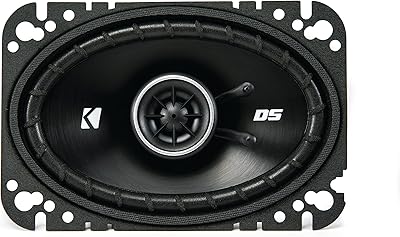
Kicker DSC460 4x6-Inch Coaxial Speakers
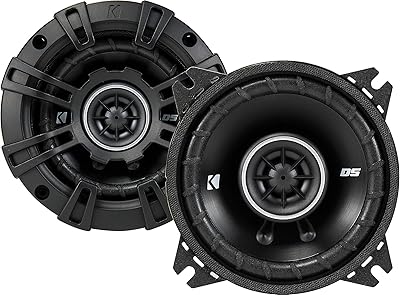
78%
83%
Sound Clarity
54%
Bass Output
91%
Ease of Installation
86%
Compatibility
77%
Build Quality
More
Kicker 43CSC464 4x6-Inch Coaxial Speakers
85%
88%
Sound Quality
85%
Ease of Installation
82%
Build Quality
91%
Compatibility with Car Audio Systems
84%
Durability
More
Kicker 51KSC6804 KS-Series 6x8 Coaxial Speakers
86%
88%
Sound Quality
90%
Bass Performance
85%
Clarity at High Volume
92%
Installation Ease
89%
Build Quality
More
Kicker DSC670 6.75-Inch Coaxial Car Speakers
77%
88%
Sound Clarity
61%
Bass Response
74%
Treble & Highs
91%
Value for Money
79%
Installation Ease
More
KICKER KM8 8-Inch Marine Coaxial Speakers
88%
94%
Sound Quality
91%
Durability
89%
LED Lighting Customization
88%
Installation Ease
90%
Build Quality
More
Kicker CSC35 3.5-Inch Coaxial Car Speakers
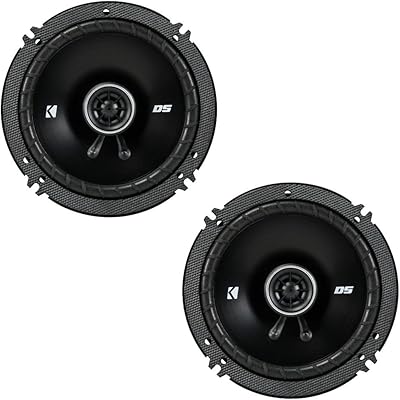
80%
83%
Sound Clarity
52%
Bass Response
91%
Installation Ease
78%
Build Quality
88%
Value for Money
More
KICKER KM4 4-Inch Marine Coaxial Speakers
86%
91%
Sound Quality
94%
Waterproof Durability
74%
Ease of Installation
89%
Build Quality
88%
Compactness
More
Kicker DSC650 6.5-Inch Coaxial Speakers
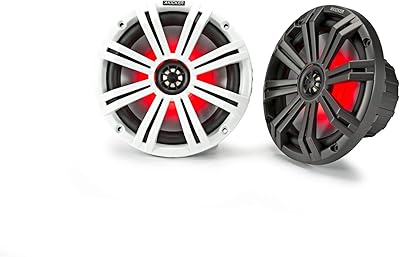
80%
88%
Sound Clarity
61%
Bass Response
86%
Tweeter Performance
91%
Installation Ease
79%
Build Quality
More
KICKER DSC350 3.5-Inch Coaxial Speakers
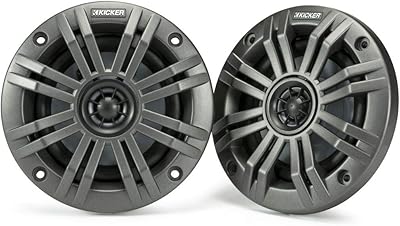
77%
83%
Sound Clarity
54%
Bass Response
91%
Installation Ease
82%
Build Quality
88%
Durability in Heat
More

FAQ

In most F-150 configurations with 6x8-inch factory speaker bays, these Kicker coaxials drop in without modification. That said, it is always worth double-checking your specific model year against Kicker's online fitment guide before purchasing, since door depth and mounting screw patterns can occasionally vary between trim levels.

Your factory head unit will work fine. The 4-ohm impedance is matched to what most OEM and aftermarket head units are designed to drive, so no external amp is required. You will get a solid improvement over stock speakers straight away, though adding an amp later would let these perform closer to their full potential.

The difference is genuinely noticeable, especially in the midrange and high frequencies. Voices sound cleaner, instruments have more texture, and the overall listening experience feels less compressed and flat. Bass improvement is real but modest — do not expect these to replace a subwoofer for deep low-end impact.

Yes, for most vehicles this is a manageable Saturday project for anyone comfortable pulling a door panel. You will need a panel removal tool, a screwdriver, and potentially a vehicle-specific wiring harness adapter. No special audio knowledge is required — the coaxial design means each speaker is a single unit that goes in where the old one came out.

No, mounting hardware and wiring adapters are not included in the box. You get the two speakers and that is it. For most vehicles, the factory mounting screws will work fine, but you may need a plug-and-play wiring harness adapter to avoid cutting into your car's existing connectors — those are widely available and inexpensive online.

The bass boost is a passive circuit built into the speaker crossover — it is always active and cannot be switched off separately. It adds a subtle lift in the low frequencies rather than a dramatic thump. Think of it as a mild compensation for the natural bass roll-off that happens with smaller car speakers, not a subwoofer replacement.

No, these are not waterproof or weather rated. They are designed for standard enclosed car door or rear deck installations where they are protected from direct moisture exposure. Using them in an open truck bed or a convertible without protection would likely shorten their lifespan significantly.

Most owners report no meaningful degradation in sound quality after one to two years of regular daily driving under normal conditions. There are some reports of early tweeter wear from users in consistently hot or humid climates, so if you live somewhere with extreme summer heat, it is worth keeping that in mind.

All three brands produce competitive speakers at this price tier, and the differences often come down to personal sound preference. The DSC680 speakers tend to favor a slightly warmer midrange, while some Pioneer options lean brighter. Rockford Fosgate models in this class often edge ahead on build materials. Trying to audition any of them before buying is ideal, but most buyers find the Kicker a strong contender on value.

Absolutely — the 4-ohm impedance is standard and works with virtually any aftermarket amp. Just keep in mind that the RMS rating of 70W per speaker is the ceiling for continuous power, so you would want to set your amp's gain appropriately to avoid pushing these beyond their comfortable range over extended listening sessions.

Where to Buy