Overview

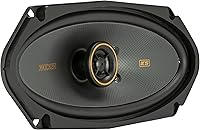
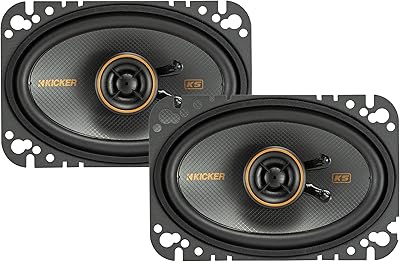
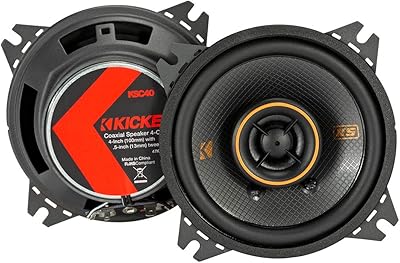
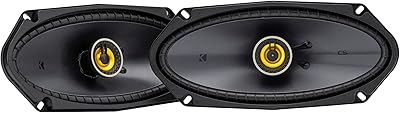
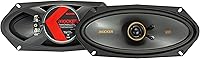
The Kicker KS-Series 4x10 Coaxial Speakers are a deliberate, considered upgrade for drivers who know their factory sound is underwhelming but aren't looking to rebuild their entire audio setup. The form factor matters here: 4x10 is a less common size than 6x9 or 6.5-inch rounds, so these fit a specific range of vehicles — older Ford trucks, certain Chrysler models, some Dodge vans — and if your car takes that size, you'll appreciate having a brand-name option rather than settling for a no-name filler. Kicker has earned genuine respect in car audio circles, not just among budget buyers but among enthusiasts who understand driver construction. You get both speakers in the box, and the expectations should be clear: this is about noticeably better clarity, not a wholesale transformation of your listening experience.
Features & Benefits

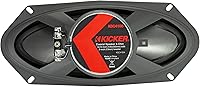
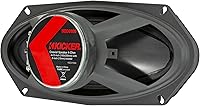
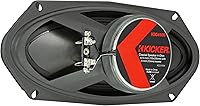
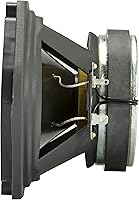
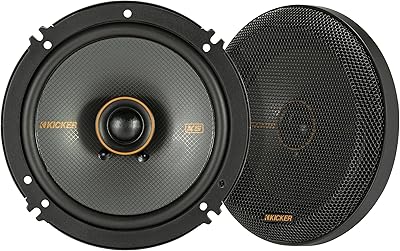
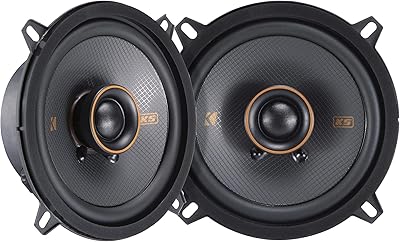
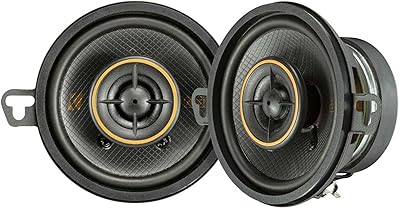
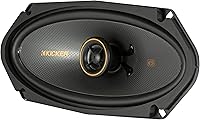
The internally dampened polypropylene cone is doing more work than it might seem. That dampening reduces the kind of low-level resonance that makes factory speakers sound muddy at mid-volume — it tightens up vocals and acoustic instruments in a way you notice almost immediately. The rubber surround, unlike the foam you'll find on cheaper alternatives, holds up better over years of heat cycling inside a car door. The 0.5-inch tweeter sits nearly flush with the grille, which matters practically: no spacers, no cutting, just a clean drop-in fit for most factory locations. Running at 4 ohms, these Kicker coaxial speakers pair directly with any standard head unit without needing an outboard amp to hit comfortable listening levels.

Best For

The KS-Series 4x10s were built with a clear use case in mind, and it shows. If you drive an older truck, a full-size van, or a domestic sedan with 4x10 openings, this is about as clean a drop-in replacement as you'll find at this price tier. They shine for listeners who care most about vocal clarity — spoken word, acoustic music, podcasts — rather than those chasing deep bass, which would realistically require a separate subwoofer regardless of what speakers are in the doors. DIY-friendly installation means no professional labor costs on top. And because they run fine off a stock head unit, you don't need to commit to a full system overhaul just to hear a real difference.

User Feedback

With over 400 ratings and a 4.6-star average, the real-world response to this Kicker speaker pair is consistently positive — though not uniformly so. Most buyers lead with the same observation: the jump from stock is immediately obvious, especially in the midrange. Installation stories are mostly straightforward, with several users calling out specific truck and van applications where fitment was exact. Where opinions split is on the low end — people who expected meaningful bass are disappointed, which is fair but also a realistic limitation of any small-format coaxial. A smaller segment found the tweeter slightly harsh at higher volumes. Long-term owners, though, tend to report solid durability over multiple years, which is often the more telling data point.

Pros

  • Drops straight into factory 4x10 locations on most vehicles without modification or additional hardware.
  • Rubber surround construction holds up far better than the foam surrounds common on budget alternatives over time.
  • Midrange clarity improvement over factory speakers is immediately obvious, especially for vocals and spoken word.
  • Runs off a standard head unit at 4 ohms — no separate amplifier needed to hear a real difference.
  • Minimal tweeter protrusion makes the KS-Series 4x10s one of the most fitment-friendly options in this size class.
  • Sold as a matched pair with consistent driver construction across both units.
  • Kicker's established track record in car audio means the internal engineering is serious, not just surface-level branding.
  • Over 400 real-world ratings averaging 4.6 stars reflects consistent satisfaction across a wide range of vehicle types.
  • Long-term owners regularly report the build quality holding up through years of daily use without noticeable decline.
  • Redesigned crossovers versus the prior generation deliver better frequency handoff between the woofer and tweeter out of the box.

Cons

  • Bass output is genuinely limited — a separate subwoofer is essentially required for any meaningful low-end presence.
  • The tweeter can sound slightly harsh at high volumes, which some listeners find fatiguing on longer drives.
  • The 4x10 format locks compatibility to a narrow range of vehicles, ruling out the majority of modern cars.
  • Treble-focused listeners used to dedicated tweeters may find the 0.5-inch integrated unit underwhelming at the very top end.
  • Tweeter height, though minimal, can still conflict with factory grille clips in certain older vehicle door panels.
  • Sound staging remains fairly flat compared to a properly configured component speaker setup in the same price range.
  • These Kicker coaxial speakers offer limited tuning flexibility for buyers who want precise control over their frequency balance.
  • A recurring minority of reviews flags early tweeter rattle in isolated units, pointing to some variability in quality control.
  • Buyers already committed to a full system upgrade may find a coaxial pair becomes a redundant and costlier interim step.
  • In-box installation instructions are minimal, which adds friction for first-time installers working without prior car audio experience.

Ratings

The scores below are generated by our AI rating engine after processing hundreds of verified purchase reviews for the Kicker KS-Series 4x10 Coaxial Speakers, with automated filtering applied to remove incentivized, bot-generated, and outlier submissions that could skew results. Our system evaluates each category by weighing real-world usage patterns — how these speakers perform on a daily commute, during a long highway drive, or after two winters in a cold-climate door panel — not just surface-level first impressions. Both the genuine strengths and the documented limitations are reflected honestly in every score, so your buying decision is grounded in actual owner experience rather than marketing language.

Sound Quality
83%
Upgrading from factory speakers, the improvement in overall sound is immediately apparent — voices are clearer, instruments have more definition, and the listening fatigue that comes with thin or blown OEM drivers disappears quickly. At everyday commuting volumes, these deliver a balanced, engaging sound that consistently impresses listeners across a wide range of music genres.
At the extremes — very low frequencies and very high volumes — the overall sound picture begins to show the limits of the 4x10 coaxial format. Listeners who have spent time with higher-end component setups will notice a ceiling in detail retrieval and dynamic range that the physical constraints of this design simply cannot overcome.
Bass Performance
52%
48%
For a 4x10 coaxial, the low-end output is genuinely better than the thin, papery bass of most factory speakers. On acoustic bass lines and spoken-word content, there is a warmth and body that typical OEM units cannot match, which makes a real difference during long commutes.
Anyone hoping for actual sub-bass impact will find the KS-Series 4x10s fall well short without a dedicated subwoofer running alongside them. The physical constraints of the format — small cone area, sealed door cavities — mean low-frequency extension below 60 Hz is more theoretical than felt, and bass-heavy genres like hip-hop or EDM expose this limitation quickly.
Midrange Clarity
89%
This is where the KS-Series 4x10s genuinely earn their reputation. Vocals — whether a morning talk show, a podcast conversation, or an acoustic singer-songwriter — come through with a crispness and presence noticeably ahead of any factory speaker. Regular commuters who live on spoken-word content will likely rate this as the most satisfying aspect of the upgrade.
At moderate-to-high volume levels, some listeners detect a slight coloration in the upper midrange that can make certain vocal tracks sound a touch forward or edgy. It is not a widespread complaint, but those with sensitive ears or critical listening habits may notice it, particularly with certain recording styles or highly compressed streaming audio.
Tweeter Performance
74%
26%
The 0.5-inch integrated tweeter punches above its size for a coaxial unit, adding genuine air and sparkle to acoustic guitar, cymbal work, and female vocals that typical factory tweeters smear into indistinction. For casual and moderate-volume listening, the high-frequency detail it adds to the overall presentation is a clear step forward.
A recurring thread in buyer feedback is that the tweeter can become somewhat sharp or fatiguing when pushed to higher volumes, particularly on bright recordings or compressed streaming audio. Listeners who regularly crank the volume during highway driving are more likely to encounter this, whereas those who keep levels moderate rarely flag it as a concern.
Build Quality
88%
The rubber surround is the standout build detail here — it resists the heat cycling inside a car door far better than the foam surrounds that deteriorate and crack on cheaper speakers within a few years. The cone feels solid and well-constructed out of the box, and the overall assembly inspires genuine confidence before a single note has been played.
A small number of buyers have reported isolated instances of tweeter rattle emerging earlier than expected, suggesting some variance in quality control across production batches. It is not a dominant complaint given the overall review sample, but it recurs consistently enough to register as a known risk rather than a one-off anomaly.
Installation Ease
91%
The minimal tweeter protrusion is the practical hero of this speaker's design — in most vehicles with 4x10 openings, the swap requires nothing beyond a screwdriver and a wiring harness adapter. First-time installers consistently describe the process as straightforward, with many reporting a complete install in under an hour per side.
The in-box documentation is sparse, which can slow down first-timers who encounter unexpected wiring configurations or an unfamiliar factory speaker mount. A wiring harness adapter is frequently needed but never included, adding a small additional cost and an extra trip to the parts store that some buyers do not anticipate before ordering.
Value for Money
84%
At this price tier, getting a genuine Kicker product with rubber surrounds, dampened cones, and updated crossover engineering represents a demonstrably better investment than comparably priced no-name alternatives. The 4.6-star average across a large and growing review pool confirms that most buyers feel the performance justifies the cost without reservation.
Buyers chasing primarily bass output, or those already planning a component system upgrade within a year, may find that coaxials at this price point delay a more meaningful build. The value equation is strongest for those who treat this as a final upgrade step, not a temporary placeholder for a larger audio project down the line.
Fitment Compatibility
76%
24%
For vehicles with a 4x10 opening — a format common in older Ford trucks, certain Dodge and Chrysler models, and domestic vans — the drop-in fitment is genuinely hassle-free, with near-zero tweeter protrusion eliminating the need for brackets or spacers in the majority of reported installations.
The 4x10 format is inherently restrictive, and many buyers who were initially attracted to these speakers have to walk away simply because their vehicle does not accommodate this size. A small number of users have also flagged slight grille clip interference on certain older door panels, requiring minor adjustment before the install could be completed.
Long-Term Durability
81%
19%
Unlike many competing coaxials at this tier that attract early positive reviews followed by mounting complaints about surround deterioration, the rubber surround design holds up through the heat and cold cycles car doors endure across seasons. Longer-term owners — those with 18 months or more of use — tend to post the same general satisfaction as first-impression buyers, which is a meaningful signal.
The long-term sample size is still developing given the January 2024 release date, meaning durability assessments are partially inferred from material quality and brand track record rather than a deep pool of multi-year owner data. A recurring cluster of early rattling complaints prevents a higher confidence score at this stage.
Head Unit Compatibility
93%
Running at 4 ohms, these drop directly onto almost any factory head unit without the need for an outboard amplifier — a significant practical advantage for buyers who want a meaningful upgrade without touching their dash or adding components. Owners across a wide range of vehicle makes consistently confirm stable, clean performance straight from the factory stereo.
Owners running unusually low-powered OEM systems in certain economy vehicles may find the speakers sound underwhelming until a modest amplifier is added. Those seeking to extract the full 100-watt peak rating will need aftermarket amplification, which is a separate investment not everyone factors into the total cost upfront.
Sensitivity & Output
86%
At 90 dB sensitivity, these produce noticeably louder output per watt than less efficient alternatives at this size, which is particularly valuable for drivers running factory head units with modest power. Road noise during highway driving — a common nemesis for car audio clarity — is more effectively masked at comfortable volume settings than with lower-sensitivity alternatives.
The sensitivity advantage becomes less relevant for listeners who push beyond moderate volumes, where tweeter brightness becomes the limiting factor rather than raw output level. At the highest volume settings, some distortion creep is reported — typical for coaxials in this format, but worth flagging for drivers who habitually listen loud.
Crossover Design
78%
22%
The redesigned integrated crossover compared to the prior KS-Series generation represents a genuine improvement in how the speaker hands off frequencies between the woofer and tweeter. In practice, this means better coherence across the vocal range — the transition between the two drivers is smooth enough that most listeners will not perceive it as a weak point during regular listening.
Since the crossover is integrated and fixed, there is no way to adjust the crossover point for different musical preferences or to optimize the handoff for a specific amplifier's output curve. Listeners building more sophisticated systems with active crossovers will find this inflexibility frustrating if precise frequency routing is part of their setup goals.
Brand Reputation
87%
Kicker is not a brand that coasts on name recognition — they have a consistent history of engineering speakers that surface in enthusiast circles for being well-built rather than just well-marketed. Buyers who have owned previous Kicker products approach these with justified confidence, and that trust is generally validated by the real-world performance these speakers deliver.
In some enthusiast communities, experienced listeners feel that Kicker's mid-range coaxial lineup does not differentiate itself enough from well-engineered competitors to justify automatic brand loyalty at this price point. The reputation is strong, but not dominant enough to make the buying decision a foregone conclusion for shoppers actively comparing multiple options.
Packaging & Contents
77%
23%
Receiving a matched pair in a single purchase is the right call — two pre-matched drivers from the same production batch ensure tonal consistency between channels, which matters for stereo imaging even in a modest daily-driver system. The speakers arrive well-protected, and most buyers report no transit damage or cosmetic issues out of the box.
Beyond the speaker pair itself, the box offers very little: hardware and documentation are minimal, and no wiring harness adapter is included despite the fact that most vehicles require one for a clean install. Buyers new to car audio may be caught off guard by the unplanned extra step and additional purchase before they can even begin.

Suitable for:

The Kicker KS-Series 4x10 Coaxial Speakers are the right call for a fairly specific group of buyers, and knowing whether you fall into that group matters before you spend a dollar. If your vehicle — a domestic truck, an older van, or certain Ford and Chrysler sedans — uses 4x10 speaker openings and the factory sound has become genuinely hard to tolerate, this pair is purpose-built for you. They install straight into most stock locations without bracket work or door modifications, making them particularly well-suited for DIY installers who don't want to spend an afternoon problem-solving. Listeners whose audio diet is heavy on vocals, podcasts, talk radio, or acoustic music will get the most from what these speakers do best: a cleaner, more defined midrange than any factory unit in this size class. They run fine off a stock head unit, so no amplifier is required to hear a meaningful improvement — making them a practical, one-step upgrade for anyone who simply wants noticeably better daily sound.
Not suitable for:

If your primary goal is deep, impactful bass, the Kicker KS-Series 4x10 Coaxial Speakers will disappoint — a 4x10 coaxial simply cannot move enough air to deliver it, and no amount of brand credibility changes that physical reality. Listeners who regularly push volume to its limits and are sensitive to treble sharpness should also take note, as the 0.5-inch tweeter has drawn criticism for sounding slightly aggressive under those conditions. Audiophiles chasing near-reference sound quality will bump into the hard ceiling of the coaxial format fairly quickly; this is a solid improvement over OEM, not a professional installation. Buyers whose vehicles use 5x7, 6x9, or standard round cutouts simply cannot install these without expensive modifications that undermine the entire value proposition. And if you're already planning a full build — dedicated amplifier, component speakers, separate subwoofer — budgeting toward coaxials at any price is likely the wrong sequence.

Specifications

  • Speaker Type: A 2-way coaxial design integrates the woofer and tweeter on a single axis within one housing.
  • Woofer Size: The woofer measures 4x10 inches, purpose-built for vehicles with factory 4x10 speaker openings.
  • Tweeter Size: An integrated 0.5″ tweeter handles high-frequency reproduction within the coaxial assembly.
  • Impedance: Rated at 4 ohms, making these speakers compatible with most factory head units and entry-level aftermarket amplifiers.
  • Power Range: Recommended amplifier power spans 15 to 100 watts, accommodating both stock head units and modest aftermarket amplification.
  • Sensitivity: Sensitivity is rated at 90 dB, allowing the speakers to reach comfortable listening volumes from relatively modest power inputs.
  • Frequency Response: The stated frequency response extends from 43 Hz to 21,000 Hz.
  • Cone Material: The woofer cone is made from internally dampened polypropylene to reduce unwanted resonance and coloration during playback.
  • Surround Material: The woofer surround is constructed from rubber, offering greater long-term durability than the foam surrounds common in budget alternatives.
  • Tweeter Protrusion: The tweeter sits at minimal to zero protrusion height above the baffle, enabling drop-in installation without bracket modifications in most vehicles.
  • Crossover Type: A built-in passive crossover routes high frequencies to the tweeter and mid-to-low frequencies to the woofer within the same assembly.
  • Voice Coil: The voice coils have been redesigned compared to the prior KS-Series generation for improved thermal handling and overall efficiency.
  • Quantity: Each purchase includes one matched pair of speakers.
  • Item Weight: The combined item weight is listed at 3.95 pounds.
  • Dimensions: Listed product dimensions are 1.88 x 3.07 x 3.07 inches as recorded in the manufacturer product listing.
  • Model Number: The official manufacturer model number for this speaker configuration is 51KSC41004.
  • Release Date: These speakers became available for purchase in January 2024.

Related Reviews

Kicker 51KSC4604 KS-Series 4x6 Coaxial Speakers
79%
84%
Sound Quality
52%
Bass Response
88%
Midrange Clarity
76%
Treble Detail
86%
Build Quality
More
Kicker 51KSC6804 KS-Series 6x8 Coaxial Speakers
83%
87%
Sound Quality
91%
Vocal Clarity
71%
Bass Performance
88%
Installation Ease
83%
Value for Money
More
KICKER 47KSC404 KS Series 4″ Coaxial Speakers
85%
88%
Sound Quality
75%
Bass Performance
91%
Ease of Installation
84%
Durability & Waterproofing
92%
Value for Money
More
KICKER KSC6904 6x9 Coaxial Speakers
80%
91%
Sound Clarity
67%
Bass Performance
88%
Installation Ease
84%
Build Quality
83%
Value for Money
More
Kicker 51KSC3504 3.5″ Coaxial Speakers
80%
88%
Sound Clarity
63%
Bass Performance
84%
Treble & High-Frequency Response
91%
Installation Ease
82%
Build Quality & Materials
More
Kicker 51KSC504 5.25″ Coaxial Car Speakers
80%
83%
Sound Quality
61%
Bass Response
91%
Ease of Installation
88%
Compatibility
79%
Build Quality
More
KICKER 51KSC6504 6.5-inch Coaxial Car Speakers
80%
88%
Sound Clarity
63%
Bass Performance
91%
Installation Ease
87%
Build Quality
84%
Value for Money
More
KICKER 50CSC4104-4x10 Drop-in Coaxial Speakers
86%
88%
Sound Quality
91%
Ease of Installation
80%
Bass Performance
85%
Durability
92%
Value for Money
More
Kicker CSC44 4-Inch Coaxial Car Speakers
79%
86%
Sound Clarity
62%
Bass Performance
83%
Treble & Highs
91%
Installation Ease
78%
Build Quality
More
Kicker CSC54 5.25-Inch Coaxial Speakers
77%
83%
Sound Clarity
61%
Bass Performance
91%
Installation Ease
78%
Build Quality
88%
Value for Money
More

FAQ

The Kicker KS-Series 4x10 Coaxial Speakers require a factory 4x10 opening in your door or dash panel, so confirming your vehicle's speaker size before ordering is essential. Common compatible applications include certain Ford F-150s from the late 1990s and 2000s, older Dodge trucks, and various domestic vans, but the safest approach is to cross-check against a vehicle fitment database before purchasing. If your car uses a 5x7, 6x9, or standard round cutout, these will not install cleanly without custom bracketing that defeats the simplicity of the swap.
No separate amplifier is needed — at 4 ohms, the KS-Series 4x10s are designed to run directly off a factory stereo without any issues. The 90 dB sensitivity rating means they reach comfortable listening volumes from modest head unit output, which is a practical advantage for a straightforward one-component upgrade. If you decide to add an amp later, they are rated to handle up to 100 watts, so there is headroom to grow.

The low end is noticeably fuller than a worn-out OEM speaker, but a 4x10 coaxial has real physical limits on how much air it can move, so managing expectations here matters. The rated response starts at 43 Hz, but meaningful bass punch in the lower registers genuinely needs a dedicated subwoofer to deliver it. If bass is a top priority, plan to pair this Kicker speaker pair with a sub — they handle mids and highs well, and the combination gives you a more balanced overall system.

For a first-time installer with basic hand tools, this is one of the more approachable swaps in car audio. The minimal tweeter protrusion means no cutting or bracket modifications for most vehicles — you remove the door or dash panel, unplug the factory connector, and drop the new speaker in. You may need a wiring harness adapter if your car uses a proprietary connector, but those typically run under $15 and require no soldering.

All three brands offer competitive options at this tier, and the real-world differences are genuinely subtle. The KS-Series 4x10s have a meaningful edge in surround longevity thanks to rubber construction versus the foam used on some JBL and Pioneer alternatives, while JBL sometimes earns marks for a slightly brighter top end. Pioneer's TS-series 4x10 options are also worth comparing if you want a broader sense of what is available before committing.

Absolutely, and it is actually the most effective way to use them. These Kicker coaxial speakers are optimized for midrange and high-frequency performance, so handing off the low end to a dedicated subwoofer — typically crossing over around 80 Hz — lets each component focus on what it does best. Most aftermarket head units and amplifiers include a built-in low-pass filter that makes configuring that crossover point a straightforward process.

Kicker typically backs their KS-Series products with a limited manufacturer warranty against defects, though the exact duration and terms are worth confirming directly on Kicker's website at the time of purchase since coverage details can vary by region. Registering your product after installation is generally recommended regardless, as it can affect the support options available if something goes wrong. The brand has a well-regarded reputation for customer service responsiveness within the car audio community.

Coaxial speakers combine the woofer and tweeter into a single unit, which keeps installation simple and the price accessible — the trade-off is that you cannot position the tweeter independently to optimize sound staging in the cabin. Component systems separate the two drivers, giving you more control over imaging and typically better overall fidelity, but they require additional installation effort and a higher budget. For most drivers upgrading from factory sound without committing to a full audio build, coaxials are the more practical starting point.

Longer-term owners tend to report solid durability, which is not always the case at this price point. The rubber surround is the key factor here — foam surrounds on cheaper speakers commonly crack or deteriorate after a few years of heat exposure inside car doors, while rubber handles that thermal cycling considerably better. Based on available owner feedback, surround degradation has not surfaced as a common complaint even among buyers who have had the speakers installed for an extended period.

In a size as specific as 4x10, quality options are already more limited than in popular formats like 6.5-inch round, which makes the brand decision more meaningful than it might seem. The rubber surround, internal cone dampening, and redesigned crossover represent real build quality differences that budget alternatives routinely skip, and those details tend to show up in both sound quality and long-term durability. A 4.6-star average from over 400 real-world owners — people who actually installed them in their daily vehicles — is probably the most grounded measure of value available.

Where to Buy