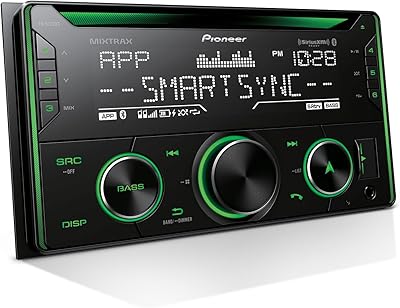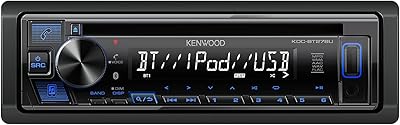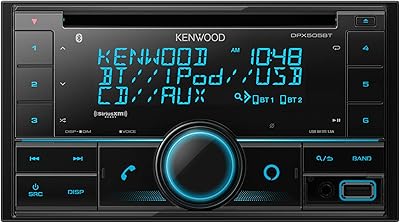
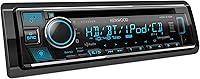
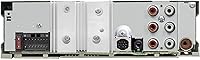
Overview

The Kenwood KDC-X705 Single DIN CD Receiver occupies a specific but loyal corner of the car audio market — a head unit built for drivers who want modern smart features without the fitment headaches of a larger chassis. Released in 2022, it targets vehicles where single-DIN slots are the only option, making it a natural upgrade path for older cars and trucks. At its price tier, it competes directly with Pioneer and Sony offerings, but Kenwood's pitch is clear: give drivers Alexa and HD Radio in a compact form factor that does not require any dash modifications to install.

Features & Benefits

Ask Alexa to skip to the next song or find the nearest gas station, and the KDC-X705 handles it cleanly — most of the time. The dual Bluetooth pairing is genuinely useful for anyone who carries a work phone and a personal one; switching between them is a button press, not a dive into menus. HD Radio shines during a long highway stretch where digital FM reception holds a steady, clean signal that standard analog radio cannot match. The three 5-volt pre-outs are the real draw for anyone planning to add an amplifier, offering a noticeably stronger signal floor than the 4-volt outputs common on mid-range competitors. The front USB charges while you drive.

Best For

This Kenwood head unit is a strong fit for a fairly specific kind of buyer. If your vehicle has a single-DIN dash opening, this upgrade path makes a lot of sense — you get streaming and voice control without cutting into your dashboard. Car audio builders who plan to run external amplifiers will find the high-output pre-outs worth the premium over cheaper alternatives. Two-phone commuters will appreciate not having to manually disconnect and reconnect devices. Anyone already using Alexa at home will find the in-car continuity natural. If you still have a stack of CDs from the early 2000s, there is room for those too.

User Feedback

With roughly 90 ratings and a 4.3-star average, the feedback on this single-DIN receiver is encouraging but thin. Satisfied buyers most often point to clear, clean audio and how well the two-phone Bluetooth actually works in daily practice. Where the unit draws more mixed reactions is Alexa: voice recognition holds up in quieter cabins but falters on highway drives with road noise in the mix. A recurring complaint involves occasional app-link drop-outs on longer trips, specifically on Android devices over Bluetooth. The physical controls earn consistent praise for staying easy to navigate at a glance. As a package, it earns its rating — with the caveat that 90 reviews is not a definitive sample.

Pros

  • Three 5-volt pre-outs deliver a strong, clean signal path for anyone adding external amplifiers.
  • Dual-phone Bluetooth keeps work and personal devices paired simultaneously, removing daily reconnection hassle.
  • HD Radio gives digital-quality local station reception with no subscription or monthly fee required.
  • Front USB handles both device charging and music playback control through a single accessible port.
  • Spotify and Pandora app-link works across both iPhone and Android, covering the most common streaming setups.
  • SiriusXM-ready design preserves the option to add satellite radio later without swapping the head unit.
  • The KDC-X705 drops into a single-DIN slot without any dashboard cutting or special modification on compatible vehicles.
  • Physical buttons and dials are arranged logically, making adjustments by feel while keeping eyes on the road.
  • CD, MP3, and WMA support means buyers with physical media libraries do not have to abandon them.
  • Alexa handles music requests, hands-free calls, and smart home commands reliably in controlled cabin conditions.

Cons

  • Alexa voice recognition degrades noticeably at highway speeds where wind and road noise enter the cabin.
  • Android users have reported recurring Bluetooth app-link drop-outs during extended drives.
  • Apple CarPlay and Android Auto are absent, which is a meaningful gap for smartphone-centric drivers at this price.
  • With roughly 90 ratings, the review pool is too thin to draw confident long-term reliability conclusions.
  • Buyers coming from touchscreen units will face a real adjustment; there is no tap-based interaction anywhere.
  • Installation often requires a separate vehicle-specific trim adapter or mounting kit, adding cost and effort.
  • The onscreen display is functional but modest, and does not compete visually with newer double-DIN alternatives.
  • No built-in navigation means Alexa can assist by voice only — no map or visual guidance is available onscreen.
  • Bluetooth audio streaming quality can vary across devices, with some users noting inconsistency between sessions.

Ratings

Our ratings for the Kenwood KDC-X705 Single DIN CD Receiver are generated by AI after analyzing verified buyer reviews from markets worldwide, with spam, bot activity, and incentivized feedback actively filtered out. Every score reflects the full distribution of genuine user experiences, surfacing both the areas where this head unit consistently earns trust and the pain points real owners run into. The resulting picture is intentionally balanced — not a marketing summary, but an honest signal for anyone deciding whether this receiver fits their specific situation.

Pre-Out Performance
91%
The three 5-volt pre-outs are the KDC-X705's headline spec for anyone planning an amplified setup. Buyers building out component speaker or subwoofer systems report noticeably cleaner signal headroom compared to the 2-volt and 4-volt outputs common in this segment. That extra voltage translates to less amplifier gain required and, in practice, a quieter noise floor.
The benefit is largely irrelevant for buyers who never plan to add external amplification, since the built-in amplifier output is adequate but unremarkable on its own. Extracting full value from the pre-outs requires additional investment in RCA cabling and amplifier hardware on top of the purchase price.
Sound Quality
83%
Drivers upgrading from older units report a clear improvement in audio clarity, particularly on HD Radio where digital signals cut out the hiss of analog FM. The internal amp handles factory speaker setups capably at moderate volumes, and the 5-volt pre-outs unlock noticeably cleaner performance when paired with aftermarket amplifiers.
Push the built-in amplifier toward higher volumes and there is some audible strain, especially in the low-mid range without a subwoofer filling in below. The 2.0 stereo channel configuration is fine for most installs but leaves more ambitious builds — front stage plus sub — fully dependent on adding external hardware.
Bluetooth Connectivity
71%
29%
The dual-phone pairing earns consistent praise from commuters who carry two devices, since both stay remembered and active without needing to reconnect each time they get in the car. Call quality over Bluetooth is generally clear in urban and suburban driving conditions, and toggling between the two paired phones requires just a single button press.
Android users in particular report intermittent audio drop-outs during long highway drives, a pattern consistent enough across reviews to suggest more than isolated incidents. iPhone users fare better overall, but even some iOS owners have noted that app-link streaming can occasionally lose its connection and require a manual restart of the source app.
Alexa Integration
69%
31%
In quieter cabin conditions, Alexa responds accurately and handles music requests, navigation queries, and quick smart home commands with real daily utility. Drivers who commute on familiar city routes find the hands-free experience genuinely reduces phone interaction, which is the core reason to choose this unit over a less voice-connected alternative.
At highway speeds or with windows open, road and wind noise regularly overwhelm the microphone, causing Alexa to misinterpret commands or fail to activate altogether. The unit also depends entirely on the phone's data connection to reach Amazon's servers, so any cellular dead zone mid-command means the request simply does not complete.
Value for Money
78%
22%
Buyers locked into a single-DIN format get a meaningful set of genuinely useful technology — HD Radio, Alexa, dual Bluetooth, and high-output pre-outs — without paying for a touchscreen they cannot fit. For drivers planning an amplified build, the 5-volt pre-outs alone recoup some of the premium over cheaper alternatives.
Buyers who will not use the pre-outs, rarely touch Alexa, or mostly stream from a single phone may find the price hard to justify against simpler, cheaper single-DIN options. The absence of CarPlay or Android Auto, which some competing units offer at a similar or lower price, narrows the value case for smartphone-centric drivers.
HD Radio Performance
88%
In metro and suburban markets with strong local station coverage, HD Radio delivers noticeably sharper, cleaner audio than standard analog FM, particularly during longer drives where analog signals waver and drift. Buyers who commute through well-covered radio markets consistently rate this among the strongest day-to-day features of this single-DIN receiver.
HD Radio reception depends entirely on geographic coverage, and drivers in rural areas or markets with fewer participating stations will see little benefit over standard AM/FM. The metadata display for station information is functional but not as visually rich as what some competing units present, a minor gap for radio-focused buyers.
Ease of Use
85%
Physical controls — tactile buttons and a central rotary knob — earn consistent praise from buyers who prioritize keeping eyes on the road. Volume, source selection, and Alexa activation all become reachable by muscle memory within a few days of regular use, reducing the fumbling that touch-reliant interfaces tend to cause while driving.
Drivers transitioning from modern touchscreen head units will face a steeper adjustment than expected, since there is no visual menu that responds to a swipe or tap. The front-panel button layout is text-heavy and can be genuinely hard to read at a glance in bright daylight or direct sunlight conditions.
USB Functionality
84%
The front-panel USB placement is practical and well-positioned for daily use, keeping cable clutter manageable without requiring a reach behind the dash. iPhone users benefit from tighter Spotify app-link integration via USB, with the head unit's physical controls managing playback directly inside the app.
Android users are limited to Bluetooth for app-link and cannot use USB for audio streaming, meaning they miss the tighter playback integration available to iPhone owners. Charging speed through the front USB is adequate but not fast by current standards, which can frustrate drivers with higher-drain devices on longer trips.
Build Quality
82%
18%
The faceplate feels appropriately solid, the disc tray opens and closes without wobble, and the overall construction holds up well to the heat cycling a car interior demands across seasons. Buyers upgrading from budget head units frequently cite an immediate, tangible step up in how the buttons and volume knob feel under the hand.
The front-panel finish picks up fingerprints quickly, which matters more than expected on a unit that gets touched multiple times per drive. Long-term durability data is still limited given the 2022 release date, so disc-tray longevity across several years of daily use remains an unresolved question in the available feedback.
Display Clarity
67%
33%
The display conveys essential information — track title, source, and station name — clearly enough for a quick glance during a drive. Buyers who prioritize physical controls over screen interaction tend to find it entirely adequate, since it shows what is playing without demanding extended visual attention.
Anyone accustomed to high-resolution color displays on newer head units will find this screen modest and underwhelming by direct comparison. In bright sunlight or direct glare, contrast drops enough to make the display noticeably harder to read at a glance, and there is no auto-brightness adjustment to compensate.
CD & Media Playback
86%
CD playback performs exactly as expected from a Kenwood unit at this level — clean audio, fast disc reading, and solid format support for MP3 and WMA files on both disc and USB drives. Drivers with a physical album library report the disc mechanism handles everyday use without complaint or misread errors.
CD playback is a niche use case for most buyers choosing this unit primarily for its smart features, so the transport adds real value only for a specific subset of owners. Lossless audio formats like FLAC are not supported, limiting appeal for listeners with higher-resolution digital libraries stored on USB drives.
Installation Experience
76%
24%
For any installer with basic experience, fitting this receiver into a single-DIN slot is a straightforward job that follows standard Kenwood wiring conventions. The chassis dimensions are typical, connectors are clearly labeled, and the unit drops into a standard ISO DIN opening without unusual modification.
First-time installers consistently discover that a vehicle-specific trim adapter and wiring harness are not included, adding cost and a separate sourcing step before installation can begin. Vehicles with proprietary stereo systems on certain GM, Ford, or Chrysler platforms may need additional adapter modules to retain factory features like steering wheel audio controls.
Streaming App Integration
74%
26%
Spotify and Pandora work through dedicated app-link connections that give the head unit direct control over playback — browsing, skipping, and volume — without needing to look at or handle the phone. iPhone users connecting via USB get the most stable and responsive version of this streaming experience.
Android users are limited to Bluetooth-only app-link, which tends to be less stable and occasionally drops mid-stream compared to the USB path available to iPhone owners. Services outside of Spotify and Pandora — such as YouTube Music or Tidal — revert to generic Bluetooth audio with no head unit integration whatsoever.

Suitable for:

The Kenwood KDC-X705 Single DIN CD Receiver is built for a specific but underserved buyer: drivers with older or simpler vehicles that have a single-DIN slot and no desire to recut their dashboard for a larger screen. It particularly suits daily commuters who carry two phones and want the friction of managing them on the road reduced to a single button press. Alexa users who have already built routines at home will find the in-car voice experience a natural extension of that habit, even if it holds up better in city traffic than on a loud highway. Car audio builders planning to run aftermarket amplifiers will get more out of the three 5-volt pre-outs than they would from most rivals in this segment. It also fits the driver who still owns CDs but wants Spotify available as a backup — a combination that few head units at any price actually support without compromise.

Not suitable for:

The Kenwood KDC-X705 Single DIN CD Receiver is a poor match for anyone whose vehicle has a double-DIN opening, since it will not fill that space without a filler kit. Drivers who have grown accustomed to app-based interfaces — particularly those expecting Apple CarPlay or Android Auto — will find their absence a hard stop at this price level. Heavy Android users who depend on app-link streaming over long drives may encounter Bluetooth drop-outs often enough to erode daily confidence in the unit. Anyone who needs onscreen turn-by-turn navigation will not find it here; Alexa can assist verbally, but there is no display large enough to show a map. If a large high-resolution screen and a fully modern touch interface are priorities, a different category of head unit will serve better.

Specifications

  • Form Factor: The unit uses a standard single-DIN chassis, fitting any vehicle dash opening designed for a DIN-1 head unit.
  • Dimensions: Overall unit dimensions measure 8.9 x 9.4 x 4 inches, consistent with a standard single-DIN receiver chassis.
  • Weight: The receiver weighs 3.2 pounds, in line with typical single-DIN head unit construction.
  • Bluetooth: Supports simultaneous pairing with two Bluetooth devices, allowing one-button switching between connected phones during a drive.
  • HD Radio: Receives FM and AM HD Radio broadcasts, delivering digital-quality audio from local stations at no ongoing subscription cost.
  • Voice Control: Alexa Built-in is integrated directly into the unit, enabling hands-free commands for music, calls, navigation, and smart home control.
  • Streaming Apps: Supports Spotify and Pandora via app-link, connecting over USB for iPhone and over Bluetooth for Android devices.
  • Pre-Out Voltage: Equipped with three pairs of 5-volt RCA pre-outputs for delivering a strong, low-noise signal to downstream external amplifiers.
  • USB Input: A front-panel USB input supports Mass Storage Class devices, music playback control, and simultaneous device charging.
  • Satellite Radio: The unit is SiriusXM-ready, requiring an optional external SiriusXM tuner module for satellite radio reception.
  • Media Playback: Plays standard CDs and supports MP3 and WMA audio file formats from USB-connected flash drives and portable devices.
  • Phone Compatibility: Works with both iPhone (USB or Bluetooth) and Android smartphones (Bluetooth only) for audio streaming and hands-free calling.
  • Audio Output: Delivers audio in a 2.0 stereo channel configuration with stereo surround sound processing for the vehicle speaker system.
  • Color: Available exclusively in Black, with a traditional front-panel design suited to most vehicle interiors.
  • Model Number: The official model designation is KDC-X705, manufactured by Kenwood and first made available in April 2022.
  • Brand: Manufactured by Kenwood, a brand with an established history in consumer and professional car audio equipment.

Related Reviews
Kenwood KDC-X305 CD Car Stereo Receiver
79%
88%
Sound Quality
91%
Equalizer & Tuning
86%
Bluetooth Connectivity
84%
CD Playback
83%
High-Res Audio Support
More
Kenwood KMR-D378BT Marine CD Receiver
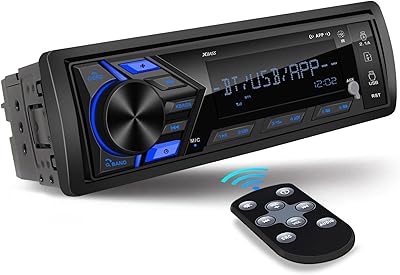
86%
88%
Ease of Installation
91%
Sound Quality
92%
Weatherproof Durability
79%
Bluetooth Connectivity
85%
Voice Control Functionality (Alexa)
More
ABSOSO Single Din Bluetooth Car Stereo
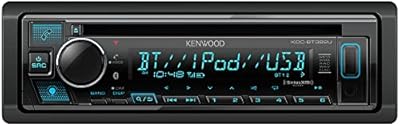
72%
88%
Value for Money
81%
Bluetooth Performance
63%
Sound Quality
56%
Build Quality
62%
Display & Visibility
More
Kenwood KDC-BT382U CD Car Stereo Receiver
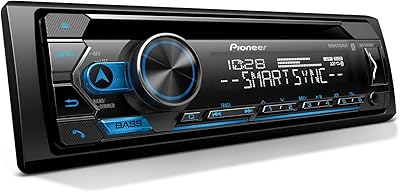
75%
86%
Bluetooth Connectivity
83%
Sound Quality
91%
Ease of Installation
78%
Value for Money
63%
Voice Assistant (Alexa)
More
Kenwood KDC-BT278U CD Car Stereo with Bluetooth
83%
88%
Bluetooth Performance
84%
Sound Quality
90%
Ease of Installation
85%
App Integration (Spotify, Pandora)
80%
Build Quality
More
Kenwood KDC-BT35 CD Car Stereo Receiver
78%
88%
Bluetooth Performance
83%
Sound Quality
84%
Ease of Installation
62%
Display Readability
71%
Amazon Alexa Integration
More
Kenwood KMR-D362BT Marine CD Receiver
76%
83%
Bluetooth Performance
78%
Sound Quality
81%
Water Resistance
58%
Display Readability
84%
Ease of Installation
More
Pioneer DEH-S4220BT 1-Din CD Receiver
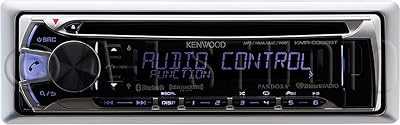
79%
88%
Bluetooth Reliability
79%
Sound Quality
91%
Ease of Installation
86%
Value for Money
58%
Display & Interface
More
Pioneer FH-S722BS Double-DIN CD Receiver
74%
76%
Bluetooth Performance
78%
Sound Quality
81%
Ease of Installation
83%
Value for Money
69%
User Interface & Controls
More
Pyle PLTS78DUB Single DIN Car Stereo
68%
74%
Value for Money
61%
Ease of Installation
78%
Touchscreen Responsiveness
81%
Bluetooth Performance
66%
Audio Quality
More

FAQ

It depends entirely on your vehicle's dash opening. This unit is built for single-DIN slots only, which are the narrower openings found in many older cars, trucks, and SUVs. If your vehicle has a double-DIN opening, you can still install it with an appropriate filler adapter kit, but there will be a gap above or below the unit. A quick search of your vehicle's year, make, and model alongside the term 'head unit size' will confirm which format you have.

The Kenwood KDC-X705 Single DIN CD Receiver does not support Apple CarPlay or Android Auto. This is one of the clearer trade-offs at this form factor. If mirroring your phone's full interface on a display is a priority, you would need a double-DIN touchscreen unit instead. What this receiver offers in place of those platforms is Alexa Built-in and Bluetooth app-link for Spotify and Pandora, which handles most daily streaming and voice-command needs without a full touchscreen.

Yes, the KDC-X705 requires your paired smartphone to be connected via Bluetooth, since the unit itself has no cellular or Wi-Fi radio of its own and relies on the phone's data connection to reach Amazon's servers. Once connected, Alexa activates with a button press and handles music requests, calls, and navigation queries without requiring you to touch the phone. Voice recognition works well in quieter driving conditions but can struggle to pick up commands reliably at highway speeds with significant road noise in the cabin.

Yes. The dual Bluetooth pairing keeps two devices connected simultaneously, and toggling between them for calls or audio is a single button press rather than a trip into the settings menu. This works well for anyone who carries separate work and personal phones. Both stay paired in the background; you simply choose which one is active for audio playback or incoming calls at any given moment.

Officially supported app-link services are Spotify and Pandora. For both, you install the app on your phone, connect your device, and playback controls route directly through the head unit's buttons and knob. Other services like Apple Music or Amazon Music can still play audio over a standard Bluetooth connection, but they will not have the deeper integration that lets the unit's controls manage playback natively within the app.

HD Radio is completely free — no subscriptions, activation fees, or monthly charges involved. It broadcasts a digital signal alongside the existing analog FM and AM frequencies, and this receiver decodes that signal automatically whenever you tune to a participating station. In areas with good local station coverage, the improvement in audio clarity over standard FM analog is noticeable, particularly on music-focused stations.

Yes, and the three 5-volt pre-outs are one of the stronger arguments for choosing this receiver over cheaper alternatives. Most budget head units offer 2-volt or 4-volt pre-out signals, so the 5-volt output here gives external amplifiers more signal headroom to work with before introducing noise into the chain. You get front, rear, and subwoofer channels, which is a complete setup for a typical two-amp or amp-plus-sub configuration.

Yes, charging and audio playback happen simultaneously through the front USB input. For iPhone users, connecting via USB also enables deeper Spotify app-link control directly from the head unit's interface. Android users connect for charging but stream audio over Bluetooth instead. The USB port also reads MP3 and WMA files from standard flash drives formatted as Mass Storage Class devices, so loading a drive with music is a straightforward alternative to streaming entirely.

For most users, Bluetooth pairing and call quality are reliable during typical city and suburban driving. The area where things become less consistent is extended highway travel, particularly for Android users depending on Bluetooth for app-link streaming. A recurring pattern in buyer feedback points to occasional audio drop-outs on longer drives. It is not a universal experience, but it is worth factoring in if uninterrupted wireless streaming across several hours is a regular requirement for you.

The receiver itself does not include a vehicle-specific installation kit. You will almost certainly need a separate dash trim kit and a wiring harness adapter matched to your vehicle's make, model, and year, both of which are widely available from brands like Metra or Scosche for typically between 10 and 30 dollars. If a shop is doing the install, they usually source the correct adapter as part of the job, but confirming that upfront saves surprises on the invoice.

Where to Buy