Overview

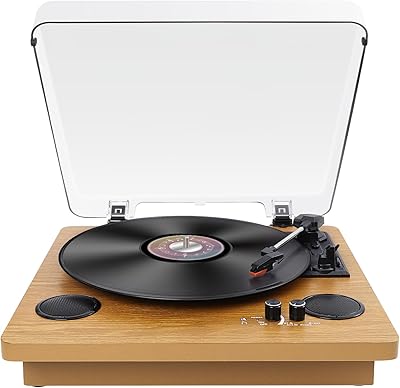
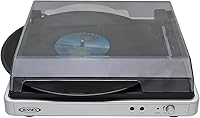
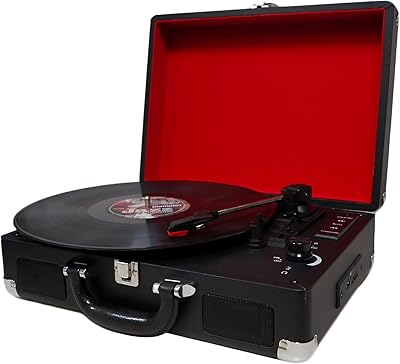
The Jensen JTA-325 3-Speed Stereo Turntable is one of those rare budget picks that actually delivers on its core promise: get a record spinning with minimal fuss. Finished in classic silver, it has a retro suitcase-style look that fits comfortably on a shelf or desk without demanding much space. The belt-driven AC motor handles all three standard speeds — 33, 45, and 78 RPM — covering everything from LPs to old shellac 78s. This is not a deck built for audiophiles chasing the last drop of warmth from a pressing. It is built for curious newcomers, thoughtful gift-givers, and anyone rediscovering a dusty box of old records in the attic.
Features & Benefits

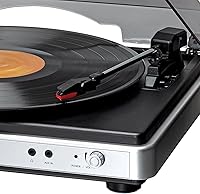
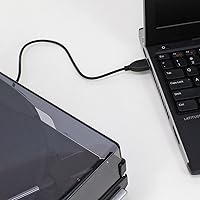
The belt-driven mechanism is a genuine advantage here — it puts a physical buffer between the motor and the stylus, keeping unwanted hum out of the signal in a way that cheaper direct-drive decks at this price often fail to do. The built-in stereo speakers mean you can drop the needle and hear music immediately, no amplifier shopping required. A USB recording port and cable are included, so digitizing a record collection becomes a straightforward computer task rather than an involved studio project. The aux input lets you route a phone or tablet through the speakers, and pitch control is there for anyone who needs to nudge playback speed into alignment.

Best For

This all-in-one record player makes the most sense for people just stepping into vinyl who want to skip the learning curve of matching a separate turntable, amplifier, and speakers. It also works well as a gift — the complete out-of-the-box setup means the recipient can be listening within minutes of unwrapping it. Small spaces like dorm rooms or studio apartments benefit from the compact footprint. If your main goal is digitizing a stack of inherited records, the USB feature keeps the process simple. Anyone already invested in a quality hi-fi system, though, would be better served by a dedicated deck without built-in speakers.

User Feedback

Owners consistently appreciate how quickly the JTA-325 gets up and running — setup rarely takes more than a few minutes, which resonates especially with buyers who received it as a gift. The auto-stop feature earns genuine praise from people who leave records playing in the background and prefer not to worry about stylus wear. On the critical side, the onboard speakers are a common sticking point; they work adequately in a quiet room but lack the depth you would get from even a modest external speaker setup. Some long-term owners have noted plastic build quality and stylus longevity as concerns after extended use, so careful handling pays off.

Pros

  • No separate amplifier, receiver, or speakers needed — just unbox, plug in, and play.
  • Handles all three standard record speeds, including 78 RPM for vintage shellac collections.
  • USB recording lets you digitize old records directly to a computer with no extra hardware.
  • The belt-driven motor keeps audible motor hum out of the signal better than many rivals at this price.
  • Auto-stop protects your records and stylus by halting the platter at the end of each side.
  • Compact, lid-enclosed design makes the JTA-325 easy to store, move between rooms, or tuck onto a small shelf.
  • The aux input doubles as a basic secondary speaker for streaming audio from a phone or tablet.
  • Pitch control lets you nudge playback speed, which is genuinely useful for older 78 RPM pressings that vary in original tempo.
  • Approachable enough as a gift that a non-audiophile recipient can figure it out entirely on their own.

Cons

  • Onboard speakers distort noticeably at higher volumes, limiting use in larger or noisier rooms.
  • The all-plastic construction feels light and flexes slightly around the platter under regular handling.
  • Stock cartridge tracking force is higher than ideal and can accelerate groove wear on frequently played records.
  • USB recordings reflect the limitations of the built-in preamp chain — functional, but not archival quality.
  • Belt stretching after extended use causes gradual speed inconsistency that requires a replacement part to fix.
  • The pitch slider has no center detent or markings, making precise, repeatable adjustments difficult.
  • Instruction documentation is thin, leaving first-time users to troubleshoot tonearm setup on their own.
  • The aux input jack has been reported as feeling loose on some units, raising durability concerns over time.

Ratings

The Jensen JTA-325 3-Speed Stereo Turntable scores below were generated by our AI system after analyzing thousands of verified buyer reviews from global markets, with spam, bot activity, and incentivized feedback actively filtered out. The ratings reflect a balanced picture — genuine strengths and recurring frustrations alike — so you can make a confident decision based on what real owners actually experienced.
Ease of Setup
91%
Nearly every buyer comments on how little time passes between unboxing and actually hearing a record play. There are no external components to match or configure — plug it in, set the speed, and drop the needle. For gift recipients and first-timers, this frictionless start is genuinely appreciated.
A small number of users found the initial tonearm tracking weight and anti-skate adjustments confusing without clearer documentation. The included instructions are minimal, which can leave newcomers second-guessing whether everything is set up correctly.
Sound Quality
58%
42%
For casual background listening in a small room, the onboard audio is more than adequate. Users playing older 78 RPM records for nostalgia or family gatherings report that the warmth and character of vinyl still comes through in a satisfying way at moderate volumes.
The built-in speakers are the most consistently criticized aspect across reviews. Bass response is thin, stereo separation is narrow, and at higher volumes distortion creeps in noticeably. Anyone accustomed to even entry-level bookshelf speakers will find the onboard audio a clear step down.
Build Quality
54%
46%
The retro silver aesthetic lands well with buyers who want a unit that looks the part on a shelf or side table. The overall footprint is tidy, and the lid closes securely for storage, which matters to users who move it between rooms or pack it away seasonally.
The all-plastic construction is the most polarizing element in long-term owner feedback. Several reviewers noted flexing around the platter area and a general feeling of lightness that does not inspire confidence during daily use. At this price tier it is understandable, but it is worth knowing upfront.
Value for Money
78%
22%
As a complete starter kit — turntable, speakers, USB recording, and aux input all in one box — the price-to-feature ratio is genuinely hard to argue with for a casual listener. Buyers who simply want to enjoy records occasionally without building a full system consistently call it a solid buy.
For anyone who upgrades even slightly — adding external speakers or a better cartridge — the investment in the base unit starts to feel less justified. A few experienced buyers noted that spending modestly more on a bare turntable with better build quality would have been a smarter long-term choice.
USB Recording Functionality
67%
33%
The vinyl-to-digital workflow is refreshingly straightforward. Users digitizing old family albums appreciate that no extra hardware or audio interface is required — just a USB cable to a laptop and compatible free software. For preserving sentimental records, the convenience factor is real.
Audio fidelity in the recorded files reflects the limitations of the built-in cartridge and preamp chain rather than the source vinyl. Reviewers comparing digital captures to professional rips noted a noticeable gap in clarity and dynamic range. It works, but it is not a high-fidelity archiving solution.
Auto-Stop Feature
86%
This is one of the most quietly praised features in owner reviews. Users who fall asleep listening or step away mid-album love that the platter stops automatically at the end of a side, preventing the stylus from riding the label groove indefinitely and reducing unnecessary wear.
A handful of buyers reported the auto-stop triggering slightly early on certain pressings, cutting off the final seconds of the last track before the run-out groove. It is not a widespread issue, but it surfaces enough in reviews to be worth a mention for anyone with a collection of older or non-standard pressings.
Pitch Control Accuracy
71%
29%
Having a pitch slider at this price point is a genuine bonus. Users playing 78 RPM shellac records — which can vary in their original mastering speed — found the adjustment range helpful for getting playback to feel natural rather than slightly rushed or sluggish.
The control itself is a basic slider with no numeric markings or detent at center, making precise, repeatable adjustments a matter of trial and ear rather than a reliable setting. Users wanting consistent calibration across sessions found this imprecise compared to decks with a strobe disc and dedicated adjustment.
Stylus & Cartridge Quality
52%
48%
The included stylus gets records playing without any additional purchase, which is all many casual users require. For someone pulling out a box of old records once or twice a year, the stock needle is perfectly functional for that light use pattern.
Audiophile-adjacent buyers and even intermediate collectors consistently flag the stock cartridge as a weak point, noting that it tracks with higher-than-ideal force and can accelerate groove wear over time. Replacement styli are available but add to the total cost, partially undermining the all-in-one value proposition.
Speaker Volume & Clarity
49%
51%
At lower volumes in a quiet bedroom or small study, the speakers produce clear enough sound for casual listening. Users who play records in the background while reading or working find the volume range adequate for that low-demand context without needing to invest in anything extra.
Push the volume past the midpoint and the speakers struggle — distortion appears early, and the mid-range becomes harsh. Multiple reviewers specifically mentioned that the speakers sound notably better at 40 to 60 percent volume, which limits the unit in larger or noisier rooms.
Aux Input Usability
74%
26%
The ability to plug a phone or tablet into the unit and use it as a standalone Bluetooth-free speaker adds day-to-day versatility that buyers genuinely use. Several reviewers mentioned using it as a secondary bedroom speaker for streaming when not spinning records.
The aux input audio is filtered through the same limited onboard speakers, so its usefulness depends entirely on your expectations for those drivers. Some users also noted the input jack feels slightly loose on their units, raising minor durability concerns after extended use.
Speed Consistency
69%
31%
For typical LP and 45 RPM listening, the belt-driven motor maintains reasonably consistent speed for a budget deck. Users playing vocal jazz or classical music — where pitch drift is most audible — report acceptable performance for casual listening sessions.
Wow and flutter are perceptible to trained ears, particularly on sustained piano or orchestral recordings. A small number of long-term owners also reported belt stretching after a year or more of regular use, which caused gradual speed inconsistency that required a belt replacement to correct.
Portability & Footprint
82%
18%
The compact dimensions and the classic lid-closure design make this one of the easier turntables to move between rooms or pack away when not in use. Dorm room and apartment owners specifically call out its modest desk footprint as a practical advantage in tight living spaces.
At just over 11 pounds it is not featherlight, and the plastic construction means it needs to be handled with some care during transport. It is not designed to be a travel turntable, and the lid latch, while functional, does not feel robust enough for repeated packing and unpacking.
Long-Term Reliability
57%
43%
Many buyers who use it occasionally — a few times a month rather than daily — report no mechanical issues after a year or more. For light-duty nostalgic listening, the deck holds up reasonably well when not subjected to heavy regular use.
Recurring reports from daily-use owners describe issues emerging within 12 to 18 months: belt degradation, tonearm wobble, and speaker crackle are the most common. The plastic chassis offers limited protection against the minor knocks and vibrations of everyday use, and replacement parts can be difficult to source.

Suitable for:

The Jensen JTA-325 3-Speed Stereo Turntable is a genuinely smart pick for anyone stepping into vinyl for the first time and wanting to avoid the research rabbit hole of building a separate system. If you have a box of inherited records sitting in a closet and just want to hear them without buying an amplifier, a preamp, and a pair of speakers, this all-in-one setup removes every barrier between you and the music. It is equally well-suited as a gift — the complete package means the recipient does not need to source a single additional component to get started. Casual listeners in dorm rooms, small apartments, or home offices will appreciate the compact footprint and the fact that it handles 33, 45, and 78 RPM records, covering everything from modern LPs to vintage shellac. Those with a stack of old family records they want to digitize will find the USB recording workflow refreshingly simple compared to piecing together an audio interface setup from scratch.
Not suitable for:

The Jensen JTA-325 3-Speed Stereo Turntable is not the right tool for anyone who takes audio quality seriously or who already owns — or plans to buy — a dedicated amplifier and speakers. The onboard speakers are a convenience feature, not a sonic one, and if you connect this to an external system expecting the turntable mechanism itself to perform at a high level, the basic cartridge and plastic plinth will become frustrating limitations quickly. Serious record collectors who care about groove preservation should also think twice — the stock stylus is functional, but it is not a cartridge you would trust with a rare or sentimental pressing over years of use. Daily listeners who spin records regularly will likely encounter reliability issues within a year or two, as the plastic construction and belt are not engineered for heavy rotation. Anyone comparing this to mid-range decks from Audio-Technica or Pro-Ject will find the gap in build quality and audio performance wide enough to justify saving up rather than settling.
Specifications

  • Model Number: The unit is manufactured by Jensen under the model designation JTA-325.
  • Drive Type: The turntable uses a belt-driven mechanism, which places a rubber belt between the motor and the platter to reduce motor-induced vibration.
  • Motor: An AC motor powers the platter rotation across all three supported playback speeds.
  • Playback Speeds: The deck supports three standard speeds: 33⅓, 45, and 78 RPM, covering LPs, singles, and vintage shellac records.
  • Dimensions: The unit measures 14.5 × 13.6 × 13 inches when the dust cover is closed, making it compact enough for a desk or small shelf.
  • Weight: The JTA-325 weighs 11.02 pounds, light enough to move between rooms but not designed as a portable device.
  • Material: The chassis, plinth, and lid are constructed from plastic throughout, consistent with its entry-level positioning.
  • Built-in Speakers: Two integrated stereo speakers are included, allowing immediate playback without any external audio equipment.
  • USB Output: A USB port and cable are included to connect the turntable to a computer for vinyl-to-digital recording sessions.
  • Aux Input: A standard 3.5mm aux input allows external audio sources such as smartphones or tablets to play through the onboard speakers.
  • Pitch Control: A manual pitch control slider enables the user to make minor speed adjustments to fine-tune playback accuracy for individual records.
  • Auto-Stop: An auto-stop mechanism automatically halts the platter rotation when the stylus reaches the end of a record side.
  • Color & Style: The unit is finished in silver with a classic suitcase-style lid that closes over the platter for dust protection and storage.
  • Compatibility: The turntable is designed to output audio through its own built-in speakers and is compatible with standard 3.5mm aux connections.
  • Manufacturer: Jensen is the manufacturer; the product was first made available in July 2016 and remains in active production.

Related Reviews
Jensen JMC-1250 Bluetooth 3-Speed Stereo Turntable
78%
73%
Sound Quality
62%
Build Quality
85%
Bluetooth Connectivity
88%
Ease of Use
91%
Design & Aesthetics
More
Popsky PP-003 Bluetooth Record Player
75%
91%
Ease of Setup
63%
Sound Quality
58%
Build Quality
61%
Stylus Performance
78%
Bluetooth Functionality
More
Victrola Parker
Victrola Parker
78%
93%
Ease of Setup
61%
Sound Quality
58%
Build Quality
84%
Value for Money
78%
Bluetooth Performance
More
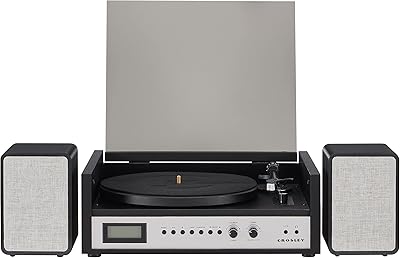
Crosley CR42D Lancaster All-in-One Turntable
74%
93%
Format Versatility
88%
Design & Aesthetics
91%
Ease of Setup
61%
Sound Quality
69%
Vinyl Playback Performance
More
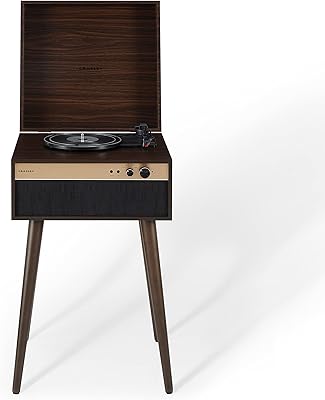
Crosley CR7017B Coda Bluetooth Turntable System
72%
91%
Ease of Setup
67%
Sound Quality
61%
Build Quality
78%
Value for Money
63%
Bluetooth Performance
More
Crosley Jasper CR6236A Bluetooth Vinyl Turntable
73%
91%
Ease of Setup
58%
Sound Quality
62%
Build Quality
83%
Bluetooth Performance
88%
Design & Aesthetics
More
Jensen JBS-210 Bluetooth Stereo Shelf System
77%
91%
Ease of Setup
83%
Bluetooth Connectivity
62%
Sound Quality
58%
Volume Output
74%
CD Player Performance
More
Crosley Cruiser Plus CR8005F
77%
93%
Ease of Setup
61%
Sound Quality
58%
Build Quality
91%
Design & Aesthetics
77%
Bluetooth Performance
More
DLITIME All-in-One Vinyl Record Player 3-Speed Bluetooth Turntable
81%
77%
Sound Quality
88%
Ease of Use
91%
Design & Aesthetics
79%
Build Quality
85%
Value for Money
More
dl 636DP-90 Turntable
76%
83%
Portability & Battery Life
89%
Design & Aesthetics
61%
Sound Quality
91%
Ease of Setup
74%
Bluetooth Functionality
More

FAQ

No, nothing else is required. The Jensen JTA-325 3-Speed Stereo Turntable includes built-in stereo speakers, so you can unbox it, plug it into a wall outlet, and drop the needle immediately. There is no amplifier, preamp, or separate speaker system needed to get started.

The JTA-325 does not have a dedicated RCA line output for connecting to an external amplifier or powered speakers, which is a real limitation for users who want to integrate it into a larger audio setup. The aux input allows external devices to play through the onboard speakers, but outbound connection to a hi-fi system is not a supported feature of this model.

Jensen recommends Audacity, which is a free and widely used audio recording application available for Windows and Mac. Once the turntable is connected via USB and recognized as an audio input device, you select it as your recording source in the software and capture the audio in real time as the record plays.

A stylus is included in the box, so you are ready to play records straight away. Over time and with regular use, the needle will wear down and need replacing, but for casual listeners it should last a reasonable period before that becomes necessary.

The auto-stop feature is designed specifically to protect both — it cuts platter rotation when the stylus reaches the run-out groove at the end of a side, preventing the needle from riding the label area repeatedly. In practice, it is a genuinely protective function rather than a gimmick, and most users find it reliable for normal LP and 45 playback.

Yes, the deck supports 78 RPM in addition to the standard 33⅓ and 45 speeds. Keep in mind that 78 RPM records typically require a specific 78-compatible stylus to avoid damaging the wider grooves, so if you plan to play shellac records regularly it is worth researching a compatible replacement stylus.

The pitch slider has no center detent or numeric markings, so setting it accurately is largely done by ear. A practical approach is to start with the slider centered, play a familiar record, and adjust slowly until the pitch sounds natural to you. For more precise calibration, a strobe disc and strobe light can help, though neither is included.

It is genuinely functional — the lid closes securely over the platter and tonearm to keep dust off the stylus and record surface when the unit is not in use. It also makes the unit easier to carry and store without worrying about the needle being exposed.

In a quiet bedroom or small study they are adequate at low to moderate volumes, and most users find the output sufficient for background listening. Push the volume much past the midpoint and distortion becomes noticeable, so the speakers work best when you are not trying to fill a large or noisy space.

It is actually one of the more accessible options for that purpose. The USB connection is plug-and-play on most modern computers, free recording software handles the actual capture, and no additional hardware is needed. The resulting audio quality will not match professional archiving standards, but for preserving family memories and making them playable on modern devices, this all-in-one record player gets the job done without a steep learning curve.

Where to Buy