Overview

The IN WIN CJ712 Small Form Factor Case comes from a brand that has quietly built a reputation for thoughtful engineering in niche PC segments, and this chassis is a solid example of that. Fitting a Micro-ATX motherboard into an 8-liter footprint is genuinely uncommon — most SFF cases stop at Mini-ITX. The metal construction and bronze finish immediately separate it from cheaper plastic alternatives that dominate this price range. IN WIN also bundles a 265W Flex ATX PSU, which simplifies build planning considerably — no hunting for a compatible power supply. That said, set expectations accordingly: this is a workstation-style box designed for efficiency and tidiness, not RGB lighting or oversized cooling setups.
Features & Benefits

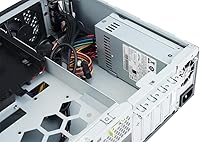
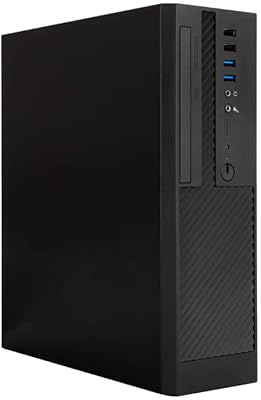
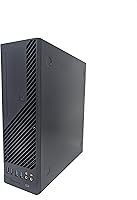
The included Flex ATX power supply is a genuine convenience — it removes a tricky compatibility puzzle that trips up many first-time SFF builders. At 265W, it handles integrated graphics, low-power discrete cards, and efficient CPUs without issue, though anything approaching a mid-range dedicated GPU will push the limits. The front panel is surprisingly well-stocked for a case this slim: two USB-C ports running at full 10 Gbps, plus traditional USB-A connections and HD Audio. Drive storage is flexible too — the tool-free detachable bay fits a 3.5-inch or 2.5-inch drive alongside a second 2.5-inch unit, and a slim optical drive slot is included, which almost no competitor at this size bothers to offer. An optional PPCT airflow partition helps manage thermals in the tight interior.

Best For

The CJ712 hits a specific sweet spot that not many cases occupy. It is a natural fit for home office or business builds where desk space is at a premium and aesthetics need to stay understated. People repurposing existing Micro-ATX hardware into a smaller enclosure will find it particularly practical — the flexibility across motherboard sizes is a real advantage here. HTPC builders who want a box that disappears into an entertainment unit without sacrificing USB connectivity will also appreciate it. The slim optical drive slot is a quiet bonus for anyone still managing physical media or legacy software. However, if your build involves a power-hungry graphics card or overclocking, this compact chassis is simply not the right tool for that job.

User Feedback

With over 240 ratings and a 4.1-star average, this SFF case earns its score mostly on build quality and the value of the included PSU. Buyers consistently praise IN WIN's metal construction as feeling more substantial than the price would suggest, and the front I/O variety draws repeated compliments. On the critical side, cable routing inside the cramped interior is a recurring frustration — the tight space leaves little room for clean management, and a few buyers found the drive bay awkward to access once other components were seated. Some builders were also caught off guard by the GPU clearance in practice, finding certain cards a tighter fit than the spec implied. Overall, satisfaction tends to run high when buyers go in understanding this is a workstation-focused enclosure, not a performance rig.

Pros

  • Rare Micro-ATX support in an 8-liter chassis opens up motherboard options most SFF cases cannot accommodate.
  • The bundled 80+ Bronze PSU removes a common SFF compatibility headache right out of the box.
  • Front panel connectivity is exceptional for the size: fast USB-C, USB-A, and audio all included.
  • All-metal construction feels noticeably more solid and durable than plastic-heavy competitors.
  • The bronze finish looks clean and professional in office or living room settings.
  • Tool-free drive bay makes storage swaps straightforward without needing to disassemble the whole build.
  • A slim optical drive slot is included — practically unheard of in cases this compact.
  • Optional PPCT airflow partition gives builders a meaningful way to manage heat in a constrained space.
  • Supports both 3.5-inch and 2.5-inch drives simultaneously, useful for mixed storage setups.
  • At its price tier, the overall value proposition — case plus PSU together — is hard to beat.

Cons

  • The 265W power ceiling rules out most dedicated gaming GPUs and leaves little headroom for future upgrades.
  • Cable routing inside the enclosure is cramped and can be genuinely frustrating, especially for less experienced builders.
  • CPU cooler height is limited to under 50mm, forcing reliance on low-profile coolers that may struggle with thermal performance.
  • GPU physical clearance in practice can be tighter than the stated maximum, depending on the card design.
  • The small 80mm fan slot means airflow capacity is inherently limited compared to larger chassis.
  • No included front fan — the slot is there, but the fan itself is an additional purchase.
  • The drive bay can be awkward to access once the motherboard and cabling are in place.
  • A single internal fan mount means thermal headroom for high-TDP components is genuinely constrained.
  • The Flex ATX PSU form factor makes aftermarket replacements harder to source than standard ATX units.
  • Buyers expecting a lot of interior working space will find the tight quarters require patience and planning.

Ratings

The IN WIN CJ712 Small Form Factor Case scores below are generated by AI after systematically analyzing verified global buyer reviews, actively filtering out incentivized, bot-generated, and outlier feedback to surface genuine user sentiment. This compact chassis earns consistent praise in several areas while drawing honest criticism in others, and both sides are reflected transparently in every category score.
Build Quality
88%
Buyers repeatedly call out the all-metal construction as a genuine surprise at this price point — it does not flex, creak, or feel hollow the way many SFF rivals do. The bronze finish holds up well and looks sharp sitting on a desk in a home office or behind a monitor.
A small number of users noted minor sharp edges on interior panels during assembly, which is a common complaint with metal SFF cases that lack post-processing on cut edges. Panel fit is tight but not always perfectly flush on every unit.
Value for Money
83%
The bundled 80+ Bronze PSU meaningfully changes the value equation — buyers are effectively getting a case and a compatible power supply together, which removes a real sourcing headache for SFF builds. For home office and productivity builds, this bundle pricing makes strong financial sense.
Buyers who want to run more demanding hardware quickly bump into the PSU wattage ceiling and may need to purchase a replacement Flex ATX unit, which narrows the value advantage. For pure gaming or workstation builds, the bundled supply can feel like a limitation rather than a benefit.
Front Panel I/O
91%
The front port lineup stands out clearly against competing cases in this size class — the presence of fast USB-C alongside multiple USB-A ports means users are not constantly reaching for adapters or hubs just to plug in a phone, external drive, or webcam.
A few buyers noted that the USB-C ports, while rated for high-speed data, are less useful if the connected motherboard does not include a matching internal header, requiring careful motherboard selection upfront. This is a compatibility nuance, not a case defect, but it catches builders off guard.
Thermal Performance
61%
39%
For low-power configurations — integrated graphics, efficient CPUs, light workloads — temperatures stay entirely manageable without any added fans. The optional PPCT airflow partition helps direct what limited airflow exists toward critical components, which builders doing light server or NAS work find adequate.
Under sustained load or with even a modest discrete GPU installed, the 8-liter interior heats up noticeably. The single 80mm fan slot simply cannot move enough air to keep ambitious builds cool, and several buyers reported throttling under extended encoding or multi-tab browsing sessions on warmer CPUs.
Ease of Assembly
58%
42%
The tool-free detachable drive bay is a genuine quality-of-life feature that makes initial storage installation straightforward. Experienced builders who have worked in tight SFF cases before tend to find the layout logical once they understand where everything is intended to go.
Cable routing is the most consistent complaint in buyer reviews — the interior leaves almost no space for clean management once a motherboard, PSU cables, and drives are in place. First-time builders especially report the process taking significantly longer than expected, with limited access once components are seated.
Motherboard Compatibility
86%
Supporting Micro-ATX alongside Mini-ITX is an uncommon feature in cases this compact, and buyers building around existing Micro-ATX hardware appreciate not being forced to purchase a new board just to downsize. This flexibility is a legitimate differentiator in the SFF segment.
Full ATX support is listed but practically very difficult to execute given the cramped interior dimensions. Buyers who attempt a full ATX installation often report clearance conflicts with cable routing and the PSU, making it more of a theoretical compatibility note than a practical option.
GPU Compatibility
63%
37%
For integrated graphics, APU builds, or compact single-fan cards like a low-profile RX 6400 or GTX 1650, the CJ712 provides enough clearance to work comfortably. Buyers focused on productivity, media playback, or light creative work find the GPU support more than sufficient for their use case.
The physical length ceiling rules out most mainstream gaming cards entirely, and even cards that technically fit sometimes create tight clearance with drive bays or PSU cables. Several buyers also found that the stated maximum length felt optimistic in practice once a card with a backplate or non-reference cooler was installed.
Noise Levels
77%
23%
Under typical office workloads with no dedicated GPU and a low-TDP processor, the chassis runs quietly enough that users sitting nearby report barely noticing it. Without a front fan installed, there is simply less hardware spinning, which keeps ambient noise low during everyday use.
The Flex ATX PSU fan, being small in diameter, spins considerably faster under load than a standard ATX PSU fan would — and small fast fans are audibly whiny in a quiet room. Buyers who push CPU usage for extended periods, such as during video exports or background indexing tasks, notice this more than they expected.
Storage Flexibility
84%
The ability to simultaneously mount a 3.5-inch drive, a 2.5-inch SSD, and a slim optical disc drive covers a wide range of practical storage configurations in one small box. Home server and NAS-style users in particular find this combination genuinely useful without needing external enclosures.
Accessing the drive bay after the rest of the build is complete can be awkward — multiple buyers note that fully removing and reinstalling drives requires partially disassembling other components. For builds where storage swaps are expected to happen frequently, this becomes a recurring inconvenience.
Optical Drive Support
89%
For the narrow but real audience that still needs optical disc access — corporate imaging, Blu-ray playback, archival work — the slim ODD bay is a rare and valued inclusion. Buyers who specifically sought this feature consistently rate it as a primary reason for choosing this case over alternatives.
The slim ODD slot only accommodates 9.5mm drives, so any older or non-standard disc drive the buyer already owns may not fit without replacement. This is a minor inconvenience for the subset of buyers who already have a thicker ODD they were hoping to repurpose.
Aesthetics & Design
79%
21%
The bronze metallic finish reads as clean and professional in office and home media environments, avoiding the aggressive styling that makes many PC cases feel out of place on a corporate desk or living room shelf. Buyers frequently describe it as discreet and adult-looking compared to heavily styled gaming cases.
The design is strictly utilitarian — there are no RGB options, tempered glass panels, or visual customization paths. For buyers who wanted a case with any visual flair beyond the bronze tone, this is a hard stop, and the exterior styling can look plain to those accustomed to enthusiast-grade chassis designs.
CPU Cooler Compatibility
55%
45%
Within its height limit, the case accommodates a decent selection of low-profile coolers, and buyers pairing it with efficient CPUs that run cool at stock speeds report no thermal issues whatsoever. For small form factor veterans who plan their cooler selection carefully, this constraint is not a surprise.
The under-50mm cooler height restriction eliminates the majority of aftermarket coolers on the market and forces reliance on a limited pool of low-profile options, some of which are pricier than standard-height equivalents. Buyers who did not research this in advance before purchasing report frustration when their planned cooler does not fit.
PSU Upgrade Path
52%
48%
For buyers who are satisfied with a lower-power build and have no plans to upgrade significantly, the included PSU removes all sourcing complexity and the build is complete right out of the box. IN WIN's inclusion of an 80+ Bronze rated unit rather than an unrated generic supply reflects quality awareness.
Flex ATX replacement units are sold by very few brands, cost more per watt than standard ATX supplies, and typically cap out around 400W — meaning the upgrade ceiling is limited and the process more expensive than buyers initially anticipate. This is a long-term ownership consideration that affects the case's practicality as a platform for future upgrades.
Packaging & Unboxing
74%
26%
Buyers generally report that the case arrives well-protected and that all included accessories are accounted for. The product feels appropriately packaged for its size, and the included hardware kit covers the basic fasteners needed for a standard build without requiring additional purchases for common configurations.
The included documentation is minimal, and a few buyers noted the assembly guide does not adequately address cable routing strategies inside the tight enclosure. Those building in an SFF chassis for the first time would benefit from supplementary resources beyond what IN WIN provides in the box.

Suitable for:

The IN WIN CJ712 Small Form Factor Case is a strong match for anyone who needs a capable desktop in a tight footprint without compromising on connectivity or storage flexibility. Home office workers and small business users will appreciate how the all-metal build and understated bronze finish look professional on or under a desk, and the generous front port selection means fewer dongles and adapters in daily use. Builders looking to rehome existing Micro-ATX or Mini-ITX hardware into a smaller, tidier enclosure will find the case unusually accommodating for its size class. HTPC enthusiasts who want something that sits quietly in a media cabinet without drawing attention are also well served here. The slim optical drive bay is a genuine rarity at this size, making the CJ712 a smart pick for anyone managing physical media archives, legacy software, or corporate imaging tasks that still rely on disc access.
Not suitable for:

The IN WIN CJ712 Small Form Factor Case has clear limits that matter a great deal depending on what you plan to build. The bundled power supply tops out at 265W, which means anything beyond a low-power discrete GPU or integrated graphics will put the system uncomfortably close to that ceiling — pairing it with a modern mid-range gaming card is not a realistic scenario. CPU cooler clearance is also strict, so tower-style coolers are out of the question; you are limited to low-profile solutions, which can be a thermal compromise on hotter processors. The interior space makes cable management genuinely difficult, and builders who take pride in clean, routed builds will likely find it frustrating. If you are planning an overclocking build, a high-wattage gaming rig, or anything that demands substantial airflow through large fans or radiators, this compact chassis is the wrong tool entirely.
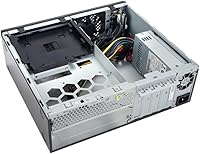
Specifications

  • Form Factor: Small Form Factor (SFF) chassis with an 8-liter internal volume, unusually spacious for its footprint class.
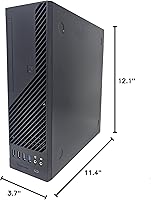
  • Dimensions: The case measures 11.4 x 3.7 x 12.1 inches (L x W x H), keeping the desktop footprint genuinely compact.
  • Weight: The unit weighs approximately 7 pounds without components installed, reflecting its all-metal construction.
  • Material: Built from metal throughout, giving it a noticeably more rigid and premium feel than plastic SFF alternatives.
  • Color & Finish: Available in a bronze finish that reads as understated and professional in office or home media environments.
  • Motherboard Support: Compatible with Micro-ATX, Mini-ITX, and standard ATX motherboard form factors, offering broader flexibility than most SFF cases.
  • Included PSU: Ships with a Flex ATX 265W power supply rated 80+ Bronze, covering efficient, low-to-mid power system builds.
  • PSU Mounting: The power supply can be positioned at either the bottom or rear of the chassis depending on the build configuration.
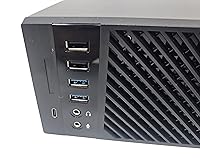
  • Front I/O: Front panel includes two USB-C 3.2 Gen 2 ports (10 Gbps each), two USB 3.0 ports, two USB 2.0 ports, and HD Audio in/out.
  • GPU Clearance: Supports discrete graphics cards up to approximately 251mm in length; longer or dual-slot-plus cards may not physically fit.
  • CPU Cooler Height: Maximum CPU cooler height is 47mm, which limits users to low-profile coolers only — tower-style coolers are not compatible.
  • Drive Bays: Accommodates one 3.5″ or 2.5″ internal drive, one additional 2.5″ drive, and one slim 9.5mm optical disc drive simultaneously.
  • Drive Bay Design: The drive bay is tool-free and detachable, allowing for easier installation and removal of storage without additional hardware.
  • Fan Support: Supports a single front-mounted 80x80x15mm PWM fan; no fan is included in the box and must be purchased separately.
  • Cooling System: Uses air cooling with an optional Partition Plate Cooling Technology (PPCT) cage that helps direct airflow more efficiently through the confined interior.
  • Optical Drive Slot: Includes a slim ODD bay accepting 9.5mm optical drives, a feature that has largely disappeared from competing SFF chassis designs.

Related Reviews

GERMANIKURE Economy Small Nail Clipper
81%
91%
Cutting Performance & Sharpness
89%
Build Quality & Materials
87%
Rust Resistance
85%
Size & Portability
76%
Leather Case Quality
More
InWin CK722 Micro-ATX Desktop Case
77%
88%
Build Quality
61%
Thermal Performance
67%
Included Power Supply
91%
Ease of Assembly
93%
Size & Footprint
More
GGAIFbp Ca-01 Double Layer Barber Carrying Case
71%
74%
Build Quality
81%
Interior Organization
67%
Lock Security
61%
Portability & Carry Comfort
63%
Interior Capacity
More
Large Tattoo Case Tattoo Kit Box - Aluminum Traveling Convention Carry Case (Silver)
85%
92%
Durability
89%
Portability
91%
Storage Organization
88%
Security Features
84%
Ease of Use
More
Stagiant 4-Tier Makeup Train Case
80%
91%
Storage Organization
88%
Portability
74%
Build Quality
79%
Tray & Compartment Design
86%
Mesh Pocket Usability
More
FOIFKIN M9 ATX Mid-Tower PC Case
76%
93%
Aesthetic Design
88%
Value for Money
76%
Cooling Performance
71%
Build Quality
58%
Cable Management
More
Larksound Small Sound Bar
75%
78%
Audio Clarity
47%
Bass Performance
86%
Connectivity Range
69%
Bluetooth Reliability
71%
HDMI ARC Performance
More
Navage Paisley Travel Case
86%
91%
Durability & Protection
85%
Ease of Use
88%
Storage Capacity
93%
Portability & Travel-Friendliness
84%
Organization Features
More
FOIFKIN F600
FOIFKIN F600
77%
91%
Value for Money
78%
Airflow Performance
74%
Build Quality
93%
Aesthetics & RGB Lighting
63%
Cable Management
More
FOIFKIN F300 2025 ATX Mid-Tower PC Case
76%
88%
Value for Money
91%
Aesthetic Design
79%
Cooling Performance
86%
Hardware Compatibility
58%
Cable Management
More
Cooler Master CMP510 Case
87%
91%
Cooling Performance
88%
Build Quality
85%
Cable Management
89%
Modularity & Customization
93%
Airflow & Ventilation
More

FAQ

Technically the IN WIN CJ712 Small Form Factor Case lists ATX as supported, but in practice the tight internal dimensions make a full ATX board an extremely difficult fit. Most builders using this chassis stick to Micro-ATX or Mini-ITX boards, where there is enough working room to actually route cables and seat components comfortably. Unless you have very specific reasons for needing a full ATX board, Micro-ATX is the sweet spot here.
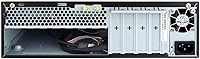
You can, but it is not as simple as swapping in any ATX unit. The CJ712 uses a Flex ATX form factor PSU, which is physically smaller than a standard ATX supply and sourced from a much narrower pool of options. Aftermarket Flex ATX units go up to around 400W from a handful of reputable vendors, so there is some upgrade headroom — just know you will need to shop specifically for that form factor rather than a typical PSU.

The card length limit sits just over 250mm, which covers a good range of low-profile and single-fan discrete GPUs. Think integrated graphics on a modern APU, or something in the range of a low-profile RX 6400 or GTX 1650. A power-hungry card like an RTX 4070 is simply off the table — the included PSU could not power it, and the card would not physically fit anyway. For light gaming, media playback, or productivity, the GPU options are workable.

The two front USB-C ports on this SFF case run at USB 3.2 Gen 2 speeds, which means up to 10 Gbps per port for data transfer. That is fast enough for modern external SSDs and high-speed peripherals, not just charging. It is one of the genuinely standout front panel specs for a case in this size and price range.

There is a slot for an 80mm PWM fan at the front, but it does not come with one installed. For a basic office build with integrated graphics or a low-power processor, the included PSU fan alone may be adequate. If you are pushing the system harder or care about thermals, picking up an 80x80x15mm fan is a worthwhile addition.

It requires patience. The interior is tight, and cable management is honestly the biggest challenge most builders report. If you can route cables before seating the drive bay and before buttoning everything up, the process goes more smoothly. It helps to plan your cable run before you start rather than trying to tuck things away at the end. Experienced builders handle it fine; first-timers should budget extra time.

Yes, the 9.5mm slim ODD slot accepts standard slim optical drives of the type commonly found in laptops — those are the drives you are looking for. Most aftermarket slim DVD and Blu-ray drives sold today will physically fit and connect without issue. It is one of the few SFF cases on the market that still includes this slot, which makes it particularly useful for business environments or anyone managing disc-based media.

With a clearance limit just under 50mm, you need a dedicated low-profile cooler — something like the Noctua NH-L9a or similar flat-design units. Stock Intel box coolers that ship with non-K processors often just squeeze under the limit. AMD's Wraith Stealth is a close call and may not fit depending on the exact board layout, so verify before you buy. Tower coolers are a non-starter here.

Yes, the detachable drive bay supports a 3.5-inch or 2.5-inch drive in the primary slot and a dedicated second 2.5-inch slot alongside it. So a spinning hard drive plus an SSD, or two SSDs, is entirely doable simultaneously. If you also install a slim optical drive, all three storage positions can be occupied at once, which is a genuinely practical setup for a home server or media archiving machine.

Under light workloads, the CJ712 tends to be reasonably quiet since the included Flex ATX PSU fan only spins up meaningfully under load. Without an added front fan, there is simply less noise-generating hardware in the system. Under sustained heavier loads, the PSU fan becomes more audible given its small size — small fans typically spin faster and louder than larger ones to move the same air. For office and general productivity use, noise levels are well within acceptable range.

Where to Buy