Overview

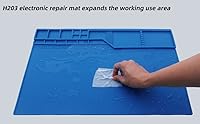
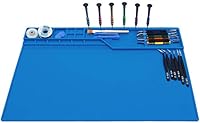
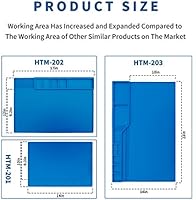
The HengTianMei H-203 22x14 Silicone Repair Mat is a thoughtfully designed work surface that brings together heat protection, magnetic organization, and screw tracking into one practical platform. At 22 by 14 inches, it gives you enough real estate to spread out a phone motherboard, keep your tools nearby, and still have room to work without feeling cramped. It sits in a mid-range price bracket — noticeably more capable than a bare rubber mat, but not an expensive professional-grade station. Since arriving in early 2021, it has quietly built a solid following among repair hobbyists and technicians alike, which explains its consistent ranking inside Amazon's top 60 for computer and mobile repair kits.
Features & Benefits

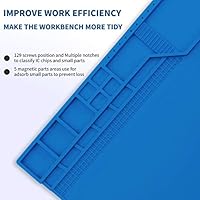
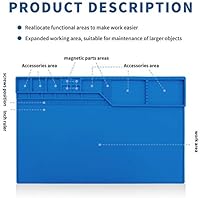
The most immediately useful aspect of this repair mat is the 129-slot screw grid. When you're mid-teardown on a modern smartphone with a dozen different screw lengths, having a labeled grid to place each one in sequence means reassembly becomes far less of a guessing game. The five magnetic zones hold lighter screws and springs without generating a strong enough field to disturb nearby sensitive ICs — a sensible balance. A built-in ruler running the full length of the mat handles quick measurements without reaching for a separate tool. Anti-slip surfaces on both sides prevent the mat from sliding on your bench and stop components from skittering across it.

Best For

This soldering and teardown mat is a natural fit for phone repair technicians who regularly deal with multi-screw disassembly — the kind of work where a misplaced screw means a rattling device or a stripped hole. Laptop repair enthusiasts and PC hobbyists will appreciate the extra width, which accommodates larger boards and more tools at once. Soldering hobbyists get the clear benefit of a heat-resistant surface that won't scorch or warp under typical iron use. Students setting up a first repair bench will find it covers the essentials without requiring multiple separate purchases. If you're currently using a plain silicone mat with no organizational features, this is a logical step up.

User Feedback

The screw grid draws the most consistent praise from buyers — technicians repeatedly mention it cutting down reassembly time on complex devices. The mat's general flatness also earns positive notes, with most users reporting it lies flush on the bench without curling edges. Where feedback gets mixed is around magnetic zone strength: lighter screws stay put, but some users find heavier hardware fasteners don't hold reliably. A handful of reviews note a noticeable silicone odor fresh out of the packaging, though most report it fades within a day or two. Compared to alternatives like Kaisi mats, buyers generally feel the organizational layout here is more comprehensive, though the price difference is worth considering.

Pros

  • The 129-slot screw grid dramatically reduces reassembly errors on complex multi-screw devices like modern smartphones.
  • Five magnetic zones keep lightweight screws and springs secure without requiring a separate parts tray.
  • The 22 by 14 inch surface offers enough room to work comfortably on most phones and mid-size laptops.
  • Heat resistance holds up well under normal soldering iron use, protecting desks from accidental contact.
  • Anti-slip backing keeps the repair mat firmly in place during hands-on tasks that require applied pressure.
  • A built-in ruler across the full length handles quick measurements without reaching for a separate tool.
  • Dedicated IC chip compartments and SMD notches bring board-level organization that flat mats simply cannot match.
  • Silicone construction resists flux, isopropyl alcohol, and common workshop chemicals without degrading over time.
  • The mat cleans up quickly with a simple wipe after most soldering or repair sessions.
  • Its mid-range price point delivers a meaningful organizational upgrade over basic rubber or plain silicone alternatives.

Cons

  • Magnetic zones are too weak to reliably hold heavier laptop or desktop hardware fasteners.
  • Some units arrive with a noticeable roll from packaging that can take a day or two to fully flatten.
  • Surface graphics and screw grid labels show wear after extended daily use and repeated aggressive cleaning.
  • No ESD protection makes this unsuitable for static-sensitive component work without additional precautions.
  • The fixed organizational layout cannot be adapted to match unconventional or highly customized repair workflows.
  • Recessed grid slots and compartment edges trap fine debris and flux residue that requires deliberate effort to clear.
  • The strong initial silicone odor can be unpleasant during the first several sessions in enclosed spaces.
  • The ruler is only printed along one edge, making it awkward to measure parts positioned toward the mat's center.

Ratings

The HengTianMei H-203 22x14 Silicone Repair Mat earns its place in a crowded field by combining organizational features that most bare silicone mats simply don't offer. The scores below were generated by AI after analyzing verified buyer reviews from global markets, with spam, bot activity, and incentivized feedback actively filtered out. Both the genuine strengths and the recurring frustrations are reflected honestly here, so you get a clear picture before committing.
Screw Organization System
88%
The 129-slot labeled grid is the feature buyers mention most when recommending this mat to others. Technicians working through multi-screw smartphone teardowns say it eliminates the guesswork during reassembly, especially when screws vary in length by fractions of a millimeter.
A few users note that the printed labels on some units can be faint or slightly misaligned, making quick visual reference harder under dim workshop lighting. The grid also has a fixed layout, so it does not adapt well to atypical disassembly workflows.
Heat Resistance
83%
Most soldering hobbyists report the mat handles typical iron contact without scorching, warping, or leaving permanent marks, which is exactly what a bench worker needs when switching between tasks quickly. The protection it offers to wooden or laminate desks is consistently praised.
The advertised 932°F ceiling is rarely tested in real repair environments, and some users suspect the practical safe threshold for sustained contact is lower. A small number of reviews mention slight discoloration after repeated high-heat exposure in the same spot.
Magnetic Zone Effectiveness
71%
29%
The five magnetic areas do a solid job of catching and holding lightweight screws and small metal clips, which is genuinely useful when you are working fast and need parts to stay put without a separate tray. Users appreciate that the magnet strength feels deliberate rather than overkill.
Heavier fasteners — particularly those from laptops or desktop hardware — tend not to hold reliably, sliding off with minimal vibration. Several buyers who primarily repair larger devices found the magnetic zones less useful than expected for their specific workflow.
Work Surface Size
91%
At 22 by 14 inches the mat gives enough room to spread out a disassembled phone, keep a few tools close, and still have a clean zone for the device shell — all without shuffling things around constantly. Users upgrading from smaller mats consistently call the extra space a noticeable improvement.
For technicians working on larger laptops or simultaneously handling multiple devices, the mat can still feel tight. It is also a fairly large footprint for compact workbenches, and a handful of buyers wished a smaller size variant were available.
Mat Flatness & Stability
79%
21%
The majority of buyers report the mat lies flat and stays put on their bench right out of the box, with the anti-slip backing doing its job during active repair sessions. This prevents the frustrating creep that cheaper mats often exhibit mid-disassembly.
Some units arrive with a slight roll or curl from packaging, and while most users say it flattens within a day or two under normal use, a minority report persistent edge curl that requires weighting down. Quality consistency here appears slightly variable across production batches.
Build & Material Quality
82%
18%
The silicone feels substantial rather than flimsy, and buyers who have used the mat for over a year generally report no tearing, cracking, or loss of shape. The surface resists the occasional accidental flux splatter or isopropyl alcohol spill without degrading.
A few long-term users note the printed markings — particularly the ruler and screw grid labels — show wear after extended daily use and aggressive cleaning. The material itself holds up well, but the surface graphics are the first things to fade.
IC Chip & Small Parts Organization
74%
26%
The dedicated notches and compartments for IC chips and tiny SMD components give this mat a clear advantage over flat alternatives for board-level repair work. Technicians doing microsoldering appreciate having a logical place to sort components without paper cups or makeshift containers.
The compartment sizing is fixed, so unusually shaped or larger IC packages do not always sit securely. Users working with a wide variety of chip form factors find themselves improvising additional storage alongside the mat anyway.
New Product Odor
61%
39%
Most buyers report the initial silicone smell dissipates within one to two days of use, especially if the mat is left in a ventilated space or briefly aired outdoors. For the majority of users, it does not cause any lasting concern.
The out-of-box smell is strong enough to be mentioned repeatedly in reviews, and for buyers with sensitivity to chemical odors it can be genuinely unpleasant for the first several sessions. A small number of users say the odor lingered noticeably longer than expected in enclosed workspaces.
Built-in Ruler Utility
76%
24%
Having a 0 to 20 inch scale printed directly on the mat eliminates reaching for a separate measuring tool during jobs that require checking cable lengths, component placement, or part dimensions. It is a small addition that gets used more often than buyers initially expect.
The ruler only runs along one edge, which limits how quickly you can measure parts placed in the center of the mat. Print clarity on the ruler markings is also inconsistent across units, with some buyers finding the graduations difficult to read at a glance.
Value for Money
81%
19%
Buyers consistently position this mat as a smart step up from basic silicone sheets without the price of a full professional ESD workstation. The combination of organizational features packed into the price makes it feel like a practical investment for anyone doing repair work regularly.
Compared to no-frills silicone mats available at a fraction of the cost, some casual users feel the premium is only justified if they actively use the screw grid and magnetic zones. Occasional buyers who just wanted heat protection found the extra features unnecessary for their needs.
Anti-Slip Performance
84%
The dual-sided anti-slip texture does what it promises — the mat grips the bench and components placed on it stay more stable than on smooth alternatives. This becomes especially valuable when applying pressure during screen replacements or connector extractions.
On very smooth glass or polished surfaces, the grip is noticeably less effective than on standard wood or fabric workbenches. A small number of buyers using the mat on non-porous surfaces report more sliding than they anticipated.
Ease of Cleaning
77%
23%
Flux residue, solder blobs, and dust wipe off the silicone surface easily with isopropyl alcohol or a damp cloth, which keeps the mat looking tidy between jobs. Users doing daily repair work appreciate not having to scrub or soak it to maintain a clean workspace.
The recessed screw grid slots and compartment edges tend to trap fine debris and flux particles that are harder to clear out with a simple wipe. Getting the mat truly clean in the organizational recesses requires deliberate effort with a brush or compressed air.
Compatibility with Repair Workflows
86%
The layout accommodates both right-handed and left-handed technicians reasonably well, and the mix of magnetic zones, grid, and open workspace means it suits phone repair, laptop work, and light soldering without needing to swap surfaces between tasks.
The fixed organizational layout does not suit every repair style — technicians with highly customized workflows may find certain zones underused while others feel cramped. It is a generalist mat, and specialists sometimes wish the zoning were configurable.
Packaging & First Impressions
69%
31%
The mat arrives rolled and is generally well-protected, with buyers reporting no damage during shipping in the vast majority of cases. The included presentation gives a reasonable first impression for the price tier.
Rolling for shipping is a practical necessity but contributes to the initial curl issue that some buyers struggle with. The packaging itself offers minimal instructions or guidance on setup, which leaves first-time buyers relying on trial and error to understand all the organizational features.

Suitable for:

The HengTianMei H-203 22x14 Silicone Repair Mat is built for anyone who regularly tears down electronics and has lost one too many screws to a cluttered bench. Phone repair technicians — whether running a small shop or fixing devices at home — will get the most out of the 129-slot screw grid, which turns the chaos of a multi-screw disassembly into a systematic, repeatable process. Laptop and PC enthusiasts who swap components often will appreciate the generous surface area and the magnetic zones for catching small fasteners mid-job. Soldering hobbyists benefit from a heat-resistant work surface that also keeps components sorted, removing the need for separate trays or cups scattered around the bench. Electronics students setting up their first dedicated workspace will find it covers the practical essentials without requiring multiple separate purchases, making it a sensible starting point for a well-organized repair setup.

Not suitable for:

The HengTianMei H-203 22x14 Silicone Repair Mat is a poor fit for technicians who primarily work with larger hardware — desktop motherboards, server components, or multi-device setups — where the 22 by 14 inch surface simply runs out of room fast. Buyers looking for a pure ESD-safe work surface for sensitive static-prone components should also look elsewhere, as this mat does not offer electrostatic discharge protection. The magnetic zones, while useful for lightweight phone screws, are not strong enough to reliably hold heavier laptop or desktop fasteners, which will frustrate anyone whose workflow depends on that feature. If you only need basic heat protection and have no interest in the organizational features, the price premium over a plain silicone mat is harder to justify. Buyers sensitive to chemical odors should also be aware that the initial off-gassing can be noticeable for the first few sessions, particularly in poorly ventilated workspaces.
Specifications

  • Dimensions: The mat measures 22 × 14 inches, providing a large, flat working area suited to most phone and laptop disassembly tasks.
  • Material: Constructed entirely from high-quality silicone, the surface resists corrosion, chemical exposure, and physical deformation under regular workshop conditions.
  • Heat Resistance: The silicone composition is rated to withstand temperatures up to 932°F (500°C), protecting the underlying desk surface from soldering iron contact.
  • Weight: The mat weighs 1.87 pounds, making it substantial enough to stay grounded on the bench without being cumbersome to reposition or store.
  • Screw Grid: A printed grid of 129 labeled screw positions allows technicians to map and track fasteners in sequence throughout a teardown.
  • Magnetic Zones: Five discrete magnetic areas are embedded across the mat surface, each offering moderate field strength suited to retaining lightweight screws and metal clips.
  • Ruler: A built-in linear scale running from 0 to 20 inches is printed along the mat edge for quick on-bench measurements without a separate tool.
  • Parts Compartments: Dedicated notches and recessed compartments are integrated into the mat layout to organize IC chips, SMD components, and other small parts during repair work.
  • Surface Texture: Both the top working surface and the underside feature an anti-slip texture pattern that stabilizes the mat on the bench and reduces component movement.
  • Model Number: The product is officially designated as model H-203 by manufacturer HengTianMei.
  • Package Dimensions: The packaged unit measures approximately 15 × 4.53 × 4.49 inches, reflecting the mat's rolled storage format for shipping.
  • Package Weight: The full package weight is 0.85 kilograms (approximately 1.87 pounds), inclusive of the mat and any included accessories.
  • Color & Finish: The mat features a consistent silicone finish across the working surface, with printed organizational graphics in contrasting tones for legibility.
  • Durability: The silicone material is rated as corrosion-resistant and shape-retaining, designed to hold its form and surface integrity through extended daily workshop use.
  • ESD Protection: This mat does not incorporate electrostatic discharge (ESD) protection and is not rated as an anti-static surface for static-sensitive component handling.
  • Batteries: No batteries are required or included, as the mat contains no electronic components or powered features.
  • Availability Date: The H-203 was first made available for purchase in January 2021 and has maintained consistent availability since release.
  • Category Ranking: The mat has reached a top-60 ranking within Amazon's Computer and Mobile Device Repair Kits category, reflecting sustained buyer demand since launch.

Related Reviews

Silicon Mix Combination Set
84%
89%
Effectiveness for Dry Hair
91%
Frizz Control
85%
Restoration of Damaged Hair
87%
Moisture Retention
80%
Texture After Use
More
DOCTORCOS Silicone Skin Mask
85%
85%
Effectiveness in Tightening Skin
92%
Skin Compatibility for Sensitive Skin
78%
Comfort and Fit
88%
Ease of Use
81%
Gradual Results over Time
More
iFixit Repair Business Toolkit
78%
88%
Tool Build Quality
83%
Tool Completeness & Coverage
91%
Anti-Clamp Opening Tool
79%
Messenger Bag Design & Organization
63%
Digital Multimeter Quality
More
BEFORE TV Antenna OD102-H
84%
91%
Signal Reception
88%
Range Performance
94%
Ease of Setup
82%
Build Quality
75%
Weather Resistance
More
superSupple Barrier Repair Cream 60mL
86%
91%
Skin Compatibility
89%
Hydration & Moisture Retention
86%
Soothe & Calm Irritation
80%
Absorption & Finish
93%
Fragrance-Free Formula
More
Asterwood Triple Repair Serum 8oz
86%
88%
Effectiveness for Wrinkle Reduction
85%
Hydration and Moisture Retention
91%
Skin Compatibility (Sensitive Skin)
84%
Texture and Feel
87%
Absorption and Finish
More
Wella Professionals Ultimate Repair Conditioner
86%
89%
Effectiveness in Repairing Damaged Hair
91%
Hydration and Moisture Retention
88%
Lightweight Feel
87%
Strengthening Properties
90%
Non-Greasy Finish
More
TOOLETRIES Silicone Back Scrubber - Charcoal
83%
92%
Effectiveness for Deep Exfoliation
88%
Ease of Use and Handle Design
94%
Durability and Longevity
72%
Comfort for Sensitive Skin
90%
Eco-friendliness of Silicone Material
More
Retevis H-777 Walkie Talkies 1 Pair
74%
83%
Audio Clarity
61%
Range Performance
88%
Battery Life & Charging
91%
Ease of Use
69%
VOX Hands-Free Performance
More
MelodySusie Hair Dryer H-S160E
86%
93%
Drying Speed
90%
Frizz Control
88%
Ease of Use
81%
Noise Level
89%
Ergonomics/Comfort
More

FAQ

For brief or incidental contact, yes — the silicone handles high temperatures well and won't scorch or transfer heat to the surface below the way a cloth or rubber mat would. That said, leaving a hot iron resting on any single spot for an extended period is still not advisable, and some users do report slight discoloration over time from repeated heat exposure in the same area.

This is genuinely a mixed bag. The magnets work reliably for the small, lightweight screws common in smartphone teardowns, but heavier laptop and desktop fasteners often don't hold firmly and can slide off with minor vibration. If you primarily work on laptops or desktop hardware, the magnetic zones may not meet your expectations — they are better suited to phone-scale components.

Most users find it flattens within a day or two once laid out flat on a bench at room temperature. If it is being stubborn, placing a few heavy books on it overnight usually does the trick. A small number of buyers report persistent edge curl, which appears to be a quality consistency issue rather than a universal problem.

No — the HengTianMei H-203 22x14 Silicone Repair Mat is not an ESD-safe surface. It offers no electrostatic discharge protection, so for handling static-sensitive components like RAM, GPUs, or bare motherboards, you would still need a dedicated anti-static mat or wrist strap setup alongside it.
Isopropyl alcohol on a lint-free cloth works well for most residue, and the silicone surface wipes clean quickly without absorbing chemicals. The trickier spots are the recessed screw grid slots and chip compartments, which tend to trap fine debris — a soft brush or a short burst of compressed air helps clear those out between sessions.

There is a noticeable silicone odor when first unboxed, which is typical for products of this material. For most users it fades within one to two days, especially if the mat is left in a well-ventilated area or aired out briefly. In enclosed or poorly ventilated workspaces the smell can linger a bit longer, so opening a window during the first few uses is a practical precaution.

Yes, and that dual-purpose use is actually where this soldering and teardown mat makes the most sense. The open surface areas handle component organization and workspace tasks, while the heat-resistant silicone means you can set a soldering iron down briefly without having to switch surfaces. Just be mindful of iron placement relative to any components you have laid out.

Both are solid options in roughly the same category, and comparisons in user feedback tend to be close. The organizational layout on this mat — particularly the screw grid and IC chip compartments — is generally regarded as more comprehensive. The Kaisi mats are also well-regarded for material quality, so the choice often comes down to which organizational layout matches your personal workflow better.

It is genuinely useful if you work on devices with lots of different screw sizes — modern iPhones and Android flagships are good examples. The ability to place each screw in a labeled position as you remove it, then work back through the grid in reverse during reassembly, eliminates a lot of guesswork. If you only do simple single-screw repairs, you probably won't use most of the grid, but for complex teardowns it earns its place quickly.

It performs well on most standard workshop surfaces — wood, laminate, and fabric-covered benches all give it enough grip to stay put during active use. On very smooth surfaces like glass or polished stone, the grip is less effective and the mat can shift during tasks that require applied lateral pressure. If your bench is glass-topped, a non-slip liner underneath would help.