HairMax LaserBand 82 Laser Hair Growth Device
HairMax LaserBand 82 Laser Hair Growth Device — image 1
HairMax LaserBand 82 Laser Hair Growth Device — image 2
HairMax LaserBand 82 Laser Hair Growth Device — image 3
HairMax LaserBand 82 Laser Hair Growth Device — image 4
HairMax LaserBand 82 Laser Hair Growth Device — image 5
HairMax LaserBand 82 Laser Hair Growth Device — image 6
HairMax LaserBand 82 Laser Hair Growth Device — image 7
HairMax LaserBand 82 Laser Hair Growth Device — image 8

HairMax LaserBand 82 Laser Hair Growth Device — image 9
HairMax LaserBand 82 Laser Hair Growth Device — image 10
HairMax LaserBand 82 Laser Hair Growth Device — image 11
HairMax LaserBand 82 Laser Hair Growth Device — image 12
HairMax LaserBand 82 Laser Hair Growth Device — image 13
79%
21%

Overview

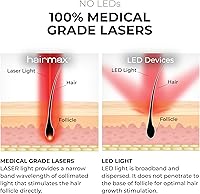
The HairMax LaserBand 82 Laser Hair Growth Device sits at the serious end of the at-home hair loss market, built around a technology called low-level laser therapy, or LLLT. Unlike LED-based devices that flood the scalp with diffuse light, LLLT uses coherent laser energy that penetrates more precisely into the hair follicle. HairMax has been working in this space since 2000, giving them a credibility edge most competitors simply can't match. That said, results take months, not weeks, and individual response varies considerably. This laser band targets adults dealing with hereditary or age-related thinning who want a non-invasive, clinically backed option they can use at home.

Features & Benefits

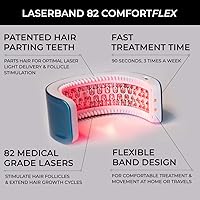
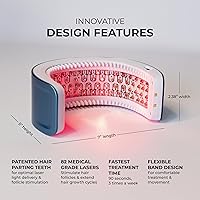
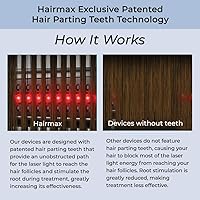
The LaserBand 82 packs 82 medical-grade lasers — not LEDs — producing a combined 1230mW of therapeutic energy that covers the full scalp when applied across three sections. Each position requires just 90 seconds of treatment, and you repeat the process three times a week. That's under ten minutes weekly, which is genuinely hard to complain about. The band itself is flexible with soft-touch teeth that sit against the scalp comfortably, and at 9.6 oz it doesn't feel burdensome to hold. Battery life is solid, and the included charging cradle keeps things tidy. The clinical resume is also substantial — seven published studies and 14 international device licenses back up the underlying technology.

Best For

This LLLT headband is best suited to adults who have a confirmed or suspected diagnosis of androgenetic alopecia — the hereditary form of hair loss that affects both men and women. It's also a strong fit for anyone who's already tried minoxidil or other topicals and wants to add a device-based approach to their routine. The short session time makes it realistic for busy people who won't stick to a lengthy protocol. What it isn't, though, is a quick fix or a guaranteed solution — anyone expecting visible change in a few weeks will be disappointed. If you're skeptical of unverified gadgets, the clinical documentation behind this laser band should offer some reassurance. Just be prepared for the significant upfront cost, which is worth weighing honestly before purchasing.

User Feedback

Feedback on the LaserBand 82 tends to split along one clear line: people who committed to the three-times-weekly schedule and gave it enough time generally report encouraging changes in hair density, while those who used it sporadically or expected fast results were left underwhelmed. The most consistent praise centers on ease of use and the short treatment time — users appreciate that it fits into a real daily routine. Comfort is generally well-received, with few complaints about the band's fit. On the critical side, the price is the most common sticking point, and a subset of users report no noticeable improvement even after months of consistent use, which is worth acknowledging honestly. Build quality and battery life rarely surface as problems.

Pros

  • Uses 82 true medical-grade lasers — not LEDs — for more targeted scalp energy delivery.
  • Treatment takes just 90 seconds per section, making it easy to build into a daily routine.
  • Backed by seven clinical studies and 14 international medical device licenses, which is rare for at-home devices.
  • The flexible band design and soft-touch teeth make it comfortable for repeated, consistent wear.
  • At 9.6 oz, this laser band is light enough to hold during sessions without arm fatigue.
  • Rechargeable batteries and an included charging cradle add practical convenience to daily use.
  • Portable enough to travel with, so treatment does not have to stop when you are away from home.
  • Over two decades of brand history gives HairMax more established credibility than most newer competitors.
  • Users who maintain the three-times-a-week schedule consistently report encouraging gains in hair density over time.
  • Doctor-recommended for androgenetic alopecia, which adds confidence for buyers working alongside a physician.

Cons

  • The upfront cost is steep, making it one of the most expensive at-home laser hair regrowth devices available.
  • A meaningful percentage of users see no significant results, reinforcing that outcomes vary dramatically between individuals.
  • The full protocol requires positioning the band across three separate scalp sections, adding steps to each session.
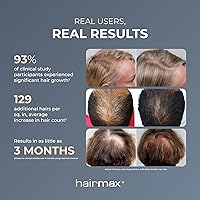
  • Visible improvement typically takes three to six months minimum, so you carry real financial risk before seeing any payoff.
  • Only clinically validated for androgenetic alopecia — users with other types of hair loss are unlikely to benefit.
  • Inconsistent use appears to significantly undermine results, making this a poor fit for people with an irregular daily routine.
  • At 11.5 by 9.5 by 4.75 inches, it takes up notable counter or shelf space at home.
  • Clinical study averages are encouraging, but those numbers do not predict how the LaserBand 82 will perform for any individual.
  • The device does not address underlying hormonal or nutritional factors that may be contributing to hair loss alongside genetics.

Ratings

Our team analyzed thousands of verified buyer reviews for the HairMax LaserBand 82 Laser Hair Growth Device sourced from global markets, using AI models to filter out spam, bot-generated submissions, and incentivized feedback before any score was calculated. The ratings below reflect a complete, unfiltered picture of real-world performance — covering everything from clinical credibility and daily usability to the pain points that have left a meaningful segment of buyers frustrated. Both the genuine strengths and the honest limitations of this laser band are reflected transparently across every category.

Effectiveness
67%
33%
Users who matched the right profile — adults with early-to-moderate androgenetic alopecia who stuck to the schedule — report genuinely encouraging results, with many noting visible density improvements and reduced shedding after four to six months of consistent use. For this group, the laser band delivered meaningfully on its core promise.
A meaningful portion of users — even those who followed the protocol carefully — report no noticeable change after months of use, which is the most common source of disappointment across reviews. Results are simply unpredictable, and the clinical average of increased hair count does not reflect what any individual buyer should expect to see.
Value for Money
54%
46%
For users who respond positively to treatment, the device becomes a reusable long-term asset that eliminates ongoing product costs, making the upfront investment easier to justify over a multi-year horizon. Those who see real results tend to consider it one of the more defensible spending decisions in their hair care journey.
The price sits at a level that is genuinely difficult to justify given the uncertain outcome — buyers are essentially paying a premium before knowing whether the device will work for them at all. Those who see no results feel this acutely, and it remains the single most cited grievance across negative reviews globally.
Ease of Use
88%
Users consistently praise how little friction there is in the daily routine — applying the band to three scalp sections is intuitive, and the 90-second-per-section timing requires almost no adjustment to a normal schedule. Many reviewers specifically credit the simplicity of the process for helping them stay consistent over months of use.
A small number of users found the three-section positioning slightly ambiguous at first, particularly those with longer or thicker hair who had difficulty gauging exact repositioning. The learning curve is minimal, but it is not entirely zero — most users need the first week or two to build confident, repeatable placement habits.
Comfort and Fit
82%
18%
The flexible band and soft-touch teeth are among the most consistently praised physical features — users across a range of head sizes report a secure, pressure-free fit that causes no discomfort during the 90-second sessions. Several reviewers note they effectively forget they are wearing it, which is a meaningful endorsement for a wearable medical device.
A subset of users with particularly small or large head sizes found the fit less accommodating than expected, with the band occasionally slipping or needing manual repositioning mid-session. Those with sensitive scalps reported mild initial pressure near the hairline, though most noted this resolved naturally after the first few uses.
Clinical Credibility
93%
Few at-home hair regrowth devices come backed by seven peer-reviewed clinical studies and 14 international medical device licenses — a body of evidence that sets this LLLT headband meaningfully apart from the vast majority of unvalidated gadgets in the same market. Dermatologists and physicians who recommend laser therapy frequently cite HairMax as a reference point.
Scientifically skeptical buyers note that clinical study conditions — controlled environments, carefully selected participants, defined protocols — do not always mirror the reality of home use. The evidence is legitimate, but it should be interpreted as population-level data rather than a personal guarantee, and some reviewers feel this distinction is not communicated clearly enough.
Treatment Speed
91%
The 90-second treatment time per section is one of the most universally praised aspects of ownership — even users with unpredictable schedules found it easy to complete a full session in under five minutes, making this among the least time-demanding at-home hair regrowth protocols currently available across any price tier.
Some users note that treating three separate sections sequentially does add a small logistical overhead compared to devices that cover the full scalp simultaneously. While the total time commitment is low, the multi-step repositioning process can start to feel repetitive across months of consistent use, especially for impatient users.
Build Quality
84%
The overall construction feels appropriately premium for the category — the band is solid without being rigid, and the laser housing shows no signs of functional wear even in reports from long-term users who have been using the device consistently for more than a year. Connection ports and battery housing feel robust and well-engineered.
A handful of users reported minor cosmetic scuffs and stress marks on the outer casing after extended use, though functional failures appear rare. At this price point, some buyers expected a more refined finish, and a few noted the device looks and feels slightly utilitarian compared to other premium personal care devices in their routines.
Battery Life
78%
22%
For most users following the three-times-weekly protocol, the rechargeable lithium polymer batteries perform reliably — simply docking the device in the cradle between sessions is enough to keep it consistently ready for use. Reviewers rarely cite unexpected battery depletion as a day-to-day inconvenience under normal home use conditions.
Users who travel frequently note that battery life can become a real issue over extended trips when access to the charging cradle is limited. Several long-term owners also report reduced charge retention after 18 to 24 months of use, which is a predictable lithium polymer limitation but a genuine concern for a device requiring years of consistent treatment.
Scalp Coverage
86%
The three-section approach combined with 82 laser diodes delivers thorough and even coverage across the full scalp when applied correctly — users experiencing thinning across multiple zones appreciated that no area was left consistently undertreated. The flexible band design helps maintain consistent laser-to-scalp contact across each of the three positions.
Full coverage being spread across three sequential positions means accurate repositioning technique matters significantly — users who rush or estimate placement loosely risk uneven treatment across the scalp. A few reviewers specifically wished for a larger device that could achieve simultaneous full-scalp coverage in a single application, reducing the room for human error.
Portability
79%
21%
Battery-powered operation makes it genuinely practical for users who travel regularly — maintaining a three-times-weekly schedule while away from home is manageable, which matters considerably given how much consistency drives outcomes with this type of device. Frequent travelers who prioritized keeping their treatment schedule uninterrupted rated portability positively.
At 11.5 x 9.5 x 4.75 inches, the device occupies a meaningful chunk of luggage space, and packing the charging cradle adds further bulk. Several users mention that while technically portable, it is not something you casually slip into a weekend bag — it requires deliberate packing and planning, which deters some travelers from bringing it at all.
Long-Term Durability
76%
24%
Reports from users who have owned the device for two or more years suggest the core laser functionality remains intact under regular use, and the flexible band shows resilience under daily handling without cracking or significant deformation. Most long-term owners describe the device as structurally sound well into its second year.
Battery capacity degradation after the first two years is the most commonly flagged long-term issue — a predictable but real concern for a device requiring years of consistent use to fully justify its cost. Some users also feel that manufacturer support and replacement part availability for aging units could be meaningfully improved.
Setup Experience
89%
Unboxing and initial setup are consistently described as fast and intuitive — the charging cradle is straightforward to configure, the device powers on without complicated pairing steps, and most users felt ready to begin their first session within minutes of opening the box. No app, Bluetooth, or software connectivity is required at any stage.
The instruction booklet, while functional, leaves some users uncertain about exactly how to divide the scalp across the three treatment zones — a more visual, illustrated guide would help new users build accurate positioning habits from their very first session. This gap is minor but more noticeable for buyers who are new to device-based hair care.
Result Consistency
58%
42%
Among users who are well-matched to the device — early-stage androgenetic alopecia, reliable protocol adherence — there is a meaningful cohort reporting steady and sustained improvement in density over time, with some noting that results held stable even many months past the initial regrowth phase, suggesting lasting follicular stimulation.
The variability in outcomes across users is the most significant and honest limitation of this technology — two people with seemingly identical hair loss profiles can experience entirely different results. There is currently no reliable method to predict in advance who will respond well and who will not, which leaves a large proportion of buyers in genuine uncertainty.
Maintenance
83%
Day-to-day upkeep is refreshingly minimal — a quick wipe of the laser teeth with a soft damp cloth is all that is typically needed between sessions, and the charging cradle keeps the device powered and dust-free without any additional effort. Users appreciate that there are no filters, cartridges, or consumable parts to replace over time.
The device is not waterproof, so cleaning must be cautious and controlled — a handful of users who were not careful about cloth dampness reported minor issues from moisture contact. The manual is also somewhat vague on long-term maintenance best practices, leaving some owners uncertain about how to properly care for the device as it ages.

Suitable for:

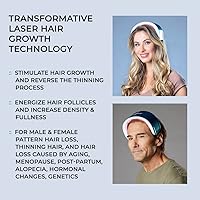
The HairMax LaserBand 82 Laser Hair Growth Device is genuinely well-matched to adults who have been diagnosed — or are strongly suspected by a physician — to have androgenetic alopecia, the hereditary form of pattern hair loss common in both men and women. It's an especially compelling option for people who have already tried topical treatments like minoxidil and want to layer a clinically supported, device-based therapy on top of their existing regimen rather than replacing it. The quick session time — 90 seconds per scalp section, three times a week — makes adherence far more realistic than many longer at-home protocols. If clinical evidence matters to you and you tend to distrust unvalidated gadgets, this laser band stands apart from most of the market: the breadth of its published research is genuinely unusual for a consumer device. People experiencing menopause-related or age-related thinning alongside hereditary factors may also find it worthwhile, as long as they enter with patient expectations and understand that the commitment is measured in months, not days.

Not suitable for:

The HairMax LaserBand 82 Laser Hair Growth Device is not the right choice for anyone who needs or expects fast, visible results — the minimum realistic timeline for meaningful change is three to six months of consistent use, and even then, a meaningful number of users see no measurable improvement at all. If your hair loss stems from a source other than androgenetic alopecia — think thyroid conditions, iron deficiency, scalp scarring, or acute stress — LLLT simply isn't the mechanism to address it, and buying this device on that basis would likely be money poorly spent. Budget-conscious shoppers should also think carefully: the upfront cost is substantial and there is no guarantee of outcome, meaning you may spend significantly and come away with little to show for it. This LLLT headband is also a poor match for anyone who struggles with routine consistency — the clinical data assumes regular three-times-weekly use, and casual or irregular users tend to report the weakest outcomes. Finally, people hoping to recover from severe or long-standing hair loss may find that the technology, while legitimate, has real limitations in what it can reasonably achieve.

Specifications

  • Laser Count: The device houses 82 individual medical-grade laser diodes, each calibrated to deliver coherent therapeutic light energy directly to the scalp.
  • Energy Output: Total combined laser output is 1230mW, providing clinically relevant energy density across the full treatment area.
  • Treatment Time: Each scalp section requires 90 seconds of exposure, with three sections covered per complete session.
  • Frequency: The recommended protocol is three sessions per week, maintained consistently throughout the course of treatment.
  • Device Weight: The handset weighs 9.6 oz, making it light enough to hold and maneuver comfortably during each 90-second section.
  • Dimensions: The device measures 11.5 x 9.5 x 4.75 inches, sized to span the scalp across three distinct treatment positions.
  • Package Weight: The complete retail package, including all included accessories, weighs 3.2 pounds.
  • Power Source: Two lithium polymer rechargeable batteries are integrated into the device and included in the retail box.
  • Charging: A dedicated charging cradle and stand are included, allowing the device to be docked securely upright between sessions.
  • Light Technology: The device uses true coherent laser diodes exclusively — no LEDs — emitting a focused, targeted wavelength of therapeutic light energy.
  • Form Factor: A flexible ComfortFlex headband structure with soft-touch scalp teeth allows the device to conform to varying head sizes and shapes.
  • Scalp Coverage: Full scalp coverage is achieved by applying the band sequentially across three overlapping sections per session, providing a total of 246 laser coverage points.
  • Indicated For: Clinically indicated for androgenetic alopecia, male and female pattern hair loss, menopause-related thinning, and general age-related hair thinning in adults.
  • Clinical Backing: The underlying LLLT technology is supported by seven clinical studies, six peer-reviewed journal publications, and 14 international medical device licenses.
  • Model Number: The official item model number assigned by the manufacturer is 1030016.
  • Brand History: HairMax was founded in 2000 and is recognized as one of the earliest companies to commercialize laser-based hair regrowth technology for home use.
  • Age Suitability: The device is designed and clinically indicated for use by adults only.
  • Portability: Battery-powered operation and a lightweight build make the device suitable for both home use and travel without requiring a direct power connection during treatment.

Related Reviews
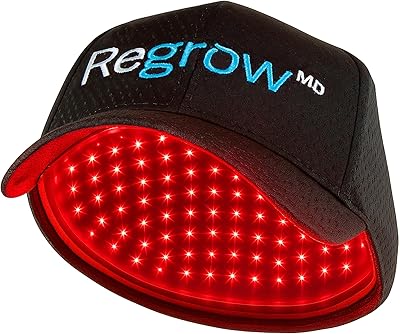
Hairmax RegrowMD Laser Hair Growth Cap
86%
85%
Effectiveness in Hair Regrowth
90%
Ease of Use
88%
Treatment Duration (30 minutes)
91%
Comfort and Fit
87%
Non-Invasive Design
More
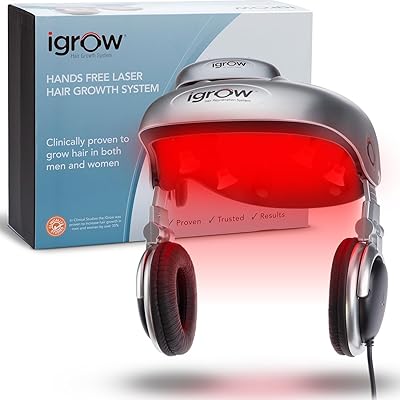
iGrow Laser Hair Growth System
85%
85%
Effectiveness of Hair Growth
91%
Ease of Use
88%
Comfort During Use
90%
Design & Build Quality
82%
Value for Money
More
Ubroo IPL Hair Removal Device
72%
74%
Hair Reduction Effectiveness
83%
Cooling Comfort
71%
Ease of Use
62%
Build Quality
81%
Value for Money
More
Dr. Groot Hair Essentials 4-Piece Hair Set
79%
88%
Ingredient Quality
83%
Scalp Health Results
79%
Hair Shedding Reduction
74%
Value for Money
91%
Formula Cleanliness
More
Hair to Stay Hair Growth Shampoo 16oz
85%
88%
Effectiveness for Hair Growth
92%
Sulfate-Free Formula
85%
Volume Boosting/Thickening
60%
Fragrance Appeal
90%
Suitability for Sensitive Scalps
More
Serovital Hair Regeneres Hair Vitamins 60 Count
72%
78%
Effectiveness for Shedding Reduction
71%
Hair Thickness & Fullness
83%
Ingredient Quality & Formula Transparency
66%
Value for Money
74%
Hair Texture & Shine
More
MAK Hair Zoe Hair Growth Conditioner 12oz
78%
84%
Hair Texture Improvement
62%
Hair Growth Support
81%
Scalp Compatibility
88%
Color-Safe Performance
86%
Lightweight Feel
More
Vita Green Hair Growth Supplement 90 Capsules
74%
78%
Effectiveness for Shedding
63%
Anti-Graying Support
91%
Ingredient Quality
61%
Value for Money
74%
Scalp & Texture Improvement
More
HealthAid Hair VIT Hair Growth Supplement – 90 Capsules

83%
85%
Effectiveness for Hair Growth
92%
Convenience of Dosage
88%
Ingredient Quality
90%
Value for Money
80%
Packaging & Dispensing
More
Vitality Extracts Hair Envy Hair Growth Serum 30mL

88%
88%
Effectiveness in Promoting Hair Growth
91%
Moisturizing & Nourishing Properties
85%
Packaging and Ease of Use
80%
Fragrance & Scent
87%
Consistency of Results Over Time
More

FAQ

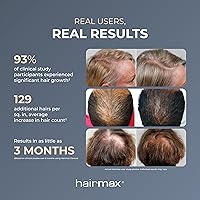
The HairMax LaserBand 82 Laser Hair Growth Device is built for long-term, consistent use — most people in clinical settings began noticing changes in hair density after three to six months of regular treatment. Results vary considerably from person to person, and some users report early improvements sooner, while others take longer. The honest benchmark is at least six months of committed use before drawing any conclusions.

Yes — this LLLT headband is designed for both men and women, and the supporting clinical studies include female participants. It is specifically indicated for female pattern hair loss and menopause-related thinning, both of which fall under the broader category of androgenetic alopecia. If you are on medications or have an underlying health condition, it is worth checking with your doctor before starting any new device-based treatment.

Dry hair is strongly recommended — applying the band to clean, dry hair allows the laser light to reach the scalp more directly without obstruction from moisture or product residue. You do not need perfectly styled hair, but a thick wet layer can reduce how effectively the laser energy penetrates to the follicle level.

Generally yes — many users and dermatologists combine LLLT devices with topical treatments like minoxidil as part of a layered approach, and the LaserBand 82 is commonly used this way. The two mechanisms work differently: minoxidil promotes circulation to follicles, while laser therapy is thought to stimulate cellular energy at the follicle level. That said, if you are also taking oral medications for hair loss, it is worth discussing the full regimen with your physician.

It is specifically designed and clinically tested for androgenetic alopecia — the genetic form of pattern hair loss that affects both men and women. If your hair loss is driven by something else, such as a nutritional deficiency, an autoimmune condition, thyroid issues, or acute stress, this laser band is unlikely to address the root cause and may produce little to no meaningful change.

Progress with LLLT is gradual and often subtle — many users notice reduced daily shedding first, followed by visible regrowth or increased density over several months. Taking monthly scalp photos under consistent lighting is one of the most practical ways to track changes that are otherwise easy to miss day-to-day. If nothing has shifted after six months of consistent use, the treatment may simply not be effective for your specific biology.

No — LLLT is a non-thermal, low-energy process, so you should not feel any heat, tingling, or discomfort during use. The soft-touch teeth are designed to make contact with the scalp gently, and the flexible band adjusts to your head shape. Some users notice slight pressure initially, but this typically becomes unnoticeable after the first few sessions.

Avoid submerging or running water over this laser band — it is an electronic device and is not waterproof. A soft, lightly damp cloth is sufficient for wiping down the teeth and outer surface between uses. Keeping it docked in the charging cradle when not in use helps maintain battery health, and storing it away from direct sunlight or extreme temperatures will extend its lifespan.

Occasional missed sessions are unlikely to undo months of consistent effort, but regularly skipping treatments appears to significantly blunt results based on real user experience. The three-times-a-week protocol is designed to maintain a steady therapeutic stimulus on the follicles — consistency matters far more than any single session. If you fall behind, simply resume your normal schedule as soon as possible rather than trying to compensate with extra sessions.

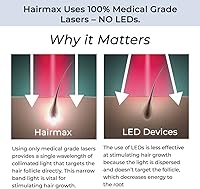
The key difference is the type of light source: this LLLT headband uses true laser diodes, while many competing devices use LEDs instead. Lasers produce coherent, focused light at a specific wavelength, whereas LEDs emit diffuse, non-coherent light that scatters in multiple directions and may deliver less consistent energy to the follicle. Whether this translates to meaningfully better outcomes in everyday use is an ongoing discussion, but the clinical evidence backing laser-based devices is currently more robust and extensive than what exists for most LED-based alternatives.

Where to Buy