Overview

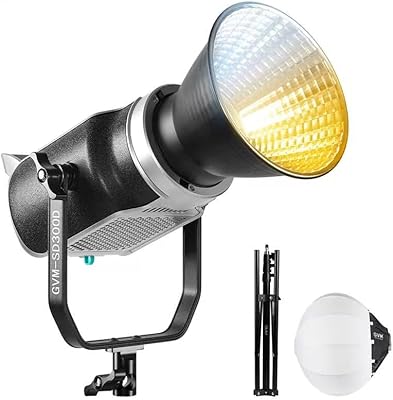
The GVM Pro SD650B 650W LED Video Light is a high-output COB studio fixture built for video creators and small production teams who have outgrown consumer-grade panels. At 650W, this isn't a light you buy because it looks good on a shelf — it's for people who need to punch through large softboxes, fill wide studio spaces, or compete with ambient daylight on location. The standard Bowens mount is a genuine practical win: it means your existing modifiers work immediately, no adapters required. At this price tier, buyers rightly expect professional-grade output and build quality, and that's exactly the angle we're examining here — not the spec sheet, but what it's actually like to work with.

Features & Benefits

The SD650B's headline number — 81,300 lux at one meter — is enough to properly expose a subject even when shooting through a large diffusion panel. The 2700K–6800K color range covers everything from tungsten-matching interior work to clean daylight simulation, and the CRI/TLCI rating above 97 means skin tones hold up accurately on camera rather than drifting. Beyond straight illumination, the fixture includes 24 effect modes — candle flicker, TV simulation, strobe, and more — which can replace separate gear on tighter sets. Control is genuinely flexible: onboard knobs, a smartphone app, and full DMX compatibility in both 8-bit and 16-bit modes for productions running a lighting board. Dual cooling fans stay under 40dB even at full power.

Best For

This 650W fixture suits a fairly specific group of buyers. Solo YouTube creators or studio owners who want one powerful key light — rather than several weaker ones — will appreciate the output headroom. Commercial photographers shooting products or portraits benefit most from the high CRI accuracy. Narrative filmmakers and branded content producers gain from those built-in effect modes, which can replace dedicated practical lighting units on tighter shoots. If you already own Bowens-mount softboxes, grids, or beauty dishes, the SD650B slots straight into your existing setup. It's not the right call for run-and-gun location work — at nearly 38 pounds, this is a fixture you position carefully and leave in place.

User Feedback

Buyers consistently highlight brightness and build quality as the standout strengths — the output lives up to the advertised numbers, and the construction feels appropriately solid for the price. Color accuracy earns particular praise from photographers doing color-critical work. On the critical side, some users have flagged that the app can be inconsistent about holding a stable connection, making the physical controls more dependable in fast-paced situations. The weight is an honest consideration too: solo operators have noted that mounting the fixture alone on a stand requires care. The effect modes divide opinion — some find them genuinely useful on narrative sets, while others rarely touch them. Customer support feedback from GVM buyers trends positive overall.

Pros

  • Output power of 81,300 lux at one meter is strong enough to drive large softboxes without losing effective exposure.
  • CRI and TLCI both above 97 means color-critical footage requires minimal correction in post.
  • Standard Bowens mount works immediately with existing modifiers — no adapters, no compatibility guesswork.
  • The SD650B supports DMX control in both 8-bit and 16-bit modes, a rare feature at this price point.
  • Dual cooling fans hold noise under 40dB at full power, keeping the fixture viable on dialogue sets.
  • 24 built-in lighting effect modes replace dedicated practical lighting units on smaller productions.
  • Brightness adjusts in 0.1% increments, making precise exposure matching across multiple fixtures straightforward.
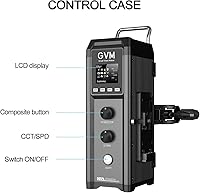
  • The LCD panel displays brightness, channel, and color temperature at a glance — no app required for basic monitoring.
  • Group channel control lets one operator adjust multiple GVM fixtures simultaneously from a single light.
  • Build quality consistently earns praise from buyers who use the fixture in high-frequency production environments.

Cons

  • The GVM app drops connection mid-session often enough that professionals treat it as unreliable for critical use.
  • At nearly 38 pounds, safe solo mounting requires a heavy-duty stand, sandbags, and careful technique.
  • Below roughly 5% brightness, some buyers notice a slight warm color shift that affects low-light consistency.
  • The onboard menu system has a genuine learning curve and isn't intuitive for users new to professional fixtures.
  • DMX channel mapping documentation in the manual is sparse, requiring outside research to configure correctly.
  • One fan can cycle on and off intermittently at mid-range brightness, producing a distracting ticking pattern on quiet sets.
  • Heavy modifiers like large octagons can feel insecure in the Bowens mount at steep beam angles.
  • The LCD display is hard to read from more than a few feet away once the screen dims during inactivity.
  • Effect modes lack fine-tuning granularity, making it difficult to dial in exact flicker speed or strobe intensity.
  • The fixture is impractical for location shoots — transport requires a dedicated case and at least two people.

Ratings

The GVM Pro SD650B 650W LED Video Light earns its ratings from AI-assisted analysis of verified global buyer reviews, with spam, incentivized posts, and bot activity actively filtered out before scoring. The result reflects a candid picture of real-world studio use — where this fixture genuinely impresses and where it falls short. Both the strengths that make it compelling and the friction points that give some buyers pause are represented transparently in each category below.
Light Output & Power
94%
Most buyers are genuinely surprised by how much light this fixture throws in practice. At 81,300 lux at one meter, it comfortably powers large softboxes and fills wide studio spaces without straining. Videographers shooting in naturally bright environments consistently report having plenty of headroom to work with.
The sheer output is overkill for small home studios or tabletop setups where dialing down to 5–10% brightness introduces some inconsistency in color temperature at the low end. A few buyers noted they rarely push it past 40% in compact spaces, which makes the full 650W feel underutilized.
Color Accuracy (CRI/TLCI)
92%
Commercial photographers report that skin tones and product colors hold up reliably on camera without any visible green or magenta cast. The CRI and TLCI both exceeding 97 means footage shot under this light requires minimal color correction in post, which saves real time on professional projects.
A small subset of buyers using particularly sensitive camera profiles noticed a slight warmth bias at the higher end of the color temperature range. It's a minor issue that calibration can address, but it's worth acknowledging for those doing critical color-matching work across multiple lights.
Color Temperature Range
88%
The 2700K to 6800K stepless range is wide enough to match tungsten practical lights on one end and mimic clean midday daylight on the other. Buyers working in mixed-light environments — offices, homes with windows, or hybrid indoor-outdoor setups — appreciate not having to swap gels constantly.
At the warm extreme, a few users found 2700K still reads slightly cooler than true tungsten on camera, which matters when trying to blend with incandescent practicals. It's close, but not a perfect match without some additional correction.
Build Quality & Construction
89%
The chassis feels solid and purposeful — buyers describe it as genuinely heavy-duty rather than just visually imposing. The control panel, knobs, and bracket all maintain consistent tolerances after repeated repositioning, which matters for studio fixtures that get adjusted regularly across different setups.
At nearly 38 pounds, the unit demands a heavy-duty light stand and a second pair of hands for safe mounting. A few solo operators flagged that the weight distribution makes single-person setup awkward and potentially risky without a proper sandbag setup at the base of the stand.
Cooling & Noise Level
83%
The dual-fan system handles sustained full-power use well without thermal throttling, and buyers shooting dialogue-heavy content consistently confirm the sub-40dB noise claim holds in practice. In a treated studio with ambient noise under 25dB, the fans are audible but not intrusive on a boom mic a few feet away.
At lower brightness settings — roughly 20 to 40% — some buyers report one fan cycling on and off in short bursts rather than running continuously, creating an intermittent ticking that's more noticeable than steady fan noise. It doesn't affect performance, but it can be distracting during quiet takes.
Control Flexibility (Onboard & DMX)
91%
Having three independent control paths — physical knobs, app, and DMX — means the fixture adapts to almost any production context. Cinematographers running a DMX board can assign the SD650B to a channel and dial it in with 16-bit precision, which is a level of control more commonly found on significantly pricier fixtures.
The onboard menu takes a short learning curve to navigate confidently, and the LCD layout isn't immediately intuitive for users switching from competitor systems. DMX labeling in the manual has also drawn criticism for being sparse, requiring some trial and error during initial configuration on a lighting board.
App Connectivity & Remote Control
67%
33%
When the GVM app connects cleanly, remote adjustment from across a studio is a genuine convenience — especially for solo operators who need to tweak output without walking back to the light between takes. Group channel control across multiple GVM units works as advertised when the connection is stable.
App stability is the most consistently cited frustration in buyer reviews. Dropouts mid-session and occasional failure to reconnect without a full restart of both the app and the light are recurring complaints. Most professional users end up treating the app as a secondary option and relying on the physical controls for reliability.
Creative Effect Modes
74%
26%
Buyers shooting narrative short films or branded content find the built-in effect modes — particularly the candle flicker, TV simulation, and strobe — genuinely useful for replacing dedicated practical lighting units on tighter shoots. Having 24 modes available without extra gear is a real space and budget saver on small sets.
The modes divide opinion sharply. Commercial photographers and interview-focused videographers report rarely using them, viewing them as feature bloat rather than practical tools. Some effects also lack fine-tuning granularity, making it hard to dial in the exact intensity or speed needed for specific creative looks.
Bowens Mount Compatibility
93%
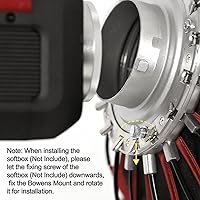
The standard Bowens mount is one of the most practically appreciated features among buyers who already own modifiers. Softboxes, beauty dishes, grids, and snoots attach without adapters, which means the fixture drops into existing kit immediately. Buyers upgrading from smaller lights keep all their accessories.
The mount itself is well-made, but the locking tension can feel slightly loose with heavier modifiers like large octagons at certain beam angles. A few users recommend double-checking modifier security before tilting the head significantly, particularly with third-party Bowens accessories that have slight dimensional variations.
Brightness Adjustment Precision
86%
The ability to nudge brightness in 0.1% increments gives cinematographers real control over exposure matching across multiple lights. Buyers doing multi-camera interviews particularly appreciate being able to match two fixtures to within a fraction of a stop without reaching for an ND filter.
At the very low end of the range — below 5% — a handful of buyers noticed slight color temperature drift toward the warm side. For most use cases this is irrelevant, but photographers doing controlled studio comparisons with identical fixtures may catch minor inconsistencies at near-minimum output.
Weight & Portability
58%
42%
For a permanent or semi-permanent studio fixture, the weight is a non-issue — once it's rigged and dialed in, it stays put. Buyers with dedicated studio spaces treat it like any other fixed infrastructure and rarely need to move it more than a few feet between shoots.
At just under 38 pounds, this 650W fixture is not a location-shoot light. Solo operators have flagged that transporting it to external venues requires a dedicated case and extra hands. It rules out the kind of run-and-gun flexibility that lighter LED panels offer, which is a real trade-off buyers should evaluate honestly before purchasing.
LCD Display & Interface
79%
21%
The LCD readout of brightness percentage, channel number, and color temperature means you always know exactly what state the light is in without relying on the app. Buyers managing multi-light setups find the channel display particularly useful for confirming group assignments at a glance.
The display is functional rather than refined — font size and contrast make it harder to read from more than a few feet away, which is inconvenient when the light is mounted high on a stand. A few buyers also noted the display dims quickly during inactivity, requiring a button press just to confirm current settings.
Value for Money
77%
23%
Relative to dedicated cinema fixtures with comparable output and DMX support, the SD650B sits at a significantly lower price point. Buyers who price-compared against similar COB studio lights with Bowens mounts and high CRI ratings consistently describe it as offering strong specification density for the cost.
The premium is real, and buyers expecting a flawless out-of-box experience across every feature — particularly the app — may feel the price sets expectations the product only partially meets. Those who use the onboard controls and DMX exclusively tend to be more satisfied with the value equation than those who expected polished app performance.
Setup & Ease of Use
72%
28%
Once the learning curve on the menu system is cleared, day-to-day operation is straightforward. Buyers who set recurring channel and brightness presets report that repeated-session setup is fast and consistent, especially in a fixed studio where the light stays in position between shoots.
First-time setup takes longer than buyers anticipate — the manual is dense in some areas and thin in others, and DMX channel mapping in particular requires outside reference material to configure correctly. For buyers new to professional studio lighting, the initial configuration can be genuinely frustrating.

Suitable for:

The GVM Pro SD650B 650W LED Video Light is purpose-built for creators and small production teams who need professional-grade output from a single fixture. It's an ideal fit for dedicated studio spaces — whether that's a commercial photography studio, a branded content production suite, or a serious YouTube creator's permanent setup — where the light lives on a stand and gets used repeatedly in controlled conditions. Commercial photographers shooting products, portraits, or fashion will find the CRI/TLCI accuracy genuinely useful, as color-critical work demands a light source that doesn't require heavy correction in post. Videographers producing short films or branded video content benefit not just from the raw output but from the built-in effect modes, which can stand in for separate practical lighting units on tighter budgets. Teams already running Bowens-mount modifier kits will slot this fixture directly into their workflow without spending extra on adapters. And for anyone managing a multi-light setup through a DMX board, the SD650B's 16-bit precision control puts it in territory usually occupied by much more expensive fixtures.

Not suitable for:

The GVM Pro SD650B 650W LED Video Light is not the right call for every buyer, and being clear about that upfront saves frustration. At just under 38 pounds, it simply isn't a portable light — solo operators who regularly shoot on location, move between venues, or need to rig and de-rig quickly will find the weight a genuine liability rather than just a minor inconvenience. Buyers expecting a polished, app-first control experience should also temper expectations: the GVM app works, but connectivity dropouts are a documented pattern, and professionals who rely on remote adjustment mid-take will likely find themselves defaulting to the physical controls. Small home studios or tabletop product photographers who rarely need to push past 200 watts won't extract meaningful value from the full 650W output and would be better served by a smaller, lighter, and less expensive COB fixture. If your priority is maximum portability, a refined mobile app, or a shallow learning curve for menu navigation, the SD650B will disappoint in those specific areas regardless of how impressive its light output is.
Specifications

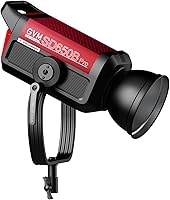
  • Power Draw: The fixture runs at a constant 650W, which requires a standard 15A circuit at minimum — worth confirming before installation in older studio spaces.
  • Max Illuminance: At one meter with no modifier attached, output reaches 81,300 lux, providing enough intensity to properly expose subjects even through heavy diffusion.
  • Color Temperature: Color temperature adjusts steplessly from 2700K to 6800K, covering the full range from warm tungsten-matching interiors to clean daylight simulation.
  • Color Accuracy: Both CRI and TLCI ratings exceed 97, meaning skin tones and product colors render with high fidelity on camera and require minimal correction in post-production.
  • Brightness Control: Output adjusts in 0.1% increments across the full 0–100% range, allowing precise exposure matching when running multiple fixtures side by side.
  • Mount Type: The fixture uses a standard Bowens mount, which is directly compatible with the majority of professional light modifiers including softboxes, beauty dishes, grids, and snoots.
  • Control Options: Three independent control methods are available: onboard control knob and buttons, the GVM smartphone app, and DMX via a standard DMX interface supporting both 8-bit and 16-bit precision modes.
  • Effect Modes: Twenty-four total lighting effect modes are included — 12 creative effects such as candle flicker, TV simulation, strobe, and fireworks, plus 12 light source matching modes.
  • Cooling System: Dual internal fans manage heat dissipation and are rated to stay below 40dB during full-power operation in an ambient environment of 22dB or quieter.
  • Display: An onboard LCD panel shows current brightness percentage, channel assignment, color temperature, and other operational parameters in real time.
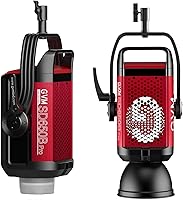
  • Beam Adjustment: The U-shaped yoke bracket supports 360-degree beam angle adjustment, allowing the head to be tilted and locked at any angle relative to the stand.
  • Connectivity: The fixture connects to the GVM app via Wi-Fi or Bluetooth and interfaces with external lighting boards through a standard DMX port.
  • Group Control: Multiple GVM fixtures assigned to the same channel can be controlled simultaneously from a single unit, without requiring a separate DMX controller for basic group management.
  • Package Dimensions: The packaged unit measures 26.5 x 16.75 x 10.6 inches, which is relevant for shipping logistics and storage planning in tighter studio spaces.
  • Item Weight: The fixture weighs 37.7 pounds, requiring a heavy-duty light stand with a weight capacity of at least 50 pounds and counterweight sandbags for safe use.
  • Lamp Technology: The light source uses professional COB (Chip-on-Board) LED lamp beads, which produce a more uniform, point-source-like output compared to multi-array panel designs.
  • DMX Precision: DMX control operates in either low-precision 8-bit mode (256 steps) or high-precision 16-bit mode (65,536 steps) for fine-grained dimming on professional lighting rigs.
  • Availability: The fixture was first made available for purchase in June 2023 and is manufactured by GVM Great Video Maker.

Related Reviews

GVM SD200B 200W LED Video Light with Lantern Softbox
80%
93%
Brightness & Output Power
91%
Color Accuracy (CRI & TLCI)
88%
Build Quality & Materials
78%
Softbox Quality & Light Diffusion
62%
Fan Noise & Thermal Management
More
GVM 800D RGB LED Video Light
86%
93%
Color Accuracy
89%
App Control Experience
86%
Portability and Weight
92%
Power Options Flexibility
84%
Build Quality
More
Ulanzi L023 40W Pro COB Video Light
77%
91%
Battery Convenience
88%
Light Output & Brightness
86%
Color Accuracy
93%
Portability & Form Factor
82%
Build Quality & Controls
More
NEEWER RGB660 PRO II
80%
91%
Brightness Output
93%
Color Accuracy
88%
Dimming Performance
67%
App & Bluetooth Control
84%
RGB Color Range
More
SMALLRIG Vibe P96 Pro LED Video Light
84%
91%
Portability & Weight
94%
Color Accuracy (CRI/TLCI)
68%
Battery Life at Full Brightness
85%
Brightness & Light Output
87%
Mounting Flexibility
More
GVM 300W COB LED Video Light Kit
86%
94%
Color Accuracy
85%
Setup & Installation
91%
Brightness & Power
88%
Fan Noise
84%
Build Quality
More
GVM 680 RGB LED Video Light with Stand Kit
83%
88%
Performance & Brightness
90%
Ease of Use (App Control)
85%
Lighting Customization
72%
Build Quality
80%
Portability
More
NEEWER HS60C Pro 60W RGB LED Video Light
83%
92%
Brightness Output
89%
Color Accuracy (CRI)
94%
Portability & Form Factor
67%
App Control & Connectivity
86%
Build Quality
More
Movo LED-WP Underwater High-Power LED Video Light
85%
86%
Overall Performance
90%
Build Quality
88%
Battery Life
84%
Ease of Use
93%
Waterproof Capability
More
NEEWER FS230B 230W Bi-Color LED Video Light
84%
93%
Brightness Output
91%
Color Accuracy
67%
App & Wireless Control
88%
Build Quality & Portability
89%
Dimming Precision
More

FAQ

Yes, the standard Bowens mount means any modifier designed for that system attaches directly without an adapter. This covers the vast majority of professional softboxes, beauty dishes, grids, umbrellas, and snoots currently on the market. Just be sure to check your modifier's weight against the mount's load tolerance if you're using something unusually heavy.

At full 650W output, the dual fans stay under 40dB in a quiet room — roughly equivalent to a soft hum rather than a noticeable whir. On a properly treated set with a directional boom mic, it's unlikely to cause problems. That said, some buyers have noted that at mid-range brightness, one fan can cycle on and off in short bursts, which is more noticeable than steady fan noise during very quiet takes.

Honestly, it's better treated as a secondary option. The app works well when the connection holds, and remote brightness adjustment from across a studio is genuinely convenient for solo operators. However, enough buyers have reported mid-session dropouts and reconnection issues that most professionals end up defaulting to the physical onboard controls for anything time-sensitive. Think of the app as a bonus feature rather than a core workflow tool.

The GVM Pro SD650B 650W LED Video Light draws a constant 650W, so you'll want to verify your circuit's amperage before plugging in. A standard 15A, 120V circuit in North America supports up to 1,800W in theory, but running a single fixture at 650W alongside other studio gear could push you close to the limit. A dedicated circuit is the safest approach for a permanent studio installation.
The built-in group channel system handles basic multi-light control without any external hardware. Assign two or more GVM fixtures to the same channel number, and adjusting one changes all of them in sync. It's not as precise as a DMX board, but for a straightforward two or three-light setup, it works cleanly through either the onboard controls or the app.

Buyers who have tested it report that the output genuinely matches the advertised figure when measured at one meter with no modifier attached. Through a large softbox, expect a significant drop in lux as with any diffused light source, but the raw power behind it means you still have useful output after diffusion — which is exactly the use case this fixture is built for.

Given the nearly 38-pound weight, you need a heavy-duty light stand rated for at least 50 pounds — standard aluminum photography stands are not appropriate here. A robust C-stand or dedicated studio stand with a proper spigot, combined with sandbags at the base, is the safe setup. Do not attempt to mount this light solo on a lightweight tripod-style stand.

The modes are adjustable to a degree but lack deep customization. You can control intensity and speed on most effects, but buyers looking for precise control over strobe frequency or exact flicker behavior may find the adjustment range limiting. For general use on narrative sets, the presets are convincing enough; for highly specific creative requirements, you may still need dedicated practical lights.

A small number of buyers have noted a slight warm shift at brightness settings below roughly 5%, which can affect color consistency when matching across multiple fixtures at near-minimum output. For the vast majority of studio use cases, this is a non-issue, but photographers doing critical color-matching work at low brightness should be aware of it and verify with their specific camera profile.

Not really — and being upfront about that is important before purchase. The SD650B weighs close to 38 pounds, requires a heavy-duty stand, and benefits from a stable, controlled environment. Moving it between locations means a dedicated transport case, a vehicle with sufficient cargo space, and a second person for safe rigging. If location flexibility matters to you, a lighter COB or LED panel fixture would serve you far better.