Overview

The Godox M1 RGB LED Video Light is a pocket-sized aluminum panel built for creators who need reliable color output without hauling a heavy kit. At roughly the size of a thick TV remote, the build feels reassuringly solid — not plasticky like many compact lights in this price range. That said, keep expectations realistic: this is a fill or accent light, not a room-flooding key light. Buyers typically size it up against similar small panels from Ulanzi and Aputure, and this compact RGB panel holds its ground on color quality. A 4.8-star average is genuinely encouraging, though the review pool is still modest, so treat it as a positive signal rather than a definitive verdict.

Features & Benefits

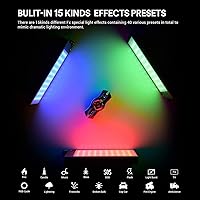
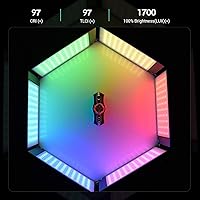
What actually makes this pocket video light worth considering is the color science behind it. A CRI of 97+ and TLCI of 97+ might sound like spec-sheet bragging, but in practice it means skin tones look natural under the light — no greenish tint, no waxy overexposure. The color temperature range runs from a warm 2500K all the way to a crisp 8500K, covering virtually any ambient condition you might shoot in. Full HSB control lets you dial in any hue across 360 degrees, with saturation and brightness adjustable independently. The 15 FX modes with 40 presets add creative range for streamers and social creators, and the music-sync beat detection is a fun touch — genuinely useful for music video work, less so for everyday shoots. Battery life runs around 2.5 hours at full power via USB-C charging.

Best For

This compact RGB panel slots in best as a secondary or supporting light rather than a primary source. Travel shooters and run-and-gun videographers will appreciate how easily it tucks into a camera bag — 240 grams and a slim 0.6-inch profile make it almost effortless to carry. Streamers and podcasters can use it to add a colored bias light behind a monitor or along a wall for visual depth. Photographers wanting colored creative lighting without taping physical gels to a flash will also find this approach far more practical. Where it struggles is as a standalone key light for anything beyond close-range work — at 1700 lux maximum output, it simply was not built to fill a room.

User Feedback

Buyers who picked up this pocket video light consistently highlight two things: build quality and color accuracy. The aluminum body draws favorable comparisons to much pricier panels, and several users single out the built-in LCD display as a genuinely helpful feature for reading exact settings at a glance — something rivals at this size often skip. The articulating bracket earns praise for its mounting flexibility across camera shoes and rigs. On the downside, the most common complaint centers on battery drain at full brightness — real-world users often report closer to 90 minutes of runtime under heavy RGB use, not the rated 150. The music beat mode gets mixed reactions, with most treating it as a fun novelty rather than a genuine workflow tool.

Pros

  • CRI 97+ and TLCI 97+ ensure skin tones and colors look accurate and natural on camera.
  • The aluminum alloy body feels genuinely premium and durable for its size and price tier.
  • At just 240 grams and barely over half an inch thick, this pocket video light fits in virtually any bag.
  • USB-C charging means topping up from a power bank on location is completely hassle-free.
  • Full 360-degree hue control lets you dial in any color precisely, without physical gels or guesswork.
  • The built-in LCD display shows exact settings at a glance — a feature many competing panels omit.
  • Color temperature range of 2500K to 8500K covers almost every real-world shooting condition.
  • The articulating bracket mounts to camera shoes, rigs, or stands without needing extra adapters.
  • 15 FX modes with 40 presets give streamers and social creators a solid toolkit for dynamic visuals.
  • The compact RGB panel holds its own against similarly priced competitors on color quality and build.

Cons

  • Real-world battery life at full RGB brightness often falls well short of the rated 150 minutes.
  • No wireless remote or companion app makes mid-shoot adjustments a physical interruption every time.
  • Maximum output of 1700 lux limits usable throw distance to roughly one meter for effective lighting.
  • The bracket tension can loosen gradually with frequent repositioning, causing slow angle drift over time.
  • Button feel is somewhat mushy and inconsistent with the otherwise solid build quality of the chassis.
  • Navigating the deeper menu layers is not intuitive and requires reading the manual to avoid frustration.
  • No protective carrying pouch is included, leaving the unit vulnerable to scratches loose in a bag.
  • FX preset customization is locked — you cannot save modified versions of effects for quick recall.
  • The LCD screen is difficult to read in bright outdoor light without manually shading it.
  • Music sync sensitivity struggles in noisy environments, reacting to ambient sound rather than the intended source.

Ratings

The scores below were generated by AI after systematically analyzing verified buyer reviews from global markets, with spam, incentivized, and bot-flagged submissions actively filtered out before scoring. Our model evaluated the Godox M1 RGB LED Video Light across every dimension that real creators care about — from color accuracy under demanding shoot conditions to how the bracket holds up after months of daily use. Both the genuine strengths and the recurring frustrations are reflected honestly in each score.
Color Accuracy
94%
The CRI 97+ and TLCI 97+ ratings are not just marketing numbers — buyers consistently report that skin tones look natural and true-to-life under this light, even in mixed-lighting environments. Portrait and interview shooters specifically note that color casts are minimal compared to budget panels they previously used.
A small number of users shooting in very warm ambient conditions noticed a slight hue shift at extreme color temperature settings near 8500K. It is a minor edge case, but perfectionists doing product photography on white backgrounds have flagged it.
Build Quality
91%
The aluminum alloy body consistently surprises buyers who expect plastic at this price point. At just 240 grams, it feels dense and well-assembled, and the overall finish holds up well through regular bag throws and location shoots.
A handful of users reported that the buttons have a slightly mushy tactile response compared to the solid feel of the chassis itself. The light also shows fingerprints easily on the aluminum surface, which bothers some buyers more than others.
Portability
93%
At 0.53 lb and a profile barely over half an inch thick, this pocket video light disappears into a camera bag or even a jacket pocket. Travel videographers and run-and-gun shooters frequently mention it as the one light they actually bring on every job without thinking twice.
The compact size means there is no included carrying pouch or protective case, which becomes a real concern when tossing it loose in a bag alongside other gear. A few buyers reported minor cosmetic scratches appearing quickly from everyday transport.
Battery Life
63%
37%
The USB-C charging port is universally appreciated — buyers can top it up from a power bank on location, which partially offsets the limited runtime. Charging time is reasonable, and the ability to use any modern cable is a practical convenience many note positively.
The rated 2.5-hour battery life at full power rarely holds up in real-world RGB use, with many buyers reporting closer to 80 to 100 minutes when pushing full saturation at maximum brightness. For longer shoots or all-day events, a second power source is essentially mandatory.
RGB Color Range & Control
89%
Full 360-degree hue control with independent saturation and brightness sliders gives creators genuinely fine-grained color dialing rather than just a handful of presets. Buyers use this for everything from matching practical lights on set to adding stylized neon accents in portrait work.
At very low saturation levels, some users find the color shifts subtly unpredictably, making it harder to lock in pastel tones consistently across takes. The control interface, while functional, has a learning curve that takes a session or two to internalize comfortably.
Light Output & Throw Distance
67%
33%
At 1700 lux maximum, the Godox M1 delivers solid punch for close-range work — think desktop setups, talking-head interviews within a couple of feet, or tight accent lighting on a product. For its size, the output-to-footprint ratio is genuinely competitive.
Anyone expecting to use this as a primary key light for a full room will be disappointed. Beyond roughly one meter, the output drops off noticeably, and several buyers who purchased it hoping to replace a larger panel have flagged this as a mismatch of expectations.
FX Lighting Effects
78%
22%
The 15 built-in FX modes with 40 presets give streamers and social content creators a genuine toolkit for adding visual dynamism to their shots. Effects like lightning, fire flicker, and paparazzi flash are detailed enough to be actually usable rather than gimmicky.
The preset customization options are limited — buyers cannot save their own modified versions of effects, which means recreating a specific look requires manual re-dialing each time. For professional broadcast use, most users end up ignoring the FX bank almost entirely.
Music Sync Feature
58%
42%
The beat detection mode is a genuinely fun feature for music video shoots or event ambiance, and a subset of buyers use it creatively for concert-style content on social platforms. When it works well, the response to audio tempo is reasonably tight.
Most buyers treat this as a novelty after the first few tries rather than a workflow tool. The sensitivity calibration is imprecise, and in noisy environments the light reacts erratically to ambient sound rather than just the intended beat source.
LCD Display & Interface
83%
The built-in LCD screen is a recurring highlight in user feedback — being able to read exact color temperature, hue values, and brightness percentages at a glance is something many compact competitors skip entirely. On-set this saves time and reduces guesswork considerably.
In bright outdoor conditions, the display can be hard to read without shading it with your hand. A few users also note that the menu navigation is not fully intuitive at first, requiring a close read of the manual to understand mode-switching logic.
Mounting & Bracket Flexibility
82%
18%
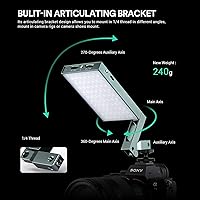
The articulating bracket with 360-degree main axis and 270-degree auxiliary axis rotation gives more positional freedom than most compact lights offer. Buyers appreciate being able to mount it to a camera shoe, a rig, or a standalone stand without needing an adapter.
Under frequent repositioning, a few long-term users report that the bracket tension loosens slightly over time and the light can slowly drift from its set angle. It is not a dealbreaker but worth knowing for precision-critical setups.
Color Temperature Range
88%
Spanning from 2500K to 8500K gives this compact RGB panel genuine versatility across shooting environments — warm firelight interiors at the low end and overcast outdoor matching at the high end. Buyers switching between indoor and outdoor setups in a single day find this range particularly useful.
At the extreme ends of the range — especially below 3000K — a small number of buyers note that color rendering consistency dips slightly. It is not a dealbreaker for most use cases, but it is worth testing before committing to high-end commercial work at those limits.
Ease of Use
80%
20%
Most buyers report getting comfortable with core functions within a single session. The physical controls are laid out logically for switching between white light, RGB, and FX modes, and the LCD feedback loop makes adjustments feel responsive rather than blind.
Accessing the deeper settings — particularly the more advanced FX customization — requires cycling through menu layers that feel unintuitive without the manual. First-time users of Godox products occasionally find the mode-switching logic less obvious than rival interfaces.
Value for Money
84%
Relative to what buyers get — a high-CRI aluminum-bodied RGB panel with USB-C charging and an LCD readout — most reviewers feel this compact RGB panel justifies its price comfortably. The build quality alone feels above its category when compared side-by-side with cheaper alternatives.
Buyers who primarily need raw output for traditional lighting work may find better value in a non-RGB bicolor panel at a similar price. The premium here is clearly for the color flexibility and portability package, not for sheer brightness-per-dollar efficiency.
Heat Management
76%
24%
For a sealed aluminum body running at 13W, the thermal performance is reasonable. Most buyers report only mild warmth during extended full-power sessions, which is reassuring for a unit with no visible ventilation slots.
After 60 to 90 minutes of continuous full-brightness RGB use, the body does get noticeably warm to the touch — not hot enough to be dangerous, but uncomfortable to hold for extended handheld operation. In high-ambient-temperature environments this effect is more pronounced.
Software & App Integration
44%
56%
For buyers who only use on-device controls, the lack of app dependency is actually a positive — there is nothing to pair, no firmware headaches, and no reliance on a phone connection mid-shoot. The standalone experience is clean and self-contained.
There is no companion app or wireless remote control option, which stands out as a gap compared to some competing panels at this tier. Buyers who want to adjust settings remotely during a solo shoot or live stream have no wireless option and must physically reach for the light each time.

Suitable for:

The Godox M1 RGB LED Video Light is a strong match for content creators who need a genuinely portable, color-accurate light they can carry anywhere without reorganizing their entire kit. Solo YouTubers and streamers who want to add colored bias lighting, a moody background glow, or a quick fill light to a talking-head setup will get real, practical value from this panel. Travel videographers and run-and-gun shooters will appreciate how it slips into any bag without adding meaningful weight or bulk, while still delivering CRI 97+ color quality that holds up on camera. Photographers tired of taping physical gels to speedlights will find the full HSB color control a far cleaner approach to creative colored lighting. Podcasters building out a visually distinctive streaming setup — colored walls, backlit monitors, accent strips — will also find this compact panel a versatile and affordable tool that punches above its size.
Not suitable for:

Anyone shopping for a primary key light to illuminate a full room or a larger shooting space should look elsewhere — the Godox M1 RGB LED Video Light simply was not engineered for that role, and its 1700-lux maximum output will leave those buyers underwhelmed past close range. Videographers or photographers who need consistent, all-day lighting on location will run into battery frustrations quickly, since real-world RGB runtime under full load often lands closer to 80 to 100 minutes rather than the rated figure. Professionals working in broadcast, commercial film, or any context where wireless remote control is a workflow necessity will also find this light limiting, as there is no app or remote option available. Buyers seeking a single light to handle both key and creative duties on a tight budget would be better served by a larger bicolor panel that prioritizes output, reserving a compact RGB light as a secondary purchase down the line.

Specifications

  • Dimensions: The light measures 5.7″ long by 2.75″ tall by 0.6″ deep, making it slim enough to slip into a jacket pocket or small camera pouch.
  • Weight: Net weight is 0.53 lb (approximately 240g), keeping the overall kit load minimal even when mounted on a camera rig.
  • Body Material: The enclosure is machined from aluminum alloy, providing a rigid, heat-dissipating shell that resists the flex and creaking common in plastic-bodied compact lights.
  • CRI & TLCI: Both the Color Rendering Index and Television Lighting Consistency Index are rated at 97+, indicating highly accurate color reproduction across the visible spectrum.
  • Color Temperature: Adjustable white light spans 2500K to 8500K in continuous steps, covering warm tungsten tones at the low end and cool overcast-daylight equivalents at the high end.
  • RGB Color Range: Full-spectrum RGB mode allows hue adjustment across 0–360°, with independent saturation (0–100%) and brightness (0–100%) control for precise creative color matching.
  • Max Illuminance: Peak output is rated at 1700 lux, which is effective at close working distances of roughly one meter but not intended for broad-area or room-fill illumination.
  • Power Consumption: The panel draws a maximum of 13W at full brightness, a figure that directly governs how quickly the internal battery depletes during sustained high-output use.
  • Battery Capacity: A built-in 2410mAh lithium-ion cell powers the light, and it is non-removable, meaning the unit must be rested or charged in place rather than swapping a spare pack.
  • Battery Life: Godox rates runtime at up to 2.5 hours (150 minutes) at maximum power, though sustained full-brightness RGB use typically yields a shorter real-world figure.
  • Charging: The light charges via a USB Type-C port at 5V/2A, compatible with standard phone chargers, laptops, and USB power banks without any proprietary cable requirement.
  • FX Modes: Fifteen built-in special effects lighting modes are included, with 40 total presets covering simulations such as lightning, fire flicker, TV screen, and paparazzi flash.
  • Music Sync: A dedicated music beat mode uses an onboard microphone to detect sound amplitude and tempo, causing the light color and intensity to respond dynamically to audio in the environment.
  • Display: A built-in LCD screen provides real-time numeric readouts of all active settings, including color temperature, hue value, saturation level, and brightness percentage.
  • Bracket Rotation: The integrated articulating bracket rotates 360° on the main axis and 270° on the auxiliary axis, enabling a wide range of mounting angles without additional adapters.
  • Mount Type: A standard 1/4-inch threaded mount is built into the bracket, compatible with camera hot shoes, cold shoes, light stands, and most common camera rig attachment points.
  • Operating Temperature: The unit is rated for use in ambient temperatures ranging from -10°C to 40°C, covering typical indoor studio and outdoor location conditions in most climates.
  • Dimming Range: Brightness is continuously adjustable from 0% to 100% in white light and RGB modes, with no visible flicker reported at standard video frame rates by most users.

Related Reviews

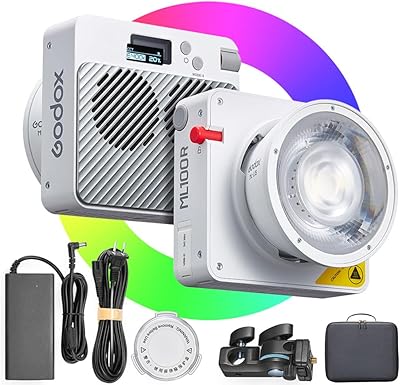
Godox ML100R RGB LED Video Light
86%
92%
Lighting Performance
91%
Color Accuracy
89%
Portability
85%
Battery Life
88%
Ease of Use
More
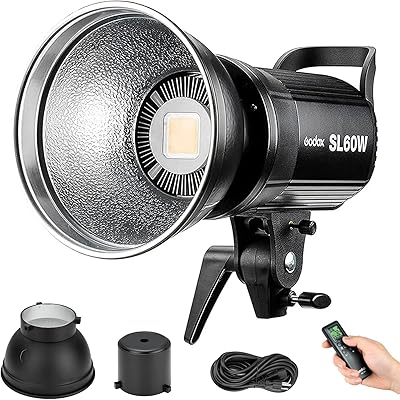
Godox SL60W LED Video Light
80%
91%
Light Output & Brightness
88%
Color Accuracy (CRI)
86%
Dimming Range & Control
93%
Bowens Mount Compatibility
84%
Wireless Remote & Grouping
More
Ulanzi L3
Ulanzi L3
87%
93%
Light Quality & COB Output
96%
Magnetic Mounting Strength
58%
Battery Endurance
91%
Color Accuracy (CRI)
89%
Accessory Versatility
More
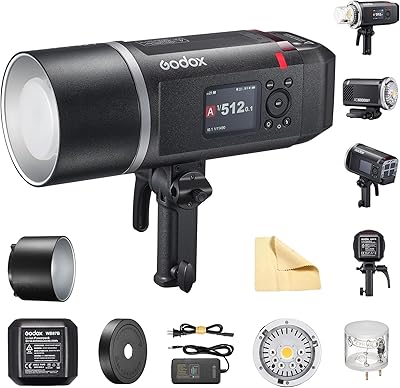
Godox AD600BMII 600Ws LED Video Light
86%
92%
Power Output
90%
Battery Life
89%
Flash Recycling Time
87%
Portability
85%
Ease of Use
More
Soonpho RGB LED Video Light Wand
79%
88%
Color Accuracy
86%
RGB Versatility
61%
Battery Life
67%
Build Quality
83%
Magnetic Mount System
More
Godox SL150WIII LED Continuous Video Light
88%
94%
Brightness and Light Output
92%
Color Accuracy
90%
Silent Operation
88%
Build Quality
89%
Wireless Control and Features
More
GVM 800D RGB LED Video Light
86%
93%
Color Accuracy
89%
App Control Experience
86%
Portability and Weight
92%
Power Options Flexibility
84%
Build Quality
More
NEEWER RGB1200
NEEWER RGB1200
83%
91%
Light Output & Brightness
93%
Color Accuracy
89%
Dimming Performance
88%
Color Temperature Range
78%
App Control & Connectivity
More
Godox ML60IIBi
Godox ML60IIBi
83%
92%
Light Output & Brightness
94%
Color Accuracy
91%
Portability & Size
52%
Battery Life
88%
Fan Noise & Thermal Management
More
SmallRig RC 60C RGB LED Video Light Lite
78%
93%
Portability
88%
Color Accuracy
61%
Battery Life
91%
Color Temperature Range
67%
App Control (SmallGoGo)
More

FAQ

It can work as a key light if you are shooting very close to the panel — within about half a meter to one meter — in a darker room. Beyond that range, the output drops off enough that most people find it better suited as a fill or accent light rather than the primary source. For a dedicated key light role, a larger, higher-output panel would serve you better.

The official rating is 2.5 hours at maximum power, but that figure applies more to white light use. When you are running full-saturation RGB at high brightness, real-world users typically report 80 to 100 minutes of runtime before needing a recharge. If you are shooting longer events, keeping a power bank handy is a smart move since the USB-C port lets you charge on the go.

Yes, the Godox M1 RGB LED Video Light can operate while connected to a USB-C power source, effectively giving you unlimited runtime as long as you have power flowing in. This is a genuinely useful option for desk setups, streaming rigs, or any situation where you are not moving around and can keep a cable plugged in.

The built-in bracket uses a standard 1/4-inch thread, which is the most common size in photography and video gear. That means it mounts directly to camera hot shoes, cold shoe adapters, light stands with a 1/4-inch spigot, and most camera rigs without needing any extra hardware. It is one of the more flexible mounting setups you find in a panel this size.

For a light in this category, the color science is genuinely strong. CRI 97+ and TLCI 97+ are scores you would expect from lights costing significantly more, and in practice that translates to natural-looking skin tones and minimal color casting on white or neutral surfaces. It holds up well for interview setups, product shots, and social content. For critical broadcast or high-end commercial work you would likely use this as a secondary light, not a primary one.

Unfortunately, no — this pocket video light does not have Bluetooth, Wi-Fi, or any wireless remote capability. All controls are handled directly on the unit via physical buttons and the LCD menu. If you are doing solo shoots where you need to adjust the light after stepping in front of the camera, you will need to physically reach back and change settings each time.

It is a fun feature, but most buyers end up treating it as a creative novelty rather than a regular workflow tool. It works reasonably well in quiet environments where the light can clearly pick up a single audio source, like music playing nearby. In noisier spaces — a busy event or a room with lots of ambient sound — it tends to react erratically. For music video shoots in a controlled environment it can genuinely add something, but it is not a reason on its own to buy this light.

Out of the box, the bracket holds its position solidly and most users have no issues. With heavy daily use and frequent repositioning over several months, a handful of long-term owners have noted that the tension gradually loosens a bit, causing slow angle creep. It is not a widespread problem, but if you are mounting the light in a fixed position for a static setup you may want to check the angle before each shoot just to be safe.

The Godox M1 sits competitively in this space, particularly on color accuracy — its CRI and TLCI scores match or beat most rivals at a similar price. The aluminum body gives it a build quality edge over some plastic competitors. Where it falls behind is the lack of wireless control, which the Aputure MC offers via Bluetooth. Battery life is roughly comparable across the category. If wireless remote control matters to you, that is the main reason to consider an alternative.

It is genuinely useful in practice. Being able to read the exact color temperature, hue value, and brightness percentage directly on the unit removes a lot of guesswork, especially when you are trying to match color settings across multiple lights on a set or recreate a look from a previous shoot. Most competing lights in this size class rely on vague indicator LEDs or require a connected app for the same information, so the built-in display is a real differentiator.