


Overview

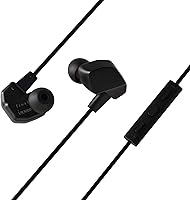
The Final VR3000 is not a gaming headset brand's attempt at audiophile credibility — it's the other way around. Final is a Japanese audio company that built its reputation on precise, natural-sounding IEMs, and these gaming earphones reflect that DNA. The tuning prioritizes spatial imaging and clarity over the bass-heavy signature most gaming peripherals lean on. There's no wireless option here, and that's intentional — the 3.5mm wired connection eliminates latency entirely. The result is a pair that occupies an interesting middle ground: more refined than budget gaming earbuds, yet approachable enough not to require a dedicated amplifier or audio interface to enjoy.

Features & Benefits

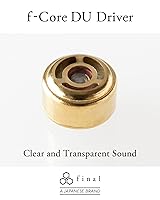
The 6mm f-Core DU driver is where Final's engineering focus shows up most clearly. It's a small driver, but tuned for wide soundstage reproduction rather than maximum low-end punch — you hear directionality in games the way the developer intended, not an amplified version designed to feel exciting. The locking earhook system is a genuine differentiator: a small clip mechanism anchors the cable at your ear, which effectively kills the rustling and tapping noise that plagues most IEM cables during extended wear. It takes a little trial to get the hook seated correctly, but once it's set, you forget it's there. The dual-hardness eartips and easy-to-drive impedance round out a thoughtfully assembled package.

Best For

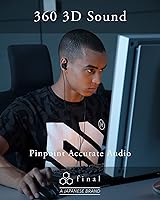
Final's gaming IEM is purpose-built for players who care about environmental audio immersion — think sprawling RPGs, open-world exploration, and VR environments where hearing a sound from the right direction actually changes how you play. It's also a strong pick for VR headset users specifically, since the compact IEM form factor sits flat and comfortable under a headset without the pressure points that accompany over-ear options. Gamers who want one pair that transitions naturally from in-game audio to music listening will find the tuning holds up well outside gaming contexts too. One honest caveat: if your priority is loud, thumping bass or competitive FPS footstep detection, these are not the right tool.

User Feedback

Across nearly 2,000 ratings, the VR3000 holds a 3.9 out of 5 — a score that reflects a satisfied majority with a small but consistent group of exceptions. The most repeated praise is the unusually wide soundstage for an IEM at this price, with multiple buyers noting it genuinely changes how they experience open-world and VR audio. On the other side, the inline microphone draws the most criticism — it works well enough for casual voice chat, but anyone comparing it to a dedicated headset mic will notice the gap immediately. Fit is the other friction point: the locking earhook, while clever, requires patience to position correctly, and buyers with smaller ears occasionally report difficulty finding a comfortable, stable seal.

Pros

  • Soundstage width is genuinely impressive for an in-ear design — open-world games sound notably more spatial and immersive.
  • Tuned for directional accuracy, so environmental audio cues actually help you navigate and react in-game.
  • The locking earhook eliminates cable rustling almost entirely, which makes long sessions noticeably quieter and less distracting.
  • At just 20 grams total, the VR3000 causes zero neck or ear fatigue even during extended gaming or listening stretches.
  • Easy to drive from any standard audio output — controller ports, laptop jacks, phone outputs — with no extra hardware needed.
  • Dual-hardness eartips create a better passive seal than single-material silicone options, improving both comfort and isolation.
  • Tonal balance translates well to music listening, making this a genuinely versatile pair beyond gaming contexts.
  • Low-profile IEM form factor is purpose-built for VR headset use without the bulk or pressure points of over-ear alternatives.
  • Five eartip pairs across multiple sizes gives a reasonable chance of finding the right fit without buying aftermarket tips.
  • A carrying pouch is included, adding practical day-to-day protection for travel or storage.

Cons

  • Bass output is noticeably lean — action game audio and bass-heavy music both feel softer than most buyers expect.
  • The inline microphone produces thin, underwhelming voice quality that teammates will notice immediately in voice chat.
  • The cable is not detachable, so any cable damage means replacing the entire unit rather than just one component.
  • The locking earhook requires a frustrating amount of trial and error before it sits correctly, especially for new users.
  • Buyers with smaller ears may never fully resolve the fit, leading to unstable isolation and inconsistent sound quality.
  • Wired-only connection is a dealbreaker for users whose devices lack a 3.5mm jack or who prefer wireless freedom.
  • The eartip selection covers size variety but offers only one material type — no foam or double-flange options in the box.
  • ABS plastic housing does not convey the durability that the mid-range price might lead some buyers to expect.

Ratings

The Final VR3000 has been evaluated by our AI system after analyzing thousands of verified global buyer reviews, with spam, bot-generated, and incentivized submissions actively filtered out. These gaming earphones earn strong marks where Final's audio expertise shines — particularly in soundstage and comfort — while the scores honestly reflect the recurring frustrations around fit and microphone performance. Both the strengths and the friction points are represented as they actually appear across real buyer experiences.

Soundstage & Spatial Imaging
91%
This is the single most praised aspect across verified reviews. Buyers repeatedly describe the sense of space as unusually convincing for an in-ear form factor — particularly in exploration-driven games where environmental audio cues matter. In VR environments especially, the directional accuracy consistently surprises users who expected something closer to a standard gaming earbud.
A minority of listeners accustomed to large over-ear headsets find the spatial impression impressive for an IEM but still noticeably narrower than a well-tuned open-back headphone. At very high volumes, some users note the wide presentation can feel slightly diffuse rather than pin-sharp.
Sound Clarity & Tonal Balance
84%
The tuning leans neutral-to-bright rather than the V-shaped curve common in gaming audio products, which means instrument separation in game soundtracks and ambient textures comes through with real definition. Buyers who also use these for music listening frequently mention that vocal clarity and midrange detail hold up well outside gaming contexts.
Listeners who expect the punchy, bass-emphasized sound signature of typical gaming headsets will find the low end restrained and underwhelming by comparison. The treble emphasis that aids clarity can occasionally tip toward sharpness on certain tracks or at louder listening levels.
Bass Response
61%
39%
The bass that is present is textured and controlled rather than loose or bloated — a quality that audiophile-leaning buyers appreciate, especially for music with acoustic instruments or layered synth work. In games where low-frequency rumble is part of environmental storytelling, the bass feels purposeful rather than absent.
For the majority of gaming use cases, most buyers will find the low end noticeably lean. Action games, shooters, and anything with heavy bass cues — explosions, engine roars, deep score music — all feel softer and less impactful than competing products at the same price. This is the most common source of disappointment among buyers who did not research the tuning philosophy before purchasing.
Comfort During Extended Sessions
88%
Long-session wearability is one of the most frequently cited strengths in verified reviews. At just 20 grams for the full cable and earphone assembly, there is virtually no fatigue on the ears, neck, or head — a stark contrast to over-ear gaming headsets that can become uncomfortable after an hour or two. Multiple buyers specifically mention preferring these for marathon gaming days.
Comfort is partially dependent on finding the right eartip size, which requires more experimentation than most buyers anticipate. Users with smaller ear canals report that even the smallest included eartips can feel unstable, reducing both comfort and passive isolation when fit is not ideal.
Fit & Stability
73%
27%
The locking earhook mechanism is a genuinely well-thought-out feature — once dialed in, it anchors the earphone securely and prevents the cable from shifting or bouncing during physical movement or long sessions at a desk. Buyers who take the time to properly seat both the eartip and the earhook consistently report excellent stability.
Getting there takes patience. Several reviewers describe the initial setup as fiddly, with the locking mechanism requiring multiple attempts before the fit feels natural. Users with smaller ears or non-standard ear geometry report that the fixed earhook angle does not always align well, leading to ongoing fit inconsistency across sessions.
Passive Noise Isolation
76%
24%
The dual-hardness eartips — with a softer outer ring and firmer inner canal portion — provide a better seal than single-material silicone tips typically offer. In a reasonably quiet gaming setup, the isolation is sufficient to block out background conversation and ambient room noise without requiring active noise cancellation.
Isolation quality is almost entirely dependent on achieving a proper seal, which loops back to the fit inconsistency issue. Buyers who struggle to find the right tip size report noticeably poor isolation, which in turn degrades the perceived bass response and overall sound quality.
Microphone Quality
54%
46%
The inline mic is functional and requires no setup — it works immediately with phones, PC audio jacks, and console controllers. For casual voice chat in co-op games where communication is helpful but not critical, it gets the job done without any additional hardware.
This is the most consistently criticized feature in buyer reviews. Voice quality is noticeably thin and lacks the presence of even a basic desktop or headset microphone — teammates and call recipients frequently notice the difference. Anyone who uses voice communication seriously, whether for team-based gaming or work calls, will likely find the mic a meaningful limitation.
Build Quality & Materials
78%
22%
The ABS thermoplastic housing feels solid rather than hollow, and the matte black finish resists fingerprints and minor scuffs reasonably well. The oxygen-free copper cable has a slightly premium texture compared to the rubber-coated cables found on budget IEMs, and the included pouch adds a layer of protection that feels intentional rather than an afterthought.
At this price point, the housing material is functional but not remarkable — there is no metal or premium finish that signals durability at a glance. The cable, while well-constructed, is not detachable, which means any cable damage requires replacing the entire unit rather than just the cable.
Cable Design & Manageability
79%
21%
The 1.2m length is well-calibrated for desktop and console gaming — long enough to reach most setups comfortably without leaving excess cable pooling on the desk. The locking earhook system also meaningfully reduces microphonics, so cable noise during movement is far less of an issue than with standard IEM cables.
The cable is not detachable, which limits customization and repairability. A small number of buyers also note that the cable has a slight tendency to retain coil memory when stored in the included pouch, requiring a brief straightening period before use.
Ease of Use & Compatibility
93%
With an 18 Ohm impedance and 101 dB/mW sensitivity, these earphones work at full volume directly from phone headphone jacks, laptop outputs, PlayStation and Xbox controller ports, and integrated PC motherboard audio — no DAC or amplifier needed. Plug-and-play usability is essentially universal across every device buyers commonly pair these with.
The 3.5mm wired-only connection is a dealbreaker for users whose devices have dropped the headphone jack, or for those who prefer the freedom of wireless. Adapters work, but they introduce another potential failure point and slightly undercut the simplicity that wired audio offers.
VR Headset Compatibility
87%
The compact, low-profile IEM form factor is a natural fit for VR use — there is no headband or over-ear cup to conflict with the headset, and the lightweight assembly stays put during head tracking and physical movement. Buyers specifically using these with standalone or PC VR headsets consistently highlight this as a practical advantage over bulkier alternatives.
Achieving a proper fit while simultaneously wearing a VR headset requires some coordination, particularly when adjusting eartips or earhooks mid-session. The included cable length is functional but leaves limited slack when the headset controller cable is also in play.
Accessory Package
81%
19%
Five pairs of eartips across multiple sizes is a generous inclusion — most budget IEMs provide three pairs at best. The carrying pouch is compact and protects the earphones adequately for travel or storage, and the earhook accessories are included at no additional cost, which adds real utility to the package.
The eartip selection, while broad in count, is limited to a single type (Type E silicone), so buyers who prefer foam, double-flange, or alternative silicone profiles have no in-box option and must source aftermarket tips independently. The pouch, while useful, is not a hard case and offers limited crush protection.
Value for Money
74%
26%
For buyers whose priorities align with what the VR3000 is actually designed to do — spatial accuracy, comfortable extended wear, and audiophile-influenced tuning — the price-to-performance ratio holds up well. Final's driver engineering and the locking earhook system are both legitimate differentiators that are not common at this tier.
For buyers expecting the full package — strong bass, great mic, easy fit — the value proposition feels less convincing. There are competing gaming earphones in a similar price range that offer more bass impact, a more capable microphone, or a more forgiving fit, making the VR3000 a strong buy only for the right buyer profile.

Suitable for:

The Final VR3000 is the right pick for gamers who genuinely care about how a world sounds, not just how loud it hits. If your library leans toward open-world RPGs, atmospheric adventures, or VR experiences where positional audio and environmental detail shape the way you play, these gaming earphones are tuned precisely for that. VR headset users in particular get a meaningful practical benefit — the low-profile IEM form factor sits flat and unobtrusive under any headset, eliminating the pressure and bulk that over-ear options introduce. Players who clock long sessions and dread the neck fatigue and ear heat that come with full-size headsets will also find the lightweight wired design a genuine relief. And if you want one pair that moves naturally from gaming into music listening without a jarring tonal shift, Final's audiophile background means the tuning holds up across both uses better than most gaming-branded earphones at this tier.

Not suitable for:

The Final VR3000 will disappoint anyone who buys it expecting the thumping, bass-forward sound that defines most gaming audio products. If your sessions center on competitive shooters where exaggerated low-end impact or amped-up footstep emphasis gives you an edge, the neutral tuning here will feel underwhelming compared to alternatives targeting that use case. The inline microphone is another hard limitation — it is functional for casual voice chat, but anyone who relies on clear voice communication for team-based or competitive play will quickly notice it falls short of even a basic headset mic. Buyers whose devices have dropped the 3.5mm headphone jack should also think carefully, since these gaming earphones are wired-only with no Bluetooth option, and adapter dependence introduces friction that undercuts the simplicity of the setup. Finally, buyers with smaller ear canals may face a real fit challenge — the locking earhook, while clever, has a fixed geometry that does not accommodate every ear shape equally, and finding a stable seal can require more patience than most people want to invest.

Specifications

  • Driver: Each earphone uses a single 6mm f-Core DU dynamic driver, a proprietary Final design optimized for wide spatial imaging and precise directional audio reproduction.
  • Impedance: Rated at 18 Ohm, these earphones require minimal power to drive and work at full output from standard 3.5mm jacks on phones, laptops, and gaming controllers.
  • Sensitivity: Sensitivity is rated at 101 dB/mW, meaning the earphones reach comfortable listening volumes without any amplification hardware.
  • Frequency Response: The driver covers the full audible range from 20 Hz to 20,000 Hz, with tuning that emphasizes midrange clarity and spatial width over bass emphasis.
  • Cable: The attached cable measures 1.2 meters in length, constructed from oxygen-free copper, and terminates in a standard 3.5mm stereo plug.
  • Microphone: An inline microphone is integrated into the cable alongside a 3-button remote for volume adjustment, play/pause control, and call answering.
  • Weight: The complete assembly including earphones and cable weighs 20 grams, making it one of the lightest gaming audio options in its category.
  • Housing Material: Earphone shells are constructed from ABS thermoplastic with a matte black finish that resists minor scuffs and fingerprints under normal use.
  • Eartips: Five pairs of dual-hardness Type E silicone eartips are included in sizes XS through XL, featuring a softer outer ring and a firmer inner canal section for improved seal and comfort.
  • Earhooks: A locking earhook mechanism is included that anchors the cable physically at the ear, significantly reducing microphonic noise caused by cable movement.
  • Connectivity: Connection is wired only via 3.5mm analog jack; there is no Bluetooth or wireless capability of any kind.
  • Form Factor: These are in-ear monitor (IEM) style earphones with an over-ear cable routing design to improve stability during extended wear.
  • Compatible Devices: Compatible with any device equipped with a 3.5mm audio output, including PCs, laptops, PlayStation and Xbox controllers, mobile phones, and tablets.
  • Carrying Case: A compact pouch made from fabric or synthetic leather is included for storage and light travel protection.
  • Water Resistance: No official water resistance or ingress protection rating is assigned — these earphones should be kept away from moisture and rain.
  • Cable Detachability: The cable is permanently attached and is not user-replaceable; the earphones must be replaced as a complete unit if the cable is damaged.
  • Plug Type: The 3.5mm plug is a standard stereo configuration, compatible with unbalanced outputs on all common consumer and gaming devices.
  • Manufacturer: Designed and produced by Final Inc., a Japanese audio company with a background in audiophile-grade IEMs and personal audio accessories.

Related Reviews

Finally Hair Building Fiber Refill 100g Light Medium Brown

87%
89%
Effectiveness in Concealing Thinning Hair
91%
Ease of Application
87%
Natural Finish
84%
Shade Match Accuracy
80%
Longevity of Results
More
L'ANZA Healing Volume Final Effects Hair Spray, 10.6 Fl Oz
87%
88%
Hold Strength
85%
Volume Boost
92%
Texture & Feel
80%
Fragrance
84%
Thermal Protection
More

FAQ

Yes, they work perfectly. The low impedance and high sensitivity mean the VR3000 reaches comfortable listening levels straight from the 3.5mm jack built into DualSense and Xbox controllers without any additional hardware.

The earhook clips onto the cable just above the earphone and sits over your ear to anchor everything in place. It takes a few tries to find the right position the first time, but once you dial it in, the setup becomes second nature. The main benefit is that cable movement stops translating into noise in your ears, which matters a lot during long sessions.

It is usable for casual co-op sessions where communication is helpful but not critical. Teammates will hear you clearly enough, but the mic lacks the warmth and presence of a dedicated headset mic — anyone in a competitive or streaming context will notice the quality gap and probably want something better.

They handle music quite well, actually. Final's tuning philosophy leans toward accuracy and natural sound rather than a hyped gaming EQ, so the VR3000 holds up for everyday listening — especially genres that benefit from clarity and detail like acoustic, jazz, or well-produced electronic music. Heavy bass-forward genres will feel underpowered.

That is one of the strongest practical use cases for these gaming earphones. The flat, low-profile IEM design sits flush against the ear without any protrusion, which means a VR headset can sit naturally over them without creating pressure points or a poor seal. Most over-ear headsets simply cannot achieve that.

The five included sizes cover a wide range, but ear canals vary more than most people expect. If none of the Type E tips work for you, the earphones accept most standard aftermarket eartips — foam tips in particular can help buyers who struggle to get a seal with silicone. It is worth trying Comply or SpinFit alternatives before giving up on the fit.

No — 18 Ohm impedance and 101 dB/mW sensitivity means these are designed to be driven easily by any standard output. Your laptop, phone, or console controller jack is more than adequate. A dedicated DAC will not hurt, but it is absolutely not necessary.

The ABS housing is solid and the matte finish is reasonably durable for everyday handling. The main long-term vulnerability is the permanently attached cable — since it cannot be replaced, any cable damage at the strain relief or jack means replacing the whole unit. Treating the cable carefully and using the included pouch for storage goes a long way.

Honestly, they are not the ideal pick for that. Competitive shooters tend to benefit from tunings that exaggerate certain frequency ranges — particularly upper-bass and lower-treble — to make footsteps and directional gunshots pop out more aggressively. These gaming earphones are tuned for natural accuracy rather than that kind of enhancement, so dedicated FPS players will likely prefer something voiced more specifically for that competitive context.

At 1.2 meters it is well-suited for desktop and couch gaming where your audio source is within arm's reach — a PC tower on the desk, a console controller in hand, or a laptop beside you. If you need to run cable across a room or connect to a tower on the floor, a 3.5mm extension cable is an inexpensive fix.

Where to Buy

eBay
In stock $82.00
wafuu.com
In stock $77.00
Pifferia
In stock $119.00