Overview

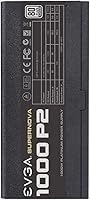
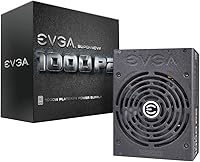
The EVGA SuperNOVA 1000 P2 1000W Power Supply has been a fixture in enthusiast PC builds since it landed in 2013, and it has held its ground against newer competition remarkably well. This is not a unit you buy because it was cheap — it sits firmly in the premium tier, designed for builders who are running serious hardware and cannot afford instability at the foundation of their system. The 80 PLUS Platinum certification means real efficiency gains in practice: less wasted energy, less heat dumped into your case. And the 10-year warranty is not marketing noise — it genuinely changes the calculus on long-term value.
Features & Benefits

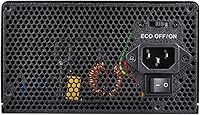
The fully modular design is one of those things that sounds like a minor convenience until you are actually routing cables in a mid-tower and realize how much difference it makes — you only plug in exactly what you need, which keeps airflow clean and the interior tidy. Running at up to 92% efficiency at standard voltages, this 1000W unit converts far more of your wall power into usable output rather than heat. The ECO fan mode keeps the 140mm double ball-bearing fan completely off under low loads, so the system runs whisper-quiet during everyday tasks. Japanese capacitors throughout the design support consistent power delivery even under sustained, heavy load.

Best For

This EVGA Platinum PSU makes the most sense for builders who are not cutting corners. If you are running an SLI or CrossFire setup, a flagship GPU paired with a high-core-count CPU, or a workstation loaded with drives and expansion cards, sustained power headroom matters far more than saving a few dollars on a lower-rated unit. It is also a smart pick for anyone who plans to upgrade incrementally over time — 1000W leaves room to grow without swapping the PSU again. And if near-silent operation during productivity work or light gaming is a priority, the passive fan behavior at low loads is a genuine advantage.

User Feedback

Across close to 3,800 ratings, the SuperNOVA 1000 P2 holds a 4.7-star average — a strong signal for a unit that has been on the market for over a decade. Owners consistently praise the build quality and how quietly the unit runs, and the cable flexibility earns positive mentions from builders who invest time in cable management. That said, the physical size does come up as a pain point — at nearly 8 inches deep, it can be a tight fit in compact cases. A smaller number of buyers flag the premium pricing as a barrier. Long-term owners largely report solid reliability, and those who have dealt with EVGA warranty support generally describe a positive experience.

Pros

  • Ten-year warranty provides rare long-term peace of mind that most PSUs simply cannot match.
  • Fully modular cabling keeps builds cleaner and makes cable management far less frustrating.
  • 80 PLUS Platinum efficiency means noticeably less heat generated inside the case under load.
  • The ECO mode keeps the fan off entirely during light use, resulting in a genuinely quiet system.
  • Japanese capacitors contribute to stable, reliable power delivery over years of heavy use.
  • Rated for both NVIDIA SLI and AMD CrossFire, covering builders with multi-GPU ambitions.
  • Nearly 3,800 user ratings averaging 4.7 stars points to a consistently positive ownership experience.
  • Long-term owners frequently report the unit holding up well years after purchase with no degradation.
  • EVGA warranty support has a solid reputation, making the coverage feel like a real safety net.

Cons

  • At nearly 8 inches deep, it can be a tight or impossible fit in compact and smaller mid-tower cases.
  • Premium pricing puts it out of reach for budget-conscious builders who do not need 1000W.
  • Overkill for any system that does not actually require high sustained power draw.
  • The unit has been on the market since 2013, so it lacks some features found in newer PSU generations.
  • Heavier than many competing units at 4.4 pounds, which can matter in certain case configurations.
  • Buyers expecting cutting-edge ATX 3.0 or PCIe 5.0 native connector support will need to look elsewhere.
  • Some users have noted the included cables feel stiff, making tight routing more difficult than expected.

Ratings

The EVGA SuperNOVA 1000 P2 1000W Power Supply scores below reflect AI-driven analysis of verified global buyer reviews, with spam, bot-generated, and incentivized feedback actively filtered out before scoring. Across nearly 3,800 real-world ratings, this unit draws consistently strong sentiment — but the analysis surfaces genuine pain points around physical size and pricing that the scores transparently capture alongside the strengths.
Build Quality
93%
Owners across years of use consistently describe this unit as feeling dense, well-assembled, and confidence-inspiring right out of the box. The double ball-bearing fan, Japanese capacitors, and solid casing give it a tangibly different feel compared to budget alternatives — something builders notice immediately when handling it during installation.
A small number of long-term users have noted minor cosmetic wear on the modular connector ports after years of repeated cable swapping, though this appears to be a cosmetic concern rather than a functional one. No widespread structural failures have been reported in the user base.
Efficiency & Power Delivery
91%
The 80 PLUS Platinum rating translates into noticeably less heat inside the case during demanding sessions, which builders running dual GPUs or overclocked CPUs genuinely appreciate. Users report stable voltage delivery even under sustained full-load conditions, with no dips or instability flagged during extended stress testing periods.
The efficiency advantage over a quality Gold-rated PSU is measurable but not dramatic at typical home-use load levels, meaning casual builders may not feel the real-world difference. At 115V specifically, the gap between Platinum and Gold certification narrows enough that everyday users are unlikely to notice it in their electricity bills.
Noise Level
88%
ECO mode is the standout feature for quiet-build enthusiasts — the fan simply does not run during light workloads, making the system library-quiet during browsing, video playback, or light productivity. Even under moderate gaming loads, the large 140mm fan keeps RPM low enough that most users describe it as a background hum at worst.
Under sustained heavy loads — long rendering jobs, stress tests, or hours of GPU-intensive gaming — the fan does spin up audibly. It is not loud by PSU standards, but builders expecting complete silence under all conditions will be disappointed when the fan finally kicks in during peak demand.
Modularity & Cable Management
89%
The fully modular system is consistently one of the most praised aspects in user feedback — being able to leave unused cables out entirely makes routing cleaner and keeps the interior of the case tidy in a way that semi-modular designs cannot match. Builders doing full cable management runs specifically call out the flexibility this provides.
The included cables are notably stiff compared to those bundled with some newer competing units, which makes tight 90-degree bends behind the motherboard tray more frustrating than they need to be. Several builders mention turning to aftermarket sleeved cable kits specifically because of this stiffness.
Warranty & Brand Support
92%
A 10-year warranty is genuinely rare in the PSU category, and EVGA's reputation for actually honoring it without excessive friction is well-documented across the enthusiast community. Long-term owners who have had to make warranty claims generally report the process was handled fairly and without unreasonable delays.
Since EVGA exited the GPU business, some buyers have expressed uncertainty about the long-term continuity of their warranty support infrastructure, though PSU warranty claims continue to be processed normally as of current user reports. Documentation retention over a 10-year period remains a practical challenge many buyers underestimate.
Value for Money
71%
29%
For builders who genuinely need 1000W with platinum efficiency and plan to keep their system running for the better part of a decade, the math on the warranty and build quality does hold up over time. Viewed as a long-term infrastructure investment rather than a component purchase, the pricing is defensible for the target audience.
For a large portion of buyers — especially those running a single mid-to-high-end GPU — the price premium over a quality Gold-rated 750W or 850W unit is hard to justify on a pure performance-per-dollar basis. Several reviewers explicitly state they would only recommend this unit to someone who truly needs the wattage and longevity, not the average builder.
Physical Fit & Form Factor
67%
33%
In standard mid-tower and full-tower cases with adequate PSU tunnels, installation is straightforward and the ATX form factor creates no surprises. Builders using larger enclosures report the unit drops in cleanly without any case modification or cable clearance issues.
At nearly 8 inches deep, this unit causes real problems in compact mid-towers, where it can obstruct HDD cages or bottom-mounted drive bays. This is one of the most consistently recurring complaints in user reviews, and it is a dealbreaker rather than an inconvenience for builders working in smaller enclosures.
Thermal Performance
86%
The combination of the oversized 140mm fan, platinum-level efficiency, and quality internal components keeps operating temperatures impressively controlled during demanding workloads. Builders who monitor PSU temperatures report the unit runs noticeably cooler than lower-efficiency alternatives under equivalent load.
In poorly ventilated cases or cramped builds where ambient temperatures are already elevated, the PSU does run warmer than in open or well-cooled enclosures — which is expected behavior, but worth noting for builders who have not prioritized case airflow in their setup.
Installation Experience
82%
18%
The modular design significantly simplifies the installation process compared to fully-wired units, and experienced builders report the whole process goes cleanly when the case has adequate clearance. Connector labeling is clear enough that first-time builders can follow it without extensive cross-referencing with the manual.
The stiffness of the included modular cables adds friction to the installation process, particularly when routing power connectors into tight spots on the motherboard or GPU. A few first-time builders have also flagged the sheer number of included cables as initially overwhelming, even though the modular system means most of them never need to be used.
Long-Term Reliability
94%
This is arguably where the SuperNOVA 1000 P2 earns its strongest praise — owners who have run it for three, five, or even seven-plus years consistently report the unit performing exactly as it did on day one. Japanese capacitors appear to live up to their reputation, with very few reports of gradual performance degradation over time.
Because this platform has been on the market since 2013, a small cohort of extremely long-term owners are starting to approach the outer edges of typical electrolytic capacitor lifespan in continuous-use scenarios. This is not a widespread concern yet, but buyers purchasing used units should factor in unknown usage history.
Multi-GPU Support
84%
For builders still running SLI or CrossFire configurations — which remain relevant in workstation and compute contexts even as gaming multi-GPU support has declined — this unit provides the sustained amperage that dual-card setups demand without the voltage instability that cheaper units can exhibit under combined GPU load.
The multi-GPU ecosystem itself has contracted significantly since this PSU launched in 2013, meaning fewer buyers are actually utilizing this feature in gaming contexts today. NVIDIA SLI support for consumer gaming cards is largely deprecated, which reduces the practical relevance of this specification for a growing share of the target audience.
Packaging & Unboxing
76%
24%
Most buyers describe the packaging as protective and well-organized, with cables sorted and stored in a dedicated pouch that keeps the accessory bundle tidy during shipping. The overall unboxing experience aligns with what buyers expect from a premium-tier product.
A recurring pattern in user feedback involves units arriving with dented or compressed outer packaging, raising anxiety during unboxing even when the unit inside is undamaged. A smaller subset of reviews describe actual shipping damage affecting the unit itself, which points to inconsistency in how the product is handled during fulfillment.
Connector Variety
81%
19%
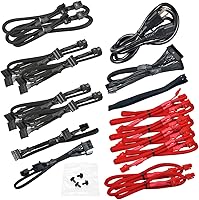
The cable bundle covers the main connectivity needs of high-end builds, including multiple PCIe connectors for GPU power and enough SATA and peripheral leads for storage-heavy workstations. Builders putting together complex systems appreciate not having to source additional cables immediately after purchase.
The absence of a native 16-pin PCIe 5.0 connector is the most pointed criticism from builders pairing this unit with the latest generation graphics cards, requiring the use of an adapter that some users find inelegant. The cable count and variety also skews toward older build configurations, which newer builders may find slightly mismatched to their component selections.

Suitable for:

The EVGA SuperNOVA 1000 P2 1000W Power Supply is built for builders who treat the PSU as a long-term foundation rather than an afterthought. If you are running a dual-GPU setup, a flagship single card paired with a high-core-count CPU, or a workstation packed with drives and PCIe expansion cards, having 1000W of headroom with platinum-tier efficiency genuinely matters. Content creators who keep their systems running under sustained load for hours at a time will appreciate both the thermal efficiency and the consistent power delivery that Japanese capacitors help maintain. The 10-year warranty makes it an especially rational choice for anyone who builds once and expects the PSU to outlast two or three rounds of component upgrades. Builders who care about cable management and airflow will also find the fully modular design a practical advantage rather than a cosmetic one.
Not suitable for:

The EVGA SuperNOVA 1000 P2 1000W Power Supply is genuinely overkill for the average mid-range or budget build. If your system draws well under 600W under full load, you are paying a significant premium for headroom you will never use. The unit measures nearly 8 inches in depth, which can create fitment problems in smaller mid-towers and is a non-starter for Mini-ITX or compact SFF cases. Buyers on a tight budget will find the pricing hard to justify when competent 80 PLUS Gold units exist at a lower cost tier for less demanding systems. And if you are purely a casual user — light gaming, office work, basic productivity — the efficiency gains at platinum certification are unlikely to recoup the price difference in electricity savings within any reasonable timeframe.
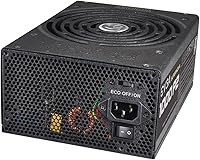
Specifications

  • Output Wattage: This unit delivers a continuous 1000W of power, providing substantial headroom for high-demand systems with multiple GPUs or processor-intensive workloads.
  • Efficiency Rating: Certified 80 PLUS Platinum, meaning it operates at up to 92% efficiency on a 115V circuit and up to 94% on 220V–240V circuits under typical loads.
  • Modularity: Fully modular design allows users to connect only the cables their build requires, eliminating unnecessary cable bulk inside the chassis.
  • Fan Size: A 140mm fan handles thermal management, offering more airflow at lower RPM compared to the smaller 120mm fans commonly found in competing units.
  • Fan Bearing: The fan uses a double ball-bearing mechanism, which is more durable under continuous operation and longer-lived than sleeve-bearing alternatives.
  • ECO Mode: Semi-passive ECO mode keeps the fan completely off during low-load conditions, allowing the system to operate in near-silence during light tasks.
  • Capacitors: All internal capacitors are sourced from Japanese manufacturers, which are widely regarded in the industry for their longevity and thermal stability.
  • Form Factor: Standard ATX form factor ensures compatibility with the vast majority of mid-tower and full-tower PC cases available on the market.
  • Dimensions: The unit measures 7.8 x 6 x 3.3 inches (L x W x H), which is notably deeper than average and may require case clearance verification before purchase.
  • Weight: At 4.4 pounds, this PSU is on the heavier side relative to lower-wattage units, reflecting its dense internal component layout.
  • GPU Compatibility: Supports both NVIDIA SLI and AMD CrossFire multi-GPU configurations, making it suitable for dual-graphics-card builds on compatible motherboards.
  • Main Connector: Includes a standard 24-pin ATX main connector compatible with virtually all modern consumer and workstation motherboards.
  • Warranty: EVGA backs this unit with a 10-year warranty, which is among the longest coverage periods offered by any power supply manufacturer.
  • Power Source: Operates on AC input power and is designed for use in standard household and office electrical environments.
  • First Available: This model was introduced to the market in August 2013 and has remained in EVGA's active lineup due to its sustained reliability track record.

Related Reviews

EVGA SuperNOVA 1000 G3 1000W 80+ Gold Fully Modular Power Supply
87%
92%
Power Delivery & Efficiency
89%
Noise & Acoustic Performance
90%
Build Quality & Durability
94%
Warranty & Long-Term Value
83%
Size & Compactness
More
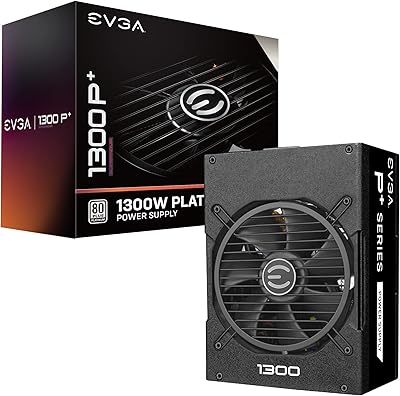
EVGA SuperNOVA 1300 P+ 1300W Power Supply
83%
91%
Build Quality
93%
Power Stability
88%
Noise Level
89%
Modularity & Cable Management
84%
Efficiency
More
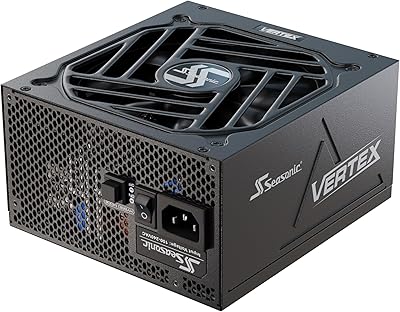
Seasonic Vertex PX-1000 1000W Power Supply
88%
94%
Build Quality
91%
Noise Level
92%
Efficiency
93%
Voltage Stability
71%
Value for Money
More
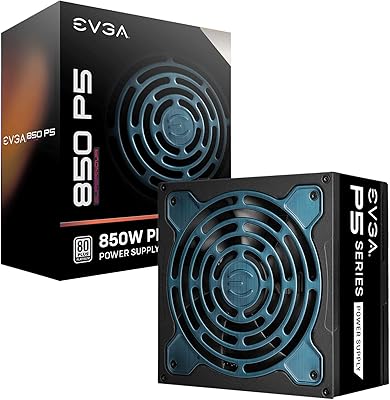
EVGA Supernova 850 P5 850W 80 Plus Platinum Power Supply
91%
95%
Performance
91%
Noise Levels
93%
Build Quality
88%
Ease of Installation
92%
Reliability & Durability
More
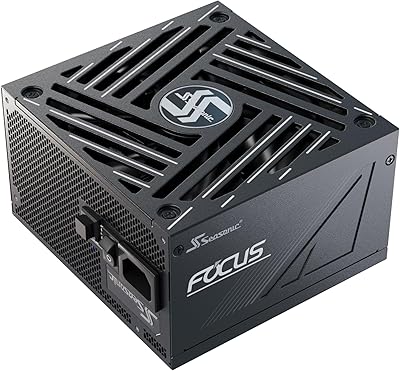
Seasonic Focus GX-1000 1000W ATX 3.0 Power Supply
90%
95%
Power Delivery
90%
Noise Level
93%
Modular Design
88%
Cooling Performance
92%
Build Quality
More
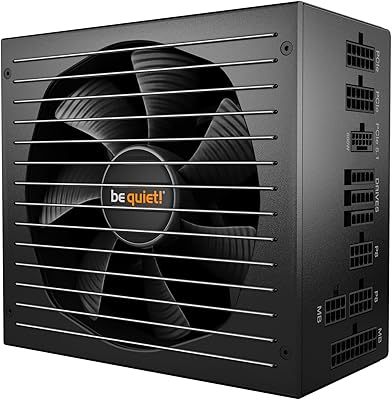
be quiet! Straight Power 12 1000W PSU
84%
91%
Acoustic Performance
89%
Build Quality
68%
Cable Quality
93%
Connector Compatibility
71%
Value for Money
More
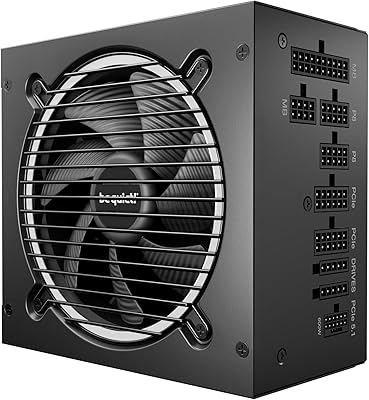
be quiet! Pure Power 13 M 1000W PSU
84%
93%
Acoustic Performance
89%
Build Quality
88%
Efficiency & Heat Output
91%
PCIe 5.1 Compatibility
87%
Voltage Stability
More
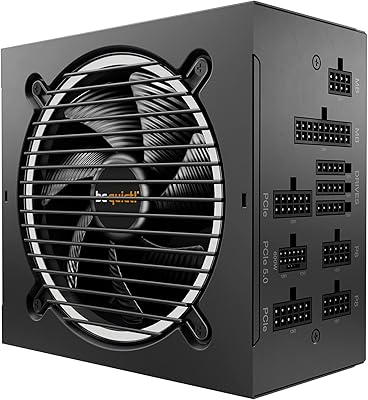
be quiet! Pure Power 12 M 1000W
85%
93%
Noise Level
89%
Efficiency & Power Delivery
91%
Build Quality
86%
Cable Quality & Flexibility
88%
Modular System Usability
More
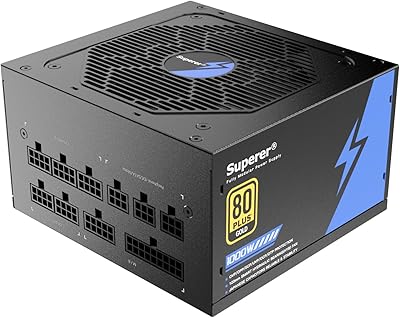
Superer ATX-1000GM 1000W ATX Power Supply
81%
88%
Value for Money
93%
Cable Management
89%
Noise Level
79%
Build Quality
84%
Power Stability
More
MYSWEETY 12V Power Supply 1000W
85%
88%
Performance
91%
Reliability
85%
Build Quality
92%
Cooling System
90%
Safety Features
More

FAQ

It depends on your specific case. At just under 8 inches in depth, the SuperNOVA 1000 P2 is longer than many entry-level PSUs, so it is worth checking your case manufacturer specs for maximum PSU depth before buying. Most full-tower and larger mid-tower cases handle it without any issues, but compact mid-towers can be a tight fit or may obstruct drive bays.

For a single GPU build, even a powerful one, 1000W is likely more than you need — a quality 750W or 850W unit would cover most single-card rigs with headroom to spare. Where 1000W makes sense is in dual-GPU setups, heavily overclocked systems, or workstations with multiple storage drives and PCIe expansion cards. That said, having more headroom than you need does not hurt efficiency in any meaningful way with a platinum-rated PSU.

ECO mode puts the fan in a semi-passive state, meaning it stays completely off when the system is under light load. For most users this is a great setting to leave enabled — your PC runs quieter during everyday tasks, and the fan only spins up when the unit actually needs cooling under heavier demand. The only scenario where you might consider disabling it is if you are running sustained 100% load in a poorly ventilated case.

EVGA handles warranty claims directly, and their support reputation in the PC hardware community is generally solid. If the unit fails within the warranty period, you contact EVGA with proof of purchase and they work through the replacement process. Keep your receipt or order confirmation stored somewhere accessible since a decade is a long time to track paperwork.

The EVGA SuperNOVA 1000 P2 1000W Power Supply predates the ATX 3.0 specification and does not include a native 16-pin PCIe 5.0 connector. If you are pairing it with a card that uses the new 16-pin connector, you will need an adapter, which is typically included with the graphics card itself. The power delivery remains capable, but builders planning a fully modern ATX 3.0 build may want to factor this in.
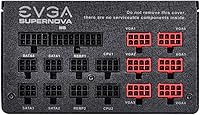
For most full-tower cases the cable lengths are adequate, though some builders with particularly deep cases or unusual routing paths have noted the cables can feel a bit short when running behind the motherboard tray. The cables are also on the stiffer side, which some people find makes tight routing more challenging. If cable extensions are already part of your plan, this is less of a concern.

Yes, it is officially rated and designed for both NVIDIA SLI and AMD CrossFire multi-GPU configurations, and 1000W provides the kind of sustained headroom those setups genuinely require. Just make sure your motherboard also supports multi-GPU and that the specific GPU models you are pairing are still supported under those configurations by the respective manufacturers.

Under moderate gaming loads, the fan runs at a low enough RPM that most people describe it as quiet or barely noticeable, especially inside a closed case. It only becomes audible during sustained heavy loads like long rendering sessions or extended stress testing. During light tasks or idle, ECO mode keeps it completely silent.

Age alone is not a reliable reason to dismiss a PSU — what matters is whether the internal components and design hold up, and this unit has accumulated years of real-world owner data that suggests it does. The efficiency rating and feature set are not cutting-edge compared to newer ATX 3.0 designs, but the core reliability and the 10-year warranty make it a rational choice for builders who prioritize longevity over having the latest spec sheet.

Start by confirming your case has enough depth to accommodate the unit without blocking any drive bays. Then calculate your system's approximate power draw to make sure you are not under-utilizing the unit to a degree that doesn't justify the cost. Finally, plan your cable routing before you start — because the cables are fully modular, lay out only the ones you need beforehand so installation goes cleanly without rerouting later.

Where to Buy