DORHEA 2-Pack Buck Boost Converter Voltage Regulator
DORHEA 2-Pack Buck Boost Converter Voltage Regulator — image 1
DORHEA 2-Pack Buck Boost Converter Voltage Regulator — image 2
DORHEA 2-Pack Buck Boost Converter Voltage Regulator — image 3
DORHEA 2-Pack Buck Boost Converter Voltage Regulator — image 4
DORHEA 2-Pack Buck Boost Converter Voltage Regulator — image 5
74%
26%

Overview

The DORHEA 2-Pack Buck Boost Converter Voltage Regulator is a dual-module kit that handles both step-up and step-down conversion, covering an input range of 6V to 36V with output adjustable all the way down to 0.6V. That wide operating window makes it genuinely versatile for a workbench without breaking the bank on industrial-grade hardware. Getting two units in one package is a practical touch — you can dedicate one to a permanent project and keep the other free for testing. DORHEA focuses specifically on power electronics accessories, and this adjustable voltage regulator reflects that focus with a feature set that punches above its mid-range price point.

Features & Benefits

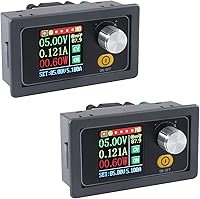
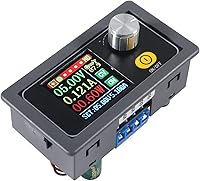
What sets this buck-boost module apart is the five-screen display that goes well beyond a simple voltage readout. You can monitor power in watts, capacity in amp-hours, energy in watt-hours, and even temperature — all with live runtime graphs. Constant-current mode adjusts in fine 0.001A steps, which is genuinely useful when driving LEDs or topping off a lithium cell without risking overcurrent damage. The display rotates and supports day and night color modes, a small but appreciated detail for varied lighting conditions. Perhaps most practical is the power-loss memory: the module recalls your last voltage setting after a shutdown, so you are not re-entering values every time you reconnect.

Best For

This adjustable voltage regulator is an obvious fit for anyone building a DIY benchtop supply. Hook it up to a spare laptop brick and you have a clean, adjustable output ready for prototyping. Engineers doing field diagnostics will appreciate its compact footprint and wide voltage range — it handles on-the-spot power needs that a fixed-output supply simply cannot. The constant-current capability also makes the DORHEA converter duo worth considering for anyone charging lithium packs or driving high-power LEDs. Students studying power electronics get real hands-on value here too, since live readouts of current, power, and temperature turn every session into a learning opportunity rather than just a task.

User Feedback

Buyers generally respond well to this buck-boost module, with most praising the accuracy of the display readings and the reassurance of having seven protection modes built in. Thermal performance gets a more mixed reception — running near the 5A ceiling for extended periods causes the modules to warm up noticeably, and several users recommend adding a small heatsink or fan for sustained high-current loads. The multi-screen UI has a learning curve; navigating between pages is not immediately obvious out of the box. On calibration, some buyers note a slight voltage offset and suggest cross-checking against a trusted multimeter. Getting two units does add genuine value for those juggling parallel projects simultaneously.

Pros

  • Both step-up and step-down conversion in one compact module covers a remarkably wide range of real-world voltage needs.
  • Seven onboard protection modes — including reverse polarity and short circuit — provide meaningful safety for components and the module itself.
  • Current limit adjustable in 0.001A steps gives genuine precision for LED driving and lithium cell charging.
  • The power-loss memory function restores your last voltage setting automatically, saving setup time on repeat sessions.
  • Five display screens show voltage, current, power, temperature, and runtime graphs all in one interface.
  • Display rotation and day/night color modes make this buck-boost module comfortable to use in varied lighting conditions.
  • Receiving two units in one purchase is practical for anyone juggling multiple simultaneous projects.
  • The wide input range of 6V to 36V means it works cleanly off laptop bricks, battery packs, and bench supplies alike.
  • Constant-current mode makes the DORHEA converter duo a legitimate option for battery charging applications, not just voltage conversion.

Cons

  • Running near the 5A maximum generates noticeable heat; continuous high-current use really calls for an added heatsink or fan.
  • The five-screen UI is not intuitive out of the box — expect a reading session with the manual before feeling comfortable navigating it.
  • Display voltage readings can show a small offset from actual output, so a calibration check with a multimeter is advisable before critical use.
  • No official calibration documentation is included, which limits usefulness in any context requiring traceable measurement accuracy.
  • The two-unit format adds cost upfront; buyers who only need one module may feel they are paying for hardware they will not use.
  • Enclosure or mounting hardware is not included, making clean integration into a project box or panel an extra step you have to solve yourself.
  • Reverse-polarity protection, while listed as a feature, has triggered unexpectedly for some users under normal operating conditions.
  • At this price tier, long-term component reliability under sustained thermal stress remains an open question for heavy daily use.

Ratings

The scores below for the DORHEA 2-Pack Buck Boost Converter Voltage Regulator were generated by our AI system after analyzing verified global buyer reviews, with spam, bot activity, and incentivized feedback actively filtered out before any scoring was applied. Each category reflects the honest distribution of real user experiences — strengths are credited where earned, and recurring pain points are surfaced without softening. The result is a transparent, balanced snapshot of how this adjustable voltage regulator actually performs in everyday hobbyist and engineering use.

Value for Money
83%
Getting two fully functional buck-boost modules with a rich display and seven protection modes in one purchase strikes most buyers as genuinely good value. For hobbyists who would otherwise spend more on a dedicated variable bench supply, this duo covers a lot of ground at a fraction of the cost.
Buyers who only need a single unit feel they are paying for a module they may never use. If you have a very specific single-project need, the two-pack format can feel less efficient than it sounds on paper.
Voltage Accuracy
71%
29%
For most hobby and prototyping work, the displayed voltage is close enough to true output that users can proceed with confidence. The fine 0.01V adjustment step is appreciated when dialing in a specific rail voltage for a microcontroller or sensor circuit.
A consistent offset between the displayed reading and measured output has been flagged by a meaningful number of buyers who cross-checked with a trusted multimeter. This is not unusual for consumer-tier modules, but it does mean you should calibrate before any precision-sensitive application.
Thermal Performance
62%
38%
At low to moderate loads — say, under 2A continuous — the modules handle heat without complaint and remain comfortable to touch. For LED drivers and light microcontroller work, thermal behavior is largely a non-issue.
Pushing the module toward its 5A ceiling for extended periods generates noticeable heat on the conversion components, and several buyers report the enclosure becoming uncomfortably warm. Without an added heatsink or airflow, sustained high-current use is a real risk to long-term reliability.
Display Quality
78%
22%
The color multi-screen display stands out compared to the basic single-line readouts found on cheaper modules. Being able to watch live power, capacity, and temperature graphs during a project session adds genuine insight that flat-number displays simply cannot match.
Readability in bright ambient light is less impressive, and a handful of users found contrast settings limiting outdoors or near windows. The screen is functional but not a premium panel, and some buyers expected sharper rendering at this price point.
UI Navigation
59%
41%
Once the button sequence for cycling between the five display pages clicks in your head, day-to-day operation becomes fairly fluid. Users who invest time with the documentation generally settle into a comfortable workflow within a session or two.
Out of the box, the interface logic is not intuitive — real buyers consistently mention a learning curve before they feel in control. There is no quick-reference label on the module itself, which means new users are reaching for the manual more often than they would like.
Build Quality
74%
26%
The physical construction feels solid for a module in this category, with components that appear well-soldered and a display housing that does not flex or creak under normal handling. Most buyers report no cosmetic or structural issues on arrival.
The enclosure is functional rather than refined, and there is no IP rating or dust protection of any kind. Users planning to integrate this into a field kit exposed to workshop dust or humidity should plan on an enclosure solution of their own.
Protection Reliability
76%
24%
Having seven protection modes built in — including reverse polarity and short circuit — gives real peace of mind when powering unfamiliar or prototype loads. Most buyers report these protections working as expected when they deliberately tested over-current or over-voltage limits.
A subset of users noted that reverse-polarity protection triggered unexpectedly even with correct wiring, which caused confusion during initial setup. It is worth double-checking input connections carefully and ensuring your supply does not spike at startup before dismissing this as a fault.
Current Control Precision
81%
19%
The 0.001A step resolution on the current limit is a standout feature for a module at this tier, and buyers using it as an LED driver or lithium charger appreciate how tightly they can constrain the output. Constant-current mode tracks stably under steady loads in most reported use cases.
Under dynamic or rapidly changing loads, some users noticed the current regulation lagged slightly before settling. This is unlikely to matter for most hobby applications, but it is worth knowing if you are powering anything with sharp transient current demands.
Memory Function
88%
The non-volatile memory that restores voltage and current settings after a power cycle is one of the most universally praised practical features. Buyers using this as a semi-permanent supply in a fixed setup — powering a router, a sensor node, or a Raspberry Pi project — find it saves meaningful time.
There is no profile system for storing multiple presets, so if you regularly switch between different voltage targets, you are manually re-entering settings each time. A simple multi-profile save function would make this module substantially more versatile for multi-project users.
Setup Ease
67%
33%
Physically connecting the module is straightforward — input and output terminals are clearly marked, and the wiring process itself takes only minutes. Buyers with any prior electronics experience are typically up and running quickly.
The initial configuration of voltage limits, current limits, and protection thresholds through the menu system takes longer than expected, particularly for users unfamiliar with multi-screen power supply interfaces. A quick-start card with the key button sequences would meaningfully lower this barrier.
Portability
79%
21%
At well under 8 ounces for both modules combined, this adjustable voltage regulator is light enough to tuck into a field kit or laptop bag without adding meaningful bulk. Engineers doing site diagnostics find the compact footprint particularly useful when space is at a premium.
The lack of any integrated case or rubber feet means the bare module slides around on a workbench and requires improvised mounting. For truly portable use, you will almost certainly want to house it in a project box before taking it off the bench.
Documentation
55%
45%
A basic manual is included and covers the essential navigation sequences well enough to get an experienced user operational. The feature set is documented thoroughly enough that persistent buyers can unlock most functions without external research.
The documentation reads as a translated technical sheet rather than a user-friendly guide, and first-time users of multi-screen power modules will find it inadequate. Several buyers turned to community forums or YouTube walkthroughs to understand features that the manual described ambiguously.
Compatibility Range
86%
The 6V to 36V input window means this buck-boost module works with an impressive variety of common sources — 12V car batteries, 19V laptop adapters, 24V tool packs, and standard bench supplies all fall comfortably within range. That flexibility is a genuine selling point for users with varied setups.
The lower bound of 6V on the input side means you cannot power it from a single Li-ion cell or a 5V USB supply, which catches some buyers off guard. If your available source sits below 6V, this module is simply not usable without a pre-boost stage.
Package Value
72%
28%
Receiving two independent, fully featured modules in a single order is a practical benefit for anyone running parallel experiments or who wants a ready backup. For workshop regulars who go through electronics at pace, the dual-unit format reduces reorder friction.
For buyers with a single specific application, the two-pack format offers no functional advantage and just adds upfront cost. Unlike consumables where bulk makes obvious sense, a second power module only adds value if you actually have a second project lined up to use it.

Suitable for:

The DORHEA 2-Pack Buck Boost Converter Voltage Regulator is a strong match for electronics hobbyists and makers who want a capable, instrumented power module without spending on a dedicated bench supply. If you are building a DIY variable power supply around a salvaged adapter or a spare battery pack, this buck-boost module gives you the adjustable output, live telemetry, and protection circuitry to do it properly. Engineers who do occasional field testing — powering sensors, microcontrollers, or small RF circuits from whatever source is at hand — will appreciate the wide input tolerance and the fine voltage adjustment. The constant-current mode makes this adjustable voltage regulator equally practical for anyone charging lithium cells or driving high-power LEDs where overcurrent protection is not optional. Students studying power electronics also get genuine educational value, since the multi-screen display turns abstract concepts like power dissipation and capacity draw into something you can watch in real time. Getting two units in one package adds real flexibility if you have parallel projects running simultaneously.

Not suitable for:

The DORHEA 2-Pack Buck Boost Converter Voltage Regulator is not the right tool for anyone who needs certified, production-grade power regulation. If your application involves medical equipment, aerospace components, or any safety-critical load, a consumer-tier module with no traceable calibration certificate is simply not appropriate. At sustained currents approaching 5A, thermal buildup becomes a real issue — buyers who plan to run heavy loads continuously will need to budget for heatsinking or active cooling, which adds complexity and cost the listing does not mention upfront. The multi-screen interface, while feature-rich, has a learning curve that can frustrate users who want a plug-and-play experience with minimal configuration. Display readings may also carry a small offset from true values, meaning anyone who needs laboratory-accurate measurements will still need a trusted external multimeter in the loop. If you only need a single module, the two-pack format may feel like unnecessary cost rather than added value.

Specifications

  • Input Voltage: Each module accepts a DC input between 6V and 36V, covering most common bench and battery supply sources.
  • Output Voltage: Output is continuously adjustable from 0.6V to 36V in precise 0.01V increments for fine voltage targeting.
  • Output Current: Current output ranges from 0 to 5A, adjustable in 0.001A steps for constant-current applications such as LED driving or cell charging.
  • Conversion Modes: Each unit supports both buck (step-down) and boost (step-up) conversion within a single compact module.
  • Display Type: A color multi-screen UI provides five distinct interface pages covering all key operating parameters.
  • Metrics Shown: Live readings include input and output voltage, current, power in watts, capacity in amp-hours, energy in watt-hours, temperature, and elapsed runtime.
  • Display Options: The screen can be physically flipped or rotated, and users can customize background color and switch between day and night display modes.
  • Protection Modes: Seven onboard protections are active at all times: over-voltage, over-current, over-power, low-voltage, over-temperature, reverse polarity, and short circuit.
  • Memory Function: The module stores the last configured voltage and current settings and automatically restores them after a power interruption or shutdown.
  • Package Contents: The package includes two identical buck-boost converter modules ready for independent use in separate projects or setups.
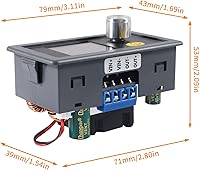
  • Dimensions: Each packaged unit measures approximately 4.02 x 3.90 x 2.24 inches, making it compact enough for portable or embedded use.
  • Weight: The combined package weight is 7.44 ounces, keeping the modules practical for portable field applications.
  • Manufacturer: These modules are produced by DORHEA, a brand specializing in consumer-grade power electronics accessories.
  • Availability: This product has been available on the Amazon marketplace since January 2022.
  • Market Rank: The converter holds a rank of approximately 2,978 in the Power Converters subcategory on Amazon as of available data.

Related Reviews

Method Body Wash Energy Boost, 18 oz, 2-Pack
84%
88%
Scent/Fragrance
85%
Moisturizing Effect
90%
Eco-Friendly Formula
87%
Skin Compatibility/Sensitivity
92%
Value for Money
More
Cllena DC 9V-40V to 24V 6A Automatic Buck Boost Converter
87%
94%
Performance and Efficiency
91%
Build Quality and Durability
66%
Ease of Installation
93%
Waterproof and Environmental Protection
89%
Versatility and Applications
More
Neutrogena Hydro Boost Body Gel Cream 16 oz (Pack of 2)

87%
94%
Hydration Effectiveness
89%
Absorption Speed
91%
Fragrance Sensitivity
84%
Skin Feel/Texture
88%
Value for Money
More
Pantene Gold Series Shampoo Moisture Boost 9.1oz (Pack of 2)
85%
88%
Hydration Effectiveness
90%
Gentleness on Scalp
70%
Fragrance Quality
91%
Sulfate-Free Formula
84%
Packaging Value
More
BANILA CO Clean It Zero Barrier Boosting Balm Duo 50mL (2-Pack)

88%
94%
Makeup Removal Effectiveness
91%
Hydration & Skin Barrier Repair
88%
Gentleness for Sensitive Skin
86%
Texture & Feel
89%
Packaging & Portability
More
TIGI Bed Head Ego Boost Split End Mender 8oz (Pack of 2)
86%
89%
Effectiveness for Split End Repair
83%
Moisturization & Hydration
91%
Frizz Control
80%
Scent & Fragrance
88%
Ease of Application
More
Neutrogena Hydro Boost Gel-Cream Extra-Dry, 1.7 oz, 2-Pack

86%
91%
Hydration Effectiveness
89%
Texture & Absorption
94%
Skin Compatibility (Dry to Very Dry)
87%
Fragrance-Free Performance
90%
Oil-Free and Non-Greasy Formula
More
Waxness Spa Choice Natural Honey Gel Hard Wax Beads 2.2 lb / 1 kg Pack of 2

85%
88%
Effectiveness for Coarse Hair Removal
91%
Gentleness on Sensitive Skin
84%
Ease of Use and Application
75%
Texture Consistency
90%
Pack Size and Value for Money
More
Lavanila Vanilla Lavender Deodorant 2-Pack (2 Oz Each)
84%
85%
Effectiveness of Odor Protection
92%
Skin Sensitivity & Irritation
80%
Scent Quality & Longevity
88%
Ease of Application
87%
Hydration & Skin Care Benefits
More
Megababe Daily Deodorant - Rosy Pits 2.6oz 2-Pack
83%
88%
Odor Protection
84%
Scent Freshness
90%
Skin Sensitivity Compatibility
80%
Value for Money
75%
Packaging and Dispensing
More

FAQ

Yes, that is one of the most practical uses for this buck-boost module. Set the output to 5V for a Pi or 3.3V for many microcontrollers, connect your battery pack as input, and the module handles the conversion cleanly. Just verify your input battery sits within the 6V to 36V range.

No — the modules ship without input or output leads, terminals, or connectors. You will need to solder or attach your own wiring based on your application. This is standard for bare converter modules at this level.

The display readings are reasonably close but not laboratory-precise. A small voltage offset is common with modules in this category, so if your project is sensitive to tight tolerances, cross-check the output against a known-good multimeter and note the offset for future reference.

At moderate loads the modules stay manageable, but pushing toward 4A or 5A continuously will cause noticeable warmth on the main conversion components. Adding a small aluminum heatsink or positioning a low-speed fan nearby is a smart precaution if your project runs heavy current for extended periods.

Yes, the constant-current mode is well suited for this. Set your target voltage to match the battery chemistry and dial in a safe current limit using the 0.001A step adjustment. That said, always monitor the first few charge cycles and make sure your input supply can deliver the required wattage comfortably.

Navigation involves button presses that cycle through the available interface pages, and the logic is not immediately obvious when you first power it on. Most users find their footing after spending a few minutes with the included documentation. It is not difficult once you learn the sequence, but do not expect it to be self-explanatory right out of the box.

The module itself is compact enough to fit inside many standard project boxes, but no mounting hardware or panel-mount bracket is included. You will need to plan your own mounting arrangement, whether that means 3D printing a bracket, using standoffs, or cutting a panel aperture to expose the display.

A small number of users have reported this, and it is worth double-checking your input polarity carefully — the module's labeling can be easy to misread under poor lighting. If it still trips unexpectedly after confirming correct polarity, measure your input supply for any voltage spikes at startup, since some supplies surge briefly when switched on.

Yes, the memory function is non-volatile, meaning it retains your last configured voltage and current limit even after a full power loss. When you reconnect power, the module restarts at the same settings rather than defaulting to zero, which is a genuinely useful feature for any fixed-output application.

Each module is fully independent and can be used in a completely separate circuit. There is no pairing or synchronization between the two. Getting a pair simply means you have a spare for another project or a backup on hand, which is where the two-unit format adds the most practical value.