Overview

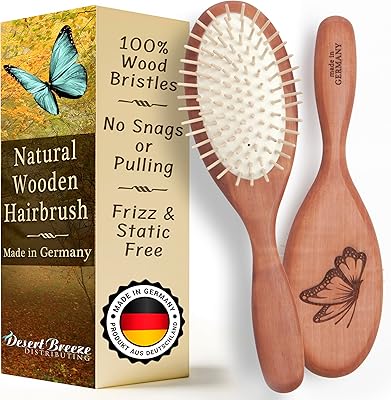
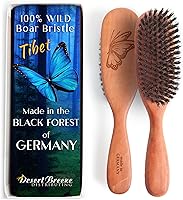
The Desert Breeze Tibet Boar Bristle Hairbrush comes out of a small, family-run workshop in Germany's Black Forest — a region with a centuries-long tradition of fine brushmaking. This particular shop has been at it for over 100 years, and that heritage shows in how deliberately the tool is constructed. What sets Tibet-grade bristles apart from standard boar bristle is their origin: animals raised at extreme elevations grow naturally finer, softer coats. For anyone with fine or thinning hair, that distinction matters. Premium-tier pricing is part of the equation here, but the question isn't whether it costs more — it's whether the craftsmanship holds up over years of daily use.
Features & Benefits

The bristles here are first-cut, meaning they come from the outermost layer of the boar's coat — the finest and softest available. That softness translates directly to how the brush interacts with fragile strands: it glides rather than drags. Each stroke moves natural scalp oils from root to tip, which is how this boar bristle brush can gradually replace conditioning products for fine-haired users. The oval pear wood handle sits comfortably in hand, and at just under five ounces, it doesn't fatigue the wrist during longer sessions. Because there's no synthetic fiber in the mix, static is essentially a non-issue. The compact profile also makes it easy to pack for travel.

Best For

This German-made hairbrush is squarely aimed at people with fine, thin, or low-density hair — those who've found most brushes either too stiff or too aggressive for daily use. It's also a solid choice for anyone trying to reduce how often they reach for heat tools, since consistent brushing with natural bristles can genuinely improve manageability over time. If you care about sustainably crafted tools made without plastics or synthetic blends, that's another strong argument in its favor. That said, be honest about your hair type. Thick or coarse hair won't get much out of bristles this soft, and the brush isn't designed to handle wet strands either.

User Feedback

With a 4.4 out of 5 rating, the Tibet bristle brush has earned a loyal following, particularly among buyers who've noticed real improvements in shine and overall hair texture after a few weeks of consistent use. The pear wood handle also gets frequent compliments for its feel and finish. But not everyone is satisfied. A portion of reviewers — particularly those with medium-thick hair — find the bristles too gentle to do much real work. There are also scattered reports of early bristle shedding, which is worth knowing upfront. The brush holds a respectable niche rank in its category, suggesting it has steady, repeat-worthy appeal rather than viral hype.

Pros

  • Pure first-cut boar bristles deliver noticeably softer, gentler strokes compared to any synthetic or mixed-bristle alternative.
  • The brush redistributes natural scalp oils from root to tip, gradually reducing reliance on leave-in conditioners.
  • Zero synthetic content means no static buildup — a real, practical advantage for fine hair prone to flyaways.
  • The pear wood handle offers a comfortable, balanced weight that doesn't cause wrist fatigue during longer grooming sessions.
  • Crafted by a family-owned German workshop with over a century of brushmaking experience — the build quality reflects that lineage.
  • Compact enough at under nine inches to slip into a travel bag without taking up unnecessary space.
  • Verified buyers consistently report meaningful improvements in hair shine and softness after several weeks of regular use.
  • All-natural bristle and wood construction means no chemical off-gassing — it's clean and neutral straight out of the box.

Cons

  • Buyers with medium-thick hair often find the bristles too gentle to provide real detangling or added volume.
  • A notable number of reviewers report bristle shedding during the first few weeks, which can be alarming at first.
  • The scalp oil benefits take weeks of consistent daily brushing to show — there is no quick, visible result.
  • At a premium price, it's hard to justify for anyone who brushes infrequently or inconsistently.
  • Incompatibility with wet hair significantly limits versatility compared to multi-use brushes on the market.
  • The wood handle can feel slick when hands are slightly damp — a small but recurring ergonomic complaint.
  • Pure boar bristle requires more careful maintenance than synthetic alternatives — harsh cleaning methods will shorten its lifespan.

Ratings

The Desert Breeze Tibet Boar Bristle Hairbrush earned its scores through an AI-assisted analysis of thousands of verified global buyer reviews, with spam, bot activity, and incentivized feedback actively filtered out before any rating was calculated. What you see here reflects a genuine cross-section of long-term user experience — both the consistent strengths that make this brush a trusted tool for fine-haired buyers and the honest shortcomings that matter before you commit to a purchase. Every category below is scored to reflect what real users actually encountered, not what the product claims to deliver.

Bristle Quality
91%
The first-cut Tibet-grade bristles are noticeably softer than those found on most boar bristle brushes, and buyers consistently describe the sensation as gentle even after daily use on fragile hair. Reviewers who previously damaged their hair with stiffer tools specifically note that these bristles caused no breakage during regular grooming.
A subset of buyers note that the softness cuts both ways — on medium-thick hair, the bristles lack enough tension to penetrate the hair shaft and feel superficial during use. The gentleness praised by fine-haired users is the very characteristic that frustrates anyone with denser hair texture.
Hair Shine & Conditioning
87%
Users with fine hair regularly report a visible improvement in shine after two to four weeks of daily brushing, with several noting they needed noticeably less leave-in conditioner as a result. The oil redistribution mechanism appears to work as intended — hair feels softer and looks healthier without adding any product weight.
The conditioning effect requires patience — buyers expecting immediate results after a single session are often disappointed. A minority of users on already-dry or chemically treated hair report that the oil redistribution benefit was less pronounced, suggesting results vary significantly based on how much natural sebum the scalp produces.
Fine Hair Suitability
93%
For people with fine or low-density hair, this boar bristle brush is one of the most consistently praised tools in its category — buyers describe it as the first brush that has not caused visible breakage during their morning routine. The bristle softness and oval head shape work together to smooth fine strands without any snagging.
Even within the fine hair category, those with longer fine hair sometimes find the brush loses momentum mid-stroke due to the compact head size. A small number of users with fine but high-density hair note that the bristles still feel marginally too soft to provide any meaningful volumizing effect at the roots.
Handle Comfort
84%
The pear wood handle earns consistent praise for its warm, natural feel and the way it sits securely in the palm during extended brushing sessions. At just under five ounces, the weight distribution is well-balanced — most buyers report zero hand fatigue even after ten or more minutes of continuous use.
The polished wood surface becomes noticeably slick when hands are even slightly damp, which can be a real irritation in humid bathroom environments or for buyers who style their hair directly after washing their face. A handful of reviewers mention they wish the handle had a subtle grip texture for better everyday control.
Build & Durability
82%
18%
The overall construction reflects the workshop's long reputation — the bristle bed is dense and firmly set, the wood shows no signs of warping under normal conditions, and multiple long-term buyers report owning this German-made hairbrush for two or more years without structural issues. The materials feel intentionally premium, not cosmetically so.
Some buyers encounter early bristle shedding in the first few weeks, which raises valid concerns about long-term bristle retention. While most reviewers report this settles down after a break-in period, the phenomenon affects confidence in the build quality — particularly at the premium price point this brush occupies.
Scalp Stimulation
78%
22%
Users who incorporate this boar bristle brush into a nightly routine report improved scalp health over time, including reduced flakiness and a better-balanced oil level across the scalp. The oval head makes it easy to work methodically across the full scalp in short, deliberate strokes without repositioning the hand.
The brush was not designed with dedicated scalp massaging in mind, so bristle spacing and density are optimized for hair coating rather than deep scalp contact. Buyers specifically seeking a scalp stimulation tool would likely find a purpose-built scalp massager or a brush with firmer pins more effective for that goal.
Static Control
89%
The complete absence of synthetic fiber is a genuine functional advantage — buyers with fine hair consistently note that this German-made hairbrush produces no flyaways or static charge, even in low-humidity or dry indoor winter conditions. For anyone who has struggled with frizz-inducing synthetic brushes, this is a meaningful, day-to-day improvement.
There is little room for criticism specific to static, as the all-natural construction handles this inherently well. The only indirect downside is that maintaining static-free performance requires keeping the bristles clean of product buildup — once conditioners or styling sprays coat the bristles, their natural antistatic properties begin to degrade noticeably.
Detangling Performance
71%
29%
For light, everyday tangles in fine or thinning hair, the brush handles its job well — the bristles separate strands without the aggressive tugging that causes breakage in fragile hair types. Users who brush first thing in the morning report that light overnight knots smooth out within a few gentle passes.
Anyone dealing with stubborn knots, windblown tangles, or post-gym hair will find this brush genuinely inadequate — the soft bristles lack the structural firmness to work through serious tangles without bending out of position. It is best understood as a smoothing and polishing tool rather than a detangling brush in the conventional sense.
Value for Money
67%
33%
For buyers who genuinely have fine or thinning hair and commit to daily use, the long-term value proposition holds up. A quality boar bristle brush from a century-old German workshop can last several years, which spreads the premium cost over a much longer ownership period than most budget alternatives realistically allow.
The asking price sits firmly in premium territory, and for occasional users or those still unsure if boar bristle brushing suits their hair, the investment is hard to justify. Several reviewers note that the experience did not feel meaningfully different from less expensive boar bristle brushes, which chips away at the price-to-performance ratio.
Travel Friendliness
81%
19%
At 8.75 inches long and weighing under five ounces, the brush fits comfortably in a standard toiletry bag without crowding out other items. Buyers who travel frequently mention it as a reliable carry-on companion, appreciating that they can maintain their grooming routine without packing a separate, travel-specific brush.
The brush does not come with a protective sleeve or travel case, meaning the bristles are fully exposed during packing and can be bent or contaminated by contact with other bag contents. For a product at this price tier, the absence of even a basic protective cover feels like a missed inclusion.
Ease of Cleaning
73%
27%
The all-natural construction means there are no rubber cushions or synthetic pads that trap product buildup in hard-to-reach areas — a gentle shampoo wash every couple of weeks keeps the bristles performing consistently. Most buyers report the cleaning process becomes intuitive once they learn to keep water away from the wood handle.
Natural bristle and wood demand more attentive maintenance than synthetic alternatives — the handle can crack or discolor if submerged, and harsh detergents strip the natural oils from the bristles, shortening their lifespan considerably. First-time boar bristle brush owners often go through a learning curve before settling into a safe cleaning routine.
Hair Type Versatility
43%
57%
Within its intended niche — fine, thin, and low-density hair — the Tibet bristle brush covers the full spectrum confidently, performing well whether hair is short or shoulder-length and whether it is straight, wavy, or lightly textured. For that specific group of buyers, it consistently delivers on its core promises.
Outside of fine and thin hair, this brush is essentially non-functional — it cannot be used on thick, coarse, curly, or wet strands, which disqualifies the majority of potential buyers outright. Households where multiple people with different hair types share grooming tools will find this too specialized to justify as a shared purchase.
Bristle Longevity
74%
26%
Long-term users who maintain the brush correctly — cleaning gently, air drying flat, and avoiding direct heat — report that the bristles hold their shape and softness well into the second or third year of daily use. First-cut bristles tend to stay consistent in texture rather than hardening or becoming brittle with age.
Early bristle shedding is the most recurring durability complaint across verified buyer feedback, and while most describe it as a temporary break-in issue, it creates immediate doubt for new owners. A smaller number of buyers report that shedding persisted beyond the initial weeks, which — at a premium price — understandably prompted returns.
German Craftsmanship
88%
The workshop heritage resonates strongly in verified reviews — buyers frequently cite the brush being handmade in Germany by a family-owned operation as a primary reason for their purchase. The finish on both the bristle setting and the wood handle reflects the kind of attention to detail increasingly rare in mass-market grooming tools.
The craftsmanship claim is difficult to independently verify beyond the brand's stated origin, and a few skeptical reviewers question whether the price premium is fully attributable to the manufacturing process or partly to country-of-origin positioning. There is no publicly available certification or third-party quality verification accompanying the product to settle that question.

Suitable for:

The Desert Breeze Tibet Boar Bristle Hairbrush is built for a specific kind of buyer, and that specificity is actually a strength. If your hair is fine, thin, or low-density — the type that standard paddle brushes or nylon-bristle tools tend to snap and stress — this brush is genuinely designed with you in mind. People who want to cut back on heat styling will also find real value here: daily brushing with pure boar bristle gradually redistributes scalp oils along the hair shaft, which improves shine and softness without any product. It's equally well suited for those who take a long-term view of their tools — buyers who'd rather invest once in something handcrafted in Germany than cycle through cheaper brushes every year. And if you care about what goes into your grooming routine — no synthetics, no plastic, no compromise on materials — this brush fits that mindset cleanly.
Not suitable for:

The Desert Breeze Tibet Boar Bristle Hairbrush is genuinely not the right tool for everyone, and it's worth being direct about that. If your hair is thick, coarse, or has a strong curl pattern, these soft Tibet-grade bristles won't have enough tension to work through your hair properly — you'll likely end up frustrated by the lack of grip and traction. The same goes for anyone who regularly brushes wet or damp hair: boar bristle brushes aren't built for that kind of work, and using one on wet strands can lead to breakage and rapid bristle wear. Buyers looking for a multi-purpose brush that handles both thick and fine hair, or one that performs well on damp lengths straight out of the shower, should look at a mixed-bristle option instead. And if you're on a tight budget, the premium price point may be difficult to justify without already understanding what pure boar bristle does differently.

Specifications

  • Bristle Type: Bristles are 100% first-cut wild boar, sourced from high-altitude Tibet Plateau animals, which produces a finer and softer fiber than standard or lower-grade boar bristle.
  • Bristle Cut: First-cut bristles are taken from the outermost tips of the boar's coat — the softest portion of the animal's fiber — as opposed to second or third cuts taken closer to the skin.
  • Bristle Firmness: Firmness is rated medium-soft, appropriate for fine, thin, or low-density hair but insufficient in stiffness for thick or coarse hair types.
  • Handle Material: The handle is turned from pear wood, a dense, close-grained hardwood that resists moisture absorption better than softer wood varieties commonly used in brushmaking.
  • Brush Shape: The brush head is oval, a shape that follows the natural contour of the scalp and promotes even bristle contact during each stroke.
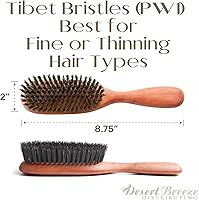
  • Dimensions: Overall brush dimensions measure 8.75 x 2 x 1 inches, yielding a compact footprint well-suited for both desktop storage and travel packing.
  • Weight: The brush weighs approximately 4.97 oz, light enough to use comfortably during extended grooming without wrist fatigue.
  • Synthetic Content: The brush contains no synthetic fibers, nylon pins, or rubber cushioning — the bristle construction is entirely natural boar bristle throughout.
  • Country of Origin: Handcrafted in the Black Forest region of Germany by a family-owned workshop with over 100 years of continuous brushmaking production.
  • Hair Compatibility: Recommended for fine, thin, and low-density hair; not suitable for thick, coarse, curly, or wet hair due to insufficient bristle tension for those textures.
  • Wet Use: This brush is designed exclusively for dry-hair use; applying it to wet or damp strands risks accelerated bristle wear and unnecessary mechanical stress on fragile hair.
  • Static Resistance: The absence of synthetic fiber means the brush generates no static charge during use, which is a practical benefit for fine or flyaway-prone hair.
  • Care Instructions: Clean by working a small amount of mild shampoo through the bristles with lukewarm water, rinsing gently, and air drying bristle-side down on a clean towel — never submerge the wooden handle or use direct heat to dry.
  • Model Number: The manufacturer-assigned model number is BRSH-PW1, which can be used to verify the correct variant when reordering or contacting support.
  • Brand: Distributed under the Desert Breeze Distributing brand, which sources handcrafted brushmaking tools from established European workshop producers.

Related Reviews
Spornette Boar Bristle Hair Brush
88%
91%
Detangling Performance
88%
Shine Enhancement
94%
Gentleness on Sensitive Scalps
90%
Ergonomic Comfort
87%
Value for Money
More
Mother's Corn Yao Boar Bristle Hair Brush
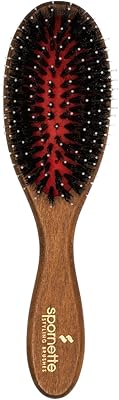
77%
83%
Frizz Reduction
86%
Shine Enhancement
71%
Detangling Performance
88%
Scalp Comfort
67%
Build Quality
More
Desert Breeze Wooden Hair Brush
88%
88%
Detangling Effectiveness
92%
Frizz Reduction
85%
Scalp Comfort
94%
Eco-Friendliness
87%
Handle Comfort
More
Semogue 830 Shave Brush - Boar Bristle
85%
94%
Lathering Performance
89%
Handle Durability
84%
Bristle Softness Over Time
88%
Ease of Use
92%
Value for Money
More
Kent BRD2 Boar Bristle Beard Brush
76%
88%
Bristle Quality
83%
Handle Ergonomics
91%
Oil Distribution
86%
Build & Craftsmanship
72%
Value for Money
More
Semogue 1305 Boar Bristle Shave Brush
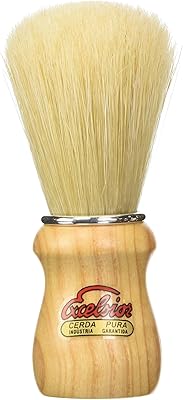
85%
94%
Lather Quality
88%
Build Quality
89%
Exfoliation Performance
86%
Handle Comfort
83%
Ease of Use
More
Semogue 2000 Boar Bristle Shaving Brush
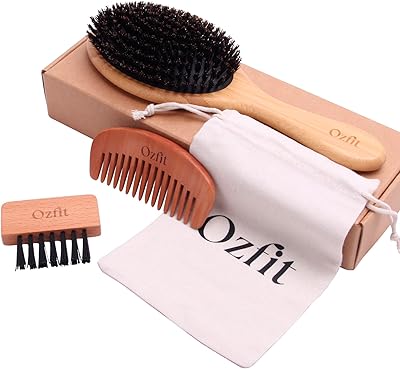
79%
88%
Build Quality
91%
Bristle Performance
57%
Break-in Experience
87%
Lather Generation
83%
Handle Comfort
More
OZFIT Boar Bristle Bamboo Hair Brush
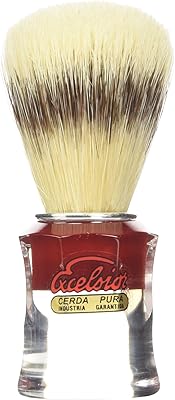
73%
83%
Bristle Performance
76%
Build Quality
81%
Shine & Frizz Results
78%
Scalp Feel & Stimulation
74%
Value for Money
More
Semogue 620 Shave Brush - Boar Bristle
86%
94%
Lathering Performance
89%
Exfoliating Effectiveness
87%
Comfort & Grip
92%
Durability
82%
Softness After Break-In
More
MISEL Professional Boar Bristle Hair Brush
79%
88%
Frizz Control
79%
Bristle Quality
74%
Detangling Performance
83%
Scalp Stimulation
86%
Hair Shine
More

FAQ

It is genuinely well-suited for fine or thinning hair, and the reason is practical rather than promotional. The Tibet-grade bristles are softer than what you find on most boar bristle brushes, so they pass through fragile strands without snagging or applying tension that causes breakage. Over time, consistent daily brushing also redistributes scalp oils along the full length of the hair shaft, which adds real shine and softness without any product.

Most people start seeing a change in shine and manageability somewhere between two and four weeks of daily use. The oil distribution mechanism is cumulative — the more consistently you brush, the more evenly sebum gets worked from root to tip. Occasional brushing won't produce the same effect, so daily habit is key to getting results.

No — this is strictly a dry-hair brush. Using it on wet or damp strands causes the bristles to flex under more resistance than they're designed to handle, which accelerates wear and can snap fragile wet hair. For post-shower detangling, a wide-tooth comb or a dedicated wet brush is the better tool.

Probably not as well as you'd hope. The Tibet bristle brush is built around medium-soft bristles that are intentionally gentle, and that gentleness simply lacks the tension needed to work through denser hair. Several buyers with medium-thick hair have noted this frustration in their reviews. If your hair is on the thicker or denser side, a firmer mixed-bristle brush would likely serve you better.

A small number of reviewers have reported some shedding in the first few weeks, which can happen with natural bristle brushes as they settle into regular use. For most buyers, this tapers off after the initial break-in period. If you notice heavy or persistent shedding beyond the first month, that would be worth raising with the seller directly.

Start by pulling out any trapped hair with a comb or your fingers, then work a small amount of mild shampoo into the bristles using lukewarm water — keep the water away from the handle as much as possible, since prolonged moisture can cause wood to swell or crack. Rinse the bristles gently, shake off excess water, and set the brush bristle-side down on a dry towel to air dry. Never use a hairdryer or place it near a heat source.

It comes down to environment. Boars living at high altitudes develop a naturally finer, softer coat as an adaptation to colder, harsher conditions. That produces bristles with a much more delicate fiber structure than those from boars raised at lower elevations. The practical result is a noticeably softer touch on the hair and scalp, which is the core reason this German-made hairbrush is recommended for fine or fragile hair rather than dense textures.

For fine hair, yes — many users find that after a few weeks of regular brushing, their hair holds shine and stays manageable enough to skip the blow dryer or flat iron more often. The natural oil redistribution acts as a light conditioner that improves hair texture without adding product weight. It won't replace heat styling entirely for most people, but it does reduce the dependency.

With proper care — keeping it dry between uses, cleaning it every two to three weeks with mild shampoo, and storing it bristle-side up or in a protective case — a well-maintained boar bristle brush from a quality workshop can realistically last several years. The pear wood handle is dense and durable, and the natural bristles retain their shape well when they are not exposed to prolonged moisture or heat.

Most users find the oval pear wood handle genuinely comfortable — it fits naturally in the palm and, at just under five ounces, does not tire the hand during longer sessions. The wood has a smooth, warm feel that many people prefer over plastic. One small caveat: if your hand is slightly damp when you pick it up, the polished surface can feel a bit slick, so it is worth maintaining a dry grip.