Overview

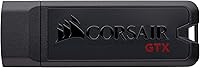
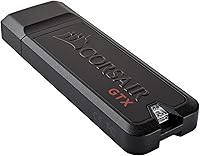
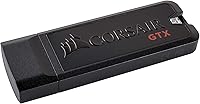
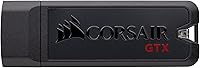
The Corsair Flash Voyager GTX 1TB Flash Drive sits at the top end of the portable storage market — built for professionals and enthusiasts who refuse to compromise on speed. Most flash drives are fine for occasional file transfers, but this high-speed flash drive is engineered for people who move large project files daily and need results fast. The zinc-alloy housing immediately sets it apart from the sea of plastic competitors; it feels substantial in hand, not disposable. With a full terabyte of capacity and a USB 3.1 Gen 1 interface, it fits a serious workflow into something that slips into your pocket.
Features & Benefits

The headline spec is 440 MB/s read and write — which, in practical terms, means a 10GB video file transfers in roughly 23 seconds rather than the several minutes you would endure with a standard drive. That speed comes from 3D NAND memory, which also tends to hold up better over time than older planar NAND, offering improved endurance cycle after cycle. The zinc-alloy body with aluminum accents is genuinely sturdy — not waterproof or military-spec, but noticeably more resistant to drops and daily wear than plastic. At just over 3 inches long and under 2 ounces, it carries 1TB of capacity in a form factor most wallets could hold.

Best For

This premium USB drive is a natural fit for video editors and photographers who regularly shuttle RAW files or 4K footage between machines — people who know exactly how painful a slow transfer mid-deadline feels. IT professionals doing system imaging will appreciate the consistent write speeds just as much as the read side. Frequent travelers who want a single drive to hold an entire archive — think a full year of client work — will find the 1TB capacity genuinely practical. If you have already outgrown regular flash drives but do not want to carry an external SSD enclosure, the Voyager GTX hits a sweet spot between portability and performance that few drives can match.

User Feedback

Across more than 1,400 ratings, the Voyager GTX holds a 4.7-star average — and verified buyers are consistent about what they love: real-world transfer speeds that actually track with the advertised figures, and a build quality that feels premium rather than fragile. The criticism that surfaces most often is the price; this is genuinely a premium-tier purchase, and some reviewers point out that a compact external SSD can be had for comparable money. A handful of users also note the drive runs warm during sustained large transfers. Compatibility has been broadly smooth across Windows and macOS, though a few report inconsistent performance through certain USB hubs rather than direct port connections.

Pros

  • Real-world transfer speeds closely match the advertised 440 MB/s, which is rare and genuinely appreciated by buyers
  • A 10GB file transfers in roughly 23 seconds — a meaningful time saving during deadline-driven workflows
  • The zinc-alloy and aluminum housing feels significantly more durable than the plastic shells on most competing drives
  • 3D NAND memory improves long-term endurance, making this high-speed flash drive a better investment over years of heavy use
  • Full 1TB capacity means most professionals can consolidate multiple smaller drives into one
  • Backward compatibility with USB 3.0 and 2.0 ports removes any anxiety about using it across older machines
  • At just over 3 inches long and under 2 ounces, the Voyager GTX packs a serious amount of storage into a genuinely pocketable form
  • A 4.7-star average across more than 1,400 verified ratings reflects consistent long-term satisfaction, not just initial impressions
  • Available in smaller capacities for buyers who want the same speed without committing to a full terabyte

Cons

  • The price is steep and hard to justify unless you regularly transfer large files as part of your actual work
  • Some users report the drive runs noticeably warm during sustained, high-volume transfers
  • Buyers comparing options may find a compact external SSD offers similar or better throughput for comparable money
  • Performance through USB hubs rather than direct ports can be inconsistent, limiting flexibility in some desk setups
  • No waterproofing or rugged certification means it is not well-suited for harsh outdoor or field environments
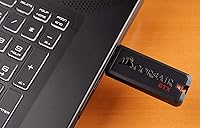
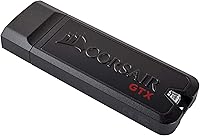
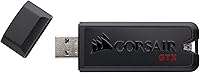
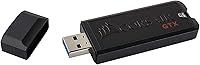
  • The lack of a cap or slide mechanism means the connector is exposed during transport, which may concern frequent travelers
  • Older USB 2.0 connections dramatically bottleneck the drive's speed, making it ineffective on legacy-only machines
  • Long-term availability of the specific 1TB variant may be a concern given the drive launched in 2018 and the market has shifted

Ratings

Our AI rating system analyzed thousands of verified global purchaser reviews of the Corsair Flash Voyager GTX 1TB Flash Drive — actively filtering out incentivized, duplicate, and bot-generated feedback — to produce scores that honestly reflect what real users experience day to day. The Voyager GTX earns strong marks in several areas that matter most to professionals, but the ratings also surface genuine trade-offs that budget-conscious buyers and casual users should weigh carefully. Both the standout strengths and the recurring frustrations are transparently reflected in every score below.
Transfer Speed
93%
Verified buyers consistently report real-world read and write speeds that come remarkably close to the advertised 440 MB/s figure, which is a rarity in the flash drive market. Professionals moving 10–20GB project folders describe transfers completing in under a minute — a tangible, workflow-changing improvement over standard drives.
Speed gains are entirely dependent on having a USB 3.1 or USB 3.0 host port available. Users connecting through older USB hubs or legacy laptops report the drive is effectively throttled, making the premium speed spec irrelevant in those environments.
Build Quality
88%
The zinc-alloy and aluminum construction earns consistent praise from users who have compared it to the flimsy plastic shells on most competing drives. Daily commuters and frequent travelers particularly appreciate that the body resists cosmetic damage and does not creak or flex under pressure.
The drive carries no waterproof or MIL-spec rating, which surprises some buyers who assume a metal build implies full ruggedization. A few users also note the exposed connector — with no cap or slider — is a minor but real vulnerability during transport.
Value for Money
61%
39%
For professionals who genuinely need both 1TB of portable capacity and fast symmetrical transfer speeds in a single pocket-sized device, the price reflects a real capability gap versus cheaper alternatives. Long-term reliability reported by multi-year owners adds weight to the investment argument.
The price-to-performance debate is the most common criticism in user reviews. Budget-aware buyers frequently point out that compact external SSDs — which can offer comparable or higher throughput — are available at similar price points, making the value case for this premium USB drive harder to defend for some buyers.
Portability
91%
Measuring just over 3 inches long and weighing under 2 ounces, the Voyager GTX fits easily into a jeans pocket, a laptop bag side pocket, or even clipped to a keychain. Users who travel between studios or work across multiple machines repeatedly highlight how freeing it is to carry a full terabyte without a cable or separate enclosure.
At 1.82 ounces, it is noticeably heavier than budget plastic flash drives, which a small number of users find surprising for something marketed as ultra-portable. The all-metal build contributes to a denser feel that not everyone expects from a USB stick.
Real-World Reliability
86%
Multi-year owners are among the drive's most vocal supporters, with verified buyers reporting sustained daily use over one to two years without performance degradation or data loss. The 3D NAND memory type is a genuine contributor here, offering better endurance than the older planar NAND found in cheaper drives.
A smaller subset of reviewers reports early failures or inconsistent detection on certain machines, though these cases represent a clear minority. No drive of any brand is immune to isolated unit defects, and Corsair's warranty process draws mixed feedback on resolution speed.
Compatibility
79%
21%
The drive works natively on Windows, macOS, and Linux without drivers, and the USB Type-A connector fits the overwhelming majority of laptops and desktops. Buyers who regularly move between a Windows workstation and a Mac report smooth plug-and-play detection on both.
Users who rely on USB hubs — particularly older or lower-powered hubs — report inconsistent speeds and occasional detection issues. A small number of macOS users also note the need to reformat from the default file system to get the best experience in Apple-only workflows.
Heat Management
67%
33%
During light to moderate use — copying documents, transferring a few gigabytes, or accessing files for general work — the drive stays close to room temperature and generates no noticeable warmth in hand. Most daily users never encounter any heat-related concerns.
Under sustained large-batch transfers, a meaningful portion of reviewers describes the metal body becoming noticeably warm to the touch. While not reported as a safety issue, it causes some users to pause transfers out of caution, which partially undermines the drive's speed advantage for long backup sessions.
Software & Setup
84%
There is essentially no setup friction — plug it in and the operating system recognizes it immediately as mass storage. This zero-driver, zero-software approach is consistently praised by IT professionals who deploy it across multiple machines where installing anything extra is not an option.
The drive ships without any bundled security or encryption software, which competitors at this price tier sometimes include. Users who need hardware-level password protection will need to handle encryption through the operating system or third-party tools.
Capacity Accuracy
82%
18%
Buyers report that the formatted usable space aligns with standard industry expectations for a 1TB drive, landing around 930–950GB in practice. There are no widespread complaints about the drive reporting significantly less space than expected, which has been a real issue with some budget alternatives.
A handful of buyers unfamiliar with binary-versus-decimal storage calculations express disappointment that formatted capacity falls short of a full 1,000GB. This is a universal industry reality, not a flaw specific to the Voyager GTX, but it generates occasional confusion in reviews.
Long-Term Endurance
83%
The use of 3D NAND provides a meaningful advantage in write cycle endurance compared to older flash storage technologies, and multi-year owners report no perceptible slowdown in read or write performance after heavy use. This matters for professionals who write large files repeatedly rather than just reading from the drive.
As with any flash storage medium, the drive has a finite write endurance ceiling that intensive users will eventually approach. There is no included health monitoring software to track remaining endurance, so heavy users are left without a built-in warning system.
Design & Aesthetics
78%
22%
The matte black finish with brushed aluminum accents gives the drive a professional, understated look that fits equally well in a boardroom or a creative studio. Users who carry it alongside premium laptops and peripherals appreciate that it does not look cheap or afterthought-ish.
The design has not changed since the drive launched in 2018, and some buyers feel it looks dated compared to newer competitors. The exposed connector and lack of any protective mechanism is also a minor aesthetic and functional gripe that surfaces occasionally in reviews.
USB Hub Performance
54%
46%
When a direct host port is not available and a modern, powered USB 3.0 hub is used, many users report adequate — if not peak — performance for standard transfers. The drive does at least maintain stable detection in most hub configurations.
Performance through unpowered or older USB hubs is the single most consistent technical complaint across reviews. Users who work primarily from docking stations or shared hub setups find the drive's real-world speeds bear little resemblance to the headline figures, making the purchase feel like a poor fit for their workflow.
Packaging & Unboxing
72%
28%
The drive arrives in clean, brand-consistent packaging that reflects its premium positioning. Most buyers report the unit arrives well-protected and undamaged, with no loose components or signs of rough handling in transit.
At this price tier, some buyers expect a carrying case, lanyard, or protective pouch to be included, and their absence draws mild but consistent criticism. The accessory offering feels minimal relative to what competing premium drives sometimes bundle.

Suitable for:

The Corsair Flash Voyager GTX 1TB Flash Drive was built for people whose work genuinely depends on fast, reliable storage they can carry anywhere. Video editors and photographers moving large RAW files or 4K footage between workstations will immediately feel the difference compared to ordinary flash drives — transfers that used to take minutes now take seconds. IT professionals who regularly image machines or deploy software in the field will appreciate both the consistent write speeds and the drive's solid, pocket-friendly build. Frequent travelers who need one drive to hold an entire archive of client work, personal media, or project files will find the full terabyte of capacity a practical relief. Creative professionals who split time between studios, offices, or co-working spaces also benefit enormously — you get near-external-SSD performance without the added bulk of a separate enclosure and cable.
Not suitable for:

If you are an everyday user who mostly transfers the occasional document, photo album, or presentation, the Corsair Flash Voyager GTX 1TB Flash Drive is almost certainly more drive than you need. The premium price tier is real, and buyers who do not regularly push large files will never recoup the value that speed advantage offers. Shoppers on a tight budget should also weigh this against compact external SSDs, which can offer comparable or even greater performance at similar price points and add the flexibility of a proper enclosure. Users who need ruggedized storage for truly harsh environments — think outdoor fieldwork, construction sites, or extreme weather — should look for drives with certified waterproofing or MIL-spec ratings, since this drive is sturdy but carries no such certification. Similarly, anyone who connects primarily through older USB hubs rather than direct ports may encounter inconsistent speeds that undercut the drive's core advantage.
Specifications

  • Brand: Manufactured by Corsair, a well-established name in enthusiast and professional PC hardware and storage accessories.
  • Model Number: The official model identifier is CMFVYGTX3C-1TB, which corresponds specifically to the 1TB variant of the Flash Voyager GTX line.
  • Capacity: This drive offers 1TB of usable flash storage, with the line also available in 128GB, 256GB, and 512GB configurations.
  • Read Speed: Sequential read speeds reach up to 440 MB/s under optimal USB 3.1 Gen 1 conditions, which is substantially faster than standard flash drives.
  • Write Speed: Sequential write speeds also reach up to 440 MB/s, a symmetrical performance profile that is uncommon at this form factor.
  • Memory Type: The drive uses 3D NAND flash memory, which offers improved endurance and data retention compared to older planar NAND designs.
  • Interface: Primary interface is USB 3.1 Gen 1 via a standard Type-A connector, with full backward compatibility with USB 3.0 and USB 2.0 ports.
  • Housing Material: The outer shell is constructed from zinc-alloy with aluminum accents, providing a solid, metal build that resists everyday drops and wear.
  • Dimensions: The drive measures 0.42 x 1.04 x 3.07 inches (approximately 10.7 x 26.4 x 78 mm), keeping it compact enough for a keychain or pocket.
  • Weight: The drive weighs 1.82 ounces (approximately 52 grams), which is notably heavier than plastic drives but reflects the all-metal construction.
  • Color: Offered exclusively in black with brushed aluminum accents for a professional, understated aesthetic.
  • Connector Type: Uses a standard USB Type-A plug, which is compatible with the vast majority of laptops, desktops, and docking stations.
  • OS Compatibility: Works natively with Windows, macOS, and Linux without requiring additional drivers, as it operates as a standard USB mass storage device.
  • Waterproofing: The drive carries no official waterproof rating or MIL-spec certification; the zinc-alloy housing offers physical durability but not liquid resistance.
  • Date Released: This model was first made available in February 2018, and as of the time of this review it has not been discontinued by the manufacturer.
  • UPC: The product UPC is 843591075237, which can be used to verify authenticity when purchasing from third-party sellers.
  • Ratings: The drive holds a 4.7-out-of-5-star average based on over 1,400 verified customer ratings on Amazon, placing it at rank 667 in the USB Flash Drives category.

Related Reviews
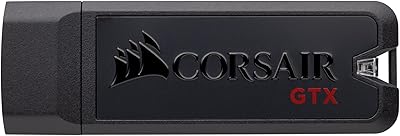
Corsair Flash Voyager GTX 256GB USB 3.1 Flash Drive
86%
91%
Performance
94%
Speed
89%
Durability
87%
Portability
88%
Compatibility
More
Corsair Flash Voyager GTX 512GB USB 3.1 Flash Drive
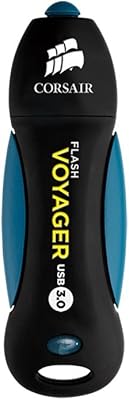
88%
94%
Performance
91%
Build Quality
82%
Value for Money
89%
Portability
96%
Transfer Speed
More
Corsair Flash Voyager 256GB USB 3.0 Flash Drive
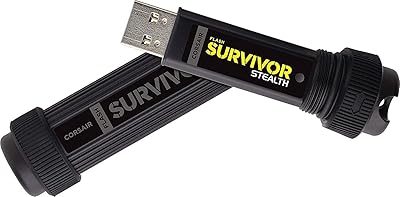
89%
88%
Performance
93%
Durability
90%
Compatibility
72%
Speed (Write)
89%
Water Resistance
More
Corsair Flash Survivor Stealth 256GB USB Drive
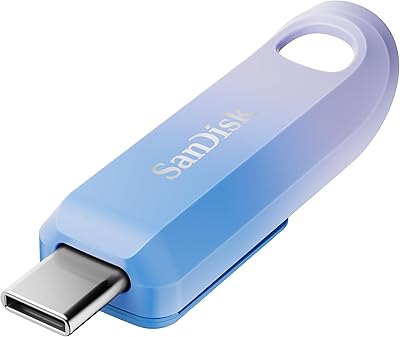
82%
94%
Build Quality
91%
Waterproofing
89%
Durability Over Time
67%
Transfer Speed
88%
Storage Capacity
More
SanDisk Creator USB-C 1TB Flash Drive
83%
86%
Read Speed Performance
61%
Write Speed Performance
93%
Storage Capacity
71%
Value for Money
74%
Build Quality & Durability
More
iDiskk 1TB SSD Flash Drive
67%
74%
Transfer Speed
58%
iPhone Compatibility
83%
Cross-Device Versatility
63%
Build Quality
69%
Plug-and-Play Ease
More
MMOMENT MK700 1TB USB 3.2 Flash Drive
85%
88%
Performance
92%
Speed
81%
Durability
89%
Portability
94%
Compatibility
More
PNY Pro Elite 1TB USB Flash Drive
82%
88%
Transfer Speed
91%
Build Quality
86%
Retractable Connector
93%
Storage Capacity
84%
Compatibility
More
SanDisk 1TB Ultra Slider USB Type-C Flash Drive
88%
88%
Performance
91%
Build Quality
90%
Portability
85%
Data Transfer Speed
89%
Durability
More
PNY Attaché 4 1TB USB Flash Drive
80%
93%
Storage Capacity
74%
Transfer Speed
57%
Write Performance
82%
Build Quality
78%
Value for Money
More

FAQ

In practice, the Voyager GTX gets consistently close to its advertised speeds when connected directly to a USB 3.1 or USB 3.0 port on a modern machine. Most verified buyers report real-world transfers that genuinely track with the spec sheet, which is not always the case with flash drives. That said, using it through a USB hub or on an older USB 2.0 port will significantly reduce throughput, so a direct connection matters.

No, it is not waterproof and carries no IP or MIL-spec water resistance rating. The zinc-alloy housing is solid enough to handle bumps and drops, but you should avoid submerging it or exposing it to rain. If you need genuinely waterproofed portable storage, you will want to look at drives that carry an explicit IP68 or similar certification.

It is a fair question, and one that comes up a lot in buyer reviews. A compact external SSD at a similar price point can sometimes match or exceed the Voyager GTX in raw speed, and also gives you a proper enclosure. The trade-off is convenience: this high-speed flash drive plugs in directly with no cable, no extra device to charge, and nothing extra to lose. For anyone who values that simplicity and portability above all else, the flash drive form factor wins.

It works across all three without any additional software or drivers. The drive presents itself as standard USB mass storage, so your operating system will recognize it immediately. On macOS you may want to reformat it to APFS or HFS+ if you plan to use it exclusively with Apple machines, since it ships formatted for broad compatibility.

It is fully backward compatible with USB 3.0 and even USB 2.0. You will get the best speeds from USB 3.1 Gen 1, but plugging it into a USB 3.0 port will still yield strong performance. USB 2.0 will bottleneck the drive considerably, but it will still read and write reliably — just slowly.

A handful of buyers have noted that the drive runs noticeably warm during sustained high-volume transfers, which is not unusual for a drive pushing this level of throughput in a compact metal shell. In casual use it stays close to room temperature. It is not a safety concern, but worth knowing if you plan to run long, uninterrupted backup sessions.

Like all storage devices, the formatted capacity will be slightly less than the stated 1TB due to how manufacturers calculate storage (1TB = 1,000GB in marketing terms, while operating systems measure in binary). You can expect roughly 930–950GB of actual usable space once formatted, which is standard across the industry and not specific to this drive.

Corsair typically includes a limited warranty on its storage products, though the specific terms can vary by region — it is worth checking Corsair's official warranty page for the most current details. The drive does not require any proprietary software and does not ship with bundled applications.

Technically yes — because the Voyager GTX offers symmetrical read and write speeds, it handles OS booting and application launching better than most flash drives. Users have successfully run live Linux environments and portable applications from it. Performance will still lag behind a dedicated NVMe SSD, but it is genuinely usable for this purpose in a way that slower drives simply are not.

Long-term feedback from verified buyers is encouraging. Several reviewers who have used the drive heavily for one to two years report that it continues to perform reliably without data loss or significant speed degradation. The metal housing shows expected cosmetic wear but remains structurally sound. As always, maintaining a backup of critical data on any single drive is good practice regardless of build quality.

Where to Buy