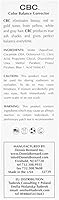
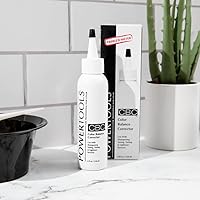
Overview

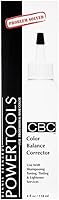
The POWERTOOLS CBC 4oz Hair Color Corrector is a professional-grade toning additive from Dennis Bernard Inc., a brand that has built steady credibility in salon-focused hair care. Rather than functioning as a standalone treatment, this color corrector is designed to be blended directly into your shampoo, bleach, or color formula — which is what sets it apart from conventional toners. It sits comfortably in the mid-range tier: more targeted and concentrated than anything you'd grab off a drugstore shelf, but without the premium price tag of top salon brands. Its consistent presence as a top-ranked corrector in the Hair Color Correctors category suggests it has earned real-world trust among buyers.

Features & Benefits

At its core, this toning additive works on a straightforward principle of color theory: blue pigment sits opposite orange on the color wheel, so introducing it during a bleaching or coloring session actively cancels brassy tones before they settle. The formula is highly concentrated, meaning you only need a few drops mixed into your shampoo, bleach, or color — a little genuinely does go a long way. It's also paraben- and sulfate-free, which matters if your scalp is sensitive or your hair is already processed. The slim 4 oz bottle fits easily on a salon station or in a kit bag, and it's formulated to work across all hair types.

Best For

This color corrector is a natural fit for DIY bleach users who regularly fight orange or warm tones after lightening — people who have cycled through purple shampoos and toning masks and want something more precise and adjustable. Salon professionals will also appreciate how easily it folds into an existing workflow without requiring a separate toning step. That said, it's not exclusively a trade tool; anyone who takes the time to understand the concentration and does a test application can get reliable results at home. If you've been frustrated by one-size-fits-all toners that either do too little or leave your hair looking dull and over-toned, this additive is worth a closer look.

User Feedback

The CBC corrector holds a rating of 3.8 out of 5, which reflects a genuinely split experience rather than a clear win or a clear disappointment. Buyers who praise it consistently point to its effectiveness on brassy tones and how easily it integrates into bleach or shampoo without a fussy application process. The criticism tends to center on one recurring issue: dosage. Because the formula is so concentrated, it's easy to overshoot, and some users end up with an unintended blue or ashy cast on their hair. A few home users also note that the instructions don't spell out quantities clearly enough. Professionals seem to handle it with fewer issues, likely because they're already comfortable adjusting additive ratios. Start with less and work up — that's the consistent advice from experienced users.

Pros

  • Blue pigment effectively neutralizes orange and brassy tones during bleaching or coloring sessions.
  • Highly concentrated formula means one small bottle covers many applications before running out.
  • Mixes easily into shampoo, bleach, or color without requiring a separate toning step.
  • Free of parabens and sulfates, making it a safer choice for sensitized or color-treated hair.
  • Compatible with all hair types, adding real versatility for both professionals and home colorists.
  • Compact bottle stores neatly on a salon station or fits comfortably in a travel kit.
  • More customizable than toning masks or purple shampoos, giving you direct control over intensity.
  • Ranked among the top Hair Color Correctors on Amazon, reflecting steady real-world demand.

Cons

  • Dosage guidance on the packaging is vague, making it easy for home users to accidentally overapply.
  • Over-toning is a genuine risk — too much product can leave hair with an unintended blue or ashy cast.
  • Results vary significantly depending on your hair's starting tone, level of lightening, and porosity.
  • Not effective on yellow tones; the blue pigment is purpose-built for orange and warm brassiness only.
  • Home users without prior color experience face a steeper learning curve than salon professionals.
  • The 3.8 out of 5 rating signals that a meaningful portion of buyers walk away less than satisfied.
  • Requires mixing into another product rather than applying directly, which adds a step to the routine.
  • No detailed mixing ratios are provided, so first-time users must rely on trial and error to get it right.

Ratings

The POWERTOOLS CBC 4oz Hair Color Corrector has been evaluated through a comprehensive AI analysis of verified buyer reviews sourced from global markets, with spam, bot-generated, and incentivized submissions actively filtered to surface genuine, experience-based feedback. Scores reflect the full picture of what this toning additive does well and where it consistently falls short across different user profiles. Strengths in formula safety and professional suitability are balanced transparently against recurring friction around dosage clarity and at-home consistency.

Toning Effectiveness
77%
23%
When used at the right concentration, the blue pigment does a credible job of neutralizing orange and brassy tones that surface during or after bleaching. Users who dial in their ratio report noticeably cooler, more balanced results compared to standard purple shampoos, especially on hair sitting at mid-level lightness after a recent lift.
Toning performance is highly dependent on starting hair tone and porosity, meaning an identical application can produce very different results across users. Some buyers with heavily pre-processed hair report that the corrector occasionally works too aggressively, depositing more pigment than intended and pushing results into territory that is difficult to reverse in a single session.
Ease of Use
61%
39%
For anyone already comfortable working with color additives, the liquid format blends quickly into shampoo, bleach, or color without clumping or requiring special technique. Salon professionals in particular appreciate how cleanly it integrates into their existing mixing process without adding time or complexity to a standard color appointment.
For beginners or occasional home colorists, the lack of a clear dosage guide makes the initial experience frustrating and guesswork-heavy. The concentration level means the margin between a successful application and an over-toned result is narrow, and users without prior experience with additive toners frequently report needing several attempts before achieving their target outcome.
Concentration Value
84%
The formula delivers genuine economy across multiple uses — a few drops go meaningfully further than a full squeeze of a comparable drugstore product. Budget-conscious buyers who tone regularly report that a single bottle comfortably covers two to four months of use, making the per-application cost competitive for the category.
The same high concentration that makes it economical also creates a calibration challenge, especially early on when users are still figuring out the right amount for their specific hair. There is no reference chart or volume marker on the bottle to guide dosing, so the first few applications tend to involve a fair amount of trial, error, and wasted product.
Formula Safety
88%
Being free of both parabens and sulfates is a meaningful plus for anyone managing color-treated, sensitized, or chemically processed hair that reacts poorly to harsher formulas. Users with scalp sensitivity specifically note fewer irritation issues compared to toning products that include these ingredients, making it a more comfortable long-term addition to a hair care routine.
While the paraben-free and sulfate-free credentials are solid, the formula lacks transparency around other ingredient details such as preservatives or fragrance components that may still be present. Buyers with strict ingredient requirements — particularly those managing contact dermatitis or scalp psoriasis — may want a more detailed full-ingredient disclosure before committing to purchase.
Dosage Clarity
43%
57%
Experienced colorists and salon professionals generally find the format self-explanatory enough to work with once they have spent time with it. Those who already carry intuition from working with other professional-grade additives tend to reach a workable ratio relatively quickly, making the learning curve shorter for this specific audience.
For the majority of home users, the dosage guidance provided is not specific enough to prevent over-application — this is one of the most consistently cited frustrations across buyer feedback. There are no per-hair-length recommendations, no mixing ratios, and no porosity-based warnings, leaving first-time users largely reliant on external research to avoid making a costly mistake.
Versatility
82%
18%
The ability to blend this toning additive into shampoo, bleach, or hair color is genuinely useful and distinguishes it from toners locked into a single application context. Whether you want to gradually shift tone during a maintenance wash or correct brassiness mid-process during a lightening session, the same product handles both scenarios without modification.
The versatility is contingent on understanding how to adjust the amount based on what you are mixing it into, since bleach and shampoo carry pigment very differently. Users who treat it as a one-ratio-fits-all additive across these varied applications frequently report inconsistent outcomes, making the multi-use benefit feel more theoretical than practical for less experienced buyers.
Results Consistency
64%
36%
Users who approach this corrector methodically — running strand tests, starting low, and adjusting over time — tend to report reliable and repeatable results once they have established their personal ratio. The color theory behind the formula is sound, and when conditions are controlled it performs consistently across different hair types.
For users who skip the trial-and-error stage, results vary considerably, and the 3.8 overall rating reflects this gap between favorable and disappointed experiences. Hair that has been pre-toned, heavily processed, or recently bleached absorbs the pigment unpredictably, and several reviewers noted results that differed noticeably from one session to the next even with no changes to their method.
Packaging & Design
73%
27%
The compact bottle dimensions make it a practical addition to a salon kit bag or bathroom shelf without occupying meaningful space. The slim cylindrical shape is easy to grip and pour from with reasonable control, which matters when you are trying to measure small drop quantities during a live coloring session.
The bottle does not include a dropper or calibrated dispensing tip, which would make precise dosing significantly easier given how concentrated the formula is. Several users have noted that the standard opening makes it easy to accidentally pour out more than intended, particularly during a first use when you have not yet developed a feel for the flow rate.
Value for Money
79%
21%
Relative to professional salon toning additives at higher price points, this color corrector delivers a reasonable return — especially once you factor in that the concentrated formula stretches across many more applications than a comparably sized standard toner. For buyers who bleach or lighten regularly, the cost-per-use makes it a practical recurring purchase.
The value proposition depends heavily on using the product correctly, and buyers who end up over-toning and needing corrective treatments to fix the result effectively cancel out any savings. At this price point, some users also feel that clearer application guidance and a precision dispenser tip should be standard inclusions rather than overlooked details.
Color Theory Accuracy
83%
The underlying science is sound — blue pigment directly counteracts the orange and warm brassy tones that are a predictable byproduct of bleaching darker hair, and the formula delivers on this principle at the correct application level. Colorists familiar with the opposing-color model find that it behaves exactly as expected, making it a dependable mid-process correction tool.
The formula's effectiveness in color theory only applies where orange or warm-brassy tones are the actual problem — it has no meaningful effect on yellow tones, which require violet pigment instead. Users who misidentify their tone issue and reach for this corrector when a purple-based product would be more appropriate tend to walk away disappointed regardless of how carefully they apply it.
Application Experience
68%
32%
When mixed into shampoo, the application process feels nearly identical to a regular wash routine, making it easy to incorporate into an existing hair care schedule without learning any new technique. For bleach mixing, the liquid format blends evenly without noticeably affecting the consistency of the mix during the coloring process.
The deep blue color means accidental over-dispensing onto skin or surfaces can temporarily stain them, something that has caught users off-guard during first use. Without a precise applicator, measuring the correct amount requires care and attention, and the learning curve for keeping the workspace tidy is steeper than with most comparable products in this category.
Professional Suitability
87%
Salon colorists report that this toning additive integrates cleanly into standard workflows without adding meaningful time to a bleach or color service. The all-hair-type compatibility makes it a practical single-item solution for a diverse client base, and professionals with existing knowledge of additive ratios find the dosage experience intuitive rather than frustrating.
Even for professionals, the absence of standardized ratio guidance means results can vary slightly between clients depending on individual porosity and starting tone. Salons looking to delegate mixing to less experienced assistants may find that additional training is necessary before this corrector can be used reliably as part of a consistent, repeatable client service.
At-Home Usability
57%
43%
Home colorists who invest time in testing their ratio report results they describe as far more precise than anything achieved with purple shampoo. The paraben- and sulfate-free formula is gentler between salon visits, and motivated DIY users find it meaningfully expands their toning options without requiring professional equipment or a salon environment.
The steep calibration curve makes this toning additive genuinely challenging for casual home colorists, and the absence of beginner-friendly guidance fuels the over-toning mistakes that dominate negative reviews. Home users without a background in hair coloring are unlikely to achieve consistent results on their first several attempts, and many describe the early experience as more stressful than satisfying.

Suitable for:

The POWERTOOLS CBC 4oz Hair Color Corrector is best suited for people who regularly work with bleach or lightener and find themselves battling persistent orange or brassy tones that cheaper toning options struggle to address. DIY colorists who have already moved past basic purple shampoos — and understand, at least roughly, how color theory works — will get the most reliable results, since the formula rewards a measured approach rather than guesswork. Salon professionals are a natural fit too; the liquid format integrates cleanly into existing bleach or color mixes without disrupting a workflow, and the concentrated bottle stretches across many applications. It works across all hair types, which adds genuine utility in a professional setting where client hair varies considerably. Budget-conscious buyers who want a concentrated option that does not run out quickly will also find the value reasonable, provided they are willing to experiment slightly with dosage to dial in the right amount for their specific starting tone.

Not suitable for:

The POWERTOOLS CBC 4oz Hair Color Corrector is not a smart pick for casual buyers who want a simple, grab-and-go toning solution with no learning curve — the high concentration makes it genuinely easy to overapply, and the consequence (an unintended blue or ashy cast) is frustrating to fix after the fact. If you are new to hair coloring entirely and lack a basic grasp of how toning works, this additive is likely to produce unpredictable results. It is also a poor match if your primary concern is yellow tones rather than orange or warm brassiness, since blue pigment targets warmth specifically and a violet-based formula would serve those needs better. People expecting a standalone toner they can apply directly without mixing will find the format inconvenient. Finally, anyone who relies heavily on detailed, step-by-step packaging instructions may find the guidance too sparse to feel confident, especially at first use.

Specifications

  • Brand: This product is manufactured by Dennis Bernard Inc. and sold under the POWERTOOLS professional hair care brand.
  • Volume: Each bottle contains 4 oz (118 ml) of liquid formula.
  • Form: The product is a liquid intended to be blended into a companion product rather than applied directly to hair on its own.
  • Pigment Color: The formula uses a blue pigment that works on color theory principles to counteract orange and brassy tones in hair.
  • Paraben-Free: The formula contains no parabens, making it compatible with sensitized or color-treated hair.
  • Sulfate-Free: The formula contains no sulfates, reducing the risk of stripping or further irritating chemically processed hair.
  • Concentration: The formula is highly concentrated, meaning only a small number of drops are needed per application.
  • Hair Type: The product is formulated to be compatible with all hair types.
  • Application Method: It is designed to be mixed into shampoo, bleach, or hair color, and is not intended for use as a standalone topical treatment.
  • Dimensions: The bottle measures 1.57 x 1.57 x 7.09 inches, compact enough to fit on a salon station or in a travel kit.
  • Product Weight: The total weight including packaging is 5.61 oz.
  • Model Number: The manufacturer-assigned item model number is 32739.
  • Category Rank: At the time of listing, the product holds a rank of #4 in the Amazon Hair Color Correctors subcategory.
  • Primary Benefit: The product is formulated specifically for tone correction, targeting unwanted warm, orange, and brassy tones during hair color services.
  • Package Type: The product is packaged in a sealed liquid bottle suited for dispensing small, controlled amounts per use.

Related Reviews
Surface Hair Trinity Color Care Leave In Conditioner 4oz
85%
92%
Effectiveness in Protecting Color
89%
Shine Enhancement
96%
Sulfate-Free Formula
78%
Texture and Feel
82%
Fragrance
More
Manic Panic Electric Banana Hair Dye 2-Pack
73%
93%
Color Vibrancy
76%
Shade Accuracy
63%
Color Longevity
84%
Application Ease
79%
Hair Conditioning
More
MANIC PANIC Classic After Midnight Semi Permanent Hair Color 4oz
90%
96%
Color Vibrancy
88%
Fade Consistency
91%
Ease of Application
85%
Scalp Comfort
93%
Mixing Flexibility
More
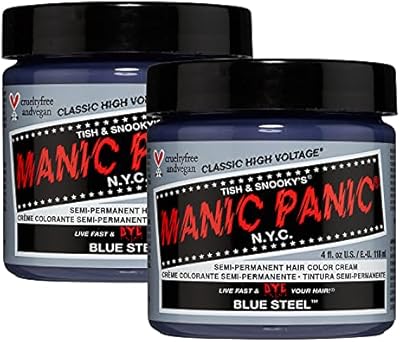
MANIC PANIC Classic Blue Steel Hair Color 4oz 2pk
86%
89%
Vibrancy of Color
92%
Ease of Application
84%
Fading Process
78%
Longevity of Color
87%
Packaging Quality
More
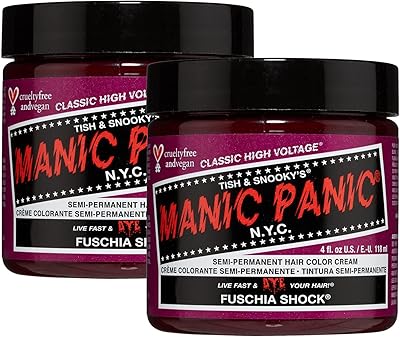
MANIC PANIC Classic Fuschia Shock Semi Permanent Hair Color - 4oz
84%
93%
Color Intensity & Vibrancy
88%
Ease of Application
81%
Longevity & Fade
75%
Scent During Application
84%
Packaging & Dispensing
More
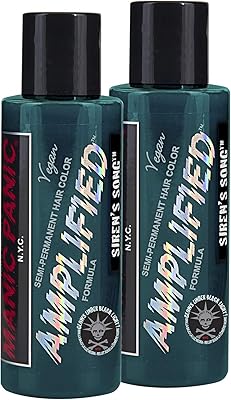
MANIC PANIC Siren's Song Hair Color - Amplified - Neon Blue Green - 4oz
82%
94%
Vibrancy of Color
85%
Long-Lasting Results
89%
Ease of Application
91%
Cruelty-Free and Vegan Benefits
67%
Color Fading Over Time
More
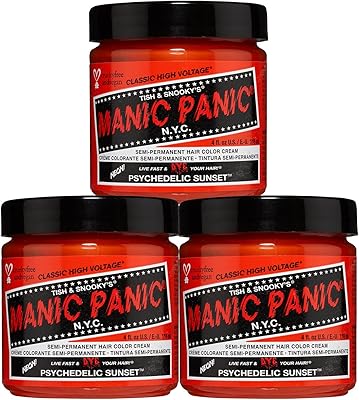
MANIC PANIC Classic Psychedelic Sunset Semi Permanent Hair Color 4oz 3pk
88%
94%
Color Vibrancy
88%
Ease of Application
85%
Longevity of Color
92%
Value for Money
91%
Performance on Lightened Hair
More
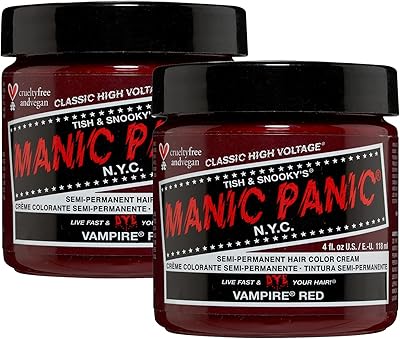
MANIC PANIC Classic Vampire Red Semi Permanent Hair Color (4oz 2pk)
84%
91%
Color Vibrancy
88%
Ease of Use
85%
Longevity on Pre-Lightened Hair
95%
Ethical Sourcing (Vegan & Cruelty-Free)
89%
Application Experience
More
COS Color Out System Hair Color Remover
85%
88%
Effectiveness in Color Removal
92%
Ease of Use
91%
Speed of Results (20-Minute Process)
85%
Hair Health After Use
86%
Gentleness on Hair
More
HAIR BURST Hydrating Hair Mask 7.4oz
86%
88%
Effectiveness in Repairing Damaged Hair
91%
Hydration & Moisture Retention
85%
Frizz Control
89%
Texture & Feel
94%
Ease of Application
More

FAQ

There is no single universal measurement since results depend on how brassy your hair currently is and how lightened it already is. A practical starting point for most home users is around 3 to 5 drops per ounce of bleach or developer. Because the formula is highly concentrated, it is genuinely worth starting on the low end, doing a strand test if possible, and adjusting the amount on future applications until you find the right ratio for your hair.

It must be mixed — this toning additive is not designed to be applied directly to dry or wet hair on its own. It is meant to be blended into shampoo, bleach, or a hair color formula before use. Applying it undiluted could produce an uneven or overly saturated result that is difficult to correct afterward.

Not in any meaningful way. This color corrector works by depositing blue pigment to cancel out warm, orange-based tones — tones that only become visible during or after a bleaching or lightening process. On unprocessed dark hair, there is no exposed brassiness for the pigment to work against, so you would see little to no effect.

The blue pigment targets orange and warm brassy tones specifically, since blue sits directly opposite orange on the color wheel. Yellow tones are a different issue and are generally better addressed with a violet or purple-pigmented product. If your main concern is yellowing on very light or platinum-blonde hair, a purple toner will likely serve you better than this one.

It depends on how much you use per session and how frequently you color, but the high concentration means most users get a substantial number of applications from one bottle. Someone adding 4 to 6 drops to a shampoo or bleach mix once a week could realistically stretch a single bottle over several months. Professionals working with multiple clients may go through it faster, but the per-use value is generally strong.

The formula is both paraben-free and sulfate-free, which are good signs for chemically processed hair that tends to be more porous and reactive than untreated hair. That said, a strand test is strongly recommended before applying to heavily processed hair, since higher porosity means pigment absorbs more readily — which increases the chance of ending up with an over-toned result.

Yes, a small amount can be blended into a box color formula before you apply it. Start with just 2 to 3 drops, mix thoroughly, and check the tone on a test strand before going ahead with a full application. Given how concentrated the formula is, even a modest addition can shift the overall color tone in a noticeable way, so less is more when you are starting out.

Over-applying is the most commonly reported issue — the result is typically an unintended blue-grey or ashy cast that is hard to overlook. Fixing it usually involves a clarifying wash or a warm-toned color treatment to counteract the excess pigment, and it can take more than one session to fully resolve. The best prevention is to start with a very small amount and work your way up incrementally across future applications.

Blue and purple shampoos deposit pigment passively during a regular wash and are mild enough to be forgiving, but their toning power is limited. This toning additive is far more concentrated and works by being mixed directly into your bleach or color before application, meaning it acts during the coloring process itself rather than after the fact. The control is significantly greater, but so is the margin for error, which is why it is better suited to people who already understand the basics of toning.

The manufacturer does not specify a fragrance profile for the formula. Since it is used as an additive blended into another product, most of what you smell during application will come from the shampoo, bleach, or color it is mixed into. The corrector itself is unlikely to add a strong independent scent, but if fragrance sensitivity is a concern, contacting Dennis Bernard Inc. directly before purchasing is a reasonable precaution.