Overview

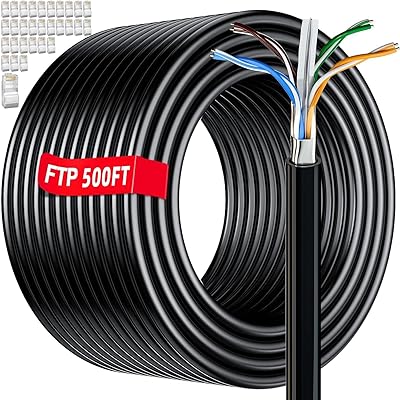
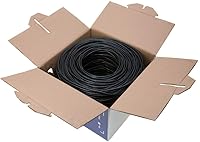
The Cables Direct Online 500FT CAT5e Outdoor Cable enters a crowded market with a clear pitch: a direct burial solution that covers serious ground without serious cost. The 500-foot spool suits homeowners and small shops needing to span a backyard, reach a detached garage, or tie in a remote access point. One thing to understand upfront — the conductors are Copper Clad Aluminum, not pure copper. CCA cable costs less to produce and performs well on shorter runs, but resistance increases over longer distances, which can affect real-world throughput. For most installs under 100 meters, the difference is rarely noticeable, but knowing this before buying matters.
Features & Benefits

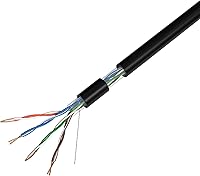
The dual-jacket LDPE construction is what sets this outdoor ethernet cable apart from standard indoor-grade options. The outer layer resists UV degradation and moisture, while the inner jacket keeps conductors protected during burial or surface mounting. You can trench it in directly at 6 to 18 inches deep depending on local code — no conduit required. The 24 AWG CCA conductors support up to 1Gbps in good conditions, making this burial-rated network cable a capable choice for IP cameras, wireless access points, and general data runs. The 300V voltage rating adds a useful safety buffer for semi-commercial setups, and the black jacket resists sun fading well in exposed above-ground runs.

Best For

This outdoor ethernet cable is a natural pick for anyone routing a long run across a yard, down a fence line, or out to a workshop. Homeowners adding cameras or stretching Wi-Fi to a detached structure will find 500 feet covers most residential layouts with room to spare. Small businesses installing outdoor access points or bridging adjacent buildings on a budget will also find it well-suited. That said, this burial-rated network cable shines on non-critical data runs — if you need peak throughput over a near-100-meter buried stretch, pure copper CAT6 is worth the extra investment. For camera feeds and routine network traffic, it does the job cleanly.

User Feedback

Buyers who put this direct burial CAT5e cable to work on camera systems generally come away satisfied — most report clean, stable signal at typical installation distances, and the jacket holds up through rain and temperature swings without complaint. The spool is consistently described as accurate in footage and easy to feed into a trench. Opinions diverge on the CCA conductor: some reviewers running longer stretches note slightly elevated resistance and modest speed drops compared to pure copper alternatives. A handful also flag that crimping CCA wire demands a firm, consistent press for a solid RJ45 seat — standard tools work fine, but the margin for a sloppy crimp is tighter than with solid copper.

Pros

  • Direct burial rated — no conduit needed for most residential trenching projects, cutting install time and material costs.
  • Dual-jacket LDPE construction resists UV exposure, moisture, and temperature swings across seasons without cracking or degrading quickly.
  • A 500-foot spool handles most home and small business outdoor runs in a single purchase with wire left over.
  • Supports up to 1Gbps, fully sufficient for IP security cameras, outdoor access points, and standard data traffic.
  • The black jacket holds its color well outdoors and sits discreetly against dark surfaces or within a trench.
  • 300V voltage rating offers a practical safety margin for semi-commercial and mixed outdoor deployments.
  • Spool arrives accurately measured and well-packaged, feeding cleanly into a trench without frustrating tangles.
  • Accessible price point for the spool length makes it a sensible choice for DIY installs and budget-sensitive projects.

Cons

  • CCA conductors carry higher resistance than pure copper, which can reduce real-world throughput on longer buried runs.
  • PoE use over extended distances is risky — CCA wire loses power efficiency and can cause connected devices to behave unpredictably.
  • Crimping CCA wire demands more precise technique than solid copper; an inconsistent press often produces a flaky or failed RJ45 connection.
  • Unshielded construction offers no protection against electrical interference, limiting suitability near industrial equipment or high-noise environments.
  • Some installers report the jacket stiffens noticeably in cold weather, making it harder to route cleanly through tight paths in winter.
  • If CCA performance proves insufficient after burial, excavating and replacing the run is a costly, time-consuming correction.
  • Not appropriate for critical network infrastructure where consistent uptime and peak throughput cannot be compromised.
  • Long-term durability data on the jacket under sustained UV stress is limited, leaving some uncertainty for permanent above-ground runs.

Ratings

The scores below reflect AI-driven analysis of verified buyer reviews for the Cables Direct Online 500FT CAT5e Outdoor Cable, with spam, bot-generated, and incentivized submissions actively filtered out to ensure the results represent genuine purchase experiences. Every rating category — from burial performance to CCA conductor trade-offs — is scored to transparently capture both what this cable does well and where real buyers have run into friction. Whether you are a first-time DIY installer or a small business network tech, these numbers are designed to give you a clear-eyed picture before you commit.

Value for Money
88%
For a 500-foot outdoor-rated direct burial spool, the price point is hard to argue with for most home and small business buyers. DIY installers consistently note that the cost savings over pure copper alternatives make it practical to buy a full spool for a single job without stretching the budget uncomfortably.
A small portion of buyers who hit CCA-related performance issues on longer runs felt the initial savings were wiped out by the need to re-run with a better cable. That is an expensive correction when the original cable is already buried underground and the trench has been filled back in.
Signal Performance
71%
29%
For the intended use cases — IP cameras, outdoor access points, and standard home network data — this burial-rated network cable delivers reliable and consistent connectivity at typical residential run lengths. Most buyers report no noticeable speed issues on runs under 50 to 60 meters, which covers the majority of backyard and between-building installs.
CCA conductors carry higher electrical resistance than solid copper, and reviewers running longer stretches report measurable throughput drops and occasional link instability as runs approach the 100-meter CAT5e ceiling. For high-bandwidth applications or near-maximum-length buried runs, the CCA limitation becomes a real performance ceiling.
CCA Conductor Quality
63%
37%
For short-to-medium runs where bandwidth demands are modest, the CCA construction performs adequately and the cost savings it enables are genuine. Buyers running this outdoor ethernet cable for security camera systems at typical backyard or small commercial distances generally report stable connectivity with no obvious signal complaints.
CCA is the most divisive aspect of this cable in buyer reviews, and the criticism is grounded in real physics rather than perception. Higher resistance over long runs, reduced PoE power delivery efficiency, and greater sensitivity to crimping technique are recurring complaints — and for buyers who discover these limitations only after burial, there is no easy fix.
Burial Suitability
86%
The direct burial rating and dual-jacket LDPE construction are the headline strengths of this direct burial CAT5e cable, and most buyers confirm it delivers on those claims once underground. Installers who trenched it at 8 to 12 inches consistently report no moisture ingress or jacket deterioration after extended time in the ground across multiple seasons.
The UTP configuration provides no shielding against ground interference or electrical coupling if the trench runs near buried power lines or other electrical utilities. Maintaining separation from power cables is important and not always achievable depending on how a property's underground infrastructure is already laid out.
PoE Compatibility
58%
42%
On shorter PoE runs under 25 to 30 meters, this outdoor ethernet cable generally powers standard IP cameras and budget-tier access points without issue. Many buyers confirm clean PoE installs in compact setups — a single building, a small parking area, a residential backyard — where cable distances are well within a comfortable margin.
CCA wire is significantly less efficient at carrying power over distance than solid copper, and reviewers powering PoE+ devices or running longer cable stretches frequently report voltage drop that causes cameras to reboot, fail to negotiate power, or operate at degraded capacity. This is arguably the most consequential real-world limitation for network installers choosing this cable.
Jacket Durability
82%
18%
Most buyers who surface-mounted this outdoor ethernet cable along fence lines, under eaves, or across exterior walls report the LDPE jacket holding its integrity well after a year or more of sun, rain, and freeze-thaw cycling. The black color shows minimal UV fading, and cracking complaints are rare in standard residential installations.
A handful of reviewers in particularly harsh climates — extreme desert heat or prolonged subzero winters — noted the jacket became brittle or slightly deformed after extended exposure. The LDPE construction is solid for typical outdoor conditions but is not rated for industrial-grade environmental stress.
Installation Ease
84%
The spool feeds cleanly and behaves well during a trench pull, which matters more than it might seem when you are kneeling in a ditch. Multiple buyers noted the jacket stays flexible enough at normal temperatures to navigate moderate bends without kinking, making it a manageable solo installation project.
In cold weather the jacket stiffens noticeably, making routing around corners and through conduit entries more awkward than in milder conditions. A few solo installers also mentioned that managing a 6-pound spool in a narrow or deep trench gets physically tiring, especially toward the end of a long run.
UV Resistance
79%
21%
Above-ground sections of this outdoor ethernet cable hold up well under direct sun exposure in most temperate and subtropical climates. Buyers who surface-mount it along fence lines or under eaves report stable jacket integrity and consistent color retention after one to two years of regular sun exposure.
In high-altitude or intensely sunny regions — the desert Southwest being a commonly cited example — some buyers report the jacket developing surface micro-cracks after prolonged UV exposure, suggesting the UV protection performs well in average conditions but is not industrial-grade. Sleeving exposed runs in conduit would meaningfully extend longevity in those environments.
Spool Packaging
81%
19%
The vast majority of buyers confirm the spool arrives accurately measured and neatly wound, with the cable feeding cleanly off the reel during a trench pull without frustrating tangles or kinks in the middle of a run. That packaging consistency is something installers genuinely notice and appreciate.
A small but recurring number of reviewers reported that the inner wraps of the spool were wound tightly enough to cause kinking in the first several feet of cable, which wasted usable length on an already budget-conscious purchase. It is an intermittent quality control issue rather than a systemic one, but it is worth being aware of.
Connector Termination
67%
33%
Standard RJ45 connectors and a basic pass-through crimping tool do work with this burial-rated network cable, and experienced installers report clean, reliable terminations when deliberate technique is applied. For buyers who regularly terminate ethernet cable, the process feels familiar with only minor adjustments needed.
CCA wire is softer and more sensitive to crimping pressure than solid copper, and multiple reviewers flag intermittent connections and outright failed terminations as recurring issues — particularly for less experienced installers who apply the same light press they might use on copper. Testing every crimp with a cable tester before burial is not optional with this cable.
Weather Resistance
83%
Through standard seasonal cycles — rain, humidity, moderate frost, and summer heat — this outdoor ethernet cable holds up without jacket failure or water ingress. Buyers who have left it installed for two or more years report no notable degradation in either physical cable condition or network connectivity.
The LDPE jacket stiffens in sub-freezing temperatures, which primarily affects installation day rather than long-term in-ground performance. That said, repeated severe freeze-thaw cycling over many years may gradually stress the jacket material, and buyers in climates with extreme winter swings should factor that into their long-term plans.
Run Length Accuracy
87%
Buyers consistently report that the 500-foot spool delivers footage close to its advertised length, arriving tangle-free on a well-wound reel that cooperates during a long trench deployment. Getting reliable spool accuracy on a budget-priced cable is something installers specifically call out as a positive.
A small fraction of buyers measured slightly under 500 feet once accounting for the first few kinked feet, which can be a problem if the run is designed to use nearly the full spool with no margin. Building a few extra feet of slack into the plan on either end essentially eliminates this as a real-world issue.
Brand Reliability
74%
26%
Cables Direct Online has a consistent presence in the outdoor networking cable category, and repeat buyers note reliable batch-to-batch quality for this product. The cable is consistently available year-round without stock disruptions, which matters for installers who return for additional spools mid-project.
As a smaller, less prominent brand, Cables Direct Online lacks the independent third-party certification documentation and publicly available test data that larger cable manufacturers provide, which gives some commercial installers pause when specifying materials for professional or multi-site deployments. Warranty terms are also less clearly communicated than buyers of premium-brand alternatives might expect.

Suitable for:

The Cables Direct Online 500FT CAT5e Outdoor Cable is purpose-built for homeowners and small business operators who need a weather-hardened ethernet run without the cost of premium pure copper cabling. If you are connecting a detached garage, workshop, shed, or outbuilding to your home network, the 500-foot spool covers most residential layouts with room to spare. It is equally well-suited for running cable to outdoor IP security cameras or wireless access points — the kind of low-to-moderate bandwidth tasks where CAT5e performance is entirely sufficient. Network installers working on budget-conscious residential or light commercial jobs will appreciate the direct burial rating, which removes the need to source and run conduit on routine outdoor trenching projects. Rural and suburban property owners who need long horizontal runs across yards, gardens, or fenced areas will find the spool size and jacket durability practical and fit for purpose.
Not suitable for:

The Cables Direct Online 500FT CAT5e Outdoor Cable is not the right tool for every outdoor networking job, and understanding its limits matters before you commit to a buried installation you may eventually need to dig up. The CCA (Copper Clad Aluminum) construction is the central trade-off: aluminum carries higher electrical resistance than copper, and performance can degrade noticeably on runs approaching 100 meters, making this a poor fit for high-throughput applications or demanding commercial environments. Anyone powering PoE devices like PTZ cameras or wireless radios over longer distances should be cautious — CCA wire is less efficient at carrying power, and some PoE hardware may exhibit instability or fail to negotiate power at all. If your installation requires guaranteed gigabit throughput at near-maximum run lengths, or if rewiring later would be disruptive and expensive, a pure copper CAT6 cable is a smarter long-term investment. The unshielded (UTP) configuration also makes this cable unsuitable near heavy electrical equipment or industrial machinery, where interference can compromise signal integrity.
Specifications

  • Cable Category: This cable is rated as CAT5e, supporting data transfer speeds up to 1Gbps over runs up to 100 meters under ideal conditions.
  • Conductor Material: Conductors are Copper Clad Aluminum (CCA) — an aluminum core with a copper coating — which reduces cost but carries higher electrical resistance than solid copper.
  • AWG Gauge: Each conductor is 24 AWG, a standard gauge for CAT5e cabling that balances flexibility with adequate signal-carrying capacity.
  • Cable Length: Each spool contains 500 feet (approximately 152 meters) of cable, sized for long outdoor runs between buildings or across large residential properties.
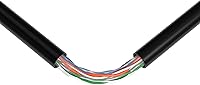
  • Conductor Count: The cable contains 8 individual conductors arranged in 4 twisted pairs, following the standard T568A and T568B ethernet wiring configurations.
  • Jacket Material: The outer jacket is LDPE (Low-Density Polyethylene), chosen for its resistance to moisture, UV radiation, and temperature extremes in outdoor environments.
  • Jacket Color: The jacket is black, which resists UV-induced fading better than lighter colors and blends discreetly into most outdoor installation settings.
  • Voltage Rating: The cable is rated for up to 300 volts, providing a safety margin suited to outdoor residential and semi-commercial networking deployments.
  • UV Resistance: The LDPE jacket is formulated to resist UV degradation, maintaining structural integrity during extended above-ground outdoor exposure over multiple seasons.
  • Waterproofing: The dual-jacket construction insulates conductors against moisture ingress during direct burial or exposed outdoor surface-mount installations.
  • Burial Rating: This cable is direct burial rated, meaning it can be installed underground without conduit in most residential and light commercial applications.
  • Max Data Rate: Under optimal conditions the cable supports up to 1Gbps throughput, though real-world speeds may be reduced on longer runs due to CCA resistance.
  • Configuration: The cable uses an Unshielded Twisted Pair (UTP) configuration, standard for residential and light commercial ethernet installations without significant interference concerns.
  • Spool Weight: The full 500-foot spool weighs approximately 6.3 pounds, manageable for a single installer to carry and deploy in the field.
  • Installation Type: Designed exclusively for outdoor and underground use, including direct burial, surface mounting along structures, and aerial runs in non-industrial environments.

Related Reviews

trueCABLE Cat5e Outdoor Ethernet Cable 500ft
89%
93%
Outdoor Durability
88%
Ease of Installation
91%
Signal Integrity
92%
Value for Money
95%
UV Resistance
More
UltraPoE Cat5e 1000ft Direct Burial Ethernet Cable
83%
91%
Conductor Quality
88%
Waterproofing & Direct Burial Rating
84%
UV & Weather Resistance
86%
PoE Performance
79%
Signal Performance & Speed
More
trueCABLE Cat5e Outdoor Shielded 1000ft Ethernet Cable
87%
93%
Cable Build Quality
88%
Shielding Effectiveness
91%
Direct Burial Performance
89%
PoE Reliability
86%
Installation Experience
More
MEIPEK Cat 7 Outdoor Ethernet Cable 500ft
70%
83%
Signal Stability & Speed
88%
Shielding & Interference Rejection
81%
Outdoor & Weather Durability
61%
CCA Conductor Quality
74%
Included RJ45 Connectors
More
MEIPEK Cat 6 FTP Outdoor Ethernet Cable 500ft
75%
83%
Outdoor Durability
74%
Signal Performance & Speed
61%
CCA vs Pure Copper Conductor
81%
FTP Shielding Quality
86%
Direct Burial Installation
More
VIVO CABLE-V003 Waterproof Cat5e Ethernet Cable 1000ft
84%
88%
Performance in Outdoor Conditions
91%
Ease of Installation
85%
Waterproofing Effectiveness
87%
Build Quality & Durability
92%
Value for Money
More
Vertical Cable Cat5e 1000ft Outdoor Ethernet Cable
77%
91%
Jacket Durability
88%
Signal Performance
93%
UV & Weather Resistance
79%
Value for Money
74%
Ease of Installation
More
trueCABLE Cat6A Direct Burial Ethernet Cable 1000ft
85%
94%
Conductor Quality
92%
Outdoor Weatherproofing
91%
Signal & Data Performance
89%
PoE Reliability
86%
Reel & Usability
More
FiveStarCable 1000Ft Cat5e FTP Ethernet Cable
85%
92%
Performance at Gigabit Speeds
88%
Ease of Installation
90%
Durability for Outdoor Use
87%
Value for Money
89%
Compatibility with High-Speed Networks
More
Voltive Cat5e Riser Ethernet Cable 100ft
87%
88%
Performance
91%
Ease of Installation
89%
Build Quality
85%
Signal Quality & Reliability
92%
PoE Compatibility
More

FAQ

Yes — the Cables Direct Online 500FT CAT5e Outdoor Cable is specifically rated for direct burial. The dual-layer LDPE jacket is built to handle ground moisture, soil contact, and temperature shifts without degrading. For most residential installs, trenching 6 to 12 inches deep is sufficient, though local codes in some areas may require deeper placement, so it is worth checking before you dig.
CCA stands for Copper Clad Aluminum — each conductor has an aluminum core with a thin copper coating. Aluminum has higher electrical resistance than pure copper, which means signal and power delivery can degrade slightly over longer distances. For typical home uses like camera feeds, Wi-Fi extension, or basic data runs under 50 to 60 meters, most people never notice the difference. On runs pushing 80 to 100 meters, the gap becomes more relevant.

For most residential low-voltage cable installs, 6 to 12 inches of depth is standard and provides good protection from incidental digging. If your run crosses a driveway, high-traffic area, or garden bed you regularly work, going 18 inches or deeper is smart insurance. Local electrical codes may specify minimum depths, so a quick check with your municipality before you start is always worthwhile.

It can, with some caveats worth knowing upfront. CCA conductors are less efficient at carrying power than solid copper, and on longer runs — particularly anything over 40 to 50 meters — voltage drop can cause PoE devices to behave unpredictably or fail to power on entirely. For shorter PoE runs under 30 meters, standard IP cameras and access points typically work without issue. If you are powering demanding PoE+ hardware over longer distances, pure copper is the safer choice.

Standard RJ45 connectors and a basic crimping tool will get the job done, but CCA wire needs a firm, deliberate crimp — more so than you might be used to with solid copper. The conductors are a touch softer, and a weak press often results in a loose or intermittent connection. Use connectors rated for solid core cable, crimp with consistent pressure, and test each end with a cable tester before you bury anything.

CAT5e is rated for 1Gbps up to 100 meters per segment, but with CCA conductors that theoretical ceiling can start to compress in practice. For camera feeds and routine data traffic, this outdoor ethernet cable is reliable at most residential distances. If your run is approaching 80 to 100 meters, upgrading to a pure copper cable gives you more headroom and peace of mind, especially if that cable will be difficult to access or replace later.

Most buyers report the spool length is consistent and accurate, and the cable feeds off the spool cleanly without tangling. That said, it is always good practice to measure your intended run and budget a few extra feet for routing around obstacles, making clean terminations at each end, and accounting for any dips or curves in the path. Cutting a run too short in the middle of a trench is a frustration worth avoiding.

The LDPE jacket handles a broad temperature range and is built for year-round outdoor exposure. In very cold conditions the jacket can stiffen noticeably, which makes working around corners and bends more demanding during installation — route carefully and avoid forcing sharp bends in freezing temperatures. In summer heat the jacket performs well, resisting UV fading and maintaining flexibility under sustained sun exposure.

The UV-resistant jacket makes this burial-rated network cable equally capable in above-ground applications — surface-mounting along a fence, running under eaves, or attaching to an exterior wall are all reasonable uses. The black jacket handles prolonged sun exposure without cracking or fading quickly. For any exposed run, use appropriate cable staples, clips, or a conduit sleeve in areas where physical abrasion or rodent activity could be a concern.

It is one of the most practical scenarios for this type of cable. Running a wired ethernet connection from a house to a garage, workshop, or barn is exactly the kind of job this direct burial CAT5e cable is designed for. Just keep in mind that a single ethernet segment tops out at 100 meters — if the distance between your buildings exceeds that, you will need a network switch or media converter at the midpoint to bridge the run reliably. Also make sure both cable ends are properly grounded to protect your equipment from electrical surges.