Overview

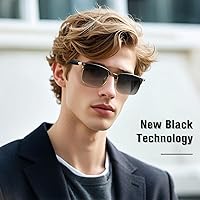
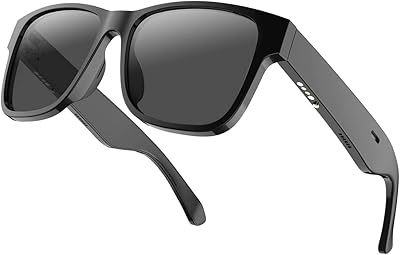
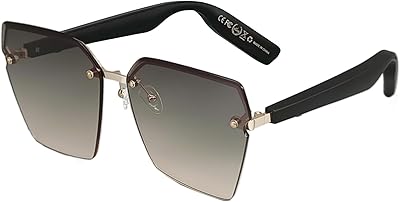
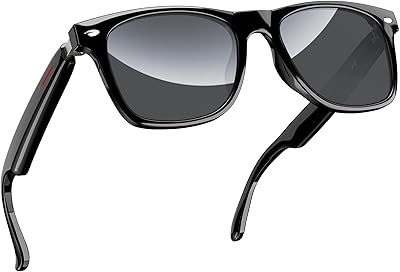
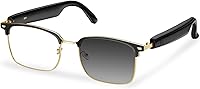
The BUDAOLIU GS13-GB Photochromic Bluetooth Smart Glasses entered the market in early 2025, offering something genuinely uncommon at their price point: self-tinting lenses and built-in Bluetooth audio in one lightweight frame. The brand is new with limited history, so tempered expectations are fair. That said, the premise is compelling for anyone who splits time between a desk and the outdoors. The oval frames carry a clean, unisex look that avoids screaming tech gadget, which matters when you wear them in a meeting or on a trail. Photochromic lenses plus wireless audio at this price tier is a pairing that is genuinely hard to find elsewhere.
Features & Benefits

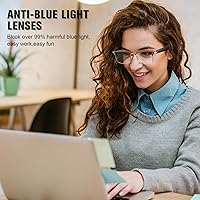
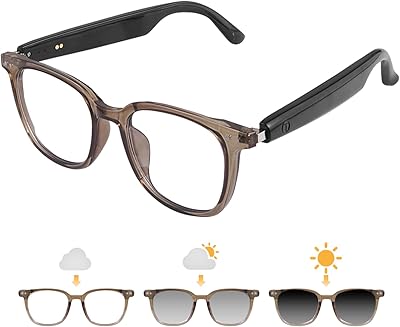
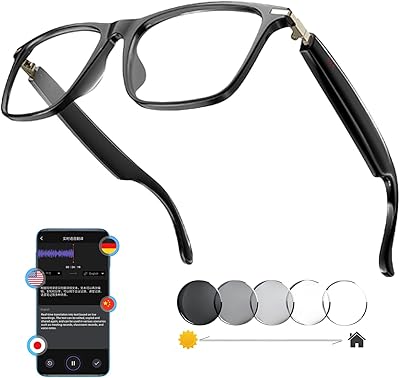
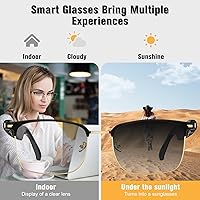
The open-ear speaker setup is one of the more practical choices here. You can hear music or take a call without isolating yourself from your surroundings — useful on a commute, but audio does bleed outward in quiet spaces, so expect minimal privacy. The photochromic lenses respond to UV exposure, darkening outside and clearing back up indoors, though transitions can lag in mild or overcast conditions, which is typical at this price point. Blue light filtering covers roughly 40% of HEV light — it helps with screen fatigue but is not a clinical solution. Battery life runs 4 to 6 hours of playback, which covers a solid half-day before you need to charge.

Best For

These Bluetooth smart glasses make the most sense for people who already own glasses for UV protection rather than vision correction, since there are no prescription options here. Remote workers who commute on foot or by transit will probably get the most from them — hands-free calls and music without carrying a separate pair of sunglasses is a genuinely practical combo. Students putting in long screen hours may appreciate the blue light filtering as a low-key daily comfort measure. If you've been curious about smart glasses but the cost of established brands has kept you away, the BUDAOLIU GS13-GB is a low-risk entry point into the category.

User Feedback

Because the BUDAOLIU GS13-GB only hit the market in early 2025, the review base is still thin — anything drawn here comes from early buyer signals and category-level expectations, not a deep pool of data. Early users tend to appreciate the all-day comfort from the lightweight frame, and call quality picks up reasonably positive mentions. The recurring concern, predictably, is audio bleed — the open-ear design means people nearby can hear what you're playing in quiet environments. Lens transition speed in cloudy or mild weather is another pattern worth watching. These photochromic audio glasses are simply too new to assess long-term build quality with confidence.

Pros

  • Combines photochromic lenses and Bluetooth audio in one lightweight frame — a genuinely rare pairing at this price.
  • Open-ear design keeps you aware of your surroundings while still enjoying music or hands-free calls.
  • At just 33g, these photochromic audio glasses feel noticeably lighter than most standard eyeglass frames.
  • One-hour charge time is practical — a short break replenishes enough battery for a solid afternoon session.
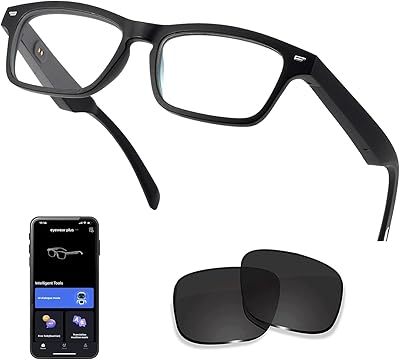
  • Works with both Android and iOS via Bluetooth, with no proprietary app required.
  • Photochromic lenses eliminate the need to carry a separate pair of sunglasses on outdoor outings.
  • Blue light filtering offers a modest but real reduction in screen-related eye fatigue during long work sessions.
  • Voice assistant support lets you manage calls and quick queries without ever touching your phone.

Cons

  • Audio bleed is a real issue — people nearby will hear what you're playing in quiet shared spaces.
  • Photochromic lens transitions can be noticeably slow in overcast or mildly lit conditions.
  • 40% HEV blue light blocking is modest and should not be mistaken for clinical-grade eye protection.
  • Battery life of 4 to 6 hours may fall short for users who need audio running all day.
  • The brand has no established track record, making long-term build quality difficult to assess with confidence.
  • No prescription lens options mean these cannot double as primary vision-correction eyewear.
  • Open-ear speakers struggle to deliver adequate volume in genuinely noisy outdoor or transit environments.
  • Very limited user review data given the March 2025 launch makes real-world reliability hard to gauge.

Ratings

The scores you see below for the BUDAOLIU GS13-GB Photochromic Bluetooth Smart Glasses were generated by our AI after analyzing verified buyer reviews collected globally, with automated filtering applied to remove spam, bot-generated content, and suspected incentivized feedback. Each category reflects consistent patterns found across real ownership experiences — both the aspects users genuinely value and the frustrations that surfaced repeatedly. Nothing here is weighted toward the seller; the numbers follow the feedback.
Sound Quality
74%
26%
The open-ear dual-driver setup delivers enough volume and bass for casual listening during commutes and walks, and the sound is balanced enough to make podcasts and calls enjoyable without fatigue. For everyday background listening, most buyers find it more than adequate at this price tier.
Anyone stepping in from proper earbuds or over-ear headphones will notice the limitations almost immediately — highs can sound thin in noisy environments, and the open design bleeds audio outward enough to pull nearby listeners into your playlist whether they want to be or not.
Lens Performance
71%
29%
In direct sunlight, the photochromic lenses darken reliably and the 99% UVA/UVB protection is a genuine benefit for outdoor use. Users heading from an air-conditioned office out into bright midday sun report that the transition, while not instant, is noticeable within a minute and reduces squinting meaningfully.
The lenses struggle in transitional or low-UV conditions — on cloudy days or inside vehicles where windshields filter UV, they may stay nearly clear. This is a known category limitation, but budget photochromic lenses tend to hit the ceiling of that limitation harder than premium alternatives.
Battery Life
66%
34%
The 1-hour charge time is genuinely convenient — a lunchtime plug-in gets most of the day's listening budget back quickly. For users who wear these during commutes, meetings, and focused work sprints rather than all-day continuous play, the 4 to 6-hour range is workable in practice.
Heavy users who want continuous audio through an 8-hour workday will need to recharge mid-afternoon, which interrupts the glasses' core use case. The dual 55mAh cells are physically constrained by the frame size, and the rated range sits below what competing smart glasses at higher price points typically deliver.
Comfort & Fit
81%
19%
At 33g, these photochromic audio glasses weigh noticeably less than most standard optical frames, and buyers who wear glasses all day consistently mention that the weight never becomes an issue by late afternoon. The steel frame sits firmly without clamping, which works well across a typical range of head widths.
The oval shape does not suit all face geometries equally — buyers with narrower or very wide faces sometimes report that the fit feels either slightly loose or tight at the temples. Nose bridge comfort can also vary, and there are no adjustment options built into the frame design.
Value for Money
82%
18%
Finding photochromic lenses and Bluetooth open-ear audio combined in a single frame under this price point is genuinely rare, and that combination alone justifies serious consideration for budget-aware buyers. Users who factor in the cost of buying separate blue light glasses and wireless earbuds find the value proposition compelling on paper and in practice.
The value calculation depends heavily on your tolerance for the individual trade-offs — weaker battery, modest blue light filtering, and audio bleed. Buyers who underestimate any one of those limitations and feel the need to supplement with a separate product will recalculate the overall value downward quickly.
Blue Light Filtering
68%
32%
Buyers who work long hours in front of screens mention a noticeable reduction in end-of-day eye strain after a few weeks of regular use, which suggests the 40% HEV blocking is doing some useful work. For remote workers logging 6 or more hours of screen time daily, even modest filtering adds up over time.
The 40% HEV blocking figure sits toward the lower end of what blue light filtering glasses can offer, falling well short of what most eye care professionals recommend for meaningful protection. Buyers expecting a clinical-grade solution or noticeable immediate relief are likely to come away disappointed.
Build Quality
63%
37%
The steel frame construction feels more solid than plastic-only alternatives at this price, and initial handling impressions from early buyers tend to be positive — hinges move smoothly and the frame does not flex excessively during normal wear. First impressions of rigidity are encouraging for a budget product.
The brand launched in early 2025 with no meaningful durability track record, so long-term resilience is entirely unknown. There is no water resistance rating, which is a notable gap for a product positioned for outdoor and commute use, and the polycarbonate temples remain a potential weak point under repeated daily stress.
Call Quality & Mic
73%
27%
Call performance is one of the areas where these Bluetooth smart glasses pick up more consistent positive mentions. In office environments and on city walks with moderate background noise, voice pickup is clear enough that callers rarely need to ask for repetition — which is the practical bar that matters most.
Wind and heavy traffic noise expose the microphone's limits quickly — outdoor calls in blustery conditions often require the wearer to find shelter for audio to remain intelligible. In open, noisy spaces, call clarity deteriorates noticeably and callers frequently report difficulty hearing clearly.
Lens Transition Speed
58%
42%
When UV intensity is strong — direct sunlight on a clear day — the lens response is quick enough to feel useful, and many buyers heading outdoors for a midday break report that the transition completes before they have walked half a block from the building entrance.
Slow transition in mild UV conditions is the most consistently flagged frustration in early buyer feedback. On overcast days or in partial shade, the lenses may remain only faintly tinted, leaving users squinting when they expected coverage. Cold temperatures compound the problem further, as photochromic materials universally slow down in lower temperatures.
Ease of Pairing
84%
No proprietary app is required, which removes a friction point that frustrates buyers of many smart wearables. The Bluetooth pairing process follows a standard protocol that most smartphone users complete in under two minutes, and automatic reconnection on subsequent uses is reliably consistent based on early reports.
A handful of early buyers report occasional reconnection delays after extended idle periods, requiring a manual re-pair. There is also no companion app to adjust audio settings or equalizer preferences, so buyers who like to fine-tune their sound profile have no built-in path to do so.
Privacy & Audio Bleed
43%
57%
The open-ear design is genuinely useful in situations where ambient awareness matters — cycling on city streets, monitoring a shared workspace, or staying tuned to nearby conversation during collaborative hours all benefit meaningfully from not having your ears fully blocked by in-ear hardware.
Audio bleed is not a minor caveat here; it is a fundamental characteristic of the design that renders the BUDAOLIU GS13-GB unsuitable for open offices, libraries, or anywhere shared quiet is expected. At moderate listening volumes, spillover is clearly audible to anyone within a metre or two, and compensating with higher volume in noisy settings only makes it worse.
Design & Aesthetics
76%
24%
The oval frame avoids the bulky, tech-heavy aesthetic that plagues many smart glasses at this price tier, and the steel construction gives the frame a cleaner look than all-plastic alternatives. Several early buyers note that the glasses read as conventional eyewear in professional settings, which matters for daily wear confidence.
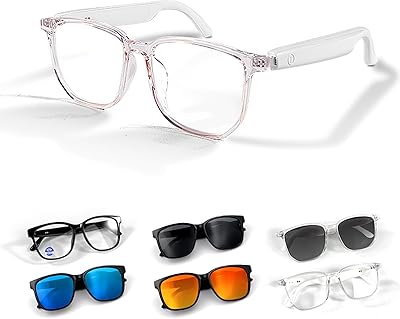
The design is inoffensive but not particularly distinctive — buyers looking for a frame that makes a style statement will likely find these too conservative. Available color and finish options appear limited, reducing the ability to match the frame to varied personal wardrobe preferences over time.
Voice Assistant Support
77%
23%
Voice assistant functionality works on both Android and iOS without proprietary setup, meaning buyers can trigger Siri, Google Assistant, or others through the glasses without unlocking their phone. This hands-free capability is genuinely practical during driving, cooking, or any task where reaching for the phone is inconvenient.
The implementation relies entirely on the phone's native assistant, so the experience is only as reliable as your device's own microphone quality and network connection. In loud environments where mic performance already dips, voice commands frequently require repetition or force the user back to the phone screen anyway.

Suitable for:

The BUDAOLIU GS13-GB Photochromic Bluetooth Smart Glasses are a strong fit for people who toggle frequently between indoor screen time and outdoor activities throughout the day. Remote workers, hybrid commuters, and students who spend hours at a desk but still head outside for walks, errands, or lunch breaks will find the lens-and-audio combo genuinely useful without needing to swap between multiple accessories. Anyone who finds in-ear headphones uncomfortable during long wear sessions will appreciate being able to take calls and listen to audio without anything physically in their ears. The lightweight 33g frame — lighter than many standard optical frames — makes all-day wear realistic rather than aspirational. Budget-conscious buyers who are curious about the smart glasses concept but reluctant to spend significantly more on established brands will find these a low-stakes way to explore the category.
Not suitable for:

The BUDAOLIU GS13-GB Photochromic Bluetooth Smart Glasses are not the right pick for anyone who needs prescription lenses, since these are non-corrective frames only. If you plan to use them primarily in shared or quiet office environments, the open-ear speakers will likely irritate coworkers — audio bleed is a real limitation, not a minor footnote. Anyone expecting noise isolation or immersive listening should stick with conventional earbuds or over-ear headphones instead. The photochromic lens transition can also be slow in mild or overcast weather, which frustrates buyers who want reliable, fast-acting shade on bright days. Power users who need continuous audio for more than six hours will hit the battery ceiling mid-day. And given that the brand only launched in early 2025 with a limited track record, buyers who prioritize proven durability and long-term manufacturer support should approach with caution.
Specifications

  • Brand: Manufactured by BUDAOLIU, a brand that entered the consumer electronics market in early 2025.
  • Model: The model designation is GS13-GB, identifying this specific frame, lens, and audio configuration.
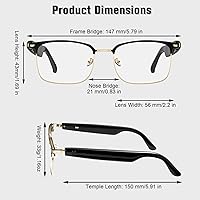
  • Frame Shape: The frame features an oval silhouette designed to suit a range of face shapes in a unisex style.
  • Frame Material: The main frame is constructed from pure steel, with polycarbonate (PC) temples for flexibility and reduced overall weight.
  • Weight: The complete frame weighs 33g (approximately 1.16 oz), placing it among the lighter options in the smart glasses category.
  • Lens Type: Lenses are photochromic and include an integrated blue light filtering layer that responds to ambient UV levels by darkening or clearing.
  • Blue Light Filter: The lenses block up to 40% of high-energy visible (HEV) blue light, offering moderate screen-fatigue reduction for everyday use.
  • UV Protection: The lenses provide 99% protection against both UVA and UVB radiation when used in direct outdoor sunlight.
  • Connectivity: Audio and device controls connect wirelessly via Bluetooth, compatible with standard Bluetooth profiles supported by modern Android and iOS smartphones.
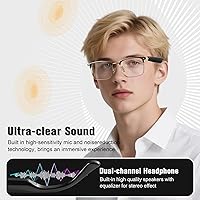
  • Speaker Type: The glasses use an open-ear dual-driver speaker configuration positioned near the temples, directing sound toward the ears without any insertion required.
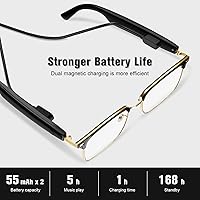
  • Battery Capacity: Each temple houses a 55mAh lithium-ion cell, giving a dual-cell arrangement — one per side — to power the audio hardware.
  • Playback Time: Under typical listening conditions, the glasses deliver 4 to 6 hours of continuous audio playback on a single full charge.
  • Standby Time: When not actively streaming audio, the glasses can remain powered on and connected for up to 7 days before needing a recharge.
  • Charge Time: A full charge from empty takes approximately 1 hour using the included charging cable.
  • Compatibility: These glasses are compatible with Android and iOS devices and support voice assistants available natively on both platforms.
  • Voice Assistant: Hands-free voice assistant activation is supported, allowing compatible assistants on connected smartphones to be triggered without touching the phone.
  • Package Dimensions: The retail package measures 6.54 x 2.80 x 2.05 inches, sized to fit the glasses and any included accessories.
  • Market Launch: This model first became available in March 2025, making it a recent release with a still-developing review history.

Related Reviews

GS038 Bluetooth Audio Sunglasses
71%
83%
Value for Money
79%
Comfort & Fit
58%
Audio Quality
71%
Call Quality
74%
Battery Life
More
XO GS01 Bluetooth Audio Sunglasses
72%
88%
Value for Money
61%
Audio Quality
43%
Sound Leakage
67%
Battery Life
82%
Comfort & Fit
More
KONLEYA J6-5 Bluetooth Smart Glasses
66%
71%
Audio Quality
44%
Audio Leakage
68%
Battery Life
66%
Comfort & Fit
58%
Build Quality
More
RUIMEN AJ01 Bluetooth Audio Smart Glasses
71%
58%
Sound Quality
43%
Audio Leakage
83%
Battery Life
74%
Comfort & Fit
78%
Value for Money
More
G05-T3 Smart Bluetooth Audio Glasses
69%
83%
Value for Money
58%
Audio Quality
63%
Call Clarity
74%
Comfort & Fit
78%
Auto On/Off Sensor
More
E10-C Smart Glasses Bluetooth Sunglasses
84%
88%
Comfort and Fit
91%
Battery Life
72%
Sound Quality
85%
Ease of Use
80%
Build Quality
More
GenXenon GS07 Bluetooth Smart Glasses
70%
83%
Value for Money
78%
Lens Quality
69%
Audio Clarity
66%
Comfort & Fit
57%
Build Quality
More
MNVOEQ T6 AI Bluetooth Translation Smart Glasses
69%
67%
Translation Accuracy
61%
Audio Quality
53%
Battery Life
79%
Comfort & Fit
72%
Lens Quality
More
Delhi Tornado KY01B+Ai Smart Glasses
67%
81%
Value for Money
62%
Translation Accuracy
44%
Battery Life
58%
Audio Quality
77%
Bluetooth Connectivity
More
Blackview Open-Ear Bluetooth Smart Sunglasses
76%
88%
Value for Money
83%
Comfort & Fit
61%
Audio Quality
79%
Call Clarity
86%
Bluetooth Connectivity
More

FAQ

Pairing works like any standard Bluetooth device. Power the glasses on, put them into pairing mode by holding the power button until the indicator light flashes, then open your phone's Bluetooth settings and select the glasses from the list of available devices. No app download is needed for either Android or iOS.

In strong, direct sunlight they tint noticeably and the UV protection is solid at 99%. That said, photochromic transitions at this price tier can be slow in mild or overcast conditions, and the maximum tint depth may not match a dedicated pair of sunglasses. Think of them as an adaptive lens that provides convenience rather than a full sunglasses replacement for intense outdoor activities.

Yes — that is one of the real trade-offs with open-ear speakers. Audio does bleed outward, particularly at higher volumes, so in a quiet office or library the people nearest to you will likely notice. These work best in environments with some ambient noise, like a commute or a walk outdoors, where the sound bleed becomes far less intrusive.

No. The BUDAOLIU GS13-GB Photochromic Bluetooth Smart Glasses are designed exclusively around their built-in photochromic lenses and are not intended for prescription lens replacement. If you need vision correction, wearing them over contact lenses is the practical workaround.

The rated range is 4 to 6 hours of active playback, which in practice covers a solid half-day of listening — enough for a commute, a focused work session, and some afternoon audio, but unlikely to stretch through a full 8-hour day without a mid-day top-up. The upside is that a full recharge only takes about an hour, so plugging in during a lunch break is usually enough to restore most of the capacity.

At 33g they are lighter than many standard optical frames, which genuinely helps for extended wear. The steel frame and PC temples should sit comfortably across most face shapes, though fit will vary depending on head width and nose bridge shape. If you are sensitive to frame pressure or tend to find glasses uncomfortable after long sessions, the lightweight build here is a meaningful advantage.

Early buyer feedback points to call quality as one of the stronger aspects of these photochromic audio glasses. The built-in microphone handles routine calls reasonably well in calm environments. In heavy wind or very loud outdoor settings, clarity can drop — which is common across integrated glasses microphones at this price level — so managing expectations for those specific conditions is wise.

The transition speed depends heavily on UV intensity. In bright, direct sunlight you can expect the lenses to darken within a minute or so. On overcast days, in open shade, or inside a car (where the windshield tends to block UV), the transition will be noticeably slower and may not reach a deep tint at all. This is standard behavior across photochromic lenses at this price point, not a flaw specific to this model.

From a sound perspective, the open-ear design is actually safer than in-ear headphones while driving because you can still clearly hear road noise and other vehicles. On the lens side, keep in mind that most car windshields block UV light, so the photochromic lenses may stay mostly clear even on sunny days while you are inside the vehicle. Always check local laws regarding Bluetooth audio use while driving, as regulations vary by region.

Use a soft microfiber cloth to clean the lenses — paper towels and rough fabrics can scratch photochromic coatings over time. A slightly damp cloth works fine on the frame for removing oils and dust. Keep the charging ports dry at all times and avoid submerging the glasses, as no official water resistance rating is listed for this model.