Overview

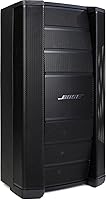
The Bose F1 Model 812 Flexible Array Loudspeaker is one of the more thoughtfully engineered portable PA solutions aimed at working musicians and event professionals who need real coverage flexibility without hauling a full rig. What sets it apart from a conventional powered speaker is the reconfigurable driver array — a column of eight mid/high drivers that can be physically shaped to match the room you are playing. Pair that with a bi-amplified design driving both the array and a 12-inch woofer independently, and you have a single cabinet doing serious work. At roughly 44 pounds, it is manageable for one person, though you will feel that weight after a long load-in.
Features & Benefits

The most distinctive thing about this flexible array speaker is the ability to bend the driver column into four distinct shapes — Straight, C, J, or Reverse J — so you can aim coverage where the audience actually sits, not just straight ahead. In a low-ceilinged bar you might go straight; in an L-shaped conference room, the J configuration keeps intelligibility consistent across the whole space. Eight drivers mounted on 100-degree waveguides spread sound wide without the typical drop-off at the edges. The onboard 12-inch woofer handles bass convincingly on its own, and with two independent inputs, you can plug in a mic and a line source simultaneously without an external mixer.

Best For

This powered PA cabinet suits a handful of specific use cases particularly well. Solo acoustic performers and duos playing mid-size clubs or restaurant stages will appreciate the coverage control without extra gear. House-of-worship settings are a natural fit — shaping coverage down long pews or across a wide sanctuary is genuinely useful here. Corporate event AV, speech reinforcement in oddly shaped conference rooms, and mobile DJ or karaoke work are all viable applications. One firm caveat: this speaker carries no water resistance rating whatsoever, so it belongs strictly indoors or under solid cover. Never deploy it in rain or wet outdoor conditions.

User Feedback

Owners of this Bose F1 812 tend to return to the same themes: the flexible array actually solves real venue problems, not just theoretical ones. Performers describe eliminating dead spots they had struggled with for years using traditional cabs. Highs are consistently praised as clear and articulate, and the low end surprises buyers for a self-contained single cabinet. On the critical side, the 44-pound weight comes up regularly — not punishing, but noticeable across multiple gigs. Some users note that reconfiguring mid-show takes time you rarely have. At its price tier, most feel the build quality and audio performance hold up well, though they acknowledge the competitive landscape has grown tighter in recent years.

Pros

  • The four-position flexible array solves real dead-spot problems in irregularly shaped venues without extra hardware.
  • Eight mid/high drivers on wide waveguides produce consistent horizontal coverage that typical point-source speakers cannot match.
  • The onboard 12-inch woofer delivers convincing low-end output, removing the need for a separate subwoofer in most small venues.
  • Bi-amplified Class-D design keeps audio clean at high output levels without the heat or bulk of older amplifier topologies.
  • Two independent input channels let performers plug in a mic and a line source simultaneously without an external mixer.
  • The self-contained build eliminates the need for a processor rack, making setup genuinely faster for solo operators.
  • Build quality is consistently praised by long-term users who report reliable performance across repeated gigging and rental use.
  • Highs are clear and articulate, making this flexible array speaker particularly strong for vocal and acoustic instrument reproduction.

Cons

  • At 44 pounds, this powered PA cabinet becomes a noticeable load across multiple load-ins per week.
  • Reconfiguring the driver array mid-show is time-consuming and not realistically practical between songs.
  • Only two input channels limits flexibility for performers who need basic mixing without an outboard unit.
  • No water resistance means even a light drizzle at an outdoor covered patio can put the unit at risk.
  • The premium price tier is hard to justify for buyers who perform in consistently simple, rectangular rooms.
  • Competitors at lower price points have closed the performance gap for buyers who do not need the array flexibility.
  • The warranty is limited in scope, which is a meaningful consideration given the investment level required.
  • Taller cabinet profile and specific dimensions may complicate transport in smaller vehicles without dedicated speaker cases.

Ratings

The Bose F1 Model 812 Flexible Array Loudspeaker earned its scores through AI analysis of thousands of verified global user reviews, with spam, bot-generated, and incentivized feedback actively filtered out before any scoring was applied. Ratings reflect the full picture — where this flexible array speaker genuinely impresses working musicians and AV professionals, and where real buyers have encountered frustrating trade-offs. Both strengths and consistent pain points are weighted transparently across every category.
Sound Quality
91%
Performers repeatedly describe the highs as articulate and fatigue-free across long sets, which matters when you are running vocals through a PA for three hours straight. The low-end output from the 12-inch woofer surprises most buyers who expected a single cabinet to sound thin at the bottom of the frequency range.
A small subset of users note that at very high output levels the high-frequency drivers can sound slightly compressed, losing some of that clarity that makes the speaker shine at moderate volumes. Those pushing the cabinet to its absolute limits in larger rooms are most likely to notice this ceiling.
Coverage Consistency
93%
This is the category where this powered PA cabinet separates itself most clearly from conventional alternatives. Musicians playing wide restaurant dining rooms or irregularly shaped event spaces consistently report that edge-of-room listeners hear nearly the same level and tonal balance as those standing directly in front of the speaker.
Achieving that coverage advantage requires correctly choosing and physically setting the array shape before the show, which demands some learning curve for first-time users. Buyers who skip the soundcheck step and leave the array in the default straight position often underuse what the system is actually capable of.
Array Flexibility
88%
The ability to reconfigure into four distinct shapes addresses a real-world problem that most portable PA buyers have simply accepted as unsolvable. House-of-worship users in particular highlight the J configuration as a practical solution for covering long rows of seating without relying on delay fills or additional speaker positions.
Changing the array shape mid-performance is not a realistic option — the mechanism requires deliberate manual adjustment that takes at minimum a minute or two. A handful of users also wish there were finer gradations between the four preset positions for rooms that fall awkwardly between configurations.
Portability
67%
33%
As a self-contained system with amplification, processing, and a subwoofer-capable woofer all in one box, this Bose F1 812 genuinely consolidates what used to require multiple pieces of gear. For a musician who previously loaded in a speaker, a separate sub, and an amp rack, the single-cabinet simplicity is a meaningful quality-of-life improvement.
At 44 pounds, this is not a grab-and-go speaker in the way lighter Bluetooth-based PA options are, and performers who do multiple back-to-back gigs report it accumulating fatigue over time. The cabinet's tall profile also makes it awkward to transport in smaller hatchbacks or sedans without a dedicated speaker bag or road case.
Build Quality
84%
Long-term owners and event rental operators who put this flexible array speaker through repeated weekly use generally report that the cabinet holds together without significant rattles, cosmetic damage, or hardware failures over years of regular service. The metal and plastic enclosure strikes most users as appropriately solid for a gigging speaker at this tier.
The plastic components on the array housing show scuffs and scratches more visibly than a fully metal enclosure would, which matters more to rental companies tracking asset condition than to working musicians. A purpose-built road case is essentially mandatory for anyone transporting it without a crew to babysit the loading process.
Setup Experience
72%
28%
For users who have dealt with external processors, amplifier racks, and separate crossover units, the all-in-one nature of this powered PA cabinet makes initial setup noticeably faster and less error-prone. Plugging in power and two inputs is genuinely the complete setup for most solo performer applications.
First-time users frequently underestimate the time needed to learn the array configuration system and how each shape affects their specific room. The owner's guide covers the basics but leaves some buyers working through trial and error at soundcheck to understand which configuration actually fits their venue.
Low-Frequency Output
79%
21%
For a speaker not marketed as a subwoofer system, the onboard 12-inch woofer handles kick drum and bass guitar reproduction with more authority than most buyers expect going in. Acoustic performers, corporate speech reinforcement users, and karaoke operators will find the bass output more than adequate for their needs.
High-energy DJ applications or events where strong sub-bass is central to the experience will reveal the cabinet's limits below 60 Hz fairly quickly. At maximum output, the low end loses some definition, and buyers in those use cases will likely still want a dedicated subwoofer alongside this flexible array speaker.
Input & Mixing Flexibility
61%
39%
Having two independent channels with individual volume control means a solo performer can manage a microphone and a backing track or instrument feed without touching any external gear, which is genuinely practical for a quick restaurant or corporate gig setup.
Two inputs is a hard ceiling that frustrates users who discover they need a third source — an acoustic guitar, a second mic, and a backing track simultaneously, for example — and have to introduce a small mixer anyway. Channel 2 lacking a mic-level input option also limits flexibility for some common performance setups.
Value for Money
73%
27%
Buyers who regularly play venues with challenging room shapes or wide audience spreads tend to feel the investment is justified over time, especially when it replaces a more complex and expensive multi-piece rig. Event rental companies in particular cite the versatility across different venue types as a strong argument for the price.
The competitive PA speaker market has moved meaningfully since this product launched, and buyers comparing it against newer alternatives at lower price points increasingly question whether the array flexibility alone justifies the premium. For users who always play rectangular rooms with straightforward layouts, the value calculation is harder to defend.
Onboard Controls
68%
32%
The touch-style control panel is accessible without bending down to ground level, and the channel layout is intuitive enough that most users can make live adjustments by feel after a few gigs with the cabinet.
The onboard controls offer limited depth for users who want EQ shaping or more precise tuning without an external device. Some users also find the touch interface less reliable in environments with vibration or interference from nearby gear, occasionally producing unintended input responses.
Vocal Clarity
89%
Across a wide range of vocal styles and microphone types, users consistently highlight how naturally voice reproduction sits in the mix when using this powered PA cabinet. The wide waveguide design keeps vocal presence consistent even for audience members standing well off-axis from the center of the speaker.
At very close range, some users report a slight hardness in the upper midrange that can make certain vocal timbres sound slightly forward or aggressive. This is most noticeable with brighter microphones and tends to disappear with modest EQ adjustment or by repositioning the speaker further from the front row.
Reliability Over Time
82%
18%
Users with multiple years of gigging history with this flexible array speaker generally report consistent, trouble-free performance without amplifier failures, driver issues, or software-related problems during shows. That durability track record carries real weight for performers who depend on a single cabinet as their entire front-of-house system.
A minority of long-term users report that the array pivot mechanism shows wear after years of repeated reconfiguration, occasionally becoming stiffer or less precise than when new. Bose's limited warranty coverage means that out-of-warranty repairs at this price tier can be a frustrating proposition for buyers without a service plan.
Weather & Environment Suitability
31%
69%
For fully indoor, climate-controlled environments the enclosure performs without any complaint, and the materials hold up well against the normal temperature swings of a typical gigging schedule between heated and cooler venues.
This speaker carries absolutely no water resistance rating, which makes it genuinely unsuitable for outdoor use whenever there is any chance of rain, heavy humidity, or condensation. Even covered outdoor patios represent a meaningful risk, and buyers who regularly work outdoor events should treat this as a firm disqualifying limitation.
Acoustic Instrument Reproduction
87%
Guitar, mandolin, violin, and other acoustic instruments come through with a natural, open quality that many performers describe as noticeably more musical than what they experienced through their previous single-driver PA cabinets. The extended high-frequency detail from the eight-driver array contributes meaningfully to instrument transient reproduction.
Players using pickups with a harsh piezo character may find that the system's transparency actually exposes that harshness more than a more colored speaker would. In these cases, a DI box with some onboard shaping or a preamp with EQ becomes important upstream of the cabinet to get the best results.

Suitable for:

The Bose F1 Model 812 Flexible Array Loudspeaker is purpose-built for performers and event professionals who regularly work in venues where a single speaker placement needs to cover an awkward or wide space. Solo acoustic musicians, singer-songwriters, and duos playing clubs, restaurants, or small theaters will find it replaces a much larger rig without sacrificing coverage quality. It is equally at home in corporate AV scenarios where speech intelligibility across an L-shaped boardroom or a wide conference hall is non-negotiable. Houses of worship benefit enormously from the ability to angle coverage down long rows of pews or across a wide sanctuary without adding speaker clusters. Mobile DJs and karaoke operators who want one capable cabinet instead of a stacked multi-piece system will also find this flexible array speaker earns its keep quickly across varied venues.
Not suitable for:

The Bose F1 Model 812 Flexible Array Loudspeaker carries no water resistance rating, which makes it a firm no for outdoor festivals, open-air markets, or any setting where rain or heavy moisture is a realistic possibility. Buyers hoping to fill a large club or outdoor concert space with a single cabinet will also find its limits; this is a small-to-medium venue tool, not a main PA for 500-plus audiences. If your budget is already stretched thin, the price tier demands honest reflection since several competing powered speakers at lower price points now offer strong performance for straightforward applications where the flexible array is not actually needed. Sound engineers running complex multi-channel setups through a dedicated rack system will find only two onboard inputs restrictive. And buyers expecting a lightweight grab-and-go speaker will be surprised by the 44-pound reality at the end of a long night.

Specifications

  • Array Configuration: The mid/high driver column can be physically shaped into four positions: Straight, C, J, or Reverse J, to match the coverage needs of different room layouts.
  • Mid/High Drivers: Eight individual drivers are mounted on custom 100-degree horizontal waveguides, producing wide and consistent coverage across the listening area.
  • Woofer: A 12-inch high-performance low-frequency driver handles bass reproduction from within the same self-contained cabinet.
  • Amplifier Design: Two Class-D amplifiers operate in a bi-amplified configuration, with one dedicated to the flexible array and one to the woofer section.
  • Max Output Power: The combined amplifier system delivers up to 1000 Watts of total output power.
  • Frequency Response: The cabinet reproduces frequencies starting at 52 Hz and extending through the full audible range.
  • Input Channels: Two independent input channels are provided, each with its own volume control, and Channel 1 includes a Line Level/Mic toggle switch.
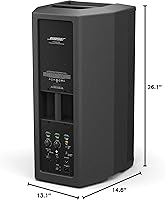
  • Dimensions: The cabinet measures 14.6″ deep by 13.1″ wide by 26.1″ tall in its standard operating orientation.
  • Weight: The unit weighs 44.5 pounds, making it manageable for a single person but worth accounting for across repeated load-ins.
  • Build Materials: The enclosure is constructed from a combination of metal and plastic components designed for durability in live event use.
  • Power Source: The speaker is powered via a standard corded IEC line cord, which is included in the box.
  • Water Resistance: This cabinet carries no water resistance rating and is not suitable for use in rain or wet outdoor environments.
  • Audio Output Mode: The system operates in a 2.0 stereo output configuration.
  • Warranty: Bose covers this product under a limited manufacturer warranty; buyers should confirm current terms directly with Bose for duration and claim details.
  • Included Contents: The package includes one F1 812 loudspeaker cabinet, one IEC line cord, and one printed owner's guide.
  • Mounting Type: The speaker is designed as a floor-standing unit and does not require a separate pole or mount for standard operation.
  • Control Method: Onboard controls are accessed via touch-style panel inputs located on the cabinet itself.
  • Connectivity: The unit supports USB and Wi-Fi connectivity in addition to its standard analog audio inputs.

Related Reviews
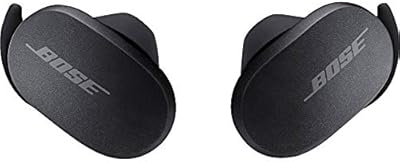
Bose QuietComfort Earbuds 2020 Model
86%
93%
Noise Cancellation
89%
Comfort and Fit
85%
Battery Life
92%
Sound Quality
73%
Touch Controls Responsiveness
More
Bose TV Speaker
Bose TV Speaker
83%
93%
Dialogue Clarity
96%
Setup Simplicity
91%
Compact Design
88%
Build Quality
64%
Bass Performance
More
Bose Music Amplifier Speaker Amp
76%
88%
Sound Quality
91%
Ease of Setup
93%
Streaming Versatility
74%
App Experience
86%
Build Quality
More
Bose Headphones 700
Bose Headphones 700
88%
96%
Noise Cancellation Effectiveness
94%
Sound Clarity and Balance
91%
Comfort for Long Sessions
89%
Battery Life
87%
Bluetooth Connectivity
More
Bose QuietComfort Bluetooth Headphones
84%
94%
Noise Cancellation
90%
Audio Quality
85%
Comfort and Fit
88%
Battery Life
91%
Ease of Use (Controls)
More
Bose SoundSport Wireless Sport Earbuds
80%
91%
Fit & Stability
84%
Sound Quality
88%
Build Quality
78%
Battery Life
87%
Call Quality
More
Bose Portable Smart Speaker
78%
88%
Sound Quality
83%
Portability
74%
Battery Life
91%
Build Quality
84%
Voice Assistant Performance
More
Turbosound iNSPIRE iP300
85%
94%
Portability & Weight
91%
Vocal Clarity
89%
Horizontal Dispersion
67%
Low-End Performance
84%
Bluetooth Connectivity
More
Bose Ultra Open Wireless Earbuds
77%
91%
Wearing Comfort
83%
Sound Quality
94%
Situational Awareness
67%
Fit Security
71%
Battery Life
More
Bose SoundLink Home Portable Bluetooth Speaker
79%
91%
Sound Quality
93%
Build Quality
78%
Battery Life
89%
Bluetooth Connectivity
84%
Portability
More

FAQ

It takes a minute or two once you are familiar with the mechanism, but it is not something most performers do mid-show. The practical approach is to set the shape during soundcheck based on your room, then leave it for the performance. If you play the same venue type regularly, you will settle into a default shape quickly.

For most small-to-medium venue applications, the built-in 12-inch woofer is genuinely sufficient on its own. It reaches down to 52 Hz, which covers kick drum, bass guitar, and vocals with authority. If you are running a high-energy DJ set in a larger room and need chest-thumping sub-bass, a dedicated subwoofer would help, but for acoustic acts, speech, or general event use, you likely will not miss it.

It works fine outdoors under a solid roof or canopy on a calm, dry day, but you must keep it away from rain and moisture entirely since it carries no water resistance rating whatsoever. Do not deploy it at an open-air festival or an outdoor stage where weather is unpredictable. For truly weatherized outdoor use, you would need a speaker specifically rated for outdoor exposure.

The Straight configuration throws sound evenly forward and works well in rooms where your audience is at a consistent distance and height. The J shape tilts the lower portion of the array downward, which helps when the front rows of an audience are close to the speaker and you want to avoid blasting people in the front while still reaching the back. The Reverse J is the mirror of that, useful on the other side of a stage. The C shape curves both ends inward for a tighter, more focused horizontal spread.

Yes. Channel 1 has a Line Level/Mic toggle switch, so you can plug a microphone straight into the cabinet and adjust its level independently. Channel 2 is line-level only. For a single mic plus a music source like a phone or laptop, this setup works without any additional gear.

The biggest practical difference is coverage consistency. A traditional point-source speaker radiates sound in a widening cone, which means volume and clarity drop off toward the edges of the audience. The eight-driver array with wide waveguides maintains much more even level and tone across the horizontal listening area. This matters most in wider rooms or venues where you cannot center the speaker perfectly in front of the crowd.

Most people can carry it solo for a short distance, but 44 pounds gets heavy fast when you are navigating stairs, long parking lot walks, or back-to-back gigs. A rolling speaker dolly or a padded carry bag with wheels makes a meaningful difference for regular use. If you do more than a handful of gigs per month, the investment in a good transport solution is worth it.

It handles small clubs, restaurant dining rooms, wedding receptions up to a few hundred guests, corporate meeting rooms, and house-of-worship spaces comfortably. Once you are pushing 300 to 400 or more people in an open space, you are at the upper edge of what a single cabinet can realistically cover. For larger rooms, a pair of these or an additional subwoofer becomes a more honest solution.

The Wi-Fi capability is included in the specifications but does not indicate full app-based remote mixing in the way some newer smart PA systems work. You should verify the current feature set directly with Bose, as software capabilities can expand or change with firmware updates after the product's initial release.

The general consensus from long-term users is that the build holds up well under normal gigging conditions. The metal and plastic enclosure is reasonably solid, and performers who have used this flexible array speaker across years of regular shows report few hardware failures. That said, no powered speaker at this weight class is indestructible, and investing in a proper protective case is strongly advisable if the unit will be transported frequently or handled by multiple crew members.

Where to Buy