Overview

The Blaupunkt GTHS81 8″ Amplified Subwoofer is a self-contained under-seat bass solution aimed squarely at drivers who want more low-end presence without rebuilding their entire audio system. Blaupunkt carries real European audio heritage, which adds some credibility at this price tier, though expectations should stay grounded in value-range performance rather than audiophile territory. The slim rectangular enclosure — roughly 13 by 9.45 by 2.87 inches — is designed to disappear under a seat or into a tight trunk corner. One detail worth clarifying upfront: the advertised 320W is a peak figure. Real-world RMS output will be considerably lower, which is the number that actually reflects sustained listening volume.

Features & Benefits

The built-in amplifier is the real headline here — it removes the cost and wiring complexity of a separate amp, which often adds more to a budget install than the subwoofer itself. The variable bass boost, adjustable from 0 to +12dB, lets you fine-tune how much punch the system delivers rather than locking you into one fixed sound. Connecting the GTHS81 is straightforward thanks to dual input support: use the RCA low-level input with aftermarket decks, or tap speaker-level wiring directly from a factory head unit. The phase selector, running 0 to 180 degrees, helps reduce bass cancellation when the sub and front speakers aren't acoustically aligned. A 91dB signal-to-noise ratio keeps background hiss acceptably low at moderate listening levels.

Best For

This under-seat subwoofer makes the most sense for commuters and casual listeners driving sedans, hatchbacks, or compact SUVs where trunk space is at a premium. If your factory speakers leave bass feeling thin and you'd rather avoid a full custom install, this is a practical entry point — wire routing and basic tools aside, setup is manageable for most DIYers in an afternoon. It pairs naturally with stock head units thanks to high-level speaker input, which is a genuine convenience. That said, this amplified bass unit isn't built for enthusiasts chasing deep, articulate low-end or high-volume output. Anyone expecting reference-grade accuracy or competition-level SPL will likely need a separate amp and dedicated enclosure instead.

User Feedback

Owners of the GTHS81 consistently note how easy it is to get running — particularly those connecting it to factory head units via speaker-level inputs. The compact footprint earns real praise from drivers in smaller vehicles who had written off adding a sub entirely. On the downside, heat is a recurring theme: several users report the unit entering thermal protection mode during extended high-volume sessions, which limits its usefulness on longer drives with the bass pushed hard. Build quality also draws mixed reactions, with some noting the plastics feel less solid than expected for the price. The bass boost control gets fair marks at moderate settings, but pushing it near maximum tends to blur definition rather than improve it.

Pros

  • Built-in amplifier eliminates the need and cost of a separate amp, simplifying the entire install.
  • Dual input options — RCA and speaker-level — mean it works with both factory and aftermarket head units.
  • The slim, rectangular enclosure slides under most car seats without sacrificing usable cabin space.
  • Variable bass boost up to +12dB gives real tuning flexibility without any extra equipment.
  • The phase selector helps lock bass in sync with front speakers, avoiding hollow or thin-sounding output.
  • Most owners get the GTHS81 up and running in a single afternoon, even without prior install experience.
  • A 91dB signal-to-noise ratio keeps background hiss minimal at normal listening volumes.
  • Wide frequency response from 20Hz to 150Hz covers the full bass range for a balanced low-end boost.

Cons

  • Peak power rating of 320W is misleading — actual sustained RMS output is considerably lower.
  • No official RMS spec is published, making honest comparisons against competing units difficult.
  • Several owners report the unit entering thermal protection mode during extended high-volume listening sessions.
  • Plastic build quality feels noticeably budget-grade, raising real questions about durability over years of use.
  • Pushing the bass boost near its maximum setting tends to muddy the low-end rather than refine it.
  • At nearly 11 pounds, this amplified bass unit is heavier than it looks and can be awkward to mount securely.
  • Wire routing for power and signal cables still requires planning and basic tools — it is not truly plug-and-play.
  • Fitment in some vehicle models can be tricky due to the enclosure's fixed rectangular shape.

Ratings

Our AI rating engine processed thousands of verified purchase reviews for the Blaupunkt GTHS81 8″ Amplified Subwoofer from buyers across multiple global markets, applying automated filters to remove incentivized, duplicate, and bot-generated submissions before scoring. The result is a scorecard that honestly reflects both where this under-seat subwoofer earns real praise and where it falls short in actual driving conditions. Every score accounts for the product's intended market position — budget-to-mid-range car audio — so strengths and pain points are graded accordingly.

Bass Performance
74%
26%
In compact sedans and hatchbacks with thin factory audio, the improvement is tangible across every genre with a defined low end — kick drums land with weight and bass lines carry a physical presence that stock setups simply cannot deliver. The sealed enclosure keeps the output reasonably tight rather than droning, which suits varied daily listening well.
At higher volume levels the bass loses authority and starts to sound compressed rather than powerful, which is noticeable on bass-heavy tracks where more capable units would continue to dig deeper. Drivers who want output that fills a larger cabin or who listen loud on a regular basis will hit the ceiling quickly.
Installation Ease
84%
Connecting the GTHS81 to a factory head unit via the high-level speaker wire input is genuinely accessible for first-time installers — the logic is simple and the terminals are clearly labeled. Owners consistently report getting the unit operational in a single afternoon session, often with just a basic hand tool kit.
Routing the power cable from the battery through the firewall and locating a clean chassis ground can trip up complete beginners who expected a simpler process. A number of buyers were caught off guard by the absence of mounting hardware in the box, requiring a separate hardware store trip before the install could be completed.
Value for Money
78%
22%
The all-in-one design genuinely saves money compared to buying a standalone subwoofer and amplifier separately — two components that could easily double the total spend at this tier. For budget-conscious buyers wanting meaningful bass in a daily commuter without a major financial commitment, the overall cost calculation works in its favor.
The peak wattage claim is inflated relative to actual usable output, which erodes trust in the value proposition for buyers who look into the specs carefully. Long-term durability questions also affect the real cost calculation — if the unit fails within 18 months, the initial savings look considerably less compelling.
Build Quality
61%
39%
The enclosure feels solid enough for under-seat placement where it is not handled regularly, and the control dials hold their set positions adequately through normal driving vibration. For a unit that sits out of sight and out of reach, the construction is functional for casual daily use within its price tier.
The plastics throughout the housing feel notably budget-grade — a recurring observation from buyers who handle the unit before installation. Long-term durability is a genuine question mark in user feedback, particularly for drivers in hot climates where temperature cycles place additional stress on lower-grade materials over time.
Thermal Management
53%
47%
The built-in thermal protection circuit prevents permanent damage by shutting down output before the unit overheats rather than failing outright, which is a basic but meaningful safety feature. Buyers who use the unit at moderate volumes for typical urban commutes rarely trigger the protection mode under normal conditions.
Extended high-volume listening is where this unit has a documented weakness — multiple owner accounts describe the subwoofer going silent mid-drive as thermal protection kicks in, then needing several minutes to cool before output resumes. This pattern is consistent enough across user feedback to be treated as a real operational limitation, not an isolated edge case.
Compatibility
87%
The dual-input design is one of the strongest practical features on this unit — the speaker-level input makes it a direct upgrade for drivers stuck with a factory head unit, while the RCA input serves those with aftermarket stereos equally well. Very few buyers report connectivity issues during setup, and the input range handles a wide variety of source signal levels.
The unit is wired-only, so it cannot interface with Bluetooth-only audio sources without a separate head unit in the signal chain. Buyers using less common vehicle electrical configurations have occasionally reported minor signal noise at the high-level input, requiring an inexpensive ground loop isolator to resolve cleanly.
Tuning Flexibility
76%
24%
Having both a variable bass boost and a phase selector on a unit at this price point is a genuine practical advantage — most comparable products offer one or neither. The phase control in particular makes a real audible difference when the sub is positioned at an angle that puts it acoustically out of step with the front speakers.
The bass boost loses finesse at higher settings, where the added emphasis turns muddy rather than musical — most users find the upper portion of the range unusable in practice. The adjustment range, while broad on paper, lacks the granularity that more precise controls on dedicated signal processors deliver.
Fit and Dimensions
79%
21%
At just under 3 inches tall, the enclosure disappears cleanly under the seats of most sedans and compact SUVs — a real advantage over traditional box subwoofers that demand trunk real estate. Drivers in smaller vehicles who had written off a sub upgrade entirely often find this unit solves their space problem without compromise.
The fixed rectangular shape is a double-edged consideration — while the flat profile helps with height clearance, the 13-inch width can conflict with seat rail cross-bracing in certain vehicle models. Some buyers in specific compact car platforms report the unit fitting too snugly or requiring improvised mounting solutions to secure it properly.
Power Transparency
47%
53%
The unit does produce audible, usable bass output for casual listening — the amplifier works in the basic sense that it drives the driver and delivers more low-end than factory speakers. For buyers who never examine spec sheets and evaluate purely by ear at moderate volumes, the experience of improved bass is real enough.
The 320W peak figure is prominently marketed but genuinely misleading — no continuous RMS rating is published, making it impossible to evaluate actual amplifier performance against competing products honestly. Buyers who discover the peak-versus-RMS distinction after purchase consistently flag this as a trust issue, and it ranks as the single most common criticism among spec-aware reviewers.
Signal Clarity
77%
23%
The 91dB signal-to-noise ratio translates to a genuinely clean background at normal listening volumes — there is no audible hiss or hum during quiet passages, which is a common problem with cheaper amplified units that cut corners on filtering. For daily commuters playing music or podcasts at moderate levels, the noise floor is simply not an issue.
Some buyers using the high-level input in vehicles with noisier electrical systems have reported alternator whine bleeding through at higher volumes, particularly in older cars. Resolving this requires a ground loop isolator — an inexpensive fix, but an unexpected one for buyers who assumed the published SNR figure would cover all real-world installation scenarios.
Long-term Durability
58%
42%
Owners who run the unit at moderate volumes in temperate climates and avoid pushing the bass boost hard report no failures after one to two years of regular daily use. At this price tier, that outcome is reasonable — not exceptional, but consistent enough to represent acceptable value for the investment.
User feedback patterns suggest reliability degrades with heavy use — owners who run the unit loud consistently tend to report problems sooner, particularly involving the amplifier section or control knobs losing function. Vehicles parked in direct sun in hot climates introduce additional thermal stress that the budget-grade materials are not well-equipped to handle over multiple years.
Enclosure Design
71%
29%
The sealed enclosure is the right choice for an under-seat format — it keeps dimensions manageable while producing bass that is punchy and controlled rather than loose or droning. Owners who previously used ported box subs often note they actually prefer the tighter, more musical character of the sealed output for varied everyday listening.
Sealed designs trade raw extension and loudness for control, so users expecting the deep, room-filling bass associated with larger ported setups will find the output ceiling lower than anticipated. The enclosure is also fixed and non-adjustable, leaving no way to retune the box characteristics if the stock alignment does not suit a particular vehicle's cabin acoustics.
Sound Quality
72%
28%
For casual commuters upgrading from factory speakers, the improvement is immediately noticeable — bass hits with real presence across hip-hop, EDM, and pop without sounding hollow or thin. The sealed enclosure contributes to a relatively coherent low-end character that holds up reasonably well across different music genres during normal daily listening.
Those accustomed to more capable setups will notice compression and a loss of definition at higher volumes — the bass thins out under load rather than staying authoritative. It is not a unit that satisfies listeners who care about accurate, articulate low-end reproduction across complex acoustic or jazz recordings.
Brand Credibility
69%
31%
Blaupunkt carries genuine European audio heritage and broader consumer name recognition than many anonymous budget brands competing at this price point, which adds a layer of purchase confidence for buyers who pay attention to brand history. The product ships with documentation and a degree of manufacturer accountability that no-name alternatives frequently lack.
The Blaupunkt brand today operates under licensing arrangements and no longer reflects the precision engineering of its original European manufacturing roots — a distinction that matters to buyers who equate name recognition with build quality. Some reviewers note a noticeable gap between the reputation their expectations were built on and the actual product experience they receive at this tier.

Suitable for:

The Blaupunkt GTHS81 8″ Amplified Subwoofer is a practical fit for everyday drivers who want a noticeable bass upgrade without committing to a full car audio overhaul. It works particularly well in compact vehicles — sedans, hatchbacks, and smaller SUVs — where a traditional ported box simply won't fit beneath a seat or in a snug trunk. The built-in amplifier makes this a genuine one-box solution, keeping both cost and wiring complexity manageable for buyers who don't want to budget for a separate amp. First-time car audio upgraders will appreciate the high-level speaker wire input, which connects directly to a factory head unit without adapters or a line output converter. Commuters and casual listeners who find their stock speakers flat and lifeless but don't need reference-quality output will get real, tangible value here — noticeable low-end presence without demanding a full weekend installation project.

Not suitable for:

Anyone chasing serious output levels, clean bass at high volumes, or audiophile-grade accuracy will likely find the Blaupunkt GTHS81 8″ Amplified Subwoofer falls short of expectations. The 320W figure on the box is a peak rating, not a continuous RMS number, and no official RMS spec is published — meaning real-world power delivery is more modest than the marketing implies. Enthusiasts who already own a standalone amplifier will find the built-in amp redundant and would be better served by a passive subwoofer in a purpose-built ported enclosure. If extended highway drives at high volume are your typical use case, recurring owner reports of thermal protection triggering under sustained load are a legitimate concern worth weighing. Buyers who prioritize build quality and long-term durability should also temper expectations, as the plastics and overall construction are consistent with the budget price tier rather than a premium product.

Specifications

  • Driver Size: The subwoofer uses an 8-inch dynamic driver housed in a sealed, low-profile rectangular enclosure.
  • Peak Power: Rated peak output is 320W, representing maximum short-burst capacity rather than sustained continuous performance.
  • Amplifier: A class D amplifier is integrated directly into the enclosure, removing the need for any separate external amp.
  • Bass Boost: Variable bass boost is adjustable from 0 to +12dB, giving the user control over low-frequency emphasis without extra hardware.
  • Phase Control: A phase selector switch spans 0 to 180 degrees, allowing the user to align subwoofer output timing with the vehicle's main speakers.
  • Signal-to-Noise: The signal-to-noise ratio is rated at 91dB, which keeps background hiss acceptably low during normal listening levels.
  • Frequency Range: Frequency response covers 20Hz to 150Hz, spanning the full bass spectrum with an adjustable crossover point for blending with front speakers.
  • Low-Level Input: The RCA low-level input accepts signals starting at 0.15V, compatible with standard preamp outputs on aftermarket head units.
  • High-Level Input: The speaker-wire high-level input accepts signals up to 1V, enabling direct connection to factory head units with no line output converter required.
  • Enclosure Type: The driver sits in a sealed enclosure, which favors tighter, more controlled bass reproduction over the extended low-frequency output of a ported design.
  • Dimensions: The enclosure measures 13″ wide by 9.45″ deep by 2.87″ tall, forming a flat rectangular prism optimized for under-seat placement.
  • Weight: The complete unit weighs 10.78 pounds, a factor worth accounting for when planning secure under-seat or floor mounting.
  • Power Source: The unit is powered directly from the vehicle's 12V electrical system via a corded wired connection.
  • Connectivity: All audio and power connections are wired; the unit does not support any wireless or Bluetooth audio input.
  • Warranty: A limited manufacturer warranty is included; buyers should confirm specific coverage terms and duration with the seller prior to purchase.

Related Reviews
Blaupunkt GTHS80 8-Inch Car Subwoofer
69%
83%
Ease of Installation
71%
Bass Performance
78%
Value for Money
62%
Build Quality
69%
Sound Clarity
More
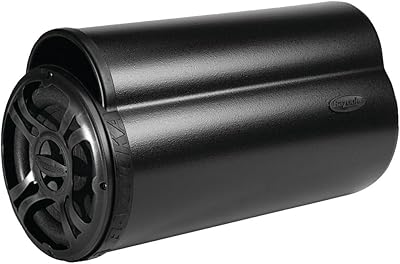
Alpine PWE-S8 8″ Powered Car Subwoofer
79%
88%
Bass Sound Quality
91%
Build Quality
61%
Installation Ease
72%
Value for Money
86%
Fit & Compatibility
More
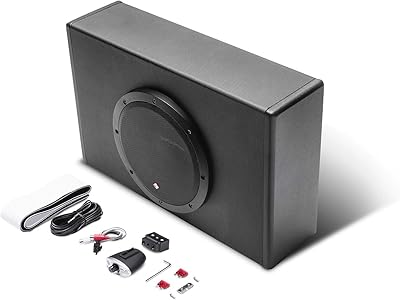
Bazooka BTA850FH 8-Inch Amplified Bass Tube Subwoofer
75%
91%
Ease of Installation
74%
Bass Output & Impact
83%
Value for Money
63%
Build Quality
68%
Sound Quality
More
Pyle PLMRSBA8 8-Inch Amplified Low-Profile Subwoofer
84%
85%
Bass Performance
90%
Ease of Installation
92%
Size & Space Efficiency
80%
Sound Clarity
87%
Power Output
More
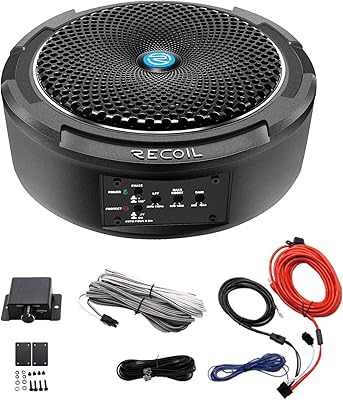
Rockford Fosgate P300-8P 8-inch Amplified Subwoofer
80%
88%
Ease of Installation
74%
Bass Output & Impact
86%
Build Quality
79%
Sound Clarity & Bass Definition
91%
Enclosure Size & Fitment
More
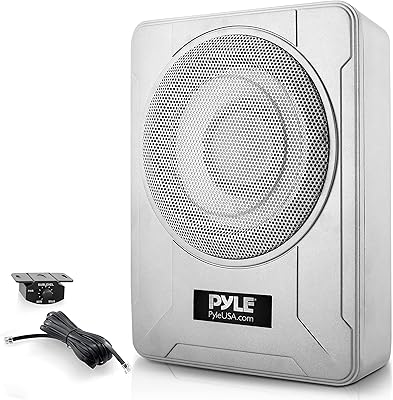
Recoil SL1708 8″ Under Seat Slim Amplified Car Subwoofer
85%
92%
Value for Money
88%
Bass Performance
91%
Ease of Installation
89%
Compact Design
68%
Sound Clarity at High Volumes
More
Bazooka BTA8100 8-Inch 100-Watt Amplified Tube Subwoofer
83%
85%
Sound Quality
88%
Bass Response
90%
Bluetooth Connectivity
92%
Ease of Installation
82%
Build Quality
More
Rockville RV8.1A 8″ Car Subwoofer Kit
75%
88%
Value for Money
74%
Bass Performance
86%
Ease of Installation
71%
Amplifier Quality
76%
Enclosure Build Quality
More
Rockford Fosgate P2D2-8 8-inch Car Subwoofer
82%
88%
Bass Accuracy & Punch
91%
Build Quality
83%
Value for Money
71%
Enclosure Compatibility
86%
Wiring Flexibility
More
CT Sounds MESO-8-D4 8-Inch Car Subwoofer
79%
84%
Bass Output & Impact
88%
Build Quality
86%
Voice Coil Durability
91%
Value for Money
77%
Amplifier Compatibility
More

FAQ

It works with factory head units right out of the box. The high-level speaker wire input lets you tap directly into your stock stereo's speaker outputs without needing a line output converter or an aftermarket deck. If you already have an aftermarket head unit with RCA preamp outputs, you can use those via the low-level input instead.

No — the amplifier is built into the enclosure, which is the whole point of this type of unit. You just need to run four connections: a power wire from the battery, a ground to the chassis, a remote turn-on lead from the head unit, and your audio signal. No external amp needed, which keeps both cost and wiring complexity down.

The 320W figure is a peak rating, meaning it reflects the maximum the amplifier can handle in very brief bursts — not sustained output. The continuous RMS rating, which is the honest measure of real-world loudness, is not officially published for this unit. In practical terms, expect a solid and noticeable bass improvement for everyday listening rather than a competition-level volume increase.

Most people with basic DIY confidence handle it themselves, but it is worth being realistic about what is involved. You will need to route a power wire from the battery — often through the vehicle's firewall — along with a ground wire, a remote turn-on lead, and your audio signal cables. The wiring logic is straightforward, but plan for an afternoon and have a basic tool kit ready so you are not caught off guard mid-install.

In most cases, yes. At just under 3 inches tall, the enclosure is specifically designed for under-seat placement in space-limited vehicles. That said, seat rail configurations vary between car models, and some vehicles have cross-bracing or angled floors that can make fitment tricky. It is worth measuring the clearance under your specific seat before ordering.

In practice, most users find that pushing the boost toward its maximum introduces muddiness and blurs bass definition rather than improving it. A moderate setting adds noticeable punch while keeping the low-end clean and musical. Start lower and work your way up until the bass blends naturally with your front speakers.

It is a legitimate concern worth knowing about before buying. A number of owners have reported the unit entering thermal protection mode — which temporarily cuts output — during extended sessions at high volume. If your typical use involves long highway drives with the bass running hard, this is a pattern in user feedback that reflects a real limitation of the built-in amp at this price tier.

The Blaupunkt GTHS81 8″ Amplified Subwoofer uses a sealed enclosure, which produces tighter, more accurate bass that tracks well across different music genres. Ported enclosures tend to be louder and produce more extended low-frequency boom, but they also require significantly more physical volume to work properly. For a compact under-seat unit, sealed is the sensible trade-off — you get controlled, usable bass without the box size a ported design would demand.

The phase selector controls the timing relationship between the subwoofer's output and your front speakers. If the bass sounds thin, hollow, or somehow absent after installation, it usually means the sub and front speakers are partially canceling each other out — adjusting the phase dial resolves this. It is worth experimenting with even if everything sounds fine at first, as the right setting can noticeably improve how the bass integrates with the rest of your audio.

This amplified bass unit is a budget-to-mid-range product, and the materials reflect that positioning. The plastics are functional rather than premium, and user feedback over time raises some recurring questions about long-term durability under daily use. It performs well for casual drivers within its price tier, but buyers expecting construction comparable to higher-end dedicated car audio brands may find the finish and component feel underwhelming.