Overview

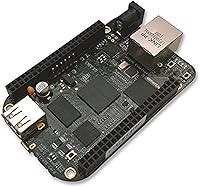
The BeagleBone Black Rev C is the most polished iteration of Beagleboard.org's community-driven single-board computer, and it shows. Powered by Texas Instruments' AM335x Cortex-A8 running at 1GHz, it handles real-time processing tasks that would overwhelm lighter hardware. What separates this revision from earlier models is the jump to 4GB onboard eMMC storage paired with 512MB DDR3 RAM — a meaningful upgrade that makes the board genuinely deployable rather than just prototypable. Debian Linux comes pre-loaded, so you're not spending your first hour fighting OS setup. In the SBC world, this open-source SBC occupies a distinct niche: less a media box, more a serious embedded computing platform.
Features & Benefits

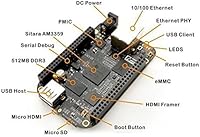
At the core of this single-board computer sits the AM335x SoC, which handles real-time I/O natively — no extra microcontroller bolted on the side. The 92-pin expansion headers are the real draw for hardware developers: you get GPIO, SPI, I2C, UART, PWM, and ADC access across two 46-pin banks, giving you hardware reach you'd normally associate with a dedicated microcontroller, but running a full Linux stack. Booting from onboard eMMC rather than an SD card eliminates a common failure point in long-running deployments. A micro-HDMI port covers display output, and community-maintained images for Ubuntu and other distros are readily available beyond the stock Debian install.

Best For

This open-source SBC is built for developers who live at the intersection of Linux and hardware — not beginners looking for a Python script to blink an LED. It's a natural fit for embedded Linux prototyping where predictable real-time behavior matters, particularly in industrial or automation contexts. The eMMC-based boot makes it viable for deployed IoT edge nodes where SD cards would eventually fail under sustained write cycles. University courses and hardware curriculum projects benefit from the board's open design and thorough community documentation. If your work involves kernel-level programming, writing device drivers, or tight hardware timing, the BeagleBone Black earns its bench spot over boards that trade I/O depth for media playback polish.

User Feedback

Owners of this single-board computer consistently highlight build quality and the stability gains from moving to eMMC — a tangible improvement over the card-slot frustrations of earlier revisions. The real-time GPIO performance draws favorable comparisons to the Raspberry Pi from reviewers who've used both; for hardware-timing-sensitive work, many prefer this board's predictability. That said, the single USB host port is a recurring complaint — you'll need a hub the moment you plug in both a keyboard and a Wi-Fi dongle simultaneously. The micro-HDMI connector has also been flagged as feeling fragile under repeated cable swapping. Documentation is thorough but scattered across community sites, which takes some adjustment.

Pros

  • The BeagleBone Black Rev C boots from onboard eMMC, eliminating SD card failures in long-running deployed projects.
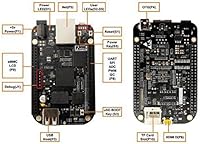
  • Ninety-two expansion pins give hardware developers access to GPIO, SPI, I2C, UART, PWM, and ADC on a single board.
  • The AM335x PRU subsystem enables deterministic real-time I/O that most general-purpose SBCs cannot match natively.
  • Debian Linux comes pre-installed, so you can SSH in and start working within minutes of first power-on.
  • Fully open hardware design means schematics and reference manuals are publicly available, not locked behind NDAs.
  • Build quality is consistently praised; this single-board computer feels engineered for deployment, not just prototyping.
  • Community images for Ubuntu and other distros give developers flexibility beyond the stock operating system.
  • The compact footprint and low weight make it practical to embed directly into enclosures or mobile project builds.
  • Long-term software support from Beagleboard.org gives industrial and educational users confidence in platform longevity.

Cons

  • Only one USB host port means a keyboard and Wi-Fi adapter together immediately exhaust native connectivity.
  • The micro-HDMI connector feels fragile and is poorly suited for environments where cables get swapped frequently.
  • Documentation is scattered across multiple community sites, wikis, and GitHub repos with no single authoritative source.
  • 4GB of onboard storage fills up quickly once development tools and project dependencies are installed.
  • Community activity and forum response times lag noticeably behind larger SBC ecosystems like Raspberry Pi.
  • Pin-multiplexing configuration requires device tree overlay work that is opaque and error-prone for newcomers.
  • Raw CPU performance is well behind current ARM Cortex-A53 or A72 competitors at comparable price points.
  • Non-stock OS images vary widely in driver support quality, making alternative distros a gamble for hardware features.
  • No onboard heatsink or passive cooling solution is included for use in thermally constrained enclosures.

Ratings

The BeagleBone Black Rev C earns its ratings here from an AI-driven analysis of verified buyer reviews collected globally, with spam, bot submissions, and incentivized feedback actively filtered out before scoring. The result is an honest picture of where this open-source SBC genuinely excels and where it asks for patience — both sides are reflected in every scorecard below.
Build Quality
88%
Reviewers consistently describe the board as feeling purposefully built rather than consumer-grade, with a PCB layout and component placement that inspires confidence in long-term deployments. The move to onboard eMMC in this revision eliminated the mechanical weak point of a protruding SD card, which developers working in enclosures or vibration-prone environments particularly appreciate.
The micro-HDMI port is the most cited hardware concern, with several owners noting it feels insufficiently reinforced for repeated cable insertion cycles. For a board likely to sit semi-permanently in a project enclosure, this is less critical, but in a lab or classroom setting where cables get swapped often, it becomes a real annoyance.
Real-Time I/O Performance
91%
This is where the BeagleBone Black genuinely separates itself from the Raspberry Pi crowd. The AM335x SoC includes dedicated Programmable Real-Time Units that handle low-latency hardware tasks without competing with the main OS, giving developers deterministic timing on GPIO operations that is difficult to replicate on general-purpose SBCs.
Unlocking the full real-time capability requires working with PRU firmware, which has a steep learning curve and sparse beginner-level documentation. Developers coming from Arduino-style environments often underestimate this complexity and hit frustration before getting predictable latency out of the hardware.
Onboard Storage Reliability
87%
The 4GB eMMC flash is one of the most practically impactful upgrades in the Rev C, allowing the board to boot and run entirely without an SD card. In deployed IoT nodes or industrial prototypes where a loose or worn SD card could mean an unrecoverable field failure, this change alone justifies choosing this revision over earlier ones.
4GB fills up faster than expected once you add development tools, libraries, and log files to a running Debian install. Users running data-heavy applications quickly find themselves managing storage carefully or offloading to USB storage, which then occupies the sole USB host port.
Expansion & GPIO Depth
93%
Ninety-two pins across two headers gives hardware developers an unusually rich interface surface for a board this size. GPIO, SPI, I2C, UART, PWM, and ADC are all accessible simultaneously, which means a single BeagleBone Black can often replace a microcontroller plus a Linux host in project architectures that would otherwise require two separate boards.
The sheer number of pins and the pin-multiplexing system that governs them can be confusing to configure correctly. Getting the device tree overlays right to expose specific interfaces requires reading through community documentation that, while thorough, is not consolidated in a single authoritative location.
Software Ecosystem
79%
21%
Debian comes pre-installed and is genuinely usable out of the box, and the broader community has produced a solid library of images, tutorials, and kernel patches over the years. For developers already familiar with Linux, getting a project running feels natural rather than fighting platform quirks.
The documentation is spread across BeagleBoard.org, GitHub repositories, older wiki pages, and third-party tutorials of varying quality and age. Newcomers routinely describe spending significant time reconciling conflicting instructions before finding a working configuration, which adds friction to early project phases.
Community Support
82%
18%
The Beagleboard.org forums have accumulated years of troubleshooting threads, project examples, and kernel-level discussion that represent genuine institutional knowledge. For less common use cases — custom device drivers, PRU programming, industrial interfaces — this archived expertise is hard to find for newer or less established platforms.
Community activity has visibly slowed compared to the Raspberry Pi ecosystem, and some forum threads that surface in searches are years old with solutions tied to deprecated software versions. Response times on new posts can be inconsistent, which is frustrating when you are blocked on a hardware-software integration issue.
Out-of-Box Experience
74%
26%
Plugging the board into USB delivers power and a network-over-USB connection without any additional setup, which is a genuinely well-thought-out first-boot experience. The pre-installed Debian image includes a browser-accessible IDE that lets intermediate users start scripting immediately.
For developers expecting the polished setup experience of a Raspberry Pi with its dedicated imager tool and extensive getting-started guides, the BeagleBone Black feels more demanding. The target audience is clearly assumed to have prior Linux experience, which means absolute beginners can feel stranded early on.
USB Connectivity
58%
42%
The USB client port serving double duty as a power input and virtual network interface is a clever design choice that reduces the need for additional cables during development. For headless projects that never need peripheral expansion, the single host port is rarely a problem.
One USB host port is a genuine constraint in any project requiring simultaneous peripherals — a Wi-Fi adapter and a keyboard together exhaust the board's native USB capacity immediately. A powered USB hub becomes a near-mandatory accessory for active development work, which adds cost and desk clutter.
Value for Money
77%
23%
The combination of onboard eMMC, full Linux capability, and deep hardware interfacing in a compact footprint offers strong value for developers who will actually use the GPIO depth. Compared to building an equivalent system from a cheaper board plus a separate microcontroller, the all-in-one architecture often wins on total project cost.
At its price point, the board competes with more polished alternatives that offer faster processors, more RAM, and better peripheral support. Buyers who primarily want a Linux media or development box and rarely touch the hardware pins may find the value proposition weaker than it looks on paper.
Documentation Quality
71%
29%
The technical depth available for this open-source SBC is impressive — schematics, reference manuals, and system reference documents are all publicly available and more detailed than what most proprietary embedded platforms offer. Serious hardware developers genuinely benefit from this transparency.
Quality and consistency vary significantly depending on which documentation source you land on. Official docs can lag behind current software releases, and community-written guides sometimes contradict each other or reference pin configurations that have changed across kernel versions, requiring cross-referencing to verify accuracy.
Form Factor & Portability
85%
The compact footprint — roughly credit-card sized at around 86 by 54mm — makes it practical to embed in enclosures, mount to robotics frames, or tuck into home automation panels without significant space allocation. At just over three ounces, it adds negligible weight to battery-powered mobile projects.
The two 46-pin headers, while valuable, dictate a certain minimum enclosure size once you account for connector clearance and cabling. Projects requiring many simultaneous header connections can result in a dense wiring harness that makes the small board footprint less of a practical advantage.
Operating System Flexibility
81%
19%
Beyond the stock Debian install, the community has maintained viable images for Ubuntu, Android, and several specialty distributions targeting robotics and real-time applications. This flexibility means the board can adapt to a project's software requirements rather than forcing a particular stack.
Non-Debian images vary significantly in maintenance status and driver support quality. Running a non-stock OS often means accepting trade-offs in hardware support, particularly for peripheral interfaces and PRU access, and community help for edge-case configurations on alternative distros is noticeably thinner.
Thermal Management
76%
24%
Under typical embedded workloads — running automation scripts, serving lightweight web applications, handling sensor data — the board stays cool without any active cooling. Its passive thermal performance is adequate for the majority of real-world deployment scenarios this hardware is designed for.
Under sustained CPU-intensive workloads, the AM335x does get warm, and there is no onboard heatsink or mounting provision for one out of the box. Users running computationally heavy continuous processes in poorly ventilated enclosures have noted thermal throttling, though this is not a common complaint for the typical use case.
Processor Capability
72%
28%
For the tasks this single-board computer is designed for — embedded control, IoT data aggregation, lightweight server workloads — the 1GHz Cortex-A8 is entirely capable and rarely becomes the bottleneck. Its real advantage is the PRU subsystem rather than raw clock speed.
Raw single-core performance is noticeably behind modern Raspberry Pi models and other ARM Cortex-A7 or A53-based competitors at similar price points. Developers who later need multimedia processing, computer vision, or heavier multithreaded workloads will hit the processor ceiling and face a board migration.

Suitable for:

The BeagleBone Black Rev C is built for developers and engineers who need a full Linux environment tightly coupled with real hardware control — not as separate systems, but as one. If your project involves writing device drivers, managing real-time sensor data, or building an IoT edge node that needs to run reliably for months without human intervention, this open-source SBC is designed exactly for that kind of work. The onboard eMMC makes it a serious choice for industrial prototyping and small-scale deployment where SD card failures would be unacceptable. Students and academics pursuing embedded Linux, ARM architecture, or kernel programming will find the open hardware design and publicly available schematics genuinely useful for learning at a deep level. Educators who want a platform with transparent internals and strong community-backed curriculum resources will also find it fits naturally into a hardware course. If you already know your way around Linux and want to go closer to the metal than a Raspberry Pi typically allows, this single-board computer rewards that investment of skill.
Not suitable for:

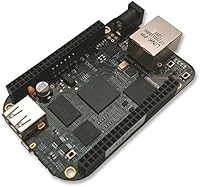
The BeagleBone Black Rev C is not the right starting point if you are new to Linux, embedded systems, or hardware programming and expecting a guided, hand-holding experience. Compared to the Raspberry Pi ecosystem, the setup documentation is fragmented, community activity is quieter, and the learning curve before your first working project is noticeably steeper. Anyone primarily interested in a media center, a desktop Linux box, or a platform for running compute-heavy applications like computer vision or machine learning should look elsewhere — the Cortex-A8 processor and 512MB of RAM will become a ceiling quickly in those scenarios. If your peripheral needs are complex and you are counting on USB ports, the single host port will be a daily frustration without a powered hub. Buyers who want a large, active beginner community with polished tutorials and a plug-and-play software store will likely find this open-source SBC feels more demanding than rewarding. It is also worth noting that for pure Python scripting or web projects where hardware pins are never touched, the board's core strengths simply go unused.

Specifications

  • Processor: Texas Instruments AM335x 1GHz ARM Cortex-A8 SoC with integrated Programmable Real-Time Units (PRUs) for deterministic hardware control.
  • RAM: 512MB DDR3 memory running at 1000MHz, shared between the operating system and user applications.
  • Storage: 4GB onboard eMMC flash storage allows the board to boot and operate entirely without an SD card.
  • Operating System: Debian Linux is pre-installed on the eMMC; community images for Ubuntu, Android, and other distributions are also available.
  • Expansion Headers: Two 46-pin headers provide 92 total expansion pins supporting GPIO, SPI, I2C, UART, PWM, and ADC interfaces simultaneously.
  • Video Output: One micro-HDMI port supports display output for projects requiring a connected monitor or screen.
  • USB Ports: One USB 2.0 Type-A host port for peripherals and one USB mini-B client port that also functions as the primary power input.
  • Connectivity: Bluetooth is listed as an available wireless interface on this board revision.
  • Power Input: The board is powered via the USB mini-B client port or an optional 5V DC barrel jack for more stable bench and deployment power.
  • Dimensions: The board measures approximately 3.54 x 2.15 inches (86 x 54mm), consistent with a compact credit-card-like form factor.
  • Weight: The board weighs 3.21 ounces (91g), making it light enough for mobile and embedded enclosure installations.
  • Processor Brand: The AM335x SoC is manufactured by Texas Instruments, a processor vendor with strong long-term embedded platform support.
  • Model Number: The official model identifier is BBONE-BLACK-4G, distributed by Element14 on behalf of Beagleboard.org.
  • Platform Type: This is a fully open-source hardware platform; schematics, reference manuals, and design files are publicly available.
  • Real-Time Units: The AM335x includes two 200MHz Programmable Real-Time Unit cores (PRUs) for low-latency, deterministic hardware interfacing tasks.
  • SD Card Slot: A microSD card slot is present and can be used to boot alternative OS images or expand available storage beyond the onboard eMMC.
  • Ethernet: One 10/100 Ethernet port is onboard, enabling wired network connectivity for headless SSH access and networked deployments.
  • Manufacturer: Designed and maintained by Beagleboard.org, a nonprofit open hardware organization, with manufacturing distributed through Element14.

Related Reviews

Stratia C+C Vitamin C Serum 15% – 1 Fl Oz
87%
89%
Effectiveness in Brightening
84%
Anti-Aging Performance
91%
Skin Sensitivity Compatibility
92%
Texture and Feel
94%
Absorption Rate
More
C.O. Bigelow Elixir Black Cologne Spray 2.5oz

87%
93%
Scent Quality
89%
Longevity
92%
Value for Money
87%
Suitability for Everyday Wear
85%
Versatility for Different Occasions
More
C.O. Bigelow Elixir Black Pepper No. 1586 Cologne 2.5oz
89%
94%
Scent Quality
89%
Longevity
91%
Fragrance Balance
88%
Packaging Appeal
85%
Value for Money
More
Symphonized NRG C USB-C Earphones
81%
90%
Sound Quality
85%
Build Quality
75%
Comfort & Fit
80%
Noise Isolation
92%
USB-C Connectivity
More
Teslong MS100-C USB-C Digital Microscope
85%
89%
Magnification Quality
91%
Ease of Use
84%
Build Quality
93%
Portability
88%
LED Lighting Performance
More
Obagi Professional-C Vitamin C Serum 1oz
85%
89%
Effectiveness in Brightening Skin
84%
Reduction of Fine Lines & Wrinkles
92%
Skin Sensitivity & Irritation
91%
Fast Absorption & Non-Greasy Texture
78%
Hydration & Moisture Retention
More
Prequel Skin Lucent-C Vitamin C Serum 1oz
85%
88%
Effectiveness for Skin Brightening
85%
Skin Texture Improvement
92%
Absorption Speed
83%
Firming and Toning
75%
Skin Sensitivity and Irritation
More
MILKTOUCH Black Peel Off Lip Tattoo - 05 Black Fig

88%
91%
Longevity & Staying Power
88%
Ease of Application
94%
Color Vibrancy & Pigmentation
85%
Comfort & Feel
93%
Waterproof & Transfer-Proof
More
Brown Sugar Black Chocolate 200X Black Bronzer Lotion
84%
89%
Tan Quality
85%
Hydration & Skin Feel
90%
Absorption Speed
60%
Scent Longevity
92%
Skin Sensitivity
More
Natura Bissé C+C Vitamin Body Cream 8.8oz
85%
88%
Hydration Effectiveness
85%
Firming Results
78%
Fragrance Longevity
91%
Absorption Speed
84%
Texture/Feel
More

FAQ

It depends entirely on what you are building. If you need real-time GPIO control with deterministic timing — think industrial sensors, robotics actuators, or tight hardware loops — the BeagleBone Black Rev C has a genuine architectural advantage through its built-in Programmable Real-Time Units, which the Raspberry Pi lacks. If you want a broader software ecosystem, more USB ports, faster raw processing, or a thriving beginner community, the Raspberry Pi is the more practical choice. They are not really competing for the same buyer.

Yes, and that is actually one of the strongest reasons to choose this revision over older ones. The 4GB eMMC is pre-loaded with Debian and boots automatically on power-up, no SD card required. You can still insert a microSD card to run a different OS image or add storage, but the board is fully self-contained without one.

Debian comes pre-installed and is the most stable and well-supported option. The community has also produced maintained images for Ubuntu, Android, and several specialty distributions aimed at robotics and real-time applications. Keep in mind that non-Debian images can vary in driver support quality, particularly for the hardware interfaces, so Debian is the safest starting point.

Honestly, not as a first board. The setup process and documentation assume a working familiarity with Linux, the command line, and at least a basic understanding of how hardware interfaces work. If you are just getting started, a Raspberry Pi with its polished getting-started guides will be far less frustrating. This open-source SBC rewards prior experience rather than building it.

The easiest method is USB. Plug the mini-B USB cable from the board to your computer and it will appear as a virtual network interface, letting you SSH in directly at 192.168.7.2 with no router involved. A browser-based IDE also loads at that address, which many users find convenient for initial scripting work.

For headless deployments where the board runs autonomously — an IoT node, a sensor gateway, an automation controller — one port is often completely sufficient. For active development where you want to plug in a keyboard, a Wi-Fi adapter, and perhaps a USB drive simultaneously, you will absolutely want a powered USB hub. It is a real limitation worth budgeting for.

For basic use, the USB mini-B cable connected to a computer or a standard 5V USB charger works fine and is how most people get started. For production deployments or projects where you are driving peripherals and capes, a dedicated 5V 2A DC barrel jack supply is more reliable and avoids voltage drops under load.

Yes, and the eMMC storage actually makes it better suited for continuous operation than SD card-based boards, which can develop read errors under sustained write cycles over time. Just make sure the enclosure has adequate passive airflow — under heavy continuous load, the processor does generate noticeable heat.

Capes are add-on boards that plug directly into the 46-pin expansion headers and extend the hardware with things like LCD displays, motor drivers, GPS modules, or additional I/O. They are entirely optional — the base board handles most embedded tasks on its own — but they can save significant wiring and prototyping time for specific project types.

Start at BeagleBoard.org, which hosts the official system reference manual, getting-started guides, and links to active community forums. GitHub repositories maintained by the Beagleboard community are also valuable for device tree overlays and PRU examples. Be aware that documentation is spread across multiple locations, and some older guides reference software configurations that have since changed, so cross-referencing is worthwhile.