

Overview

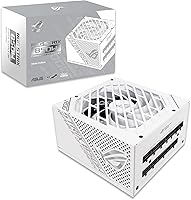
The ASUS ROG Strix 850W Power Supply sits firmly in the premium enthusiast tier — not a unit you buy because it's cheap, but because you want the combination of reliability, performance, and long-term peace of mind. The white colorway makes this ROG Strix unit particularly attractive to builders assembling clean, all-white systems, where most PSUs would stand out like a sore thumb. What really sets it apart from similarly priced competitors is the 10-year warranty — a coverage period that most Seasonic, Corsair, or EVGA options simply don't match at this wattage. Holding a #12 spot in Computer Power Supplies with over 4,100 ratings isn't an accident. This is a PSU that earns its price.

Features & Benefits

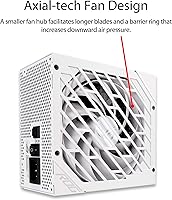
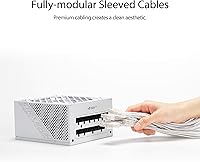
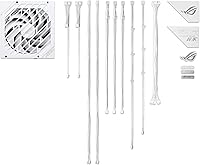
The fan on this 850W PSU is where things get interesting. ASUS uses an Axial-tech fan design with a barrier ring around the blade tips, which forces air downward more aggressively than a conventional fan — less turbulence, better heat dissipation. Paired with dual ball bearings instead of the cheaper sleeve bearing alternative, that fan is built to spin reliably for years under heat and load. Below 40% load, it stops entirely; the 0dB passive mode is genuinely impressive for everyday desktop use or lighter gaming. The 80 Plus Gold rating, backed by Japanese capacitors, keeps efficiency high and waste heat low. Fully modular cables round things out, making cable management far cleaner than semi-modular rivals.

Best For

The ROG Strix 850G makes the most sense for builders putting together a white-themed or aesthetically deliberate system where every component is chosen with intention. On the power side, 850W gives comfortable headroom for pairings with demanding GPUs like an RTX 4080 or RX 7900 XT, without over-provisioning. Long-term reliability seekers will especially appreciate the decade-long warranty, which outlasts the typical 5-year coverage most brands offer. If you value quiet operation during non-gaming hours, this unit delivers it. That said, if aesthetics and brand ecosystem mean nothing to you, or you're working with a tight budget, there are more value-focused 850W options worth considering before committing here.

User Feedback

With over 4,100 ratings averaging 4.7 stars, the ROG Strix 850G sits in rare territory for a PSU — that kind of consistent approval across a large sample is hard to fake. Buyers routinely cite near-silent performance and the premium feel of the modular connectors as reasons they'd buy again. Voltage stability over multi-year use comes up often in longer-term reviews, which is reassuring. The criticisms that do appear tend to cluster around the price relative to competitors, and occasional notes about cable length falling short in full-tower cases. A small number of DOA reports and shipping damage complaints exist, though they appear isolated rather than systemic.

Pros

  • 10-year warranty coverage is a genuine differentiator that outlasts most competing PSUs at this wattage.
  • Semi-passive fan mode keeps this 850W PSU near-silent during light gaming and everyday desktop use.
  • Dual ball bearing fan is engineered to outlast cheaper sleeve bearing designs by a significant margin.
  • 80 Plus Gold efficiency backed by Japanese capacitors keeps operating temperatures and electricity waste low.
  • Fully modular cable system makes build cleanliness far easier and future upgrades less of a hassle.
  • White colorway is a rare option in the PSU market, ideal for aesthetically curated white builds.
  • A 4.7-star average across more than 4,100 ratings reflects unusually consistent satisfaction for a power supply.
  • Axial-tech fan with barrier ring generates better downward airflow pressure than conventional fan designs.
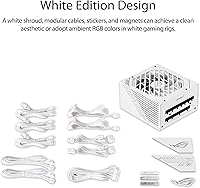
  • Magnetic logo plate with included stickers allows cosmetic personalization without opening or modifying anything.

Cons

  • The price sits noticeably above budget-friendly 850W alternatives from Seasonic, Corsair, and EVGA.
  • Some cable lengths may fall short inside full-tower cases, requiring careful routing or extension cables.
  • No RGB lighting means it will not integrate with illuminated builds for buyers who prioritize that aesthetic.
  • A small number of buyers have reported receiving DOA units straight out of the box.
  • Fan noise under sustained near-maximum load has been noted occasionally, which can matter in quiet workstation setups.
  • Isolated shipping damage reports suggest the outer packaging may not fully protect the unit in rough transit.
  • At 850W, this ROG Strix unit is unnecessary overkill for mid-range or lower-power configurations.
  • The specialist white finish reduces resale appeal if you later want to repurpose the PSU in a different build.

Ratings

The ASUS ROG Strix 850W Power Supply earns its high standing with a 4.7-star average across more than 4,100 verified ratings — a level of consistent approval that is genuinely rare in the power supply category. The scores below were generated by AI after analyzing confirmed buyer reviews worldwide, with spam, bot-submitted feedback, and incentivized reviews actively filtered out before any scoring took place. Both the clear strengths and the recurring pain points flagged by real owners are reflected transparently across every category.

Noise Level
93%
The semi-passive fan design is one of the standout real-world features here — during everyday desktop work, light gaming, and anything below a heavy sustained load, the fan simply does not spin. Owners building quiet workstations or gaming rigs used in shared spaces consistently single this out as a decisive purchasing reason, and the feedback backs it up at scale.
Under prolonged heavy load — extended rendering sessions or hours of demanding gameplay — a portion of users report the fan becomes clearly audible. It is not alarming, but it can be noticeable in a quiet room, and a small minority expected this 850W PSU to remain near-silent even when pushed to its limits.
Build Quality
91%
Picking this unit out of the box, the first thing most buyers notice is how solid it feels — the housing has no flex, the modular ports are tightly toleranced, and the finish is clean and consistent throughout. Long-term owners frequently describe it holding up well across multiple system builds spanning several years of continuous use.
A small number of buyers have reported receiving units dead on arrival, and isolated shipping damage complaints suggest the outer packaging does not always provide sufficient protection in rough transit. These are edge cases rather than a systemic pattern, but they appear frequently enough to be worth flagging for buyers ordering through third-party sellers.
Value for Money
72%
28%
When the 10-year warranty, Japanese capacitors, and Axial-tech fan engineering are factored in, buyers who plan to carry this ROG Strix unit across multiple builds over a decade find the price genuinely justifiable. Enthusiasts who have previously dealt with a failed cheaper PSU mid-build tend to view the premium as a worthwhile insurance policy.
Cross-shopping against Seasonic, Corsair, or EVGA equivalents at similar or lower price points makes the ROG Strix 850G a harder sell for buyers indifferent to the ASUS brand or aesthetic. The performance gap between premium-tier 850W units is narrow enough that cost-focused builders can find comparable reliability elsewhere without paying a brand premium.
Voltage Stability
92%
Multi-year owners are notably consistent in their positive feedback about voltage regulation — a factor that directly affects the longevity of every component the PSU feeds. The combination of Japanese capacitors and Gold-level efficiency translates into tight, stable delivery under both light and heavy loads, which is exactly what you want powering a demanding GPU and CPU pairing.
Confirmed real-world voltage fluctuation reports are rare in the broader review pool, making this a low-risk category overall. However, the absence of widely published independent ripple measurements for this specific unit means buyers with lab-grade precision requirements should verify figures from trusted hardware outlets before committing.
Warranty & Support
96%
A 10-year warranty at this price tier is genuinely hard to match — most competitors stop at 5 to 7 years, and that gap matters when you consider how long a quality PSU can realistically serve across successive system generations. Owners who have used ASUS support report a reasonably smooth claims process when a valid proof of purchase is on hand.
The warranty is tied to the original purchaser, which limits its practical value for anyone buying the unit secondhand. A minority of users have also noted that navigating ASUS customer support response times can be slow during peak periods, and the RMA process requires purchase documentation that some buyers have long since discarded.
Thermal Performance
89%
The Axial-tech fan's barrier ring increases downward airflow pressure, meaning the unit dissipates heat effectively even when the fan is spinning at moderate speeds. Builders who have run demanding multi-hour gaming sessions consistently report the chassis exterior staying well within comfortable temperature ranges throughout those extended loads.
At near-maximum sustained load — heavy overclocking combined with simultaneous CPU and GPU stress — a portion of reviewers noted the unit running warmer than anticipated under those extreme conditions. This is unlikely to concern typical gaming builds, but it is a fair consideration for buyers planning compute-intensive or continuous-duty workloads.
Efficiency
88%
The 80 Plus Gold certification reflects real-world efficiency of 87–90% under typical loads, meaning noticeably less power drawn from the wall and less heat dumped into the case compared to Bronze or Silver-rated alternatives. Buyers running systems for long daily hours report the difference in electricity draw becoming meaningful over months of continuous operation.
The efficiency advantage narrows against Platinum or Titanium-rated alternatives at very high sustained loads, and buyers running 24/7 workstation configurations may see a measurable difference in operating costs over time. For a standard gaming use case this delta is largely negligible, but it is a fair trade-off to acknowledge at the premium price point.
Cable Management
86%
A fully modular system means only the cables a build actually needs are ever attached — no permanently fixed bundle to fold, hide, or fight with behind the motherboard tray. Builders working in mid-tower cases with limited rear clearance particularly appreciate not having a cluster of unused cables competing for the same constrained space.
Cable length is the most recurring weak point flagged in user reviews, with enough independent mentions to constitute a genuine pattern. In full-tower cases — particularly those with a PSU shroud at the bottom and long routing paths to upper drive bays — some cable runs come up noticeably short without the addition of extension cables.
Fan Longevity
85%
Dual ball bearings are meaningfully more durable than the sleeve bearings found in budget PSUs — they maintain consistent spin characteristics under heat and resist degradation in ways that sleeve designs simply cannot match over time. For a unit intended to serve across a full decade, the bearing quality matters far more than it might appear on a spec sheet.
No substantial long-term failure data exists yet at scale for this specific model, since PSU fan degradation typically takes many years to appear in buyer reviews. The theoretical longevity advantage of ball bearings is well-documented, but real-world outcomes at the 7–10 year mark remain difficult to verify from the current pool of available feedback.
Aesthetic Design
84%
The white colorway fills a genuine gap in the premium PSU market, where most options default to black, and builders assembling a curated all-white system have very few comparable choices at this performance tier. The magnetic logo plate is a small but practical touch that allows cosmetic personalization without any permanent modifications to the unit.
The absence of RGB or addressable lighting means this unit will not integrate with synchronized lighting ecosystems, which matters in builds where the PSU is visible through a windowed shroud. The white finish also limits long-term flexibility — if the unit ever needs to be repurposed in a standard black build, it will look clearly out of place.
Ease of Installation
83%
The fully modular system removes the intimidation of a sprawling pre-attached cable bundle, which first-time builders in particular appreciate during their initial installation. Connectors seat firmly and positively with no ambiguity about whether they are locked in, and cable labeling makes identifying the correct runs during a complex build noticeably less stressful.
The physical weight of the unit — just over 4 lbs — means it requires a firm grip during mounting, particularly when working solo in a case with tight or poorly positioned PSU bay access. Builders using smaller ATX cases have also noted the standard depth occupies the full bay with little margin for error in tighter enclosures.
Overall Reliability
94%
The combination of Japanese capacitors, a dual ball bearing fan, and a 10-year manufacturer warranty creates a strong reliability baseline that long-term owners consistently validate in their reviews. Multi-year feedback describes stable voltage, no signs of capacitor issues, and zero unplanned shutdowns — the kind of track record that is genuinely difficult to fake across thousands of ratings.
DOA reports, while a small fraction of the overall review count, appear with enough regularity to confirm this is not a zero-risk purchase. Shipping handling is the most commonly cited culprit among affected buyers rather than manufacturing defects, but the practical outcome is the same — a non-functional unit that requires a return before the build can proceed.
Power Headroom
87%
At 850W continuous output, this ROG Strix unit gives high-end gaming builds genuine breathing room — the kind where GPU and CPU power spikes can occur simultaneously under a demanding workload without the unit straining near its rated ceiling. Operating a PSU at 60–70% of capacity rather than near its limit is broadly understood to extend operational lifespan.
For mid-range builds with a modest GPU and a low-TDP CPU, 850W is significant overkill that adds upfront cost without any practical performance benefit. Buyers who do not have a clear upgrade roadmap that would eventually justify the headroom would typically be better served by a 650W unit at a lower price point with equivalent efficiency and build quality.

Suitable for:

The ASUS ROG Strix 850W Power Supply is purpose-built for enthusiast PC builders who refuse to compromise on component quality or long-term reliability. It is an especially strong fit for anyone assembling a white-themed system, since a white PSU at this performance tier is genuinely rare, and this ROG Strix unit pairs naturally with matching cases, coolers, and GPU shrouds without any visual awkwardness. Builders running power-hungry GPUs — an RTX 4080, RX 7900 XT, or similarly demanding cards — will appreciate having 850W of headroom so the unit operates comfortably within its thermal limits rather than near its ceiling. The 10-year warranty makes this 850W PSU a smart investment for buyers who plan to carry a quality unit across multiple system generations. If quiet operation matters — whether for late-night gaming or working from the same rig during the day — the semi-passive fan mode means you will rarely, if ever, hear this unit under typical loads.

Not suitable for:

The ASUS ROG Strix 850W Power Supply is not the right call for builders whose primary concern is keeping upfront costs as low as possible. If your GPU and CPU combination would run comfortably on 650W or less, the extra capacity here is money spent on headroom you will never use. Buyers with full-tower cases and long cable routing requirements should also be cautious — a recurring complaint among owners involves cable lengths that feel tight in larger enclosures, which can create genuine headaches during a complex build. This ROG Strix unit is also a poor fit if you are indifferent to brand aesthetics; comparable 80 Plus Gold efficiency and solid build quality can be found in Seasonic, Corsair, or EVGA alternatives at a lower price point if you have no use for the design premium. Finally, anyone looking to integrate a PSU into an RGB lighting ecosystem will want to look elsewhere, as the ROG Strix 850G ships with no RGB whatsoever.

Specifications

  • Output Wattage: This unit provides a continuous 850W of power output, suitable for high-end single-GPU gaming and enthusiast desktop builds.
  • Efficiency Rating: An 80 Plus Gold certification means the PSU operates at 87–90% efficiency under typical loads, reducing both heat output and electricity consumption.
  • Form Factor: The unit conforms to the standard ATX / ATX12V form factor, fitting the vast majority of mid-tower and full-tower desktop cases.
  • Fan Design: The Axial-tech fan features an extended blade length, a smaller central hub, and a barrier ring around the tips that increases downward air pressure and reduces turbulence.
  • Fan Bearing: Dual ball bearings are used in place of the cheaper sleeve bearing design found in many competing PSUs, offering greater longevity and more consistent performance under sustained heat.
  • Passive Mode: The fan stops spinning entirely below 40% load, enabling near-silent operation during light gaming, general desktop use, and idle states.
  • Cable System: All cables are fully modular, meaning only the connectors actually needed for a given build are attached, keeping unused cables out of the chassis entirely.
  • Dimensions: The unit measures 160 x 150 x 86 mm, which is standard ATX PSU sizing and fits most cases that accept a regular ATX power supply.
  • Weight: The PSU weighs 4.03 lbs (1.83 kg), within the typical range for a fully modular 850W unit with heatsink-covered internal components.
  • Capacitors: Internal capacitors are sourced from Japanese manufacturers, a recognized quality indicator associated with stable voltage delivery and extended component lifespan.
  • Warranty: ASUS backs this unit with a 10-year limited warranty, one of the longest coverage periods available in the consumer PSU market at this wattage tier.
  • Customization: A magnetic logo plate on the visible face of the unit can be reskinned using the included sticker set, allowing cosmetic personalization without any tools or modifications.
  • Connector Type: The primary motherboard connection uses a standard ATX plug, compatible with current-generation desktop motherboards across all major platforms.
  • Compatibility: This PSU is designed exclusively for standard desktop PC use and is not compatible with small form factor, proprietary OEM, or server chassis.
  • RGB Lighting: This unit includes no RGB or addressable lighting of any kind; the exterior is finished in solid white with no illuminated elements.

Related Reviews
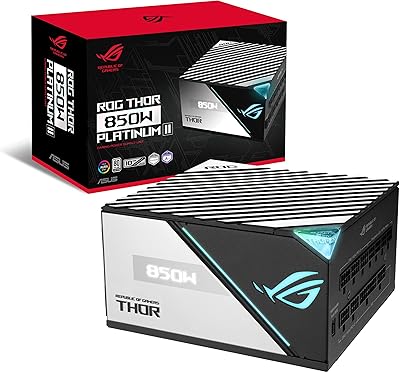
ASUS ROG Thor 850W Platinum II Power Supply
89%
93%
Performance
91%
Quiet Operation
94%
Build Quality
90%
Energy Efficiency
88%
Ease of Installation
More
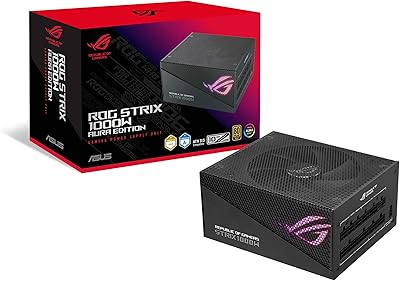
ASUS ROG Strix 1000W Gold Aura Edition Power Supply
89%
94%
Power Delivery
91%
Energy Efficiency
89%
Cooling Performance
88%
Noise Level
92%
Modular Design & Cable Management
More
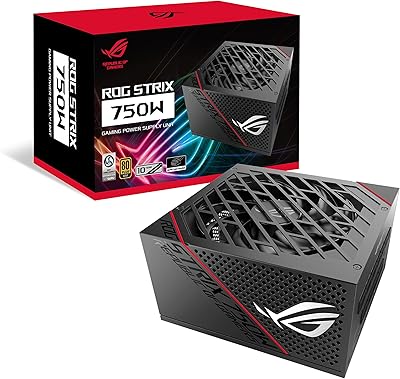
ASUS ROG Strix 750G ATX Power Supply
88%
94%
Build Quality
92%
Noise Level
74%
Value for Money
96%
Warranty & Support
89%
Cable Management
More
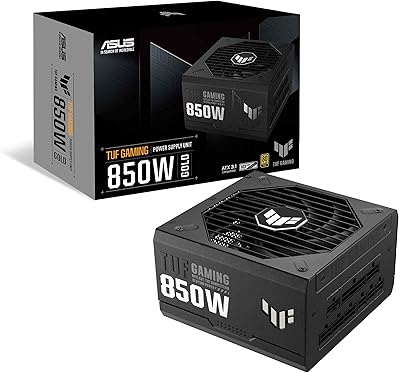
ASUS TUF Gaming 850W Gold Power Supply
84%
93%
Build Quality
91%
Power Stability
89%
Noise Level
87%
Efficiency & Power Draw
84%
Cable Quality & Flexibility
More
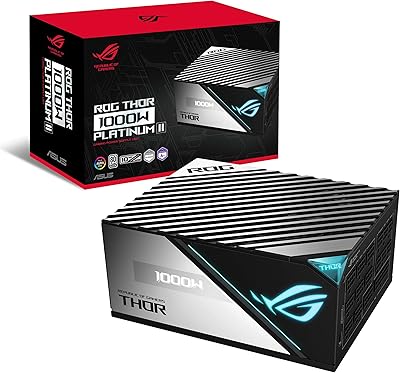
ASUS ROG Thor 1000W Platinum II Power Supply
89%
95%
Power Performance
92%
Efficiency
88%
Noise Levels
91%
Build Quality
90%
Cooling Performance
More
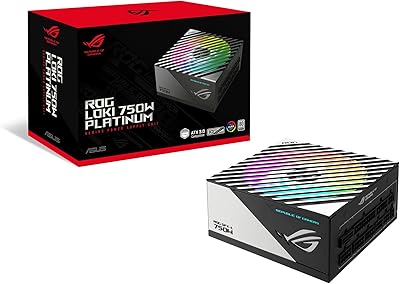
ASUS ROG Loki SFX-L 750W Platinum Power Supply
90%
95%
Performance
91%
Build Quality
94%
Quiet Operation
92%
Efficiency
90%
Cable Management
More
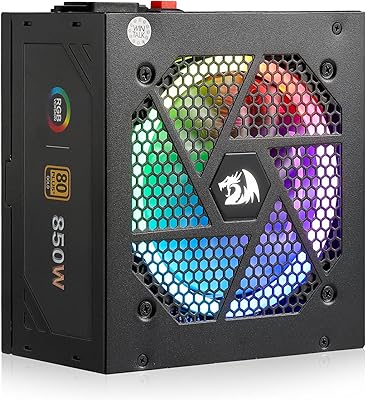
Redragon RGPS-850W 850W Power Supply
80%
78%
Power Delivery Stability
81%
Build Quality & Components
86%
Noise Level & Fan Behavior
84%
Modular Cable System
88%
PCIe 5.1 & ATX 3.1 Compatibility
More
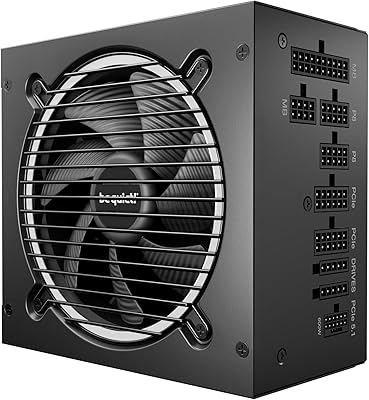
be quiet! Pure Power 13M 850W PSU
85%
93%
Acoustic Performance
88%
Build Quality
91%
Voltage Stability
94%
Future Compatibility
79%
Value for Money
More
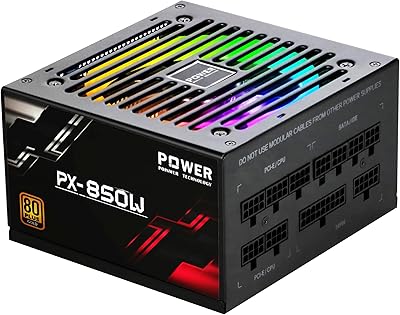
POINWER PX-850W 850W Power Supply
80%
86%
Power Delivery Stability
89%
Energy Efficiency
74%
Build Quality & Components
83%
Cable Management & Modularity
81%
Noise Level
More
be quiet! Pure Power 12 M 850W Modular Power Supply
88%
94%
Quiet Operation
88%
Ease of Installation
89%
Build Quality
92%
Power Delivery Stability
90%
Energy Efficiency
More

FAQ

Yes, 850W is a comfortable fit for most high-end single-GPU configurations. An RTX 4080 paired with a current-generation CPU typically draws 600–700W under combined full load, so this 850W PSU keeps your system well within the unit's safe operating range. If you are planning a dual-GPU or heavily overclocked workstation build, you would want to size up, but for a standard enthusiast gaming rig it is more than adequate.

Below 40% load — which covers most browsing, light gaming, and desktop work — the fan does not spin at all. You will only start to hear it once your system is drawing significant power during extended gaming or rendering sessions. Most owners find it genuinely inaudible during typical use, though a small number of reviewers have noted it becomes audible under sustained near-maximum load.

This is one of the more common concerns flagged by buyers, and it is worth taking seriously. Some users have reported that certain cables — particularly the CPU EPS and longer peripheral runs — feel tight when routing to distant drive bays or around the rear of the chassis. Measuring your longest cable path before ordering is a smart move, and third-party modular extension cables are a straightforward fix if you do run short.

ASUS covers this unit for 10 years against defects in materials and workmanship. If the unit fails within that window, you contact ASUS support directly with proof of purchase to initiate a claim for repair or replacement. It is worth noting the warranty is tied to the original purchaser, so it does not carry over fully if you sell the unit secondhand. Keep your receipt somewhere accessible.

This ROG Strix unit was released before the 12VHPWR connector became standard, so a native 16-pin PCIe 5.0 cable is not included in the box. For cards that require it, the adapter that ships with the GPU itself is the intended solution. If a factory-native 12VHPWR cable is a hard requirement for your build, you may want to look at newer PSU releases that include one from the manufacturer.

Not at all. The colorway is purely cosmetic and has zero impact on performance, compatibility, or thermals. This 850W PSU will function identically in a black, grey, or any other case. The only practical consideration is that you are paying a small premium for an aesthetic that will be hidden if your case does not have a windowed PSU shroud.

All three are respected, Gold-rated, fully modular 850W options and the performance gap between them is narrow. The ROG Strix 850G differentiates itself with the Axial-tech fan engineering, the white colorway for themed builds, and the 10-year warranty period. If you are not building a white system and your preferred alternative already matches on warranty and efficiency, the final decision largely comes down to current pricing and brand preference.

On this ROG Strix unit, the 0dB passive mode is a fixed behavior and cannot be toggled on or off via a rear switch or software — unlike some competing units that offer that option. For most users this is a non-issue and a welcome feature, but if you strongly prefer constant active cooling even at idle, it is worth factoring that into your decision before purchasing.

The full modular cable set covers the standard bases: a 24-pin ATX motherboard connector, one or two EPS CPU power connectors, PCIe connectors for GPU power, SATA power cables, and Molex peripheral connectors. Since the system is fully modular, you only attach what your specific build requires and leave the rest in the box. The exact connector count per cable type is listed on the ASUS product page and is worth cross-referencing against your component list before building.

Start with the retailer — for a new purchase, most will process a replacement quickly without routing you through the warranty system. If that path is unavailable, ASUS support handles DOA claims directly. A small number of buyers have reported shipping damage in reviews, so inspecting the outer box before signing for delivery is worthwhile. Take photos of any visible damage before unpacking, as documentation speeds up the return or replacement process significantly.

Where to Buy