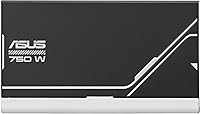
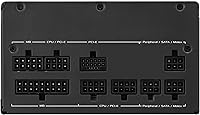
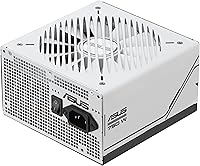
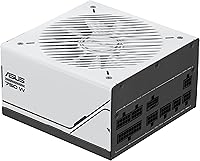
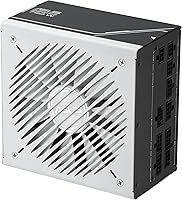
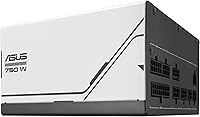
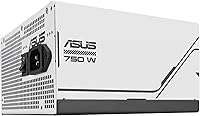
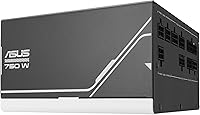
Overview

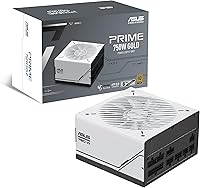
The ASUS Prime 750W Gold Power Supply doesn't chase trends — no RGB strips, no fanless mode, no theatrical extras. What it offers is a straightforward, well-built unit from a brand that takes PSU quality seriously. ASUS positioned their Prime lineup as the dependable workhorse tier, and this 750W Gold unit lives up to that brief. Its ATX 3.0 compliance makes it genuinely future-ready for PCIe Gen 5 graphics cards, which matters if you're planning a build that needs to last several years without another PSU swap. The 8-year warranty is the kind of confidence statement that's rare at this price point. If stability and longevity matter more than aesthetics, this unit deserves serious consideration.

Features & Benefits

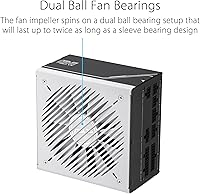
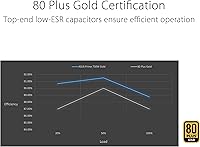
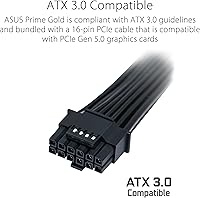
The AP-750G is fully modular, meaning you only connect the cables your build actually needs — a small thing that makes a real difference when routing cables behind a tight case. On efficiency, 80 Plus Gold certification means the PSU wastes less power as heat, which adds up over time on your electricity bill and inside your case thermals. The fan uses dual ball bearings, a design that genuinely outlasts cheaper sleeve bearings by a meaningful margin. ASUS also incorporated their Axial-tech fan design with a barrier ring that directs airflow more deliberately downward. Low-ESR capacitors handle load fluctuations cleanly, keeping voltage stable when your GPU ramps up hard. A 16-pin PCIe Gen 5 cable is bundled in the box.

Best For

This 750W Gold unit sits in a sweet spot for mid-range to high-end gaming builds. A modern setup pairing an RTX 4070 or RX 7800 XT with a current-gen CPU will run comfortably within its headroom — though builders planning an RTX 4090 or a similarly power-hungry configuration should consider stepping up to 850W or beyond. It's a strong match for long-term builders who buy once and don't want to revisit their PSU for a decade. The fully modular design also appeals to anyone building in a compact case where cable clutter creates real problems. If you're intentionally skipping fanless or RGB because you'd rather put that budget toward performance components, the AP-750G matches that mindset precisely.

User Feedback

With a 4.7-star average across more than a thousand verified purchases, the AP-750G has earned its standing with a large and credible sample. Buyers consistently highlight the quiet day-to-day operation and the clean cable installation experience. Build quality gets frequent mentions too — reviewers note it feels solid, not hollow or cheaply constructed. On the critical side, a handful of users report the fan becomes noticeable under sustained heavy load, worth knowing if near-silent operation is a priority. Some mention packaging that felt less protective than expected for the price tier. ASUS warranty support gets positive remarks in several threads, though individual service experiences naturally vary. The overall tone across reviews reads as genuinely satisfied rather than passively indifferent.

Pros

  • The 8-year warranty is genuinely rare at this price tier and adds serious long-term value.
  • Fully modular design keeps cable runs clean and makes installation noticeably less frustrating in tight cases.
  • ATX 3.0 compliance with a bundled 16-pin cable means no adapter headaches with the latest PCIe Gen 5 GPUs.
  • Dual ball bearing fan is a meaningful durability upgrade over the sleeve bearings common in budget units.
  • 80 Plus Gold efficiency reduces wasted heat and trims electricity costs over years of daily use.
  • The AP-750G runs quietly during typical desktop and gaming workloads, staying unobtrusive in most environments.
  • Low-ESR capacitors help maintain stable voltage under load, which protects components during GPU spikes.
  • ASUS brand backing means established support infrastructure and accessible firmware or compatibility documentation.
  • Over 1,000 verified ratings with a 4.7-star average is a credible satisfaction signal, not a thin sample size.

Cons

  • No fan-stop mode means the fan runs continuously, even during light browsing or idle desktop use.
  • 750W headroom is genuinely tight for enthusiast builds using top-tier GPUs like the RTX 4090.
  • No RGB integration limits appeal for builders trying to match lighting across all system components.
  • Some buyers reported that packaging felt underpowered for the unit inside, raising transit damage concerns.
  • Fan audibility increases under sustained heavy load, which may bother users in quiet room environments.
  • Warranty value depends on regional support quality — ASUS PSU RMA experiences vary noticeably by location.
  • Competing units occasionally offer similar specs at a lower cost during sales, narrowing the value gap.
  • The unit offers no power monitoring software or companion app, which some modern PSUs now include.

Ratings

The scores below reflect an AI-driven analysis of verified global buyer reviews for the ASUS Prime 750W Gold Power Supply, with spam, bot-generated, and incentivized feedback actively filtered out before scoring. Each category is rated based on patterns found across thousands of real user experiences, capturing both what this unit consistently gets right and where it falls short. Strengths and genuine pain points are weighted equally — nothing is glossed over to make the numbers look better than the evidence supports.

Build Quality
91%
Buyers consistently describe the AP-750G as feeling dense and well-constructed straight out of the box — not the hollow, rattling sensation common in budget units. The modular connector panel is tight and secure, and the chassis shows no flex under normal installation handling.
A small number of reviewers noted that the finish on the unit's exterior showed minor scuffing after installation in cases with tight PSU bays, suggesting the coating may not be the most scratch-resistant. Nothing structurally concerning, but worth mentioning for appearance-conscious builders.
Reliability & Stability
93%
Across hundreds of long-term owner reviews, system crashes or voltage instability attributable to this 750W Gold unit are genuinely rare. Builders running RTX 40-series cards report stable operation through extended gaming sessions without unexpected shutdowns or power-related anomalies.
A small cluster of early buyers reported issues during the first few weeks of use, though it's unclear whether these were unit defects or installation errors. No widespread pattern of failure emerged, but the occasional early-life report is worth noting for buyers who need zero tolerance for downtime.
Noise Level
74%
26%
During light desktop use, media playback, and moderate gaming loads, the AP-750G's fan stays impressively quiet and rarely draws attention. Builders in open-air or well-ventilated setups report barely noticing it during standard workday use.
Under sustained heavy load — extended gaming at high GPU utilization — the fan spins up noticeably and becomes audible in quieter rooms. The absence of a fan-stop mode means there is always some fan noise present, even at idle, which frustrates users who were expecting near-silent operation.
Cable Management
89%
The fully modular design earns consistent praise from builders who've dealt with semi-modular or non-modular units before — being able to leave unused cables in the bag makes a real difference in tight mid-tower builds. Cable quality is described as flexible enough to route cleanly without fighting stiff sleeves.
Some users found the cable lengths slightly short for full-tower cases with bottom-mounted PSU shrouds, requiring careful planning or extension cables for CPU power runs. The included cable set also lacks labeling, which can slow down first-time builders during installation.
ATX 3.0 & GPU Compatibility
88%
Buyers pairing this unit with RTX 4070, 4070 Ti, and 4080 cards report clean compatibility with no adapter frustrations — the bundled 16-pin cable handles the connection directly. The ATX 3.0 compliance also means the PSU handles sharp GPU power spikes without triggering instability.
Users running RTX 4090 builds noted the 750W ceiling leaves uncomfortably thin headroom, especially with overclocking in the picture. The AP-750G is simply not designed for that tier of power draw, and a handful of buyers found that out the hard way before returning it.
Efficiency & Heat Output
86%
The 80 Plus Gold rating translates to real-world benefits that long-term owners appreciate — the unit stays relatively cool during typical loads, and several builders noted lower case temperatures after upgrading from older bronze-rated PSUs. Electricity draw is noticeably efficient for a 750W unit.
Under very high sustained loads, warm air exhaust from the PSU does contribute slightly to overall case temperatures, though this is expected behavior rather than a flaw. Users in high-ambient-temperature environments should ensure adequate case airflow to keep the unit comfortable.
Warranty & Support
77%
23%
The 8-year warranty is a legitimate differentiator that experienced builders recognize immediately — most competing units at this price tier cap at three to five years. Several reviewers who engaged with ASUS support describe responsive handling of their claims.
Warranty satisfaction varies significantly by region, with some international buyers reporting slower RMA processing than expected. The warranty's value is only as good as the local support infrastructure, and ASUS PSU support is not equally accessible or efficient in all markets.
Value for Money
83%
For what you get — full modularity, ATX 3.0 compliance, dual ball bearings, and an 8-year warranty — the AP-750G sits at a price point most experienced builders consider fair rather than inflated. It consistently ranks in the upper tier of its wattage class without crossing into premium pricing.
During promotional periods, competing Gold-rated units from reputable brands occasionally undercut this unit's standard price while offering similar specs, temporarily narrowing its value proposition. Buyers who are flexible on timing may find the deal less compelling at full retail.
Installation Experience
84%
First-time builders and experienced veterans alike describe installation as straightforward — the standard ATX dimensions fit without hassle in most mid-tower and full-tower cases, and the modular system removes the usual cable-stuffing frustration. ASUS includes a basic but useful setup guide.
A few users in compact mid-tower builds with bottom-mounted PSU bays mentioned that maneuvering the unit into place was tighter than expected, though this is more a case design issue than a PSU fault. The lack of clearly labeled cables adds minor friction for those new to modular builds.
Fan Longevity
88%
The dual ball bearing fan design is a spec that resonates strongly with buyers who've had sleeve-bearing fans degrade and get noisy after two or three years of use. Long-term owners report the fan maintaining consistent, quiet operation well into year two and beyond.
Because this is a relatively recent product, there are limited multi-year data points from verified owners to fully validate the longevity claim at scale. The design is sound in principle, but real-world durability over five-plus years remains to be confirmed by the broader user base.
Packaging & Unboxing
63%
37%
The cable organization inside the box is tidy and practical — cables arrive separated and easy to identify by connector type. Most buyers report receiving the unit in good condition, with no transit damage to the PSU itself.
Multiple reviewers flagged that the outer box and internal foam protection felt underwhelming relative to what a premium-positioned unit might be expected to ship with. A small but recurring group of buyers reported dented packaging on arrival, raising questions about how well the unit survives rough shipping handling.
Aesthetics & Visual Design
58%
42%
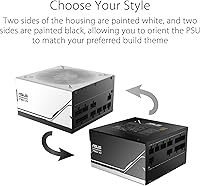
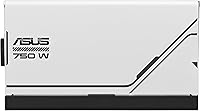
Builders who prefer a clean, minimalist look appreciate that the AP-750G doesn't try too hard — the black finish is understated and won't clash with any case aesthetic. For closed-panel builds, the appearance is entirely irrelevant and never a point of contention.
Users building in cases with PSU visibility windows or RGB ecosystems will find this unit completely unsupported — there is no lighting whatsoever, and the exterior design is purely utilitarian. For buyers who care about the visual completeness of their build, this is a genuine gap in the product's appeal.
Wattage Headroom
71%
29%
For the majority of mid-range to upper-mid gaming builds — pairing a current-gen GPU like an RTX 4070 or RX 7900 GRE with a modern CPU — 750W provides a comfortable operating margin without unnecessary oversizing. Buyers with typical build configs report no complaints about capacity.
Enthusiast-tier builders targeting flagship GPUs or planning aggressive overclocking will feel the ceiling sooner than expected. The 750W rating leaves limited buffer for power-hungry configurations, and several buyers who underestimated their total system draw ended up stepping up to a higher-wattage unit.

Suitable for:

The ASUS Prime 750W Gold Power Supply is built for PC builders who want a dependable foundation without overpaying for features they'll never use. It's a natural fit for anyone pairing a current-gen mid-to-high-end GPU — think an RTX 4070 Ti or RX 7800 XT — with a modern desktop CPU, where 750W provides comfortable headroom without unnecessary excess. Builders who plan to keep their system running for five or more years will find the 8-year warranty particularly compelling, since most competing units at this tier offer only three to five years of coverage. The fully modular design also makes it well-suited to compact or mid-tower cases where every unneeded cable adds real cable management pain. If you're upgrading from an older bronze or non-rated unit and want a measurable efficiency and reliability improvement, this 750W Gold unit delivers exactly that kind of meaningful step up.

Not suitable for:

Builders pushing the upper limits of power draw should look elsewhere — the ASUS Prime 750W Gold Power Supply is not the right call for configurations built around an RTX 4090, a high-core-count Threadripper, or any dual-GPU workstation setup where peak demand regularly approaches or exceeds 700W under combined load. Users who specifically want a silent, fan-off mode at idle or low load will also be disappointed, as this unit runs its fan continuously with no zero-RPM option. RGB enthusiasts looking to match lighting across their entire build will find nothing to work with here — aesthetics were clearly not a priority in the design brief. Those who prefer sourcing from brands with dedicated North American or European service centers should research ASUS PSU warranty fulfillment in their region before committing, since warranty value depends entirely on the support process being accessible. Finally, ultra-budget builders might find comparable 80 Plus Gold options with shorter warranties available at a lower cost if long-term reliability assurance isn't a priority.

Specifications

  • Model Number: The AP-750G is the official model designation for this unit within the ASUS Prime PSU series.
  • Rated Wattage: This unit delivers a continuous output of 750W, suitable for mainstream to upper-mid-range desktop PC configurations.
  • Efficiency Rating: 80 Plus Gold certified, meaning the PSU operates at 87–90% efficiency under typical load conditions, reducing wasted energy as heat.
  • ATX Standard: Fully compliant with the ATX 3.0 specification, which introduces improved transient power handling required by modern high-performance GPUs.
  • Modular Design: Fully modular — every cable, including the 24-pin ATX connector, detaches completely so unused cables stay out of the build entirely.
  • PCIe Cable: Includes a 16-pin (12VHPWR) PCIe Gen 5.0 cable in the box for direct compatibility with RTX 40-series and other next-generation graphics cards.
  • Fan Bearing: The cooling fan uses dual ball bearings, a design rated for significantly longer operational life than the sleeve bearings found in lower-cost units.
  • Fan Design: Axial-tech fan featuring a smaller central hub, extended blade length, and a barrier ring that directs airflow downward with greater efficiency.
  • Capacitor Type: Equipped with low-ESR (Equivalent Series Resistance) capacitors that maintain stable output voltage even during rapid load transitions from the GPU.
  • Form Factor: Standard ATX / ATX12V form factor measuring 150 x 150 x 86 mm, compatible with full-tower, mid-tower, and most compact ATX cases.
  • Dimensions: Physical dimensions are 150 mm (L) x 150 mm (W) x 86 mm (H), equivalent to approximately 5.9 x 5.9 x 3.3 inches.
  • Weight: The unit weighs 3.2 pounds (approximately 1.45 kg), consistent with a well-built, component-dense PSU at this wattage.
  • Warranty: Covered by an 8-year manufacturer warranty, which is among the longest coverage periods offered for a PSU at this price tier.
  • RGB Lighting: No RGB lighting is included; the unit uses a clean, understated aesthetic with no addressable or fixed lighting elements.
  • Fan Stop Mode: This unit does not include a zero-RPM or fan-stop function; the fan runs continuously at all load levels.
  • Brand & Series: Manufactured by ASUS under their Prime series, which targets builders seeking reliable, specification-accurate components over premium pricing or cosmetic features.
  • Cooling Method: Cooled entirely by active air cooling through the internal fan; no passive or hybrid cooling modes are available on this model.

Related Reviews
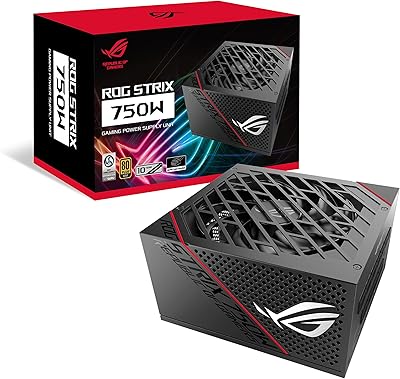
ASUS ROG Strix 750G ATX Power Supply
88%
94%
Build Quality
92%
Noise Level
74%
Value for Money
96%
Warranty & Support
89%
Cable Management
More
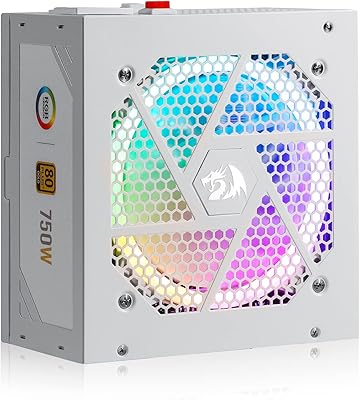
High Power 750W 80 Plus Gold Certified PC Power Supply
86%
94%
Energy Efficiency
88%
Noise Level
85%
Ease of Installation
91%
Build Quality
89%
Power Delivery Stability
More
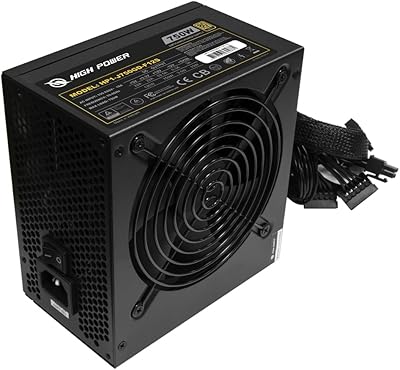
Redragon RGPS-750W 750W Modular Power Supply
79%
83%
Value for Money
76%
Build Quality
88%
Noise Level
81%
Modular Cable System
84%
Efficiency & Power Delivery
More
ASUS TUF Gaming 850W Gold Power Supply
84%
93%
Build Quality
91%
Power Stability
89%
Noise Level
87%
Efficiency & Power Draw
84%
Cable Quality & Flexibility
More
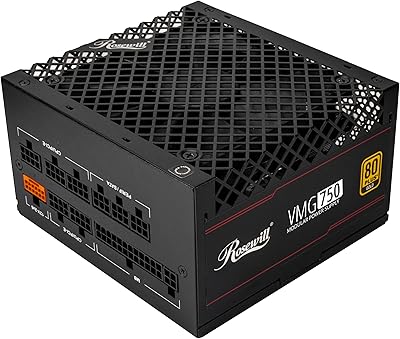
Rosewill VMG 750W ATX Power Supply
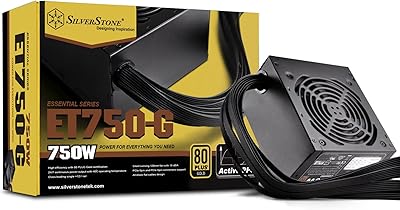
80%
88%
Value for Money
84%
Connector & Cable Quality
91%
Build Compactness
74%
Noise Level
83%
System Stability
More
SilverStone Tek 750W 80 Plus Gold Power Supply
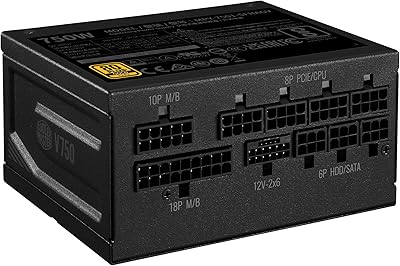
88%
91%
Energy Efficiency
93%
Cooling and Noise Level
89%
Build Quality
88%
Power Output Stability
85%
Cable Management
More
Thermaltake GF1 750W 80 Plus Gold Power Supply
89%
93%
Power Delivery Performance
95%
Energy Efficiency
89%
Noise Level
88%
Build Quality
90%
Cooling Efficiency
More
Cooler Master V750 SFX Gold Power Supply
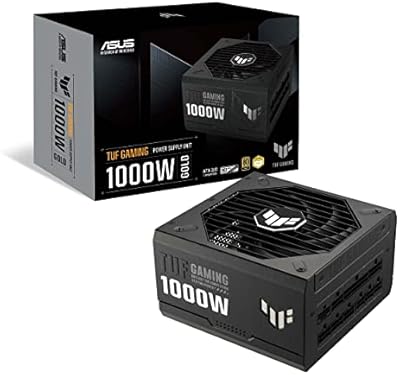
83%
91%
Build Quality
93%
Power Stability
78%
Cable Management
89%
Connector Compatibility
82%
Noise Level
More
ASUS TUF Gaming 1000W Power Supply
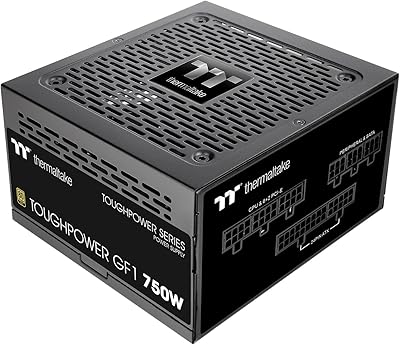
85%
91%
Build Quality
72%
Value for Money
86%
Fan Noise & Acoustics
93%
Cable Management
94%
ATX 3.0 Compatibility
More
ASUS ROG Strix 1000W Gold Aura Edition Power Supply
89%
94%
Power Delivery
91%
Energy Efficiency
89%
Cooling Performance
88%
Noise Level
92%
Modular Design & Cable Management
More

FAQ

Yes, that combination sits comfortably within 750W under real-world gaming loads. An RTX 4080 paired with a 65–125W CPU typically peaks well below 700W, so you'll have reasonable headroom. Where things get tighter is if you're overclocking both the CPU and GPU aggressively at the same time, so keep that in mind.

It's included in the box. ASUS bundles a 16-pin (12VHPWR) cable with the AP-750G, so if you're installing an RTX 40-series card, you're covered right out of the gate without hunting down an adapter or third-party cable.

The AP-750G uses a standard ATX form factor, which means it physically won't fit in cases designed specifically for SFX or SFX-L power supplies. Most mATX cases are built to accept standard ATX PSUs, so that's usually fine, but mini-ITX builds typically require a smaller SFX unit — always check your case specifications before buying.

During everyday desktop tasks and light gaming, most users won't notice it at all — the fan runs quietly and stays in the background. Under sustained heavy load, like extended gaming sessions with a demanding GPU, it does spin up and becomes audible, though it stays within a reasonable range. If you're building a near-silent PC and need a fan-stop mode, this unit doesn't offer one, so it may not be the right fit.

The ASUS Prime 750W Gold Power Supply carries an 8-year limited manufacturer warranty covering defects in materials and workmanship. To claim it, you'd typically go through ASUS support directly with proof of purchase. Warranty fulfillment quality can vary by region, so it's worth checking ASUS's local support options in your country before assuming the process is seamless everywhere.

You should only use the cables that came with the AP-750G. PSU cables from other manufacturers — even ones that physically fit — can have different wire configurations that cause shorts or damage. It's one of those rules that experienced builders follow strictly, and for good reason. Stick with the included cables.

ATX 3.0 updated the technical standard for how PSUs handle sudden power spikes from modern GPUs. Cards like the RTX 40-series can draw sharp bursts of power that older PSUs weren't designed to absorb cleanly, which can cause instability or shutdowns. ATX 3.0 compliance means this 750W Gold unit is engineered to handle those spikes without complaint, making it a more stable partner for current-gen graphics cards.

A meaningful one, yes. Bronze units typically operate at around 82–85% efficiency, while Gold-rated units push closer to 87–90%. That gap means less power wasted as heat inside your case and slightly lower electricity draw over time. The build quality jump, especially to dual ball bearings and low-ESR capacitors, is also a legitimate durability improvement over entry-level hardware.

No, the AP-750G doesn't include any companion software, USB monitoring port, or smart features. What you get is a clean, hardware-only PSU with no digital interface. If real-time voltage monitoring or app integration matters to you, you'd need to look at higher-end units from ASUS or other brands that explicitly offer those features.

That depends heavily on where GPU power requirements go in the next generation. Current mid-to-high-end cards are well-served by 750W, but if next-gen GPUs continue pushing peak draw higher, there's a real chance you'd want more headroom eventually. If long-term flexibility is a priority, stepping up to an 850W or 1000W unit now could save you from having to replace the PSU during your next major hardware upgrade.

Where to Buy