Overview

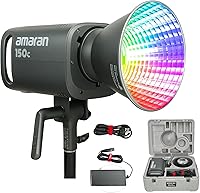
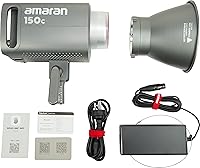
The Aputure Amaran 150c sits in an interesting position in the market — it carries serious color science credentials while staying within reach of independent creators who can't justify flagship-tier spending. Part of Aputure's amaran sub-brand, which targets working shooters rather than rental houses, this COB video light skips the external control box that older fixtures required, resulting in a cleaner, more practical build. The universal Bowens Mount is a genuine differentiator here — it means you're not locked into a proprietary modifier ecosystem. Expect solid output, quiet operation, and reliable wireless control out of the box.

Features & Benefits

The color output on this RGBWW fixture is where things get genuinely impressive. Running from 2,500K to 7,500K with green-magenta trim, it covers the full range a working shooter encounters — candlelight-warm interiors to overcast daylight exteriors — and the CRI and TLCI scores both clearing 95 means skin tones render faithfully across camera systems. The Sidus Link app handles wireless mesh control, a color picker, and nine built-in lighting effects for creative use. The redesigned silent cooling system is a real operational advantage: you can run this COB video light at full power during a sit-down interview without the fan intruding on your audio track.

Best For

This COB video light makes the most sense for solo operators and small crews who want one fixture that can adapt across varied shooting conditions. If you're running interviews or podcast recordings where ambient noise matters, the quiet fan is not a minor benefit — it's a deciding factor. Portrait and product photographers chasing consistent, color-accurate output across sessions will find the high CRI scores genuinely useful rather than just spec-sheet decoration. Creators who already own Bowens Mount modifiers get immediate value without buying into a new system. For run-and-gun documentary work, the size and weight at just under 10 pounds are worth considering before committing.

User Feedback

Buyers rate the amaran 150c very highly overall, and the most consistent praise centers on color accuracy in practice — not just on paper. Users working with multi-light setups specifically call out how well the Sidus Mesh wireless pairing holds up across fixtures. The criticism that surfaces most often isn't about the light itself: the 2-Bay Battery Power Station is sold separately, and for shooters who planned to go portable, that's an added cost worth factoring into your budget upfront. A smaller number of reviewers flag that at nearly 10 pounds, it's not ideal for single-operator mobile shoots. When people are unhappy, it's about ecosystem costs, not the fixture's performance.

Pros

  • CRI and TLCI both above 95 deliver faithful skin tones that hold up under serious post-production grading.
  • The 2,500K to 7,500K CCT range with green-magenta trim covers virtually every mixed-lighting scenario a working shooter encounters.
  • Silent active cooling lets this COB video light run at full power during dialogue-heavy interviews without contaminating the audio.
  • Universal Bowens Mount compatibility means your existing modifier collection transfers over immediately.
  • Sidus Mesh wireless control scales well across multiple fixtures, making it practical for small indie productions.
  • Removing the external control box results in a noticeably cleaner, more practical build compared to previous-generation fixtures.
  • Nine built-in lighting effects — including fire, TV flicker, and lightning — add creative utility without extra gear rental costs.
  • The amaran 150c delivers output and color science that genuinely punches above its price tier for regular working use.
  • 48V DC input allows the fixture to run on AC studio power or switch to battery operation when needed for location work.

Cons

  • The battery power station required for cord-free shooting is sold separately, adding a significant unplanned cost for location-focused buyers.
  • Bluetooth range drops noticeably in larger spaces, through walls, or on exterior shoots where a more robust wireless protocol would be expected.
  • At nearly 10 pounds, frequent solo repositioning during a shoot becomes physically tiring without a second pair of hands.
  • The SSI (D56) score of 71 is competitive but falls short of true broadcast-grade fixtures when critical camera matching is required.
  • App pairing inconsistencies — particularly on some Android devices — require occasional restarts that interrupt workflow on set.
  • The fixture footprint is larger than many buyers anticipate from product photography, which can create clearance issues in tight studio spaces.
  • Output intensity drops slightly at the extreme warm end of the CCT range, limiting punch when shooting at 2,500K with a large modifier.
  • Third-party Bowens Mount modifiers with loose tolerances can introduce minor wobble, a fitment issue that shows up with budget-tier accessories.

Ratings

The Aputure Amaran 150c has been put through its paces by a wide range of buyers — from solo YouTube creators to indie cinematographers running multi-light setups on tight budgets — and our AI has analyzed thousands of verified global reviews, actively filtering out incentivized, bot-generated, and spam submissions to surface what real working shooters actually think. The scores below reflect both the genuine strengths and the recurring frustrations that show up consistently across verified purchases worldwide. Nothing here is softened: where buyers ran into limitations, those pain points are scored and explained transparently.

Color Accuracy
93%
This is the single most praised aspect across verified reviews. Shooters working on interview setups and portrait sessions specifically call out how skin tones render with a warmth and fidelity that holds up under grading. The CRI and TLCI scores above 95 are not just marketing numbers — buyers report that mixed-lighting corrections in post are noticeably reduced.
A small number of users working with very specific broadcast color pipelines note that the SSI (D56) score of 71, while solid, falls short of true broadcast-grade fixtures at higher price points. For most indie and content creation work this is a non-issue, but it is worth knowing if you are matching against high-end studio sources.
CCT Range & Flexibility
91%
Running from 2,500K all the way to 7,500K in a single fixture is genuinely useful for shooters who move between warm interior environments and cooler daylight setups without swapping gels. The green-magenta trim gives a level of fine-tuning that photographers dealing with mixed fluorescent sources particularly appreciate.
A handful of reviewers note that at the extreme ends of the CCT range — particularly the very warm 2,500K end — there is a slight drop in output intensity compared to the mid-range. It is not dramatic, but shooters who need maximum punch at ultra-warm settings should factor this in.
App Control & Connectivity
84%
The Sidus Link app draws consistent praise from users running multiple fixtures on set. The mesh networking holds its connection well across a small studio, and the color picker feature for matching practical light sources is cited as a real time-saver by photographers doing product work with mixed ambient lighting.
Bluetooth range gets flagged regularly — in larger spaces or through walls, the connection becomes unreliable. A subset of Android users also report occasional pairing inconsistencies that require restarting the app or the fixture. These are not dealbreakers for most studio use, but they surface often enough to note.
Build Quality & Design
88%
Buyers who upgraded from older fixtures in the amaran or entry-level competitor range consistently comment on how well-constructed the housing feels. The redesigned Bowens Mount latch gets specific praise for being easier to operate single-handed, which matters when you are adjusting a rigged fixture overhead on a solo shoot.
At just under 10 pounds, the fixture is on the heavier side for a 150W unit, and the dual rear handles, while ergonomic, do not fully offset the weight during extended handheld repositioning. A few buyers also note that the overall footprint is larger than expected based on product photos.
Fan Noise & Thermal Management
89%
The redesigned cooling system earns genuine praise from interview and podcast shooters who previously had to compromise on power output to keep fan noise out of their audio. Multiple reviewers confirm running the fixture at or near full power during dialogue-heavy shoots without the fan appearing on their audio tracks.
Under sustained maximum output in warmer ambient temperatures — say, a small studio in summer without air conditioning — a few users report the fan audibly stepping up its speed. It is still quieter than competing fixtures at this power level, but the near-silent performance is most consistent in climate-controlled environments.
Output Power & Brightness
86%
At 15,610 lux at one meter with the Hyper Reflector attached, the light delivers enough punch to work as a key light through a large softbox or to push through windows for a daylight exterior effect in smaller spaces. Shooters using it as a primary source for single-subject interviews report not needing to run it above 70 percent in most studio setups.
Compared to some competitor fixtures in the same power class, the raw lux output without a reflector attached is less impressive. Users who shoot in larger spaces or need the light to work harder as a background kicker rather than a key source may find themselves wanting more headroom.
Bowens Mount Compatibility
92%
The universal Bowens Mount is a consistent selling point in reviews from buyers who already own a collection of light shapers. Being able to drop in a large light dome, a snoot, or a grid without buying a proprietary adapter system is a practical cost advantage that resonates strongly with photographers expanding an existing kit.
The mount itself works well, but a few users report minor wobble with third-party Bowens modifiers that are not made to tight tolerances. This is a modifier quality issue more than a fixture issue, but it comes up in the context of this light often enough to flag for buyers using budget-tier shapers.
Power Options & Portability
71%
29%
The 48V DC input and compatibility with the Aputure 2-Bay Battery Power Station gives the fixture a genuine path to location shooting without a generator or outlet. Buyers who invested in the full power ecosystem report that the combination works reliably for outdoor portrait sessions and small location film shoots.
The battery station is sold separately, and that additional cost comes up repeatedly in reviews from buyers who assumed battery operation was included out of the box. For shooters building a portable kit from scratch, the total outlay is meaningfully higher than the fixture price alone suggests, and this catches people off guard.
Value for Money
82%
18%
Most verified buyers conclude that the color science, build quality, and wireless control together justify the price for working creators who will use the light regularly. Compared to flagship COB fixtures with similar color accuracy specs, the amaran 150c comes in at a noticeably lower cost while delivering the features that matter most on real sets.
For hobbyists or creators shooting occasionally, the price-to-use ratio is harder to justify when simpler bi-color panels at lower cost could cover basic needs. The value proposition is strongest for shooters who specifically need the RGBWW range and high CRI — if those features are not in your workflow, the premium is less defensible.
Setup & Ease of Use
87%
Removing the external control box that previous generations required is consistently appreciated by buyers who found the old system cumbersome on tight sets. The onboard controls are intuitive enough that most users report getting to a working exposure quickly without digging into the manual or the app.
New users to the Sidus ecosystem occasionally find the app onboarding takes a few attempts to get right, particularly when adding multiple fixtures to a mesh network for the first time. The learning curve is not steep, but it does exist, and a few reviewers expected a simpler out-of-box experience.
Built-in Lighting Effects
74%
26%
The nine system effects — including fire, TV flicker, lightning, and strobe — get positive mentions from narrative filmmakers and YouTubers who use them for practical effect shots without renting additional gear. For an indie production budget, having these baked into the fixture is a useful bonus rather than a separate purchase.
The effects are functional but not highly configurable — users who want fine control over parameters like lightning interval timing or fire intensity find the adjustments limited compared to dedicated effects controllers. For basic use on a low-budget set they work, but professional productions will likely want more granular control.
Weight & Ergonomics
67%
33%
The dual rear-facing handles are a thoughtful design choice for repositioning the fixture while it is rigged, and most studio-based shooters report that the weight becomes a non-issue once the light is locked onto a stand or truss. The balance point feels intentional rather than accidental.
At nearly 10 pounds, solo run-and-gun operators and shooters who frequently reposition lights mid-shoot flag the weight as a genuine inconvenience. Paired with a larger Bowens modifier, the total load on a lightweight light stand can become a stability concern, and some users mention needing to upgrade their support gear after purchase.
Wireless Range
63%
37%
Within a standard-sized studio or enclosed shooting space, the Bluetooth connection via Sidus Link is stable and responsive enough for practical wireless control. Users controlling a single fixture from across a medium-sized room report a reliable experience during normal shooting conditions.
The wireless range is the most consistently criticized technical limitation in user reviews. Through walls, in larger warehouse-style spaces, or on exterior locations, the Bluetooth connection drops or becomes sluggish. Several buyers expected Wi-Fi-based control given the price point and felt Bluetooth alone was a limiting choice.
Thermal Performance Under Load
78%
22%
Under typical shooting conditions — full power for 30-to-60-minute stretches in a ventilated space — the fixture manages heat without throttling output or triggering safety shutoffs. Buyers using it for extended product photography sessions report consistent output throughout long shooting days.
In enclosed, poorly ventilated spaces or during back-to-back shooting days in hot environments, a small number of users report the housing getting noticeably warm to the touch. No safety failures are reported, but the thermal headroom in non-ideal conditions is a fair consideration for location shooters in warm climates.

Suitable for:

The Aputure Amaran 150c is a strong fit for working indie filmmakers, content creators, and photographers who need professional-grade color accuracy without committing to flagship-tier pricing. If you regularly shoot interviews, podcasts, or narrative scenes where fan noise would bleed into dialogue tracks, the redesigned silent cooling system directly solves a real operational problem. Portrait and product photographers who care about repeatable skin tone accuracy will find that CRI and TLCI scores both clearing 95 translate into fewer color correction headaches in post. Creators who already own a collection of Bowens Mount modifiers get immediate mileage out of this fixture without spending on adapters or replacing existing light shapers. Small crews running multi-light setups on indie productions will also appreciate how well the Sidus Mesh wireless control scales when managing several fixtures from a single device across a studio environment.

Not suitable for:

Buyers expecting a fully portable, battery-ready kit out of the box should know upfront that the Aputure Amaran 150c does not include the battery station needed for cord-free operation — that is a separate, meaningful purchase that significantly changes the total cost of a location-ready setup. At just under 10 pounds, this is not the right tool for solo run-and-gun documentary shooters who need to reposition lights quickly and frequently without a dedicated crew member. Hobbyists or creators who shoot occasionally and primarily need a simple bi-color panel for basic talking-head videos will likely find the full feature set — RGBWW range, color picker, app control — more than their workflow actually demands, making the price harder to justify. Shooters working in large warehouse-style spaces or on exterior locations should also be aware that the Bluetooth-based wireless control has real range limitations that a Wi-Fi-based system would not impose. If your pipeline requires true broadcast-grade light sources for critical camera matching on high-end commercial productions, the SSI scores, while competitive for this price tier, may fall short of what your colorist expects.

Specifications

  • Max Power: The fixture draws up to 150W, providing sufficient output for use as a key light in small-to-medium studio environments.
  • CCT Range: Color temperature spans 2,500K to 7,500K, covering the full range from warm tungsten interiors to cool overcast daylight exteriors.
  • Color Mode: Full RGBWW output with 360° HSI color control and green-magenta adjustment for precise matching against mixed practical light sources.
  • CRI: Color Rendering Index is rated at 95 or above, indicating highly accurate color reproduction across the visible spectrum.
  • TLCI: Television Lighting Consistency Index is also rated at 95 or above, confirming reliable color performance for video camera systems.
  • SSI Scores: SSI (D56) is rated at 71 and SSI (Tungsten) at 83, reflecting strong spectral similarity to standard daylight and tungsten reference sources.
  • Illuminance: Output reaches 15,610 lux at 1 meter when used with the included Hyper Reflector, measured at the center of the beam.
  • Luminous Flux: Total light output is 11,196 lumens at a color temperature of 5,600K under standard testing conditions.
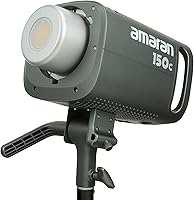
  • Mount Type: Universal Bowens Mount is built in, allowing direct compatibility with a wide range of third-party and manufacturer light shapers.
  • Power Input: Accepts 48V DC power, compatible with both the included AC adapter for studio use and the Aputure 2-Bay Battery Power Station for location shooting.
  • Cooling System: A redesigned silent active cooling system uses a high-efficiency heat sink combined with a low-noise fan to manage thermal output during extended operation.
  • Connectivity: Bluetooth connectivity is handled via the Sidus Link app, which also supports Sidus Mesh technology for wireless multi-fixture control.
  • Built-in FX: Nine system lighting effects are built in, including Fire, Lightning, TV, Strobe, Explosion, Cop Car, Paparazzi, Faulty Bulb, and Pulsing.
  • Weight: The fixture weighs 9.68 pounds, which should be factored into stand and rigging load calculations, especially when combined with large modifiers.
  • Dimensions: Packaged dimensions are 17.5 x 13.75 x 9.25 inches, reflecting the physical footprint buyers should account for in storage and transport cases.
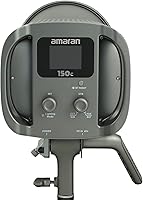
  • Control Interface: Onboard controls allow direct adjustment without the app, and the fixture operates without requiring an external control box.
  • Handles: Dual rear-facing side handles are built into the housing to allow ergonomic repositioning of the fixture when it is rigged on a stand or overhead mount.
  • Manufacturer: Designed and manufactured by Aputure under the amaran product sub-brand, which targets professional and prosumer video and photography applications.

Related Reviews
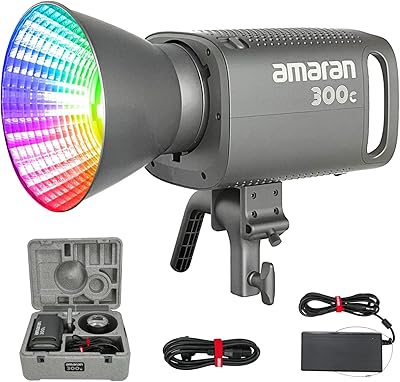
Aputure Amaran 300c RGB COB Video Light
86%
93%
Color Accuracy
95%
Light Output
89%
App Control
91%
Bowens Mount Compatibility
76%
Portability
More
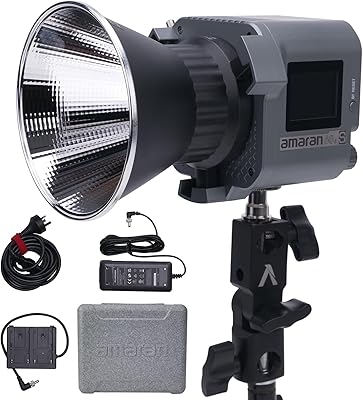
Aputure Amaran 60D S
83%
94%
Color Accuracy
91%
Build Quality
83%
App Control & Connectivity
88%
Value for Money
74%
Lighting Effects Quality
More
Aputure Amaran MC
Aputure Amaran MC
87%
98%
Portability
94%
Color Accuracy
91%
App Integration
89%
Mounting Versatility
93%
Charging Options
More
Aputure Amaran T2C RGBWW LED Tube Light 60cm
86%
91%
Lighting Quality
88%
Ease of Use
85%
Portability
74%
Battery Life
80%
Build Quality
More
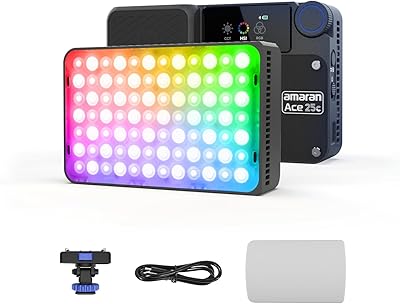
amaran Ace 25c
amaran Ace 25c
85%
94%
Portability & Size
91%
Brightness Output
78%
Battery Life (Standard Use)
62%
Battery Life (Boost Mode)
93%
Mounting Versatility
More
Aputure MC RGBWW On Camera Video Light
87%
94%
Color Accuracy
91%
Portability
75%
Battery Life
89%
Ease of Use
86%
App Control/Connectivity
More
Aputure MC Pro
Aputure MC Pro
89%
93%
Light Output & Intensity
96%
Build Quality & Durability
91%
Weather Resistance
94%
Wireless Connectivity & Control
88%
Battery Performance
More
Aputure MT Pro RGBWW Mini Tube Light
87%
94%
Lighting Quality
89%
Portability
90%
Ease of Use
70%
Battery Life
88%
Build Quality
More

FAQ

No, it does not. The fixture ships with an AC power adapter for studio use, but battery operation requires the Aputure 2-Bay Battery Power Station, which is sold separately. This is one of the most common surprises buyers mention after purchase, so factor that additional cost into your budget if cord-free shooting is part of your plan.

Yes, the universal Bowens Mount built into the fixture is compatible with the broad ecosystem of Bowens-fit light shapers from Aputure and third-party brands. Most standard softboxes, beauty dishes, snoots, and grids will attach without adapters. Just note that modifiers with very loose tolerances may fit with a slight wobble — that is a modifier quality issue rather than a fixture problem.

In normal studio conditions, the redesigned cooling system is quiet enough that it does not register on typical interview or podcast microphone setups. Most users running dialogue-heavy productions report no audible fan intrusion on their audio tracks. In hot, poorly ventilated spaces the fan can step up its speed somewhat, but it remains significantly quieter than competing fixtures at this power level.

The app is optional — you can control everything through the onboard controls directly on the fixture. The Sidus Link app adds wireless control via Bluetooth, a color picker tool for matching practical light sources, and access to the nine built-in lighting effects. If you are running multiple fixtures on a set, the Sidus Mesh feature in the app lets you group and control them simultaneously from one device.

Within a standard enclosed studio space, the Bluetooth connection is reliable for most users. Range becomes an issue in larger warehouse-style spaces, through thick walls, or on exterior locations. If your work regularly requires controlling the fixture from a significant distance or through obstructions, the Bluetooth range is a genuine limitation to consider before purchasing.

It handles both well. The 2,500K to 7,500K bi-color range with green-magenta adjustment covers practical lighting tasks, but the full RGBWW output with 360° HSI control lets you dial in any color for creative applications. With coverage of over 90% of the Rec.2020 color space, it is a capable tool for color-motivated lighting on narrative productions, not just a standard bi-color interview light.

Under normal conditions in a ventilated space, sustained full-power operation is manageable and users report consistent output across long shooting days. In small, enclosed, or poorly ventilated rooms — particularly in warm ambient temperatures — the housing will get noticeably warm and the fan will run faster. No thermal shutoff failures are commonly reported, but shooting in hot environments without adequate ventilation is worth planning around.

The color accuracy specs — CRI and TLCI both above 95 — are genuinely competitive with more expensive fixtures for most production work. The main gap shows up in SSI scores, where the D56 rating of 71 is solid but falls below what true broadcast-grade sources achieve. For indie film, content creation, and portrait photography, that difference rarely matters in practice. For high-end commercial or broadcast work where critical camera matching is required, the gap becomes more relevant.

The nine effects are Fire, Lightning, TV, Strobe, Explosion, Cop Car, Paparazzi, Faulty Bulb, and Pulsing — all accessible through the Sidus Link app. Basic parameters can be adjusted, but the level of fine control is limited compared to a dedicated effects controller. For low-budget narrative productions they work well as practical tools; professional productions needing precise effect customization may find the options somewhat constrained.

At just under 10 pounds, the fixture itself is manageable on a quality mid-range or heavy-duty light stand, but the total load increases significantly when you add a large Bowens Mount modifier. A few buyers have noted that their existing lightweight stands felt unstable with the full fixture-and-modifier combination rigged overhead. If you plan to use large softboxes or heavy modifiers and rig the light at height, investing in a stand rated for the combined load is worth doing before your first shoot.