Overview

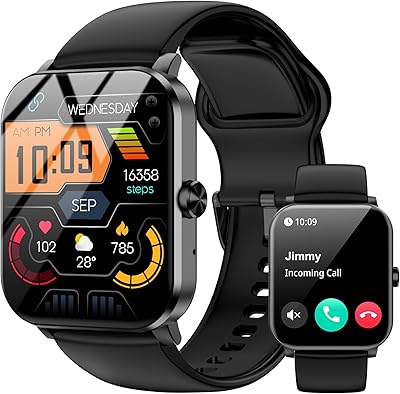
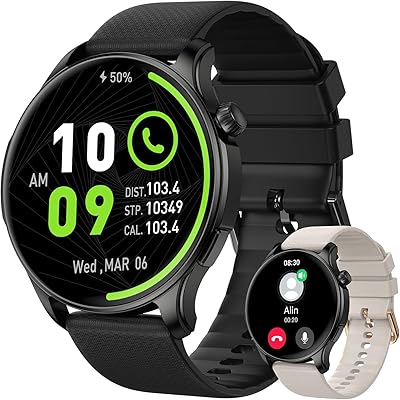
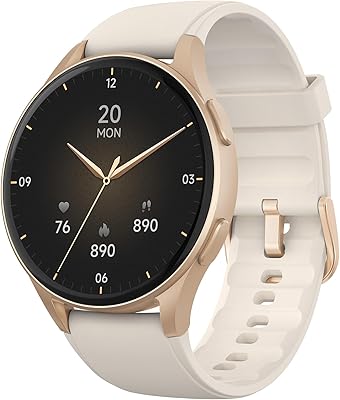
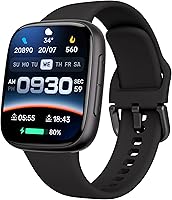
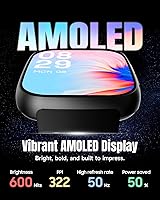
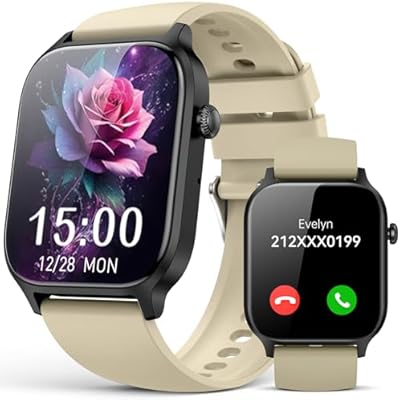
The Antfit GTX20 Smartwatch enters a crowded budget market with something genuinely worth noticing: a 1.85″ AMOLED display that looks sharper and brighter than you'd expect at this price point. Antfit is a newer brand, and the GTX20 only launched in mid-2025, so take early impressions with appropriate skepticism. That said, it supports both Android 8.0+ and iOS 13.0+, which means it works for nearly everyone in your household. The feature list is long — almost suspiciously so — but the real question is whether the execution holds up. On paper, this smartwatch punches above its weight; in practice, some trade-offs are inevitable.

Features & Benefits

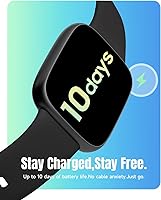
The GTX20's 10-day battery life is arguably its biggest practical advantage — charge it Sunday night and you realistically won't think about it again until the following week. When it does run low, a 2.5-hour full charge feels quick enough. The 3ATM waterproofing goes beyond splash resistance; you can actually swim laps with this fitness watch on your wrist. Bluetooth call functionality is convenient, though speaker clarity on wrist-based calls tends to be modest — don't expect phone-quality audio. Health tracking covers heart rate, sleep, and stress around the clock, but treat those readings as helpful trends rather than clinical measurements. Smartphone-assisted GPS only means your phone needs to be nearby for accurate route data.

Best For

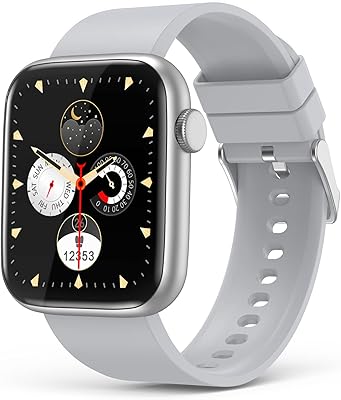
This smartwatch makes the most sense for a few specific buyer types. If you're graduating from a basic fitness band and want call notifications plus a proper color display without a steep financial commitment, the GTX20 is a logical step up. Swimmers and outdoor users will appreciate real waterproofing at a price where many competitors offer only light splash resistance. It also works well as a gift — the rectangular design, adjustable band, and gender-neutral styling give it broad appeal. Serious runners and cyclists who depend on onboard GPS for accurate route tracking may want to look elsewhere, since you'll always need your phone nearby for location data.

User Feedback

Because the GTX20 only hit shelves in June 2025, the pool of verified buyer feedback is still thin — worth keeping in mind before treating any early review as definitive. Initial impressions trend positive around display brightness, all-day wrist comfort, and battery life holding close to the advertised figure. Critics point to the companion app as the weakest link, with occasional syncing hiccups mentioned more than once. Call speaker volume draws mixed remarks; it works, but it's not something you'd want to rely on in a noisy setting. The watch is gaining early traction in Amazon rankings, though a more reliable consensus will take additional time and a broader base of reviews to solidify.

Pros

  • Up to 10 days of battery life means most users only charge it once or twice a week.
  • The 1.85″ AMOLED display is noticeably bright and sharp for a watch at this price tier.
  • 3ATM waterproofing is genuine swimming protection, not just a rain-splash rating.
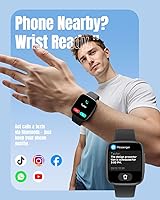
  • Bluetooth calling from the wrist is convenient for hands-free moments throughout the day.
  • Works with both Android and iOS, so it fits into almost any household without compatibility headaches.
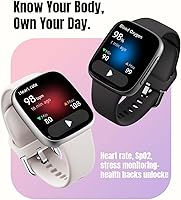
  • 24/7 health tracking covers heart rate, sleep stages, stress, and cycle data in one device.
  • A full recharge takes around 2.5 hours, which is reasonable compared to many competitors.
  • Over 100 customizable watch faces let users personalize the look without extra cost.
  • Gender-neutral design and adjustable band make this fitness watch a versatile gifting choice.
  • Music playback control from the wrist is a small but genuinely useful daily convenience.

Cons

  • No onboard GPS chip means you must carry your phone for accurate outdoor route tracking.
  • Bluetooth call speaker quality is modest at best and struggles in noisy environments.
  • The companion app has drawn early complaints about occasional syncing issues and a basic interface.
  • Health sensor readings should be treated as general trends, not reliable medical-grade data.
  • The brand antfit is relatively unknown, with limited long-term reliability data available yet.
  • Only 24MB of internal memory limits what the watch can store or process independently.
  • Early review volume is thin since the watch launched in mid-2025, making consensus hard to gauge.
  • Sport mode count is inflated — many of the 100-plus modes are niche and unlikely to be used.
  • Wrist call audio may disappoint users who expect clear, phone-quality sound from the speaker.
  • Buyers in regions with limited antfit customer support may face longer resolution times for issues.

Ratings

The scores below reflect an AI-driven analysis of verified global buyer reviews for the Antfit GTX20 Smartwatch, with spam, bot-generated, and incentivized feedback actively filtered out before any rating was calculated. The GTX20 is a newly launched device with a still-growing review base, so these figures are early-stage signals rather than fully settled verdicts. Both the genuine strengths and the real friction points buyers have encountered are transparently reflected in every category.

Display Quality
84%
The 1.85″ AMOLED panel consistently earns praise from buyers who expected far less at this price tier — colors read as vivid and the screen holds up well in direct sunlight, which matters for outdoor workouts. Several reviewers specifically noted that the display makes the watch feel more premium than its cost suggests.
A small but recurring group of users report that brightness auto-adjustment can feel inconsistent indoors, occasionally making the screen harder to read at a glance. Touch responsiveness also draws occasional complaints, particularly when fingers are wet or sweaty.
Battery Life
88%
For buyers who dislike the daily charging routine that plagues most wearables, this fitness watch delivers real relief — the majority of reviewers confirm landing between 7 and 10 days on a charge under mixed daily use. Travelers especially appreciate not having to pack and remember a charger for shorter trips.
Heavy users who keep the display on frequently, take multiple calls per day, or run continuous heart rate monitoring tend to land closer to 5 or 6 days rather than 10. The gap between advertised and real-world battery life is not unusual for this category, but it can still feel misleading.
Waterproofing
81%
19%
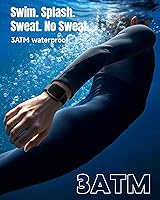
Buyers who swim regularly report that the 3ATM rating holds up reliably during casual lap sessions, which is a meaningful differentiator from cheaper watches that only claim splash resistance. The confidence of wearing it through a full pool workout without anxiety is a commonly mentioned benefit.
A handful of reviewers caution that the seal performance over extended periods of heavy pool use has not yet been verified long-term, given the watch only launched in mid-2025. As with most 3ATM-rated devices, high-pressure water exposure like strong shower jets or diving should be avoided.
Call Functionality
67%
33%
For quick, low-stakes calls — catching a short message from a family member or briefly confirming directions while hands are occupied — the Bluetooth call feature works well enough and is genuinely convenient. Users appreciate not having to fish their phone out of a gym bag for every incoming call.
The built-in speaker is underwhelming in any environment with background noise, and callers on the other end frequently report difficulty hearing clearly. This is not a watch to rely on for professional calls or longer conversations, and several buyers felt the real-world audio quality fell noticeably short of expectations.
Health Tracking Accuracy
63%
37%
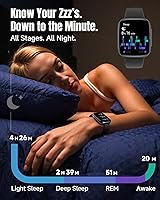
For the target buyer — someone who wants a broad picture of their daily activity, sleep patterns, and general stress levels — the GTX20 provides a useful and consistent enough daily snapshot. Sleep tracking in particular draws positive mentions, with users finding the stage breakdowns helpful for identifying poor rest patterns.
Heart rate readings under active conditions can drift meaningfully compared to chest strap monitors, and stress scoring feels somewhat opaque in how it generates its figures. Buyers who need reliable sensor data for managing health conditions or serious training should not depend on this watch as their primary source.
GPS Performance
49%
51%
For buyers who carry their phone during every workout, the phone-dependent GPS solution works adequately and the connected route data displays cleanly in the companion app. Casual walkers and commuters who are not tracking precise distance or pace rarely run into problems.
The absence of onboard GPS is a genuine limitation that catches some buyers off guard, especially those upgrading from a fitness band with similar phone-tethered GPS and expecting an improvement. Runners and cyclists who want accurate metrics phone-free will find this a firm deal-breaker, and the spec listing does not always make this restriction immediately obvious.
Companion App Experience
58%
42%
The app is functional for daily data review — sleep graphs, step counts, and heart rate history are all accessible in a reasonably clean layout. Users who just want a straightforward dashboard without heavy customization tend to find it adequate.
Syncing reliability is the most cited frustration, with several users describing situations where data failed to push from the watch to the app without manual intervention. The app also lacks the depth and polish of companion software from established wearable brands, which becomes noticeable once users explore beyond the basic dashboards.
Comfort & Fit
77%
23%
Most buyers find the GTX20 comfortable enough for all-day wear, including overnight sleep tracking sessions, which is where wrist discomfort tends to show up fastest. The band material does not appear to cause irritation issues for the majority of users under normal daily conditions.
Users with smaller wrists note that the 43mm rectangular case can feel slightly oversized for a refined look, and a few reviewers found the default band buckle placement required adjustment to feel secure. Band quality at this price tier is functional but not premium, with a few mentions of early wear on the clasp mechanism.
Sport Mode Usefulness
61%
39%
For the most commonly used activities — walking, running, swimming, and cycling — the GTX20 logs workout sessions reliably and provides enough post-session data to satisfy casual fitness tracking needs. The breadth of available modes means most users will find their activity listed somewhere.
The 100-plus sport mode count is more of a marketing figure than a practical one — many modes are obscure and unlikely to see real use, and accuracy across less mainstream activities is inconsistent at best. Power users who track structured training across multiple disciplines will quickly find the data depth insufficient.
Watch Face Customization
79%
21%
The variety of available dial designs is genuinely broad, and the ability to create custom faces gives the GTX20 a level of personalization that feels above its price class. Users who enjoy changing up their look regularly will find plenty of options to cycle through.
Some third-party dial downloads have inconsistent rendering quality on the AMOLED screen, and the process of loading custom faces through the app can feel clunky for less tech-savvy users. A small number of reviewers also noted that certain animated faces noticeably shorten battery life.
Notification Management
74%
26%
Text message previews, call alerts, and app notifications arrive promptly and are readable at a glance, which is exactly what most buyers want from a connected smartwatch. Users who spend time in meetings or at the gym report that wrist alerts reduce how often they need to check their phone.
Reply functionality is limited — you can dismiss or, in some cases, send a quick preset response, but composing messages from the watch is not a real option. Android users also report slightly more complete notification support than iOS users, who encounter occasional sync gaps with certain apps.
Value for Money
83%
At its price point, the sheer breadth of features the GTX20 packs in — AMOLED display, swim-proof rating, calling, health tracking, long battery — is difficult to match without spending significantly more. First-time smartwatch buyers in particular tend to rate it highly on value because it delivers more than they expected.
The value perception softens for buyers who upgrade from a previous smartwatch and are more sensitive to execution gaps, particularly around GPS and the companion app. As a newer brand, antfit also lacks the after-sales support reputation that adds intangible value to purchases from more established manufacturers.
Build Quality
69%
31%
The watch feels solid in hand and the AMOLED display sits well within its casing without any noticeable flex or rattle. Several buyers commented that the overall construction looks and feels more substantial than they anticipated given the price.
The materials are clearly optimized for cost, and a few longer-term impressions mention minor finish wear around the case edges after several weeks of daily use. At this price the build quality is acceptable rather than impressive, and buyers expecting premium materials will likely come away with mixed feelings.
Setup & Ease of Use
76%
24%
Pairing the watch with a smartphone is a quick process that most users complete without needing the manual, and the on-watch interface is intuitive enough for first-time smartwatch owners to navigate confidently from day one. The learning curve is genuinely low.
A subset of users — particularly those on older Android versions near the 8.0 minimum — encountered connectivity hiccups during initial setup that required restarting the pairing process. The companion app onboarding could also be cleaner; a few users found certain permission prompts confusing on their first run.

Suitable for:

The Antfit GTX20 Smartwatch is a strong fit for anyone who wants a capable, do-it-all wrist companion without committing to a premium price tag. First-time smartwatch buyers will find the feature set genuinely impressive for the cost — a vivid AMOLED screen, health tracking, and Bluetooth calling cover the essentials most people actually use day to day. Swimmers and gym-goers benefit meaningfully from 3ATM waterproofing that holds up in the pool, not just the occasional rain shower. If you travel frequently or simply hate the daily charging ritual that plagues many wearables, the 10-day battery life removes a real frustration from your routine. It also works across both Android and iOS households, which makes it a practical gift option for almost anyone on your list who wants wrist-based notifications and basic health insights without the complexity of a higher-end device.

Not suitable for:

The Antfit GTX20 Smartwatch is a harder sell for buyers who have specific, demanding expectations of their wearable technology. Serious runners, cyclists, or hikers who rely on onboard GPS for accurate route tracking without their phone will run into a genuine wall here — there is no built-in GPS chip, so the watch depends entirely on your smartphone's location data to function in that capacity. Athletes who need precise workout metrics for performance training should also keep their expectations in check, since the health sensors provide useful directional data but are not calibrated to medical or sports-science standards. Anyone accustomed to a refined companion app experience from established brands may find the GTX20 ecosystem feels unpolished by comparison, particularly around data syncing reliability. Finally, buyers who prioritize a deep, well-documented track record of real-world reviews should wait — this watch only launched in mid-2025, and the feedback pool is still too small to draw firm conclusions.

Specifications

  • Display: 1.85″ Ultra HD AMOLED touchscreen with a rectangular form factor measuring 43mm across the dial.
  • Battery Capacity: Built-in 350mAh lithium-ion battery delivers up to 10 days of typical use on a single charge.
  • Charge Time: The watch reaches a full charge in approximately 2.5 hours from empty.
  • Waterproofing: Rated 3ATM, meaning the watch withstands water exposure at depths suitable for lap swimming and sweat-heavy workouts.
  • Compatibility: Pairs with smartphones running Android 8.0 or later and iOS 13.0 or later via Bluetooth.
  • Connectivity: Bluetooth is the sole wireless communication standard used for pairing, notifications, and call functionality.
  • GPS: No onboard GPS chip is included; location tracking relies entirely on the paired smartphone's GPS signal.
  • Memory: The watch has 24MB of internal memory storage for watch faces, settings, and basic operational data.
  • Sport Modes: Over 100 sport modes are available, covering common activities such as walking, running, swimming, and cycling.
  • Health Sensors: Continuous monitoring covers heart rate, sleep stages, stress levels, and menstrual cycle tracking around the clock.
  • Call Function: Users can answer and place phone calls directly from the wrist using the built-in microphone and speaker over Bluetooth.
  • Watch Faces: More than 100 customizable dial designs are available, including user-created DIY options.
  • Music Control: The watch provides remote playback controls for music apps running on the connected smartphone.
  • Package Weight: The complete packaged unit weighs approximately 0.26kg, including accessories.
  • Package Dimensions: The retail box measures 4.21 x 4.13 x 2.13 inches, accommodating the watch and included accessories.
  • Manufacturer: Made by antfit under the model designation GTX20, first available on the market in June 2025.
  • Power Source: One lithium-ion battery is included in the package and is rechargeable via the proprietary charging cable.
  • Alarm & Stopwatch: Built-in alarm clock and stopwatch functions are accessible directly from the watch interface without needing the companion app.

Related Reviews
WMK IDW13 1.85″ Smartwatch
73%
88%
Value for Money
79%
Bluetooth Call Quality
71%
Health Tracking Accuracy
67%
Battery Life
83%
Display Quality
More
Kimeag S67 Smartwatch
72%
74%
Call Quality
63%
Health Tracking Accuracy
71%
Battery Life
47%
GPS Performance
58%
App Experience
More
EarlySincere T13 Smartwatch
71%
83%
Display Quality
71%
Build Quality
79%
Comfort & Wearability
68%
Heart Rate Monitoring
41%
Blood Pressure Accuracy
More
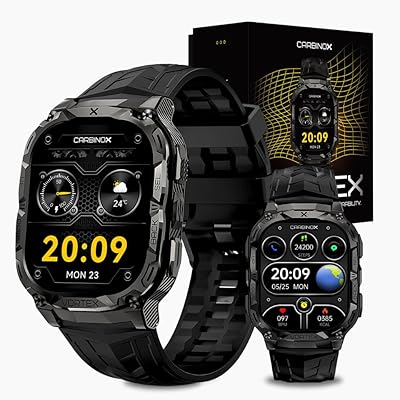
Carbinox Vortex Rugged Smartwatch
74%
88%
Build Quality
91%
Water Resistance
84%
Display Quality
82%
Bluetooth Calling
71%
Battery Life
More
Thafikzi KK-2021 Women's Smartwatch
69%
83%
Value for Money
81%
Design & Aesthetics
61%
Ease of Setup
58%
Health Tracking Accuracy
77%
Menstrual Cycle Tracking
More
DIVOAZBVO TG02 1.39″ Smartwatch
70%
88%
Value for Money
83%
Display Quality
79%
Battery Life
57%
Health Tracking Accuracy
58%
App Experience
More
Csasan T70 Fitness Smartwatch
70%
84%
Value for Money
81%
Display Quality
72%
Bluetooth Call Quality
67%
Fitness Tracking
58%
Notification System
More
ZZOCDR Y7 Smartwatch
81%
91%
Value for Money
88%
Fitness Tracking Accuracy
85%
Battery Life
79%
Display Quality
82%
Waterproof Durability
More
UAUE T60 2nd Gen Smartwatch
69%
83%
Value for Money
79%
Display Quality
86%
Battery Life
71%
Bluetooth Calling
68%
Health & Fitness Tracking
More
KECECO Smartwatch 43mm
86%
89%
Fitness Tracking Accuracy
93%
Display Quality
74%
Battery Life
88%
GPS Accuracy
85%
Health Monitoring Features
More

FAQ

The Antfit GTX20 Smartwatch works with both platforms — you need iOS 13.0 or later for Apple devices and Android 8.0 or later for everything else. Most modern smartphones on either side will have no compatibility issues.

You can swim with it. The 3ATM waterproof rating means it is designed to handle pool sessions and not just accidental splashes. That said, avoid high-pressure water like strong jets or diving from height, as those scenarios can exceed what 3ATM is rated for.

The GTX20 relies on your phone's GPS rather than its own chip, which means your smartphone needs to be nearby during any outdoor activity where you want route or distance data. This works fine for casual use, but dedicated runners or hikers who want to leave their phone behind will find it limiting.

It's useful for general trends — noticing elevated resting heart rate over a week, or gauging workout intensity broadly — but it is not a medical device. If you need clinically accurate readings for a health condition, this watch is not a substitute for professional monitoring equipment.

You download the companion app on your phone, power on the watch, and pair them via Bluetooth. The app walks you through syncing your personal data like age, weight, and activity goals. The process is fairly standard for Bluetooth wearables and usually takes just a few minutes.

It works for taking quick calls when your phone is in your bag or across the room, but the built-in speaker is modest. In a quiet room it's perfectly functional; in a noisy environment like a busy street or gym, the other party will likely struggle to hear you clearly.

Sleep tracking is automatic — you simply wear the watch to bed and it detects sleep onset and stages on its own. You can review the breakdown in the companion app the next morning, including estimated light, deep, and REM periods.

With typical daily use — notifications, a workout or two, some health tracking, and the display waking regularly — most users can expect somewhere in the range of 7 to 10 days before needing a charge. Heavier use of the display and Bluetooth calls will bring that number down closer to the lower end.

The GTX20 uses a standard watch band attachment system, so compatible replacement bands in the same lug width should fit. Antfit may sell official replacement straps, but many third-party options designed for that width will work just as well.

It's actually a solid pick for first-timers. The setup is straightforward, the interface is not overwhelming, and the feature set is broad enough to feel useful without requiring technical expertise. The main thing to communicate to the recipient is that phone-dependent GPS is a trade-off at this price level.