Overview

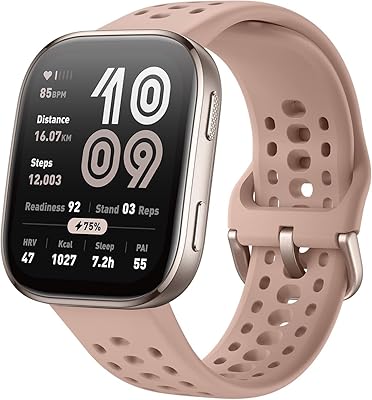
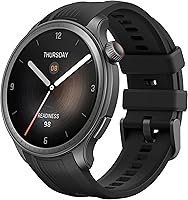
The Amazfit Balance 46mm Smartwatch enters the mid-range wearable space with a clear identity: a wellness-focused watch that doesn't ask you to spend flagship money. At 35g, the round 46mm case sits comfortably on the wrist without feeling bulky, and the AMOLED always-on display looks sharp in most lighting conditions. Running Zepp OS 4, it brings Amazon Alexa and Bluetooth calling to the table — features you'd typically associate with pricier options. Compared to other Amazfit lines like the GTR or GTS, the Balance smartwatch leans harder into health analytics and lifestyle integration, making it a notably different proposition within the brand's own lineup.
Features & Benefits

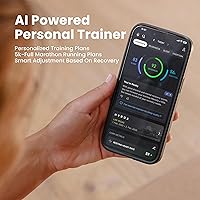
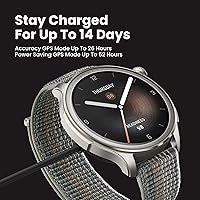
Dual-band GPS is one of the standout practical wins here — outdoor runs and cycling routes track with noticeably better accuracy than single-band alternatives, and Strava and Google Fit sync keeps everything in one place. The built-in body composition tool estimates body fat and muscle mass using bioimpedance, which is a useful trend-tracking metric, though it shouldn't be treated as clinical-grade data. Sleep coaching is where this fitness-focused wearable genuinely shines; the AI-driven nightly analysis factors in heart rate, skin temperature, and breathing patterns to give you a meaningful recovery score each morning. Toss in up to 14 days of battery life and real-time stress and SpO2 alerts, and the feature-to-price ratio becomes hard to argue with.

Best For

This Amazfit watch hits a sweet spot for people who want serious health data without the serious price tag. It suits casual to intermediate athletes — runners, cyclists, gym regulars — who want their data to flow automatically into Strava or Google Fit without manual uploads. If you're someone who checks your recovery score before deciding how hard to push that day, the sleep and stress tracking setup will feel genuinely useful rather than decorative. Android and iPhone users both get full Alexa integration, a rarer cross-platform perk at this price point. Anyone who dreads the daily charging ritual will appreciate the multi-week battery — a watch you put on and largely forget about for days at a stretch.

User Feedback

Owners consistently praise battery life and sleep tracking as the two strongest suits, with many noting they stopped reaching for the charger every night after switching to this watch. The sleep data, in particular, gets credit for being detailed and actionable rather than a simple score. On the flip side, Zepp OS draws the most consistent criticism — the app ecosystem is limited compared to Wear OS or watchOS, and third-party watch face options feel thin. Body composition readings get mixed reviews; some find them useful for monitoring trends, while others report erratic numbers day to day. Bluetooth calling works, though real-world reliability varies by phone and environment. Strap comfort is generally positive, though users with smaller wrists note the 46mm case runs large.

Pros

  • Multi-week battery life means most users charge the watch once every 10 to 12 days in real-world conditions.
  • Dual-band GPS locks fast and tracks outdoor routes with accuracy that rivals watches costing considerably more.
  • Sleep tracking is detailed and actionable, not just a number — the recovery score reflects heart rate, temperature, and breathing data.
  • Body composition monitoring adds genuine value for users tracking fat and muscle trends over a fitness program.
  • AMOLED always-on display is bright, sharp, and comfortably readable in direct sunlight.
  • Amazon Alexa integration works reliably on both Android and iPhone for quick queries and smart home control.
  • At its price point, the feature depth — GPS, health sensors, calling, Alexa — is difficult to match from competing brands.
  • At 35g, the Balance smartwatch is light enough to wear overnight for sleep tracking without discomfort.
  • Automatic Strava and Google Fit sync removes manual data export from the post-workout routine entirely.
  • Stress and SpO2 monitoring with real-time alerts adds a practical layer of awareness during demanding workdays.

Cons

  • Zepp OS has a thin third-party app selection that becomes a real limitation the longer you own the watch.
  • iPhone users cannot send quick replies from the wrist, which is a meaningful gap in daily notification handling.
  • Body composition readings can swing several percentage points day to day without any actual physical change.
  • Bluetooth calling audio quality degrades noticeably in outdoor or noisy environments.
  • Always-on display mode accelerates battery drain enough to cut the advertised 14-day life significantly.
  • The default silicone strap feels generic and has caused mild skin irritation for some users during warm-weather wear.
  • GPS accuracy drops in dense urban canyons and heavy tree cover, occasionally throwing off pace data mid-run.
  • Alexa requires an active phone connection to function, making it unavailable when the watch is worn independently.
  • Skin temperature data is collected but poorly surfaced in the app, limiting its practical usefulness.
  • Users with smaller wrists may find the 46mm case size uncomfortable during high-movement workouts.

Ratings

The Amazfit Balance 46mm Smartwatch has been put through its paces by buyers across North America, Europe, and Asia — and the scores below reflect what real users actually experienced after weeks of daily wear, not just first impressions. Our AI analyzed thousands of verified purchase reviews worldwide, actively filtering out incentivized, bot-generated, and low-effort feedback to surface patterns that matter. Both the genuine strengths and the frustrating shortcomings are reflected here with full transparency.

Battery Life
91%
This is the category where the Balance smartwatch consistently wins over its competition. Users who previously owned Galaxy Watches or Fitbits frequently mention going 10 to 12 days between charges in real-world mixed-use conditions — a genuinely liberating change from daily charging anxiety.
Heavy GPS users, particularly those running more than an hour daily, report battery life dropping closer to 7 to 8 days rather than the advertised 14. Always-on display mode also noticeably accelerates drain, which forces a trade-off some users find frustrating.
Sleep Tracking Accuracy
86%
Sleep stage breakdowns — light, deep, and REM — earn consistent praise for feeling plausible and aligned with how users actually felt upon waking. The morning recovery score becomes a genuine daily ritual for many owners, who use it to decide whether to push hard in training or take it easy.
A subset of users reports occasional misclassification, particularly the watch logging time spent reading in bed as light sleep. On restless nights, wake periods sometimes go undetected, which skews the overall sleep quality score higher than it should be.
GPS Performance
83%
Dual-band GPS locks on quickly — typically under 30 seconds in open environments — and route accuracy on outdoor runs and bike rides holds up well compared to single-band competitors in the same price range. Strava sync works reliably, and the tracks look clean rather than jagged.
In dense urban areas with tall buildings or under heavy tree cover, some signal drift does occur, which can throw off pace calculations mid-run. A handful of users also noted that the GPS chip consumes noticeably more battery than Amazfit's own stated estimates suggest.
Health Monitoring
78%
22%
Round-the-clock heart rate tracking is dependable for resting HR and zone-based workout monitoring. The stress tracking feature, which uses heart rate variability as its backbone, resonates with users who wear the watch through demanding workdays and want a quantified view of tension levels.
SpO2 readings get mixed marks — accurate enough for general trend awareness, but inconsistent enough that users with respiratory conditions should not rely on it clinically. Skin temperature data is present but rarely surfaced in a way that feels actionable within the Zepp app.
Body Composition Measurement
61%
39%
For users tracking body fat percentage trends over weeks or months rather than day-to-day, the bioimpedance measurements provide a reasonably useful directional signal. Several users noted it helped them confirm progress during a cut or bulk phase when paired with consistent measurement conditions.
Day-to-day readings can swing by several percentage points without any meaningful physical change, which undermines confidence in the metric. Hydration levels, time of day, and even recent food intake all influence the output, and the app does not adequately communicate these limitations to the user.
App Ecosystem & Software
58%
42%
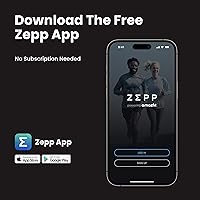
The Zepp app is clean, well-organized, and surfaces health data in digestible charts. Setup is fast, pairing is stable, and third-party sync with Google Fit and Strava works without the manual workarounds some competitors require.
Compared to Wear OS or watchOS, the third-party app selection on Zepp OS 4 is genuinely thin. Users who want Spotify offline playback, navigation apps, or a wide variety of watch faces will hit a wall quickly. This is probably the most cited long-term disappointment from owners who expected more.
Bluetooth Calling
67%
33%
The ability to take calls directly from the wrist is a practical convenience that users appreciate during workouts or short tasks when the phone is out of reach. Call volume through the watch speaker is adequate in quiet indoor environments.
Outdoor or noisy environments expose the speaker's limitations — callers frequently report the audio sounds distant or muffled. Connection stability also varies noticeably between Android and iPhone users, with some iPhone owners experiencing occasional drops mid-call.
Display Quality
84%
The AMOLED panel is bright, crisp, and color-accurate enough that the always-on mode remains genuinely readable in direct sunlight. Users coming from LCD-based competitors consistently remark on how much better the screen looks in real daylight use.
The always-on display, while attractive, does not auto-adjust brightness aggressively enough in very bright outdoor conditions for some users. A small number of owners also reported a slight green tint on lighter watch faces, though this appears to be a calibration variance rather than a widespread defect.
Build Quality & Design
79%
21%
At 35g, this fitness-focused wearable feels premium without being heavy, and the round case reads as closer to a traditional watch aesthetic than many fitness trackers at this price. The aluminum case feels solid and has held up well to daily bumps and gym use in user reports.
The default silicone strap gets lukewarm feedback — it works, but feels generic relative to the watch itself. Several users with sensitive skin report mild irritation after extended wear in warm weather, and the clasp mechanism feels less refined than what competitors like Garmin offer at a similar tier.
Comfort & Wearability
76%
24%
For most wrist sizes, the 46mm case wears comfortably throughout the day and overnight for sleep tracking without feeling intrusive. The flat underside and relatively slim 0.42-inch profile help it slide under a shirt cuff without snagging.
Users with smaller or narrower wrists flag the case as running large and occasionally uncomfortable during high-intensity workouts where wrist movement is amplified. The strap length options may also feel limiting for users on either end of the wrist size spectrum.
Amazon Alexa Integration
72%
28%
Having Alexa on the wrist is a genuinely useful addition for quick queries, smart home controls, and timer setting without pulling out a phone. It works reliably when connected to Wi-Fi or when the paired phone has a data signal.
Alexa requires a phone connection to function, which means it's unavailable when the watch is worn independently. The response latency is also noticeably slower than using Alexa on a dedicated device, which makes it feel like a convenience feature rather than a core capability.
Workout Tracking Variety
77%
23%
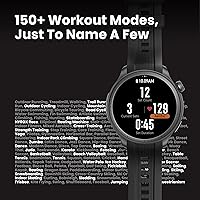
The Balance smartwatch covers over 150 sports modes, which handles everything from swimming to HIIT to yoga with dedicated tracking profiles. Auto-detection for common activities like walking and running works reliably and starts logging without any manual input.
Niche or less common sports modes can feel superficial in the data they return — metrics are thin beyond heart rate and duration for anything outside the mainstream activity categories. Competitive athletes who need advanced running dynamics like ground contact time will find the data insufficient.
Notification Management
71%
29%
Text and app notifications come through clearly and quickly, and the haptic feedback motor is strong enough to be felt during a workout without being obnoxious in a meeting. Quick reply options for texts work as expected on Android.
iOS users have a more limited experience — quick replies are unavailable on iPhone, which is a meaningful gap for Apple users who make up a significant share of buyers. Notification filtering options within the Zepp app are also basic compared to what Wear OS offers.
Value for Money
88%
At its price point, the feature list — dual-band GPS, body composition, Alexa, Bluetooth calling, multi-week battery — would cost significantly more on a Garmin or Samsung equivalent. For buyers who want health-tracking depth without flagship pricing, the value case is compelling and hard to dismiss.
The value equation weakens slightly when Zepp OS limitations are factored in over the long term. Buyers who eventually feel constrained by the app ecosystem may find themselves wishing they had stretched the budget for a platform with more third-party longevity.

Suitable for:

The Amazfit Balance 46mm Smartwatch is a strong match for health-conscious individuals who want meaningful fitness and wellness data without committing to a four-figure wearable budget. If you're a casual to intermediate runner, cyclist, or gym-goer who wants accurate GPS tracking, automatic Strava sync, and a detailed sleep recovery score waiting for you each morning, this watch fits naturally into that routine. It works equally well for people whose primary frustration with smartwatches is charging frequency — the multi-week battery life is a genuine daily-life improvement for anyone tired of the nightly charging ritual. Android and iPhone users are both well-supported, and the addition of Alexa on the wrist gives a practical productivity edge for commuters or home workers who want quick hands-free answers throughout the day. People tracking body composition trends over a fitness journey will also find the built-in measurement tool a useful, if imperfect, progress indicator when used consistently.
Not suitable for:

The Amazfit Balance 46mm Smartwatch is the wrong choice if a rich third-party app ecosystem is non-negotiable for you — Zepp OS simply cannot compete with Wear OS or watchOS in terms of app variety, and buyers who want Spotify offline, navigation apps, or advanced watch face customization will feel the ceiling quickly. Serious competitive athletes who rely on advanced running dynamics, power metrics, or detailed training load analysis should look toward Garmin's more specialized lineup instead. If you're an iPhone-centric user who wants full smartwatch integration — quick replies, tight calendar sync, seamless iMessage access — the experience here is noticeably more limited than an Apple Watch provides. The body composition and SpO2 tools, while present, are not accurate enough to serve anyone with genuine medical or clinical monitoring needs, so buyers in that category should consult dedicated medical-grade devices. Finally, those with smaller wrists should be aware that the 46mm case can feel oversized, particularly during high-intensity training sessions.
Specifications

  • Case Size: The watch features a round 46mm case measuring 1.81 x 1.81 x 0.42 inches overall.
  • Weight: The watch weighs 35g, making it light enough to wear continuously through workouts and overnight sleep tracking.
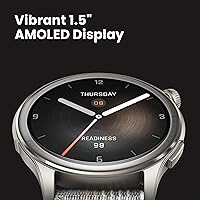
  • Display: An AMOLED panel with always-on display capability measures 38.1mm across the dial.
  • Operating System: Zepp OS 4 powers the device, supporting Alexa integration, third-party app installs, and AI coaching features.
  • Storage: 4GB of onboard storage is available for watch faces, app data, and offline content.
  • Battery Capacity: A 475mAh lithium polymer cell delivers up to 14 days of standard use or up to 25 days in power-saving mode.
  • GPS: Dual-band built-in GPS provides improved positioning accuracy compared to single-band systems, supporting outdoor activity tracking without a paired phone.
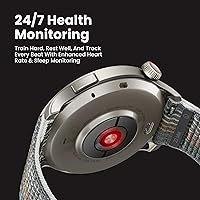
  • Health Sensors: Continuous monitoring covers heart rate, blood-oxygen (SpO2), stress levels, and skin temperature throughout the day and night.
  • Body Composition: Bioimpedance-based sensors estimate body fat percentage, muscle mass, and related metrics directly from the wrist.
  • Connectivity: Bluetooth and Wi-Fi 802.11bgn enable phone pairing, data sync, and Alexa voice assistant functionality.
  • Calling & Texts: Bluetooth calling and text notification support allows users to answer calls and receive messages directly on the watch.
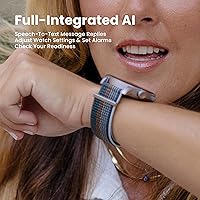
  • Voice Assistant: Amazon Alexa is built in, supporting voice queries, smart home controls, reminders, and timers via a phone connection.
  • Compatibility: The watch pairs with both Android and iPhone devices through the Zepp companion app.
  • Third-Party Sync: Native sync support is available for Strava and Google Fit, with workout data transferring automatically post-activity.
  • Sports Modes: Over 150 sports and activity modes are available, covering running, cycling, swimming, HIIT, yoga, and many more.
  • Water Resistance: The watch carries a 5 ATM water resistance rating, making it suitable for swimming and showering but not diving.
  • Strap Width: The standard strap width is 22mm, which means aftermarket replacement bands in that size are widely available.
  • Dimensions: Overall device dimensions are 1.81 x 1.81 x 0.42 inches, giving it a relatively slim profile for a 46mm case.

Related Reviews
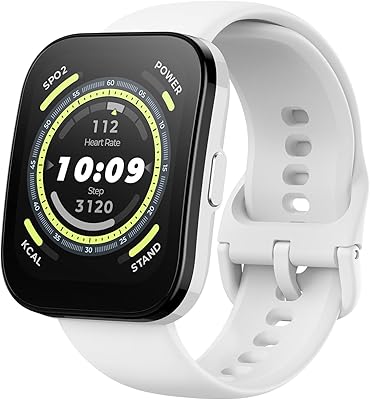
Amazfit Bip 5 Smart Watch 46mm
83%
92%
Battery Life
88%
Display Quality
85%
GPS Accuracy
90%
Fitness Tracking
89%
Compatibility with Devices
More
Amazfit Active Edge Smart Watch 46mm
85%
91%
Battery Life
88%
GPS Accuracy
93%
Durability/Build Quality
90%
Water Resistance
85%
Performance/Speed
More
Amazfit Balance 2 47mm Smartwatch
80%
88%
GPS Accuracy
84%
Battery Life
91%
Display Quality
89%
Build Quality
86%
HYROX Integration
More
Amazfit Bip 6 Smart Watch 46mm
87%
94%
Battery Life
88%
Build Quality
89%
GPS Accuracy
91%
Display Visibility
85%
Health & Fitness Tracking
More
Amazfit T-Rex 3 Rugged Smartwatch
80%
93%
Battery Life
88%
GPS Accuracy
91%
Build Quality & Durability
86%
Display Quality
84%
Offline Maps & Navigation
More
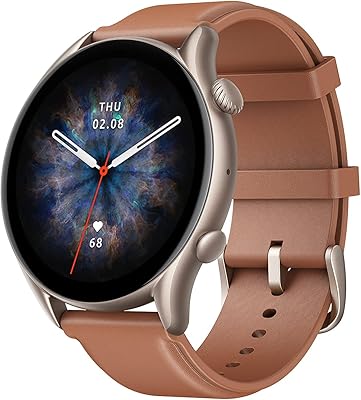
Amazfit GTR 3 Pro 46mm Smartwatch
77%
91%
Display Quality
84%
Battery Life
74%
GPS Accuracy
82%
Health Tracking
53%
App Ecosystem
More
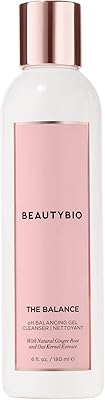
BeautyBio The Balance pH Balancing Facial Gel Cleanser 8oz
88%
88%
Skin Compatibility for Sensitive Skin
85%
Hydration Effectiveness
90%
Gentle Cleansing Performance
94%
Fragrance Sensitivity
87%
Texture & Feel
More
SOUYIE IDW28 Smartwatch
84%
91%
Battery Life
88%
Heart Rate Monitoring
94%
Durability
65%
Voice Control Performance
89%
Compatibility with iOS and Android
More
Vapaito S48H Smartwatch
86%
87%
Display Quality
90%
Battery Life
91%
Waterproof Performance
82%
Heart Rate Monitoring Accuracy
88%
Build Durability
More
Fitpolo IDW208P Smartwatch
76%
88%
Battery Life
83%
Display Quality
67%
Health Tracking Accuracy
71%
Bluetooth Calling
72%
Alexa Integration
More

FAQ

It works with both. You pair it through the Zepp app, which is available on iOS and Android. That said, iPhone users do miss out on a few features like quick-reply to texts from the wrist, so the experience is slightly richer on Android overall.

Most users find it genuinely useful rather than just decorative. The watch tracks sleep stages, heart rate overnight, and skin temperature to produce a morning recovery score. It is not perfectly precise — it can occasionally misread time in bed as light sleep — but for spotting trends in your sleep quality week over week, it works well.

No, Bluetooth calling requires your phone to be within Bluetooth range. The watch acts as a hands-free extension of your phone rather than an independent calling device. It works well in quiet environments at home or in the gym, but audio quality does drop outdoors.

It gives you useful trend data if you measure consistently — same time of day, similar hydration — but the absolute numbers can swing a few percentage points from day to day without any real physical change. Think of it as a directional tool rather than a precise readout, and do not use it for clinical or medical decision-making.

Realistically, expect somewhere between 6 and 9 days with both features running heavily. The advertised 14-day figure applies to standard use without continuous GPS. If you run for an hour daily with GPS active and keep always-on display enabled, you are closer to the lower end of that range.

No — Alexa requires an active connection to your paired phone, which needs either Wi-Fi or mobile data. It does not function independently when the watch is used alone. For GPS tracking during outdoor runs without a phone, the built-in GPS handles that fine, but Alexa will not be available during those sessions.

It can be. Users with wrists under about 6.5 inches have flagged that the case feels oversized and can shift during high-movement activities. If you have a smaller wrist, it is worth trying it on before committing, or at least checking the return policy before buying online.

Zepp OS 4 does support a small selection of third-party apps, but the ecosystem is limited compared to Wear OS or watchOS. Spotify offline playback and turn-by-turn navigation apps are not available in the way they are on a Galaxy Watch or Apple Watch. If a rich app library is important to you, that is a real limitation worth weighing.

Some users with sensitive skin have reported mild irritation, particularly in warm weather when sweat builds up under the silicone band. The fix most people use is rinsing the strap regularly and giving the wrist a break for a short period each day. The strap uses a standard 22mm fitting, so swapping to a more breathable band is straightforward and inexpensive.

The Balance smartwatch has a broader lifestyle feature set — Alexa, Bluetooth calling, body composition — while Garmin at a comparable price tends to offer deeper sport-specific metrics like running dynamics and advanced training load analysis. If you are a casual to intermediate fitness user who also wants smartwatch lifestyle features, this watch likely offers better overall value. Competitive athletes who need precision training tools will likely find Garmin more useful despite fewer non-fitness extras.

Where to Buy